Affiliate Disclosure: As an Amazon Associate we earn from qualifying purchases. Some links may earn us a commission at no cost to you.

Best PSU for RX 9070 (2026): 750W or 850W? 5 Top Picks
The best PSU for an RX 9070 is a 750W ATX 3.1 unit if you are pairing it with a Ryzen 5 or Ryzen 7, and an 850W ATX 3.1 unit if you are running a 9800X3D class chip or plan to upgrade the GPU later. Wattage is only half of that answer. The RX 9070 carries a 220W TDP, but in short-duration transients it spikes to 830W, and a supply without ATX 3.0 or ATX 3.1 transient handling reads that spike as an overload and shuts the system down.
That gap between the sticker number and the peak number is why "650W is fine" forum advice keeps leaving builders with a machine that crashes under load. Below are five picks that clear the transient spec, split across the 750W and 850W tiers, plus the headroom math for working out which tier your own build actually needs.
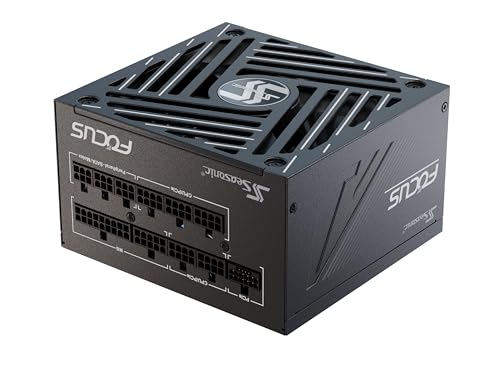
Our top pick: Seasonic Focus GX 850W ATX 3.1
Seasonic's ATX 3.1 flagship handles the RX 9070's 830W peak spike with margin, runs nearly silently thanks to its hybrid fan, and carries a 10-year warranty backed by Seasonic's in-house build quality. No other 850W pick in this article matches its efficiency certification.
Quick picks
Pick | PSU | Where to buy |
|---|---|---|
Best Overall | Check Price | |
Best Value | Check Price | |
Best Premium | Check Price | |
Best 750W | Check Price | |
Editor's Pick | Check Price |
Best Overall
- PSU
- Where to buy
- Check Price
Best Value
- PSU
- Where to buy
- Check Price
Best Premium
- PSU
- Where to buy
- Check Price
Best 750W
- PSU
- Where to buy
- Check Price
Editor's Pick
- PSU
- Where to buy
- Check Price
Specs at a glance
Pick | PSU | Wattage | Efficiency | ATX Spec | Warranty |
|---|---|---|---|---|---|
Best Overall | 850W | Gold + Cybenetics Platinum | ATX 3.1 / PCIe 5.1 | 10 years | |
Best Value | 850W | 80+ Gold | ATX 3.1 / PCIe 5.1 | 10 years | |
Best Premium | 850W | 80+ Titanium | ATX 3.0 / PCIe 5.0 | 10 years | |
Best 750W | 750W | Gold + Cybenetics Gold | ATX 3.1 / PCIe 5.1 | 10 years | |
Editor's Pick | 750W | 80+ Gold | ATX 3.1 / PCIe 5.1 | 10 years |
Best Overall
- PSU
- Wattage
850W
- Efficiency
Gold + Cybenetics Platinum
- ATX Spec
ATX 3.1 / PCIe 5.1
- Warranty
10 years
Best Value
- PSU
- Wattage
850W
- Efficiency
80+ Gold
- ATX Spec
ATX 3.1 / PCIe 5.1
- Warranty
10 years
Best Premium
- PSU
- Wattage
850W
- Efficiency
80+ Titanium
- ATX Spec
ATX 3.0 / PCIe 5.0
- Warranty
10 years
Best 750W
- PSU
- Wattage
750W
- Efficiency
Gold + Cybenetics Gold
- ATX Spec
ATX 3.1 / PCIe 5.1
- Warranty
10 years
Editor's Pick
- PSU
- Wattage
750W
- Efficiency
80+ Gold
- ATX Spec
ATX 3.1 / PCIe 5.1
- Warranty
10 years
How much PSU an RX 9070 needs: the peak-draw story
The RX 9070's 220W TDP is its average gaming load number. It measures sustained power draw during extended workloads, which is the right number for thermal planning, but the wrong number for PSU sizing. Modern GPUs draw power in bursts, not at a steady rate. When the RX 9070 hits a brief load spike (loading into a scene, resolving a shader, firing off a compute burst), the power demand can jump to 830W for fractions of a second before settling back to the 200-240W average.
Older PSUs weren't designed to handle this. An ATX 2.0 or ATX 2.4 unit hits that spike and either clamps, drops voltage, or trips a protection circuit. The result is a system crash, a game freeze, or a restart under load. Forums are full of "my system crashes with an RX 9070 on a 750W PSU" threads, and in most of those cases the PSU is a pre-ATX 3.0 unit that worked fine with older GPUs that drew power more linearly.
ATX 3.0 formalized a transient response requirement: the PSU had to handle power spikes up to 200% of its rated wattage for 100 microseconds. ATX 3.1 tightened that spec further and introduced the 12V-2x6 connector. Every pick in this article meets either ATX 3.0 or ATX 3.1. The be quiet! Dark Power 13 is ATX 3.0 with its own 2× excursion rating; the other four picks are ATX 3.1.
The math for a typical RX 9070 gaming build: sustained GPU draw around 220W, Ryzen 7 9800X3D at 65-90W under gaming load, rest-of-system 40-60W, total sustained load roughly 325-370W. A 750W PSU has 350W of headroom above that sustained figure, which sounds comfortable. The headroom that matters is transient response on the GPU rail. ATX 3.1 at 750W handles the 830W spike; a non-ATX 3.0 unit at 850W may not. For a deeper look at how to size your full power cooling setup, see our power and cooling guide.
How we picked
Every PSU in this round-up clears the same three bars. First, ATX 3.0 or ATX 3.1 compliance: the transient response certification is non-negotiable for RX 9070 builds. Second, Tier A OEM manufacturing: Seasonic builds in-house, Corsair RMx uses CWT, MSI MAG GL runs on CWT or Great Wall at this tier, and be quiet! Dark Power 13 is in-house FSP-lineage engineering. Third, fully modular. On a PSU you'll spend hours routing cables, and a non-modular unit inside a build is a sustained irritant.
Efficiency matters here beyond the badge. 80+ Gold means roughly 88-92% efficiency at typical loads. 80+ Titanium hits 94-95%. At 350W sustained draw, the Titanium unit generates about 20W less heat inside the chassis than a Gold unit. In a mid-tower ATX case with an RX 9070 already warming the air, that 20W shows up as quieter case fans and a slightly cooler GPU under sustained loads.
The 750W vs 850W question comes down to your CPU and your upgrade path. Ryzen 5 7600 or 7700X plus RX 9070 stays well under 600W sustained, and 750W with ATX 3.1 handles it. Add a Ryzen 7 9800X3D or plan a future CPU upgrade, and 850W gives you the room to do it without touching the PSU again. RX 9070 XT builds skip the 750W tier entirely; the XT's higher peak draw belongs at 850W minimum. The panel is the other half of the same build decision, and our monitor shortlist for the RX 9070 sizes the screen to what the card renders rather than to a spec sheet.
Best Overall: Seasonic Focus GX 850W ATX 3.1
Specs
Continuous output | 850W |
Spec | ATX 3.1 / PCIe 5.1 |
Efficiency | 80+ Gold, Cybenetics Platinum |
Modularity | Fully modular |
GPU connector | Native 12V-2x6 |
Fan | 135mm FDB hybrid |
Depth | 140mm |
Warranty | 10 years |
Continuous output
850W
Spec
ATX 3.1 / PCIe 5.1
Efficiency
80+ Gold, Cybenetics Platinum
Modularity
Fully modular
GPU connector
Native 12V-2x6
Fan
135mm FDB hybrid
Depth
140mm
Warranty
10 years
What it does well
Seasonic builds every component in-house, with no third-party OEM and no rebadged platform. That distinction is audible and measurable over time: the hybrid fan runs in fully passive mode at light loads, shifts quietly to its first active stage, and only spins up meaningfully under heavy sustained load. For most gaming sessions, you won't hear it.
The Cybenetics Platinum certification is a tier above standard 80+ Gold and is independently measured by Cybenetics labs rather than self-reported. At the RX 9070 build's typical 350W gaming load, the Focus GX 850W runs more efficiently than any other pick in this round-up: less wasted energy, less heat generated inside the case, quieter fan behavior over long sessions.
ATX 3.1 at 850W means the RX 9070's 830W transient hits with roughly 20W of headroom on the peak spec and over 450W of headroom on sustained load. That's the confidence buffer this pick exists to provide. The 10-year warranty is meaningful because Seasonic has among the lowest warranty claim rates in the industry.
What you give up
This is not the value pick. The Seasonic Focus GX 850W ATX 3.1 costs more than the MSI and Corsair alternatives, and the extra money buys build quality and efficiency rather than additional features. If the PSU is a line item you're trying to minimize, the MSI MAG A850GL PCIE5 does the same ATX 3.1 job for less. One user review flagged minor coil whine at idle, reportedly more noticeable on the white variant; the black variant's reviews don't surface this consistently.
Who it's for
High-end RX 9070 builds where the rest of the system is similarly premium: Ryzen 7 9800X3D or Intel Core Ultra 200K class CPUs, where the combined gaming load approaches 500W sustained. Also the right pick for builders who want to carry the PSU through two or three GPU upgrades. The 10-year warranty and ATX 3.1 spec provide real future-proofing.
Best Value: MSI MAG A850GL PCIE5

Specs
Continuous output | 850W |
Spec | ATX 3.1 / PCIe 5.1 |
Efficiency | 80+ Gold |
Modularity | Fully modular |
GPU connector | Native dual-color 12V-2x6 cable |
Form factor | Compact ATX |
Warranty | 10 years |
Continuous output
850W
Spec
ATX 3.1 / PCIe 5.1
Efficiency
80+ Gold
Modularity
Fully modular
GPU connector
Native dual-color 12V-2x6 cable
Form factor
Compact ATX
Warranty
10 years
What it does well
Amazon's #1 Best Seller in PSUs, and the ranking is earned rather than purchased: 5,613 reviews with 82% five-star, 1,000+ sold last month, MSI-rated at 3× GPU power excursion handling and 2× total system excursion per ATX 3.1. At the RX 9070's 830W spike, this PSU has margin.
The dual-color 12V-2x6 cable is a feature most brands skip at this price tier. The cable changes color if the connector isn't fully seated, which serves as a useful indicator when routing cables behind a shroud where you can't see the connector directly. It prevents the 'GPU crashed because the power connector worked loose' issue that trips up new builders.
Compact sizing fits in cases where longer PSUs create cable management problems. Fully modular means you run only the cables you need. At this price-to-spec ratio, this is the unit most RX 9070 builds should buy.
What you give up
MSI's warranty service is the weak point: slow turnaround, and MSI typically requires the buyer to cover inbound shipping. Corsair and Seasonic handle this better. The ~7% one-star rate includes units that failed in the 7-12 month range. That's not a disqualifying signal for an 850W PSU at this price, but if long-term reliability is the priority over value, the Seasonic is the right call.
Who it's for
Budget-to-midrange RX 9070 builds (Ryzen 5 7600, Ryzen 7 7700X, or Intel Core i5-14600K plus the standard RX 9070) where you want ATX 3.1 transient coverage and an 850W ceiling without premium PSU pricing. The right pick for the majority of RX 9070 builds being assembled right now. If the card in the build is the cheaper RX 9060 XT rather than the 9070, the wattage answer moves down a tier: we ran whether 500W is enough for an RX 9060 XT through the same system arithmetic.
Best Premium: be quiet! Dark Power 13 850W

Specs
Continuous output | 850W |
Spec | ATX 3.0 / PCIe 5.0 |
Efficiency | 80+ Titanium, up to 95.4% |
Modularity | Fully modular |
12V rails | 4 independent, overclocking key for single-rail |
Fan | Frameless Silent Wings |
Cables | 120cm sleeved |
Capacitors | Japanese 105C |
Warranty | 10 years |
Continuous output
850W
Spec
ATX 3.0 / PCIe 5.0
Efficiency
80+ Titanium, up to 95.4%
Modularity
Fully modular
12V rails
4 independent, overclocking key for single-rail
Fan
Frameless Silent Wings
Cables
120cm sleeved
Capacitors
Japanese 105C
Warranty
10 years
What it does well
The only 80+ Titanium pick in this round-up, and the efficiency advantage is real. At 350W sustained load, the difference between Gold and Titanium is roughly 18-22W less heat dissipated inside the case. With the RX 9070 already warming the chassis, 20W of avoided heat shows up as quieter case fans and lower GPU junction temperatures over extended sessions.
The overclocking key is a physical switch on the PSU body that toggles between four independent 12V rails and a single massive 12V rail. For an RX 9070 build with an overclocked 9800X3D or 9950X, single-rail mode maximizes available headroom without software intervention. The frameless Silent Wings fan is engineered specifically for be quiet!'s thermal targets; it runs slower and quieter than comparable fans on Gold units.
The Dark Power 13 handles up to 2× its rated wattage in peak excursions per be quiet!'s spec. At 850W, that covers the RX 9070's 830W spike with the same principle as the ATX 3.1 units, even without the 3.1 certification stamp.
What you give up
ATX 3.0, not 3.1. The functional difference is minor for most builders, since be quiet! rates the 2× excursion coverage that the ATX 3.0 spec requires. But the 12V-2x6 connector is an ATX 3.1 feature, and this unit predates it. Verify your specific RX 9070 AIB's cable requirement before ordering. The review count is low (57 at time of writing), and the few DOA reports that appear in those reviews are more visible at low volume. Be quiet! customer support is responsive but slower than Corsair or Seasonic to resolve. The cables are also shorter than expected for a premium unit per at least one buyer review.
The same distinction is worth checking on any unit you shortlist, and our roundup of the best ATX 3.1 power supplies covers how to tell a native 12V-2x6 design from an ATX 3.0 unit shipped with an adapter.
Who it's for
Enthusiast builders for whom acoustic performance is a hard requirement, or builds running extended workloads (content creation alongside gaming, 24/7 home server duty) where the efficiency advantage compounds over time. If you're pairing the RX 9070 with a 9950X or a 285K, this is the pick that handles the combined TDP at the highest efficiency in the round-up.
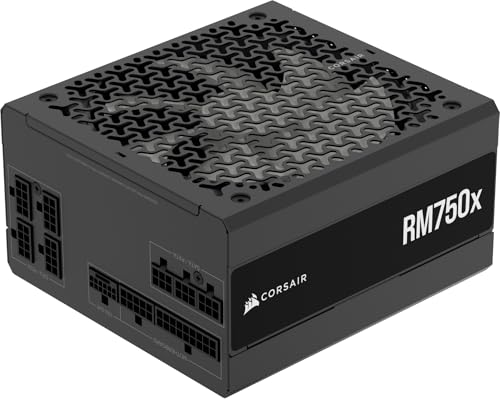
Best 750W: Corsair RM750x ATX 3.1 750W
Specs
Continuous output | 750W |
Spec | ATX 3.1 / PCIe 5.1 |
Efficiency | 80+ Gold, Cybenetics Gold |
Modularity | Fully modular |
GPU connector | Native 12V-2x6 |
Fan | 140mm FDB hybrid |
Fan control | Physical speed knob |
Capacitors | Japanese 105C |
Warranty | 10 years |
Continuous output
750W
Spec
ATX 3.1 / PCIe 5.1
Efficiency
80+ Gold, Cybenetics Gold
Modularity
Fully modular
GPU connector
Native 12V-2x6
Fan
140mm FDB hybrid
Fan control
Physical speed knob
Capacitors
Japanese 105C
Warranty
10 years
What it does well
ATX 3.1 at 750W is a different product from a non-ATX 3.0 unit at 850W. The spec determines how the PSU handles the RX 9070's 830W peak spike. The Corsair RM750x ATX 3.1 is rated to handle it; an older 850W unit without ATX 3.0 or 3.1 may not be. Wattage is a sustained-load number. Transient response is the RX 9070 compatibility number, and the Corsair clears it. The wattage tier still has to be right before the spec matters, and our GPU-tier PSU wattage guide puts the RX 9070 alongside the rest of the RDNA4 and GeForce lineup.
The Corsair RMx series sits in the enthusiast community's Tier A category: the tier where the OEM (CWT) builds to a quality ceiling that justifies the 10-year warranty claim. The hybrid fan runs passively at light loads. The physical fan speed control knob is a QoL feature that builders running near-silent setups appreciate; it requires no software and does not require the fan to run at all under light loads. 4.7 stars across 290 reviews with no reported stability issues under GPU-heavy loads.
What you give up
750W is the floor for an RX 9070 build, not the ceiling. Paired with a Ryzen 5 7600 and a standard build, you have comfortable headroom. Add a Ryzen 7 9800X3D or plan a future CPU upgrade, and the margin shrinks. The RX 9070 XT's higher peak draw belongs in the 850W tier. If there's any chance you'll upgrade to the XT, the Corsair RM750x ATX 3.1 at 750W is the wrong pick. One buyer review noted a mild relay click on power on/off. Corsair confirms this as normal behavior for the capacitor bank, but it is noticeable in a near-silent build. The GRE sits a tier below the standard 9070 at 220W of board power, and whether 550W is enough for an RX 9070 GRE runs that same arithmetic with the processor as the variable.
The XT version pushes those numbers up again: our breakdown of whether 650W is enough for an RX 9070 XT runs the headroom math per CPU pairing.
Who it's for
Efficient midrange RX 9070 builds at a tight budget. Ryzen 5 7600, Ryzen 7 7700X, or Intel Core i5-14600K paired with the standard RX 9070 where the sustained gaming load stays under 600W. Not for RX 9070 XT builds.
Editor's Pick: MSI MAG A750GL PCIE5

Specs
Continuous output | 750W |
Spec | ATX 3.1 / PCIe 5.1 |
Efficiency | 80+ Gold |
Modularity | Fully modular |
GPU connector | Native dual-color 12V-2x6 cable |
Form factor | Compact ATX |
Warranty | 10 years |
Continuous output
750W
Spec
ATX 3.1 / PCIe 5.1
Efficiency
80+ Gold
Modularity
Fully modular
GPU connector
Native dual-color 12V-2x6 cable
Form factor
Compact ATX
Warranty
10 years
What it does well
The cheapest ATX 3.1 pick in this round-up, and the price advantage is real. MSI rates the MAG A750GL PCIE5 at 220% total power excursion handling, above the ATX 3.1 baseline of 200%, though below the A850GL's 3× GPU excursion rating. The dual-color 12V-2x6 connector indicator is present here as well. Compact sizing fits in tight cases. Same MSI MAG GL platform as the A850GL Best Value pick, with the same 10-year warranty.
This is the entry point for the article's core story: ATX 3.1 transient coverage for the RX 9070 at the absolute minimum price. If the budget is the constraint, this is the pick that gets the build right without padding the PSU line item.
What you give up
The same MSI caveats from the Best Value pick carry over: slow RMA, buyer-covers-inbound-shipping, and a ~7% reliability tail in the product family's reviews. In the enthusiast PSU community's tier lists, the MSI MAG GL sits just below the Corsair RMx in independent test data. At 750W, the same upgrade-path constraints from the Corsair pick apply. This is the floor, not the ceiling, for an RX 9070 build.
Who it's for
Budget builders with the RX 9070 (not XT) plus a Ryzen 5 or mid-range Intel CPU, where the build's total sustained gaming load stays under 600W and ATX 3.1 coverage is the priority. The pick for the builder who wants to spec the PSU correctly for the RX 9070's peak-draw behavior without adding to the PSU budget.
Bottom line
If your RX 9070 build has a high-end CPU and you want a decade of reliable power at the best efficiency in the group, the Seasonic Focus GX 850W ATX 3.1 is the right call.
If you're building a midrange system and want ATX 3.1 transient coverage at the best value, the MSI MAG A850GL PCIE5 is what most builders should buy.
If acoustic performance drives your build and you're pairing the RX 9070 with a power-hungry CPU, the be quiet! Dark Power 13 850W earns its premium with 80+ Titanium efficiency.
If your build is an efficient midrange system and the budget is tight, the Corsair RM750x ATX 3.1 750W handles the RX 9070's peak draw with proper ATX 3.1 spec. And if you want the cheapest ATX 3.1 entry point, the MSI MAG A750GL PCIE5 covers the spec at the lowest price here.
The common thread: ATX 3.1 transient response is what makes a PSU right for the RX 9070. That spec, not just the wattage number, is the thing to check.
FAQ
Is 750W enough for an RX 9070 build?
It depends on the PSU's ATX compliance, not just the wattage. A 750W unit with ATX 3.1 transient compliance handles the RX 9070's 830W peak spike properly. The spec is designed exactly for this case. A 750W unit without ATX 3.0 or 3.1 compliance may not. The Corsair RM750x ATX 3.1 750W and MSI MAG A750GL PCIE5 both clear the bar; an older 750W Gold unit without the ATX 3.0 spec does not.
What's the difference between ATX 3.0 and ATX 3.1 for the RX 9070?
ATX 3.0 introduced the transient power excursion requirement: PSUs must handle up to 200% of their rated wattage for brief spikes. ATX 3.1 tightened the spec and introduced the 12V-2x6 connector. For an RX 9070 build, either spec handles the 830W peak spike adequately; ATX 3.1 is newer and preferred, but the be quiet! Dark Power 13 (ATX 3.0) covers the excursion per its own spec sheet.
Does the RX 9070 need a PSU with a native 12V-2x6 connector?
Native 12V-2x6 is preferred but not strictly required. If your PSU has a 12VHPWR connector (ATX 3.0-era), that works with an adapter for most RX 9070 AIBs. Two 8-pin PCIe connectors also work for many AIBs. Native 12V-2x6 is the cleanest connection. All four ATX 3.1 picks in this article include it.
Why does the RX 9070 spike to 830W if its TDP is only 220W?
TDP measures sustained average load: the heat the cooling system needs to handle during extended workloads. Peak transient draw is different. Modern GPUs draw power in rapid bursts tied to the render loop. When the RX 9070 fires up compute units for a brief, intense task (scene transitions, shader compilation, physics bursts), the instantaneous draw spikes several times above the TDP for fractions of a second before settling back. The 830W transient is real, brief, and fully within AMD's spec, but significant enough that the PSU needs the ATX 3.0 or 3.1 transient response design.
Can I use my current non-ATX 3.0 PSU with an RX 9070?
It may work, but it's a gamble. Older PSUs weren't designed to handle modern GPU transient spikes, and the RX 9070's 830W peak will stress a non-ATX 3.0 unit in ways that may not be immediately visible (voltage sag, protection circuit trips, reduced lifespan). If the current PSU is a Tier A unit in good condition under 5 years old, the risk is lower. For a new build or a known-budget unit, replacing it with an ATX 3.1 pick before installing the RX 9070 is the right move.
Is 850W overkill for an RX 9070 build?
Not overkill: appropriately sized headroom. A typical RX 9070 gaming system draws around 350-400W sustained. An 850W PSU running at 40-50% load sits in its peak efficiency range and runs coolest and quietest at that load point. The headroom also covers future CPU upgrades, additional storage, and peripherals without replacing the PSU. 750W works for efficient builds; 850W is the right call for anything you plan to grow.
Related Articles

Best 750W PSUs for RTX 5070 Builds: 5 ATX 3.1 Picks (2026)
Best 750W PSU for an RTX 5070 build? These 5 ATX 3.1 picks skip the 850W upsell and still handle the card's transient spikes without tripping protection.
Sep 8, 2026

Best 1000W PSU for RTX 5070 Ti (2026): 750W Is the Floor
The best 1000W PSU for an RTX 5070 Ti absorbs the CPU spikes a 750W unit rides at its limit. Five ATX 3.1 native 12V-2x6 picks, and when 850W is enough.
Aug 25, 2026

Best RTX 5090 PSU 2026: Why 1000W Isn't Enough (5 Picks)
The best PSU for an RTX 5090 is not Nvidia's 1000W floor. Transient spikes explained, five 1200W to 1500W ATX 3.1 picks, and 12V-2x6 cable notes that matter.
Aug 10, 2026

Best Headset for Modern Warfare 4 (2026): 5 Footstep Picks
Best headset for Modern Warfare 4 in 2026: five picks that place footsteps by ear, from a budget wired floor to an open-back pick, with the audio mix to run.
Oct 13, 2026

Best CPU for Star Citizen (2026): 5 Picks for Landing Zones
Best CPU for Star Citizen in 2026: the Ryzen 7 9800X3D leads in busy landing zones; the 7800X3D trails it by about 5 fps for less. 5 picks + the 32GB RAM rule.
Oct 13, 2026