Affiliate Disclosure: As an Amazon Associate we earn from qualifying purchases. Some links may earn us a commission at no cost to you.
Best $1500 Gaming PC
A ~$1,500 1440p gaming PC built around the Radeon RX 9070 16GB and Ryzen 5 9600X on AM5, fit to today's prices, with 32GB of memory as the first upgrade.
$1,500.00(target price)
Components
| Component | Part Name | Price | Buy |
|---|---|---|---|
| GPU | $741.99 | Buy on Amazon | |
| Cheaper option | GPU prices are running above MSRP. This swap keeps the build's performance target and saves $152.00 today. | $589.99 | Buy on Amazon |
| CPU | $177.99$220.00 | Buy on Amazon | |
| Mobo | $99.99 | Buy on Amazon | |
| RAM | $249.99 | Buy on Amazon | |
| SSD | $189.99 | Buy on Amazon | |
| Cheaper option | SSD prices are running above MSRP. This swap keeps the build's performance target and saves $20.07 today. | $169.92 | Buy on Amazon |
| Cooler | $31.41$34.90 | Buy on Amazon | |
| PSU | $72.99$144.99 | Buy on Amazon | |
| Case | $149.99 | Check Price on Amazon | |
| Total at today's prices | $1,714.34Normally about $1,380 at MSRP | ||
| With the cheaper options | $1,542.27 | ||
Who This Build Is For
This is the fifteen-hundred-dollar build for someone gaming on a 1440p monitor who wants current AAA games at high settings without upscaling, plus enough headroom to stream or record on the side. It pairs a 16GB Radeon RX 9070 with a six-core Ryzen 5 9600X on AM5, the platform AMD is still releasing processors for, so the CPU can be swapped later without a new board.
Be clear about what today's market does to this budget. Memory, storage and graphics cards are all selling well above their normal prices because of a supply shortage, and the parts list reflects that. Today's total lands a little over the target, inside the range we hold our builds to, and the place it gives up the most is memory: 16GB fits the budget today, where we'd normally spec 32GB at this level. If you mostly play one game at a time with a browser and Discord open, 16GB is fine. If you keep a lot running in the background, plan on the memory upgrade covered below.
Build Overview
Key Specs
CPU | AMD Ryzen 5 9600X (6 cores, 12 threads, AM5) |
GPU | ASUS Prime Radeon RX 9070 16GB GDDR6 |
Motherboard | ASRock B650M-HDV/M.2 (micro-ATX, B650, no Wi-Fi) |
Memory | Patriot Viper Venom 16GB (2x8GB) DDR5-6000 CL36 |
Storage | WD Black SN7100 1TB NVMe Gen4 |
Power Supply | Corsair RM850e 850W 80+ Gold, fully modular, ATX 3.1 |
Case | NZXT H7 Flow RGB White (mid-tower) |
Cooling | Thermalright Peerless Assassin 120 SE (dual-tower air) |
Target | 1440p high settings, 60 to 144Hz |
CPU
AMD Ryzen 5 9600X (6 cores, 12 threads, AM5)
GPU
ASUS Prime Radeon RX 9070 16GB GDDR6
Motherboard
ASRock B650M-HDV/M.2 (micro-ATX, B650, no Wi-Fi)
Memory
Patriot Viper Venom 16GB (2x8GB) DDR5-6000 CL36
Storage
WD Black SN7100 1TB NVMe Gen4
Power Supply
Corsair RM850e 850W 80+ Gold, fully modular, ATX 3.1
Case
NZXT H7 Flow RGB White (mid-tower)
Cooling
Thermalright Peerless Assassin 120 SE (dual-tower air)
Target
1440p high settings, 60 to 144Hz
Here are the parts that make up this build, with links to current Amazon pricing for each one.
Performance Summary
At 1440p the RX 9070 runs six of the seven games in our table at 85 FPS or more on their top presets, with Stalker 2 the outlier at around 60. At 1080p every game but Stalker 2 averages over 100 FPS. The Ryzen 5 9600X is quick enough that the graphics card sets the pace in almost everything; Baldur's Gate 3 is the main exception, where the processor caps both resolutions at the same figure.
Performance Expectations
Average FPS across seven current AAA games at each game's listed preset, native resolution, Ryzen 5 9600X with Radeon RX 9070.
- Cyberpunk 2077172 FPS
- Alan Wake 2128 FPS
- Stalker 271 FPS
- Marvel's Spider-Man 2153 FPS
- Starfield107 FPS
- Baldur's Gate 3131 FPS
- Hogwarts Legacy117 FPS
Average FPS across seven current AAA games at each game's listed preset, native resolution with no upscaling or frame generation, for the Ryzen 5 9600X and RX 9070 together. Expect about 10% either way depending on the scene, driver and patch.
At 1440p, Cyberpunk 2077, Marvel's Spider-Man 2 and Baldur's Gate 3 average above 100 FPS, and Alan Wake 2, Starfield and Hogwarts Legacy sit between 85 and 93. Stalker 2 is the heaviest game on the list at 59 FPS; turning on FSR 4 is the easy way to lift it if you want a smoother feel on a high-refresh monitor.
Baldur's Gate 3 shows the same 131 FPS at both resolutions because the 9600X, not the graphics card, sets that ceiling. Stalker 2 is also processor-limited at 1080p, which is why it gains less there than the other games do. Black Myth: Wukong is left out of the table: there's no published CPU-limited result for the 9600X in it, so we can't say whether the processor or the graphics card would set the pace.
Parts Breakdown
Every part here was picked against today's prices, not the ones from a year ago. The AMD Ryzen 5 9600X and ASUS Prime Radeon RX 9070 carry the gaming load; the rest is chosen so nothing holds them back and so the first upgrades (memory, then the processor) are simple.
CPU

The Ryzen 5 9600X is a six-core, twelve-thread Zen 5 chip that boosts to 5.4GHz and runs cool at its default power setting. For 1440p gaming that's plenty: in our table it only becomes the limit in Baldur's Gate 3 and in Stalker 2 at 1080p. The trade-off versus the eight-core Ryzen 7 9700X is fewer threads for heavy multitasking, like CPU-encoded streaming or long video exports. Here the RX 9070's hardware encoder handles streaming, so the extra cores matter less. The 9600X doesn't come with a cooler, which is why this build includes one.
GPU

The ASUS Prime Radeon RX 9070 is the reason this build is a 1440p machine. Its 16GB of memory keeps high-resolution textures in the newest games from spilling over, and RDNA 4 adds FSR 4 upscaling and an improved hardware encoder with AV1 support for streaming. The same-tier alternative is the GeForce RTX 5070, which brings DLSS and stronger ray tracing but only 12GB of memory. For high-settings 1440p without ray tracing, the extra memory is the better bet. This Prime card is about 304mm long and 2.5 slots thick, uses two 8-pin power connectors, and ASUS asks for a 650W power supply.
Motherboard

The ASRock B650M-HDV/M.2 is a white micro-ATX AM5 board that covers what this build needs: DDR5 support with EXPO, a PCIe 5.0 M.2 slot plus a second Gen4 M.2 slot, USB-C on the rear, and 2.5Gb Ethernet. It has two memory slots, not four, and no Wi-Fi. The trade-off versus a full ATX B650 board with Wi-Fi is those missing extras; what you keep is the same socket and memory support for less. If you can't run a cable to your router, add a Wi-Fi adapter.
Memory (RAM)

The Patriot Viper Venom 16GB DDR5-6000 kit is two 8GB sticks at 6000MT/s, the speed Ryzen 9000 chips like best. This is the part the shortage hits hardest: memory is selling well above its normal price right now, and 16GB is what fits the budget today. It runs every game in our table, but those figures come from test systems with more memory, and some recent games plus a busy background can push past 16GB and cause hitching. A 32GB kit is the first upgrade once memory prices settle. Because the board has only two slots, that upgrade means replacing this kit with a 2x16GB kit rather than adding to it.
Storage

The WD Black SN7100 1TB is a Gen4 NVMe drive rated up to 7,250MB/s reads, with TLC flash and low heat output. Game loads and installs are quick, and the board's Gen5 slot runs it at full Gen4 speed. The trade-off versus a 2TB drive is space: a handful of current AAA installs fill 1TB fast. Storage is also selling above normal right now, so start at 1TB and use the board's second M.2 slot when you need more.
Power Supply

The Corsair RM850e is an 850W, 80+ Gold, fully modular ATX 3.1 unit. The RX 9070 and 9600X together sit well under its rating, so the fan stays quiet, and there's room for a much hungrier graphics card later. The trade-off versus a 750W unit is a slightly higher price for headroom you won't use on day one. It includes a native 12V-2x6 cable for newer cards, but this Prime card uses two 8-pin connectors: run two separate PCIe cables rather than one daisy-chained cable.
Case

The NZXT H7 Flow RGB White is a mid-tower with a mesh front, room for a graphics card up to 410mm and a cooler up to 185mm tall, so the 304mm RX 9070 and the 155mm air cooler fit with space to spare. It ships with three 120mm RGB intake fans on one front frame. The trade-off versus a compact micro-ATX case is size: the H7 is big for a micro-ATX board, but it gives cool temperatures, easy cable routing and room for any future card.
Cooling
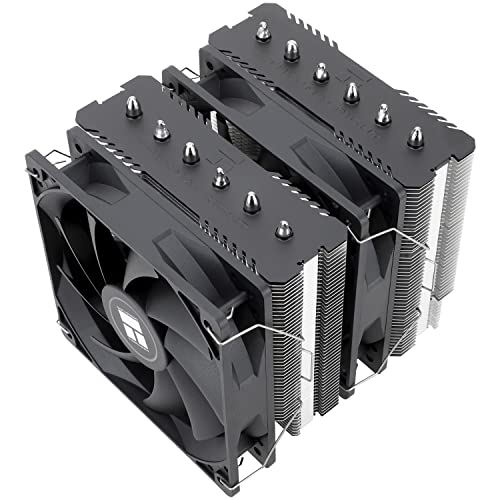
The Thermalright Peerless Assassin 120 SE is a dual-tower air cooler with two 120mm fans and AM5 mounting in the box. It keeps the 9600X cool and quiet with lots of margin, and it would handle an eight-core upgrade too. The trade-off versus a 240mm liquid cooler is looks and a bulkier tower near the memory, in exchange for no pump to fail. The Viper Venom sticks sit close to the front fan's lowest position; if the fan touches them, slide it up a few millimeters on its clips.
Why This Build Works
The money goes where 1440p gaming needs it: a 16GB graphics card that runs six of the seven games in our table above 85 FPS at their top presets, and a processor fast enough that it rarely holds that card back. The supporting parts are chosen to last through upgrades. The 850W supply, the roomy case and the dual-tower cooler all have headroom for a bigger graphics card or an eight-core processor, and AM5 keeps the processor path open.
The compromise is honest and temporary. With memory and storage selling well above normal, 16GB of RAM and a 1TB drive are what fit the budget today. Both are easy to change later without touching anything else in the build.
Alternative Options
If you lean on ray tracing or prefer DLSS, a GeForce RTX 5070 drops into the same build with no other changes, though it has 12GB of memory instead of 16GB. If you need Wi-Fi built in, look at a B650 board with Wi-Fi in the name, and check that it still fits the white theme if that matters to you.
If you want a smaller desk footprint, the micro-ATX board fits compact micro-ATX cases; check the graphics card length and cooler height against the case's limits first, since this card is about 304mm long and the cooler is 155mm tall.
Build & Setup Tips
Install the 9600X, the SSD and the memory on the board before it goes in the case, and mount the cooler last after the board is in. Use the two separate 8-pin cables from the power supply for the graphics card.
After the first boot, enter the BIOS and turn on EXPO so the memory runs at 6000MT/s instead of its slower default. Update the BIOS before installing Windows if the board's version is older than the one ASRock lists for Ryzen 9000 support. Connect the front fan cable to a chassis fan header and set a gentle curve in the BIOS; the case ships without a rear fan, so adding a single 120mm exhaust is a cheap improvement but not required.
Upgrade Paths
Memory comes first. Once prices settle, replace the 2x8GB kit with a 2x16GB DDR5-6000 kit, which removes the one real weak spot in this build. Storage is second: drop a second NVMe drive into the free Gen4 M.2 slot.
For processor upgrades, a Ryzen 7 9800X3D is the big step for games that are CPU-limited here, like Baldur's Gate 3. The cooler and power supply already handle it. On the graphics side, the 850W unit has room for a much faster card when prices come down.
Final Thoughts
This build gets a 1440p monitor running current AAA games at high settings, mostly above 85 FPS, without leaning on upscaling. It costs a little more than the budget today because of the shortage, and memory is where it gives ground. Buy it knowing that 32GB is the first upgrade, and everything else is set up to last several years of upgrades.
FAQs
Can this build run 1440p at 144 FPS?
Not in the heaviest AAA games at their top presets. In our table the best 1440p results are Baldur's Gate 3 at 131 FPS, Cyberpunk 2077 at 117 and Marvel's Spider-Man 2 at 110, and the rest of the list sits between 59 and 93. A 144Hz or 165Hz monitor with FreeSync still makes sense: variable refresh keeps those frame rates smooth, lighter esports games have far more headroom, and FSR 4 can lift the heavier games when you want higher frame rates.
Is 16GB of RAM enough for this build?
For most games played one at a time, yes. It's the part this build gives up the most on, though: memory is selling well above normal because of the shortage, and 16GB is what fits the budget today. Some recent games, plus a browser, Discord and a stream running in the background, can push past 16GB and cause hitching. A 32GB kit is the first upgrade once memory prices settle.
How do I upgrade to 32GB of memory later?
The ASRock B650M-HDV/M.2 has two memory slots, both filled by this 2x8GB kit, so you replace the kit rather than add to it. Get a 2x16GB DDR5-6000 kit, swap it in, and turn EXPO back on in the BIOS. Mixing the old and new sticks isn't an option on a two-slot board.
Why does this build cost more than fifteen hundred dollars right now?
A shortage has pushed memory, SSDs and graphics cards well above their normal prices. We fit builds to what parts cost today rather than to last year's prices, and this one lands a little over the target, inside the range we allow. The page shows the live total and what the same parts normally cost, so you can see how much of the gap is the shortage.
Is the Ryzen 5 9600X a bottleneck for the RX 9070?
Rarely. In our table the processor sets the ceiling only in Baldur's Gate 3, at 131 FPS at both 1080p and 1440p, and in Stalker 2 at 1080p. Everywhere else the graphics card is the limit. If you mainly play CPU-heavy games like Baldur's Gate 3, a Ryzen 7 9800X3D drops into the same board later.
Does this build have Wi-Fi?
No. The ASRock B650M-HDV/M.2 has 2.5Gb Ethernet but no Wi-Fi or Bluetooth. Use a cable if you can; otherwise add a PCIe or USB Wi-Fi adapter, or choose a B650 board with Wi-Fi built in.
Is this build good for streaming?
Yes, for streaming while you play. The RX 9070 has a hardware encoder with AV1 support, so the encoding work stays off the processor and the six-core 9600X keeps its threads for the game. The weak spot is memory: OBS, a browser and chat on top of a big game is exactly the case where 32GB helps, so make that upgrade first if you stream often.