Affiliate Disclosure: As an Amazon Associate we earn from qualifying purchases. Some links may earn us a commission at no cost to you.
Best $2000 Gaming PC
High-refresh 1440p and upscaled 4K on the RX 9070 XT and Ryzen 7 9800X3D, picked for today's prices with 32GB of DDR5 and a fast 1TB drive.
$2,000.00(target price)
Components
| Component | Part Name | Price | Buy |
|---|---|---|---|
| GPU | $831.99$1,079.99 | Buy on Amazon | |
| CPU | $443.00$479.00 | Buy on Amazon | |
| Mobo | $99.99 | Buy on Amazon | |
| RAM | $479.99$505.99 | Buy on Amazon | |
| SSD | $189.99 | Buy on Amazon | |
| Cheaper option | SSD prices are running above MSRP. This swap keeps the build's performance target and saves $20.07 today. | $169.92 | Buy on Amazon |
| Cooler | $76.99 | Buy on Amazon | |
| PSU | $72.99$144.99 | Buy on Amazon | |
| Case | $93.99 | Buy on Amazon | |
| Total at today's prices | $2,288.93Normally about $1,810 at MSRP | ||
| With the cheaper options | $2,268.86 | ||
Who This Build Is For
This build is for the player who wants high-refresh 1440p with a processor that never holds the frame rate back. It pairs the Ryzen 7 9800X3D, the fastest gaming processor you can buy, with the ASUS Prime Radeon RX 9070 XT, a 16GB card that runs every game on our chart above 60 fps at 1440p with no upscaling, and four of the eight above 100.
It also suits the player with a 4K screen in the mix, as long as upscaling is allowed to do part of the work. Memory, storage and graphics cards are all selling well above their normal prices right now, and that shaped this parts list: at today's prices the total sits near the top of the range we allow around the two-thousand-dollar target, and each part is the sensible pick at this budget today rather than the one we would choose in a calmer market.
Build Overview
Key Specs
CPU | AMD Ryzen 7 9800X3D (8 cores / 16 threads, 3D V-Cache) |
GPU | ASUS Prime Radeon RX 9070 XT 16GB GDDR6 |
Motherboard | ASRock B650M-HDV/M.2 (micro-ATX, AM5, no Wi-Fi) |
Memory | Corsair Vengeance RS 32GB (2x16GB) DDR5-6000 |
Storage | WD_Black SN7100 1TB NVMe Gen4 |
Cooling | ARCTIC Liquid Freezer III Pro 360 (360mm AIO) |
Power Supply | Corsair RM850e 850W 80+ Gold, fully modular |
Case | NZXT H7 Flow RGB (white, mid-tower) |
CPU
AMD Ryzen 7 9800X3D (8 cores / 16 threads, 3D V-Cache)
GPU
ASUS Prime Radeon RX 9070 XT 16GB GDDR6
Motherboard
ASRock B650M-HDV/M.2 (micro-ATX, AM5, no Wi-Fi)
Memory
Corsair Vengeance RS 32GB (2x16GB) DDR5-6000
Storage
WD_Black SN7100 1TB NVMe Gen4
Cooling
ARCTIC Liquid Freezer III Pro 360 (360mm AIO)
Power Supply
Corsair RM850e 850W 80+ Gold, fully modular
Case
NZXT H7 Flow RGB (white, mid-tower)
Here are the parts that make up this build, with links to current pricing on Amazon for each one.
Performance Summary
At 1440p with no upscaling, every game on our chart stays above 60 fps, six of the eight clear 90, and Baldur's Gate 3 passes 170. Stalker 2 on its Epic preset is the heaviest, in the mid 60s, with Black Myth: Wukong in the low 80s. At 1080p seven of the eight run above 100 fps and Stalker 2 lands in the high 80s, which suits a high-refresh panel. Native 4K ranges from the high 30s to the high 90s, so FSR 4 upscaling is how you get a smooth 4K picture on this card.
Performance Expectations
Average FPS across eight current AAA titles, native rendering (no upscaling or frame generation).
- Cyberpunk 2077184 FPS
- Alan Wake 2139 FPS
- Black Myth: Wukong112 FPS
- Stalker 288 FPS
- Marvel's Spider-Man 2170 FPS
- Starfield117 FPS
- Baldur's Gate 3199 FPS
- Hogwarts Legacy119 FPS
Average FPS across eight current AAA titles at the presets listed under the chart, rendered natively with no upscaling or frame generation, at 1080p, 1440p and 4K. Each figure is the lower of what the RX 9070 XT and the Ryzen 7 9800X3D reach in separate reviewer test suites, so expect about 10% either way depending on the scene. In this pairing the graphics card sets every number on the chart, and the 9800X3D still has headroom in each game, which is why it can carry a faster card later.
Parts Breakdown
Every part below supports the two that set the frame rate, the AMD Ryzen 7 9800X3D and the ASUS Prime Radeon RX 9070 XT. Each section covers why the part is here, what to weigh it against, and anything to check when it goes together.
CPU
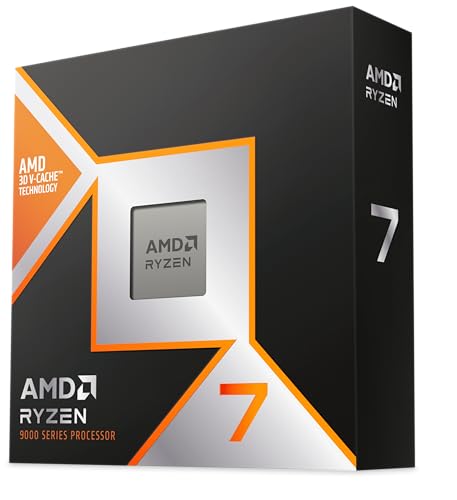
The 9800X3D stacks a large slab of 3D V-Cache under its eight Zen 5 cores, and that cache is why it leads gaming benchmarks, most of all in CPU-heavy games like Baldur's Gate 3, Stalker 2 and busy multiplayer shooters where minimum frame rates matter. A Ryzen 7 9700X costs less and matches it in productivity work, but gives up a clear chunk of high-refresh performance, and high refresh is the point of this build. It is rated at 120W, so a budget B650 board runs it at full speed, and it has the speed to feed a much faster graphics card later.
GPU

The RX 9070 XT sets this build's ceiling. Its 16GB of GDDR6 handles high-texture settings at 1440p and gives 4K enough memory, and FSR 4 upscaling turns 4K into a smooth experience in games that support it. The RTX 5070 Ti is the card we would normally weigh it against, with similar raster speed and a clear lead once ray tracing is on, but it is selling so far above its usual price right now that it costs more than an RTX 5080. That makes the RX 9070 XT the sensible card at this budget today. This ASUS Prime model is 312mm long and 2.5 slots thick, and it takes power through three 8-pin plugs rather than a 12V-2x6 connector.
Motherboard

The ASRock B650M-HDV/M.2 is a white micro-ATX AM5 board with a PCIe 5.0 graphics slot, one Gen5 and one Gen4 M.2 slot, 2.5Gb Ethernet and a front USB-C header for the case's port. The 9800X3D draws little power, so a budget B650 board runs it at full speed and the money goes to parts that change frame rates. A B850 board adds built-in Wi-Fi, more M.2 slots and beefier power delivery, but no extra gaming performance. There is no Wi-Fi or Bluetooth on this board, so plan on a wired connection or a PCIe or USB adapter. It also has just two memory slots, so a later move to 64GB means replacing the kit rather than adding to it.
Memory (RAM)
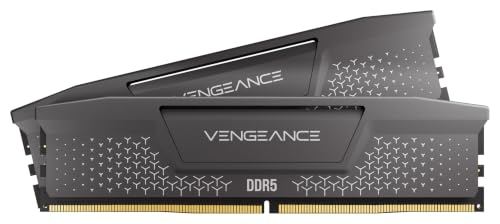
The Corsair Vengeance RS 32GB kit runs two 16GB sticks at DDR5-6000, the speed Ryzen 9000 processors run best at, with a one-click AMD EXPO profile. 32GB covers gaming with Discord, a browser and a stream running alongside. Memory is the part hit hardest by the current shortage, so this is a mainstream kit with looser timings than the CL30 kits enthusiasts chase. The 9800X3D's large cache makes it less sensitive to memory latency than most processors, so the gap in games is small. Two sticks rather than four also keep the memory controller stable at full speed.
Storage

The WD Black SN7100 1TB is a fast Gen4 NVMe drive, rated up to 7,250 MB/s reads, and it runs cool in a desktop. A terabyte holds the operating system and a handful of large modern games, though some titles now pass 150GB each, so a big library will fill it. The twenty-five-hundred-dollar build is this same machine with a 2TB Samsung 990 Pro instead, so this one gives up half the storage and a little drive speed, and nothing else. Put the drive in the board's primary M.2 slot and keep the second slot free for another drive later.
Power Supply

The Corsair RM850e is an 850W, 80 Plus Gold, fully modular unit built to the ATX 3.1 standard. ASUS recommends 750W for this card, and the RX 9070 XT (around 300W in games) plus the 9800X3D (rated at 120W) sit well inside what it delivers, so it runs at a quiet, efficient load and absorbs short power spikes without strain. The card takes three 8-pin PCIe plugs, and Corsair lists an 8-pin PCIe cable plus a 12V-2x6 to dual 8-pin cable in the box, which together cover all three. A 750W unit would also run this build, but the extra headroom covers a bigger graphics card later.
Case

The NZXT H7 Flow RGB is a roomy white mid-tower with a perforated front panel, room for a 360mm radiator up front, and up to 410mm of graphics card clearance. It ships with one fan, a triple 120mm F360 RGB Core in the front, so most of this build's airflow comes from the cooler's own three fans. With the radiator and its fans in the front, the 312mm Prime card still has more than 30mm to spare. The case takes boards up to E-ATX, so the micro-ATX board leaves plenty of room for cable routing. A smaller case would save desk space, but few compact cases take a front 360mm radiator with a long card in front of it.
Cooling

The ARCTIC Liquid Freezer III Pro 360 is a 360mm all-in-one liquid cooler with a thick 38mm radiator, three 120mm fans and a small fan on the pump housing that blows across the board's power delivery. It keeps the 9800X3D cool and quiet in games, and it is selling well below its normal price right now, which is why it made the list. A dual-tower air cooler would handle a 120W chip almost as well with no pump to wear out, so it is a fair swap if that changes. Mount the radiator in the front: with its fans it is about 63mm thick, more than the 57mm NZXT lists for top-mounted radiators.
Why This Build Works
The budget goes where you see it on screen. The 9800X3D means the processor is not the reason a game stutters, and the RX 9070 XT carries 1440p high refresh natively and 4K with upscaling. Everything else supports those two: a board that runs the processor at full speed without paying for extras, memory at the platform's preferred speed, a fast drive, and a cooler and power supply with room to spare.
The shortage shaped the rest. With memory and storage selling far above their usual prices, this build holds at 32GB and 1TB rather than stretching to bigger kits, and puts the budget toward the processor and graphics card that decide frame rates. Both of the smaller parts are easy to add to once prices settle.
Alternative Options
If ray tracing matters more to you than raw frame rates and RTX 5070 Ti prices come back to earth, that card drops into this build with no other changes. If you want more storage from day one, the twenty-five-hundred-dollar build is this machine with a 2TB drive. If you want Wi-Fi built in and more M.2 slots, a B850 board fits the H7 Flow with room to spare. And if you would rather skip liquid cooling, a dual-tower air cooler fits under the case's 185mm height limit and leaves the front free for the included fan.
Build & Setup Tips
Update the motherboard BIOS to the latest release before installing Windows to pick up current memory compatibility and Ryzen 9000 fixes. Mount the radiator in the front with the tubes at the bottom, and move the case's included F360 fan to the top as exhaust so heat from the radiator and the card has a way out. Run a separate PCIe cable to each of the card's three 8-pin plugs rather than splitting one cable. Enable the EXPO profile so the memory runs at DDR5-6000, then confirm the speed in Task Manager. Install the current AMD Adrenalin driver and turn on FSR 4 in games that support it before judging 4K performance.
Upgrade Paths
The graphics card is the part to upgrade later, and the 9800X3D is fast enough to feed a much bigger card. The 850W supply covers an RTX 5080-class card, which NVIDIA pairs with an 850W recommendation, and its native 12V-2x6 cable is already there, so a GPU swap is a one-part job. Memory goes to 64GB by replacing the kit, best left until memory prices calm down. Storage grows by adding a second NVMe drive in the free M.2 slot. The AM5 socket also leaves a path to future Ryzen processors on the same board with a BIOS update.
Final Thoughts
This is the build for high-refresh 1440p on the best gaming processor available, with a 16GB card that handles 4K through upscaling. The shortage pushes today's total toward the top of what we allow for a two-thousand-dollar build and keeps memory and storage modest, but the two parts that decide frame rates are the right ones, and the live prices on this page show when the rest starts to ease.
FAQs
Can this build run games at 4K?
Yes, with upscaling for the heaviest games. At native 4K the RX 9070 XT runs from the high 30s in Stalker 2 to the high 90s in Baldur's Gate 3, and four of the eight games on our chart reach 60 fps or better. FSR 4 upscaling in supported games is what makes the rest smooth. Native 4K at high refresh is flagship-card territory.
Why the RX 9070 XT instead of an RTX 5070 Ti?
The two are close in raster performance, and the RTX 5070 Ti pulls ahead with ray tracing on, so in a normal market it would be the pick at this budget. Right now it is selling so far above its usual price that it costs more than an RTX 5080. The RX 9070 XT gives you similar frame rates without ray tracing for much less of the budget, and if 5070 Ti prices come back down, it drops straight into this build.
Does this build have Wi-Fi?
No. The ASRock B650M-HDV/M.2 has 2.5Gb Ethernet but no Wi-Fi or Bluetooth. Run a cable to your router if you can, which is the better connection for online games anyway, or add a PCIe Wi-Fi card or a USB adapter.
Is 32GB of RAM enough?
Yes, for gaming and for streaming with OBS, Discord and a browser open alongside. 64GB helps with heavy video editing, but memory is selling far above its usual price right now. The board has two memory slots, so moving to 64GB later means replacing the kit with a 2x32GB set.
What does the twenty-five-hundred-dollar build add?
Only storage. It uses the same processor, graphics card, board, memory, cooler, power supply and case, and swaps the 1TB WD Black SN7100 for a 2TB Samsung 990 Pro. Frame rates are the same. If you run short of space later, a second NVMe drive in this build's free M.2 slot does the same job.
Will the 360mm liquid cooler fit in the NZXT H7 Flow?
Yes, in the front. The radiator and its fans are about 63mm thick, more than the 57mm NZXT lists for top-mounted radiators, so the front is the place for it. The case allows up to 410mm of graphics card length, and with the radiator in front the 312mm ASUS Prime card still has room to spare. Move the case's included front fan to the top as exhaust.
Can the power supply handle a graphics card upgrade later?
Yes, up to an RTX 5080-class card. The RM850e is an 850W Gold unit that already clears ASUS's 750W recommendation for this card, and NVIDIA's guidance for an RTX 5080 is 850W. It also has a native 12V-2x6 cable for newer cards. Only a flagship card would call for a larger unit.