Affiliate Disclosure: As an Amazon Associate we earn from qualifying purchases. Some links may earn us a commission at no cost to you.
Best $5000 Gaming PC
A premium gaming and creator PC on the RTX 5080 and Ryzen 7 9800X3D, fit to a $5,000 budget with 64GB of DDR5, a 4TB Gen5 drive and an LCD liquid cooler.
$5,000.00(target price)
Components
| Component | Part Name | Price | Buy |
|---|---|---|---|
| GPU | $1,899.99 | Buy on Amazon | |
| CPU | $443.00$479.00 | Buy on Amazon | |
| Mobo | $99.99 | Buy on Amazon | |
| RAM | $1,199.99 | Buy on Amazon | |
| SSD | $839.99 | Buy on Amazon | |
| Cooler | $279.99 | Buy on Amazon | |
| PSU | $72.99$144.99 | Buy on Amazon | |
| Case | $249.99 | Buy on Amazon | |
| Total at today's prices | $5,085.93Normally about $3,390 at MSRP | ||
Who This Build Is For
This is a premium build for someone who games hard and also creates: video editing, 3D work, photo libraries and local AI tools, all on the same machine. It pairs the ASUS TUF Gaming RTX 5080 with AMD's Ryzen 7 9800X3D, then puts the rest of a five-thousand-dollar budget into 64GB of fast memory, a 4TB Gen5 drive, a liquid cooler with an LCD screen on the pump and a glass full-tower case built to be looked at.
There is no RTX 5090 here, and that is a choice forced by the market rather than a preference. Graphics cards, memory and storage are all selling well above their normal prices right now, and the 5090 is the worst of it: the card alone costs more than this entire budget today. That makes the RTX 5080 the fastest graphics card that fits, and a 5090 is the upgrade to plan for once supply recovers.
If you only game, the three-thousand-dollar build uses the same processor and graphics card and gets the same frame rates; the extra money here buys memory, storage and looks, not speed in games.
Build Overview
Key Specs
CPU | AMD Ryzen 7 9800X3D (8c/16t, 96MB L3) |
GPU | ASUS TUF Gaming GeForce RTX 5080 OC 16GB GDDR7 |
Motherboard | ASRock B650M-HDV/M.2 (AM5, micro-ATX, no Wi-Fi) |
Memory | G.Skill Trident Z5 Neo 64GB (2x32GB) DDR5-6000 CL30 |
Storage | WD Black SN8100 4TB NVMe PCIe 5.0 |
Power Supply | Corsair RM850e 850W 80+ Gold (ATX 3.1) |
Case | Lian Li O11D EVO XL White (full tower, no fans included) |
Cooling | NZXT Kraken Elite 360 (360mm AIO with LCD) |
CPU
AMD Ryzen 7 9800X3D (8c/16t, 96MB L3)
GPU
ASUS TUF Gaming GeForce RTX 5080 OC 16GB GDDR7
Motherboard
ASRock B650M-HDV/M.2 (AM5, micro-ATX, no Wi-Fi)
Memory
G.Skill Trident Z5 Neo 64GB (2x32GB) DDR5-6000 CL30
Storage
WD Black SN8100 4TB NVMe PCIe 5.0
Power Supply
Corsair RM850e 850W 80+ Gold (ATX 3.1)
Case
Lian Li O11D EVO XL White (full tower, no fans included)
Cooling
NZXT Kraken Elite 360 (360mm AIO with LCD)
Here are the parts that make up this build, with links to current pricing on Amazon for each one.
Performance Summary
At native 4K with no upscaling, six of the eight games on our chart run at 60 fps or better, from Alan Wake 2 just over 60 to Baldur's Gate 3 past 100. Black Myth: Wukong lands in the high 50s and Stalker 2 in the high 40s, which is where DLSS upscaling earns its keep. At 1440p every game on the chart runs at 80 fps or more and six of them pass 100, so a 1440p high-refresh monitor is the best match for native rendering, and a 4K panel works well with DLSS turned on.
Performance Expectations
Average FPS across 8 current AAA titles, native (no upscaling).
- Cyberpunk 2077209 FPS
- Alan Wake 2143 FPS
- Black Myth: Wukong126 FPS
- Stalker 298 FPS
- Marvel's Spider-Man 2188 FPS
- Starfield129 FPS
- Baldur's Gate 3205 FPS
- Hogwarts Legacy143 FPS
Average FPS across eight current AAA titles at the presets listed under the chart, at native resolution with no upscaling. Each figure is the lower of what the RTX 5080 and the Ryzen 7 9800X3D reach in separate reviewer test suites, so expect about 10% either way depending on the scene. At 1080p the graphics card is rarely the limit: Stalker 2 is the one game where the processor sets the ceiling, just under 100 fps. At 1440p and 4K the card decides the frame rate in every game.
Parts Breakdown
CPU
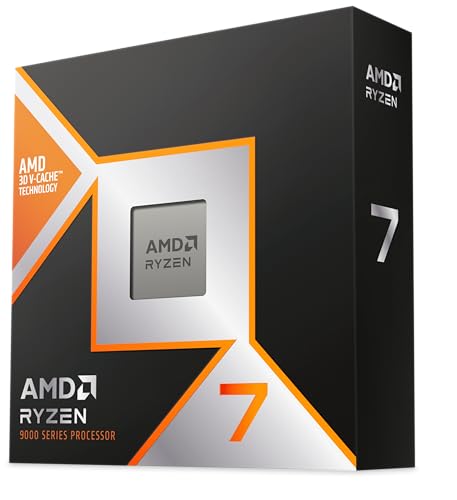
The Ryzen 7 9800X3D is the fastest gaming processor on AM5: 8 cores, 16 threads and 96MB of L3 cache, 64MB of it from the 3D V-Cache die stacked under the cores. That cache is why it keeps an RTX 5080 fed at 1440p and in high-refresh esports games, and it will keep a 5090 fed later too. The trade-off is core count. A 16-core Ryzen 9 9950X3D finishes long renders and encodes much faster, but it games at about the same speed and would want a sturdier motherboard than this one, so for a gaming-first creator build the 9800X3D is the better use of the money.
GPU

The ASUS TUF RTX 5080 is a 16GB card with a large triple-fan cooler that stays quiet under long gaming and render loads, and it runs every game on our chart at 80 fps or more at 1440p and six of the eight at 60 or better at 4K. Its NVENC encoders handle streaming and video exports well, and DLSS 4 with frame generation stretches 4K further. The trade-off against a 5090 is real: half the video memory, which matters for larger local AI models and very heavy 3D scenes, and a clear drop in native 4K frame rates. The card is about 348mm long and 3.6 slots thick, well inside what this case takes, and it uses a single 12V-2x6 power connector.
Motherboard

The ASRock B650M-HDV/M.2 is a plain micro-ATX AM5 board, and it is here on purpose: with memory and storage selling far above their normal prices, the board is where this build saves so the money can go to parts you feel. It has the two things this build needs most, a PCIe 5.0 M.2 slot for the Gen5 drive and a full-length x16 slot for the graphics card, plus a second Gen4 M.2 slot, 2.5Gb Ethernet and two memory slots. The trade-offs: there is no Wi-Fi or Bluetooth, the x16 slot runs at PCIe 4.0, which costs a 5080 next to nothing in games, and a B850 board would add a third M.2 slot, more USB and a beefier power stage for a 16-core chip later. This listing is the white version, which suits the white case.
Memory (RAM)

The G.Skill Trident Z5 Neo 64GB DDR5-6000 CL30 kit sits at the AM5 sweet spot for speed and timings, and its EXPO profile sets it up in one BIOS toggle. DDR5-6000 lets the processor's memory controller run in step with the memory, which matters more on this platform than raw speed. For games alone 32GB is plenty, so 64GB is a creator choice: it keeps 4K timelines, big photo catalogs, 3D scenes and local AI tools in memory without swapping to disk. The board has only two memory slots, and this kit fills both.
Storage

The WD Black SN8100 4TB is a PCIe 5.0 drive that goes in the board's Gen5 M.2 slot. Four terabytes holds a large game library plus active projects, and the Gen5 speed shows up where creators feel it: copying footage, scrubbing large files and working from a scratch disk. In games the gap is small, since load times on a Gen5 drive barely move compared with a good Gen4 one, so a 4TB Gen4 drive is the trade-off if you only play. The SN8100 also runs cooler than earlier Gen5 drives, though it still likes a heatsink and some airflow over the board.
Power Supply

The Corsair RM850e is an 850-watt, 80 Plus Gold, fully modular unit built to ATX 3.1, with a native 12V-2x6 cable that runs straight to the 5080's power connector, so there is no adapter in the build. ASUS and NVIDIA both recommend 850 watts for an RTX 5080, and the 9800X3D draws well under what a 16-core chip pulls, so this build has comfortable headroom. Be clear on the limit, though: an RTX 5090 calls for a 1000-watt supply, so moving to one means replacing this unit as part of the upgrade. A 1000-watt supply now would save that step, at the cost of money this build put into memory and storage.
Case

The Lian Li O11D EVO XL White is a full-tower, dual-chamber showcase case with glass on the front and side. It takes graphics cards up to 460mm long, so the 348mm TUF card fits with lots of room, and the power supply and cables live in the rear chamber, which keeps the main chamber clean. The case ships without fans, so plan on buying them: the Kraken's three fans go on the radiator, and the case needs at least three more as bottom intakes feeding the graphics card. The trade-off is that a micro-ATX board leaves empty space in a case built for E-ATX, and a mid-tower airflow case would cool just as well for less. You are paying for the look and the room to grow.
Cooling

The NZXT Kraken Elite 360 is a 360mm liquid cooler with an LCD screen on the pump that can show temperatures, an image or a GIF. Mount the radiator in the case's top position as exhaust. The 9800X3D runs cooler than earlier X3D chips because its cache sits under the cores, so a good dual-tower air cooler would also handle it in games and long renders. The Kraken is here for the clean look in a glass case and the screen, not because the processor needs it.
Why This Build Works
Every gaming part here matches the fastest graphics card you can buy within this budget today: the 9800X3D keeps the RTX 5080 fed at high refresh rates, the 850-watt ATX 3.1 supply covers it with a native cable, and the liquid cooler and full tower keep noise down under long loads. The budget board is the one place it holds back, and it gives up only Wi-Fi and some expansion, not speed.
On the creator side, 64GB of memory and a 4TB Gen5 drive handle editing, 3D and AI tools comfortably. The limits are the 16GB of video memory for the largest AI models and scenes, and the 8-core processor for long renders, and both are deliberate choices in favor of gaming speed.
Alternative Options
If you only game, the three-thousand-dollar build gets the same frame rates on the same processor and card, and you can skip the 64GB kit, the 4TB Gen5 drive and the showcase case. If your work leans toward long renders, compiles or encodes, a Ryzen 9 9950X3D doubles the cores at the same gaming speed, but pair it with a B850 board with stronger power delivery rather than this one. If you need Wi-Fi without running a cable, a B850 board with Wi-Fi built in is the cleaner fix; on this board, use a USB Wi-Fi adapter, since the thick graphics card is likely to cover the lower expansion slots.
Build & Setup Tips
Check the BIOS version on first boot and update it with ASRock's Instant Flash tool, then enable the memory's EXPO profile. Expect the first boot after a memory change to take a minute or more while AM5 trains 64GB; a black screen during that time is normal, so don't power off early. Turning on Memory Context Restore in the BIOS afterward shortens later boots.
Plan the airflow before you close the case: the Kraken's radiator at the top as exhaust, three fans on the bottom pulling air up into the graphics card, and three more on the side or one at the rear if you want extra flow. The board has only a few chassis fan headers, so daisy-chain fans or a PWM fan hub keep the wiring simple. Connect the Kraken's USB cable to an internal USB 2.0 header so NZXT CAM can drive the screen. Install the SN8100 in the board's Gen5 M.2 slot rather than the Gen4 one, push the 12V-2x6 cable in until it sits fully flush with no gap, and support the card if it sags.
Upgrade Paths
The planned upgrade is an RTX 5090 once supply recovers and prices come back toward normal. The 9800X3D and the case are ready for one; budget for a 1000-watt ATX 3.1 supply with a native 12V-2x6 cable at the same time, since the RM850e is too small for a 5090. Storage is the easy add, with the board's second M.2 slot free for another drive. Memory is harder, because both slots are full, so going past 64GB means replacing the kit. AMD has committed to AM5 for future processor generations, so a later X3D chip can drop into this board after a BIOS update.
Final Thoughts
In today's market, five thousand dollars buys the fastest gaming PC that a 5090 shortage allows: the RTX 5080 and 9800X3D for frame rates, 64GB of memory and a 4TB Gen5 drive for creative work, and a cooler and case that look the part. If you only play games, the three-thousand-dollar build matches it frame for frame. If you also create, this is the one to buy, with a 5090 and a bigger power supply as the next step once the card is back within reach.
FAQs
Why doesn't a five-thousand-dollar gaming PC have an RTX 5090?
Because the card alone sells for more than this whole budget right now. A shortage has pushed graphics card, memory and storage prices well above normal, and the 5090 is hit hardest. The RTX 5080 is the fastest card that fits, and the budget left over goes to 64GB of memory, a 4TB Gen5 drive, a liquid cooler and a showcase case. A 5090 is the upgrade to make once supply recovers.
Is the RTX 5080 fast enough for 4K gaming?
At native 4K with no upscaling, six of the eight games on our chart run at 60 fps or better, and Baldur's Gate 3 passes 100. Black Myth: Wukong lands in the high 50s and Stalker 2 in the high 40s, so turn on DLSS for those. At 1440p every game on the chart runs at 80 fps or more. Expect about 10% either way depending on the scene.
Is this build faster in games than the three-thousand-dollar build?
No. Both use the Ryzen 7 9800X3D and RTX 5080, so frame rates are the same. This build adds 64GB of memory instead of 32GB, a 4TB Gen5 drive, an LCD liquid cooler and a full-tower showcase case, which help with editing, 3D and AI tools and with looks, not with frame rates.
Can I upgrade this build to an RTX 5090 later?
Yes, with one extra part. The processor and case are ready for a 5090, but the 850-watt Corsair RM850e is not: NVIDIA recommends a 1000-watt supply for the 5090, so buy a 1000-watt or larger ATX 3.1 unit with a native 12V-2x6 cable at the same time as the card.
Does this build have Wi-Fi?
No. The ASRock B650M-HDV/M.2 has 2.5Gb Ethernet but no Wi-Fi or Bluetooth. Run a cable if you can, or add a USB Wi-Fi adapter, since the thick graphics card is likely to cover the board's lower expansion slots. If you need wireless built in, swap to a B850 board with Wi-Fi.
Which case fans do I need to buy?
The Lian Li O11D EVO XL ships with no fans, and the Kraken's three fans go on its radiator at the top. Add at least three 120mm or 140mm fans on the bottom as intakes to feed the graphics card, and three more on the side or one at the rear for extra flow. The board has only a few chassis fan headers, so daisy-chain fans or a PWM fan hub make the wiring easier.