Affiliate Disclosure: As an Amazon Associate we earn from qualifying purchases. Some links may earn us a commission at no cost to you.

Best Handheld for Emulation and Retro Gaming (2026)
Pick an emulation handheld by the newest console you plan to play and by the shape of the screen you want to play it on. Chip power decides whether PS2, 3DS or Switch runs at all. Screen shape decides whether a SNES game fills the panel in sharp, even pixels or sits in a box with black bars down both sides.
These five handhelds split along both lines: a 16:9 all-rounder, two 4:3 screens at different power levels, and two dual-screen clamshells for the DS and 3DS libraries. Every one ships empty. You load it with emulators and your own game backups.
Our top pick: Retroid Pocket 5
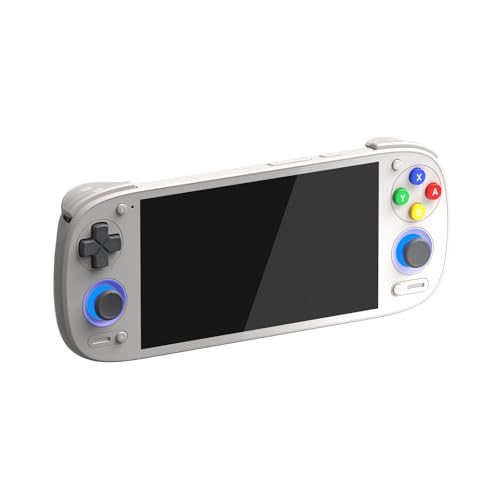
The Retroid Pocket 5 is the one to buy if you want a single device from the NES to the PS2. Its Snapdragon 865 runs most of the GameCube and PS2 catalog at 3x resolution, and the 1080p AMOLED still scales 240p games by a clean factor of four.
Quick picks
Pick | Handheld | Screen | Runs well up to | Buy |
|---|---|---|---|---|
Best Overall | 16:9, 5.5 in AMOLED | GameCube, PS2, most Wii | ||
Best Value | 4:3, 4.7 in 1280x960 | PSP, Dreamcast, lighter GameCube | ||
Best Premium | 4:3, 4.2 in 1280x960 | Most PS2 and GameCube at 2x | ||
Best Budget | Two 4 in 640x480, 4:3 | DS, PS1, most PSP | ||
Editor's Pick | 6 in 16:9 plus 3.92 in second screen | 3DS, nearly all PS2 and GameCube, most Switch |
Best Overall
- Handheld
- Screen
16:9, 5.5 in AMOLED
- Runs well up to
GameCube, PS2, most Wii
Best Value
- Handheld
- Screen
4:3, 4.7 in 1280x960
- Runs well up to
PSP, Dreamcast, lighter GameCube
Best Premium
- Handheld
- Screen
4:3, 4.2 in 1280x960
- Runs well up to
Most PS2 and GameCube at 2x
Best Budget
- Handheld
- Screen
Two 4 in 640x480, 4:3
- Runs well up to
DS, PS1, most PSP
Editor's Pick
- Handheld
- Screen
6 in 16:9 plus 3.92 in second screen
- Runs well up to
3DS, nearly all PS2 and GameCube, most Switch
Specs at a glance
Handheld | Chip | Screen | Aspect | Battery | OS |
|---|---|---|---|---|---|
Snapdragon 865 | 5.5 in 1080p AMOLED | 16:9 | 5,000 mAh | Android 13 | |
Unisoc T820 | 4.7 in 1280x960, 120 Hz | 4:3 | 5,000 mAh | Android 13 | |
Snapdragon G3x Gen 2 | 4.2 in 1280x960 | 4:3 | 4,700 mAh | Android | |
Rockchip RK3568 | Two 4 in 640x480 | 4:3 (x2) | 4,000 mAh | Android 14 or Linux | |
Snapdragon 8 Gen 2 | 6 in 1080p + 3.92 in | 16:9 + near-square | 6,000 mAh | Android 13 |
- Chip
Snapdragon 865
- Screen
5.5 in 1080p AMOLED
- Aspect
16:9
- Battery
5,000 mAh
- OS
Android 13
- Chip
Unisoc T820
- Screen
4.7 in 1280x960, 120 Hz
- Aspect
4:3
- Battery
5,000 mAh
- OS
Android 13
- Chip
Snapdragon G3x Gen 2
- Screen
4.2 in 1280x960
- Aspect
4:3
- Battery
4,700 mAh
- OS
Android
- Chip
Rockchip RK3568
- Screen
Two 4 in 640x480
- Aspect
4:3 (x2)
- Battery
4,000 mAh
- OS
Android 14 or Linux
- Chip
Snapdragon 8 Gen 2
- Screen
6 in 1080p + 3.92 in
- Aspect
16:9 + near-square
- Battery
6,000 mAh
- OS
Android 13
What each handheld runs, by console generation
Start from the newest system in your library, find its row, and buy from the devices that clear it. Anything older than that row is covered by every pick here.
System ceilings by generation
Console generation | Comfortable on | Where it gets shaky |
|---|---|---|
8-bit, 16-bit, Game Boy, GBA | All five | Nothing. Choose on screen shape and controls. |
PS1, N64 | All five | N64 varies game by game on the RG DS. |
PSP, DS, Dreamcast | All five | Heavier PSP games need tuning on the RG DS. DS on a single screen means a split or a swap button. |
GameCube, PS2, Wii | Retroid Pocket 5, AYANEO Pocket S Mini, AYN Thor Pro | The RG476H runs lighter games only. The RG DS is out. |
3DS | AYN Thor Pro (best), Retroid Pocket 5 | Single-screen devices shrink or swap the two screens. The RG DS lacks the chip. |
Switch | AYN Thor Pro, most games with setup | Selective on the Retroid Pocket 5. Not a target for the others. |
PS3, Wii U | None of these reliably | Early on the Thor. A PC handheld is the better tool. |
8-bit, 16-bit, Game Boy, GBA
- Comfortable on
All five
- Where it gets shaky
Nothing. Choose on screen shape and controls.
PS1, N64
- Comfortable on
All five
- Where it gets shaky
N64 varies game by game on the RG DS.
PSP, DS, Dreamcast
- Comfortable on
All five
- Where it gets shaky
Heavier PSP games need tuning on the RG DS. DS on a single screen means a split or a swap button.
GameCube, PS2, Wii
- Comfortable on
Retroid Pocket 5, AYANEO Pocket S Mini, AYN Thor Pro
- Where it gets shaky
The RG476H runs lighter games only. The RG DS is out.
3DS
- Comfortable on
AYN Thor Pro (best), Retroid Pocket 5
- Where it gets shaky
Single-screen devices shrink or swap the two screens. The RG DS lacks the chip.
Switch
- Comfortable on
AYN Thor Pro, most games with setup
- Where it gets shaky
Selective on the Retroid Pocket 5. Not a target for the others.
PS3, Wii U
- Comfortable on
None of these reliably
- Where it gets shaky
Early on the Thor. A PC handheld is the better tool.
The rows reflect the reviews linked in each pick section and current Android emulators: RetroArch and its cores for the older systems, PPSSPP for PSP, melonDS for DS, Dolphin for GameCube and Wii, NetherSX2 for PS2, and Azahar for 3DS. Switch emulation on Android runs on the community forks that followed yuzu's shutdown, and compatibility there shifts from release to release, so treat that row as the least stable on the page.
Screen shape: 4:3, 16:9 or two screens
Most consoles before the PS2 drew a picture around 320 by 240 pixels for a 4:3 television. A screen shows those pixels evenly only when it can multiply them by a whole number, which is what integer scaling means. A 1280x960 panel, the one in the RG476H and the AYANEO Pocket S Mini, takes a 240-line image to exactly four times its size and fills the screen top to bottom with no blur and no bars. SNES games at 256x224 land at 1024x896 on the same panel, and GBA games at 240x160 scale five times to 1200x800.
A 16:9 1080p screen manages the same factor of four vertically, because 240 times four is 960 and the panel has 1080 rows. The leftover is the problem: a thin band top and bottom, and wide black bars at the sides, so a 5.5-inch screen shows a 4:3 game about the size of a 4.4-inch one. In exchange, the 16:9 panel fits PSP natively and fills edge to edge with PS2 and GameCube games that offer a widescreen mode or take a widescreen patch.
Dual screens solve the DS and 3DS layout instead of the aspect ratio. A DS screen is 256x192, which doubles cleanly to 512x384 inside each 640x480 panel on the RG DS. The AYN Thor's 1080p top screen takes the 3DS top image (400x240) at four times, and its 1240x1080 bottom panel takes the 320x240 touch screen at three times. On any single-screen handheld, those games run, but you shrink both screens side by side or flip between them with a button.
Android, Linux or a PC handheld
All five picks run Android, and that is deliberate. Android gets the newest emulator builds first, including the ones for PS2, 3DS and Switch, and it lets you run a frontend that turns a folder of emulators into one game library. ES-DE scrapes box art and launches each game in the right emulator, Daijisho does a similar job, and RetroArch handles most older systems inside one app. The cost is setup time: expect an evening of installing emulators, pointing them at your folders, and adding BIOS files dumped from your own consoles where a system needs one.
Linux handhelds are the other route. They boot straight into a game list on firmware such as muOS, Knulli or NextUI and are easier to hand to someone who never wants to see a settings menu. They also stop earlier: reviews of the TrimUI Brick Pro, a typical example, found everything through PS1 flawless and N64, Dreamcast and PSP a partial bonus tier. We did not give a Linux device a buy slot because the cheap listings on Amazon commonly bundle a memory card preloaded with games, and we won't send you to those. The RG DS has a Linux option if you want to try that side later.
A Windows or SteamOS handheld is the right tool only when PS3 or Wii U is the target. RPCS3 and Cemu are desktop emulators, and EmuDeck installs and configures them alongside the older systems on a Steam Deck or ROG Ally. The trade is size, weight and a battery that drains fast on those workloads, and older systems gain nothing over a pocket Android device. If PC games are part of the plan, our guide to the best handheld gaming PC covers that category.
Controls that matter for emulation
Emulation asks more of a control layout than modern games do, because it mimics a dozen different controllers. Four details separate a comfortable emulation handheld from an annoying one.
D-pad position. Anything before the PS1 is played on the d-pad. A d-pad up top, where your left thumb rests, suits 2D libraries. The Retroid Pocket 5 puts it low, under the left stick, which is fine for 2D and cramped for analog-heavy 3D games, by its reviewer's account.
Analog triggers. GameCube shoulder buttons had travel before the final click, and some games read it. Every pick here except the RG DS has analog triggers or a mode for them. On the Thor you can switch them between digital and analog.
Stick clicks and stick placement. PS2 games use L3 and R3, and the PSP and N64 libraries want a stick where your thumb naturally sits. The RG476H puts its sticks below the face buttons, which reviewers found uncomfortable in stick-heavy games.
Touch. DS and 3DS games are played on a touch screen. The two dual-screen picks give you a real one. On the others, you tap a shrunken image on a single panel.
If you plan to dock any of these to a TV, pair it with a pad built for retro input. Our guide to the best controller for emulation and retro gaming covers that side.
Battery under emulation load
Reviewer battery tests under heavy emulation, the worst case for each device that published one. Lighter systems run far longer: the same Retroid Pocket 5 lasted about 11 hours on GBA.
Battery benchmarks
Heaviest load each reviewer tested: GameCube, PS2 and Switch at maximum settings on the Retroid Pocket 5, Switch (Breath of the Wild) on the AYN Thor.
- 3.6 hours
- 4 hours
The other three have no comparable test yet. Android Authority's AYANEO Pocket S Mini review saw the battery fall below 30 percent after roughly four hours of PS2 and GameCube, which points to a little over five hours in total (our estimate from that reading). The RG DS is rated at about six hours by its maker, and nobody has published a heavy-load figure for the RG476H. The Thor also ran about six hours on DS and 3DS with both screens at full brightness.
If long trips are the plan, a USB-C power bank matters more than a few hundred mAh on the spec sheet; our guide to power banks for gaming handhelds covers which ones keep up.
How we picked
We started with the console list, not the chip list. Each device had to clear a named generation in published hands-on reviews, and we wrote down where each one stops, because that ceiling is what a buyer is paying for. A device that boots a PS2 game and stutters through it does not clear PS2 here.
Then we sorted by screen shape. A 4:3 panel at 1280x960 and a 1080p 16:9 panel suit different libraries, and a dual-screen clamshell suits a third. That split is why the list has two 4:3 picks and two dual-screen picks instead of five versions of the same widescreen slab.
Every pick resolved to a live Amazon listing. Several strong emulation devices, including the Retroid Pocket 6, sell mainly from their makers' own stores, so they appear in the notes below rather than with buy buttons. Some Anbernic hardware on Amazon is sold through third-party storefronts, so we checked that each listing named the right model and chip. We keep no trusted-brand list for handhelds, so each pick rests on the hands-on reviews cited in its section.
Best Overall: Retroid Pocket 5
The 16:9 all-rounder for a library that tops out at PS2 and GameCube.
Specs
Chip | Snapdragon 865, Adreno 650 |
Screen | 5.5 in 1920x1080 AMOLED, 16:9, touch |
Memory | 8 GB RAM, 128 GB storage |
Battery | 5,000 mAh |
OS | Android 13 |
Cooling | Active fan |
Video out | Yes, over USB-C |
Chip
Snapdragon 865, Adreno 650
Screen
5.5 in 1920x1080 AMOLED, 16:9, touch
Memory
8 GB RAM, 128 GB storage
Battery
5,000 mAh
OS
Android 13
Cooling
Active fan
Video out
Yes, over USB-C
What it does well
The Snapdragon 865 is the oldest chip in this group and still the one with the most emulator tuning behind it. Joey's Retro Handhelds tested GameCube and PS2 at 3x upscaling and found most of both libraries playable, with the usual exceptions that trouble every device. The active fan rarely spins up outside its loudest performance mode, so clocks hold through long sessions.
The 5.5-inch 1080p AMOLED makes this the best-looking widescreen panel at its size here. PSP games fill it natively, and sixth-generation games with a widescreen option use the whole width. Older 4:3 games still get an exact factor of four vertically.
It also outputs video over USB-C, so it doubles as a small console on a TV. A handheld dock turns that into a one-cable setup.
What you give up
Switch is selective. Lighter games run; demanding 3D titles don't. Treat it as a PS2 device that occasionally plays Switch.
The d-pad sits below the left stick, and its reviewer found that position cramped in stick-heavy games. 128 GB fills quickly once GameCube, Wii and PS2 disc images arrive, so budget for a card. Worst-case battery was about three and a half hours.
Who it's for
Buy it if your library runs from the NES through PS2 and GameCube and you want one widescreen device that covers all of it without stepping up to the flagship chips.
Best Value: Anbernic RG476H
The 4:3 screen for players whose library lives before the PS2.

Specs
Chip | Unisoc T820 |
Screen | 4.7 in 1280x960, 4:3, 120 Hz |
Memory | 8 GB RAM, 128 GB storage |
Battery | 5,000 mAh |
OS | Android 13 |
Controls | Hall sticks, analog triggers, gyro |
Video out | No |
Chip
Unisoc T820
Screen
4.7 in 1280x960, 4:3, 120 Hz
Memory
8 GB RAM, 128 GB storage
Battery
5,000 mAh
OS
Android 13
Controls
Hall sticks, analog triggers, gyro
Video out
No
What it does well
The 4.7-inch 1280x960 panel is the reason to buy it. SNES, Genesis and PS1 games scale by an exact four and fill the screen from top to bottom, and the 120 Hz refresh gives fast 2D games a clean image in motion. Joey's Retro Handhelds called it about the best 4:3 Android handheld at its price.
The Unisoc T820 handles everything through PSP and Dreamcast, and the controls cover the extras those systems want: Hall sticks, analog triggers and a gyro. The d-pad is accurate and a touch stiff, which suits fighting games.
What you give up
GameCube and PS2 are hit or miss. Lighter games such as Mario Kart: Double Dash and Animal Crossing run well, while later Wind Waker areas, Twilight Princess and F-Zero GX struggle. If PS2 is the main reason you're buying, this is the wrong rung.
The sticks sit below the face buttons, awkward for long analog sessions, and the face buttons are stiff enough to tire your thumbs. There is no video output. The Amazon listing comes from a third-party storefront, so check that the title says RG476H and T820 before you order.
Who it's for
Buy it if most of your games are 2D or 32-bit and you want the sharpest 4:3 picture for them without paying flagship money.
Best Premium: AYANEO Pocket S Mini
A 4:3 screen and a chip that doesn't stop at PS1.

Specs
Chip | Snapdragon G3x Gen 2 |
Screen | 4.2 in 1280x960, 4:3 |
Memory | 8 GB LPDDR5X, 128 GB UFS 4.0 |
Battery | 4,700 mAh |
OS | Android |
Build | Metal frame, glass front |
Controls | Hall triggers, gyro |
Chip
Snapdragon G3x Gen 2
Screen
4.2 in 1280x960, 4:3
Memory
8 GB LPDDR5X, 128 GB UFS 4.0
Battery
4,700 mAh
OS
Android
Build
Metal frame, glass front
Controls
Hall triggers, gyro
What it does well
The 4.2-inch 1280x960 panel gives the same exact factor-of-four scaling as the RG476H, and the Snapdragon G3x Gen 2 behind it is a gaming-tuned chip with far more headroom. Android Authority's review found most PS2 and GameCube games ran fine at 2x resolution in NetherSX2 and Dolphin. That combination is rare: 4:3 handhelds usually stop well short of the sixth generation.
The build is a step up from everything else here, with a metal frame and a glass front, and it adds Hall-effect triggers and a gyro for the games that use them. It is also the most compact of the three stronger devices on this list.
What you give up
PS2 and GameCube games that offer widescreen modes look better on a 16:9 screen, and on 4:3 they letterbox. You are choosing the retro shape over the sixth generation's widescreen option.
Battery is adequate rather than long, with Android Authority's unit falling below 30 percent after about four hours of PS2 and GameCube. It runs warm under that load. Only one full review was available when we checked, so treat its performance as promising rather than settled.
Who it's for
Buy it if your favorite games are 4:3 but your library reaches into PS2 and GameCube, and you want one premium device instead of a retro screen plus a second handheld.
Best Budget: Anbernic RG DS
Two touch screens in a clamshell, for the DS library and everything older.

Specs
Chip | Rockchip RK3568, Mali-G52 |
Screens | Two 4 in 640x480 IPS, 4:3, both touch |
Memory | 3 GB RAM, 32 GB storage |
Storage expansion | microSD up to 2 TB |
Battery | 4,000 mAh |
OS | Android 14, Linux option |
Form factor | Clamshell |
Chip
Rockchip RK3568, Mali-G52
Screens
Two 4 in 640x480 IPS, 4:3, both touch
Memory
3 GB RAM, 32 GB storage
Storage expansion
microSD up to 2 TB
Battery
4,000 mAh
OS
Android 14, Linux option
Form factor
Clamshell
What it does well
The RG DS rebuilds the DS layout: two 4-inch 640x480 panels, both touch-enabled, in a fold that closes over them. Held Games found most of the DS library ran well, with the Game Boy line, GBA and PS1 at full speed. Both screens are 4:3, so a DS image doubles cleanly and older 240-line games double exactly to fill each panel.
It runs Android 14 with a Linux option, takes microSD cards up to 2 TB, and folds shut for a bag without a case. For its price, nothing else here plays DS games in their original form.
What you give up
The RK3568 is a modest chip. N64 varies from game to game, PSP is near its ceiling, and 3DS is not a realistic target. 3 GB of RAM and 32 GB of storage are tight, and the sticks sit deep and feel slippery.
Early firmware shipped with screen-sync bugs that later updates addressed, so update it before you judge it. The Amazon listing comes from a third-party storefront rather than Anbernic, so confirm the RG DS model name and the dual 4-inch screens in the title.
Who it's for
Buy it if DS games are the main event, with Game Boy, GBA and PS1 alongside, and you'd rather spend little than chase 3DS.
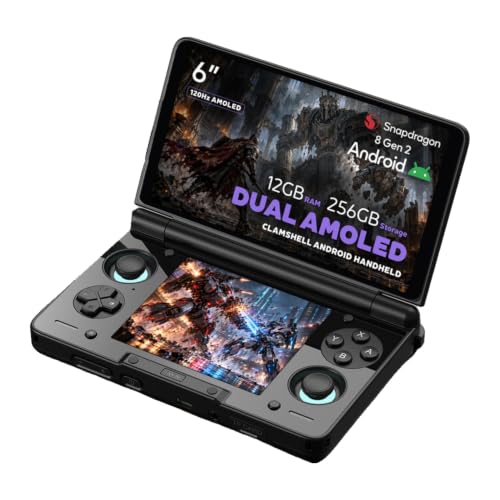
Editor's Pick: AYN Thor Pro
The 3DS replacement, with Switch and PS2 on the same chip.
Specs
Chip | Snapdragon 8 Gen 2 |
Top screen | 6 in 1920x1080 AMOLED, 120 Hz |
Bottom screen | 3.92 in 1240x1080 AMOLED, 60 Hz |
Memory | 12 GB RAM, 256 GB storage |
Battery | 6,000 mAh |
OS | Android 13 |
Wireless | Wi-Fi 7 |
Chip
Snapdragon 8 Gen 2
Top screen
6 in 1920x1080 AMOLED, 120 Hz
Bottom screen
3.92 in 1240x1080 AMOLED, 60 Hz
Memory
12 GB RAM, 256 GB storage
Battery
6,000 mAh
OS
Android 13
Wireless
Wi-Fi 7
What it does well
Joey's Retro Handhelds called the Thor the best way to play 3DS games, at 4x resolution with a few exceptions, and rated its DS emulation excellent at 8x, including games played sideways like a book. The 6-inch 1080p top screen is 120 Hz AMOLED and the 3.92-inch bottom screen is AMOLED too, so both halves of a dual-screen game look as good as the top half does on anything else here.
The Snapdragon 8 Gen 2 is the strongest chip in this group. Nearly the full PS2, GameCube and Wii catalog runs upscaled, and most Switch games run once you have set the emulator up. Battery lasted about six hours on DS and 3DS with both screens at full brightness.
What you give up
Price is the first catch. AYN sells the Thor from its own store, and the Amazon listing was running far above that when we checked, so compare the two before you buy here. PS3 and Wii U are early, and the bottom screen's 120 Hz mode skips frames in fast games, so leave it at 60.
The triggers are flat and boxy, the shell creaks, and the hinge locks at three angles only. Apps and HD texture packs can't live on the SD card, so the 256 GB of internal storage on this Pro model matters more than it looks.
Who it's for
Buy it if 3DS and DS are the core of your library, or if you want one device that covers those plus Switch and upscaled PS2, and you accept a premium price for it.
Worth knowing before you buy
Strong devices that aren't on Amazon. The Retroid Pocket 6 is the Pocket 5's successor, with a Snapdragon 8 Gen 2 and a 120 Hz AMOLED, and it sells from Retroid's own store. If Switch matters more than a few days of shipping, it is the faster widescreen option. The AYN Odin 3 sits above the Thor in chip power and showed up on Amazon only through resellers well above AYN's own price.
Listings with games included. Skip any listing that advertises thousands of preloaded games or a game card. Brand-official devices ship empty, and the games on those cards are not licensed. Emulators are legal software; the legal way to fill one is to dump the games and BIOS files you already own.
Storage. GameCube and PS2 disc images run from about 1 to 4 GB each, so a library of either outgrows 128 GB quickly. A fast microSD card also cuts loading stutter on the bigger systems; our guide to microSD cards for gaming handhelds covers which ones are worth it.
Bottom line
If you want one device for the NES through the PS2, buy the Retroid Pocket 5. If your library is mostly 2D and 32-bit and you want the sharpest picture for it, buy the Anbernic RG476H. If you want that 4:3 screen with PS2 and GameCube power behind it, buy the AYANEO Pocket S Mini. If DS games are the point and the budget is small, buy the Anbernic RG DS. If 3DS is the point, buy the AYN Thor Pro, after checking AYN's own price.
FAQ
What is the best handheld for PS2 emulation?
The Retroid Pocket 5 is the value answer: its Snapdragon 865 runs most of the PS2 library at 3x resolution in NetherSX2, a widely used Android PS2 emulator. For more headroom, the AYN Thor Pro's Snapdragon 8 Gen 2 runs nearly the whole catalog upscaled, and the AYANEO Pocket S Mini manages most games at 2x on a 4:3 screen. Chips at the Unisoc T820 level, like the RG476H's, handle lighter PS2 games only.
Is a 4:3 or 16:9 screen better for retro games?
4:3 is better if most of your games come from before the PS2. A 1280x960 panel scales 240-line games by exactly four and fills the screen, while a 16:9 panel shows the same game with wide side bars. 16:9 is better for PSP and for PS2 and GameCube games with widescreen modes. If your library spans both, the 16:9 Retroid Pocket 5 is the compromise, and the 4:3 AYANEO Pocket S Mini is the option that leans retro.
Can a handheld emulate Switch or 3DS games?
Yes, at the top of the range. The AYN Thor Pro runs most Switch games after setup and is the best 3DS device here, with a second screen that matches the original layout. The Retroid Pocket 5 plays 3DS on a single screen and lighter Switch games. Below that chip class, plan on neither. Switch emulation on Android depends on community emulator forks, so compatibility changes between releases.
Is a Steam Deck or ROG Ally good for emulation?
Yes, especially for PS3 and Wii U, which run through the desktop emulators RPCS3 and Cemu. EmuDeck sets those up alongside the older systems on SteamOS or Windows. For anything up to PS2 and GameCube, a pocket Android handheld does the same job in a smaller, lighter body with longer battery life. Choose the PC handheld when PS3, Wii U or your Steam library is part of the plan.
Anbernic or Retroid: which is better?
Neither brand wins across the board, so pick the device rather than the logo. Retroid's Pocket 5 is the stronger widescreen all-rounder. Anbernic makes the 4:3 and dual-screen shapes Retroid doesn't, such as the RG476H and the RG DS, but those chips stop at lighter GameCube and PS2. Anbernic hardware on Amazon is often sold through third-party storefronts, so check the model name and chip in the listing title.
Do emulation handhelds come with games, and is emulation legal?
Official devices ship with no games, and listings that bundle thousands of preloaded titles are selling games they have no right to sell. Emulators themselves are legal software. The legal way to play is to make backups of games you own and dump the BIOS files from your own consoles where a system needs one. Every pick in this guide ships empty.
Related Articles

Best Handheld Gaming PC (2026): Windows, SteamOS, Switch 2
The best handheld gaming PC in 2026 by platform: Windows, SteamOS or Switch 2, with reviewer battery hours at 13W to 30W, OLED vs LCD, and 5 picks by buyer.
Nov 10, 2026

Best Controller for Emulation and Retro Gaming (2026)
The best controllers for emulation and retro gaming, ranked by d-pad accuracy, system-accurate layouts, and low-latency wireless. Our top picks for every setup.
Jul 10, 2026

5 Best microSD Cards for Steam Deck & ROG Xbox Ally (2026)
The best microSD card for Steam Deck and ROG Xbox Ally X in 2026: five A2-rated picks by capacity, plus which handheld slot is UHS-I and which can use UHS-II.
Nov 8, 2026

Best Docks for Gaming Handhelds (2026): 5 Picks by Device
The best docks for Steam Deck, ROG Ally, and Legion Go in 2026: picks by device, with display-out limits and charging wattage explained so you buy right.
Jul 7, 2026

Best Gaming Laptops for Ananta (2027): 5 Launch Picks
The best laptop for Ananta clears NetEase's posted PC specs: a GTX 1060 floor and an RTX 3080, 32 GB recommended tier. Five picks from RTX 5060 to RTX 5080.
Nov 25, 2026