Affiliate Disclosure: As an Amazon Associate we earn from qualifying purchases. Some links may earn us a commission at no cost to you.

Best CPU for iRacing (2026): 5 Picks for Full-Grid Racing
iRacing lives and dies on your CPU. The physics tick, the tire model, and the draw calls at a 30-car standing start all lean on single-thread speed and cache, not on how many cores you own. A mid-range chip with a large L3 cache can hold a steadier frame time through a full grid than a pricier part that trades cache for extra cores.
Every pick here is chosen for that reality: strong per-core speed and, where it counts, AMD's 3D V-Cache. Below are five processors by tier, from a budget single-screen build to a triple-screen rig that also streams.
Our top pick: AMD Ryzen 7 9800X3D
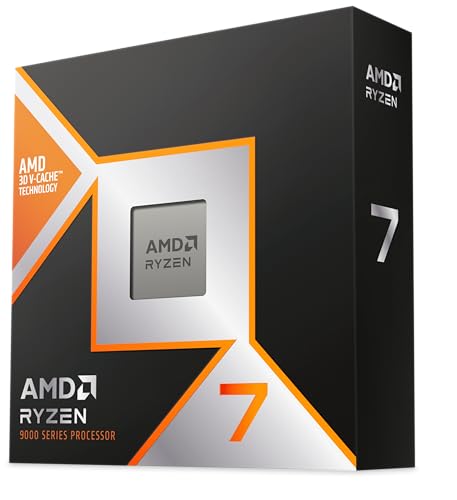
For most iRacing drivers the Ryzen 7 9800X3D is the chip to beat. Its 96 MB of 3D V-Cache keeps the physics and AI logic fed during full-grid restarts, where the 1 percent lows decide whether the car feels planted, not the headline average frame rate.
Quick picks
CPU | Best for | Where to buy |
|---|---|---|
The all-round iRacing sweet spot | ||
Nearly the same race feel for less | ||
Race and stream on one rig | ||
3D V-Cache on a budget | ||
When cache is out of budget |
- Best for
The all-round iRacing sweet spot
- Where to buy
- Best for
Nearly the same race feel for less
- Where to buy
- Best for
Race and stream on one rig
- Where to buy
- Best for
3D V-Cache on a budget
- Where to buy
- Best for
When cache is out of budget
- Where to buy
Why iRacing punishes your CPU
iRacing runs its physics at a high fixed rate and updates every car on track each tick. Add cars and the CPU work climbs fast, while your graphics card mostly coasts. That is why the game is famous for being CPU-bound: at a standing start with 30 cars in view, the number that dips is your minimum frame rate, and a dip there is what you feel as a stutter through the first corner.
Two things move that minimum. The first is per-core speed, since the physics thread cannot be spread across many cores. The second is cache. A large L3 cache lets the CPU keep the hot physics and AI data close instead of waiting on system memory, which is exactly what AMD's 3D V-Cache adds. Going from a single screen to triples roughly triples the draw calls the CPU has to prepare, so triple-screen drivers feel a weak CPU first.
Match the CPU to your setup
Your setup | Typical session | CPU to buy | Where to buy |
|---|---|---|---|
Single 1080p or 1440p screen | Club races, hotlaps, small fields | ||
Single high-refresh 1440p | Split races with full 30-plus grids | ||
Triple screens | Endurance and league racing, big fields | ||
Triples plus streaming or recording | Broadcasting and multitasking mid-race | ||
Tight budget, single screen | Casual racing, smaller grids |
Single 1080p or 1440p screen
- Typical session
Club races, hotlaps, small fields
- CPU to buy
- Where to buy
Single high-refresh 1440p
- Typical session
Split races with full 30-plus grids
- CPU to buy
- Where to buy
Triple screens
- Typical session
Endurance and league racing, big fields
- CPU to buy
- Where to buy
Triples plus streaming or recording
- Typical session
Broadcasting and multitasking mid-race
- CPU to buy
- Where to buy
Tight budget, single screen
- Typical session
Casual racing, smaller grids
- CPU to buy
- Where to buy
What the cache actually buys you
iRacing has no standardized CPU benchmark suite, so the cleanest public proof point comes from a neighboring racing title. In GamersNexus testing of F1 24 at a CPU-bound setting, the 9800X3D held a measurable lead over the last-generation 7800X3D. Both games are lightly threaded and cache-sensitive, so the pattern carries: cache lifts the average a few percent and does more for the 1 percent lows that matter on a crowded grid. The same cache story shows up in open-world racing: our guide to the best CPU for Forza Horizon 6 ranks chips by how they hold 1 percent lows in crowded freeroam.
A cache-sensitive racing title used as a stand-in for iRacing, which has no standardized CPU test.
- 464 FPS
- 438 FPS
How we picked
We start from how iRacing actually loads a system, then work down by budget. Cache and per-core speed come first because they set your minimum frame rate on a full grid. Core count comes last, since the physics thread cannot use a big core budget on its own. If you want the full framework behind this, see our guide on how to choose a CPU and motherboard. If you also race the Assetto franchise, our best CPUs for Assetto Corsa EVO and ACC applies the same grid-start logic to those titles.
Only chips with a clean, in-stock Amazon listing made the list. Four of the five carry 3D V-Cache because that is what a sim racer feels most. The one exception is there on purpose, as an honest floor for buyers who cannot stretch to cache this month. Our best CPU for MSFS 2024 picks apply the same cache-first test to a sim whose photogrammetry-heavy hubs pin the main thread the way a full grid does.
Best Overall: AMD Ryzen 7 9800X3D
Specs
Cores / threads | 8 / 16 |
Max boost clock | 5.2 GHz |
L3 cache | 96 MB (104 MB total) |
Default TDP | 120 W |
Socket | AM5 |
Architecture | Zen 5 with 2nd-gen 3D V-Cache |
Cores / threads
8 / 16
Max boost clock
5.2 GHz
L3 cache
96 MB (104 MB total)
Default TDP
120 W
Socket
AM5
Architecture
Zen 5 with 2nd-gen 3D V-Cache
What it does well
The 9800X3D is the current high point for iRacing. The second-generation 3D V-Cache sits under the compute die this time, so the chip clocks higher than the 7800X3D while keeping the same 96 MB of L3. On a full grid that combination holds your minimum frame rate up where the car stays predictable through the first-lap scrum.
It also has the headroom for triples. Feeding three screens is mostly CPU draw-call work, and this chip does not flinch at it, so you can run a wide field on a triple setup without the frame time falling apart.
What you give up
You pay a premium over the 7800X3D for a lead that is real but not huge. If your league runs small fields on a single screen, you will rarely see the gap. It also needs an AM5 board and DDR5, so a platform jump from an older system adds to the bill.
Who it's for
The single-screen or triple-screen racer who runs full split grids and wants the steadiest frame time available. If you only build once every few years, this is the safe ceiling.
Best Value: AMD Ryzen 7 7800X3D

Specs
Cores / threads | 8 / 16 |
Max boost clock | 5.0 GHz |
L3 cache | 96 MB (104 MB total) |
Default TDP | 120 W |
Socket | AM5 |
Architecture | Zen 4 with 3D V-Cache |
Cores / threads
8 / 16
Max boost clock
5.0 GHz
L3 cache
96 MB (104 MB total)
Default TDP
120 W
Socket
AM5
Architecture
Zen 4 with 3D V-Cache
What it does well
The 7800X3D was the sim-racing default for a reason, and it still is one. Same 96 MB of 3D V-Cache as the 9800X3D, one generation back, at a clock speed that is a touch lower. In iRacing that difference is small, and on a single high-refresh screen most drivers would struggle to tell the two apart blind.
It also runs cool and quiet at its cache-friendly power level, which suits a wheel-and-pedal room where you do not want a screaming fan during a two-hour enduro. We break down whether it still earns a slot in our look at whether the 7800X3D is still worth buying.
What you give up
Stock is drifting toward clearance, so the listing can go out or spike in price without warning. It also gives up the 9800X3D's clock lead, which shows up most on triples with the largest fields. If you want the full upgrade math, we cover the 7800X3D versus 9800X3D question in detail.
Who it's for
The value-minded racer who wants the X3D cache feel without paying for the newest generation, especially on a single high-refresh screen. Grab it while it lasts.
Best Premium: AMD Ryzen 9 9950X3D

Specs
Cores / threads | 16 / 32 |
Max boost clock | 5.7 GHz |
L3 cache | 128 MB (144 MB total) |
Default TDP | 170 W |
Socket | AM5 |
Architecture | Zen 5 with 2nd-gen 3D V-Cache |
Cores / threads
16 / 32
Max boost clock
5.7 GHz
L3 cache
128 MB (144 MB total)
Default TDP
170 W
Socket
AM5
Architecture
Zen 5 with 2nd-gen 3D V-Cache
What it does well
The 9950X3D pairs the same cache-fed gaming performance as the 9800X3D with 16 cores. For a pure iRacing box that is more than you need, but for the driver who streams the race, records replays, or runs a second workload on the same machine, those extra cores stop the encode or the render from stealing time from the physics thread.
On the cache-carrying die it behaves like a 9800X3D in game, so you are not trading away race performance to get the core count.
What you give up
It costs a lot more, draws more power, and wants stronger cooling. For a single-screen racer who never streams, most of that spend sits idle. Scheduling can also send a game to the wrong core group if you skip AMD's chipset software, so setup matters more than on the single-CCD chips.
Who it's for
The racer who is also a creator: streaming the league night, editing replays, or keeping heavy apps open mid-session on one rig.
Best Budget: AMD Ryzen 5 7600X3D

Specs
Cores / threads | 6 / 12 |
Max boost clock | 4.7 GHz |
L3 cache | 96 MB (102 MB total) |
Default TDP | 65 W |
Socket | AM5 |
Architecture | Zen 4 with 3D V-Cache |
Cores / threads
6 / 12
Max boost clock
4.7 GHz
L3 cache
96 MB (102 MB total)
Default TDP
65 W
Socket
AM5
Architecture
Zen 4 with 3D V-Cache
What it does well
The 7600X3D is the cheapest way into 3D V-Cache. Six cores and 96 MB of L3 give it the same cache trick that makes iRacing feel smooth, so on a single 1080p or 1440p screen with club-sized fields it punches well above its price.
For a first sim-racing PC or a focused iRacing box that does nothing else, this is the value sweet spot. The cache does the heavy lifting where it counts.
What you give up
Six cores and a lower clock mean it runs out of road first on triples with a packed grid, where the draw-call load and the largest fields expose the gap to the eight-core X3D chips. It is also sold in limited runs, so availability comes and goes.
Who it's for
The budget builder on a single screen who wants the cache advantage without paying for cores they will not use in iRacing.
Editor's Pick: AMD Ryzen 5 9600X

Specs
Cores / threads | 6 / 12 |
Max boost clock | 5.4 GHz |
L3 cache | 32 MB (38 MB total) |
Default TDP | 65 W |
Socket | AM5 |
Architecture | Zen 5 (no 3D V-Cache) |
Cores / threads
6 / 12
Max boost clock
5.4 GHz
L3 cache
32 MB (38 MB total)
Default TDP
65 W
Socket
AM5
Architecture
Zen 5 (no 3D V-Cache)
What it does well
The 9600X is the honest floor here, and the one chip on the list without 3D V-Cache. It is a fast, efficient Zen 5 six-core that clocks high, so on a single screen with modest grids iRacing runs perfectly well. If cache is simply out of budget this month, this is the pick that still gets you racing.
What you give up
Without the big cache it gives up frame-time stability on full grids, which is the exact situation the X3D chips were built for. As grids grow or you move to triples, the gap to even the 7600X3D opens up. Think of it as a smart starting point on AM5 that leaves the door open for an X3D drop-in later. The same cache-versus-clocks split decides how far a city grows in our CPU picks for Cities: Skylines II, where the simulation tick rather than the frame counter is what stalls first.
Who it's for
The tight-budget racer who wants a modern AM5 base now and plans to upgrade to an X3D chip down the line without changing the board.
What the Spark engine changes
iRacing is replacing its DirectX 11 renderer with a new engine, Spark, and the rollout is tracking across 2026. That raises a fair question before you spend: will the chip you buy now still be the right one after the switch? iRacing has not published CPU requirements for Spark, so any specific number you see quoted is a guess. What iRacing does publish today is a three-tier spec sheet, and our breakdown of iRacing system requirements sets each tier against the parts we would actually buy for one screen, triples, or VR.
Buy for the game that exists today. Spark is a rendering change first, and the fixed-rate physics tick that makes iRacing CPU-bound is not what it rewrites. The eight-core X3D parts here stay the safe call: they win on cache and per-core speed, which is what the current engine leans on, and they carry the core count to absorb a heavier render thread if Spark asks for one. If you race full grids and want the widest margin for whatever lands, the 9950X3D is the pick that buys headroom instead of a faster today.
Racing in VR instead?
This guide is built around flat screens, single and triple. VR changes the math because the headset adds its own CPU cost and a hard frame-time deadline. If you race in a headset, start with our dedicated pick list in the best CPU for VR sim racing, which ranks X3D chips for that specific load.
Rounding out the build
The CPU sets your frame-time floor, but the rest of the rig decides the ceiling. For the display side, our best GPUs for sim racing guide pairs the right card to single-screen and triple setups, and the best monitors for sim racing walks through ultrawide versus triples so your CPU pick is not held back by the wrong panel.
Bottom line
For iRacing, buy the cache. The Ryzen 7 9800X3D is the pick for the widest range of drivers, the 7800X3D saves money for nearly the same feel on a single screen, and the 7600X3D brings the cache advantage to a budget build. Step up to the 9950X3D only if you stream or create on the same rig, and reach for the 9600X only when cache truly will not fit the budget.
FAQ
Is iRacing CPU or GPU bound?
iRacing is heavily CPU-bound, especially on full grids. The physics run on a fast fixed-rate thread and the CPU updates every car each tick, so your minimum frame rate at a standing start is set by per-core speed and cache far more than by your graphics card. The GPU mostly matters once you move to triples or high resolutions.
Do I need an X3D CPU for iRacing?
You do not strictly need one, but it is the single best hardware choice for this game. The large 3D V-Cache on AMD's X3D chips keeps the physics and AI data close to the cores, which lifts the 1 percent lows that decide whether a crowded grid feels smooth. If your budget allows, an X3D chip is the pick.
Is the Ryzen 7 9800X3D overkill for iRacing?
Not really. On a single small-grid session it has headroom to spare, but iRacing's worst-case moments are full-grid starts and triple-screen fields, and that is exactly where the 9800X3D's cache and clock hold the frame time steady. It is the safe pick if you want one chip that never becomes the bottleneck.
What CPU do I need for triple screens in iRacing?
Triples roughly triple the draw calls the CPU prepares, so this is where a weak chip shows first. An eight-core X3D part like the 9800X3D is the comfortable choice for triple screens with large fields. The 7800X3D is a fine step down if your grids are smaller, and add cores with the 9950X3D only if you also stream.
Does iRacing use multiple cores?
It uses several, but not many, and it leans hardest on one fast physics thread. That is why a six or eight-core chip with strong per-core speed and cache beats a higher-core part that clocks lower. Extra cores help only when you run other work alongside the game, such as streaming or recording.
Is the Ryzen 5 7600X3D good enough for iRacing?
Yes, for most single-screen setups. Its 96 MB of 3D V-Cache gives it the same smoothness advantage as the pricier X3D chips, so club and split racing on one screen feels great. It runs shorter on headroom for triples and the very largest grids, where the eight-core X3D parts pull ahead.
Related Articles

Best CPU for VR Sim Racing (2026): 5 X3D Picks by Tier
The best CPU for VR sim racing is an X3D chip: VR racing is brutally CPU-bound, and V-cache holds your frametimes steady. Here are five picks by budget tier.
Jul 5, 2026

Best GPUs for Sim Racing 2026: 5 Picks for Triples and VR
Best GPUs for sim racing in 2026: 5 picks by display setup, from one 1440p panel to triple screens and VR, plus the iRacing no-DLSS math that sets your tier.
Aug 30, 2026

Best Monitor for Sim Racing (2026): Ultrawide vs Triples
The best monitor for sim racing in 2026, with the GPU tier every config needs: 34-inch ultrawide, 49-inch super ultrawide, or 1440p triples on a real rig.
Sep 21, 2026

9800X3D vs 7800X3D (2026): 11% Average, 25% Where It Counts
9800X3D vs 7800X3D in 2026: an 11% average uplift, 25% in cache-heavy games, and which of four buyer profiles should actually pay the upgrade premium.
Sep 13, 2026

Best CPUs for Gaming in 2026: Top Picks for Every Budget
The best gaming CPUs for 2026 across every budget, from the Ryzen 5 7600X to the Ryzen 9 9950X3D, with full specs and clear buying advice for every tier.
Jul 8, 2026