Affiliate Disclosure: As an Amazon Associate we earn from qualifying purchases. Some links may earn us a commission at no cost to you.

Best CPUs for Gaming in 2026: Top Picks for Every Budget
Picking the best gaming CPU in 2026 comes down to matching a chip to your resolution, your budget, and whether you do anything besides play. Cache-heavy AMD X3D parts lead the frame-rate charts, but a mid-range chip is plenty if your graphics card does most of the work at higher resolutions.
Below are five gaming CPUs that cover every budget, from an affordable AM5 entry point to a 16-core flagship. Each pick lists its specs, what it does well, and who it suits, so you can jump straight to the tier you are shopping.
Quick picks
Tier | Chip | Best for | Buy |
|---|---|---|---|
Best budget | AMD Ryzen 5 7600X | Tight budgets on a current platform | |
Best value | AMD Ryzen 7 9700X | All-round gaming and light creation | |
Best overall | AMD Ryzen 7 9800X3D | The highest frame rates in most games | |
Best high-end | AMD Ryzen 9 9950X3D | Gaming plus heavy creator workloads | |
Best Intel | Intel Core Ultra 7 265KF | Intel builders who want strong value |
Best budget
- Chip
AMD Ryzen 5 7600X
- Best for
Tight budgets on a current platform
- Buy
Best value
- Chip
AMD Ryzen 7 9700X
- Best for
All-round gaming and light creation
- Buy
Best overall
- Chip
AMD Ryzen 7 9800X3D
- Best for
The highest frame rates in most games
- Buy
Best high-end
- Chip
AMD Ryzen 9 9950X3D
- Best for
Gaming plus heavy creator workloads
- Buy
Best Intel
- Chip
Intel Core Ultra 7 265KF
- Best for
Intel builders who want strong value
- Buy
Specs at a glance
Chip | Cores / threads | Boost clock | L3 cache | TDP |
|---|---|---|---|---|
AMD Ryzen 5 7600X | 6 / 12 | Up to 5.3 GHz | 32 MB | 105 W |
AMD Ryzen 7 9700X | 8 / 16 | Up to 5.5 GHz | 32 MB | 65 W |
AMD Ryzen 7 9800X3D | 8 / 16 | Up to 5.2 GHz | 96 MB (3D V-Cache) | 120 W |
AMD Ryzen 9 9950X3D | 16 / 32 | Up to 5.7 GHz | 128 MB (3D V-Cache) | 170 W |
Intel Core Ultra 7 265KF | 20 / 20 | Up to 5.5 GHz | 30 MB | 125 W |
AMD Ryzen 5 7600X
- Cores / threads
6 / 12
- Boost clock
Up to 5.3 GHz
- L3 cache
32 MB
- TDP
105 W
AMD Ryzen 7 9700X
- Cores / threads
8 / 16
- Boost clock
Up to 5.5 GHz
- L3 cache
32 MB
- TDP
65 W
AMD Ryzen 7 9800X3D
- Cores / threads
8 / 16
- Boost clock
Up to 5.2 GHz
- L3 cache
96 MB (3D V-Cache)
- TDP
120 W
AMD Ryzen 9 9950X3D
- Cores / threads
16 / 32
- Boost clock
Up to 5.7 GHz
- L3 cache
128 MB (3D V-Cache)
- TDP
170 W
Intel Core Ultra 7 265KF
- Cores / threads
20 / 20
- Boost clock
Up to 5.5 GHz
- L3 cache
30 MB
- TDP
125 W
AMD Ryzen 5 7600X: best budget gaming CPU
The Ryzen 5 7600X is the cheapest way onto AMD's current AM5 platform without giving up real gaming performance. Six Zen 4 cores handle high-refresh 1080p and 1440p play with room to spare, and buying in now means you can drop in a faster chip later without replacing the motherboard. That same argument makes it the value pick in our best CPU for Gears of War: E-Day guide, where the game's own recommended tier stops well short of the top of this list.

Specs
Spec | Value |
|---|---|
Cores / threads | 6 / 12 |
Boost clock | Up to 5.3 GHz |
L3 cache | 32 MB |
TDP | 105 W |
Socket | AM5 |
Cores / threads
- Value
6 / 12
Boost clock
- Value
Up to 5.3 GHz
L3 cache
- Value
32 MB
TDP
- Value
105 W
Socket
- Value
AM5
What it does well
For the price it stays close to far pricier chips in most games, because gaming rarely needs more than six fast cores. It runs on a modest air cooler and leaves budget for a stronger graphics card, which is where 1080p and 1440p frame rates are actually won. If the 7600X sits above your cap, the same platform argument plays out one tier down in our guide to the best CPU under $200 for gaming, where the AM5-versus-LGA1700 bet is the whole decision.
Who it's for
First-time builders who want a current-gen platform with an upgrade path. For the wider range of AMD options, see our full ranking of the best AMD processors for gaming.
AMD Ryzen 7 9700X: best value mid-range CPU
The Ryzen 7 9700X is the balanced pick for players who also edit video, stream, or run background apps while gaming. Eight Zen 5 cores give it more headroom than the 7600X, and its efficiency keeps thermals and power draw low without an expensive cooler. Gamers choosing purely on frame rate usually end up weighing the two X3D generations instead, and our 9800X3D vs 7800X3D breakdown shows which one earns the premium.

Specs
Spec | Value |
|---|---|
Cores / threads | 8 / 16 |
Boost clock | Up to 5.5 GHz |
L3 cache | 32 MB |
TDP | 65 W |
Socket | AM5 |
Cores / threads
- Value
8 / 16
Boost clock
- Value
Up to 5.5 GHz
L3 cache
- Value
32 MB
TDP
- Value
65 W
Socket
- Value
AM5
What it does well
It delivers strong frame rates across 1080p and 1440p and holds up in productivity work that leans on more cores. The 65 W design means it runs cool and quiet, which suits small-form-factor builds and quieter rooms. Where that stops being enough is the cache-bound library, which is the line the Ryzen 7 9700X vs 9800X3D comparison draws across eight game benchmarks and six buyer profiles.
Who it's for
Players who want one chip that games well and handles multitasking. If your workload leans on streaming, compare it against our best CPUs for streaming and gaming.
AMD Ryzen 7 9800X3D: best overall gaming CPU
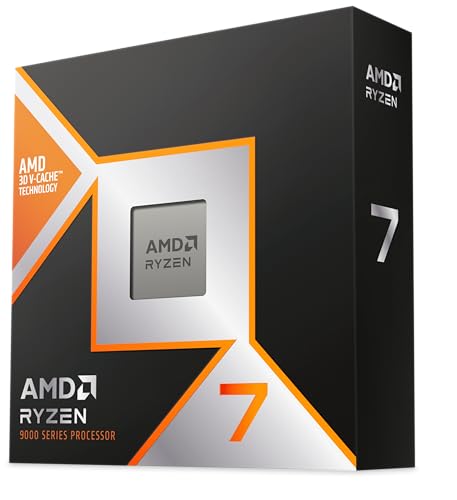
The Ryzen 7 9800X3D is the chip to beat for pure gaming. Its second-generation 3D V-Cache stacks extra L3 cache right on the cores, which keeps more game data close and pushes frame rates past everything else in the games that stress the processor hardest. If you are already on an AM4 X3D chip, the move is a platform swap rather than a chip swap, so we worked through whether the 5800X3D to 9800X3D upgrade is worth it before you commit to a board and a memory kit.
Specs
Spec | Value |
|---|---|
Cores / threads | 8 / 16 |
Boost clock | Up to 5.2 GHz |
L3 cache | 96 MB (3D V-Cache) |
TDP | 120 W |
Socket | AM5 |
Cores / threads
- Value
8 / 16
Boost clock
- Value
Up to 5.2 GHz
L3 cache
- Value
96 MB (3D V-Cache)
TDP
- Value
120 W
Socket
- Value
AM5
What it does well
It tops most 1080p and 1440p gaming charts and, unlike the previous generation, clocks high enough to hold its own in productivity too. The extra cache pays off most in simulation, strategy, and esports titles that hammer the CPU. If you have already settled on a graphics card, our guide to the best CPUs for the RTX 5070 Ti narrows this same ladder down to one pairing.
Who it's for
Anyone building a high-refresh gaming PC who wants the best frame rates without stepping up to a flagship. Prefer the blue team? See our best Intel CPUs for gaming for the closest rivals. If you are still weighing that against the cheaper Ryzen options, our verdict on whether the Ryzen 7 9800X3D is worth it for gaming works the buy and skip cases scenario by scenario.
AMD Ryzen 9 9950X3D: best high-end CPU
The Ryzen 9 9950X3D is for people who want elite gaming and serious multi-core power in one chip. Sixteen Zen 5 cores tackle rendering, compiling, and heavy multitasking, while the 3D V-Cache keeps gaming frame rates within touching distance of the 9800X3D. A handful of games reward those extra cores directly, which is why our best CPUs for Star Citizen picks put a sixteen-core part at the top of the range.

Specs
Spec | Value |
|---|---|
Cores / threads | 16 / 32 |
Boost clock | Up to 5.7 GHz |
L3 cache | 128 MB (3D V-Cache) |
TDP | 170 W |
Socket | AM5 |
Cores / threads
- Value
16 / 32
Boost clock
- Value
Up to 5.7 GHz
L3 cache
- Value
128 MB (3D V-Cache)
TDP
- Value
170 W
Socket
- Value
AM5
What it does well
It is one of the fastest chips you can buy for a mixed workload, matching dedicated gaming parts in games while topping productivity benchmarks. That flexibility is the reason to pay the premium over the 9800X3D. If that mixed workload is specifically video, the pick changes again. Our roundup of the best CPUs for video editing and gaming weighs rendering cores against 3D V-Cache and splits five picks by how much of your time goes to the timeline.
Who it's for
Creators and streamers who game at a high level and need cores for work too. If your day is mostly rendering or encoding, our streaming and gaming CPU guide digs into that trade-off. If you are cross-shopping that chip against the last-gen 16-core X3D, our Ryzen 9 7950X3D vs 9950X3D comparison splits the call by upgrader and new builder.
Intel Core Ultra 7 265KF: best Intel gaming CPU
If you would rather build on Intel, the Core Ultra 7 265KF is the value sweet spot of the current Core Ultra line. Its 20 cores handle gaming and productivity comfortably, and dropping the integrated graphics keeps the price down for anyone pairing it with a discrete GPU. Picking a side is its own decision. Our AMD vs Intel breakdown for gaming and productivity puts the two brands head to head at four price bands, with a winner and a caveat named for each.

Specs
Spec | Value |
|---|---|
Cores / threads | 20 / 20 |
Boost clock | Up to 5.5 GHz |
L3 cache | 30 MB |
TDP | 125 W |
Socket | LGA 1851 |
Cores / threads
- Value
20 / 20
Boost clock
- Value
Up to 5.5 GHz
L3 cache
- Value
30 MB
TDP
- Value
125 W
Socket
- Value
LGA 1851
What it does well
It posts competitive gaming frame rates and strong multi-core numbers, and the LGA 1851 platform gives Intel builders a modern base with fast memory support. Skipping the iGPU trims cost without affecting a GPU-equipped gaming build. Platform longevity is the other half of that decision, and how AM5 and LGA 1851 compare on upgrade path lays out what each socket still has coming before it retires.
Who it's for
Intel loyalists who want current-generation performance at a fair price. For the full blue-team lineup across budgets, read our best Intel CPUs for gaming.
How we picked these gaming CPUs
We weighed real gaming frame rates first, then platform longevity, price, and power efficiency. X3D chips win on pure gaming because their stacked cache feeds the cores faster, but non-X3D parts often make more sense once you factor in price or heavy multi-core work. Core count came last in that weighting, because it moves frame rates least: our breakdown of how many CPU cores you actually need for gaming walks the workload ladder from six cores up to sixteen.
Resolution matters too. At 1080p the processor drives frame rates, so a fast chip pays off; at 4K the graphics card carries most of the load and a mid-range CPU keeps up. Platform choice counts as well, since AMD's AM5 socket has a longer upgrade runway than most Intel boards. Owners of an older AM4 machine face a different question entirely, and the Ryzen 5 3600 to 5700X3D verdict covers whether a drop-in beats a full rebuild.
Bottom line
For most players the Ryzen 7 9800X3D is the CPU to buy in 2026, delivering the highest frame rates in the games that lean hardest on the processor. Shoppers on a budget get most of the way there with the Ryzen 5 7600X, while creators who also game hard should stretch to the Ryzen 9 9950X3D. Intel builders lose little by starting with the Core Ultra 7 265KF. MMO players are the exception worth naming, because cache matters more there than clock speed: our guide to the best CPUs for World of Warcraft walks through why a large L3 pool holds frame rates together in a packed capital or a 20-player raid.
FAQ
What is the best gaming CPU for most people in 2026?
For most gamers the Ryzen 7 9800X3D is the best all-around choice thanks to its 3D V-Cache, which delivers top frame rates in the games that stress the processor most. If it sits outside your budget, the Ryzen 5 7600X covers current-gen gaming for far less.
Do I really need an X3D CPU for gaming?
You do not strictly need one, but AMD's X3D chips lead almost every gaming benchmark because their stacked cache keeps more game data close to the cores. If gaming is your main priority and the budget allows, an X3D part is the safest pick for high frame rates.
Is Intel or AMD better for gaming right now?
For pure gaming AMD currently holds the lead with its X3D lineup, which tops most frame-rate charts. Intel stays competitive on value, and the Core Ultra 7 265KF is a strong choice that pairs well with a good graphics card for high-refresh play.
How much CPU do I need for 1080p versus 4K gaming?
At 1080p the processor matters most because the graphics card is rarely the bottleneck, so a fast chip like an X3D part pays off. At 4K the GPU does most of the work, so a mid-range CPU such as the Ryzen 7 9700X keeps up with far pricier options.
Related Articles
Best 1080p 240 FPS Esports PC Build 2026 — $2,500
$2,500 esports PC build for 1080p 240 FPS — Ryzen 7 9800X3D + RTX 5060 Ti 16GB, live Amazon prices and flat 1% lows for competitive shooters.
Jan 16, 2026
Best 1080p 60 FPS Gaming PC Build 2026 — $1,500
$1,500 gaming PC build for 1080p 60 FPS — Ryzen 5 9600X + RTX 5050, full parts list with live Amazon prices and a one-card GPU upgrade path.
Jan 16, 2026

Best AMD CPU for Gaming 2026: 8 Ryzen Picks Ranked
The best AMD CPU for gaming in 2026, ranked by price to performance: 8 Ryzen picks from the 9600X to the 9950X3D, plus the 9850X3D buy-or-skip verdict.
Aug 26, 2026

AMD vs Intel 2026: 4 Tier Matchups for Gaming & Work
AMD vs Intel for gaming in 2026, settled tier by tier: a clear winner at every price band from budget to flagship, plus a separate productivity verdict.
Aug 10, 2026

PC Building Guide 2026: Every Step From Parts to Boot
PC building guide for 2026: choose the 8 core parts, assemble them step by step, set up BIOS and EXPO, install Windows 11, and boot your first gaming PC.
Sep 1, 2026