Affiliate Disclosure: As an Amazon Associate we earn from qualifying purchases. Some links may earn us a commission at no cost to you.

Best CPU for VR Sim Racing (2026): 5 X3D Picks by Tier
Almost every gaming build guide tells you to skip the X3D chip and put the money into your GPU. For VR sim racing, that advice is backwards. Strap on a headset in iRacing or Assetto Corsa Competizione with a full grid on track, and the processor, not the graphics card, is what decides whether the run feels smooth or makes you queasy.
The reason is cache. AMD's 3D V-cache chips hold the physics and track-state data the CPU chews through every frame, and that is exactly what keeps your frametimes steady when twenty cars come out of a corner together. Here are five of them, ranked by what you want to spend.
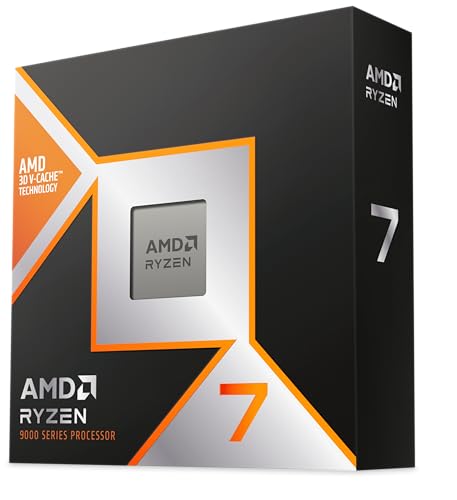
Our top pick: AMD Ryzen 7 9800X3D
The 9800X3D holds the steadiest CPU frametime of anything here when the grid fills up, and in VR a steady frametime is the whole game.
Quick picks
Pick | CPU | Best for | Where to buy |
|---|---|---|---|
Best Overall | The smoothest frametimes for most VR sim builds | ||
Best Value | Nearly the same result for less money | ||
Best Budget | Real V-cache on a tight budget | ||
Best Premium | Race and stream or create with no compromise | ||
Editor's Pick | 16-core V-cache at a clearance price |
Best Overall
- CPU
- Best for
The smoothest frametimes for most VR sim builds
- Where to buy
Best Value
- CPU
- Best for
Nearly the same result for less money
- Where to buy
Best Budget
- CPU
- Best for
Real V-cache on a tight budget
- Where to buy
Best Premium
- CPU
- Best for
Race and stream or create with no compromise
- Where to buy
Editor's Pick
- CPU
- Best for
16-core V-cache at a clearance price
- Where to buy
Specs at a glance
CPU | Cores / threads | Boost clock | L3 cache | TDP |
|---|---|---|---|---|
8C / 16T | Up to 5.2 GHz | 96 MB | 120W | |
8C / 16T | Up to 5.0 GHz | 96 MB | 120W | |
6C / 12T | Up to 4.7 GHz | 96 MB | 65W | |
16C / 32T | Up to 5.7 GHz | 128 MB | 170W | |
16C / 32T | Up to 5.7 GHz | 128 MB | 120W |
- Cores / threads
8C / 16T
- Boost clock
Up to 5.2 GHz
- L3 cache
96 MB
- TDP
120W
- Cores / threads
8C / 16T
- Boost clock
Up to 5.0 GHz
- L3 cache
96 MB
- TDP
120W
- Cores / threads
6C / 12T
- Boost clock
Up to 4.7 GHz
- L3 cache
96 MB
- TDP
65W
- Cores / threads
16C / 32T
- Boost clock
Up to 5.7 GHz
- L3 cache
128 MB
- TDP
170W
- Cores / threads
16C / 32T
- Boost clock
Up to 5.7 GHz
- L3 cache
128 MB
- TDP
120W
Why VR sim racing is CPU-bound
A VR headset asks the machine to draw two images, one per eye, and to deliver them on a fixed schedule. Most headsets want a new frame every 90th of a second, and if the CPU misses that deadline the compositor has to reproject or drop a frame. On a flat monitor a stutter is a visual annoyance. In a headset it is the thing that turns your stomach.
Sim racing makes that deadline hard to hit. Engines like iRacing, Assetto Corsa Competizione, and rFactor 2 run a high physics tick rate and simulate every car on track, so the CPU load climbs as the field grows. A full grid coming through a chicane is the worst case, and it lands on the processor, not the graphics card.
This is where 3D V-cache earns its price. The extra L3 cache keeps the physics and track-state working set close to the cores instead of making round trips to main memory. That shows up as a higher frametime floor, which is a fancy way of saying your 1% lows stay high. Steady 1% lows are what stop the reprojection and keep VR comfortable, and that is why a cache-heavy chip matters here in a way it never does for a flat-screen shooter.
Benchmarks
VR frametime numbers are hard to chart cleanly, so the tables below use CPU-bound titles reviewers do measure. They stand in for the sim-racing workload: physics-heavy racing, a cache-sensitive flight sim, and a raw CPU-limited shooter. The pattern is the same one you feel under a full grid in a headset.
- 438 FPS
- 440 FPS
- 409 FPS
- 409 FPS
- 405 FPS
Microsoft Flight Simulator 2024 stands in for the streaming-heavy, cache-hungry side of sim work. It is one of the most CPU-bound titles reviewers test, and the cache-heavy chips pull clearly ahead when the processor is the limit.
- 96 FPS
- 95 FPS
- 81 FPS
- 80 FPS
- 78 FPS
- 612 FPS
- 610 FPS
- 555 FPS
- 540 FPS
- 500 FPS
How we picked
We started from the workload, not the spec sheet. VR sim racing is CPU-bound and frametime-sensitive, so the ranking rewards cache and frametime consistency over headline average FPS. Every pick here carries 3D V-cache, because in this specific workload the cache is the feature that pays off. If you want the same reasoning applied to flat-screen flight sim, we walk through it in the same cache-sensitive picture in flight sim.
After that it came down to honest trade-offs. Core count matters if you stream or run telemetry and dashboard apps alongside the sim, so the six-core budget pick is ranked with that limit stated plainly. The dual-CCD chips get you productivity headroom but ask you to manage core scheduling, so they sit where a buyer who wants that headroom would look.
None of these chips ship with a cooler, and the 120W and 170W parts want a real tower cooler or an AIO to hold their boost clocks. On the platform side a solid B650 or B850 board is plenty for the single-CCD chips. For a full breakdown of pairing a board to one of these, see a board to pair with it. DDR5-6000 CL30 is the floor on AM5, and it matters more here than usual because it feeds the same CPU-bound frametimes the cache is protecting.
Best Overall: AMD Ryzen 7 9800X3D
Specs
Cores / threads | 8C / 16T |
Boost clock | Up to 5.2 GHz |
L3 cache | 96 MB (3D V-Cache) |
TDP | 120W |
Socket | AM5 |
Memory | DDR5-5600 |
Cooler | Not included |
Cores / threads
8C / 16T
Boost clock
Up to 5.2 GHz
L3 cache
96 MB (3D V-Cache)
TDP
120W
Socket
AM5
Memory
DDR5-5600
Cooler
Not included
What it does well
The 9800X3D holds the most consistent CPU frametime of any pick when a full grid loads in. Community VR testing has shown median CPU frametime dropping into the low-4ms range in rFactor 2 on a Quest 3, which is comfortably inside a 90 Hz budget. The 96 MB L3 pool keeps the physics and track-state working set in cache instead of spilling to RAM, and that is what smooths the 1% lows in Assetto Corsa Competizione and iRacing under a full field.
It also runs cooler and clocks higher than the 7800X3D thanks to the reversed V-cache stack that sits the cache under the cores. If you want the head-to-head on that generational jump, we cover the 7800X3D versus 9800X3D decision in full.
What you give up
You pay the top of the X3D ladder for a chip that only stretches its legs when you are genuinely CPU-bound. Heavy supersampling on a high-res headset where you are already GPU-limited shrinks the frametime win over a 7800X3D. Eight cores is plenty for racing but not a productivity workhorse.
Who it's for
The sim racer on a mid-to-high-res headset (Quest 3, Crystal Light, Aero) who wants the smoothest possible frametimes under a full grid and does not want to think about the CPU again for years. The default answer for most VR sim builds.
Best Value: AMD Ryzen 7 7800X3D

Specs
Cores / threads | 8C / 16T |
Boost clock | Up to 5.0 GHz |
L3 cache | 96 MB (3D V-Cache) |
TDP | 120W |
Socket | AM5 |
Memory | DDR5-5200 |
Cooler | Not included |
Cores / threads
8C / 16T
Boost clock
Up to 5.0 GHz
L3 cache
96 MB (3D V-Cache)
TDP
120W
Socket
AM5
Memory
DDR5-5200
Cooler
Not included
What it does well
Same 96 MB L3 cache class as the 9800X3D, so the cache-resident physics working set that matters for VR frametime consistency is there. Reviewers put it within roughly 7% of the 9800X3D in F1-class racing titles, and in a full VR field the felt difference is a slightly higher frametime floor, not a different experience. The single best value in a VR sim build right now.
What you give up
First-gen V-cache sits on top of the cores, so it clocks a touch lower and runs warmer under the cache layer than the 9800X3D. You lose the last few percent of frametime headroom and a bit of platform tail. In the densest grids the 9800X3D pulls a cleaner 1% low.
Who it's for
The value-focused VR sim racer who wants X3D frametime behavior without paying the top-of-ladder price, and is fine giving up a few percent to bank the savings toward a better headset or GPU.
Best Budget: AMD Ryzen 5 7600X3D

Specs
Cores / threads | 6C / 12T |
Boost clock | Up to 4.7 GHz |
L3 cache | 96 MB (3D V-Cache) |
TDP | 65W |
Socket | AM5 |
Memory | DDR5-5200 |
Cooler | Not included |
Cores / threads
6C / 12T
Boost clock
Up to 4.7 GHz
L3 cache
96 MB (3D V-Cache)
TDP
65W
Socket
AM5
Memory
DDR5-5200
Cooler
Not included
What it does well
Full 96 MB L3 cache on a 65W envelope. Reviewers measured it within about 5% of the 7800X3D across a large game geomean and around 409 FPS average in F1 24, which tells you the physics working set fits in cache the same way it does on the 8-core parts. For a pure VR sim rig with a light background load it holds frametimes far better than its price suggests and sips power.
What you give up
Six cores, not eight. Stream, a dashboard app, a telemetry overlay, Discord, and the sim all at once, and the core count starts to bite before the cache does. It also boosts lower than the 8-core X3D chips, so the very top of the frametime ceiling is a little lower.
Who it's for
The budget VR sim builder running the sim and not much else, who wants real X3D frametime behavior and is spending the savings on the headset or wheelbase where it is felt more.
Best Premium: AMD Ryzen 9 9950X3D

Specs
Cores / threads | 16C / 32T |
Boost clock | Up to 5.7 GHz |
L3 cache | 128 MB (2nd-gen 3D V-Cache) |
TDP | 170W |
Socket | AM5 |
Memory | DDR5-6000 |
Cooler | Not included |
Cores / threads
16C / 32T
Boost clock
Up to 5.7 GHz
L3 cache
128 MB (2nd-gen 3D V-Cache)
TDP
170W
Socket
AM5
Memory
DDR5-6000
Cooler
Not included
What it does well
The 9950X3D puts the second-gen V-cache on one CCD and eight more full-clocked cores on the other. A VR sim pinned to the cache die gets 9800X3D-class frametime behavior while OBS, replay capture, and telemetry live on the second CCD without stealing from the game. Reviewers measured roughly a 23% average-framerate lead over the 7950X3D, and it is the best gaming-plus-productivity chip you can buy for a racing box.
If you go this route, feed it properly. We break down DDR5 to feed it so the cache is not waiting on memory.
What you give up
You pay flagship money, and the dual-CCD design means the frametime win over a plain 9800X3D in a pure-gaming VR session is small to none. 170W wants serious cooling. Race and never touch a productivity workload and this is more chip than the job needs.
Who it's for
The VR sim racer who streams or creates alongside racing and refuses to compromise either side. Also the buyer who wants one chip to last through several GPU upgrades and handle everything.
Editor's Pick: AMD Ryzen 9 7950X3D

Specs
Cores / threads | 16C / 32T |
Boost clock | Up to 5.7 GHz |
L3 cache | 128 MB (1st-gen 3D V-Cache) |
TDP | 120W |
Socket | AM5 |
Memory | DDR5-5200 |
Cooler | Not included |
Cores / threads
16C / 32T
Boost clock
Up to 5.7 GHz
L3 cache
128 MB (1st-gen 3D V-Cache)
TDP
120W
Socket
AM5
Memory
DDR5-5200
Cooler
Not included
What it does well
Same architectural idea as the 9950X3D, a generation back and cheaper. One CCD carries the 3D V-cache for the racing frametimes, the other eight cores handle the stream and background load. For a VR racer who streams on a budget it is a lot of capable silicon at a clearance price, and it runs at a friendlier 120W than the 9950X3D.
What you give up
First-gen dual-CCD scheduling is fussier: the wrong CCD can end up running the game if the driver or Game Bar mis-parks, and you lose the frametime advantage until you fix it. Lower clocks and older V-cache mean it trails the 9950X3D by a clear margin. It asks more of the buyer than any single-CCD pick.
Who it's for
The hands-on streamer-racer who wants 16 threads plus a V-cache CCD, is comfortable verifying core parking, and would rather spend the 9950X3D difference elsewhere.
Bottom line
If you race in VR and want to buy once and forget about the CPU, get the Ryzen 7 9800X3D. If you want almost the same smoothness for less, the 7800X3D is the value call. On a tight budget the 7600X3D gets you real V-cache as long as you are not running a heavy background load. If you stream or create alongside racing, the 9950X3D handles both without compromise, and the 7950X3D does the same for less if you will manage its core scheduling. Whichever tier you land in, the answer for VR sim racing is a V-cache chip. Pair it with a wheel for iRacing and Assetto Corsa and you are set.
FAQ
Why is VR sim racing so CPU-bound compared to flat-screen racing?
A headset renders two images on a fixed schedule, usually 90 frames per second, and sim engines run a heavy physics simulation for every car on track. That combination lands on the CPU. As the grid fills, the processor has to do more work to hit the same deadline, so it becomes the limiting part long before the graphics card does. On a flat monitor the workload is lighter and more forgiving, which is why the same race can feel CPU-bound in VR and GPU-bound on a screen.
Do I really need an X3D chip for VR sim racing, or will a regular Ryzen work?
A regular Ryzen will run the game, but the X3D chips hold noticeably steadier frametimes in a full field, and steadier frametimes are what keep VR comfortable. Because sim racing is the exact workload where 3D V-cache pays off, the usual advice to skip X3D and spend on the GPU does not apply. If VR sim racing is your main use, the cache is worth it.
Is the Ryzen 7 9800X3D or 7800X3D better for iRacing and Assetto Corsa in VR?
The 9800X3D is the better chip. It clocks higher, runs cooler thanks to the reversed cache stack, and holds a cleaner 1% low when the grid is packed. The 7800X3D carries the same 96 MB cache class and gets you most of the way there for less money, so it is the value pick rather than the wrong pick. If the budget allows, the 9800X3D is the smoother of the two under a full field.
Does a 6-core CPU like the 7600X3D bottleneck VR sim racing?
For the sim by itself, no. The 7600X3D carries the full 96 MB V-cache, so the frametime behavior that matters for VR is there, and it lands within a few percent of the 8-core chips in racing titles. The limit shows up when you pile on background load. Streaming, a telemetry overlay, a dashboard app, and Discord all at once will lean on the missing cores. If you just race, it is a strong budget choice.
What causes stutter and nausea in VR sim racing, and does the CPU fix it?
The culprit is inconsistent frametimes and dropped frames, not a low average FPS. When the CPU misses the headset's frame deadline, the compositor reprojects, and that hitch is what your inner ear objects to. A cache-heavy CPU helps by keeping the 1% lows high, which is where the drops happen. It is not the only factor, since cooling, RAM speed, and in-game settings all play a part, but the CPU is the biggest lever in a sim-racing rig.
Related Articles

Best CPU for MSFS 2024 in 2026: 5 X3D and Intel Picks
Best CPU for MSFS 2024: the Ryzen 7 9800X3D holds 1% lows at photogrammetry hubs where non-X3D chips stutter. Five picks by tier, plus the Intel path.
Aug 29, 2026

9800X3D vs 7800X3D (2026): 11% Average, 25% Where It Counts
9800X3D vs 7800X3D in 2026: an 11% average uplift, 25% in cache-heavy games, and which of four buyer profiles should actually pay the upgrade premium.
Sep 13, 2026

Best Motherboards for the 9800X3D (2026): 5 Picks by Tier
The best motherboards for the 9800X3D, ranked by build tier: X870E, X870, B850 and B650E picks with the VRM, form-factor and I/O tradeoffs that decide it.
Aug 6, 2026

Best Sim Racing Wheel for iRacing and Assetto Corsa (2026)
The best sim racing wheels for iRacing and Assetto Corsa, from the MOZA R5 direct drive bundle to the Logitech G Pro, matched to your torque and mounting.
Jul 3, 2026

Best CPUs for Streaming and Gaming (2026): 5 NVENC Picks
Best CPUs for streaming and gaming in 2026: 5 picks from 6 to 16 cores. Your GPU handles NVENC encoding, so eight good cores beat a 16-core flagship CPU.
Aug 24, 2026