Affiliate Disclosure: As an Amazon Associate we earn from qualifying purchases. Some links may earn us a commission at no cost to you.

Best DDR4 RAM for Gaming 2026: AM4 & LGA 1700 Survival Guide
AM4 and LGA 1700 aren't legacy platforms. Together they represent hundreds of millions of active gaming PCs still running DDR4, and the right answer for those systems in 2026 isn't to feel behind. DDR4-3600 CL18 is the correct target for Ryzen 5000, and DDR4-3200 CL16 covers most Intel 12th and 13th gen boards cleanly. This guide finds the best kits at each tier.
Our top pick: G.Skill Ripjaws V DDR4-3600 32GB
The Ripjaws V DDR4-3600 32GB hits every requirement for an AM4 or LGA 1700 gaming build: it runs at the Ryzen Infinity Fabric sweet spot, it ships with Intel XMP 2.0 for a one-BIOS-setting install, and it fits under virtually every air cooler at 42mm height.
Quick picks
Pick | Kit | Platform fit | Where to buy |
|---|---|---|---|
Best Overall | AM4 + LGA1700 | Check Price | |
Best Value | LGA1700 + budget AM4 | Check Price | |
Best Premium | AM4 Ryzen 5000 / X3D | Check Price | |
Best Budget | AM4 + LGA1700 entry | Check Price | |
Editor's Pick | AM4 + LGA1700 | Check Price |
Best Overall
- Kit
- Platform fit
AM4 + LGA1700
- Where to buy
- Check Price
Best Value
- Kit
- Platform fit
LGA1700 + budget AM4
- Where to buy
- Check Price
Best Premium
- Kit
- Platform fit
AM4 Ryzen 5000 / X3D
- Where to buy
- Check Price
Best Budget
- Kit
- Platform fit
AM4 + LGA1700 entry
- Where to buy
- Check Price
Editor's Pick
- Kit
- Platform fit
AM4 + LGA1700
- Where to buy
- Check Price
Specs at a glance
Kit | Speed | Timings | Capacity | Height | XMP/DOCP |
|---|---|---|---|---|---|
DDR4-3600 | CL18-22-22-42 | 2x16GB | 42mm | XMP 2.0 | |
DDR4-3200 | CL16-18-18-38 | 2x16GB | 42mm | XMP 2.0 | |
DDR4-3600 | CL16-19-19-39 | 2x16GB | 44mm (RGB) | XMP 2.0 + DOCP | |
DDR4-3600 | CL18-22-22-42 | 2x8GB | 42mm | XMP 2.0 | |
DDR4-3600 | CL18 | 2x16GB | ~34mm (low-profile) | XMP |
- Speed
DDR4-3600
- Timings
CL18-22-22-42
- Capacity
2x16GB
- Height
42mm
- XMP/DOCP
XMP 2.0
- Speed
DDR4-3200
- Timings
CL16-18-18-38
- Capacity
2x16GB
- Height
42mm
- XMP/DOCP
XMP 2.0
- Speed
DDR4-3600
- Timings
CL16-19-19-39
- Capacity
2x16GB
- Height
44mm (RGB)
- XMP/DOCP
XMP 2.0 + DOCP
- Speed
DDR4-3600
- Timings
CL18-22-22-42
- Capacity
2x8GB
- Height
42mm
- XMP/DOCP
XMP 2.0
- Speed
DDR4-3600
- Timings
CL18
- Capacity
2x16GB
- Height
~34mm (low-profile)
- XMP/DOCP
XMP
Why DDR4-3600 is the Ryzen sweet spot
Ryzen's memory controller is tied to the Infinity Fabric clock. At DDR4-3600, the fabric runs at exactly 1800 MHz in a 1:1 ratio with the memory controller. That's the target. It delivers the lowest latency and highest bandwidth the AM4 platform can offer from DDR4.
At DDR4-3200, the Infinity Fabric drops to 1600 MHz. The memory controller still runs fine, and most Intel LGA 1700 builders won't notice much difference, but on Ryzen 5000, benchmarks show 3 to 8 percent better gaming performance at 3600 vs. 3200 in CPU-bound scenarios at 1080p. In Counter-Strike 2 and similar CPU-sensitive titles, that gap reaches into the double digits for 1% low frame times.
What happens above DDR4-3600 is less obvious. Pushing to 4000 MHz or higher on AM4 typically drops the Infinity Fabric into an asynchronous 2:1 mode, which increases memory latency and often produces worse gaming performance than a stable 3600 CL18 setup. DDR4-3600 is not a compromise. It is the ceiling.
For LGA 1700 Intel builders, the calculus is simpler. Intel's memory controller scales more linearly and doesn't have the same FCLK dependency, so DDR4-3200 CL16 is a fully reasonable choice, and the gap to 3600 is smaller.
How we picked
The primary filter was platform fit. Every kit here works across both AM4 and LGA 1700. There are no AM4-only or Intel-only choices on this list. XMP 2.0 support (or DOCP on AMD-certified kits) was non-negotiable. Install-it-and-enable-XMP is how every builder should experience RAM setup.
Availability matters in 2026 DDR4. The market has thinned on some kits that were staples in 2022 and 2023. The Corsair Vengeance LPX DDR4-3600 was on this list originally, but new-condition stock is no longer being Amazon-fulfilled. Every kit here had confirmed new-condition in-stock status at the time of writing. If the thinning market has you eyeing AM5 instead, whether AM5 can use DDR4 is worth settling first, because the answer changes what you have to buy.
Capacity: the minimum for a 2026 gaming build is 32GB in dual-channel. Modern AAA games regularly use 12 to 14 GB of combined system and video memory. Add a browser, Discord, and a streaming overlay, and 16GB becomes tight under load. The Best Budget pick runs 16GB to serve builders on a strict ceiling, but the note there is honest: budget for 32GB within a year if you stay on AM4.
Height clears most CPU coolers. At 42mm, the Ripjaws V family passes under the Thermalright Phantom Spirit 120 SE, the DeepCool AK620, and similar sub-50mm air coolers without issue. The Trident Z Neo runs 44mm with the RGB fin. A couple of millimeters tighter can matter in close-clearance builds.
Best Overall: G.Skill Ripjaws V DDR4-3600 32GB

Specs
Speed | DDR4-3600 |
Timings | CL18-22-22-42 |
Capacity | 2x16GB |
Voltage | 1.35V |
Form factor | 288-pin UDIMM |
Profile | XMP 2.0 |
Height | 42mm module height |
ECC | Non-ECC |
Speed
DDR4-3600
Timings
CL18-22-22-42
Capacity
2x16GB
Voltage
1.35V
Form factor
288-pin UDIMM
Profile
XMP 2.0
Height
42mm module height
ECC
Non-ECC
What it does well
The Ripjaws V DDR4-3600 32GB runs on virtually every AM4 and LGA 1700 board shipping in 2026. G.Skill's QVL coverage is among the widest in the DDR4 market, and three thousand reviews at 4.7 stars suggests the IC yield is consistent enough to avoid the compatibility lottery.
XMP 2.0 setup is one BIOS toggle. You enable XMP, the board reads the profile, sets 3600 MHz and 1.35V, and you reboot into rated speed. On most B450, B550, Z490, Z590, B660, and Z790 boards, that is the end of the RAM story.
The 42mm height is a practical consideration that doesn't get enough attention. Tall RGB kits at 48 to 54mm require careful clearance checks. The Ripjaws V clears the Thermalright Phantom Spirit 120 SE with room, making it the default choice in any build using a sub-50mm air cooler.
G.Skill backs these with a lifetime warranty and, per recent owner accounts, customer service that answers the phone. A 5-year-old kit replaced under RMA with a matched replacement set is the kind of support story that earns repeat buyers.
What you give up
CL18-22-22-42 are not the tightest timings at DDR4-3600. The Trident Z Neo CL16 kit on this list runs a tighter primary timing and offers a measurable improvement in 1% lows in CPU-sensitive games on Ryzen 5000 and the X3D variants. If you're running a 5800X3D or 5700X3D and care about the last few frames in Counter-Strike 2 or Microsoft Flight Simulator, the Neo earns its premium.
There's no RGB here. The black aluminum heatspreader is clean, but builders who want a lit interior will need to look at the Trident Z Neo or a comparable RGB kit.
Reports from reviewers suggest IC sourcing varies between Samsung, Hynix, and Micron batches under the same model number. Real-world gaming performance difference is minimal, but it's relevant if you intend to manually tune sub-timings beyond XMP.
Who it's for
The AM4 or LGA 1700 builder who wants to set XMP and not think about RAM again. Gaming and productivity use case. No RGB needed. Widest possible motherboard compatibility at the optimal Ryzen frequency. If you are still deciding whether to stay on DDR4 at all, see whether upgrading to DDR5 is worth it in 2026 for the full platform cost.
Best Value: G.Skill Ripjaws V DDR4-3200 32GB
Specs
Speed | DDR4-3200 |
Timings | CL16-18-18-38 |
Capacity | 2x16GB |
Voltage | 1.35V |
Form factor | 288-pin UDIMM |
Profile | XMP 2.0 |
Height | 42mm module height |
ECC | Non-ECC |
Note | Amazon's Choice |
Speed
DDR4-3200
Timings
CL16-18-18-38
Capacity
2x16GB
Voltage
1.35V
Form factor
288-pin UDIMM
Profile
XMP 2.0
Height
42mm module height
ECC
Non-ECC
Note
Amazon's Choice
What it does well
With 13,236 reviews and Amazon's Choice status, the G.Skill Ripjaws V DDR4-3200 32GB is as thoroughly field-tested as DDR4 gets. CL16 timings at 3200 MHz produce tighter effective latency than CL18 at the same frequency, and for Intel LGA 1700 builders, that's a real win.
The compatibility footprint here is nearly universal. Every LGA 1700 board from B660 through Z790 validates DDR4-3200. The XMP 2.0 setup experience is identical to the 3600 kit: one toggle, one reboot.
For a builder running a 12th or 13th gen Intel CPU at 1440p or higher, the performance gap between DDR4-3200 and DDR4-3600 is small enough that the value arithmetic tips toward this kit.
What you give up
On AM4, DDR4-3200 means the Infinity Fabric runs at 1600 MHz instead of 1800 MHz. That's not a 1:1 performance penalty, but it shows in CPU-bound workloads. Benchmarks across multiple sources show a 3 to 8 percent average FPS gap between 3200 and 3600 in CPU-sensitive 1080p gaming on Ryzen 5000. In Counter-Strike 2 and Microsoft Flight Simulator, that gap can reach into double digits for 1% lows.
If you're building on AM4 and specifically running a 5800X3D or 5700X3D, the 3D V-Cache architecture is sensitive to memory latency. Reports suggest those CPUs specifically benefit from the 1:1 FCLK at 3600 for maximum 1% low headroom. The Best Overall kit is the right answer for X3D builds, not this one.
Who it's for
Intel LGA 1700 builders who want solid DDR4 at the right spec for their platform. AMD builders primarily GPU-limited at 1440p or 4K where the FCLK gap doesn't show up in frame times. Builders on the tightest budget who can't stretch to the 3600 version.
Best Premium: G.Skill Trident Z Neo DDR4-3600 CL16 32GB
Specs
Speed | DDR4-3600 |
Timings | CL16-19-19-39 |
Capacity | 2x16GB |
Voltage | 1.35V |
Form factor | 288-pin UDIMM |
Profile | XMP 2.0; AMD DOCP |
Height | 44mm module height |
ECC | Non-ECC |
Note | Optimized for AMD Ryzen |
Speed
DDR4-3600
Timings
CL16-19-19-39
Capacity
2x16GB
Voltage
1.35V
Form factor
288-pin UDIMM
Profile
XMP 2.0; AMD DOCP
Height
44mm module height
ECC
Non-ECC
Note
Optimized for AMD Ryzen
What it does well
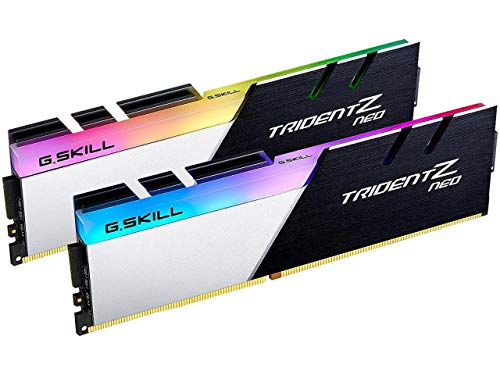
The Trident Z Neo's CL16 primary timing at 3600 MHz is the reason to buy this kit over the Ripjaws V. The primary CAS latency gap from 16 to 18 nanoseconds is measurable in CPU-sensitive AM4 workloads. Builders on Ryzen 5000 and particularly the X3D-variant chips see the improvement most clearly in 1% low frame times in CPU-bound titles.
G.Skill specifically engineered the Trident Z Neo for AMD DDR4 platforms. The QVL coverage on X570, B550, and X470 boards is extensive, and reviews confirm clean XMP/DOCP operation across a wide range of motherboards without manual timing adjustment.
User accounts confirm dual-rank Hynix B-die ICs in some batches of this kit. Dual-rank operation improves memory access interleaving, and B-die is the historically preferred IC for AM4 manual overclocking. If you ever want to push further with manual sub-timing tuning, this kit gives you the headroom.
The RGB fin is well-executed. Eight-zone lighting, software-controllable, and reviewers consistently describe the color quality as among the better DDR4 RGB implementations.
What you give up
At 44mm, the fin raises module height above the Ripjaws V's 42mm. That extra 2mm tightens clearance with some air coolers. Check your cooler's maximum RAM clearance spec before ordering, particularly with tower coolers like the DeepCool AK620 at close clearance.
On Intel LGA 1700, the CL16 advantage over CL18 at 3600 is smaller than on AM4. Intel's memory controller doesn't benefit from tight-timing tuning the same way Ryzen does. For Intel builders, the Best Overall kit covers everything this kit offers at lower cost.
Who it's for
Ryzen 5000 builders who want to extract every 1% low from their CPU. Specifically appropriate for 5800X3D and 5700X3D builds, where cache-sensitive workloads reward lower memory latency. Builds with RGB themes where the memory lighting is part of the interior design.
Best Budget: G.Skill Ripjaws V DDR4-3600 16GB
Specs
Speed | DDR4-3600 |
Timings | CL18-22-22-42 |
Capacity | 2x8GB |
Voltage | 1.35V |
Form factor | 288-pin UDIMM |
Profile | XMP 2.0 |
Height | 42mm module height |
ECC | Non-ECC |
Note | Amazon's Choice |
Speed
DDR4-3600
Timings
CL18-22-22-42
Capacity
2x8GB
Voltage
1.35V
Form factor
288-pin UDIMM
Profile
XMP 2.0
Height
42mm module height
ECC
Non-ECC
Note
Amazon's Choice
What it does well
This is the same frequency and timing profile as the Best Overall pick, at half the capacity. Two 8GB modules run dual-channel, which is the critical configuration for hitting the Ryzen Infinity Fabric sweet spot at 1800 MHz. Going to 16GB doesn't sacrifice the platform frequency benefit. It limits the headroom.
The kit is identically sourced and validated to the 32GB version. Upgrade path is straightforward: when you're ready for 32GB, buy a matched second kit of the same model and drop it into the remaining two slots. G.Skill's matched-kit design means you can expand without a compatibility gamble.
What you give up
16GB is the 2026 gaming floor, not the ceiling. Modern AAA titles regularly use 12 to 14 GB combined between system memory and video memory at higher settings. Add a browser with 10 tabs, Discord, and a streaming overlay on top of a game like Call of Duty, and 16GB gets tight.
The math has changed. The delta between the 16GB and 32GB kits is not what it was two years ago. If your budget allows 32GB at all, the Best Overall kit is the right call. This pick serves builders where 32GB genuinely isn't possible this cycle, with the explicit expectation that 32GB is the next upgrade. If you are still weighing the two capacities, our breakdown of whether 16GB is enough for gaming walks through where the 1% lows break.
Reports suggest that buyers who start at 16GB on AM4 commonly return for the 32GB upgrade within 8 to 12 months as games get heavier. Budget that purchase into your build planning now if you can.
Who it's for
Cost-constrained AM4 builders who want dual-channel DDR4-3600 without the 32GB cost. First-time upgraders replacing a single 8GB stick. Builders who are GPU-limited for now and treating memory as a deferred upgrade.
Editor's Pick: Kingston Fury Beast DDR4-3600 32GB
Specs
Speed | DDR4-3600, CL18 |
Capacity | 2x16GB |
Form factor | 288-pin UDIMM, XMP |
Note | AMD Ryzen ready |
Heat spreader | Low-profile heat spreader |
ECC | Non-ECC |
Speed
DDR4-3600, CL18
Capacity
2x16GB
Form factor
288-pin UDIMM, XMP
Note
AMD Ryzen ready
Heat spreader
Low-profile heat spreader
ECC
Non-ECC
What it does well
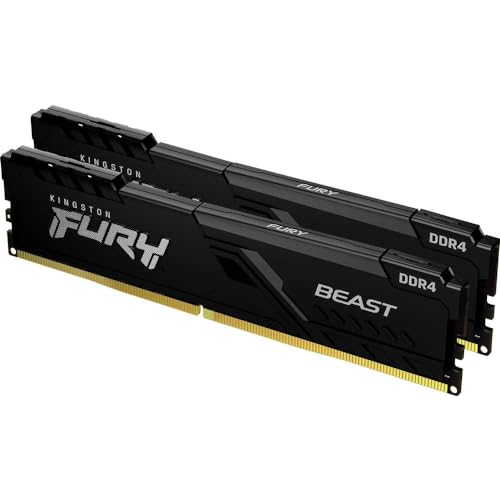
Kingston's FURY Beast offers DDR4-3600 in a low-profile form factor that fits under virtually every tower air cooler without a clearance check. The heat spreader runs shorter than the Ripjaws V's 42mm, making this the practical SFF and tight-cooler-clearance pick for DDR4-3600 32GB.
Kingston certifies this kit for AMD Ryzen compatibility alongside Intel XMP. The Plug N Play auto-overclock to 2666 MHz means the kit runs stable even before you enable XMP in BIOS. That's a reasonable failsafe for builders who want the fastest path to a booting system. Enable XMP in the next boot and you're at 3600.
The review base at 4.8 stars across 956 verified purchasers suggests a low defect and compatibility issue rate. Kingston backs the kit with a lifetime warranty.
What you give up
One reviewer noted benchmark scores roughly 3 percent below average for DDR4-3600 kits in synthetic testing. IC batch variance is the likely explanation rather than a design deficit, and real-world gaming performance differences at this level are below perceptible. Worth noting for anyone planning manual sub-timing tuning.
The warranty and RMA support documentation trail is not as widely discussed as G.Skill's. G.Skill's lifetime warranty and active customer service is a demonstrable advantage for long-term ownership.
Enable XMP in BIOS and verify voltage. Reports from buyers indicate some boards default to 1.2V for this kit rather than the specified 1.35V. Stable XMP operation requires the correct voltage, so verify that the BIOS has set 1.35V after enabling XMP. Most modern AM4 and LGA 1700 boards handle this automatically, but it's worth confirming on first boot.
Who it's for
Builders who want a second strong DDR4-3600 32GB option beyond G.Skill. SFF or ITX builds where cooler clearance is genuinely tight. Anyone building with a strong preference for Kingston's product ecosystem or who finds the Ripjaws V out of stock.
Bottom line
For AM4 Ryzen 5000 builds, buy the G.Skill Ripjaws V DDR4-3600 32GB and enable XMP. That's the right answer for 95% of builds on that platform, and it will stay right for as long as the AM4 socket is in service.
For Ryzen 5800X3D or 5700X3D builds where 1% lows matter, the G.Skill Trident Z Neo CL16 32GB earns the premium.
For Intel LGA 1700 builders on a tight budget, the G.Skill Ripjaws V DDR4-3200 32GB covers the platform well at a lower cost. The 3200-vs-3600 gap is smaller on Intel, and CL16 timings offset some of the frequency difference.
If you're asking whether to upgrade to DDR5: not for AM4 or LGA 1700. Those sockets don't support DDR5. When you're ready to move to AM5 or LGA 1851, that question matters. For now, these picks are your platform's ceiling, and they're good picks. Check out our best DDR5 kits for AM5 builds when you're ready for that conversation.
FAQ
Is DDR4 still good for gaming in 2026?
Yes. AM4 and LGA 1700 are DDR4 platforms, and DDR4-3600 is still the correct memory spec for both. Hundreds of millions of gaming PCs run these platforms, and DDR4-3600 32GB delivers everything a Ryzen 5000 or 12th/13th gen Intel build needs. The DDR4-vs-DDR5 conversation only becomes relevant when you're upgrading to AM5 or LGA 1851. Those are different sockets that don't run DDR4 at all.
What is the best DDR4 speed for AM4 Ryzen 5000?
DDR4-3600. At that frequency, Ryzen's Infinity Fabric clock runs at 1800 MHz in a 1:1 ratio with the memory controller, which produces the lowest latency and highest effective bandwidth the platform supports. Going above 3600 on AM4 typically drops the Infinity Fabric into an asynchronous 2:1 mode that raises latency and can hurt gaming performance. DDR4-3600 CL18 or CL16 is the ceiling. Stop there.
Should I upgrade from DDR4 to DDR5?
If you're on AM4 or LGA 1700, you can't. DDR4 and DDR5 are not compatible with the same sockets. A DDR4-to-DDR5 upgrade means upgrading your CPU and motherboard at the same time. That's a platform move, not a RAM upgrade. If your AM4 or LGA 1700 build is running DDR4-3200 or slower, upgrading to DDR4-3600 within your existing platform is the worthwhile move. See our best DDR5 kits for AM5 if you're planning a platform upgrade.
Does DDR4-3600 vs DDR4-3200 make a difference in gaming?
On AM4, yes. Benchmarks show 3 to 8 percent better average FPS going from DDR4-3200 to DDR4-3600 in CPU-bound scenarios at 1080p, with gaps reaching double digits in Counter-Strike 2 and other CPU-sensitive titles. The difference comes from the Infinity Fabric running at 1800 MHz (3600) vs. 1600 MHz (3200), with lower memory latency reaching the CPU faster. On Intel LGA 1700, the gap is smaller, typically 2 to 5 percent in CPU-bound tests, so DDR4-3200 is a more defensible choice there.
What DDR4 RAM is best for Intel 12th or 13th gen?
Both the G.Skill Ripjaws V DDR4-3600 32GB and the G.Skill Ripjaws V DDR4-3200 32GB work well on Intel LGA 1700. The 3600 kit gives you slightly more headroom and the same kit works if you ever move to an AM4 system. The 3200 CL16 kit is a strong choice if you're Intel-only and want to save. The frequency gap between 3200 and 3600 is smaller on Intel platforms than on AMD.
Is 16GB or 32GB of DDR4 better for gaming in 2026?
32GB. Modern AAA games regularly use 12 to 14 GB combined between system memory and video memory at higher settings, and the 2026 release cycle is not getting lighter. 16GB is the floor for gaming in 2026. It plays everything, but it gets tight under multitasking. The cost gap between 16GB and 32GB DDR4-3600 kits has narrowed enough that 32GB is the right call for any build that expects to stay relevant for more than 12 months. The Best Budget 16GB pick is here for builders with a genuine capacity constraint, not because 16GB is the optimal answer.
Related Articles

Best 32GB DDR5 RAM for Gaming (2026): 5 AM5 & Intel Picks
The best 32GB DDR5 RAM for gaming: 5 picks, matched to your CPU. AM5 wants EXPO 6000 CL30, LGA 1851 wants XMP 6400 CL32. Pick by platform, not spec sheet.
Sep 7, 2026

Best 64GB DDR5 RAM 2026: 5 Kits for Creators (2x32GB)
The best 64GB DDR5 RAM kits for 4K editing, 3D, and local AI: five 2x32GB DDR5-6000 EXPO and XMP picks ranked by workload, plus why two sticks beat four on AM5.
Aug 19, 2026

Best B650 Motherboards for Ryzen 9000 (2026): Mid-Tier AM5 Picks
B650 is the AM5 value lane for Ryzen 9000. We pick 5 boards by build profile, with a BIOS-update buying framework built in.
May 18, 2026

Best CPU Cooler for Ryzen 5 7600 (2026): 5 Wraith Upgrades
The best CPU cooler for the Ryzen 5 7600 fixes noise, not heat: the boxed Wraith Stealth copes with 88 watts but gets loud doing it. Five AM5-ready upgrades.
Oct 13, 2026

Best NR200 Fans (2026): 5 Picks + the Right Airflow Setup
Best fans for NR200 builds, by slot: 25mm top exhaust, slim 120mm bottom intake for thick GPUs, a 92mm rear upgrade, and the airflow setup that beats PSU heat.
Oct 13, 2026