Affiliate Disclosure: As an Amazon Associate we earn from qualifying purchases. Some links may earn us a commission at no cost to you.

Core Ultra 7 265K vs Ryzen 7 9800X3D: Which CPU Wins?
Two chips, one question: which one belongs in your build?
The Intel Core Ultra 7 265K and the AMD Ryzen 7 9800X3D represent completely different bets on what a modern gaming-adjacent CPU should be. Intel stacked 20 cores and leaned into hybrid architecture. AMD stacked 64 MB of V-Cache on eight Zen 5 cores and tuned specifically for games. Both are competitive. The right choice depends on what your rig actually does when you sit down at it.
At a glance
Cores / Threads | 20 (8P + 12E) / 20 | 8 / 16 |
L3 Cache | 30 MB | 96 MB |
Boost Clock | 5.5 GHz | 5.2 GHz |
TDP | 125W | 120W |
Platform | LGA 1851 | AM5 |
iGPU | Yes | No |
Cores / Threads
- Intel Core Ultra 7 265K
20 (8P + 12E) / 20
- AMD Ryzen 7 9800X3D
8 / 16
L3 Cache
- Intel Core Ultra 7 265K
30 MB
- AMD Ryzen 7 9800X3D
96 MB
Boost Clock
- Intel Core Ultra 7 265K
5.5 GHz
- AMD Ryzen 7 9800X3D
5.2 GHz
TDP
- Intel Core Ultra 7 265K
125W
- AMD Ryzen 7 9800X3D
120W
Platform
- Intel Core Ultra 7 265K
LGA 1851
- AMD Ryzen 7 9800X3D
AM5
iGPU
- Intel Core Ultra 7 265K
Yes
- AMD Ryzen 7 9800X3D
No
Where each one wins
Scenario | Winner | Why | Get it |
|---|---|---|---|
Pure 1440p AAA gaming | AMD Ryzen 7 9800X3D | 96 MB V-Cache feeds the render pipeline; 15-30% lead in CPU-bound titles | |
Esports at 1080p / 1440p (CS2, Valorant) | AMD Ryzen 7 9800X3D | 1% lows hit harder; ~23% average ahead in Counter-Strike 2 | |
Cache-sensitive sims (MSFS, Total War) | AMD Ryzen 7 9800X3D | Cache latency advantage shows 25-35% leads in sim workloads | |
Streaming + gaming simultaneously | Intel Core Ultra 7 265K | 12 E-cores absorb OBS encoding without raiding gaming threads | |
Video rendering / content creation | Intel Core Ultra 7 265K | ~51% multi-core lead in Cinebench; 20 cores eat through timelines | |
Platform upgrade path | AMD Ryzen 7 9800X3D | AM5 committed through 2027+; LGA1851 has no announced next-gen CPU | |
Budget-conscious gaming build | Check current pricing | Varies; 265K has traded below 9800X3D at significant margins at times |
Pure 1440p AAA gaming
- Winner
AMD Ryzen 7 9800X3D
- Why
96 MB V-Cache feeds the render pipeline; 15-30% lead in CPU-bound titles
- Get it
Esports at 1080p / 1440p (CS2, Valorant)
- Winner
AMD Ryzen 7 9800X3D
- Why
1% lows hit harder; ~23% average ahead in Counter-Strike 2
- Get it
Cache-sensitive sims (MSFS, Total War)
- Winner
AMD Ryzen 7 9800X3D
- Why
Cache latency advantage shows 25-35% leads in sim workloads
- Get it
Streaming + gaming simultaneously
- Winner
Intel Core Ultra 7 265K
- Why
12 E-cores absorb OBS encoding without raiding gaming threads
- Get it
Video rendering / content creation
- Winner
Intel Core Ultra 7 265K
- Why
~51% multi-core lead in Cinebench; 20 cores eat through timelines
- Get it
Platform upgrade path
- Winner
AMD Ryzen 7 9800X3D
- Why
AM5 committed through 2027+; LGA1851 has no announced next-gen CPU
- Get it
Budget-conscious gaming build
- Winner
Check current pricing
- Why
Varies; 265K has traded below 9800X3D at significant margins at times
- Get it
Benchmarks
- Ryzen 7 9800X3D639 FPS
- Core Ultra 7 265K521 FPS
- Ryzen 7 9800X3D238 FPS
- Core Ultra 7 265K194 FPS
Extrapolated from cache-sensitivity pattern data; no direct head-to-head reviewer benchmarks located. Kirbs can verify against a direct source before publishing.
- Ryzen 7 9800X3D145 FPS
- Core Ultra 7 265K111 FPS
Extrapolated from strategy-title cache-sensitivity pattern; estimated ~30% 9800X3D lead.
- Ryzen 7 9800X3D180 FPS
- Core Ultra 7 265K138 FPS
- Core Ultra 7 265K34700 pts
- Ryzen 7 9800X3D23020 pts
Extrapolated from CS2 benchmark pattern (~23% 9800X3D lead); no direct Valorant reviewer head-to-head located.
- Ryzen 7 9800X3D940 FPS
- Core Ultra 7 265K763 FPS
Intel Core Ultra 7 265K

Specs
Cores / Threads | 20 (8P + 12E) / 20 |
Boost clock | 5.5 GHz |
L3 cache | 30 MB |
TDP | 125W (up to 250W) |
Architecture | Arrow Lake, Intel 20A |
Socket | LGA 1851 |
Integrated graphics | Xe-LPG |
Cores / Threads
20 (8P + 12E) / 20
Boost clock
5.5 GHz
L3 cache
30 MB
TDP
125W (up to 250W)
Architecture
Arrow Lake, Intel 20A
Socket
LGA 1851
Integrated graphics
Xe-LPG
What it does well
The 265K's 12 Efficiency cores are the real argument for this chip in a streaming or creator setup. When you run OBS software encoding alongside a game, the encoder workload drops onto E-cores. P-cores stay focused on the game. That isolation matters. It is the difference between the game hitching every time the encoder fires a keyframe and the game not noticing at all.
Multi-threaded work is where the 265K properly separates itself. A 51% lead over the 9800X3D in Cinebench multi-core is not close. Blender renders, video timeline exports, large compilation jobs, anything that can spread across 20 threads will feel substantially faster on the 265K. If you split your machine time between gaming and genuine content creation, the 265K's core count pays for itself.
The integrated Xe-LPG graphics is a niche win for most buyers, but a real one for troubleshooting. If a discrete GPU dies, the system still boots to a display. That diagnostic capability disappears on the 9800X3D.
Arrow Lake's reputation has improved. Multiple BIOS updates and Intel's 200S Boost mode addressed the performance regressions that plagued the platform at launch. PCGamesN's re-evaluation concluded the chip "is no longer a lemon," and the gaming gap to AMD, while still real, closed somewhat post-patch.
What you give up
The gaming gap is consistent and not small. In cache-sensitive titles like Counter-Strike 2, Microsoft Flight Simulator, Cyberpunk 2077, and simulation titles with large open worlds, the 9800X3D's 96 MB of L3 cache feeds data to the cores faster than the 265K's 30 MB can. That shows up in both average FPS and 1% lows. In CS2 at 1080p competitive, the 265K trails by roughly 23%. In Cyberpunk at 1440p, the 1% lows gap widens further. At 4K where the GPU becomes the constraint, the gap narrows significantly.
LGA1851 has no announced CPU upgrade path. AMD committed AM5 through 2027 with multiple new CPUs already named for the platform. Intel's roadmap for LGA1851 is effectively silent past current Arrow Lake. Buyers planning to swap a CPU in three years face a likely platform purchase as well. Stepping up to Intel's flagship does not change that, and the 9800X3D vs 285K comparison weighs the same LGA1851 question against the Core Ultra 9.
The 265K also runs hotter under sustained workloads when power limits are unrestricted. Z890 boards default to aggressive power settings; a quality cooler and a Z890 board are table stakes, and that platform cost matters when comparing the two chips head to head.
Who it's for
The builder who streams, renders, or edits on the same machine they game on. If OBS, Premiere, Blender, or DaVinci Resolve are real parts of your week, the 265K's 20-core package earns its keep. Also the right call when the price delta to the 9800X3D is wide enough to fund a GPU tier upgrade. Extra frames from a better GPU are more valuable than the V-Cache advantage for most buyers at that spend level.
AMD Ryzen 7 9800X3D
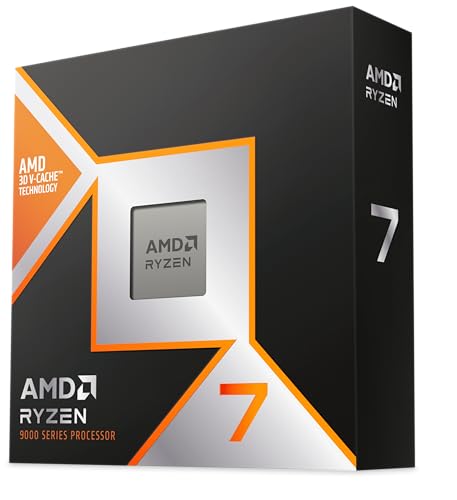
Specs
Cores / Threads | 8 / 16 |
Boost clock | 5.2 GHz |
L3 cache | 96 MB (incl. 64 MB V-Cache) |
TDP | 120W |
Architecture | Zen 5, TSMC 4nm |
Socket | AM5 |
Integrated graphics | None |
Cores / Threads
8 / 16
Boost clock
5.2 GHz
L3 cache
96 MB (incl. 64 MB V-Cache)
TDP
120W
Architecture
Zen 5, TSMC 4nm
Socket
AM5
Integrated graphics
None
What it does well
96 MB of L3 cache is the hardware story, but the result shows up at the frame counter. Games that stream geometry, AI behavior, or world-state data through the CPU, such as simulation titles, open-world games, and competitive shooters with dense scenes, get fed from cache instead of reaching back to slower main memory. The 9800X3D's 1% lows in Counter-Strike 2 run roughly 20% better than the 265K. In Cyberpunk 2077 at 1440p, average FPS is about 23% ahead and 1% lows are about 31% better. In Microsoft Flight Simulator, where the engine streams photogrammetry and terrain data continuously, the cache advantage reaches 30% or more.
The AM5 platform is mature. B650 and B850 boards have been through multiple BIOS generations; there are no surprises left. The socket commitment to 2027+ means a buyer who wants to upgrade their CPU in two years can drop in a next-generation Ryzen without a motherboard purchase. That is not the case on LGA1851.
Power efficiency in gaming is also worth noting. At 120W TDP with clock speeds calibrated around cache hit rate rather than raw frequency, the 9800X3D delivers its gaming performance at modest power draw. A solid mid-range tower cooler handles it without fan noise that becomes noticeable at idle.
What you give up
Eight cores is eight cores. The 265K's 20-thread count matters in workloads that use parallel threads: video encoding, 3D rendering, and large compilation jobs. Multi-core Cinebench shows a 51% gap in Intel's favor. If you spend hours a week in Blender or export long video timelines, the 9800X3D will feel noticeably slower on those tasks.
No integrated graphics means no display output without a working discrete GPU. For most builders this is a non-issue. For anyone who troubleshoots hardware or occasionally moves a system without a spare GPU on hand, it is worth knowing.
Streaming is the one gaming-adjacent scenario where the 9800X3D's eight Zen 5 cores compete directly with the 265K's E-core isolation. OBS software encoding on the 9800X3D runs on the same eight cores as the game. At moderate stream settings the chip handles it cleanly, but a demanding game at high-quality software encode compresses both workloads.
Who it's for
The gamer who primarily games. Sim racers, flight sim enthusiasts, competitive CS2 and Valorant players building toward a high-refresh ceiling, MMO players living in dense content zones. The 9800X3D targets all of them. It is also the right call for any builder on AM5 with a solid B650 or B850 board who wants a platform they can return to for a CPU upgrade in 2027 without buying a new motherboard. The LGA1851 equivalent (B860 boards for the Core Ultra 200 lineup) does not offer that same upgrade runway.
Which one should you buy?
Pure gamer on a 1440p or higher display: Buy the AMD Ryzen 7 9800X3D. The cache advantage in CPU-bound scenarios is real, consistent, and shows up in the titles that stress CPUs the most. If you already own a 7800X3D rather than buying fresh, our 7800X3D vs 9800X3D breakdown covers whether the cache and clock gains justify the upgrade cost instead.
Streamer and gamer on a single rig: Buy the Intel Core Ultra 7 265K. E-core isolation is a genuine architectural advantage for simultaneous stream and game workloads. For a deeper look at QuickSync versus NVENC across single-PC and dual-PC setups, see our full breakdown of Intel vs AMD for streaming.
Creator who also games: Buy the Intel Core Ultra 7 265K. If Blender, Premiere, or DaVinci Resolve are part of your week, the 51% multi-core lead in CPU-intensive tasks is worth accepting the gaming gap.
Platform longevity buyer: Buy the AMD Ryzen 7 9800X3D. AM5's 2027+ commitment and the existing board ecosystem mean a CPU upgrade in two or three years is a CPU purchase. On LGA1851, that upgrade is likely a platform purchase.
4K gamer with a flagship GPU: Lean toward the Intel Core Ultra 7 265K unless the price delta to the 9800X3D is small. At 4K with an RTX 5080 or RTX 5090, GPU bottleneck narrows the CPU gap substantially. For the card itself, our best GPU for Core Ultra 7 265K guide matches each pick to 1080p, 1440p or 4K.
Bottom line
The AMD Ryzen 7 9800X3D is the better gaming CPU. That holds at 1440p with no meaningful asterisks. The cache architecture leads in cache-sensitive titles, leads in esports 1% lows, and the AM5 platform is a proven investment. If gaming is the primary job, buy the 9800X3D.
The Intel Core Ultra 7 265K earns its place for a specific buyer: someone who streams, renders, or creates alongside gaming and needs one chip to handle both jobs cleanly. For that profile, the gaming gap is the acceptable cost of a chip that does not bottleneck anything else on the desk. If you're weighing the 265K against AMD's non-X3D option, our Ryzen 7 9700X vs Core Ultra 7 265K comparison covers that matchup directly.
FAQ
Is the Ryzen 7 9800X3D worth the higher price over the Core Ultra 7 265K for gaming?
For a dedicated gaming build at 1440p, yes. The 9800X3D's 96 MB V-Cache delivers 15-30% better performance in cache-sensitive titles and meaningfully better 1% lows across most games. If your budget is tight and the price delta is significant, consider whether that difference could fund a GPU tier upgrade instead. More GPU often moves the frame counter further than a CPU step at 1440p and above.
Which CPU is better for streaming and gaming at the same time?
The Core Ultra 7 265K handles simultaneous OBS encoding more cleanly. Its 12 Efficiency cores absorb the encoder workload without competing with the P-cores running the game. The 9800X3D can manage simultaneous streaming on software encode, but the eight cores share duty between the game and the encoder. If you stream at high quality on software encode frequently, the 265K's architecture makes the workload easier to schedule.
Does the Core Ultra 7 265K catch up to the 9800X3D at 1440p or 4K?
At 1440p, the gap remains real in cache-sensitive titles. The 9800X3D leads by roughly 15-30% in those scenarios. At 4K with a powerful GPU, both chips become less of a variable. The GPU starts to bottleneck first, and the CPU difference narrows. In heavily GPU-bound scenarios like 4K path tracing in Cyberpunk 2077, the chip choice matters much less than the GPU choice.
Which platform should I choose for future upgrades: AM5 or LGA1851?
AM5 is the more defensible long-term platform. AMD has publicly committed AM5 through 2027 with multiple new CPU launches planned. LGA1851 has no announced next-generation processors beyond current Arrow Lake. A buyer planning to upgrade their CPU in two or three years is more likely to find a drop-in upgrade on AM5 than on LGA1851.
Is the Core Ultra 7 265K good for video editing and content creation?
Yes. The 265K holds a ~51% lead in Cinebench R24 multi-core over the 9800X3D. Applications like DaVinci Resolve, Premiere Pro, and Blender spread work across many threads, and the 265K's 20-core package uses all of them. If content creation is a regular workload alongside gaming, the 265K is the more capable chip for that part of the day.
Can I use a B650 or B850 board with the Ryzen 7 9800X3D, or do I need X870?
A B650 or B850 board works fine with the 9800X3D for most gaming builds. You need a BIOS update if the board shipped before the Ryzen 9000 series launched, but current stock ships with compatible firmware. X870 and X870E add a second PCIe 5.0 M.2 slot, USB4, and lane bifurcation, real for some setups but not necessary for a gaming rig paired with a single GPU and one or two NVMe drives.
Related Articles

How to Choose a CPU and Motherboard
The buyer's framework for picking a CPU and motherboard pair: use case first, socket second, chip tier third, then the board class that matches.
May 17, 2026

Best B650 Motherboards for Ryzen 9000 (2026): Mid-Tier AM5 Picks
B650 is the AM5 value lane for Ryzen 9000. We pick 5 boards by build profile, with a BIOS-update buying framework built in.
May 18, 2026

Best NR200 Fans (2026): 5 Picks + the Right Airflow Setup
Best fans for NR200 builds, by slot: 25mm top exhaust, slim 120mm bottom intake for thick GPUs, a 92mm rear upgrade, and the airflow setup that beats PSU heat.
Oct 13, 2026

Best Prebuilt PC for Gears of War: E-Day (2026): 5 Picks
The best prebuilt PC for Gears of War: E-Day, matched to its 1080p, 1440p and 4K tiers: 5 ray tracing-ready systems with the memory and SSD space it needs.
Oct 12, 2026

Best Headset for Modern Warfare 4 (2026): 5 Footstep Picks
Best headset for Modern Warfare 4 in 2026: five picks that place footsteps by ear, from a budget wired floor to an open-back pick, with the audio mix to run.
Oct 13, 2026