Affiliate Disclosure: As an Amazon Associate we earn from qualifying purchases. Some links may earn us a commission at no cost to you.

HyperX Cloud III Review (2026): All 4 Clouds Ranked
Buy the wired HyperX Cloud III. It is the one Cloud that gets comfort, mic clarity and multiplatform support right at the lowest price, and for most people the decision stops there.
The rest of this guide is for everyone whose answer is different. Take the Cloud III S Wireless if you want a 120-hour battery instead of a cable, the Cloud Alpha if you care more about bass and mids than about hearing footsteps, and nothing at all if the Cloud II on your desk still works. One thing to know before you shop: the original Cloud III Wireless is no longer sold on Amazon, so the Cloud III S is the only current wireless Cloud.
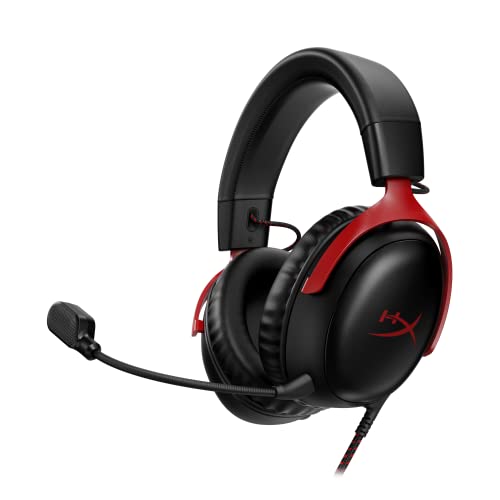
Our top pick: HyperX Cloud III (Wired)
The Cloud III hits the right combination of build quality, audio clarity, and multiplatform versatility. If you don’t already own a Cloud headset, this is the one to start with.
At a glance
Headset | Wireless? | Mic | Connection | Best For | Buy |
|---|---|---|---|---|---|
Wired only | Detachable, 10mm, LED mute | USB-C + USB-A + 3.5mm | Most people, wired gaming | ||
2.4GHz + BT (up to 120h / 200h) | Detachable, 10mm | 2.4GHz dongle + BT | Cloud III owners going wireless | ||
Wired only | Detachable, mic monitoring loop | USB + 3.5mm | Legacy holdout, hardware 7.1 fans | ||
Wired only | Detachable, noise-cancelling | 3.5mm + USB (via sound card) | Cleaner mids, mixed gaming/music use | ||
2.4GHz + BT (60h) | Retractable ClearCast Gen 2.X | 2.4GHz dongle + BT | Wireless buyers wanting 100+ presets |
- Wireless?
Wired only
- Mic
Detachable, 10mm, LED mute
- Connection
USB-C + USB-A + 3.5mm
- Best For
Most people, wired gaming
- Buy
- Wireless?
2.4GHz + BT (up to 120h / 200h)
- Mic
Detachable, 10mm
- Connection
2.4GHz dongle + BT
- Best For
Cloud III owners going wireless
- Buy
- Wireless?
Wired only
- Mic
Detachable, mic monitoring loop
- Connection
USB + 3.5mm
- Best For
Legacy holdout, hardware 7.1 fans
- Buy
- Wireless?
Wired only
- Mic
Detachable, noise-cancelling
- Connection
3.5mm + USB (via sound card)
- Best For
Cleaner mids, mixed gaming/music use
- Buy
- Wireless?
2.4GHz + BT (60h)
- Mic
Retractable ClearCast Gen 2.X
- Connection
2.4GHz dongle + BT
- Best For
Wireless buyers wanting 100+ presets
- Buy
Which HyperX Cloud should you buy?
Your situation | Best pick | Buy |
|---|---|---|
You need a reliable wired headset for PC or console gaming | HyperX Cloud III (Wired) | |
You want wireless and you’re already in the HyperX ecosystem | HyperX Cloud III S Wireless | |
Your Cloud II still works and you’re wondering if you should upgrade | Keep the Cloud II, or replace it with a new one if it’s broken | |
You want better mid-range clarity for mixed gaming and music use | HyperX Cloud Alpha | |
You want wireless with more audio customization than HyperX offers | SteelSeries Arctis Nova 5 | |
You want to upgrade from Cloud II to Cloud III purely for the spec bump | Don’t. Cloud II is still good if it’s not broken |
You need a reliable wired headset for PC or console gaming
- Best pick
HyperX Cloud III (Wired)
- Buy
You want wireless and you’re already in the HyperX ecosystem
- Best pick
HyperX Cloud III S Wireless
- Buy
Your Cloud II still works and you’re wondering if you should upgrade
- Best pick
Keep the Cloud II, or replace it with a new one if it’s broken
- Buy
You want better mid-range clarity for mixed gaming and music use
- Best pick
HyperX Cloud Alpha
- Buy
You want wireless with more audio customization than HyperX offers
- Best pick
SteelSeries Arctis Nova 5
- Buy
You want to upgrade from Cloud II to Cloud III purely for the spec bump
- Best pick
Don’t. Cloud II is still good if it’s not broken
- Buy
How we evaluated
Gaming headsets at this price range live or die by three things: sound signature, mic intelligibility, and build durability. We evaluated each pick in the Cloud family on those three axes. Not against reference studio monitors, but against the question buyers actually ask: will my teammates hear me clearly, will I hear footsteps, and will this still work in two years?
Sound signature at this tier is almost always V-shaped: boosted bass and treble, recessed mids. That works for gaming. The Cloud II and Cloud III both follow this pattern. The Cloud Alpha is a deliberate departure from it, which is why it earns its own section. Neither approach is universally better; they’re different choices for different listeners.
Mic quality we measured practically: does it pass the Discord test? Most headsets at this price range do. The ones that stand out are the ones that pass the test with less background noise and more voice presence. The Cloud III’s 10mm mic and the Arctis Nova 5’s retractable ClearCast mic are both strong here. Judged the same way, the standouts across the wider market are the ones we picked in our roundup of gaming headsets for PC, PS5 and Xbox.
Durability we weighed from long-term community feedback: the leatherette flaking on older Cloud II units, the fixed cable attachment point on the Cloud III wired, the dongle reliability concerns on the original Cloud III Wireless. These are the real wear patterns, and they’re worth knowing before you buy. If you are pricing a headset alongside a mouse and keyboard in the same order, our guide to choosing peripherals as a set covers which one to spend on first.
Best for Most People: HyperX Cloud III (Wired)
Specs
Drivers | 53mm angled |
Microphone | 10mm detachable noise-cancelling, LED mute indicator |
Connections | USB-C, USB-A, or 3.5mm |
Spatial audio | DTS Headphone:X (lifetime activation) |
Build | Aluminum frame, memory foam ear cups and headband |
Weight | 320g |
Drivers
53mm angled
Microphone
10mm detachable noise-cancelling, LED mute indicator
Connections
USB-C, USB-A, or 3.5mm
Spatial audio
DTS Headphone:X (lifetime activation)
Build
Aluminum frame, memory foam ear cups and headband
Weight
320g
What it does well
The angled 53mm drivers are the meaningful upgrade from the Cloud II. Angling the drivers changes the listening axis relative to your ear canal, which sharpens positional cues without requiring extra processing. Footsteps, directional gunfire, and environmental sounds read with better left-right and front-back separation than the flat driver arrangement in the Cloud II. Most buyers won’t articulate it this way, but they’ll notice their positional reactions improving. If positional accuracy is the whole reason you are buying, compare it against the dedicated picks in our guide to headsets tuned for footstep clarity.
The memory foam ear cushions are comfortable enough for long sessions. The headband padding has been softened compared to earlier Cloud versions. At 320g, the weight lands where most people stop noticing it’s there. The aluminum frame doesn’t creak under normal handling. It’s the same frame that has survived two-plus generations of “drop it on my desk and forget it” treatment.
Three connection options mean it actually works the way it says it does. USB-A connects to the PC for virtual 7.1 via DTS software; USB-C connects to laptops and newer gaming handhelds; 3.5mm plugs into anything else. The mic detaches clean with no loose connection wobble, and the LED mute indicator on the earcup is genuinely useful.
What you give up
The cable exits the left earcup and is fixed. It doesn’t detach from the headset side, only from the USB or 3.5mm termination end. That fixed junction is a wear point over time. Reports suggest the cable connection at the earcup can develop intermittent issues after a year or two of daily desktop use, especially with repeated bending at the same angle. Nothing catastrophic, but worth knowing.
Ear cup depth is slightly shallower than on the Cloud II. Buyers with larger ears may find the drivers sitting against their outer ear rather than clearing it. That affects both comfort over long sessions and the perceived soundstage, since sealed drivers produce a different listening experience than slightly-off-ear ones. Check the return policy if you’re on the border.
The DTS processing requires a USB connection. The 3.5mm path sends analog audio only, no software processing, no virtual surround. For console players plugging into a DualSense or Xbox controller, the headset sounds fine, but the DTS experience is a PC-only feature.
The mic picks up mechanical keyboard noise at high gain settings. If you’re using a clicky board, bring the mic sensitivity down in software or use push-to-talk.
Who it’s for
Anyone whose previous headset just gave out and who spends most of their gaming time on PC or a single console. If you already own a Cloud II that still works, you don’t need this. The Cloud III is a better headset, but the delta isn’t worth the cost if your current hardware is functional. If your Cloud II’s pads are peeling and the mic is dying, upgrade here.
Best Wireless: HyperX Cloud III S Wireless

Specs
Drivers | 53mm angled |
Wireless | 2.4GHz and Bluetooth 5.3 |
Battery | Rated up to 120 hours on 2.4GHz, 200 hours on Bluetooth |
Microphone | 10mm detachable noise-cancelling |
Platforms | PC, PS5, Xbox Series X|S, Nintendo Switch, mobile via Bluetooth |
Charging | USB-C |
Drivers
53mm angled
Wireless
2.4GHz and Bluetooth 5.3
Battery
Rated up to 120 hours on 2.4GHz, 200 hours on Bluetooth
Microphone
10mm detachable noise-cancelling
Platforms
PC, PS5, Xbox Series X|S, Nintendo Switch, mobile via Bluetooth
Charging
USB-C
What it does well
The 120-hour 2.4GHz battery rating is the headline feature, and it holds up. At typical daily gaming session lengths of two to four hours, you’re looking at weekly charging at most. The Bluetooth side adds a separate connection plane: you can keep the 2.4GHz dongle in your PC and pair your phone via Bluetooth simultaneously, switching audio without juggling dongles.
Sound quality follows the wired Cloud III’s tuning closely. The driver is the same 53mm angled configuration. If you’ve already used a wired Cloud III and liked the audio signature, the Cloud III S Wireless doesn’t change that.
Build quality matches the wired version. The aluminum frame carries over. The headset doesn’t feel cheaper because it’s wireless.
The Cloud III S replaces the original Cloud III Wireless, which is no longer available on Amazon. If you were looking for the Cloud III Wireless specifically, the Cloud III S is the current product. It adds Bluetooth and multi-platform support over the original. Deciding between the two connection types in general is a separate call, and we work through it in our wired versus wireless headset head-to-head.
What you give up
There’s no sidetone. No mic monitoring that lets you hear your own voice during calls or gaming sessions. For people who game without sidetone, this doesn’t register as a loss. For people who find they can’t regulate their speaking volume without it, this is a genuine omission.
The headset doesn’t work while charging. The battery is large enough that you’ll rarely hit this wall mid-session, but it’s a constraint worth knowing for marathon gaming days.
The HyperX NGENUITY software is available for EQ customization, but the preset library is limited compared to the SteelSeries Arctis Nova 5’s companion app. If audio preset flexibility matters to you, that alternative is worth looking at instead.
Who it’s for
The Cloud III wired owner who wants to cut the cable for their PC desk setup. Also a good fit for someone who games on multiple platforms and wants a single wireless headset that covers them all without extra dongles. Not the pick if you’re on a tight budget: the wired Cloud III covers the same audio quality at a meaningfully lower price.
Still Worth It: HyperX Cloud II

Specs
Drivers | 53mm, non-angled |
Sound card | USB, with discrete hardware 7.1 DSP |
Microphone | Detachable, with mic monitoring (sidetone) support |
Connections | USB and 3.5mm |
Build | Aluminum frame, memory foam ear cups |
Weight | 309g |
Amazon ratings | Over 68,000 |
Drivers
53mm, non-angled
Sound card
USB, with discrete hardware 7.1 DSP
Microphone
Detachable, with mic monitoring (sidetone) support
Connections
USB and 3.5mm
Build
Aluminum frame, memory foam ear cups
Weight
309g
Amazon ratings
Over 68,000
What it does well
The Cloud II’s sound card uses a discrete DSP chip for hardware 7.1 processing. The Cloud III replaced this with DTS software processing over USB. Whether hardware or software 7.1 sounds better depends on the implementation, but many long-term Cloud II owners prefer the hardware card’s soundstage character. It tends to produce a wider sense of space that some find more immersive. This is not a clear upgrade story in the audio quality direction; it’s a different design decision.
The mic monitoring (sidetone) loop in the Cloud II’s USB sound card is a feature the Cloud III and Cloud III S Wireless don’t include. If you’ve gamed with sidetone for years and then tried a headset without it, you notice immediately. The Cloud II has it; the Cloud III family does not.
The 68,000-plus Amazon ratings at a 4.5-star average tell a simple story: this headset has been bought by a lot of people, used for a long time, and survived the review window. The failure modes are known and documented. The velour ear pad variant holds up better over time than the leatherette.
What you give up
Non-angled drivers mean the listening axis is straight into your ear rather than angled forward. The positional accuracy delta versus the Cloud III is subtle but reviewer-documented: the Cloud III’s angled drivers produce slightly sharper left-right separation in controlled tests. Most casual gamers won’t notice it. Competitive players in directional shooters might.
Older Cloud II production runs used leatherette pads that flake over time. If you buy a new unit today, the pad materials are improved, but third-party velour replacements are inexpensive and worth having on hand. Reports suggest the pads begin to flake between 18 and 30 months of daily use on older units.
No USB-C. If your setup has moved to USB-C ports exclusively, you’ll need an adapter for the 3.5mm path or a hub for the USB-A connection.
Who it’s for
Someone whose Cloud II just gave out and wants the same headset back. If you built your positional hearing muscle memory on the Cloud II’s soundstage and you like the hardware 7.1 card, replacing it with another Cloud II is a legitimate choice. Also the right pick for anyone who needs sidetone and doesn’t want to change their workflow.
If you’re buying a gaming headset for the first time and you’re weighing Cloud II vs Cloud III, buy the Cloud III. The angled drivers and updated mic are worth the price difference. The Cloud II recommendation is for people who already know what they have and want to stay there.
Different Tuning: HyperX Cloud Alpha

Specs
Drivers | 50mm dual-chamber, separate chambers for bass and mid/high frequencies |
Microphone | Detachable noise-cancelling |
Connections | 3.5mm and USB (included USB sound card) |
Build | Aluminum frame, memory foam ear cups |
Weight | 335g |
Drivers
50mm dual-chamber, separate chambers for bass and mid/high frequencies
Microphone
Detachable noise-cancelling
Connections
3.5mm and USB (included USB sound card)
Build
Aluminum frame, memory foam ear cups
Weight
335g
What it does well
The Cloud Alpha’s dual-chamber driver design physically separates the bass frequency range from the mids and highs. Standard single-chamber drivers produce all frequencies from the same membrane, which creates resonance bleed: the bass physically interferes with mid and high-frequency reproduction. By routing bass into its own chamber, the Alpha reduces that bleed. The result is a cleaner mid-range, with voices in games and on Discord feeling more present and audio that doesn’t get muddy in scenes with heavy environmental bass (explosions, engine noise, ambient score).
The comfort level is similar to the Cloud III. The ear cup depth on the Alpha gives slightly more space than the Cloud III, which helps with long-session comfort for buyers who found the Cloud III’s shallower cups pressing against their ears.
For content consumption alongside gaming (streaming video, music, extended Discord calls) the Alpha’s flatter response is easier to listen to for hours than the V-shaped Cloud III.
What you give up
The dual-chamber tuning reduces bass presence compared to the V-shaped Cloud III and Cloud II. Buyers who want a satisfying thump from explosions and in-game music will find the Alpha less immediately satisfying out of the box. This isn’t a deficiency. It’s a deliberate design choice toward accuracy rather than excitement, and it’s a difference that matters depending on your listening preferences.
No USB-C. No DTS Spatial Audio lifetime activation. The included USB sound card is older-generation hardware. No wireless option at this price point in the Cloud Alpha line: the Cloud Alpha Wireless is a separate, premium product at a significantly different price.
Who it’s for
The buyer who uses their headset for more than gaming: someone who takes calls, watches content, and plays games with the same headset and wants a single tuning that’s comfortable across all of those scenarios. If you’ve found gaming headsets fatiguing after long sessions and suspect the V-shaped EQ is part of the problem, the Alpha’s flatter signature is worth trying.
Not the right pick for competitive players who want maximum bass presence and the most aggressive gaming-focused tuning. Stick with the Cloud III if you want the gaming-first sound profile.
Ready to Cross-Shop: SteelSeries Arctis Nova 5

Specs
Drivers | Neodymium magnetic |
Wireless | 2.4GHz and Bluetooth |
Battery | Rated up to 60 hours on 2.4GHz |
Microphone | ClearCast Gen 2.X retractable |
Audio presets | 100-plus via the Arctis Nova 5 companion app |
Platforms | PC, PS5, Xbox Series X|S, Nintendo Switch, mobile (single dongle plus Bluetooth) |
Charging | USB-C |
Drivers
Neodymium magnetic
Wireless
2.4GHz and Bluetooth
Battery
Rated up to 60 hours on 2.4GHz
Microphone
ClearCast Gen 2.X retractable
Audio presets
100-plus via the Arctis Nova 5 companion app
Platforms
PC, PS5, Xbox Series X|S, Nintendo Switch, mobile (single dongle plus Bluetooth)
Charging
USB-C
What it does well
The companion app’s 100-plus game-specific audio presets are a genuine differentiator. This isn’t global EQ. It’s per-game tuning configured for individual titles. You switch from one preset to another as you switch games. For buyers who play across different genres (competitive shooters, open-world games, narrative titles with heavy score), the preset flexibility removes the need to manually dial in EQ every time. The HyperX NGENUITY app doesn’t offer this level of per-game customization.
The ClearCast Gen 2.X retractable microphone retracts fully into the earcup when not in use. No detached mic sitting on your desk, no mic dangling when you walk away from your setup. It’s a meaningfully better ergonomic solution than the detachable plug-in mic that the Cloud family uses.
At 60 hours on 2.4GHz, the battery holds up well: you’re charging roughly twice a week at typical session lengths. Multi-platform via a single USB dongle and Bluetooth covers PC, both major consoles, Switch, and phone without hardware changes.
What you give up
The Arctis Nova 5 sits at a higher price than the wired Cloud III. If budget is the primary concern, the Cloud III covers 90 percent of the gaming audio use case at a lower cost.
The neutral, accurate tuning sounds flat to buyers used to V-shaped gaming headsets out of the box. Before the companion app presets kick in, the default sound signature may feel less exciting than the Cloud III’s boosted bass and treble. The customization upside requires investing time in the app.
The preset library is app-dependent. If the Arctis app is discontinued, updated to a broken state, or loses support for a platform, the preset advantage disappears. This is not a theoretical concern: headset companion apps have been abandoned before. SteelSeries has a better track record than most, but it’s worth naming.
Who it’s for
The wireless buyer who plays multiple game genres and wants the audio to adapt automatically without manual EQ adjustment. Someone who has used HyperX headsets and wants to stay in a comparable comfort and build quality tier but needs more customization than NGENUITY provides. Not the right pick for wired-only setups or tight budgets.
Bottom line
If you’re starting from scratch: buy the HyperX Cloud III (Wired). The angled drivers, multiplatform connections, and build quality hit the right points for most gaming setups.
If you want wireless and you’re already in the HyperX ecosystem: the Cloud III S Wireless is the current product. The original Cloud III Wireless is no longer available. The Cloud III S adds Bluetooth and a longer battery. Check a fresh price; it’s a meaningful step up from the wired version.
If your Cloud II still works: don’t upgrade. The Cloud III is a better headset on paper, but the real-world gaming difference doesn’t justify replacing hardware that’s functioning correctly. When it breaks, replace it with the Cloud III.
If you care about audio quality for mixed use beyond gaming: the Cloud Alpha’s dual-chamber tuning is worth the detour. It won’t satisfy buyers who want punchy V-shaped bass, but it’s noticeably cleaner for voice and content consumption.
If you want wireless with real audio customization and you’re ready to leave the HyperX ecosystem: the Arctis Nova 5’s companion app and retractable mic earn the higher price for the right buyer. It’s the pick for people who want per-game preset control and a mic that disappears when not in use.
FAQ
Is the HyperX Cloud III worth it over the Cloud II?
The Cloud III is a better headset: angled drivers improve positional accuracy and the updated 10mm mic is clearer. But “worth it” depends on your situation. If your Cloud II is broken, upgrade here. If your Cloud II still works, the audio improvement doesn’t justify replacing it. The Cloud III is worth buying new; it’s not worth replacing working hardware.
What is the difference between the HyperX Cloud III and the Cloud III S?
The Cloud III is wired. The Cloud III S is wireless, with 2.4GHz and Bluetooth connectivity and up to 120 hours of battery life on 2.4GHz. The original Cloud III Wireless is no longer available on Amazon. The Cloud III S is the current wireless version, and it also adds Bluetooth, which the original Cloud III Wireless didn’t have.
Does the HyperX Cloud III work on PS5 and Xbox?
Yes. The Cloud III includes a 3.5mm connection that plugs directly into a DualSense or Xbox controller for basic stereo audio. The USB connections work on PC and PS5 natively. Xbox USB audio support depends on your specific Xbox model and system settings. For console use, the 3.5mm path is the simplest and most reliable option across platforms.
Does the HyperX Cloud III have good mic quality?
The 10mm detachable mic is solid for gaming and Discord use. Teammates consistently report clear voice pickup. The mic is noise-cancelling and includes a built-in mesh filter for additional background noise reduction. At high gain settings it can pick up mechanical keyboard noise: lowering mic sensitivity or using push-to-talk resolves this. It’s not a studio microphone, but it passes the gaming headset test clearly.
Should I upgrade from HyperX Cloud II to Cloud III?
Only if your Cloud II is broken or worn out. The Cloud III has angled drivers (better positional audio), an improved mic, USB-C support, and updated padding. These are real improvements, but they’re not significant enough to justify the cost of replacing a functioning Cloud II. When your Cloud II reaches end of life (pads flaking, mic dying, cable fraying) that’s the time to move to the Cloud III.
Related Articles

4 Best Budget Gaming Headsets Under $60: Clear Mics (2026)
Best budget gaming headsets under $60, ranked mic-first: 4 wired picks that keep your voice clean on Discord, plus what each one gives up on comfort and sound.
Sep 6, 2026

5 Best Wireless Gaming Headsets With 3D Audio (2026)
Wireless gaming headsets with 3D audio, ranked: 5 picks compared on Tempest 3D, THX Spatial and DTS Headphone:X, with real battery and latency numbers.
Aug 20, 2026

Best Headset for Helldivers 2 (2026): 5 Picks for PC and PS5
Best headset for Helldivers 2 in 2026: 5 picks that place bug flanks by ear and keep stratagem callouts clear on PC and PS5, from budget wired to planar.
Oct 5, 2026

Should You Upgrade Your GPU in 2026? 5 Signs + What to Buy
Should you upgrade your GPU? Five signs and a 2-minute bottleneck test tell you if a new card will pay off, plus when to wait and the right pick for any budget.
Oct 7, 2026

F1 25 System Requirements (2026): 3 Tested GPU Tiers
F1 25 system requirements, official and tested: an RTX 4060 class PC runs it past 144 fps at 1080p. Here is what ray tracing, path tracing, and VR add on top.
Oct 7, 2026