Affiliate Disclosure: As an Amazon Associate we earn from qualifying purchases. Some links may earn us a commission at no cost to you.

Best AMD CPU for Gaming 2026: 8 Ryzen Picks Ranked
The best AMD CPU for gaming in 2026 is the Ryzen 7 9800X3D, and for most builders the decision ends there. It has the 3D V-Cache that gaming actually rewards, it drops into any AM5 board, and nothing above it is worth the step up unless you also render or compile for a living. The rest of this guide is about the seven chips around it: which one to buy when your budget lands somewhere other than the top, and where each of them gives something up. Ranked by what you get per dollar, not by core count.
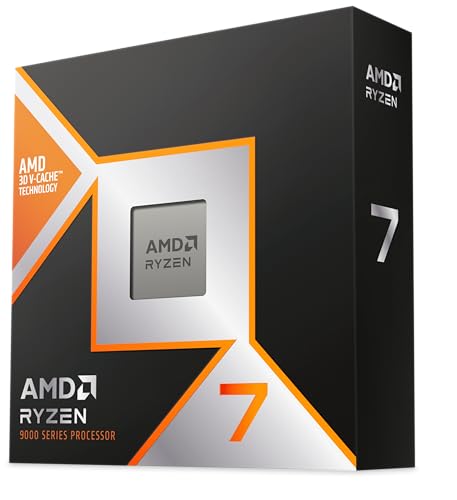
Quick picks
Use case | Pick | Why | Where to buy |
|---|---|---|---|
Best overall | The gaming default. 96 MB of L3 cache, 8 cores, drops into any AM5 board. | ||
Fastest | Roughly 3% more frames than the 9800X3D for meaningfully more power. | ||
Best value X3D | Within a few percent of the 9800X3D in games, on cheaper boards. | ||
Best budget X3D | 4.5% off the 7800X3D in games. The cheapest 3D V-Cache worth buying. | ||
Cheapest current-gen | The least you can spend and still land on a current-gen AM5 chip. | ||
Best non-X3D all-rounder | 8 Zen 5 cores for mixed work. Loses to the 7800X3D in games. | ||
Do-it-all flagship | 16 cores plus cache. For people who game and render on one machine. | ||
No graphics card | Radeon 780M plays 1080p at low to medium with no dGPU at all. |
Best overall
- Pick
- Why
The gaming default. 96 MB of L3 cache, 8 cores, drops into any AM5 board.
- Where to buy
Fastest
- Pick
- Why
Roughly 3% more frames than the 9800X3D for meaningfully more power.
- Where to buy
Best value X3D
- Pick
- Why
Within a few percent of the 9800X3D in games, on cheaper boards.
- Where to buy
Best budget X3D
- Pick
- Why
4.5% off the 7800X3D in games. The cheapest 3D V-Cache worth buying.
- Where to buy
Cheapest current-gen
- Pick
- Why
The least you can spend and still land on a current-gen AM5 chip.
- Where to buy
Best non-X3D all-rounder
- Pick
- Why
8 Zen 5 cores for mixed work. Loses to the 7800X3D in games.
- Where to buy
Do-it-all flagship
- Pick
- Why
16 cores plus cache. For people who game and render on one machine.
- Where to buy
No graphics card
- Pick
- Why
Radeon 780M plays 1080p at low to medium with no dGPU at all.
- Where to buy
Specs at a glance
CPU | Cores / threads | L3 cache | 3D V-Cache | Generation | Socket |
|---|---|---|---|---|---|
8 / 16 | 96 MB | Yes | Zen 5 | AM5 | |
8 / 16 | 96 MB | Yes | Zen 5 | AM5 | |
8 / 16 | 96 MB | Yes | Zen 4 | AM5 | |
6 / 12 | 96 MB | Yes | Zen 4 | AM5 | |
6 / 12 | 32 MB | No | Zen 5 | AM5 | |
8 / 16 | 32 MB | No | Zen 5 | AM5 | |
16 / 32 | 128 MB | Yes | Zen 5 | AM5 | |
8 / 16 | 16 MB | No | Zen 4 APU | AM5 |
- Cores / threads
8 / 16
- L3 cache
96 MB
- 3D V-Cache
Yes
- Generation
Zen 5
- Socket
AM5
- Cores / threads
8 / 16
- L3 cache
96 MB
- 3D V-Cache
Yes
- Generation
Zen 5
- Socket
AM5
- Cores / threads
8 / 16
- L3 cache
96 MB
- 3D V-Cache
Yes
- Generation
Zen 4
- Socket
AM5
- Cores / threads
6 / 12
- L3 cache
96 MB
- 3D V-Cache
Yes
- Generation
Zen 4
- Socket
AM5
- Cores / threads
6 / 12
- L3 cache
32 MB
- 3D V-Cache
No
- Generation
Zen 5
- Socket
AM5
- Cores / threads
8 / 16
- L3 cache
32 MB
- 3D V-Cache
No
- Generation
Zen 5
- Socket
AM5
- Cores / threads
16 / 32
- L3 cache
128 MB
- 3D V-Cache
Yes
- Generation
Zen 5
- Socket
AM5
- Cores / threads
8 / 16
- L3 cache
16 MB
- 3D V-Cache
No
- Generation
Zen 4 APU
- Socket
AM5
Ryzen 7 9800X3D: best overall for gaming
Specs
Spec | Value |
|---|---|
Cores / threads | 8 / 16 |
L3 cache | 96 MB (3D V-Cache) |
Base / boost | 4.7 / 5.2 GHz |
TDP | 120 W |
Socket | AM5 |
Memory | DDR5 |
Cores / threads
- Value
8 / 16
L3 cache
- Value
96 MB (3D V-Cache)
Base / boost
- Value
4.7 / 5.2 GHz
TDP
- Value
120 W
Socket
- Value
AM5
Memory
- Value
DDR5
This is the chip to buy if you are not trying to optimise anything. Eight Zen 5 cores, 96 MB of L3 cache stacked underneath, and the cache is the part that matters: games are latency-bound far more than they are core-count-bound, and a big cache keeps the working set off the memory bus. In practice that shows up as higher 1% lows, which is the number you feel as smoothness rather than read off a chart.
It is also the easy platform answer. Any AM5 board runs it, including the mid-range B650 options in our B650 motherboard guide, and you do not need DDR5 above the sweet spot to get most of the benefit.
Where it loses: it is a middling productivity chip for the money. Eight cores is eight cores, and if you spend your day in Blender or a compiler you are paying a cache premium that does nothing for those workloads. We went deeper on that trade in our 9800X3D buy-or-skip verdict.
Ryzen 7 9850X3D: fastest, if you will pay for 3%

Specs
Spec | Value |
|---|---|
Cores / threads | 8 / 16 |
L3 cache | 96 MB (3D V-Cache) |
Boost clock | +400 MHz vs 9800X3D |
TDP | 120 W |
Socket | AM5 |
Launched | January 2026 |
Cores / threads
- Value
8 / 16
L3 cache
- Value
96 MB (3D V-Cache)
Boost clock
- Value
+400 MHz vs 9800X3D
TDP
- Value
120 W
Socket
- Value
AM5
Launched
- Value
January 2026
The 9850X3D is a 9800X3D with a higher boost ceiling. Same eight cores, same 96 MB of stacked cache, same socket. The clock is about 400 MHz higher, roughly 8%, and that is the entire difference on the spec sheet.
The frame-rate difference is smaller than the clock difference. Across tested games it lands about 3.2% ahead on average, 211.2 FPS against 204.6, with the spread running from 1% to 6% depending on title. The wins concentrate in CPU-limited open-world and simulation games. In anything already saturated by cache, or anything GPU-bound, the gap closes to nothing.
Where it loses: power. It pulls around 18% more on average and as much as 40% more in some titles, which means more heat in the same cooler and a noisier loop for a few frames. Buy it if you want the fastest AMD gaming chip and the premium is small on the day you check. Otherwise the 9800X3D is the better buy and it is not close on value.
Ryzen 7 7800X3D: best value X3D

Specs
Spec | Value |
|---|---|
Cores / threads | 8 / 16 |
L3 cache | 96 MB (3D V-Cache) |
Base / boost | 4.2 / 5.0 GHz |
TDP | 120 W |
Socket | AM5 |
Generation | Zen 4 |
Cores / threads
- Value
8 / 16
L3 cache
- Value
96 MB (3D V-Cache)
Base / boost
- Value
4.2 / 5.0 GHz
TDP
- Value
120 W
Socket
- Value
AM5
Generation
- Value
Zen 4
The previous-generation X3D chip is still one of the best gaming buys AMD has, and it is the pick when the 9800X3D is more than you want to spend but you refuse to give up the cache. Same 96 MB, same eight cores, one generation back on the core architecture.
It sits close enough to the 9800X3D that the upgrade is hard to justify if you already own one. We ran that comparison in full in 7800X3D vs 9800X3D.
Where it loses: it is an end-of-life part on a live socket. Stock is clearance stock, so availability moves week to week and the price can swing in either direction. If you find one at a good number, take it. Do not build a plan around it being there next month.
Ryzen 5 7600X3D: best budget X3D

Specs
Spec | Value |
|---|---|
Cores / threads | 6 / 12 |
L3 cache | 96 MB (3D V-Cache) |
Base clock | 4.1 GHz |
TDP | 65 W |
Socket | AM5 |
Cooler | Not included |
Cores / threads
- Value
6 / 12
L3 cache
- Value
96 MB (3D V-Cache)
Base clock
- Value
4.1 GHz
TDP
- Value
65 W
Socket
- Value
AM5
Cooler
- Value
Not included
This is the chip that changed the bottom of the AMD gaming stack. Six cores instead of eight, but the full 96 MB of 3D V-Cache, which is the part that drives gaming performance. It lands about 4.5% behind the 7800X3D in games and roughly 10% ahead of Intel's Core Ultra 5 250K.
For a build that plays games and does little else, this is the value pick in the lineup. The cache advantage is largest at 1080p with a fast GPU, exactly where a budget-conscious builder tends to sit, and it narrows at 1440p as the GPU takes over. If the card in question is an RX 9070 XT, our CPU pairing guide for that card puts published numbers on where that narrowing happens.
Where it loses: six cores is a real ceiling. Heavily threaded work, streaming and encoding on the same machine, and a handful of newer games that scale past six cores will all find it. It also ships without a cooler, so budget for one. If you are weighing six against eight, our guide to how many CPU cores you need for gaming walks the ladder workload by workload.
Ryzen 5 9600X: cheapest way onto current-gen AM5

Specs
Spec | Value |
|---|---|
Cores / threads | 6 / 12 |
L3 cache | 32 MB |
Base / boost | 3.9 / 5.4 GHz |
TDP | 65 W |
Socket | AM5 |
Generation | Zen 5 |
Cores / threads
- Value
6 / 12
L3 cache
- Value
32 MB
Base / boost
- Value
3.9 / 5.4 GHz
TDP
- Value
65 W
Socket
- Value
AM5
Generation
- Value
Zen 5
The 9600X is the entry point to current-generation AM5, and its case is the platform rather than the chip. Six Zen 5 cores, a normal 32 MB cache, and a clear upgrade path: drop in an X3D part in two years without touching the board or the memory. Our CPU and motherboard guide walks through what that upgrade path is worth.
Where it loses: no 3D V-Cache. Against the 7600X3D it gives up real frames in cache-sensitive games, and that is most of the games people buy a gaming CPU for. Buy it because you want the cheapest current-gen entry with room to upgrade, not because you want the best frames at this budget. If frames are the goal and you can stretch, the 7600X3D is the better chip.
Ryzen 7 9700X: best non-X3D all-rounder

Specs
Spec | Value |
|---|---|
Cores / threads | 8 / 16 |
L3 cache | 32 MB |
Base / boost | 3.8 / 5.5 GHz |
TDP | 65 W |
Socket | AM5 |
Generation | Zen 5 |
Cores / threads
- Value
8 / 16
L3 cache
- Value
32 MB
Base / boost
- Value
3.8 / 5.5 GHz
TDP
- Value
65 W
Socket
- Value
AM5
Generation
- Value
Zen 5
Eight Zen 5 cores at 65 W, and the chip to pick when gaming is genuinely half of what the machine does. It handles compiles, exports and multi-app work better than any six-core in this list, and it runs cool enough that cooling stops being a design constraint.
The honest framing is a price one. The 9700X and the 7800X3D sit at roughly the same street price, and at equal money the 7800X3D wins gaming outright: about 6.6% on average, and far more in the titles that lean on cache. In Cyberpunk 2077 the gap is 125 FPS against 110, and the 1% lows separate by 47%. Whether that cache is worth paying for at 1440p depends on the card behind it, and our guide to the best CPU for 1440p gaming matches each GPU tier to the chip that earns its price there.
Where it loses: games, against its own price bracket. Buy the 9700X if your workload is mixed and you value the productivity headroom. If the machine is mostly for playing games, the money is better spent on cache.
Ryzen 9 9950X3D: best do-it-all flagship

Specs
Spec | Value |
|---|---|
Cores / threads | 16 / 32 |
L3 cache | 128 MB |
Base / boost | 4.3 / 5.7 GHz |
TDP | 170 W |
Socket | AM5 |
Generation | Zen 5 |
Cores / threads
- Value
16 / 32
L3 cache
- Value
128 MB
Base / boost
- Value
4.3 / 5.7 GHz
TDP
- Value
170 W
Socket
- Value
AM5
Generation
- Value
Zen 5
Sixteen cores with 3D V-Cache on one of the two core complexes. This is the chip for the person who does not want to choose: it games within a whisker of the 9800X3D and renders like a workstation part.
It earns its place in a single scenario, which is one machine doing both jobs seriously. If you stream while you play, or you edit and export between sessions, the extra eight cores stop being a spec-sheet number and start saving you real time.
Where it loses: for pure gaming it is money spent on cores you will not use, and the dual-CCD layout means the scheduler has to park games on the cache-equipped side. That mostly works now, but it is a moving part the single-CCD chips do not have. If you only game, buy the 9800X3D and spend the difference on the GPU.
Ryzen 7 8700G: the no-graphics-card path

Specs
Spec | Value |
|---|---|
Cores / threads | 8 / 16 |
Integrated GPU | Radeon 780M |
L3 cache | 16 MB |
TDP | 65 W |
Socket | AM5 |
Generation | Zen 4 APU |
Cores / threads
- Value
8 / 16
Integrated GPU
- Value
Radeon 780M
L3 cache
- Value
16 MB
TDP
- Value
65 W
Socket
- Value
AM5
Generation
- Value
Zen 4 APU
The 8700G is the one pick here that changes what the build costs, because it removes a component. The Radeon 780M is quick enough to play at 1080p on low to medium settings: around 45 FPS in Cyberpunk 2077 at low, comfortably past 60 in lighter titles, and well clear of that in esports games.
It is the right answer for a small, quiet machine, an HTPC, or a first build where the graphics card is coming later. Because it is AM5, that later graphics card slots straight in and the CPU keeps working.
Where it loses: it is not a substitute for a graphics card. A discrete RX 7600 is roughly 147% faster at low settings, and the gap widens as you turn things up. It also has the smallest cache in this list, so once you do add a GPU it is the weakest gaming CPU of the eight. Treat it as a path, not a destination.
9850X3D vs 9800X3D: which should you buy?
Aggregate gaming average for the two current Zen 5 X3D parts, same test rig.
- 211.2 FPS
- 204.6 FPS
Buy the 9800X3D. That is the verdict for almost everyone, and the numbers above are why: 3.2% average, and the two chips are otherwise identical parts on the same socket with the same cache.
The 9850X3D is worth it in one case. You want the fastest AMD gaming chip available, you play CPU-limited open-world or simulation titles at high frame rates, and the premium on the day you buy is small. Everywhere else the gap is inside the margin where you would not notice it without a counter on screen, and you pay for it in power and heat. We took that decision apart on its own page: whether the 9850X3D is worth it over the 9800X3D walks through the measured 1080p gap and what it costs in heat.
X3D vs non-X3D at the same price
Two chips at roughly the same street price, one with 3D V-Cache and one without.
- 125 FPS
- 110 FPS
This is the single most useful comparison in the AMD lineup right now, because the two chips cost about the same. The 7800X3D is a generation older and has half the raw clock advantage, and it still wins gaming by 6.6% on average. The 1% lows separate by far more. If you are weighing that tradeoff by genre rather than by budget, our breakdown of X3D vs non-X3D for gaming names one Ryzen per player type.
The rule it produces is simple. If the machine is mostly for games, spend on cache before you spend on cores or clocks. If the machine does real work as well, the eight Zen 5 cores are worth the frames you give up. Everything else in this list is a variation on that trade, and the same logic applies across vendors in our AMD vs Intel comparison.
Should you buy AM5 now or wait for Zen 6?
Buy now. AM5 has been shipping since 2022 and AMD has committed to supporting it past the next architecture, which means a board bought today is expected to take a Zen 6 chip later. That is the opposite of the position AM4 buyers were in at the equivalent point, and it is the strongest argument for the platform.
Waiting costs you the use of the machine, and the chip you would wait for will launch above the price the 9800X3D sits at now. The upgrade-minded move is to buy the cheapest chip that does the job today on a board you are happy to keep, then swap the CPU when the generation you want is out and discounted.
How we ranked these AMD gaming processors
The order is price-to-performance for gaming first, with platform longevity as the tiebreak. Gaming performance is taken from aggregate results across multiple reviewers rather than a single test run, because single-game results swing hard on cache-sensitive titles and would flatter the X3D parts unfairly.
Every pick has to be a chip you can buy today, on a socket that has an upgrade path, with a cooler solution that does not cost more than the next chip up. Parts that only make sense at a specific discount are noted as such rather than ranked on the assumption the discount holds. Where a chip wins on paper and loses in practice, the practice wins. Our full cross-vendor CPU ranking applies the same method with Intel included.
The bottom line
If you want the best gaming CPU and you are done thinking about it, buy the 9800X3D. If your budget stops short of that, buy the 7600X3D and keep the cache. If you game and work on the same machine, buy the 9700X for mixed loads or the 9950X3D if the work is serious. If you want the fastest chip and the premium is small today, buy the 9850X3D. If there is no graphics card in the build yet, buy the 8700G and add one later. If the 9950X3D is the chip you are circling, the Ryzen 9 7950X3D vs 9950X3D comparison covers whether last-gen 16-core silicon is still the smarter buy.
FAQ
What is the best AMD CPU for gaming in 2026?
The Ryzen 7 9800X3D. Its 96 MB of 3D V-Cache is what gaming rewards, it works in any AM5 board, and the only chip that beats it is the 9850X3D by about 3% for meaningfully more power draw. Unless you also do heavy productivity work, nothing above it is worth the money.
Is the Ryzen 7 9850X3D worth it over the 9800X3D?
For most people, no. It averages 3.2% more frames across tested games, with a range of 1% to 6%, and draws around 18% more power to do it. It makes sense if you specifically want the fastest AMD gaming chip and play CPU-limited open-world or simulation titles. Otherwise the 9800X3D is the better value.
Is the Ryzen 5 7600X3D better than the 7600X for gaming?
Yes, clearly. The 7600X3D carries the full 96 MB of 3D V-Cache against the 7600X's 32 MB, and cache is what drives gaming frame rates. It lands about 4.5% behind the much more expensive 7800X3D. That is why the 7600X no longer appears in this list.
Do I need 3D V-Cache, or is a normal Ryzen chip fine?
If the machine is mainly for games, get the cache. At the same price the 7800X3D beats the 9700X by about 6.6% on average in games and by far more in the 1% lows. If you compile, render or stream on the same machine, the extra cores on a non-X3D chip are worth more than the frames you give up.
Can the Ryzen 7 8700G game without a graphics card?
At 1080p on low to medium settings, yes. Its Radeon 780M manages around 45 FPS in Cyberpunk 2077 at low and comfortably more in lighter and esports titles. It is not a replacement for a discrete card: an RX 7600 is roughly 147% faster. It suits a small or quiet build, or one where the graphics card comes later.
Related Articles
Best 1440p 120 FPS Mid-Range Gaming PC Build 2026 — $2,500
$2,500 mid-range gaming PC for 1440p 120 FPS — Ryzen 7 9800X3D + RTX 5070, live Amazon prices, flagship-GPU-ready PSU for an easy upgrade.
Jan 16, 2026
Best 4K 120 FPS High-End Gaming PC Build 2026 — $3,500
$3,500 high-end gaming PC for 4K 120 FPS — Ryzen 7 9800X3D + RTX 5080 16GB, live Amazon prices and DLSS 4 frame generation.
Jan 16, 2026

Best CPUs for Gaming in 2026: Top Picks for Every Budget
The best gaming CPUs for 2026 across every budget, from the Ryzen 5 7600X to the Ryzen 9 9950X3D, with full specs and clear buying advice for every tier.
Jul 8, 2026

AMD vs Intel 2026: 4 Tier Matchups for Gaming & Work
AMD vs Intel for gaming in 2026, settled tier by tier: a clear winner at every price band from budget to flagship, plus a separate productivity verdict.
Aug 10, 2026

Best $1,500 Gaming PC Build 2026: RTX 5070 + 7800X3D
Create a powerful $1500 gaming PC in 2026 using the Ryzen 7 7800X3D and RTX 5070 to dominate 1440p Ultra, enjoy smoother 4K, and stay set for future upgrades.
Aug 3, 2025