Affiliate Disclosure: As an Amazon Associate we earn from qualifying purchases. Some links may earn us a commission at no cost to you.

Is the Ryzen 7 9800X3D Worth It in 2026? Buy or Skip
Buy the Ryzen 7 9800X3D if you play competitive shooters at high refresh, flight and racing sims, or strategy games with heavy AI loads. Skip it if you game at 1440p on a mid-tier GPU, where the same money does more good in the graphics card. It is the fastest gaming CPU on the market in 2026, and it carries a price premium that puts it in direct competition with building a more complete system around a 9600X. Whether that premium pays off depends on what you play, what GPU you pair it with, and whether V-Cache-sensitive workloads are part of your gaming diet at all.
The rest of this guide shows the work behind that split: what the X3D cache buys you frame by frame, where the 9600X and 9700X close the gap, how the Core Ultra 7 265K compares on the other platform, and whether the newer 9850X3D changes the answer.
Our top pick: AMD Ryzen 7 9800X3D
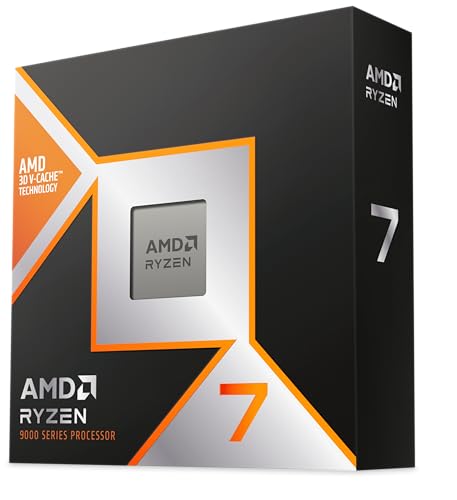
The 9800X3D is the gaming CPU PCBH recommends at the high end without reservation. Its 96 MB of L3 cache through AMD's 3D V-Cache technology gives it an advantage in cache-hungry games that no other mainstream chip can match at any price. If gaming performance is the primary variable in your build decision, nothing else competes.
At a glance: 9800X3D vs the alternatives
Chip | Cores / TDP | V-Cache | Cache-sensitive gaming | GPU-bound 1440p | Where to buy |
|---|---|---|---|---|---|
8c/16t, 120W | 96 MB | Top tier | Top tier | Check Price | |
8c/16t, 120W | 104 MB | Top tier (+3%) | Top tier | Check Price | |
8c/16t, 65W | None | 15-20% behind | Near-equal | Check Price | |
6c/12t, 65W | None | 15-25% behind | Within 5-8% | Check Price | |
20c/125W | None | 25-30% behind | Near-equal | Check Price |
- Cores / TDP
8c/16t, 120W
- V-Cache
96 MB
- Cache-sensitive gaming
Top tier
- GPU-bound 1440p
Top tier
- Where to buy
- Check Price
- Cores / TDP
8c/16t, 120W
- V-Cache
104 MB
- Cache-sensitive gaming
Top tier (+3%)
- GPU-bound 1440p
Top tier
- Where to buy
- Check Price
- Cores / TDP
8c/16t, 65W
- V-Cache
None
- Cache-sensitive gaming
15-20% behind
- GPU-bound 1440p
Near-equal
- Where to buy
- Check Price
- Cores / TDP
6c/12t, 65W
- V-Cache
None
- Cache-sensitive gaming
15-25% behind
- GPU-bound 1440p
Within 5-8%
- Where to buy
- Check Price
- Cores / TDP
20c/125W
- V-Cache
None
- Cache-sensitive gaming
25-30% behind
- GPU-bound 1440p
Near-equal
- Where to buy
- Check Price
What you're paying for: the X3D cache explained
The "3D" in 9800X3D refers to 96 megabytes of L3 cache stacked directly on top of the chip die using AMD's 3D V-Cache technology. Standard Zen 5 chips carry 32-40 MB. That gap is not subtle.
Every frame a game runs, the CPU fetches game-state data: AI decisions, physics calculations, draw call data. The round trip from L3 cache takes roughly 1.5 nanoseconds. The round trip from main system RAM takes 60-80 nanoseconds. The more of a game's working data fits in L3 cache, the fewer of those expensive RAM trips happen, and the more frames the chip can push per second.
The games where this matters most share a common pattern: they issue many small, fast CPU requests per frame rather than a few large ones. Competitive shooters (Counter-Strike 2 at 1080p competitive settings), sims (Microsoft Flight Simulator 2024 over photogrammetry cities), strategy games with thousands of units (Total War: Warhammer 3 late-game battles, Baldur's Gate 3 Act 3 in the Lower City), and MMOs in dense content all feed directly into the V-Cache advantage. If you want to understand the generational leap from the 7800X3D to the 9800X3D, our 9800X3D vs 7800X3D comparison breaks down where each generation pulled ahead.
The games where this matters least are the ones where the GPU becomes the bottleneck before the CPU does. At 1440p with a mainstream GPU, Cyberpunk 2077 at Ultra and Black Myth: Wukong at High are both waiting on the GPU for the majority of frames. The 9800X3D and the 9600X finish the CPU work at roughly the same time, then both sit idle while the GPU catches up. That's where the premium largely disappears. For the category-level version of that call across the whole Ryzen lineup, see our guide to X3D vs non-X3D for gaming, which picks one chip per player type.
Benchmarks
- Ryzen 7 9800X3D604 FPS
- Ryzen 7 9850X3D640 FPS
- Core Ultra 7 265K490 FPS
- Ryzen 7 9700X480 FPS
- Ryzen 5 9600X462 FPS
- Ryzen 7 9850X3D90 FPS
- Ryzen 7 9800X3D85 FPS
- Ryzen 7 9700X72 FPS
- Ryzen 5 9600X68 FPS
- Core Ultra 7 265K65 FPS
- Ryzen 7 9850X3D148 FPS
- Ryzen 7 9800X3D140 FPS
- Ryzen 7 9700X115 FPS
- Ryzen 5 9600X112 FPS
- Core Ultra 7 265K106 FPS
- Ryzen 7 9850X3D156 FPS
- Ryzen 7 9800X3D154 FPS
- Ryzen 7 9700X142 FPS
- Core Ultra 7 265K140 FPS
- Ryzen 5 9600X138 FPS
- Ryzen 7 9850X3D93 FPS
- Ryzen 7 9800X3D90 FPS
- Ryzen 7 9700X84 FPS
- Core Ultra 7 265K82 FPS
- Ryzen 5 9600X81 FPS
- Ryzen 7 9850X3D116 FPS
- Ryzen 7 9800X3D110 FPS
- Ryzen 7 9700X92 FPS
- Ryzen 5 9600X88 FPS
- Core Ultra 7 265K86 FPS
Buy it: when the 9800X3D is worth every dollar
Competitive shooters at high refresh rates. If you're chasing 360Hz or higher in Counter-Strike 2, Valorant, or any game where the CPU is the frame-rate ceiling at max settings, the 9800X3D delivers. The gap over the 9600X in CS2 at competitive settings runs around 30% in average frame rates. That advantage is real and tangible. You'll feel it in 1% lows even more than in averages.
Simulation and strategy games. Microsoft Flight Simulator 2024 flying over dense photogrammetry cities. Total War: Warhammer 3 Mirror of Madness battles with 5,000 units on screen. Baldur's Gate 3 in Act 3's Lower City. Stellaris in a late-game empire with 200 AI factions running. These are the genres that expose the V-Cache advantage most clearly. The 9800X3D leads by 20-25% in these titles over the 9600X. That's the difference between steady 85 FPS and dipping to 68 FPS in the most demanding scenes of your flight plan. Star Citizen's busy landing zones load the CPU the same way, and our best CPU for Star Citizen guide ranks five chips by how well they hold up there.
Escape from Tarkov belongs in this group too. Its Unity engine keeps an enormous working set resident on dense maps, and the best CPUs for Escape from Tarkov are ranked by how much of that set the cache can hold.
Building around a high-end GPU at 1440p or 1080p. If you're pairing with an RTX 5080, RTX 5090, or an RX 9070 XT, you need a CPU that keeps up. At 1440p with those cards, the GPU's frame delivery is fast enough that a slower CPU starts showing in 1% lows. The 9800X3D removes CPU from the equation entirely. To pick the right graphics card to pair with it, see our guide to the best GPUs for the 9800X3D for GPU pairings across every budget.
Streaming or recording while gaming in cache-sensitive titles. The 96 MB cache handles context-switching more gracefully than standard Zen 5. When a second thread (encoder, streaming software) is stealing CPU cycles, the X3D architecture maintains more stable frame rates than the 9700X or 9600X in the titles that stress cache the most.
Skip it: when the 9800X3D is overkill
1440p gaming with a mid-tier GPU. If your build is centered around an RTX 4070 Super, an RX 7800 XT, or anything in that performance band, the GPU is your frame limiter in AAA titles at 1440p. Cyberpunk 2077 at 1440p Ultra with that class of GPU produces nearly identical frame rates from the 9600X and the 9800X3D. The CPU is waiting on the GPU every frame. You're paying the X3D premium for performance you can't access yet. The broader version of that question, do you need an X3D CPU for gaming at all, works through the same resolution and library math for three AM5 chips.
The honest call: the savings from choosing a 9600X or 9700X go toward a GPU upgrade instead. A 9700X plus a better GPU tier almost always beats a 9800X3D plus a mid-tier GPU on actual gaming outcomes. Our Ryzen 5 9600X gaming review walks through exactly where that trade lands at 1080p and 1440p.
Productivity-heavy workloads without gaming in cache-sensitive titles. If your primary workload is video editing, 3D rendering, or compiling code, the 9800X3D's 8-core config is not the right choice. A Ryzen 9 9950X or the Core Ultra 7 265K delivers more sustained all-core throughput for these tasks. The V-Cache is optimized for the fast, random data-access pattern games need, not the sequential bulk-data-throughput pattern renders need. If Intel's flagship is on your shortlist for that work, the 9800X3D vs 285K breakdown shows where its 24 cores pull ahead and where the X3D still wins.
One caveat on the 265K: it had game-to-game performance regressions at Arrow Lake launch that reviewers flagged. That situation has largely resolved with driver and BIOS updates, but if you're considering the 265K for gaming specifically, compare reviewer benchmarks from late 2025 onward.
Should you wait for the 9850X3D?
The short answer: no. Buy the 9800X3D now.
The 9850X3D launched with modest improvements: roughly 3-4% faster in most games, up to 6% in the most cache-sensitive titles like Counter-Strike 2 and MSFS 2024. The catch is a 30% higher power draw under gaming load. The 9850X3D pulls significantly more wattage while the performance advantage is measured in single-digit percentages. On a per-frame-per-watt basis, the 9800X3D wins cleanly.
With AMD's PBO (Precision Boost Overdrive) enabled, a tuned 9800X3D closes most of the gap between the two chips. The 9850X3D makes sense only if you want the absolute ceiling with no tuning effort and aren't concerned about the power delta.
At current pricing, the 9850X3D charges a premium for 3-4% better performance in a narrow set of games. The 9800X3D is the better value by a clear margin for virtually every buyer. If you're holding out because of the 9850X3D, stop holding out. The upgrade question is settled. If your build is headed for the flagship card, our picks for the best CPU for the RTX 5090, graded at 1440p and 4K, show where that value call holds.
One more X3D option sits above both: the Ryzen 9 9950X3D, which pairs 3D V-Cache with 16 cores. That is the right chip if you genuinely need heavy multi-threaded throughput alongside cache-sensitive gaming, because it does both jobs well. For gaming alone it does not beat the 9800X3D in any way you will see on screen, and AMD has said as much itself. If frames are the goal, the extra cores are cost you never get back.
How we decided
For a CPU decision-guide, the evaluation method matters as much as the verdict. The chips in this comparison were selected to answer the three questions buyers actually ask: Is the X3D worth it over the cheaper 9600X? Is it worth it over the more efficient 9700X? Is it worth it over the cheaper cross-platform 265K? And does the 9850X3D change the calculus? If your question is the cheapest way into V-Cache rather than the fastest, our 7700X3D vs 7800X3D comparison covers the Zen 4 end of the X3D line.
Performance data comes from published benchmark suites at Tom's Hardware, GamersNexus, TechPowerUp, and Hardware Unboxed. The benchmark basket prioritizes cache-sensitive titles (Counter-Strike 2, MSFS 2024, Total War: Warhammer 3, Baldur's Gate 3 Act 3) because those are where the X3D decision is made, plus two GPU-bound AAA titles (Cyberpunk 2077, Black Myth: Wukong) to show where the premium evaporates.
Platform compatibility: all AMD chips in this comparison use the AM5 socket. An existing B650 or B850 board from any reputable partner handles the 9800X3D with a current BIOS. If your board predates the Zen 5 AGESA update (most boards from major vendors have had it since late 2024), flash the BIOS before swapping the chip. For a full look at which B650 boards pair well with Ryzen 9000 series chips, that guide covers the VRM requirements by CPU class.
The cooler is not included with the 9800X3D, so budget at least a Thermalright Peerless Assassin 120 SE as a minimum pairing. The Intel 265K requires a Z890 motherboard, which adds platform cost to the cross-platform comparison. For a broader look at what factors matter when choosing a CPU for your build, the pillar guide covers the full decision framework.
Bottom line
The Ryzen 7 9800X3D is worth the price if you play in the genres where V-Cache shows: competitive shooters at high refresh, flight and racing sims, strategy games with heavy AI loads, or RPGs with dense scene simulation. For those buyers, the gap over the 9600X and 9700X is real and repeatable across a significant part of the PC gaming catalog.
For 1440p gaming with a mid-tier GPU in a mainstream AAA library, the 9600X or 9700X handles the workload. The delta is invisible in real play at that tier. Put the savings toward the GPU. We put that trade head to head in the Ryzen 7 9700X vs 9800X3D breakdown, which sorts the two chips by workload, resolution, and cache sensitivity rather than by a single average.
The 9850X3D adds too little performance for too much power to justify the premium at current pricing.
FAQ
Is the Ryzen 7 9800X3D compatible with my existing AM5 motherboard?
Yes, as long as the board has the AGESA Zen 5 compatibility BIOS update. Most B650 and B850 boards from major vendors (MSI, ASUS, ASRock, Gigabyte) have had this update available since late 2024. Check your board manufacturer's support page for the latest BIOS version before installing the chip. If you're building new, any current B850 board handles it out of the box.
Do I need a new motherboard to use the Ryzen 7 9800X3D?
Not if you're already on AM5. If you're upgrading from an older platform (AM4, Intel LGA 1700 or 1851), you'll need a new AM5 motherboard and DDR5 RAM. A mid-range B650 or B850 board handles the 9800X3D without issue. You don't need an X870E for a standard gaming build.
Is the Ryzen 7 9800X3D overkill for 1440p gaming?
Yes, for most 1440p builds. Paired with a mid-tier GPU like the RTX 4070 Super or RX 7800 XT, the GPU is the bottleneck in most AAA titles, the 9600X or 9700X lands within a few percent, and the X3D premium does more good in the graphics card. It stops being overkill with a high-end GPU (RTX 5080, RX 9070 XT), and in cache-sensitive titles like Counter-Strike 2, MSFS 2024, and Total War, where the X3D gap shows even at 1440p.
How much faster is the 9800X3D than the 9600X in games?
In cache-sensitive titles, the gap is 15-30% in average frame rates and wider in 1% lows. CS2, MSFS 2024, and Total War show the largest deltas. In GPU-bound AAA at 1440p like Cyberpunk 2077, the gap shrinks to 5-8% or less. The average across a mixed game library sits around 10-15% in favor of the 9800X3D, which is the number to weigh against the price difference.
Should I wait for the Ryzen 7 9850X3D or buy the 9800X3D now?
Buy the 9800X3D now. The 9850X3D is about 3-4% faster in most games with approximately 30% more power draw under gaming load. With PBO enabled on the 9800X3D, the gap narrows further. The 9850X3D makes sense only if you want the absolute frame ceiling without any tuning. For most buyers, the 9800X3D is the better value at current pricing.
Related Articles

9800X3D vs 7800X3D (2026): 11% Average, 25% Where It Counts
9800X3D vs 7800X3D in 2026: an 11% average uplift, 25% in cache-heavy games, and which of four buyer profiles should actually pay the upgrade premium.
Sep 13, 2026

Best B650 Motherboards for Ryzen 9000 (2026): Mid-Tier AM5 Picks
B650 is the AM5 value lane for Ryzen 9000. We pick 5 boards by build profile, with a BIOS-update buying framework built in.
May 18, 2026

Best Monitor Arm for Ultrawide: 5 Picks by Weight (2026)
Best monitor arm for ultrawide monitors in 2026: 5 arms whose rated range matches real 34 to 49 inch panel weights, so your screen stays put without sagging.
Oct 15, 2026

Best Gaming Laptop for Modern Warfare 4 (2026): 5 Picks
The best gaming laptop for Modern Warfare 4 comes down to GPU wattage and VRAM. Five picks from RTX 5060 to RTX 5080, matched to 144Hz and 240Hz targets.
Oct 15, 2026

AM4 vs AM5 in 2026: Is AM4 Still Worth It? (5 CPU Picks)
AM4 vs AM5 in 2026: AM5 still wins most new gaming builds despite DDR5 prices, but AM4 is the smarter buy below one budget line. See where it flips + 5 picks.
Oct 15, 2026