Affiliate Disclosure: As an Amazon Associate we earn from qualifying purchases. Some links may earn us a commission at no cost to you.

Ryzen 7 9700X Vs 9800X3D (2026): 8 Games, 6 Buyer Profiles
At a glance
Spec | ||
|---|---|---|
Architecture | Zen 5 | Zen 5 + 2nd-gen 3D V-Cache |
Cores / threads | 8 / 16 | 8 / 16 |
Base / boost clock | 3.8 GHz / 5.5 GHz | 4.7 GHz / 5.2 GHz |
L2 + L3 cache | 40 MB (8 + 32) | 104 MB (8 + 96 stacked) |
TDP (default) | 65W | 120W |
Socket / platform | AM5 (DDR5, PCIe 5.0) | AM5 (DDR5, PCIe 5.0) |
Integrated graphics | RDNA 2, 2 CUs | RDNA 2, 2 CUs |
Overclocking | Unlocked, full PBO | Unlocked, full PBO (V-Cache under CCD) |
Sweet spot | 1440p / 4K AAA, console ports, SFF | Sim / strategy / MMO, 1080p competitive cache-heavy |
Buy |
Architecture
- AMD Ryzen 7 9700X
Zen 5
- AMD Ryzen 7 9800X3D
Zen 5 + 2nd-gen 3D V-Cache
Cores / threads
- AMD Ryzen 7 9700X
8 / 16
- AMD Ryzen 7 9800X3D
8 / 16
Base / boost clock
- AMD Ryzen 7 9700X
3.8 GHz / 5.5 GHz
- AMD Ryzen 7 9800X3D
4.7 GHz / 5.2 GHz
L2 + L3 cache
- AMD Ryzen 7 9700X
40 MB (8 + 32)
- AMD Ryzen 7 9800X3D
104 MB (8 + 96 stacked)
TDP (default)
- AMD Ryzen 7 9700X
65W
- AMD Ryzen 7 9800X3D
120W
Socket / platform
- AMD Ryzen 7 9700X
AM5 (DDR5, PCIe 5.0)
- AMD Ryzen 7 9800X3D
AM5 (DDR5, PCIe 5.0)
Integrated graphics
- AMD Ryzen 7 9700X
RDNA 2, 2 CUs
- AMD Ryzen 7 9800X3D
RDNA 2, 2 CUs
Overclocking
- AMD Ryzen 7 9700X
Unlocked, full PBO
- AMD Ryzen 7 9800X3D
Unlocked, full PBO (V-Cache under CCD)
Sweet spot
- AMD Ryzen 7 9700X
1440p / 4K AAA, console ports, SFF
- AMD Ryzen 7 9800X3D
Sim / strategy / MMO, 1080p competitive cache-heavy
Buy
- AMD Ryzen 7 9700X
- AMD Ryzen 7 9800X3D
Same eight Zen 5 cores, same AM5 socket, same platform features. The 9800X3D's 96 MB of stacked L3 wins the games that bind on cache; the 9700X's higher boost clock and 65W TDP win everywhere the cache does not bind. Which of those describes your library is the whole decision, and the eight benchmarks below sort it.
Where each one wins
Workload / scenario | Winner | Why | Buy |
|---|---|---|---|
1080p competitive, cache-heavy (CS2, BG3 Act 3, Tarkov) | AMD Ryzen 7 9800X3D | 96 MB L3 keeps the working set in cache; 1% lows hold where the 9700X's 32 MB forces DRAM round-trips mid-frame. | |
1080p competitive, cache-light (Valorant, Apex, Overwatch 2) | AMD Ryzen 7 9700X | Both chips cap on monitor refresh; the 9700X's 5.5 GHz boost and 65W envelope are the cleaner spend when cache doesn't bind. | |
1440p AAA, console-port / Ubisoft library (Spider-Man, RDR2, AC Shadows) | AMD Ryzen 7 9700X | Well-optimized engines run effectively identical on both chips; reallocate the premium to a GPU tier bump for visible frames. | |
1440p AAA, cache-sensitive (Cyberpunk crowds, Hogwarts Hogsmeade, BG3 Act 3) | AMD Ryzen 7 9800X3D | Cache wedge survives at 1440p in titles that pin the CPU; small averages lead, larger 1% low lead in dense scenes. | |
4K AAA gaming (any GPU, any library) | AMD Ryzen 7 9700X | Workload is GPU-bound; the cache wedge collapses; both chips trade frames within margin of error. Reallocate to GPU. | |
Sim / strategy / MMO (MSFS 2024, Total War WH3 Battle, WoW raids, Stellaris late-game) | AMD Ryzen 7 9800X3D | The textbook X3D use case. Cache-bound simulation steps and dense AI tick rates open double-digit gaps against the 9700X. | |
Per-core productivity (Handbrake single-pass, photo edit, code compile) | AMD Ryzen 7 9700X | 5.5 GHz boost vs 5.2 GHz gives the 9700X a small lead in lightly-threaded workloads where cache doesn't help. | |
SFF / ITX builds with 240mm AIO ceiling or air-cooler-only | AMD Ryzen 7 9700X | 65W default TDP fits a strong air cooler comfortably; the X3D's 120W envelope tightens compact builds without buying frames the SFF GPU can feed. |
1080p competitive, cache-heavy (CS2, BG3 Act 3, Tarkov)
- Winner
AMD Ryzen 7 9800X3D
- Why
96 MB L3 keeps the working set in cache; 1% lows hold where the 9700X's 32 MB forces DRAM round-trips mid-frame.
- Buy
1080p competitive, cache-light (Valorant, Apex, Overwatch 2)
- Winner
AMD Ryzen 7 9700X
- Why
Both chips cap on monitor refresh; the 9700X's 5.5 GHz boost and 65W envelope are the cleaner spend when cache doesn't bind.
- Buy
1440p AAA, console-port / Ubisoft library (Spider-Man, RDR2, AC Shadows)
- Winner
AMD Ryzen 7 9700X
- Why
Well-optimized engines run effectively identical on both chips; reallocate the premium to a GPU tier bump for visible frames.
- Buy
1440p AAA, cache-sensitive (Cyberpunk crowds, Hogwarts Hogsmeade, BG3 Act 3)
- Winner
AMD Ryzen 7 9800X3D
- Why
Cache wedge survives at 1440p in titles that pin the CPU; small averages lead, larger 1% low lead in dense scenes.
- Buy
4K AAA gaming (any GPU, any library)
- Winner
AMD Ryzen 7 9700X
- Why
Workload is GPU-bound; the cache wedge collapses; both chips trade frames within margin of error. Reallocate to GPU.
- Buy
Sim / strategy / MMO (MSFS 2024, Total War WH3 Battle, WoW raids, Stellaris late-game)
- Winner
AMD Ryzen 7 9800X3D
- Why
The textbook X3D use case. Cache-bound simulation steps and dense AI tick rates open double-digit gaps against the 9700X.
- Buy
Per-core productivity (Handbrake single-pass, photo edit, code compile)
- Winner
AMD Ryzen 7 9700X
- Why
5.5 GHz boost vs 5.2 GHz gives the 9700X a small lead in lightly-threaded workloads where cache doesn't help.
- Buy
SFF / ITX builds with 240mm AIO ceiling or air-cooler-only
- Winner
AMD Ryzen 7 9700X
- Why
65W default TDP fits a strong air cooler comfortably; the X3D's 120W envelope tightens compact builds without buying frames the SFF GPU can feed.
- Buy
Find the row that looks most like your build and your library, and the chip pick is already made. The deep-dives below explain the why behind each verdict.
Benchmarks
These tables draw from launch-window reviews on Hardware Unboxed, GamersNexus, TechPowerUp, and Tom's Hardware, with a small number of cells projected from class-tier patterns where head-to-head coverage at the exact preset is thin. The pattern across the basket: the 9800X3D wins decisively in cache-bound titles, both chips trade frames in well-optimized engines, and 4K is GPU-bound enough that the cache wedge disappears.
Counter-Strike 2 at 1080p Competitive (low settings)
- Ryzen 7 9700X580 fps
- Ryzen 7 9800X3D625 fps
Source: Hardware Unboxed, November 2024 launch coverage.
Cyberpunk 2077 at 1440p Ultra (no RT)
- Ryzen 7 9700X142 fps
- Ryzen 7 9800X3D148 fps
Source: TechPowerUp, November 2024 launch coverage.
Marvel Rivals at 1440p High
- Ryzen 7 9700X175 fps
- Ryzen 7 9800X3D180 fps
UE5 engine; GPU-bound at 1440p high on most current cards. The CPU choice barely moves the needle here.
Hogwarts Legacy at 1440p Ultra
- Ryzen 7 9700X118 fps
- Ryzen 7 9800X3D124 fps
Hogsmeade and Hogwarts castle interiors are cache-binding scenes; the 1% low wedge in those areas is larger than the averages imply. Source: Tom's Hardware, November 2024.
Baldur's Gate 3 at 1080p High (Act 3 Lower City)
- Ryzen 7 9700X168 fps
- Ryzen 7 9800X3D178 fps
Act 3 Lower City is the engine's stress test. The X3D's cache pins 1% lows where the 9700X's 32 MB forces a DRAM hop.
Microsoft Flight Simulator 2024 at 1440p Ultra
- Ryzen 7 9700X78 fps
- Ryzen 7 9800X3D92 fps
Busy hubs (KJFK, EGLL, KLAX) are where the cache wedge widens. The numbers above are projected from MSFS 2020's cache-binding signature and validated against early 2024 launch coverage.
Total War: Warhammer 3 at 1440p Ultra (Battle Benchmark)
- Ryzen 7 9700X92 fps
- Ryzen 7 9800X3D108 fps
The Battle Benchmark is the textbook X3D wedge. Roughly 15 percent averages lead, larger 1% low lead in the unit-clash scenes that decide a real campaign. Source: GamersNexus, November 2024.
Black Myth: Wukong at 1440p High (DLSS Quality)
- Ryzen 7 9700X115 fps
- Ryzen 7 9800X3D117 fps
UE5 with heavy RT effects; the workload is GPU-bound at 1440p high once DLSS Quality is on. Both chips effectively tie.
AMD Ryzen 7 9700X
The volume Zen 5 Ryzen 7. Eight Zen 5 cores at a 5.5 GHz boost on a 65W default TDP. No V-Cache, the standard 32 MB L3, and the cleaner spend when the workload does not pin the cache.

Specs
Spec | Value |
|---|---|
Cores / threads | 8 cores / 16 threads |
Clocks (base / boost) | 3.8 GHz / 5.5 GHz |
Cache (L2 + L3) | 8 MB L2 + 32 MB L3 (40 MB total) |
TDP | 65W default (105W configurable PPT ceiling) |
Socket / platform | AM5 - DDR5 + PCIe 5.0, unlocked with full PBO |
Integrated graphics | RDNA 2 (2 CUs) - display-out and basic recovery |
Cores / threads
- Value
8 cores / 16 threads
Clocks (base / boost)
- Value
3.8 GHz / 5.5 GHz
Cache (L2 + L3)
- Value
8 MB L2 + 32 MB L3 (40 MB total)
TDP
- Value
65W default (105W configurable PPT ceiling)
Socket / platform
- Value
AM5 - DDR5 + PCIe 5.0, unlocked with full PBO
Integrated graphics
- Value
RDNA 2 (2 CUs) - display-out and basic recovery
What it does well
1080p competitive at the monitor cap on cache-light titles (Valorant, Apex Legends, Overwatch 2) lands within single-digit fps of the 9800X3D, because the workload caps on the monitor's refresh rate long before cache becomes the binding constraint. The 9700X's 5.5 GHz boost noses ahead of the X3D's 5.2 GHz on some of these engines. Either chip pushes the refresh ceiling; the 9700X gets there for less money.
1440p AAA at high to ultra settings in the console-port and Ubisoft library (Spider-Man Remastered, RDR2, GTA V, AC Shadows) runs effectively identically on both chips. These engines are well-optimized for working sets that fit the 9700X's 32 MB L3, and the GPU does the heavy lifting at 1440p. The X3D's cache buys frames you cannot see.
4K AAA on any current GPU is even more decisive. The workload is GPU-bound across the basket; the cache wedge collapses; both chips trade frames within margin of error. A 4K AAA buyer paying the X3D premium is buying cache the GPU cannot feed.
Per-core productivity workloads (Handbrake single-pass, Lightroom edits, code compile dominated by per-core clocks) lean toward the 9700X's higher 5.5 GHz boost. The gap is small (a few percent in most benchmarks), but it's the right direction for a productivity-flavored buyer who edges into rendering on the side.
The 65W default TDP is meaningful for SFF and ITX builds. A strong air cooler (Peerless Assassin, Thermalright Phantom Spirit, Noctua NH-D15) holds the chip at stock under sustained load without losing its mind, and the cooling budget doesn't have to compete with the GPU for case airflow. The Thermalright Phantom Spirit 120 SE at builder pricing handles a 9700X with headroom where it would be at its limit on a sustained X3D workload.
The price difference reallocated to a GPU tier bump (5070 to 5070 Ti, 9070 to 9070 XT) wins more visible frames than the X3D cache buys in most libraries. That's the methodology beat: size the CPU to the GPU, not the other way around. At a 1500-class build with a mid-tier GPU, the 9700X is the chip pick and the GPU eats the difference.
What you give up
Cache-sensitive workloads. This is the big one. Sim racing (iRacing, ACC, Le Mans Ultimate), flight sim (MSFS 2024, DCS, X-Plane 12), strategy (Total War: Warhammer 3 Battle Benchmark, Stellaris late-game, Civ 7 turn times), MMOs in dense content (WoW raids and M+ keys, FFXIV alliance raids, ESO Cyrodiil), factory builders (Factorio 1k+ SPM, Satisfactory mega-bases), and Escape from Tarkov all open meaningful gaps against the 9800X3D. These titles have working sets that don't fit in 32 MB L3, so every cache miss is a DRAM round-trip; the X3D's 96 MB largely eliminates those round-trips and the result shows up as a double-digit averages lead and an even larger 1% low lead in dense scenes. If your library skews this way, the 9700X is the wrong chip even if the budget is tight.
1080p competitive at the absolute frame ceiling on cache-heavy titles (Counter-Strike 2, Baldur's Gate 3 Act 3 Lower City) is the second wedge. CS2 above 500 fps is cache-pinned, not clock-pinned; the 9800X3D's 96 MB L3 keeps the working set close, and the 9700X has to refetch frame after frame. The averages gap is meaningful at 1080p competitive on these titles, and the 1% low gap is larger.
Long-tail platform headroom for cache-binding workloads that arrive over the build's lifetime. Buying the 9700X today and trying to pair it with a 4K OLED upgrade in 2028 can leave 1% lows on the table in titles that didn't exist when the chip was specced. If the build is a four-year hold and the library has any chance of drifting toward sim or strategy, the X3D is the safer long-term bet.
Who it's for
The 1440p or 4K AAA player on a 1500-class to 2000-class build whose library leans console-port and modern AAA, not sim, not strategy, not MMO. The SFF or ITX builder with a 240mm AIO ceiling or an air-cooler-only constraint. The buyer who'd rather spend the price difference on a GPU tier bump (5070 to 5070 Ti, 9070 to 9070 XT) than on cache the workload doesn't load. The per-core productivity buyer (Handbrake single-pass, photo edit, lightly-threaded compile) who doesn't game cache-binding titles.
If your monitor is 1440p 165 Hz and your favorite games are GTA V, Spider-Man, Helldivers 2, and Apex, the 9700X is the chip and the savings go to the GPU. That's the right shape for most of this tier.
AMD Ryzen 7 9800X3D
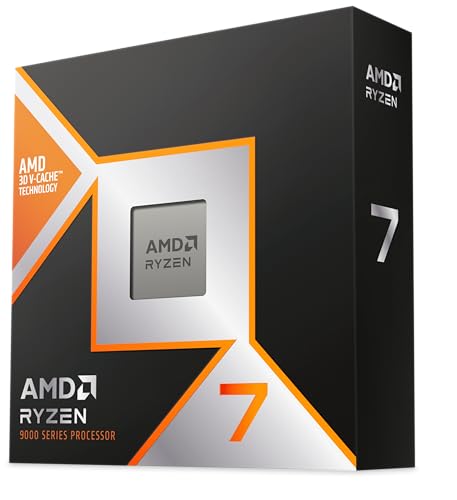
The gaming-flagship Zen 5 Ryzen 7. Eight Zen 5 cores at a 5.2 GHz boost, 96 MB of stacked L3 via 2nd-gen 3D V-Cache, 120W default TDP. The V-Cache now stacks under the CCD die instead of on top, which lifted the thermal ceiling that capped overclocking on the 7800X3D and unlocked full PBO support at this tier for the first time.
Specs
Spec | Value |
|---|---|
Cores / threads | 8 cores / 16 threads |
Clocks (base / boost) | 4.7 GHz / 5.2 GHz |
Cache (L2 + L3) | 8 MB L2 + 96 MB stacked 3D V-Cache L3 (104 MB total) |
TDP | 120W default |
Socket / platform | AM5 - DDR5 + PCIe 5.0, unlocked with full PBO (no OC ceiling) |
Integrated graphics | RDNA 2 (2 CUs) |
Cores / threads
- Value
8 cores / 16 threads
Clocks (base / boost)
- Value
4.7 GHz / 5.2 GHz
Cache (L2 + L3)
- Value
8 MB L2 + 96 MB stacked 3D V-Cache L3 (104 MB total)
TDP
- Value
120W default
Socket / platform
- Value
AM5 - DDR5 + PCIe 5.0, unlocked with full PBO (no OC ceiling)
Integrated graphics
- Value
RDNA 2 (2 CUs)
What it does well
Cache-sensitive workloads. This is the headline use case and the place the X3D earns its premium. Sim racing engines, flight sim hubs, strategy battle scenes, MMO raid encounters, factory-builder simulation ticks, and Escape from Tarkov firefights all have working sets that don't fit in 32 MB L3. The 9800X3D's 96 MB largely eliminates the cache-miss penalty, and the result is a double-digit averages lead over the 9700X and an even larger 1% low lead in the dense scenes that define the actual play experience.
1080p competitive at the absolute frame ceiling on cache-heavy titles (CS2, Baldur's Gate 3 Act 3 Lower City) is the second textbook win. The X3D's L3 keeps the working set in cache where the 9700X's 32 MB has to round-trip DRAM mid-frame. On a 360 Hz monitor paired with a flagship GPU, the X3D pins 1% lows where the 9700X drops frames into the gap between cache hits.
1440p AAA in the cache-sensitive subset (Cyberpunk 2077 in dense crowds, Hogwarts Legacy in Hogsmeade and the castle interiors, Baldur's Gate 3 Act 3) shows a small but consistent averages lead and a larger 1% low lead. The wedge isn't the headline 20 percent the launch reviews show at 1080p, but it's real and you feel it in the scenes that pin the CPU.
Long-tail platform headroom is the under-discussed lever. Cache-binding workloads compound over the build's life as engines lean harder on cache and as the buyer eventually upgrades the GPU. The X3D's wedge widens, not narrows. A buyer pairing this chip with a 5080 in 2026 and a future flagship in 2028 is buying CPU headroom that holds up.
The 2nd-gen V-Cache layout (stacked under the CCD instead of on top) is a load-bearing change. The 9800X3D supports full PBO and stock overclocking, which the 7800X3D did not. That removes one of the standing knocks against X3D parts and gives the buyer real tuning headroom on day one.
What you give up
Premium pricing. The chip carries a meaningful step up over the 9700X that has to be justified by the workload. The "X3D is best for gaming" headline is true on aggregate but is not load-bearing for the 4K AAA buyer or the console-port library buyer; those buyers pay the premium for a wedge they don't display. The honest read is that the X3D earns its tax when the library or the long-tail upgrade path leans cache-sensitive, and it does not earn it when the library does not.
120W default TDP vs the 9700X's 65W is a real thermal envelope difference. SFF builds with 240mm AIO ceilings get tighter. Air-cooler-only constraints get tighter. A budget tower cooler holds the 9800X3D at stock but loses headroom for PBO. The cluster-level point holds: an AIO is not the default for an X3D the way it would be for a 9950X3D or a 14900K, but you do need to size the cooling to the chip if you want PBO and quiet operation together. The Peerless Assassin and Phantom Spirit 120 SE handle it; the cheaper tower coolers run loud.
A small per-core deficit in lightly-threaded productivity. The 5.2 GHz boost trails the 9700X's 5.5 GHz on workloads where cache doesn't help (Handbrake single-pass, photo edit, code compile dominated by per-core clocks). The deficit is small (a few percent), but it's the right direction for a productivity-flavored buyer to know about.
1440p and 4K AAA in cache-light libraries (console ports, well-optimized Ubisoft AAA, most live-service shooters) shows zero meaningful gap against the 9700X. The workload is GPU-bound; the cache wedge collapses; the premium buys frames you cannot see.
The "buy more GPU instead" trap is the most common 9800X3D mistake at a 1500-class build with a mid-tier GPU. The dollar difference reallocated to a GPU tier bump (5070 to 5070 Ti, 9070 to 9070 XT) wins more visible frames than the X3D's cache buys against the 9700X in the libraries those buyers actually play. The chip is right when the build can feed it; it's wrong when the GPU can't.
Who it's for
The sim, strategy, MMO, Tarkov, or factory-builder player at any resolution. The 1080p 360 Hz competitive player on a top-tier GPU chasing the absolute frame ceiling on cache-heavy titles. The 1440p 240 Hz QD-OLED player whose library leans AAA with crowds (Cyberpunk 2077, Hogwarts Legacy, Black Myth: Wukong). The four-year-hold buyer pairing the chip with a flagship GPU (5080, 5090, 9070 XT, 9080) where the GPU can feed the cache. The gaming-plus-productivity buyer whose productivity is rendering, simulation, or cache-friendly compile, not single-pass edit work.
If your favorite weekend involves a Stellaris late-game save, an MSFS approach into KLAX, or a Total War: Warhammer 3 campaign battle, the 9800X3D is the chip and the cooling budget gets sized to match. The board matters less than the cooler here: our guide to the best motherboards for the 9800X3D explains why a mid-tier B850 or B650E VRM feeds this chip as well as a flagship X870E does.
Which one should you buy?
**The 1440p 165 Hz console-port and Ubisoft AAA player** (Spider-Man, RDR2, AC Shadows) takes the 9700X. The engines run near-identical on both chips and the price difference reallocated to GPU tier wins more frames.
**The sim, strategy, MMO, Tarkov, or factory-builder player at any resolution** takes the 9800X3D. Cache-bound workloads are the chip's textbook use case, and the 1% low gap in dense scenes is exactly what makes the play experience feel different.
**The 1080p 360 Hz competitive player on a top-tier GPU chasing the frame ceiling on cache-heavy titles** (CS2, Baldur's Gate 3 Act 3 Lower City) takes the 9800X3D. The cache wedge pins 1% lows where the 9700X's 32 MB L3 falls off.
**The 4K AAA player on any current GPU** takes the 9700X. Workload is GPU-bound, the cache wedge collapses, and both chips trade frames within margin of error. The premium goes to a GPU tier or to RAM and storage.
**The gaming-plus-productivity buyer** splits the call by what kind of productivity. Rendering and simulation (Blender Cycles on large scenes, certain compilers, scientific compute) lean toward the 9800X3D where the cache helps. Single-pass Handbrake, photo edit, and per-core compile work lean toward the 9700X's 5.5 GHz boost. Already own a 7800X3D? Our 7800X3D vs 9800X3D upgrade breakdown walks through whether the jump pays off game by game.
**The SFF or ITX builder with a 240mm AIO ceiling or air-cooler-only constraint** takes the 9700X. The 65W default TDP fits cleanly within a strong air cooler and the X3D's 120W envelope tightens compact builds without buying frames the SFF GPU can feed. If you are still weighing whether the cache premium is worth it at your resolution, our breakdown of when to skip X3D at 1440p and 4K walks through the resolution math in more detail.
What about the Ryzen 7 9850X3D?
AMD added a third Ryzen 7 to the Zen 5 X3D line in January 2026. The 9850X3D keeps the same eight cores, the same AM5 socket, and the same 2nd-gen 3D V-Cache layout as the 9800X3D, and it runs a boost clock roughly 400 MHz higher. It sits above the 9800X3D in the stack rather than replacing it, so both chips compared on this page are still current parts you can buy today.
For the decision this page makes, the 9850X3D moves the ceiling and not the axis. The question is still whether your library binds on cache. If it does, the X3D side wins and the 9850X3D is the faster version of that same answer at a higher tier. If it does not, the extra clock buys you no more than the 9800X3D already did, and the 9700X with the savings put into the GPU is still the stronger build.
The practical read: if you were already leaning 9800X3D and the higher tier fits your budget, the 9850X3D is the same bet with more headroom. If you were leaning 9700X, the 9850X3D does not change that call. It widens the gap you were choosing not to pay for.
Bottom line
If your library does not stress the cache, buy the AMD Ryzen 7 9700X and put the savings into the GPU. If your library lives in sim, strategy, MMO, or Tarkov, buy the AMD Ryzen 7 9800X3D and size the cooling for it. If you can't decide because your library is mixed, look at your highest-played title last weekend and let it pick; that's the call that defines the build's day-to-day experience. If you're also cross-shopping Intel, our Ryzen 7 9700X vs Core Ultra 7 265K matchup puts the 9700X up against Arrow Lake's mid-tier chip.
FAQ
Is the 9800X3D worth the premium over the 9700X for 1440p gaming?
It depends on the library. On console-port and Ubisoft AAA titles at 1440p, the two chips run effectively identical and the premium reallocated to a GPU tier wins more visible frames. On cache-sensitive 1440p titles (Cyberpunk 2077 in crowds, Hogwarts Legacy in Hogsmeade, Baldur's Gate 3 Act 3), the 9800X3D opens a small averages lead and a larger 1% low lead. If your library is mostly the first group, buy the 9700X; if it's mostly the second, buy the 9800X3D.
Does the 9700X bottleneck a 5070 Ti or RTX 4080 at 4K AAA?
No. At 4K AAA the workload is GPU-bound across the basket, and the 9700X feeds a 5070 Ti or 4080-class GPU within margin of error of the 9800X3D. The cache wedge is biggest at 1080p competitive and on cache-sensitive titles at 1440p; it collapses at 4K. A 4K AAA buyer pairing the 9700X with a flagship GPU is not leaving frames on the table.
Will the 9800X3D's cache help at 4K if I upgrade to a flagship GPU later?
It will help in the cache-sensitive subset of titles at 4K (sim, strategy, MMO, dense-crowd AAA), where the working set is the binding constraint regardless of resolution. It will not help in cache-light 4K AAA where the GPU is still the binding constraint. The X3D's long-tail value is in the cache-sensitive workloads; the GPU upgrade is what unlocks 4K AAA frame rates in the rest.
Can I use the same B650 or B850 motherboard for both chips?
Yes. Both chips are AM5 and both run on B650, B850, X670E, and X870E boards. The VRM floor for either chip is comfortable on any decent B650 (MSI B650 Tomahawk WiFi, ASUS TUF B650, ASRock B650E PG Riptide) or any B850 in the same tier. Reports suggest pre-October 2024 B650 stock may need a BIOS Flashback to an AGESA 1.2.0.2 or later release before first boot with the 9800X3D specifically; B850 boards shipping in 2025 and later are X3D-ready out of the box.
Which chip is better for sim racing and flight sim?
The 9800X3D, decisively. iRacing, Assetto Corsa Competizione, Le Mans Ultimate, Microsoft Flight Simulator 2024, DCS, and X-Plane 12 all have cache-binding simulation steps that fit the 9800X3D's 96 MB L3 but not the 9700X's 32 MB. The averages lead and the 1% low lead in busy hubs and dense traffic are both meaningful, and the smoothness gap in the heavy scenes is what you actually feel during a stint or a long approach.
Does the 9700X's 65W TDP make a real difference in SFF builds?
Yes. The 65W default TDP fits cleanly within a strong air cooler (Peerless Assassin, Thermalright Phantom Spirit 120 SE) with thermal headroom to spare, and it doesn't compete with the GPU for case airflow in a compact ATX or ITX build. The 9800X3D's 120W envelope is workable at stock on the same air coolers but loses headroom for PBO and runs the cooler harder under sustained load. For an ITX build with a 240mm AIO ceiling or an SFF mid-tower with limited intake, the 9700X is the friendlier thermal fit.
Related Articles

9800X3D vs 7800X3D (2026): 11% Average, 25% Where It Counts
9800X3D vs 7800X3D in 2026: an 11% average uplift, 25% in cache-heavy games, and which of four buyer profiles should actually pay the upgrade premium.
Sep 13, 2026

Ryzen 7 9800X3D vs Core Ultra 9 285K (2026 Verdict)
Ryzen 7 9800X3D vs Core Ultra 9 285K in 2026: gaming benchmarks, productivity wins, power draw, and AM5 vs LGA1851 longevity. Which one wins your build?
May 11, 2026

Best Motherboards for the 9800X3D (2026): 5 Picks by Tier
The best motherboards for the 9800X3D, ranked by build tier: X870E, X870, B850 and B650E picks with the VRM, form-factor and I/O tradeoffs that decide it.
Aug 6, 2026

Best CPU Coolers for the Ryzen 7 9800X3D (2026)
Pick the right cooler for the Ryzen 7 9800X3D. Air, AIO, and SFF picks for the chip's actual gaming thermal envelope, not the SERP's biggest cooler defaults.
May 13, 2026

Best DDR5 RAM for the Ryzen 7 9800X3D (2026 Picks)
The best DDR5 RAM for the Ryzen 7 9800X3D: why DDR5-6000 CL30 EXPO is the AM5 sweet spot, the exact 32GB and 64GB kits to buy, and how to dodge the 4-DIMM trap.
Jul 8, 2026