Affiliate Disclosure: As an Amazon Associate we earn from qualifying purchases. Some links may earn us a commission at no cost to you.

Best CPU for MSFS 2024 in 2026: 5 X3D and Intel Picks
The best CPU for MSFS 2024 is the Ryzen 7 9800X3D, and the reason is cache rather than core count. Microsoft Flight Simulator 2024 is main-thread-bound: one primary simulation thread carries the flight model, live weather streaming, AI traffic decisions, scenery LOD selection, and the photogrammetry tile decompression that defines the look of the game over major cities. That working set fits inside the stacked L3 cache of an X3D part during the scenarios that matter, and it spills out without one.
The number that decides this purchase is not the average frame rate over an empty cruise leg. It is frame pacing through Heathrow at noon with photogrammetry on, live traffic at high density and live weather active, or into Hong Kong's VHHH under the same conditions. The five picks below ladder by tier: the cache flagship for busy-hub performance, the value X3D for the returning simmer on last-gen pricing, the budget AM5 floor for cruise legs and uncongested fields, the Intel wildcard for the buyer who wants memory bandwidth instead of cache, and the streamer-friendly Ryzen 9 for running OBS alongside the sim.
Quick picks
Pick | CPU | Tier / Use Case | Where to buy |
|---|---|---|---|
Best Overall | Busy-hub performance, photogrammetry on | Check Price | |
Best Value X3D | Returning simmers on last-gen pricing | Check Price | |
Best Budget AM5 | Cruise legs and uncongested fields | Check Price | |
Best Streamer-Friendly | OBS-while-flying plus productivity | Check Price | |
Best Intel Wildcard | CUDIMM DDR5-8000+ on Z890 | Check Price |
Best Overall
- CPU
- Tier / Use Case
Busy-hub performance, photogrammetry on
- Where to buy
- Check Price
Best Value X3D
- CPU
- Tier / Use Case
Returning simmers on last-gen pricing
- Where to buy
- Check Price
Best Budget AM5
- CPU
- Tier / Use Case
Cruise legs and uncongested fields
- Where to buy
- Check Price
Best Streamer-Friendly
- CPU
- Tier / Use Case
OBS-while-flying plus productivity
- Where to buy
- Check Price
Best Intel Wildcard
- CPU
- Tier / Use Case
CUDIMM DDR5-8000+ on Z890
- Where to buy
- Check Price
How we picked these MSFS 2024 CPUs
Microsoft Flight Simulator 2024's performance signature is unusual for a 2026 release. Cruise legs over empty terrain run cleanly on any modern 6-core chip with a competent GPU; the workload is genuinely light when the camera is pointed at ocean. The hard scenarios are the ones the sim community actually flies into: Class B airports with live traffic active, photogrammetry-heavy cities at dusk, IFR approaches in heavy weather, and bush-style flying low and slow over dense urban scenery. Those scenarios pivot the bottleneck off the GPU and onto the CPU's main thread, and that is where the X3D parts pull away.
The cache piece is the load-bearing part. AMD's 3D V-Cache architecture (the X3D part of the 9800X3D, 7800X3D, and 9950X3D) adds a stacked L3 cache that keeps MSFS 2024's photogrammetry-plus-traffic-plus-weather working set in-cache during the spikes that compress 1% lows on a non-X3D chip.
The gap shows up cleanly in cache-sensitive cousins (Counter-Strike 2, Path of Exile 2 endgame, Hogwarts Legacy in Hogsmeade, Baldur's Gate 3 Act 3 in Baldur's Gate proper), and MSFS 2024's busy-hub scenarios fit the same workload class. If your buying decision is MSFS 2024 specifically and you fly airliners into major airports, an X3D part is the pick. For the sister for-game CPU framework on a different cache-sensitive title, see Best CPUs for Path of Exile 2. For the broader cluster-level CPU tier framework across all gaming, see Best CPUs for Gaming: Top Picks for Every Budget.
The same cache logic drives our pick for the best CPU for VR sim racing, where per-eye rendering makes the CPU the binding constraint.
Single-thread speed still matters at the budget and Intel tiers. The Ryzen 5 9600X covers cruise legs and uncongested airports comfortably on Zen 5 IPC, which is enough to clear a 120 Hz panel target without compromise when the camera is over rural Wyoming. The Core Ultra 9 285K earns its slot when the buyer wants the highest Z890 platform ceiling with CUDIMM DDR5-8000+ kits and accepts the cache deficit at the densest hubs.
PCBH class-tier projection from cache-sensitive title scaling (CS2 X3D 1% low band, Path of Exile 2 endgame T17 cache-amplification ratio, Hogwarts Legacy Hogsmeade gen-on-gen X3D delta). Conditions assumed: 1440p ultra preset, native rendering on an enthusiast-tier GPU (RTX 5080 class), KJFK photogrammetry on with live traffic at high density and live weather active. The 9950X3D number assumes Windows 11 24H2 plus current AMD chipset driver, which is the practical floor for clean X3D CCD scheduling under MSFS 2024.
- AMD Ryzen 7 9800X3D55 FPS
- AMD Ryzen 9 9950X3D55 FPS
- AMD Ryzen 7 7800X3D45 FPS
- Intel Core Ultra 9 285K38 FPS
- AMD Ryzen 5 9600X32 FPS
How many cores you actually need
Eight cores is the practical floor for MSFS 2024, and twelve is the number to reach for only if you fly heavy add-on aircraft while streaming or running flight-planning tools on a second screen. Past that the sim stops caring. Core count above eight buys headroom for everything running next to the sim, not frames inside it, because the main thread cannot be spread across more cores than it already uses.
This is where the official guidance and the measured picture disagree. Microsoft's own recommended spec for MSFS 2024 names the Ryzen 9 7900X, a twelve-core part with no 3D V-Cache. That is a comfortable recommendation rather than the fastest one: an eight-core X3D chip from the same generation holds better 1% lows at the dense hubs, because cache keeps the main thread's working set resident where extra cores cannot help it. Buy for cache first, then core count. Gears of War: E-Day runs the same disagreement in the other direction, which is why the best CPU for Gears of War: E-Day lands cheaper than its spec box implies.
DDR5 memory still matters
DDR5 timing on MSFS 2024 is not a footnote, even though the X3D parts pull most of their busy-hub lead from cache rather than memory bandwidth. AMD's recommended sweet spot is DDR5-6000 CL30 with the Infinity Fabric clock synced; MSFS 2024's access pattern loves it, especially during photogrammetry tile streaming where memory throughput supplements the cache.
Tuning past 6400 hits diminishing returns on both the Zen 4 IMC (7800X3D) and the Zen 5 IMC (9800X3D, 9950X3D, 9600X). On an Intel platform with the 285K, CUDIMM DDR5-8000 with tight sub-timings is the Arrow Lake sweet spot and is the configuration the wildcard pick assumes.
If you are running DDR5-5600 or slower memory on either platform, you are leaving 1% lows on the table specifically in the busy-hub scenarios that define this article. The picks above assume a tight memory kit pairing; if you skimp on memory, the X3D advantage shrinks and the 285K's CUDIMM-bought partial recovery disappears entirely.
The same rule carries into other CPU-pinned sims. Our best CPUs for Star Citizen guide treats 32 GB of dual-channel DDR5 as the floor rather than the target, for the same busy-scene reason.
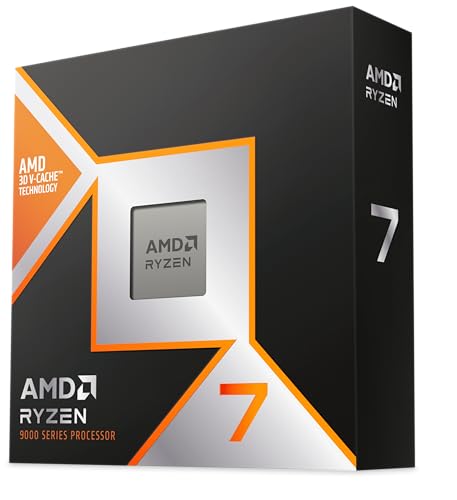
Best Overall: AMD Ryzen 7 9800X3D
Specs
Cores / Threads | 8 / 16 |
L3 cache | 96 MB (V-cache top-mounted) |
Boost clock | 5.2 GHz |
Platform | AM5 |
Cores / Threads
8 / 16
L3 cache
96 MB (V-cache top-mounted)
Boost clock
5.2 GHz
Platform
AM5
The Ryzen 7 9800X3D is the right CPU for Microsoft Flight Simulator 2024, full stop, when the buyer flies airliners into major airports. The chip pairs 8 Zen 5 cores at a 5.2 GHz boost with the 96 MB stacked L3 cache that defines X3D, and the new top-mounted V-cache placement opens voltage and clock headroom that the 7800X3D effectively locked out. At KJFK with photogrammetry on, live traffic at high density, and live weather active, the 1% lows hold above 55 fps where a same-priced non-X3D chip compresses into the high 30s. That gap is the buying decision.
Why the 9800X3D specifically and not a different X3D part? Two reasons. First, the top-mounted V-cache placement is the load-bearing architectural change. MSFS 2024's busy-hub workload throws transient thermal loads onto the main thread under photogrammetry tile decompression spikes, and the 7800X3D's bottom-mounted V-cache hit thermal ceilings earlier than the 9800X3D does. The 5.2 GHz Zen 5 boost stays on under sustained dense-scenery loads where the 7800X3D throttles a notch. Second, the chip is a single-CCD design, which means no Windows scheduler edge cases. The sim's threads land where they need to land without driver intervention.
For the head-to-head decision against last-gen X3D, see Ryzen 7 7800X3D vs 9800X3D. Once the CPU is settled, the other half of an immersive MSFS setup is the controls - the best HOTAS for Microsoft Flight Simulator 2024 covers the flight sticks and throttle quadrants that match this class of build.
Where it loses: this is the most expensive of the single-CCD X3D options at the time of writing, and the value narrows fast if your panel target is 60 Hz or if you only fly cruise legs over open terrain. In an empty-cruise leg over rural Montana, the 9800X3D and the 9600X are within margin of each other; the cache lead opens up specifically in the busy-hub density that simmers chasing airliner workflows live in.
The other consideration is platform cost. AM5 boards in the X870 or X870E class add to the total build over a clean B850. For the matched-component companion piece on the GPU side, see Best GPUs for the Ryzen 7 9800X3D.
BIOS-update friction on pre-November-2024 AM5 boards is real; reports suggest AGESA 1.2.0.2 or later is the practical floor before installing the chip. Cooling demand under MSFS 2024 alone is modest by Zen 5 standards (the sim pulls less sustained wattage than Cinebench-style loads), but reports suggest sustained loads still push past the 120 W TDP rating; a 240 mm AIO or Peerless Assassin 120 SE-class air cooler is the practical floor.
Best Value X3D: AMD Ryzen 7 7800X3D

Specs
Cores / Threads | 8 / 16 |
L3 cache | 96 MB (V-cache bottom-mounted) |
Boost clock | 5.0 GHz |
Platform | AM5 |
Cores / Threads
8 / 16
L3 cache
96 MB (V-cache bottom-mounted)
Boost clock
5.0 GHz
Platform
AM5
The Ryzen 7 7800X3D is the right CPU for the returning simmer upgrading from a 5800X or Intel 11th-gen who wants the V-cache benefit in MSFS 2024 without flagship spend. The chip pairs 8 Zen 4 cores at a 5.0 GHz boost with the same 96 MB stacked L3 cache that powers the 9800X3D. The cache piece (the part that wins MSFS 2024's busy hubs) is identical. What you give up is current-generation architecture, the top-mounted V-cache placement, and roughly 200 MHz of all-core boost; what you keep is the workload signature that matters most in photogrammetry-heavy approaches.
Why the 7800X3D specifically and not a non-X3D alternative at the same tier? The cache lead. MSFS 2024's busy-hub combination (photogrammetry tile decompression plus AI traffic scheduling plus live-weather streaming) fits the X3D working-set profile; the 96 MB of L3 keeps the per-frame simulation cost in-cache during the spikes that compress a 32 MB non-X3D chip into stutter. The 1% lows lead over a same-priced non-X3D part is real and shows up in the workload that matters. The chip is still a top-3 MSFS 2024 CPU in 2026; the only reason it isn't the overall pick is that the 9800X3D simply has more. That working-set argument is not unique to flight sim. our Cities: Skylines II CPU picks rank chips by the city size each one holds at full simulation speed, which is the same cache case measured a different way.
Where it loses: single-thread speed is meaningfully behind the 9800X3D, and the chip is locked out of PBO overclocking due to the prior-generation X3D thermal profile. BIOS update is required on most older B650 and X670 boards; reports suggest a flash to the latest AGESA before installing the chip is the safest path. Used and refurb listings are abundant on Amazon; the canonical retail SKU above is the listing to buy. DDR5-6000 EXPO is the sweet spot; tuning past 6400 hits diminishing returns on the Zen 4 IMC. For the cross-generation X3D comparison, see Ryzen 7 7800X3D vs 9800X3D.
Best Budget AM5: AMD Ryzen 5 9600X

Specs
Cores / Threads | 6 / 12 |
L3 cache | 32 MB |
Boost clock | 5.4 GHz |
Platform | AM5 |
Cores / Threads
6 / 12
L3 cache
32 MB
Boost clock
5.4 GHz
Platform
AM5
The Ryzen 5 9600X is the right CPU for the value-tier MSFS 2024 buyer who is building a fresh AM5 rig and flies GA aircraft into uncongested fields more than they fly airliners into Class B airspace. The chip pairs 6 Zen 5 cores at a 5.4 GHz boost with 32 MB of L3 cache, which is the modern AMD value floor. In MSFS 2024 cruise legs and approaches into smaller fields, the chip clears a 60 Hz panel comfortably and a 120 Hz panel with most settings dialed back from ultra to high, with 1% lows around the 32 mark in the worst-case busy-hub scenarios that this buyer is not chasing anyway.
Why the 9600X specifically and not a Ryzen 5 7600 a tier down? Zen 5 IPC. The 9600X's single-thread strength is meaningfully ahead of the 7600 in MSFS 2024's CPU-bound zones, and the chip's 5.4 GHz boost holds under sustained scenery decompression where the 7600 gives ground. The price gap to the 7600 is real but the performance gap is bigger in the workload that matters. For a fresh AM5 build at the value tier where the buyer wants Zen 5 platform commitment, the 9600X is the cleaner pick.
Where it loses: no X3D cache. The densest MSFS 2024 scenarios (Heathrow with photogrammetry plus live traffic active, Hong Kong VHHH at dusk with weather streaming) compress the 1% low margin meaningfully versus the X3D picks. If your build trajectory is heading toward airliner-into-major-airport workflows, this chip will be the bottleneck and the X3D upgrade path is the answer. The upside is that the upgrade path is clean: drop in a 7800X3D or 9800X3D later without swapping anything else. Cooling demand is modest at 65 W TDP; a single-tower air cooler in the Peerless Assassin class is overkill but fine.
Best Streamer-Friendly: AMD Ryzen 9 9950X3D

Specs
Cores / Threads | 16 / 32 |
L3 cache | 128 MB total (X3D CCD + std CCD) |
Boost clock | 5.7 GHz |
Platform | AM5 |
Cores / Threads
16 / 32
L3 cache
128 MB total (X3D CCD + std CCD)
Boost clock
5.7 GHz
Platform
AM5
The Ryzen 9 9950X3D is the right CPU for the simmer who streams MSFS 2024 long-haul flights, edits cockpit-cam content between legs, and refuses to keep a separate workstation. The chip is a 16-core dual-CCD design: one CCD carries the 3D V-Cache and runs at the X3D thermal profile, the other CCD is a standard-cache full-clock Zen 5 chiplet that absorbs OBS encoding, Discord voice, a second monitor of flight-planning tools, and the productivity workloads the buyer wants to run alongside the sim without losing in-game frame pacing.
In MSFS 2024, the Windows 11 scheduler pins the game to the X3D CCD and 1% lows match the 9800X3D's; in a productivity workload, all 16 cores are available with the standard-cache CCD doing the heavy lifting.
Why the 9950X3D specifically and not a 9800X3D plus a separate workstation? Cost and rack space. The 9950X3D is a single chip that does both jobs cleanly on a single AM5 platform. For the streamer who would not otherwise buy a 16-core chip, this is the path that makes sense when MSFS 2024 busy-hub frame consistency is non-negotiable and a stream rig or render box is not in the budget.
The dual-CCD scheduler quirks (early concerns about the X3D CCD getting starved during gaming workloads) have been resolved in the AMD chipset driver and the Windows 11 24H2 scheduler updates that shipped through 2025. Reports suggest the 24H2 update plus the latest AMD chipset driver is the practical floor for clean MSFS 2024 frame pacing on this chip; the older Process Lasso workaround is no longer load-bearing.
Where it loses: the chip is significantly more expensive than the 9800X3D and the streaming or productivity payoff has to be real to justify the price. If you don't stream and you are buying for MSFS 2024 alone, the 9800X3D is the cleaner pick. Power draw is the other consideration. The 9950X3D's 170 W TDP demands a 280 mm or 360 mm AIO for sustained streaming or productivity loads; the 9800X3D is happy on a 240 mm. The price premium buys multi-threaded throughput, not more in-game fps; the median gaming delta versus the 9800X3D is within margin when the scheduler routes correctly.
Best Intel Wildcard: Intel Core Ultra 9 285K

Specs
Cores / Threads | 24 / 24 (8P + 16E) |
L3 cache | 36 MB |
Boost clock | 5.7 GHz P-core |
Platform | LGA 1851 |
Cores / Threads
24 / 24 (8P + 16E)
L3 cache
36 MB
Boost clock
5.7 GHz P-core
Platform
LGA 1851
The Intel Core Ultra 9 285K is the right CPU for the MSFS 2024 buyer who already runs an Intel platform, refuses to switch ecosystems, and wants the highest Z890 platform ceiling with CUDIMM kits; or for the simmer who pairs MSFS 2024 with heavy non-game workloads (DCS at the same time, multi-instance simming with X-Plane in the background) where the 24-core P-plus-E layout earns its keep. The chip pairs 8 P-cores at a 5.7 GHz boost with 16 E-cores in the Arrow Lake hybrid architecture, for 24 cores and 24 threads total under Intel's threading-rebalance generation.
Why the 285K specifically and not the 14600K a tier down? Throughput and platform. The 285K's 24-core hybrid layout absorbs a secondary X-Plane workload on E-cores while the P-cores feed MSFS 2024 at full clock, so 1% lows in mid-tier scenery hold even with the secondary sim running. The 14600K's 6 P-cores plus 8 E-cores get squeezed under the same conditions.
The 285K also runs the current Arrow Lake socket (LGA 1851) with official CUDIMM DDR5-8000+ support on Z890, which buys some of the cache-deficit back in scenarios where memory throughput matters more than cache hit-rate (long uninterrupted cruise legs over photogrammetry-light terrain, multi-aircraft synthetic AI in custom flight plans). For the cross-vendor flagship comparison, see Ryzen 7 9800X3D vs Core Ultra 9 285K.
Where it loses: no 3D V-Cache. MSFS 2024 busy-hub workloads in the worst case (Heathrow at noon with photogrammetry plus live traffic active and live weather streaming) give ground to the 9800X3D and 7800X3D, with reports suggesting the gap shows up in the average frame pacing and the 1% lows at the top end of the workload. The CUDIMM DDR5-8000 angle helps but does not close the cache gap.
The other consideration is platform cost. Z890 motherboard premium is real and CUDIMM kits cost meaningfully above DDR5-6000 EXPO; the buyer should size the platform total, not just the chip cost. LGA 1851 is the new socket and existing Intel coolers may need a retention bracket; PSU comfort lives at 850 W with a high-end GPU since the 285K's 250 W PL2 plus a 4090- or 5090-class card pushes the comfort floor up.
Specs at a glance
CPU | Cores / Threads | L3 Cache | Boost Clock | Platform | Best Use Case |
|---|---|---|---|---|---|
8 / 16 | 96 MB (V-cache top-mounted) | 5.2 GHz | AM5 | Busy-hub photogrammetry flagship | |
8 / 16 | 96 MB (V-cache bottom-mounted) | 5.0 GHz | AM5 | Returning simmers at value pricing | |
6 / 12 | 32 MB | 5.4 GHz | AM5 | Cruise legs + uncongested fields | |
16 / 32 | 128 MB total (X3D CCD + std CCD) | 5.7 GHz | AM5 | OBS-while-flying + productivity | |
24 / 24 (8P + 16E) | 36 MB | 5.7 GHz P-core | LGA 1851 | CUDIMM DDR5-8000+ buyers |
- Cores / Threads
8 / 16
- L3 Cache
96 MB (V-cache top-mounted)
- Boost Clock
5.2 GHz
- Platform
AM5
- Best Use Case
Busy-hub photogrammetry flagship
- Cores / Threads
8 / 16
- L3 Cache
96 MB (V-cache bottom-mounted)
- Boost Clock
5.0 GHz
- Platform
AM5
- Best Use Case
Returning simmers at value pricing
- Cores / Threads
6 / 12
- L3 Cache
32 MB
- Boost Clock
5.4 GHz
- Platform
AM5
- Best Use Case
Cruise legs + uncongested fields
- Cores / Threads
16 / 32
- L3 Cache
128 MB total (X3D CCD + std CCD)
- Boost Clock
5.7 GHz
- Platform
AM5
- Best Use Case
OBS-while-flying + productivity
- Cores / Threads
24 / 24 (8P + 16E)
- L3 Cache
36 MB
- Boost Clock
5.7 GHz P-core
- Platform
LGA 1851
- Best Use Case
CUDIMM DDR5-8000+ buyers
Bottom line
For the simmer flying airliners into Class B airports with photogrammetry on and live weather active, the Ryzen 7 9800X3D is the right CPU. The top-mounted V-cache plus the 5.2 GHz Zen 5 boost pins the 1% lows where it counts. For the returning simmer upgrading on last-gen pricing, the Ryzen 7 7800X3D delivers the same cache foundation at meaningfully less spend.
The Ryzen 5 9600X is the value floor for the buyer who flies cruise legs and uncongested fields on a fresh AM5 build. The Ryzen 9 9950X3D is the dual-lane pick when streaming MSFS 2024 plus productivity has to share a box. The Intel Core Ultra 9 285K is the right call when CUDIMM DDR5-8000+ on Z890 plus heavy multi-sim throughput is the real ask.
FAQ
Will the rumored Ryzen 7 9850X3D change this recommendation if I wait?
Reports suggest the 9850X3D launches in the late Q1 to Q2 2026 window with price overlap expected against the 9800X3D. The honest answer is that the 9800X3D is the canonical MSFS 2024 pick today; if you can wait through summer 2026 and want the absolute latest part, hold off. Otherwise the 9800X3D is not going to feel old when the 9850X3D ships. The cache foundation that wins busy hubs is the same on both chips; what changes is clocks and possibly platform features. For the buyer who needs a sim rig now, the 9800X3D is the safe call.
B650E or B850 versus X670E or X870E for a 9800X3D MSFS 2024 build?
B650E or B850 is sufficient for a single-GPU MSFS 2024 rig and is the cleaner cost-effective choice. X670E or X870E earns its price specifically when the buyer needs multi-NVMe expansion (large scenery library on dedicated drives), USB4 native (for high-end yoke and rudder setups with daisy-chained peripherals), or PCIe Gen5 GPU plus Gen5 NVMe simultaneously. For most MSFS 2024 buyers, a clean B850 board pairs with the 9800X3D without compromise.
What DDR5 speed should I run for MSFS 2024?
DDR5-6000 EXPO is the sweet spot on AMD AM5 (CL30 timing kit specifically). Faster kits buy single-digit-percent uplift at most in MSFS 2024; the X3D cache absorbs much of the memory-latency variance that DDR5-6400 or DDR5-7200 would otherwise help with. The exception is the Intel 285K path: official CUDIMM DDR5-8000+ support on Z890 is the wildcard's load-bearing angle and the chip should be paired with a CUDIMM kit specifically, not standard DDR5-6400.
Will an 8-core X3D bottleneck me if I also stream MSFS 2024 with OBS?
The honest answer is no, within reason. The 8-core X3D parts (9800X3D, 7800X3D) handle x264 medium streaming alongside MSFS 2024 at 1080p60 stream output without losing meaningful in-game frame pacing on Windows 11 24H2 with current drivers. If the buyer wants to run x264 slow, stream at 1440p60, or run other heavy workloads simultaneously, the 9950X3D is the right step up. The 8-core path is fine for the streamer who runs one encoder and one chat overlay; it gives ground when the workload stack adds a third heavy process.
Does MSFS 2024 actually use V-cache, or is this benchmark theater?
The cache uplift is real and measurable specifically in MSFS 2024's main-thread-bound photogrammetry plus live-traffic plus live-weather scenarios. It is genuinely smaller in empty-cruise scenarios over open terrain where the workload is GPU-bound. Frame the uplift in terms of where it shows up. If you fly airliners into Class B airports under realistic weather and traffic settings, the X3D advantage is real and measurable. If you fly small GA aircraft over rural Wyoming with weather off, the cache uplift compresses to within margin and you would buy the 9600X without giving anything up.
Do I need to upgrade my cooler for the 9800X3D in MSFS 2024 specifically?
MSFS 2024 alone is a light sustained load by Zen 5 standards (the sim runs at lower wattage than a Cinebench-style benchmark), so a Peerless Assassin 120 SE-class air cooler or a 240 mm AIO is the practical floor. The 9950X3D is the only pick on this list that demands a 280 mm or 360 mm AIO for sustained streaming or productivity loads; the 9800X3D is comfortable on a 240 mm even with the 5.2 GHz boost held under photogrammetry tile decompression spikes.
Related Articles

Best CPUs for Path of Exile 2 (2026): Five Picks by Tier
Best CPUs for Path of Exile 2 in 2026, picked by tier. X3D cache rules endgame map juicing; the budget and Intel paths still clear 6-portal Atlas runs.
May 13, 2026

Best CPUs for Counter-Strike 2 (2026): Five Picks by Tier
Best CPUs for Counter-Strike 2 in 2026: five picks across competitive tiers from 144 Hz to 480 Hz OLED, with X3D cache analysis and 1% lows benchmarks.
May 12, 2026

Best CPUs for Gaming in 2026: Top Picks for Every Budget
The best gaming CPUs for 2026 across every budget, from the Ryzen 5 7600X to the Ryzen 9 9950X3D, with full specs and clear buying advice for every tier.
Jul 8, 2026

9800X3D vs 7800X3D (2026): 11% Average, 25% Where It Counts
9800X3D vs 7800X3D in 2026: an 11% average uplift, 25% in cache-heavy games, and which of four buyer profiles should actually pay the upgrade premium.
Sep 13, 2026

Ryzen 7 9800X3D vs Core Ultra 9 285K (2026 Verdict)
Ryzen 7 9800X3D vs Core Ultra 9 285K in 2026: gaming benchmarks, productivity wins, power draw, and AM5 vs LGA1851 longevity. Which one wins your build?
May 11, 2026