Affiliate Disclosure: As an Amazon Associate we earn from qualifying purchases. Some links may earn us a commission at no cost to you.

Best External SSDs for Gaming (2026): 5 Picks by USB Port
The best external SSD for gaming is the one your USB port can actually feed. On a 20 Gbps USB 3.2 Gen 2x2 port, buy the Samsung Portable T9 2TB; on the standard 10 Gbps USB-C port most gaming laptops ship with, the Samsung T7 Shield 1TB hits the same real-world speed for less; on Thunderbolt 4 or 5, the OWC Envoy Ultra is in a class of its own.
Port tier, not brand or spec sheet, sets your speed ceiling: a Gen 2x2 drive in a Gen 2-only laptop performs identically to a cheaper Gen 2 drive. These five picks cover every tier, from rugged Gen 2 drives you can toss in a bag to Thunderbolt 5 drives that nearly match an internal NVMe, plus what actually works on PS5, Xbox, and Steam Deck.
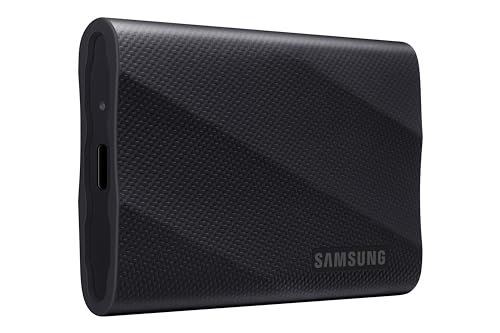
Our top pick: Samsung Portable T9 2TB
The Samsung T9 is the reference Gen 2x2 drive. It saturates the 20 Gbps ceiling, holds 2TB, and comes from a manufacturer that has shipped reliable portable SSDs for five generations. If your gaming PC or recent laptop has a USB 3.2 Gen 2x2 port, this is the pick.
Quick picks
Pick | Drive | Interface | Read Speed | Buy |
|---|---|---|---|---|
Best Overall | USB 3.2 Gen 2x2 | 2,000 MB/s | ||
Best Value | USB 3.2 Gen 2x2 | 2,100 MB/s | ||
Best Premium | Thunderbolt 5 | 6,000+ MB/s | ||
Best Budget | USB 3.2 Gen 2 | 1,050 MB/s | ||
Editor's Pick (Rugged) | USB 3.2 Gen 2 | 1,050 MB/s |
Best Overall
- Drive
- Interface
USB 3.2 Gen 2x2
- Read Speed
2,000 MB/s
- Buy
Best Value
- Drive
- Interface
USB 3.2 Gen 2x2
- Read Speed
2,100 MB/s
- Buy
Best Premium
- Drive
- Interface
Thunderbolt 5
- Read Speed
6,000+ MB/s
- Buy
Best Budget
- Drive
- Interface
USB 3.2 Gen 2
- Read Speed
1,050 MB/s
- Buy
Editor's Pick (Rugged)
- Drive
- Interface
USB 3.2 Gen 2
- Read Speed
1,050 MB/s
- Buy
Specs at a glance
Pick | Drive | Interface | Read | Write | Capacity | IP Rating | Warranty |
|---|---|---|---|---|---|---|---|
Best Overall | USB 3.2 Gen 2x2 | 2,000 MB/s | 1,950 MB/s | 2TB | None | 3 years | |
Best Value | USB 3.2 Gen 2x2 | 2,100 MB/s | 2,000 MB/s | 2TB | None | 3 years | |
Best Premium | Thunderbolt 5 / TB4 / USB4 | 6,000+ MB/s | 5,000+ MB/s (1,350 MB/s sustained) | 2TB | None | 3 years | |
Best Budget | USB 3.2 Gen 2 | 1,050 MB/s | 1,000 MB/s | 1TB | IP65 | 3 years | |
Editor's Pick | USB 3.2 Gen 2 | 1,050 MB/s | 1,000 MB/s | 2TB | IP65 | 2 years |
Best Overall
- Drive
- Interface
USB 3.2 Gen 2x2
- Read
2,000 MB/s
- Write
1,950 MB/s
- Capacity
2TB
- IP Rating
None
- Warranty
3 years
Best Value
- Drive
- Interface
USB 3.2 Gen 2x2
- Read
2,100 MB/s
- Write
2,000 MB/s
- Capacity
2TB
- IP Rating
None
- Warranty
3 years
Best Premium
- Drive
- Interface
Thunderbolt 5 / TB4 / USB4
- Read
6,000+ MB/s
- Write
5,000+ MB/s (1,350 MB/s sustained)
- Capacity
2TB
- IP Rating
None
- Warranty
3 years
Best Budget
- Drive
- Interface
USB 3.2 Gen 2
- Read
1,050 MB/s
- Write
1,000 MB/s
- Capacity
1TB
- IP Rating
IP65
- Warranty
3 years
Editor's Pick
- Drive
- Interface
USB 3.2 Gen 2
- Read
1,050 MB/s
- Write
1,000 MB/s
- Capacity
2TB
- IP Rating
IP65
- Warranty
2 years
Transfer speed benchmarks
- OWC Envoy Ultra TB5 2TB (TB4 host)5255 MB/s
- Crucial X10 Pro 2TB2100 MB/s
- Samsung Portable T9 2TB2033 MB/s
- Samsung T7 Shield 1TB1050 MB/s
- SanDisk Extreme 2TB1050 MB/s
- Crucial X10 Pro 2TB2000 MB/s
- Samsung Portable T9 2TB1823 MB/s
- OWC Envoy Ultra TB5 2TB (TB4 sustained)1350 MB/s
- Samsung T7 Shield 1TB1000 MB/s
- SanDisk Extreme 2TB1000 MB/s
How we picked
The first step when shopping for an external SSD is checking the actual USB version on the port of your machine. Port tier sets your speed ceiling, and nothing about the drive changes that.
USB 3.2 Gen 2 (10 Gbps) is the most common port on gaming laptops and desktops shipped through 2023. Top speed: ~1,050 MB/s. USB 3.2 Gen 2x2 (20 Gbps) appears on recent gaming desktops and some 2023-plus gaming laptops, usually on one USB-C port. Top speed: ~2,000 MB/s. Thunderbolt 4 and USB4 (40 Gbps) are on higher-end laptops and newer Intel desktops: ~5,200 MB/s. Thunderbolt 5 (80 Gbps) is currently found mainly on Apple Silicon Macs and a handful of high-end Windows laptops: 6,000+ MB/s.
Once you know the port, the choice is simple. Gen 2 buyers pick between budget and capacity. Gen 2x2 buyers choose between the T9 and X10 Pro. TB4 and TB5 buyers look at the OWC Envoy Ultra.
We also validated Amazon availability (no third-party-only listings), review ratings, and known reliability patterns. The SanDisk Extreme PRO had a rough run of data-loss reports in recent batches; the standard Extreme has a significantly cleaner track record at comparable speeds.
Samsung Portable T9 2TB: Best Overall
The T9 is the cleanest pick at the Gen 2x2 tier. Samsung's NVMe controller inside the enclosure delivers ~2,033 MB/s sequential reads in real-world CrystalDiskMark testing, close to the 20 Gbps ceiling. At 2TB, it holds a meaningful game library without requiring a second drive, and the Samsung brand carries one of the better track records in portable storage.
Specs
Interface | USB 3.2 Gen 2x2 (20 Gbps) |
Rated read / write | 2,000 / 1,950 MB/s |
Real-world read / write | ~2,033 / ~1,823 MB/s (CrystalDiskMark, Gen 2x2 host) |
Capacity | 2TB |
IP rating | None |
Warranty | 3 years |
Interface
USB 3.2 Gen 2x2 (20 Gbps)
Rated read / write
2,000 / 1,950 MB/s
Real-world read / write
~2,033 / ~1,823 MB/s (CrystalDiskMark, Gen 2x2 host)
Capacity
2TB
IP rating
None
Warranty
3 years
What it does well
On a Gen 2x2 host, the T9 saturates the connection. Moving a 100 GB game directory takes about 50 seconds, fast enough that you stop noticing the transfer window. Compatibility is thorough: Windows, macOS, and PlayStation are all validated (for PS4 game backups and media storage on PS5). The form factor is compact and pocketable.
For gamers who rotate game libraries between a desktop and a gaming laptop, or who use an external drive as an active overflow partition rather than just an archive, the T9 handles both jobs without complaint.
What you give up
No ruggedization. If you want an IP rating for bag or travel use, the T7 Shield or SanDisk Extreme are the better choices. The T9 also costs more than the Crucial X10 Pro, which benchmarks slightly faster in sequential reads. The main thing the T9 gets you over the X10 Pro is brand reliability at a tier where Crucial's external SSD track record is less established.
The port dependency is the biggest caveat. On a Gen 2-only port, which covers the majority of gaming laptops sold before 2024, the T9's 2,000 MB/s advantage disappears. At that point you are paying a premium for speed you cannot access.
Who it's for
Gamers with a desktop or a recent laptop that has a USB 3.2 Gen 2x2 port, who want to move large game libraries between machines or carry a fast overflow drive for installed titles. If you are not sure whether your machine has Gen 2x2, check the laptop's spec sheet for "20 Gbps" or "Gen 2x2" in the USB description before buying.
Crucial X10 Pro 2TB: Best Value
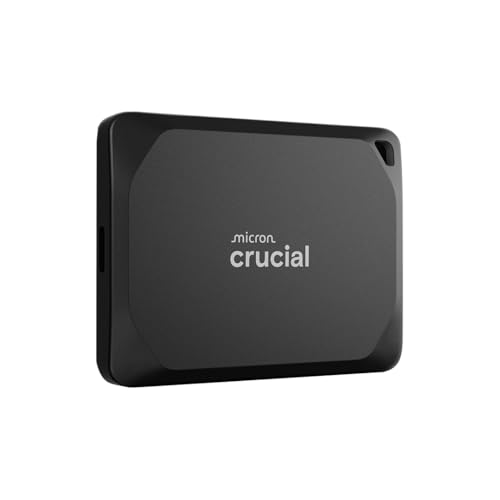
The X10 Pro is the value pick at the Gen 2x2 tier. Rated at 2,100/2,000 MB/s, it edges the T9 in sequential tests and competes at or near the same throughput in real-world 48 GB file transfers. The price per gigabyte tends to be lower than the Samsung equivalent, which is the argument for buying it over the T9 when brand preference is not a factor.
Specs
Interface | USB 3.2 Gen 2x2 (20 Gbps) |
Rated read / write | 2,100 / 2,000 MB/s |
Capacity | 2TB |
IP rating | None |
Warranty | 3 years |
Model number | CT2000X10PROSSD902 |
Interface
USB 3.2 Gen 2x2 (20 Gbps)
Rated read / write
2,100 / 2,000 MB/s
Capacity
2TB
IP rating
None
Warranty
3 years
Model number
CT2000X10PROSSD902
What it does well
The X10 Pro matches or edges the T9 in sequential-read tests while typically landing at a lower price. It is compact, includes a USB-C cable, and is widely stocked at major retailers. For buyers who have confirmed Gen 2x2 on their machine and want maximum MB/s per dollar, the X10 Pro makes the stronger value case.
Crucial is well-established in internal NVMe storage, and the X10 Pro carries the same controller expertise into the external enclosure. In back-to-back 48 GB transfer tests against the T9, the X10 Pro either matches or comes out slightly ahead.
What you give up
The Crucial X10 Pro has a shorter external SSD track record than Samsung does. That may matter for buyers who have a strong preference for a brand with years of portable-SSD returns data. Like the T9, it has no IP rating, and it is subject to the same port-tier dependency: on a Gen 2-only port it caps at the same 1,050 MB/s as a much cheaper drive.
One point worth knowing: the X9 Pro is a completely different tier. The X9 Pro uses USB 3.2 Gen 2 (10 Gbps) and tops out around 1,050 MB/s. If a deal site surfaces the X9 Pro at a discount, that is not the same product. The X10 Pro is the Gen 2x2 version.
Who it's for
Budget-minded gamers who know their machine has a Gen 2x2 port and want the fastest external SSD at the lowest price per gigabyte. Also a good pick for anyone who primarily cares about sequential transfer throughput and is comfortable with a newer brand in the external SSD space.
OWC Envoy Ultra Thunderbolt 5 2TB: Best Premium

The OWC Envoy Ultra is the fastest consumer external SSD available in mid-2026. On a Thunderbolt 4 host, it delivers around 5,255 MB/s sequential read, as measured on a MacBook Pro M3 Max. On a Thunderbolt 5 host, the rated ceiling is 6,000+ MB/s. No Gen 2x2 or USB4 drive comes close. The tradeoff is that you need a TB4 or TB5 port to get that performance, and the drive commands a corresponding premium.
Specs
Interface | Thunderbolt 5 (80 Gbps) |
Backward compatibility | TB4, TB3, USB4, USB 3.x |
Rated read | 6,000+ MB/s (TB5 host) |
Real-world read (TB4 host) | ~5,255 MB/s sequential |
Sustained write | ~1,350 MB/s after the SLC cache fills |
Capacity | 2TB |
Warranty | 3 years |
Enclosure | Passive aluminum |
Interface
Thunderbolt 5 (80 Gbps)
Backward compatibility
TB4, TB3, USB4, USB 3.x
Rated read
6,000+ MB/s (TB5 host)
Real-world read (TB4 host)
~5,255 MB/s sequential
Sustained write
~1,350 MB/s after the SLC cache fills
Capacity
2TB
Warranty
3 years
Enclosure
Passive aluminum
What it does well
At ~5,255 MB/s on a TB4 host, the Envoy Ultra runs at roughly five times the throughput of a Gen 2x2 drive. For use cases that move large directories frequently, the difference is real and noticeable: copying a 50 GB Unreal Engine project that takes 25 seconds on a T9 takes about 10 seconds on the Envoy Ultra.
The backward-compatibility ladder means it works everywhere. Plug it into a USB 3.2 Gen 2 port and it performs like any other Gen 2 drive, slowly. Plug it into TB3, TB4, or USB4 and it scales with the host. On a TB5-equipped Mac or Windows laptop, it runs at the full 6,000+ MB/s ceiling.
Mac gamers and game-dev workflows running asset libraries off an external drive get the most value here. The passive aluminum housing runs warm under sustained load but stays within operating limits.
What you give up
The sustained write speed drops significantly once the SLC write cache fills on the 2TB model. MacRumors measured ~1,350 MB/s sustained writes on a TB4 host after the buffer filled. For large sequential writes, specifically game installs and directory copies exceeding 50 to 80 GB, the effective throughput compresses well below the headline. The Envoy Ultra is fast for reads and burst writes; it is a mid-tier drive for sustained writes.
The price is the other constraint. This is the most expensive drive on the list by a wide margin, and most gaming laptops and many gaming desktops do not have TB4 or TB5 ports. Plugged into a USB 3.2 Gen 2 port, it is a very expensive 1,050 MB/s drive.
Who it's for
Mac gamers, game developers moving large asset libraries, and early-adopter PC builders with TB4 or TB5-equipped machines who regularly transfer 50+ GB directories. Not the right pick for buyers whose machines have USB 3.2 Gen 2 or Gen 2x2 ports only.
Samsung T7 Shield 1TB: Best Budget
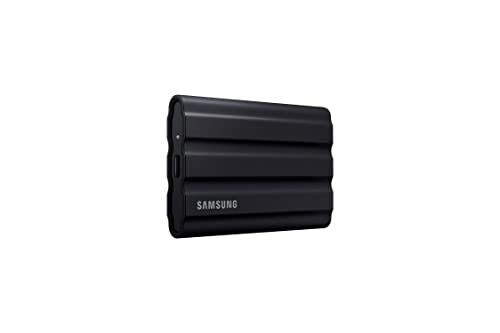
The T7 Shield is the sensible entry into fast external storage. It hits 1,050 MB/s on any machine with a USB 3.2 Gen 2 port, carries an IP65 dust and water rating, and comes from Samsung with a three-year warranty. For buyers who want a rugged, reliable portable SSD without paying for speed their ports cannot use, this is the pick.
Specs
Interface | USB 3.2 Gen 2 (10 Gbps) |
Rated read / write | 1,050 / 1,000 MB/s |
Capacity | 1TB |
Durability | IP65 dust and water resistance |
Warranty | 3 years |
Model number | MU-PE1T0S/AM |
Interface
USB 3.2 Gen 2 (10 Gbps)
Rated read / write
1,050 / 1,000 MB/s
Capacity
1TB
Durability
IP65 dust and water resistance
Warranty
3 years
Model number
MU-PE1T0S/AM
What it does well
The IP65 rating is genuine protection, not marketing language. The T7 Shield holds up to dust and water exposure at a level that makes it usable for LAN parties, travel, and outdoor environments where the T9 or X10 Pro would be a liability.
Console gamers get solid compatibility. The T7 Shield works for PS4 game backups and media storage on PS5, and for Xbox One and backward-compatible title storage on Xbox. USB-C cable included.
For any machine with a Gen 2 port only, the T7 Shield delivers the same 1,050 MB/s ceiling as a Gen 2x2 drive would, at a lower price and with an IP rating that adds real durability.
What you give up
One terabyte is tight. Modern AAA titles are 80 to 150 GB each, and a single 1TB drive fills up quickly once you factor in the operating system overhead on the host machine's drive. Buyers whose game libraries already exceed 500 GB internally should consider whether 1TB is enough before committing. The T7 Shield is not available in a 2TB Gen 2 configuration at the same price tier. When the requirement shifts from portable speed to bulk capacity, external flash stops being the cheap answer, and SSD versus HDD for archive storage works out where a mechanical drive still wins.
For buyers with a Gen 2x2 or TB4 port on their machine, the T7 Shield's 1,050 MB/s ceiling is a bottleneck. The T9 or X10 Pro would deliver meaningfully faster transfers on those ports. See our internal NVMe SSD guide if you are considering adding internal storage instead.
Who it's for
Budget-constrained buyers who want IP-rated portable storage, console gamers keeping PS4 and Xbox One libraries on a portable drive, and anyone who needs a pocketable drive for LAN or travel use. Also a good pick for gaming PC builders looking for a rugged backup drive on the side of a mid-range gaming build.
SanDisk Extreme 2TB: Editor's Pick (Rugged)
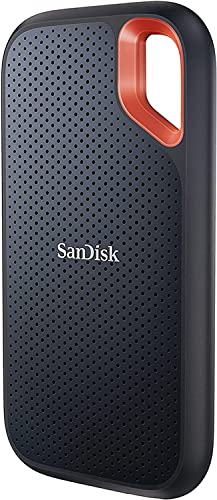
The SanDisk Extreme 2TB is the rugged volume pick for buyers with Gen 2-only ports who need 2TB instead of 1TB. It hits the same 1,050 MB/s ceiling as the T7 Shield, carries the same IP65 rating, and adds the capacity to hold a larger game or media library. With over 89,000 ratings at 4.6 stars, it has the review volume that validates long-term durability claims in a way that newer entrants cannot match.
Specs
Interface | USB 3.2 Gen 2 (10 Gbps) |
Rated read / write | 1,050 / 1,000 MB/s |
Capacity | 2TB |
Durability | IP65 dust and water resistance |
Warranty | 2 years |
Model number | SDSSDE61-2T00-G25 |
Interface
USB 3.2 Gen 2 (10 Gbps)
Rated read / write
1,050 / 1,000 MB/s
Capacity
2TB
Durability
IP65 dust and water resistance
Warranty
2 years
Model number
SDSSDE61-2T00-G25
What it does well
Two terabytes in a rugged, pocketable form factor is the headline. For console gamers who run a mix of PS4 titles and older Xbox games, or for PC gamers who want a large external archive drive they can carry to LAN events, the SanDisk Extreme 2TB covers both the capacity and the ruggedness requirements at Gen 2 speeds.
The review depth matters here. 89,000 ratings represent a meaningful sample of real-world usage across travel, console, and PC environments. The 4.6-star average across that volume is a stronger durability signal than a drive with 5,000 ratings and a perfect score.
What you give up
Gen 2 speed ceiling, same as the T7 Shield. On a machine with a Gen 2x2 or TB4 port, this drive leaves performance on the table. The two-year warranty is one year shorter than the Samsung drives on this list, which matters for storage hardware that may run continuously.
One product confusion worth flagging: the SanDisk Extreme PRO is a different drive with a rougher recent track record. Reports of data loss on recent PRO batches circulated through 2023 and 2024. This pick is the standard Extreme (SDSSDE61-2T00-G25), not the PRO. If a deal site shows the PRO at a discount, skip it and pay for the standard version.
Who it's for
Travel gamers and LAN-party regulars who want 2TB of rugged portable storage at Gen 2 speeds. Console gamers with a mix of PS4 and Xbox One library who need more than 1TB. PC gamers with Gen 2-only ports who want the volume but cannot justify the Gen 2x2 premium for speeds their machine cannot use.
External SSD for gaming on PS5, Xbox, and Steam Deck
Consoles and handhelds cap external drives well below the T9's ceiling, so the Gen 2 picks are the right buy for them. The PS5's rear USB-A ports run at 10 Gbps, and a USB drive there plays PS4 games directly and stores PS5 games, but PS5 titles have to move back to internal storage or an M.2 expansion drive before they run.
Xbox Series X and S use 5 Gbps USB 3.1 Gen 1 ports, so every drive on this list lands well under 500 MB/s there. That is enough for backward-compatible Xbox One titles, which run straight from USB, and for parking Series games you plan to copy back later.
The Steam Deck's single USB-C port is USB 3.2 Gen 2 (10 Gbps), and SteamOS can add an external drive as a library location. The Samsung T7 Shield 1TB is the natural match: it saturates that port and survives a backpack. For how external drives fit next to internal NVMe and hard drives, see our guide to choosing memory and storage.
Bottom line
Port tier is the purchase decision. Get that right and any drive on this list is a defensible buy.
For Gen 2x2 machines, the Samsung Portable T9 2TB is the reference pick. It saturates the connection, holds a real game library, and comes from a manufacturer with a long portable-SSD track record. The Crucial X10 Pro 2TB is the better-value alternative at the same tier if you care more about price per gigabyte than brand reliability history.
For Thunderbolt 4 and 5 machines, the OWC Envoy Ultra is in a different performance class. The sustained write caveat is real, but for reads and burst transfers it is the fastest external SSD you can buy.
For Gen 2-only machines or budget buyers, the Samsung T7 Shield 1TB covers the rugged 1TB use case and the SanDisk Extreme 2TB covers the rugged 2TB use case at the same 1,050 MB/s ceiling.
Check your port spec first. Then pick accordingly.
FAQ
Can you run PS5 games from an external SSD?
No. PS5 games require installation to the console's internal M.2 slot or a PlayStation-compatible M.2 expansion drive installed in the expansion bay. USB external drives can store PS5 game files for archiving, but the console will not run them from USB. You have to transfer the game back to internal storage first. External USB drives on PS5 work normally for PS4 titles and media. The "for PS5" branding that appears on some external drives refers to brand compatibility, not PS5-native game execution.
What USB speed does my gaming laptop actually have?
Most gaming laptops shipped before 2024 have USB 3.2 Gen 2 (10 Gbps) on their USB-C ports. A Gen 2x2 (20 Gbps) port is explicitly labelled in the laptop's spec sheet as "20 Gbps" or "Gen 2x2". If those words do not appear in the I/O table, assume Gen 2. Some high-end 2023-and-later laptops include one Gen 2x2 or Thunderbolt 4 port alongside standard Gen 2 ports. Check the manufacturer's spec page, not the box, for the authoritative answer.
Is the Samsung T9 faster than the T7 Shield?
On a USB 3.2 Gen 2x2 host, yes. The T9 delivers around 2,000 MB/s versus the T7 Shield's 1,050 MB/s. On a Gen 2-only host, both drives cap at the same 1,050 MB/s. The T9's speed advantage exists only when the host port is Gen 2x2. Plug either drive into a Gen 2-only port and the performance is identical.
What is the difference between Thunderbolt 4 and USB4?
USB4 is the specification; Thunderbolt 4 is Intel's certified implementation of USB4 at 40 Gbps. Both carry 40 Gbps on a certified connection. An OWC Envoy Ultra connected to a Thunderbolt 4 port runs at roughly 5,200 MB/s. Thunderbolt 5 is the newer generation, running at 80 Gbps and delivering around 6,000 MB/s from the Envoy Ultra. Thunderbolt 5 is currently most common on Apple Silicon Macs and a handful of high-end Windows laptops. Most gaming desktops and laptops top out at TB4 or USB4 as of 2026.
Can I use an external SSD for Xbox Series X game storage?
Not for running Series X and Series S games. Xbox Series X and S use a proprietary expansion card slot that requires a Seagate Storage Expansion Card. No external USB drive can substitute for that. External USB drives on Xbox Series machines can store Series-generation titles for archiving, but the console will not execute them from USB. To play a Series game, it needs to be on internal storage or the expansion card. Xbox One and backward-compatible games run normally from any external USB drive connected to a Series machine.
How long does it take to transfer a 100 GB game to an external SSD?
At Gen 2x2 speeds of around 2,000 MB/s, roughly 50 seconds. At Gen 2 speeds of around 1,000 MB/s, roughly 100 seconds. At Thunderbolt 4 speeds of around 5,000 MB/s, roughly 20 seconds. These estimates assume the host controller is not the bottleneck, which is usually a safe assumption for dedicated USB controllers on gaming PCs, but not always true on older laptops where multiple ports share a single USB hub.
Related Articles

Is the RTX 5070 Ti Enough for 4K? Yes, at 60 FPS (2026)
Is the RTX 5070 Ti enough for 4K? Yes: 4K 60 in most games and 61fps in Cyberpunk 2077 Ultra RT natively. See when a 4K 120Hz panel needs the RTX 5080.
Oct 7, 2026

Is Ryzen 5 Enough for Gaming? 9600X vs 9700X, 9800X3D (2026)
Is Ryzen 5 enough for gaming? Yes: the 6-core 9600X games within about 2% of a Ryzen 7 9700X. See when the 9700X or 9800X3D is actually worth the upgrade.
Oct 7, 2026

Best GPU for 7800X3D (2026): 5 Picks by Resolution
The best GPU for 7800X3D builds by resolution: five picks from 1080p esports to 4K, where the CPU stops being the limit, and the PSU each card really needs.
Oct 8, 2026

Ryzen 9 9950X vs 9800X3D (2026): 16 Cores or 3D V-Cache?
Ryzen 9 9950X vs 9800X3D: the 9800X3D wins cache-heavy games by 15 to 25%, the 9950X wins renders and streaming. Find your build in one scenario table.
Oct 6, 2026

Steam Machine vs Building Your Own PC: 2026 Verdict
Steam Machine vs building your own PC in 2026: what Valve's box gets right, where a DIY rig wins on VRAM and the upgrade path, and which one you should buy.
Oct 6, 2026