Affiliate Disclosure: As an Amazon Associate we earn from qualifying purchases. Some links may earn us a commission at no cost to you.

How Much PSU Wattage for a Gaming PC? 9 GPU Tiers (2026)
Most 2026 gaming builds land between 650W and 850W. An RTX 5060 is comfortable on 650W, an RTX 5070 or RX 9070 wants 750W, an RTX 5080 wants 850W, and only the RTX 5090 genuinely needs 1000W. The reason those numbers sit above what a wattage calculator returns is that your GPU’s TDP is not the number to shop by. The RTX 5070’s 250W TDP tells you average draw under typical gaming load. It does not tell you what happens in the 2-millisecond burst when a scene loads, a shader compiles, or a frame spikes. RTX 50-series and RDNA4 cards operate under ATX 3.1 specifications that allow transient spikes well above rated TDP. Buy to the spike, not the sticker.
The table below gives you the real floor for each GPU tier, then we back each one with a concrete ATX 3.1 pick. If you've already settled on 850W and want the full spec breakdown, the best ATX 3.1 PSUs at 850W guide covers every current unit.
Quick answer: PSU wattage by GPU tier
GPU | TDP | Peak transient | Min PSU floor | Recommended | Connector required |
|---|---|---|---|---|---|
RTX 5060 | 150W | ~190W | 550W | 650W | 12V-2x6 or 2x8-pin |
RTX 5060 Ti | 180W | ~230W | 600W | 650W | 12V-2x6 native preferred |
RTX 5070 | 250W | ~320W | 700W | 750W | 12V-2x6 native preferred |
RTX 5070 Ti | 300W | ~390W | 800W | 850W | 12V-2x6 required |
RTX 5080 | 360W | ~450-500W | 800W | 850W | 12V-2x6 required |
RTX 5090 | 575W | ~660W+ | 1000W | 1000W+ | 12V-2x6 required |
RX 9060 XT | 160W | ~200W | 550W | 650W | 2x 8-pin PCIe |
RX 9070 | 220W | ~280W | 650W | 750W | 2x 8-pin PCIe |
RX 9070 XT | 304W | ~390W | 750W | 850W | 2x 8-pin PCIe |
RTX 5060
- TDP
150W
- Peak transient
~190W
- Min PSU floor
550W
- Recommended
650W
- Connector required
12V-2x6 or 2x8-pin
RTX 5060 Ti
- TDP
180W
- Peak transient
~230W
- Min PSU floor
600W
- Recommended
650W
- Connector required
12V-2x6 native preferred
RTX 5070
- TDP
250W
- Peak transient
~320W
- Min PSU floor
700W
- Recommended
750W
- Connector required
12V-2x6 native preferred
RTX 5070 Ti
- TDP
300W
- Peak transient
~390W
- Min PSU floor
800W
- Recommended
850W
- Connector required
12V-2x6 required
RTX 5080
- TDP
360W
- Peak transient
~450-500W
- Min PSU floor
800W
- Recommended
850W
- Connector required
12V-2x6 required
RTX 5090
- TDP
575W
- Peak transient
~660W+
- Min PSU floor
1000W
- Recommended
1000W+
- Connector required
12V-2x6 required
RX 9060 XT
- TDP
160W
- Peak transient
~200W
- Min PSU floor
550W
- Recommended
650W
- Connector required
2x 8-pin PCIe
RX 9070
- TDP
220W
- Peak transient
~280W
- Min PSU floor
650W
- Recommended
750W
- Connector required
2x 8-pin PCIe
RX 9070 XT
- TDP
304W
- Peak transient
~390W
- Min PSU floor
750W
- Recommended
850W
- Connector required
2x 8-pin PCIe
The “Min PSU floor” column is the absolute floor for a quality PSU. The “Recommended PSU” column is where you want to land to account for CPU load, system overhead, and a buffer you’ll appreciate when the PSU ages.
Why minimum-spec PSUs fail on RTX 50-series
RTX 50-series GPUs run under ATX 3.1 specifications. The standard allows the GPU to draw up to three times its rated power for transient periods of less than 100 microseconds, and up to double its rated power in longer bursts. A 750W PSU does not fail because it cannot sustain 750W. It fails because the protection circuitry on older or lower-quality units interprets a 400W spike as a fault and triggers overcurrent protection. The system shuts down. Sometimes it restarts. Sometimes it does not.
This is not a theoretical edge case. It is the reason Nvidia moved the RTX 40-series to the 12VHPWR connector and the reason ATX 3.1 units became the standard for the RTX 50-series. A PSU that meets ATX 3.1 spec has been validated to handle those spikes without false tripping. A PSU that predates ATX 3.1 has not.
The second failure mode is quality. A cheap “750W” unit from an unknown brand may carry a 750W rating at 25 degrees Celsius under test conditions it never sees in a real chassis. At 40 degrees ambient inside a mid-tower, that same unit may deliver 680W reliably under sustained load. The Tier A OEMs listed in this guide are rated at temperature and tested by independent labs. The difference is not marketing. It is whether the PSU finishes the scene or shuts down your PC mid-render.
Is 850W overkill? Sizing without the table
For most builds, yes. An 850W unit under an RTX 5070 spends its life at roughly a third of its rated load, and the spare capacity buys you nothing you can measure. A larger PSU does not pull more from the wall. It only ever delivers what the system asks for, so what you are paying for is headroom you never touch.
The case for going one tier up is narrower than it usually gets made out to be, and it comes down to three situations. You plan a GPU upgrade inside the unit’s warranty window, where buying the tier you will need later beats buying twice. Your CPU is a Ryzen 9 or a Core Ultra 9 that sees real all-core work, which adds sustained draw the GPU tables do not account for. Or you want the fan to stay off longer, since most quality units run passively below roughly 40 percent load. Notice that none of those three is “more watts are safer”. A quality 650W unit is safer than a no-name 850W one.
If your parts are not in the table above, the arithmetic is short. Add your CPU’s rated power to your GPU’s rated power, add about 90W for the board, drives, fans and memory, then add 30 percent on top. A Ryzen 7 9800X3D at 120W with an RX 9070 at 220W gives you 430W, and 30 percent takes that to roughly 560W, which rounds up to a 650W unit. The 30 percent is not superstition. It is the transient allowance from the section above plus the efficiency curve, which peaks near half load on every unit worth buying.
The rule that survives every build: take the wattage tier the table gives you, then put the difference into the quality of the unit rather than into more watts. A Gold-rated ATX 3.1 unit from a Tier A OEM at 750W will outlast and out-behave a no-name 1000W unit in every way you will actually notice.
Our picks by wattage tier
Tier | PSU | Wattage | Warranty | Where to buy |
|---|---|---|---|---|
650W | 650W | 7 years | Check Price | |
750W (Best All-Rounder) | 750W | 10 years | Check Price | |
850W | 850W | 7 years | Check Price | |
1000W | 1000W | 10 years | Check Price |
650W
- PSU
- Wattage
650W
- Warranty
7 years
- Where to buy
- Check Price
750W (Best All-Rounder)
- PSU
- Wattage
750W
- Warranty
10 years
- Where to buy
- Check Price
850W
- PSU
- Wattage
850W
- Warranty
7 years
- Where to buy
- Check Price
1000W
- PSU
- Wattage
1000W
- Warranty
10 years
- Where to buy
- Check Price
650W tier: RTX 5060 builds
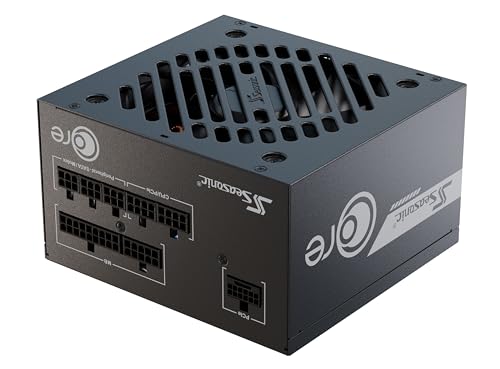
Specs
Model | Seasonic CORE GX 650W |
Standard | ATX 3.1 |
Connector | PCIe 5.1 (12V-2x6 native) |
Efficiency | 80+ Gold |
Cabling | Fully Modular |
Warranty | 7-year warranty |
Form factor | 140mm housing |
Model
Seasonic CORE GX 650W
Standard
ATX 3.1
Connector
PCIe 5.1 (12V-2x6 native)
Efficiency
80+ Gold
Cabling
Fully Modular
Warranty
7-year warranty
Form factor
140mm housing
What it does well
Seasonic builds their CORE GX line in-house. The same manufacturer that builds OEM units for brands charging more is the one with their name on this unit. ATX 3.1 native means the 12V-2x6 connector is included without an adapter, which removes one failure point from the cable path between your PSU and GPU.
The hybrid fan control runs the fan off entirely at low loads. For a build that idles on a desktop most of the day, this extends fan bearing life and keeps noise at zero during casual use. The fully modular design simplifies cable routing in tighter cases where unused cables create airflow obstructions.
At 650W, this unit sits comfortably above the floor for RTX 5060 and RTX 5060 Ti builds. It handles CPU plus GPU load with room left for storage drives, case fans, and the occasional USB device draw that calculator tools miss. The 650W tier also covers a Radeon RX 9070 GRE beside a six or eight core processor, and is 550W enough for an RX 9070 GRE shows the arithmetic for that pairing.
What you give up
The CORE GX carries a 7-year warranty against the Focus GX line’s 10 years. For most buyers on a GPU replacement cycle of three to four years, that gap rarely matters. If you plan to run this PSU through two full GPU generations without touching it, the Focus GX line is worth the premium.
At 650W, there is no upgrade headroom. If you later drop in an RTX 5070 without swapping the PSU, you are running at ceiling on a unit not sized for that GPU. Budget a PSU swap into your upgrade plan or start at 750W. If you would rather size the card to the supply than the other way round, our picks for the best GPU for a 650W PSU cover what a 550W to 650W unit can run without a swap.
Who it’s for
Builders putting together an RTX 5060 Ti system who want genuine Seasonic quality without paying for wattage they will not use. Tight budgets, slim cases, and builds where the PSU is a one-time purchase for a single GPU generation. If you want the full shortlist rather than one tier pick, our best PSU for RTX 5060 Ti guide ranks five units by build type, from budget to SFF to upgrade headroom.
750W tier: RTX 5070 builds

Specs
Model | MSI MAG A750GL PCIE5, 750W |
Standard | ATX 3.1 |
Connector | PCIe 5.1 (12V-2x6 native) |
Efficiency | 80+ Gold |
Cabling | Fully Modular |
Warranty | 10-year warranty |
Form factor | compact 150mm body |
Model
MSI MAG A750GL PCIE5, 750W
Standard
ATX 3.1
Connector
PCIe 5.1 (12V-2x6 native)
Efficiency
80+ Gold
Cabling
Fully Modular
Warranty
10-year warranty
Form factor
compact 150mm body
What it does well
The MSI MAG A750GL PCIE5 is the most commonly purchased PSU in this tier for a reason. Amazon’s Choice with over 5,600 ratings and more than a thousand units moving per month tells you that builders consistently find it, buy it, and do not return it. The 10-year warranty at this price tier is exceptional. Most PSUs at comparable wattage carry 5 or 7 years. Ten years means this unit is built to outlast the GPU, the CPU, and probably the case it is installed in. It is one of five units in our roundup of the best 750W PSUs for RTX 5070 builds, where the ATX 3.1 compliance and OEM tier behind each one are laid out side by side.
The compact 150mm body fits tighter builds where a standard 160mm PSU requires routing around cables or leaves the side panel slightly bowed. The dual-color 12V-2x6 cable is a genuinely useful feature: the cable changes color when the connector is properly seated, removing the guesswork that caused melted connectors on early RTX 40-series installations. Fully modular means you route only the cables your build needs.
For our GPU picks in this tier, see our 1440p GPU options guide covering the full RTX 5070 and RX 9070 lineup.
What you give up
Some longer-term reviews flag fan noise degradation after several months of sustained use. The percentage is small relative to the total review count, but if you plan to run this system in a quiet office or bedroom environment, monitor it over the first year. Reports suggest the fan bearing can develop a slight hum in some units over extended use.
MSI’s warranty service process moves slower than Seasonic’s direct RMA path. Reviewers note that turnaround takes longer and shipping to MSI is the customer’s cost. If warranty service is a priority over a 10-year span, the Seasonic units in this guide handle that better.
Who it’s for
The majority of gaming builds in 2026. RTX 5070, RTX 5070 Super, or RX 9070 paired with a mid-tier Ryzen or Intel processor. The 1440p 144Hz mainstream buyer who wants a solid PSU and does not want to think about it again for a decade. On the AMD side of that tier the transient story is sharper than the TDP suggests, which is why our guide to the best PSU for an RX 9070 works through the 750W and 850W tiers pick by pick.
850W tier: RTX 5070 Ti and RTX 5080 builds
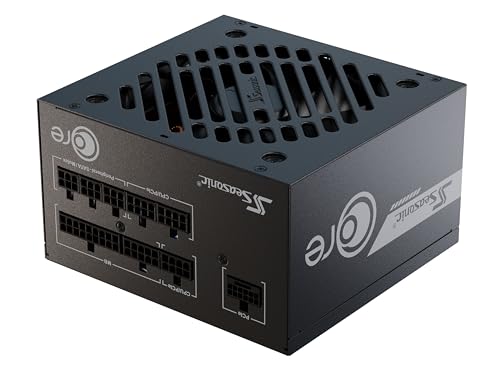
Specs
Model | Seasonic CORE GX 850W, 850W |
Standard | ATX 3.1 |
Connector | PCIe 5.1 (12V-2x6 native) |
Efficiency | 80+ Gold + Cybenetics Platinum |
Cabling | Fully Modular |
Warranty | 7-year warranty |
Form factor | 140mm housing |
Model
Seasonic CORE GX 850W, 850W
Standard
ATX 3.1
Connector
PCIe 5.1 (12V-2x6 native)
Efficiency
80+ Gold + Cybenetics Platinum
Cabling
Fully Modular
Warranty
7-year warranty
Form factor
140mm housing
What it does well
The CORE GX 850W carries Cybenetics Platinum certification on top of 80+ Gold. Those are two separate testing regimes with different methodologies, and Cybenetics Platinum represents a higher efficiency bar than 80+ Gold alone. At 850W draw, the difference in heat generation and electricity cost over four years is real.
Seasonic in-house manufacturing on the CORE GX 850W means the same quality controls that make the Focus GX line trusted also apply here. The RTX 5080 has a 360W Total Board Power rating, with transient spikes that can reach 450-500W under gaming load. A quality 850W unit absorbs those spikes cleanly. A cheaper alternative rated at 850W may trip its overcurrent protection instead. This one does not.
At 850W with an ATX 3.1 native connector, this is also the right buy for anyone pairing the RTX 5070 Ti with a high-end AMD Ryzen 9 9950X or Intel Core Ultra 9 285K processor where combined draw under all-core load exceeds what 750W covers safely. If you are deciding between the two tiers for that card specifically, our verdict on whether 750W is enough for an RTX 5070 Ti walks through the transient math.
What you give up
Seven-year warranty. The Focus GX 850W in ATX 3.1 form carries a 10-year warranty for buyers who want that longer coverage. The CORE GX 850W is the better value at the 850W tier; the Focus GX 850W is the better warranty.
Who it’s for
RTX 5070 Ti and RTX 5080 builds. Also the right call for any builder who expects a GPU upgrade within two years and wants the PSU to survive one more generation without a swap.
1000W tier: RTX 5090 builds
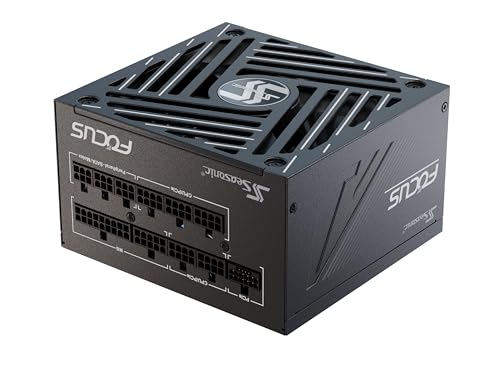
Specs
Model | Seasonic Focus GX 1000W |
Wattage | 1000W |
Standard | ATX 3.1 |
Connector | PCIe 5.1 (12V-2x6 native) |
Efficiency | 80+ Gold + Cybenetics Gold |
Cabling | Fully Modular |
Warranty | 10-year warranty |
Fan | 135mm FDB fan |
Fan mode | hybrid fan control |
Model
Seasonic Focus GX 1000W
Wattage
1000W
Standard
ATX 3.1
Connector
PCIe 5.1 (12V-2x6 native)
Efficiency
80+ Gold + Cybenetics Gold
Cabling
Fully Modular
Warranty
10-year warranty
Fan
135mm FDB fan
Fan mode
hybrid fan control
What it does well
The RTX 5090 has a 575W TDP. Add a Ryzen 7 9800X3D or Core Ultra 9 285K running at sustained all-core load and a well-populated motherboard, and a system can push past 900W before accounting for storage and fan draw. The 1000W floor is the honest floor for an RTX 5090 build. The Focus GX 1000W provides that headroom with Seasonic in-house build quality and a 10-year warranty. If you are weighing a unit you already own against that floor, the 850W versus 1000W call for an RTX 5090 splits by CPU tier and by whether the label says ATX 3.1.
The 135mm FDB fan with hybrid control runs fanless at low loads and spins up cleanly under sustained gaming or compute load. Reviewers consistently cite cable quality as a differentiator: the braided flexible cables route more cleanly in larger cases than the stiffer cables common in competing units.
For the full RTX 5090 PSU range including Platinum options at 1200W and above, see our RTX 5090 PSU guide.
What you give up
Cybenetics Gold, not Platinum. At the 1000W tier, the Seasonic Vertex GX-1000 and Corsair HX1000 are Platinum-rated options at higher cost. If maximum efficiency is the priority on an always-on workstation, those units are worth the premium. For a gaming system that runs four to eight hours a day, Gold efficiency is fine.
Who it’s for
RTX 5090 gaming builds and AI or creative workstations running the GPU under sustained compute loads. Also any builder who wants a single PSU that survives two full GPU generations without a second thought.
How we set these wattage floors
The TDP number on a GPU spec sheet is the average power draw under a standardized workload. It is useful for thermal design and cooling calculations. It is not the number a PSU needs to deliver. The same gap shows up on last-generation cards, which is why it is worth checking whether 550W is enough for an RTX 4070 Super before reusing a supply you already own.
Modern high-end GPUs draw more power in short bursts than their TDP suggests. The ATX 3.1 standard was introduced specifically to handle these transients, requiring PSUs to support current spikes of up to three times the GPU’s rated current for very short periods. A PSU not validated against ATX 3.1 may trip its overcurrent protection during these spikes, causing unexpected shutdowns. That mechanism is what decides the borderline cases: whether 650W is enough for an RX 9070 XT comes down to excursion handling rather than the wattage printed on the box.
The wattage floors in this guide account for: GPU transient spike headroom, a mid-tier CPU running under gaming load, storage and fan overhead, and a buffer for PSU aging. PSU efficiency drops slightly as units age. A unit that delivers 850W cleanly in year one delivers somewhat less cleanly in year five. Sizing above the floor gives you that buffer. For a worked example of that buffer at the entry tier, our 550W and RTX 5060 Ti breakdown runs the same sums by CPU pairing.
On quality tier: we recommend 80+ Gold minimum for any gaming build. Bronze-rated PSUs are fine for office machines running at 15-20% load where the efficiency gap between Bronze and Gold closes to almost nothing. A gaming PC running a high-end GPU at 60-80% load operates in the range where Gold’s efficiency advantage is real, and where the better capacitors and quality controls in Gold-rated units matter for long-term stability. Skip Bronze. See our PSU and case selection guide for the full methodology.
The Tier A OEM list that underlies these picks (Seasonic in-house, CWT for MSI’s MAG/MPG line) reflects the actual manufacturers behind the brand names. Seasonic builds their own units. MSI’s MAG A line uses CWT internals, which are the same OEM behind premium Corsair units. Brand name is not the signal; OEM is. Quality inside the case only covers half the path. On the wall side, our surge protector guide for gaming PCs sizes protection by joule budget and outlet count.
Bottom line
For RTX 5060 builds, 650W from a Tier A OEM covers the tier cleanly. For the majority of 2026 gaming builds running an RTX 5070 or RX 9070, 750W is the floor with real headroom. RTX 5070 Ti and RTX 5080 buyers need 850W to handle transient spikes without cutting corners. RTX 5090 builds need 1000W minimum. The RTX 5080 sits right on the boundary between those tiers, and whether 750W is enough for an RTX 5080 comes down to the CPU class, the drive count, and whether the unit carries an ATX 3.1 rating.
If you are not sure which tier you are building in, start at 750W. The MSI MAG A750GL PCIE5 covers RTX 5070-class builds, has a 10-year warranty, fits compact cases, and is the most field-proven unit in its tier. It is the right call for most builds. If your build is specifically a 5070 and you want the sufficiency case rather than the tier chart, we worked through whether 650W is enough for an RTX 5070 separately.
FAQ
Is 750W enough for an RTX 5070?
Yes, with the right PSU. A quality 750W ATX 3.1 unit from Seasonic, MSI, or Corsair handles an RTX 5070 build cleanly. The caveat is ATX 3.1 compliance and build quality: a cheap 750W unit from an unknown OEM can trip its overcurrent protection during the card’s transient spikes. The MSI MAG A750GL PCIE5 is the pick at this tier.
Is 650W enough for an RTX 5060 Ti?
Yes. The RTX 5060 Ti has a 180W TDP with peaks around 230W under transient load. A quality 650W ATX 3.1 unit covers that draw plus a mid-tier CPU and system overhead with headroom to spare. The Seasonic CORE GX 650W is the pick at this tier. If you plan to upgrade to an RTX 5070 in the next two years, start at 750W and skip the PSU swap later.
Do I need ATX 3.1 for RTX 50-series GPUs?
You do not strictly need it, but it is the right call for any new build in 2026. ATX 3.1 PSUs have been tested and validated to handle the transient spike behavior of RTX 50-series GPUs. Older ATX 3.0 or pre-ATX 3.0 units can work with adapter cables, but the adapter is an additional failure point and the unit has not been validated for 50-series spike behavior. All four picks in this guide are ATX 3.1 native with 12V-2x6 connectors included.
What is the minimum PSU for RTX 5080?
The honest minimum is 850W from a quality ATX 3.1 unit. The RTX 5080 has a 360W Total Board Power rating, and transient spikes under gaming load can reach 450-500W. A 750W unit is technically capable of running the system but is operating near its ceiling during those spikes. The Seasonic CORE GX 850W is the right call.
Is 850W enough for RTX 5070 Ti?
Yes. The RTX 5070 Ti has a 300W TDP with transient peaks around 390W. An 850W unit with ATX 3.1 compliance and quality OEM internals handles a 5070 Ti paired with a high-end CPU without issue. If you are pairing a 5070 Ti with a Ryzen 9 9950X or Intel Core Ultra 9 285K running under heavy all-core workloads simultaneously, budget 900W to be safe. For gaming-only builds, 850W is fine.
Related Articles

Best RTX 5090 PSU 2026: Why 1000W Isn't Enough (5 Picks)
The best PSU for an RTX 5090 is not Nvidia's 1000W floor. Transient spikes explained, five 1200W to 1500W ATX 3.1 picks, and 12V-2x6 cable notes that matter.
Aug 10, 2026

Best GPU for 1440p Gaming 2026: 5 16GB Picks, 144-240Hz
The best GPU for 1440p gaming in 2026: five 16GB picks matched to 144 and 240 Hz targets, the 8GB cards to skip, and the benchmarks behind every call.
Sep 26, 2026

Pro X3 vs Pro X2 Superstrike (2026): Worth the Upgrade?
Pro X3 Superstrike vs Pro X2 Superstrike: 135-hour battery, centered balance, wired 8K polling. Who should upgrade, who should buy the X2, who should skip it.
Oct 14, 2026

Is 16GB RAM Enough for Gaming in 2026? 1080p, 1440p and 4K
Is 16GB RAM enough for gaming in 2026? Yes at 1080p or 1440p with few apps open. Add Discord, OBS or a browser behind the game and 32GB stops the stutter.
Oct 14, 2026

Best Monitor for RTX 3060 (2026): 5 Picks, 1080p and 1440p
The best monitor for the RTX 3060 is a 27-inch 1440p 180Hz panel run with DLSS, or a 24-inch 1080p one if you stay native. Five picks matched to the 12GB card.
Oct 14, 2026