Affiliate Disclosure: As an Amazon Associate we earn from qualifying purchases. Some links may earn us a commission at no cost to you.

Best ATX 3.1 Power Supplies (2026): 5 Native 12V-2x6 Picks
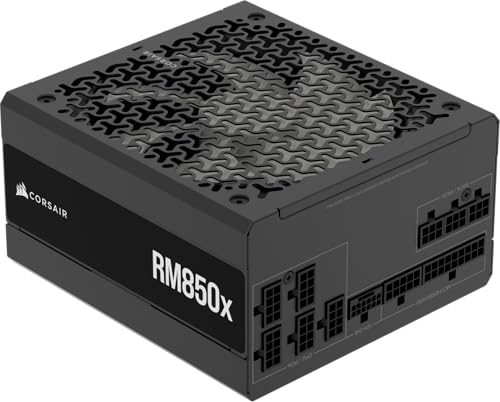
If you want an ATX 3.1 power supply, the Corsair RM850x (2024) is the one to buy for most gaming builds: CWT-built, Cybenetics Gold, and a native 12V-2x6 connector with no adapter in the box. The four alternatives below cover Platinum efficiency, a tighter budget, and compact cases.
All five picks are 850W, the tier that suits the widest range of current builds. Every one carries a native 12V-2x6 connector rather than a 12VHPWR socket with a converter in the accessory bag, and that distinction is the thing worth checking before you buy, because plenty of listings still say ATX 3.1 while shipping the older hardware.
Our top pick: Corsair RM850x (2024) ATX 3.1
CWT-built, Cybenetics Gold-certified, and sporting a 10-year warranty, the 2024 revision of Corsair's most-recommended PSU line is now ATX 3.1-native. It is the clearest choice for mid-range to high-end builds that want a high-confidence unit without paying Platinum pricing.
Quick picks
Pick | PSU | Efficiency | Warranty | Buy |
|---|---|---|---|---|
Best Overall | Cybenetics Gold (91%) | 10 years | Check Price | |
Best Value | 80 PLUS Gold (94.4%) | 5 years | Check Price | |
Best Premium | Cybenetics Platinum | 10 years | Check Price | |
Best Budget Platinum | Cybenetics Platinum (94.1%) | 10 years | Check Price | |
Editor's Pick (Compact) | 80 PLUS Gold | 10 years | Check Price |
Best Overall
- PSU
- Efficiency
Cybenetics Gold (91%)
- Warranty
10 years
- Buy
- Check Price
Best Value
- PSU
- Efficiency
80 PLUS Gold (94.4%)
- Warranty
5 years
- Buy
- Check Price
Best Premium
- PSU
- Efficiency
Cybenetics Platinum
- Warranty
10 years
- Buy
- Check Price
Best Budget Platinum
- PSU
- Efficiency
Cybenetics Platinum (94.1%)
- Warranty
10 years
- Buy
- Check Price
Editor's Pick (Compact)
- PSU
- Efficiency
80 PLUS Gold
- Warranty
10 years
- Buy
- Check Price
Specs at a glance
PSU | Wattage | Connector | Efficiency | Fan Size | Warranty |
|---|---|---|---|---|---|
850W | Native 12V-2x6 | Cybenetics Gold | 140mm FDB | 10 years | |
850W | Native 12V-2x6 + 4x PCIe 6+2 | 80 PLUS Gold (94.4%) | 120mm semi-passive | 5 years | |
850W | Native 12V-2x6 | Cybenetics Platinum | 135mm FDB hybrid | 10 years | |
850W | Native 12V-2x6 + 90-degree adapter | Cybenetics Platinum (94.1%) | 140mm semi-passive | 10 years | |
850W | Native 12V-2x6 | 80 PLUS Gold | 120mm zero-RPM | 10 years |
- Wattage
850W
- Connector
Native 12V-2x6
- Efficiency
Cybenetics Gold
- Fan Size
140mm FDB
- Warranty
10 years
- Wattage
850W
- Connector
Native 12V-2x6 + 4x PCIe 6+2
- Efficiency
80 PLUS Gold (94.4%)
- Fan Size
120mm semi-passive
- Warranty
5 years
- Wattage
850W
- Connector
Native 12V-2x6
- Efficiency
Cybenetics Platinum
- Fan Size
135mm FDB hybrid
- Warranty
10 years
- Wattage
850W
- Connector
Native 12V-2x6 + 90-degree adapter
- Efficiency
Cybenetics Platinum (94.1%)
- Fan Size
140mm semi-passive
- Warranty
10 years
- Wattage
850W
- Connector
Native 12V-2x6
- Efficiency
80 PLUS Gold
- Fan Size
120mm zero-RPM
- Warranty
10 years
ATX 3.1 vs ATX 3.0: what actually changed
ATX 3.0 introduced the 12VHPWR connector to handle the 600W delivery requirement for RTX 4090-class GPUs. The problem was structural: 12VHPWR cables could develop micro-fractures under stress, especially when bent close to the GPU end. Melted connectors appeared at a rate that spooked builders even though the absolute failure count was small.
ATX 3.1 replaces 12VHPWR with the 12V-2x6 connector. The new connector has a locking retention tab, a physically larger contact area, and a tighter spec around the cable-to-connector angle to prevent the stress fracture issue. For high-end builds pairing a PSU with a RTX 5090 or RTX 5080, native 12V-2x6 from the PSU means no adapter in the cable chain. ATX 3.1 also relaxed the hold-up time requirement to 12ms at full load, down from ATX 3.0's 17ms, and carried over the transient power excursion tolerances ATX 3.0 introduced.
For builds below the RTX 5080 tier, ATX 3.0 units with a native connector are still a sensible buy if the price is right. But ATX 3.1 carries no penalty at 850W, so for a new build there is no reason to choose 3.0 intentionally. If the build is genuinely budget-bound rather than just below flagship, our best budget PSU under $80 shortlist covers what still clears the safety floor at that price.
How to tell a real ATX 3.1 PSU from an ATX 3.0 with an adapter
The label on the listing is not enough. A product page can say ATX 3.1 while the unit ships a 12VHPWR socket and a 12VHPWR-to-12V-2x6 converter in the accessory bag, which puts the adapter straight back into the cable chain that ATX 3.1 exists to remove. Three checks separate the two.
Look for the words native 12V-2x6 in the connector spec, not just ATX 3.1 or PCIe 5.1 in the product title. The modular panel on the PSU should carry a 12V-2x6 socket of its own. Then read the cable list: a genuine ATX 3.1 unit ships one cable with a 12V-2x6 head at both ends, while an adapter unit lists a 12VHPWR cable plus a converter. Last, check the revision. Several vendors sell an ATX 3.0 and an ATX 3.1 version of the same model name from a single listing, and the variant picker often defaults to the older one. Confirming a native connector is also the cheapest half of the safety question do you need a 12VHPWR power monitor for an RTX 5090 answers, where the verdict for a stock card is no and the three exceptions are named.
One spec that tells you less than it looks like it does: hold-up time. ATX 3.1 relaxed the requirement to 12ms at full load, down from ATX 3.0's 17ms, with 17ms at 80% load recommended. That is a change in test methodology rather than a downgrade you will notice, so a shorter hold-up figure on an ATX 3.1 spec sheet is not a reason to skip the unit. One more thing the native-versus-adapter split raises: whether that adapter is a problem on a mid-tier card at all. We worked through whether an RTX 5070 Ti needs a native 12V-2x6 cable separately, and at 300W the honest answer is no.
How we picked
The OEM matters more than the brand name on the box. Seasonic builds its own units in-house. Corsair's RMx 2024 revision comes from Channel Well Technology (CWT), a Tier A OEM with a consistent record. be quiet!'s Pure Power 13 M and Power Zone 2 are in-house or FSP-built depending on wattage. That OEM provenance is the first filter before any spec comparison. Any PSU that sits below this tier, regardless of marketing claims, is off the table for a B850 motherboard build or above.
All five picks are 850W continuous, the tier that fits the widest range of current builds. A 9800X3D paired with an RTX 5080 sits near 550W under sustained load, which leaves headroom for transient spikes, drives and fans without stressing the unit. Above that tier the arithmetic changes: an RTX 5090 pulls enough that 850W stops being the comfortable answer, and the 1200W and 1500W picks for RTX 5090 builds cover it. If you are not sure which tier you are in, how much wattage a gaming PC actually needs works the calculation up from the parts list.
Efficiency certifications carry real meaning in this tier. Cybenetics is an independent certification lab that tests at multiple load points across different voltage conditions, unlike 80 PLUS which tests only at 115V. A Cybenetics Platinum unit is meaningfully more efficient than a Cybenetics Gold unit under the real load profile of a gaming PC. The efficiency gap matters more for workstations running 24/7 than for a gaming rig with 6 to 8 hours of daily use, but at 850W the price difference between Gold and Platinum has narrowed enough that Platinum is worth considering. See the full PC building guide for how PSU selection fits into the broader build planning process.
Best Overall: Corsair RM850x (2024) ATX 3.1
Specs
Wattage | 850W continuous |
Standard | ATX 3.1 / PCIe 5.1 compliant |
Efficiency | Cybenetics Gold, up to 91% |
GPU connector | Native 12V-2x6 |
Fan | 140mm FDB, zero-RPM mode |
Cabling | Fully modular |
Capacitors | 100% Japanese 105C |
Warranty | 10 years |
OEM | CWT |
Wattage
850W continuous
Standard
ATX 3.1 / PCIe 5.1 compliant
Efficiency
Cybenetics Gold, up to 91%
GPU connector
Native 12V-2x6
Fan
140mm FDB, zero-RPM mode
Cabling
Fully modular
Capacitors
100% Japanese 105C
Warranty
10 years
OEM
CWT
What it does well
CWT's 2024 rework is a real revision, not a sticker update. The unit now ships with a native 12V-2x6 connector, which means no adapter between the PSU and the GPU. That matters for RTX 50-series and RX 9000-series cards, where the connector carries up to 600W transiently. If the RX 9000-series card in question is a Radeon RX 9070, our breakdown of the best PSU for an RX 9070 covers which of the two wattage tiers its 830W transient peak actually needs.
The 140mm FDB fan is quiet. Under light gaming loads with a mid-range GPU it will spend most of its time at low RPM or stopped entirely. The fully modular cable system keeps unused cables out of the case. Five thousand-plus reviews at 4.8 stars is a large enough sample to trust the reliability signal.
The 10-year warranty is among the longest in the class. Corsair has honored it consistently, including honoring claims on the 2021 revision when that batch had documented problems.
What you give up
Cybenetics Gold sits below Platinum. If you are running a workstation 10 hours a day, the Seasonic Focus GX-850 ATX 3.1 or be quiet! Power Zone 2 will cost less to operate over 3 to 5 years. For a gaming PC with typical daily use patterns, the efficiency difference is small in practice.
The cable bundle ships with two 8-pin PCIe connectors alongside the 12V-2x6. Most builds need only one or two PCIe connections, so this is rarely a problem. If you are running a multi-GPU test setup, you may need an additional modular PCIe cable.
One variant trap to know: Corsair sells both the 2021 revision and the 2024 ATX 3.1 revision of the RM850x from the same product listing. The variant picker defaults to the older model on some Amazon views. Buyers report suggest selecting "RMx (2024) - ATX 3.1" explicitly in the style selector before adding to cart.
Who it's for
Mid-range to high-end gaming builds on AM5 or Intel LGA1851 using anything up to an RTX 5080. Builders who want a high-confidence CWT-built unit with a large review sample and a 10-year warranty, without paying Platinum tier pricing.
Best Value: be quiet! Pure Power 13 M 850W

Specs
Wattage | 850W continuous |
Standard | ATX 3.1 / PCIe 5.1 compliant |
Efficiency | 80 PLUS Gold, 94.4% peak |
GPU connector | Native 12V-2x6 plus 4x PCIe 6+2-pin |
Fan | 120mm semi-passive, zero-RPM under low load |
Topology | LLC, single 12V rail |
Cabling | Fully modular |
Model | BP027US |
Wattage
850W continuous
Standard
ATX 3.1 / PCIe 5.1 compliant
Efficiency
80 PLUS Gold, 94.4% peak
GPU connector
Native 12V-2x6 plus 4x PCIe 6+2-pin
Fan
120mm semi-passive, zero-RPM under low load
Topology
LLC, single 12V rail
Cabling
Fully modular
Model
BP027US
What it does well
The Pure Power 13 M 850W comes from be quiet!'s 2025 lineup and meets the full ATX 3.1 spec with a native 12V-2x6 connector. Its 94.4% peak efficiency rating is at the top of the Gold-certified field. LLC topology keeps voltage regulation tight across load swings, which matters when a GPU transitions between idle and full gaming load.
The semi-passive fan turns off completely below moderate loads. With a mid-range GPU at desktop idle, this unit is silent. The 120mm fan only spins up under heavy draw, and even then be quiet!'s fan curves are tuned for quiet operation. Four PCIe 6+2-pin connectors alongside the 12V-2x6 make this flexible for older-format GPU installations as well.
Single 12V rail means the unit can deliver the full 850W to any one rail without artificial current limits. The spec sheet claims it can handle power excursions up to double the rated wattage, which covers even an RTX 5090's transient spikes.
What you give up
The 120mm fan is smaller than the 140mm units on the Seasonic and be quiet! Power Zone 2. Under sustained gaming loads it will spin faster and louder to move equivalent air volume. For a desktop with typical 6 to 8 hour sessions this is rarely noticeable. In a quiet room under a prolonged stress test, you will hear the difference.
The 12V-2x6 cable measures roughly 580mm in length. In builds where the PSU housing sits at the top of the case, that cable may not comfortably reach an RTX 5090. A 90-degree adapter resolves it. Bottom-mounted PSU housings (the standard layout) have no issue.
Who it's for
Budget-conscious 1080p and 1440p builds on AM5 or Z890 with an RTX 5070 or RX 9070. Builders using standard bottom-mounted PSU layouts in a typical ATX mid-tower case who want ATX 3.1 compliance without paying Gold-plus pricing.
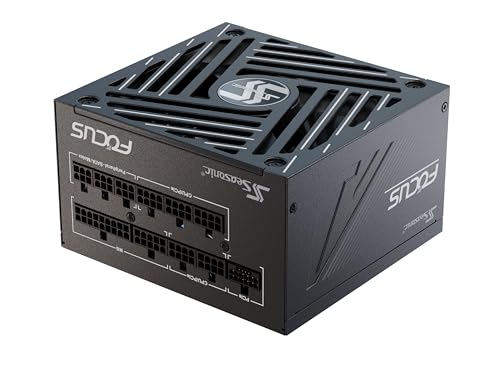
Best Premium: Seasonic Focus GX-850 ATX 3.1
Specs
Wattage | 850W continuous |
Standard | ATX 3.1 / PCIe 5.1 compliant |
Efficiency | 80 PLUS Gold, Cybenetics Platinum |
GPU connector | Native 12V-2x6 |
Fan | 135mm FDB, hybrid fan control |
Thermal design | OptiSink |
Capacitors | 100% Japanese 105C |
Cabling | Fully modular |
Warranty | 10 years |
OEM | Seasonic in-house |
Wattage
850W continuous
Standard
ATX 3.1 / PCIe 5.1 compliant
Efficiency
80 PLUS Gold, Cybenetics Platinum
GPU connector
Native 12V-2x6
Fan
135mm FDB, hybrid fan control
Thermal design
OptiSink
Capacitors
100% Japanese 105C
Cabling
Fully modular
Warranty
10 years
OEM
Seasonic in-house
What it does well
Seasonic builds this in-house. There is no OEM lottery with a Seasonic unit; every Focus GX-850 ATX 3.1 comes off the same factory floor with the same component sourcing. That consistency is what justifies the premium over CWT-built alternatives.
The Cybenetics Platinum certification is meaningful here. Cybenetics tests at multiple load points across 100V and 115V mains, capturing real-world efficiency better than the 80 PLUS test protocol. The Focus GX-850 ATX 3.1 clears Platinum thresholds across the 20% to 100% load range, which means better efficiency under the low-load conditions that make up most of a gaming PC's daily operation.
The 135mm FDB fan with OptiSink design keeps thermal management effective without the noise penalty. Hybrid fan control keeps the fan stopped at low loads. Native 12V-2x6 connector handles the full 600W delivery to RTX 5090-class GPUs without an adapter.
What you give up
It costs more than any other unit in this group. If your build uses an RTX 5070 Ti or below, the Cybenetics Gold units deliver comparable real-world power delivery at a lower price point. The Platinum efficiency advantage shrinks further at the lower load levels a mid-range GPU draws. For the 5070 specifically the wattage question has its own answer: we covered whether 650W is enough for an RTX 5070 and which ATX 3.1 units clear it.
The Amazon review sample is 229, which is meaningful but smaller than the Corsair's 5,695. Some buyers have flagged coil whine at idle, appearing specifically in the white-finish variant. The black-finish unit (B0DLFMTX12) has not shown this pattern at scale.
Who it's for
Workstation-adjacent builds running sustained loads, content creators who leave their system under load for hours at a stretch, and anyone building with an RTX 5080 or RTX 5090 who wants a Platinum-rated no-rebadge OEM unit. Also the right call for builders who plan to keep the system for 5-plus years and want the warranty security of a direct Seasonic product. If the build is specifically an RTX 5080, the 850W ATX 3.1 picks for the RTX 5080 narrow this field to the five units that clear NVIDIA's floor with the right connector.
Best Budget Platinum: be quiet! Power Zone 2 850W

Specs
Wattage | 850W continuous |
Standard | ATX 3.1 / PCIe 5.1 compliant |
Efficiency | 80 PLUS Platinum, Cybenetics Platinum 94.1% |
GPU connector | Native 12V-2x6, 90-degree angled adapter included |
PCIe connectors | 3x 6+2-pin |
Fan | 140mm Pure Wings 3, semi-passive |
Topology | LLC, single 12V rail |
Cabling | Fully modular |
Model | BP007US |
Warranty | 10 years |
Wattage
850W continuous
Standard
ATX 3.1 / PCIe 5.1 compliant
Efficiency
80 PLUS Platinum, Cybenetics Platinum 94.1%
GPU connector
Native 12V-2x6, 90-degree angled adapter included
PCIe connectors
3x 6+2-pin
Fan
140mm Pure Wings 3, semi-passive
Topology
LLC, single 12V rail
Cabling
Fully modular
Model
BP007US
Warranty
10 years
What it does well
This is the only unit in the group that ships with a 90-degree angled 12V-2x6 connector in the box. That detail solves a real routing problem. In a full-tower case where the PSU sits at the bottom rear and the GPU is mounted near the top of the board, the cable has to travel a significant distance and bend sharply near the GPU end. The 90-degree connector takes the acute bend out of the equation.
Cybenetics Platinum at this price point is an unusual combination. The be quiet! Power Zone 2 850W sits at a price below the Seasonic Focus GX-850 ATX 3.1 while matching its Platinum efficiency certification. The 140mm Pure Wings 3 fan cools efficiently at lower RPM than a 120mm unit would, keeping noise low under load.
LLC topology provides stable voltage regulation across transient load events. The single 12V rail delivers the full 850W without artificial current splitting. be quiet! designed this unit specifically for the new standard: the 12V-2x6 cable is standard-length and the 90-degree adapter makes routing in any case geometry straightforward.
What you give up
The review sample is 84. That is a real confidence gap compared to the Corsair and MSI units in this group. One verified DOA report appears in the Amazon reviews; be quiet!'s replacement process worked without friction in that case, but the small sample means the reliability floor is less established than for the higher-reviewed picks.
The cables are flat and non-braided. In an open-frame build or a case with a large side window, the cable appearance behind the board is less polished than sleeved alternatives. The 24-pin cable has twisted conductors near the motherboard connector, which several buyers noted looks awkward in visible routing paths.
Who it's for
Builders who want Cybenetics Platinum without paying Seasonic pricing. Specifically good for anyone building with an RTX 5090 or RTX 5080 who needs the full 600W transient handling and wants the 90-degree 12V-2x6 connector for routing in a standard full-tower or mid-tower layout. If the RTX 5090 is specifically the card you are powering, the best PSUs for the RTX 5090 roundup works through the 1200W tier and the cable-clearance problem in detail.
Editor's Pick (Compact): MSI MPG A850G PCIE5

Specs
Wattage | 850W continuous |
Standard | ATX 3.1 / PCIe 5.1 compliant |
Efficiency | 80 PLUS Gold |
GPU connector | Native 12V-2x6 |
Capacitors | 100% Japanese 105C |
Depth | 150mm, versus 160mm standard |
Cabling | Fully modular |
Topology | Single rail |
Fan | Zero-RPM mode |
Warranty | 10 years |
Wattage
850W continuous
Standard
ATX 3.1 / PCIe 5.1 compliant
Efficiency
80 PLUS Gold
GPU connector
Native 12V-2x6
Capacitors
100% Japanese 105C
Depth
150mm, versus 160mm standard
Cabling
Fully modular
Topology
Single rail
Fan
Zero-RPM mode
Warranty
10 years
What it does well
The 150mm depth is 10mm shorter than a standard ATX PSU. In a compact ATX or mATX case where the PSU compartment is tight, that 10mm is the difference between a cramped cable bundle and a clean routing path. Cases built around standard PSU depths sometimes give away that extra length for cable management; the MSI MPG A850G PCIE5 leaves it in your favor.
Japanese capacitors, a 10-year warranty, and a native 12V-2x6 connector check the reliability basics. The zero-RPM fan mode keeps the unit silent under light desktop use. With nearly 3,000 reviews at 4.6 stars, this is a high-confidence pick for gaming-oriented builds.
The cable variety is good. MSI ships multiple lengths and configurations, which makes fitting cables in different case layouts easier without buying extensions separately.
What you give up
Efficiency is 80 PLUS Gold without the Cybenetics Platinum overlay. For a standard gaming rig the difference is small in practice, but if efficiency across the full load curve is a priority, the Seasonic and be quiet! Power Zone 2 rate higher.
The OEM lineage for the 850W variant is less certain than for MSI's 1000W A1000G PCIE5, which is documented as Great Wall-built. Treat the 850W at Corsair/CWT-comparable reliability tier rather than counting it as a confirmed Great Wall build.
One buyer caution: pre-owned and resale units have occasionally shipped with missing cables. Buy new from Amazon directly.
Who it's for
Compact ATX and mATX builds where PSU depth is a real constraint. Good for tight cases where the standard 160mm PSU leaves no room for cable management behind the shroud. Gaming-focused builds that want a clean install without buying a separate short-depth alternative.
Bottom line
For most gaming builds, the Corsair RM850x (2024) ATX 3.1 is the call. CWT-built, 10-year warranty, large review sample, native 12V-2x6, Gold efficiency. If you want Platinum efficiency without paying Seasonic pricing, the be quiet! Power Zone 2 850W delivers Cybenetics Platinum and includes the 90-degree 12V-2x6 connector. For the absolute no-rebadge assurance with a decade of warranty, the Seasonic Focus GX-850 ATX 3.1 is the unit. If the build is going into a compact case where depth is tight, the MSI MPG A850G PCIE5 is the compact-form solution. Budget builders wanting ATX 3.1 compliance at the lowest entry point land on the be quiet! Pure Power 13 M 850W. If you are sizing the wattage tier rather than picking the unit, we worked out whether 750W is enough for an RTX 5070 Ti in its own verdict.
ATX 3.1 is the current standard. All five units here meet it and carry the native 12V-2x6 connector that eliminates the adapter stress point. Pick the efficiency tier and form factor that fit your build and move on. If you are deciding whether a smaller unit clears a specific card, the 650W versus 750W call for an RX 9070 XT works the same arithmetic one wattage tier below these picks.
FAQ
What is ATX 3.1 and how is it different from ATX 3.0?
ATX 3.1 is Intel's 2024 revision to the ATX Power Supply Design Guide. The biggest change is replacing the 12VHPWR connector from ATX 3.0 with the 12V-2x6 connector. The 12V-2x6 has a locking retention tab, wider contact surfaces, and tighter bend-radius tolerances that address the stress fracture concerns that appeared with some 12VHPWR cable installations. ATX 3.1 also tightened the transient excursion tolerance and the hold-up time requirement to 50ms. For most builders, the practical difference is a more reliable GPU power connection on RTX 50-series and RX 9000-series cards.
Do I need an ATX 3.1 power supply for an RTX 5080 or RTX 5090?
Nvidia lists an ATX 3.0 or ATX 3.1 PSU as recommended for the RTX 5090 and RTX 5080. You can run these cards on an ATX 3.0 unit with the bundled 12VHPWR adapter, but a native ATX 3.1 PSU with a 12V-2x6 connector removes the adapter from the chain entirely. Given that RTX 5090 and 5080 units draw up to 575W and 360W respectively under transient load, eliminating the adapter stress point is worth doing. For the RTX 5070 Ti and below, an ATX 3.0 unit with a native 12VHPWR connector is still a sound choice.
What is the 12V-2x6 connector and why does it replace 12VHPWR?
The 12V-2x6 connector is the successor to the 12VHPWR connector introduced with ATX 3.0. Both carry up to 600W to a GPU over a single cable. The 12V-2x6 differs in three ways: it adds a positive locking mechanism to prevent accidental disconnection, it uses wider contact pins to reduce resistance, and its physical housing enforces a tighter cable routing angle near the connector body. That last point addresses the root cause of the 12VHPWR melting incidents that appeared after launch of the RTX 4090.
Is 850W enough for a high-end gaming build in 2026?
For the vast majority of gaming builds, yes. A system with a Ryzen 9 9800X3D and an RTX 5090 draws roughly 600W under sustained gaming load. An 850W PSU gives 250W of headroom for storage, fans, RGB, and transient spikes. The only scenario where 850W runs tight is a workstation-style build with a 285K, an RTX 5090, and multiple NVMe drives under sustained all-core load. For that configuration, a 1000W unit is the safer choice. Standard gaming builds at any GPU tier through the RTX 5090 are fine at 850W.
Can I use an ATX 3.1 PSU in a system with older ATX connectors?
Yes. ATX 3.1 PSUs are backward compatible with all previous ATX connector standards. They ship with the same 24-pin ATX motherboard connector, 8-pin EPS CPU connectors, SATA power connectors, and Molex connectors that earlier units used. The only new connector is the 12V-2x6 for the GPU. If your current GPU uses two 8-pin PCIe connectors, you plug those in from the fully modular cable bundle. The 12V-2x6 connector sits unused if your GPU does not need it.
Related Articles

Best B850 Motherboards (2026): Mid-Tier AM5 Picks by Build Profile
B850 is the AM5 mid-tier sweet spot for Ryzen 9000 builds. We pick 5 boards by profile, from flagship ATX to compact ITX.
May 14, 2026

How to Build a Gaming PC: A Buyer's Decision Framework
Build a gaming PC the right way: GPU-first ordering, CPU sized to match, motherboard overspend avoided, and the PSU/case rules that protect the build.
May 17, 2026

Best Airflow ATX Mid-Tower Cases 2026: 5 Picks by Budget
Best ATX mid-tower cases for airflow in 2026: five picks that keep a hot GPU and a 360mm AIO cool, from the budget Phanteks G400A to the five-fan Torrent.
Oct 21, 2026

RTX 5090 vs RTX 5080 (2026): Which GPU Should You Buy?
RTX 5090 vs RTX 5080 in 2026: the 5090 is the no-compromise 4K flagship, the 5080 saves half the spend at 4K 120Hz. Pick by panel, workload, and PSU budget.
Jul 7, 2026

Best GPU for Assassin's Creed Shadows (2026): 5 Picks
The best GPU for Assassin's Creed Shadows is an RX 9070 XT. Five picks from 1080p to 4K with measured FPS, the ray tracing modes, and how much VRAM you need.
Oct 21, 2026