Affiliate Disclosure: As an Amazon Associate we earn from qualifying purchases. Some links may earn us a commission at no cost to you.

iRacing System Requirements 2026: Official vs 3 Real Builds
iRacing's official minimum is a four-core CPU, 16 GB of RAM, and a graphics card with 6 GB of memory on 64-bit Windows 11, and that is enough to launch the sim. Racing a full grid smoothly takes more: a Ryzen 7 9800X3D, 32 GB of DDR5, and a graphics card sized to your screens. A clean lap on an empty track asks very little of your hardware, but holding a stable frame rate through a twenty-car pack going three-wide into turn one asks a great deal, and that lower number decides whether the sim feels honest.
The official system requirements list three tiers, but even the high-end tier stops short of what a triple-screen or VR rig needs. This guide puts iRacing's own spec sheet next to the parts we would actually buy, sorted by how you race: one screen, three screens, or in VR. It leads with the part that matters most, and that part is not the graphics card.
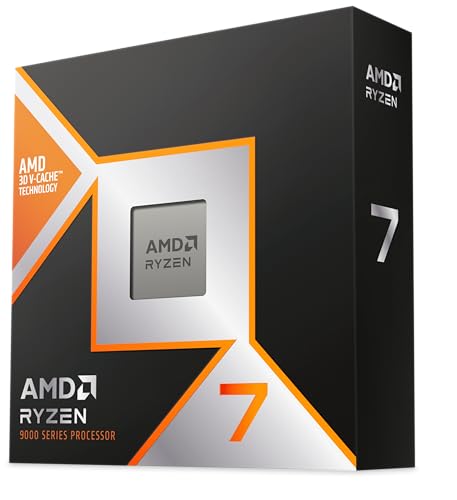
Our top pick: AMD Ryzen 7 9800X3D
iRacing leans on the processor far more than the graphics card, and its frame rate lives or dies on the CPU's cache when the grid is full. The Ryzen 7 9800X3D carries 96 MB of L3 cache and the strongest gaming cores on sale right now, which is why it anchors every tier below. Buy the chip once and it drives a single screen, a triple setup, or a VR headset without becoming the part that holds you back.
Quick picks
Five parts cover every way of running iRacing in 2026. The processor anchors all of them, and the graphics card scales with your display.
Part | What it is for | Where to buy |
|---|---|---|
Every iRacing build, one screen to VR | ||
One screen at 1080p or 1440p | ||
Triple 1440p and entry VR | ||
VR and maxed triple screens | ||
The memory kit every build wants |
- What it is for
Every iRacing build, one screen to VR
- Where to buy
- What it is for
One screen at 1080p or 1440p
- Where to buy
- What it is for
Triple 1440p and entry VR
- Where to buy
- What it is for
VR and maxed triple screens
- Where to buy
- What it is for
The memory kit every build wants
- Where to buy
Official iRacing system requirements vs our build
Component | Official minimum | Official recommended | Official high end | Our build |
|---|---|---|---|---|
Processor | 4 cores (Core i5-6600, Ryzen 3 4300G) | 6 cores (Core i5-11600, Ryzen 5 5600X) | 8+ cores (Core i7-14700, Ryzen 7 9700X) | |
Graphics card | 6 GB (GTX 1070, RX 5600 XT) | 8 GB (RTX 2070, RX 5700 XT) | 10 GB+ (RTX 4070, RX 9070) | 16 GB, sized to your screens (see below) |
Memory | 16 GB DDR4 | 16 GB | 32 GB+ | G.Skill Flare X5 32 GB DDR5-6000 |
Storage | 40 GB | 225 GB (every car and track) | 225 GB+ | 1 TB NVMe SSD |
Processor
- Official minimum
4 cores (Core i5-6600, Ryzen 3 4300G)
- Official recommended
6 cores (Core i5-11600, Ryzen 5 5600X)
- Official high end
8+ cores (Core i7-14700, Ryzen 7 9700X)
- Our build
Graphics card
- Official minimum
6 GB (GTX 1070, RX 5600 XT)
- Official recommended
8 GB (RTX 2070, RX 5700 XT)
- Official high end
10 GB+ (RTX 4070, RX 9070)
- Our build
16 GB, sized to your screens (see below)
Memory
- Official minimum
16 GB DDR4
- Official recommended
16 GB
- Official high end
32 GB+
- Our build
G.Skill Flare X5 32 GB DDR5-6000
Storage
- Official minimum
40 GB
- Official recommended
225 GB (every car and track)
- Official high end
225 GB+
- Our build
1 TB NVMe SSD
iRacing's published minimum is a four-core CPU, 16 GB of DDR4, and a graphics card with 6 GB of dedicated memory. The example parts, like the Core i7-4790 and the GTX 1070, date from 2014 and 2016. They will launch the sim, but they were never chosen with a full field of modern car models in mind.
The recommended tier asks for six cores, 16 GB of RAM, and an 8 GB card, and the high-end tier steps up to eight cores, 32 GB, and 10 GB or more of graphics memory. That top tier is closer to honest, but it still treats the processor as a core count. What the spec sheet never says is that iRacing is limited by the CPU, and the figure that matters is the minimum frame rate at a full-grid start. iRacing also wants any VR system at the recommended tier or better, and it runs on 64-bit Windows 11 only, with no Mac or Linux support.
One change is still coming. iRacing's in-house Spark graphics engine remains in development as of the Season 3 2026 updates, with no firm release date, and the current build needs DirectX 11 at minimum. Until Spark lands, the old rule holds: a fast processor with a large cache is what keeps the minimum frame rate up when twenty cars fill the screen. iRacing also renders natively today, with only a basic spatial upscaler and no frame generation, so you cannot upscale your way out of a weak card. For the wider display question, sim racing displays are their own decision.
What to buy by display setup
Your display decides the graphics card, because it decides how many pixels that card has to push. The processor and the memory stay the same across all three setups.
Display setup | Graphics card | CPU and memory | Where to buy |
|---|---|---|---|
Single screen, 1080p or 1440p | 9800X3D, 32 GB DDR5 | ||
Triple 1440p | 9800X3D, 32 GB DDR5 | ||
VR headset | 9800X3D, 32 GB DDR5 |
Single screen, 1080p or 1440p
- Graphics card
- CPU and memory
9800X3D, 32 GB DDR5
- Where to buy
Triple 1440p
- Graphics card
- CPU and memory
9800X3D, 32 GB DDR5
- Where to buy
VR headset
- Graphics card
- CPU and memory
9800X3D, 32 GB DDR5
- Where to buy
Spend on the CPU before the GPU
If your budget forces a choice, put the money into the processor. iRacing leans on the CPU for the physics tick and for feeding cars to the graphics card, so a fast chip with a big cache raises the floor of your frame rate in exactly the moments that decide a race. A mid-tier card paired with a 9800X3D beats a high-end card paired with a weak processor every time the grid fills up.
Triple screens add a wrinkle. iRacing draws each screen as its own view, which roughly triples the draw-call work the processor has to do. Nvidia cards can shift some of that projection work onto the GPU through their multi-view rendering, which is why iRacing's own guidance and most triple-screen racers lean Nvidia for that setup. AMD cards run triples cleanly too, they just ask a little more of the CPU. If you are still sorting the chip, the CPU side of a VR rig covers it in depth.
Best CPU for iRacing: AMD Ryzen 7 9800X3D
Specs
Cores / threads | 8C / 16T |
Boost clock | Up to 5.2 GHz |
Cache | 96 MB L3 (2nd-gen 3D V-Cache) |
TDP | 120 W |
Socket | AM5 |
Memory | DDR5-5600 (EXPO 6000) |
Cores / threads
8C / 16T
Boost clock
Up to 5.2 GHz
Cache
96 MB L3 (2nd-gen 3D V-Cache)
TDP
120 W
Socket
AM5
Memory
DDR5-5600 (EXPO 6000)
What it does well
The 9800X3D's 96 MB of L3 cache is exactly what iRacing rewards. The sim keeps the whole physics model and a full grid of cars close to the processor, and a large cache holds the one percent lows up when a pack funnels into a braking zone. It is the strongest gaming chip on sale, so it stays ahead of the graphics card in the scenes that actually drop frames. Pair it with a B650 or B850 board and you have a platform that will not hold iRacing back for years.
What you give up
It needs the AM5 platform and DDR5 memory, so an older AM4 or Intel build is a full swap rather than a drop-in. It also runs warm under load and wants a competent air cooler or a 240 mm liquid cooler. If you already race on a 7800X3D, there is little reason to move for iRacing alone.
Who it's for
Anyone building or upgrading a dedicated sim rig who wants the processor decided once. It is the safe anchor for a single screen today that you plan to grow into triples or VR later.
Single-screen GPU: Sapphire Pulse RX 9060 XT (16 GB)

Specs
Chip | Radeon RX 9060 XT |
VRAM | 16 GB GDDR6 |
Boost clock | Around 3130 MHz |
Board power | 160 W |
Power | 1x 8-pin, 550 W PSU |
Outputs | 3x DP 2.1, HDMI 2.1 |
Chip
Radeon RX 9060 XT
VRAM
16 GB GDDR6
Boost clock
Around 3130 MHz
Board power
160 W
Power
1x 8-pin, 550 W PSU
Outputs
3x DP 2.1, HDMI 2.1
What it does well
For one screen at 1080p or 1440p, the RX 9060 XT has all the graphics power iRacing asks for and more. The sim is well optimized, so this card holds high, stable frame rates at a full grid and leaves room for the higher refresh panels sim racers favor. Its 16 GB of memory is more than a single screen needs today, which means it will not run short as tracks and car models grow denser.
What you give up
This is a single-screen card. Push it to triple 1440p, where the pixel count roughly triples, and it runs out of room. It also sits on the AMD side, so it misses the multi-view rendering that helps Nvidia cards with triple screens. Ray tracing is not a factor in iRacing, so nothing is lost there.
Who it's for
First-rig builders and anyone racing on a single 1080p or 1440p monitor who wants strong frame rates without paying for a card the sim cannot use.
Triple-screen GPU: MSI Ventus 3X RTX 5070 Ti OC

Specs
Chip | GeForce RTX 5070 Ti |
VRAM | 16 GB GDDR7 |
Boost clock | Around 2482 MHz (OC) |
TGP | 300 W |
Power | 1x 16-pin, 750 W PSU |
Outputs | 3x DP 2.1a, HDMI 2.1b |
Chip
GeForce RTX 5070 Ti
VRAM
16 GB GDDR7
Boost clock
Around 2482 MHz (OC)
TGP
300 W
Power
1x 16-pin, 750 W PSU
Outputs
3x DP 2.1a, HDMI 2.1b
What it does well
Triple 1440p means driving roughly eleven million pixels at once, more than 4K, and the RTX 5070 Ti has the raster power and the 16 GB of memory to hold a high frame rate across all three screens. As an Nvidia card it also supports the multi-view rendering that shifts projection work off the processor, which is the single biggest help a triple-screen racer can get. It is the sensible middle of this guide: enough for triples now and enough for entry-level VR.
What you give up
It costs meaningfully more than the single-screen card, and on one monitor that money is wasted, because iRacing cannot spend it. For the most demanding VR headsets at full clarity you will still want to step up. See the full sim racing GPU field if you want to compare the tier in detail.
Who it's for
Triple 1440p racers, ultrawide users, and anyone easing into VR who wants one card that covers the jump from three screens to a headset.
VR GPU: ASUS TUF RTX 5080 OC

Specs
Chip | GeForce RTX 5080 |
VRAM | 16 GB GDDR7 |
Boost clock | 2790 MHz (OC) |
TGP | 360 W |
Power | 1x 16-pin, 850 W PSU |
Length | 358 mm (3.1-slot) |
Chip
GeForce RTX 5080
VRAM
16 GB GDDR7
Boost clock
2790 MHz (OC)
TGP
360 W
Power
1x 16-pin, 850 W PSU
Length
358 mm (3.1-slot)
What it does well
VR is the most demanding way to run iRacing. A modern headset renders a high-resolution image for each eye and will not tolerate dropped frames without making you queasy, so the target is a locked ninety frames or more, held through a full grid. The RTX 5080 and its 16 GB of memory clear that bar in VR and give you a comfortable margin at maxed triple 1440p as a bonus. It is the no-compromise pick for a cockpit built around a headset.
What you give up
It draws around 360 watts, so plan on a quality 850 watt power supply and real case airflow, and check the card's length against your case first. On a single screen it is far more card than iRacing can use. If your budget only stretches to triples, the RTX 5070 Ti covers that for less.
Who it's for
VR racers and anyone building a cockpit they do not want to revisit, who will also run maxed triple screens when the headset is off.
Memory: G.Skill Flare X5 32 GB DDR5-6000
Specs
Capacity | 32 GB (2x16 GB) |
Speed | DDR5-6000 |
Timings | CL30-38-38-96 |
Voltage | 1.35 V |
Profile | AMD EXPO |
Form factor | 288-pin UDIMM |
Capacity
32 GB (2x16 GB)
Speed
DDR5-6000
Timings
CL30-38-38-96
Voltage
1.35 V
Profile
AMD EXPO
Form factor
288-pin UDIMM
What it does well
iRacing's high-end tier asks for 32 GB, and this is the kit to hit it. Two 16 GB sticks of DDR5-6000 with CL30 timings are the sweet spot for an AM5 build, and the AMD EXPO profile means you enable one setting in the BIOS and the speed is set. Thirty-two gigabytes leaves room for the sim, a browser full of setups, voice chat, and a stream overlay without the system reaching for the page file mid-race.
What you give up
There is little to give up at this capacity. Sixteen gigabytes still runs iRacing, and it is what the minimum and recommended tiers ask for, but it leaves no headroom for anything else you keep open, which is why the high-end tier moves to 32 GB. Going to 64 GB does nothing for the sim. For the wider memory picture, the best 32 GB DDR5 kits has the full list.
Who it's for
Every AM5 iRacing build. This is the default memory choice for the 9800X3D, and there is no reason to spend less or more for the sim.
Storage, power, and the rest
iRacing asks for 40 GB of free space to install, and pulling down every car and track pushes that to around 225 GB, so a 1 TB NVMe drive is the sensible floor and leaves room for replays and other games. A solid-state drive is not optional though, because loading a track off a mechanical hard drive is slow enough to make you late to your own qualifying session.
Size the power supply to the graphics card, not to the sim. The single-screen build is happy on a quality 650 watt unit, the triple-screen RTX 5070 Ti wants 750 watts, and the VR RTX 5080 build wants 850. Add a wheel and pedals and a decent monitor and you have the rest of the rig. For the controls, a wheel and pedal set is where the feel comes from.
Racing in VR? Start with the CPU
VR does not let the processor off the hook. It draws fewer cars at once, but the higher frame rate a headset demands more than cancels that out, so the CPU load goes up on balance. Whatever headset you choose, keep the 9800X3D at the center of the build and scale the graphics card to the resolution of your lenses. The best gaming CPUs at every budget round-up shows where it sits against the rest.
Bottom line
iRacing runs on very little, but racing it well is a CPU question first. Start with the Ryzen 7 9800X3D and 32 GB of DDR5, then pick the graphics card for your screens: the RX 9060 XT for one monitor, the RTX 5070 Ti for triple 1440p, and the RTX 5080 for VR.
Buy the processor once and grow the display later, and you will not have to think about iRacing's requirements again for a long time.
FAQ
Is iRacing CPU or GPU bound?
iRacing is bound by the processor first. The graphics card sets how many pixels you can push, which matters for triple screens and VR, but the CPU decides your frame rate in the moments that count, like a full-grid start. That is why a strong chip with a large cache, such as the Ryzen 7 9800X3D, is the most important part of an iRacing build.
Can I run iRacing on a low-end PC or laptop?
Yes, as long as it runs 64-bit Windows 11 and has a graphics card with at least 6 GB of dedicated memory, which is iRacing's current minimum. A recent laptop with a discrete graphics card handles a single screen fine. The catch is stability at a full grid: budget parts hold up on an empty track but drop frames when twenty cars are on screen, which is exactly when you need them not to.
What is the best CPU for iRacing in 2026?
The AMD Ryzen 7 9800X3D. Its 96 MB of cache and strong gaming cores hold the minimum frame rate up in dense fields better than anything else on sale, and iRacing's engine does not reward more cores than it has. The 7800X3D remains a strong, cheaper alternative if you are already on the AM5 platform.
Do I need a better PC for triple screens or VR?
You need a better graphics card, not a better processor. Triple 1440p pushes roughly three times the pixels of a single screen, and VR is more demanding still, so both want a stronger card like the RTX 5070 Ti or RTX 5080. The 9800X3D and 32 GB of RAM stay the same across every setup.
How much RAM and storage does iRacing need?
Plan on 32 GB of RAM, which matches iRacing's high-end tier and leaves room for setups, voice chat, and a stream. For storage, iRacing asks for 40 GB to install and around 225 GB for the full car and track library, so a 1 TB NVMe SSD is the sensible choice. Use a solid-state drive rather than a mechanical hard drive for load times.
Related Articles

Best CPU for VR Sim Racing (2026): 5 X3D Picks by Tier
The best CPU for VR sim racing is an X3D chip: VR racing is brutally CPU-bound, and V-cache holds your frametimes steady. Here are five picks by budget tier.
Jul 5, 2026

Best GPUs for Sim Racing 2026: 5 Picks for Triples and VR
Best GPUs for sim racing in 2026: 5 picks by display setup, from one 1440p panel to triple screens and VR, plus the iRacing no-DLSS math that sets your tier.
Aug 30, 2026

Best CPUs for Gaming in 2026: Top Picks for Every Budget
The best gaming CPUs for 2026 across every budget, from the Ryzen 5 7600X to the Ryzen 9 9950X3D, with full specs and clear buying advice for every tier.
Jul 8, 2026

Best Gaming Laptop for Modern Warfare 4 (2026): 5 Picks
The best gaming laptop for Modern Warfare 4 comes down to GPU wattage and VRAM. Five picks from RTX 5060 to RTX 5080, matched to 144Hz and 240Hz targets.
Oct 15, 2026

Best Monitor Arm for Ultrawide: 5 Picks by Weight (2026)
Best monitor arm for ultrawide monitors in 2026: 5 arms whose rated range matches real 34 to 49 inch panel weights, so your screen stays put without sagging.
Oct 15, 2026