Affiliate Disclosure: As an Amazon Associate we earn from qualifying purchases. Some links may earn us a commission at no cost to you.

Should You Upgrade Your GPU or CPU First for Gaming?
It is the question every gamer asks once frames start dipping: do you put your money into a new graphics card or a new processor first. Spend on the wrong one and you watch your benchmark barely move while the cash is already gone.
There is a real answer, and you can find most of it on your own machine in about five minutes. This guide shows you how to read your own usage data, gives the clear 2026 default for most players, names the cases where the processor comes first, and points you at the right upgrade for both.
How to answer this yourself
Open MSI Afterburner with its on-screen display, or just Task Manager alongside GPU-Z, and run the game you play most. Use your real settings, on your real monitor, in live gameplay rather than a menu screen. You are watching two numbers under load: GPU utilization and CPU utilization.
If the GPU sits pegged near 100 percent while the processor has clear headroom, you are GPU-bound. A faster graphics card is what moves frames, and that describes most gamers. If instead one CPU core is pinned near 100 percent while the GPU coasts at 60 to 80 percent, you are CPU-bound. A faster GPU would mostly sit idle, because the processor is the ceiling.
One caveat that trips people up: frame caps, v-sync, and loading screens distort the reading. Measure uncapped, in a busy part of the game, for a couple of minutes before you trust the numbers. Per-core matters too, since a single maxed core while total usage looks low still means the CPU is holding you back.
In 2026, most gamers should upgrade the GPU first
For the large majority of players, the graphics card is the upgrade that changes the experience. The GPU sets the resolution and frame rate you live with for the next several years, and almost everything you would want to raise (settings, resolution, ray tracing) leans on it. If you are choosing where a single upgrade goes and your diagnosis came back GPU-bound, this is the call. Our how to choose a GPU guide walks the framework in full.
Memory is the other half of the argument. An aging card caps texture quality no matter how fast the processor next to it is. The 2026 floors are simple: 8 GB above the budget tier is a card to walk away from, 12 GB is the 1440p floor, and 16 GB is the 4K floor with no exceptions. A modern 16 GB card is what makes a real, every-session difference for a player on older hardware.
This holds for anyone on a Pascal, Turing, or Ampere card, which is to say most people reading this. The processor under those GPUs is rarely the thing holding the frames back. Get the graphics card sorted first, then worry about the rest.
When the CPU comes first
There are four cases where the processor genuinely earns the first upgrade. They are specific, and you will usually know if you are in one of them.
First, an old platform. A pre-Zen 3 Ryzen (the 1600 and 2600 era) or a pre-12th-gen Intel chip genuinely bottlenecks a modern mid-range GPU. Here the processor, and likely the whole platform, is the move. Second, esports on a high-refresh panel. Chasing 240 or 360 Hz in CS2, Valorant, or Apex on a 1080p monitor is CPU-bound territory, where a stronger card buys almost nothing and the processor and memory buy the frames.
Third, simulation, strategy, and MMO titles with ugly 1 percent lows. Microsoft Flight Simulator, Total War, large-scale MMOs, and grand-strategy games lean on cache and single-thread speed, and this is the one place the 3D V-Cache premium earns itself. Fourth, streaming-heavy or multitask builds, where encoding plus the game plus a stack of browser sources genuinely eats cores. Outside these four, the answer is still GPU first. If your library is competitive shooters at high refresh, our best GPUs for esports at 1440p guide pairs with the CPU-first read here.
What to upgrade by current GPU tier
Current GPU | What to upgrade | Why |
|---|---|---|
GTX 1080 / 1070 / 1060 era (Pascal) | GPU, no question | Pascal is two-plus generations and a VRAM era behind. The processor is rarely the limiter next to this card. Jump to a current 16 GB GPU. |
RTX 2060 to 2080 / RX 5700 XT era (Turing, RDNA 1) | GPU | Still GPU-bound at 1440p, and 6 to 8 GB of memory caps modern textures. A 16 GB current-gen card is the upgrade you feel. |
RTX 3060 to 3070 / RX 6700 XT era (Ampere, RDNA 2) | GPU first, unless 1 percent lows are your pain | Plenty of CPU pairings still hold here. The card is the ceiling for higher settings and resolution. Go CPU only if an old platform sits under it. |
RTX 4070 / RX 7800 XT class with an old CPU | CPU or platform | The one case where the GPU is already ahead of the processor. If the chip under it is pre-Zen 3 or pre-12th-gen, the CPU is the move. |
Esports player, decent GPU, 1080p high-refresh panel | CPU and fast RAM | High-refresh esports is CPU-bound, so the card you have is likely fine. Spend on the processor and DDR5-6000 CL30. |
GTX 1080 / 1070 / 1060 era (Pascal)
- What to upgrade
GPU, no question
- Why
Pascal is two-plus generations and a VRAM era behind. The processor is rarely the limiter next to this card. Jump to a current 16 GB GPU.
RTX 2060 to 2080 / RX 5700 XT era (Turing, RDNA 1)
- What to upgrade
GPU
- Why
Still GPU-bound at 1440p, and 6 to 8 GB of memory caps modern textures. A 16 GB current-gen card is the upgrade you feel.
RTX 3060 to 3070 / RX 6700 XT era (Ampere, RDNA 2)
- What to upgrade
GPU first, unless 1 percent lows are your pain
- Why
Plenty of CPU pairings still hold here. The card is the ceiling for higher settings and resolution. Go CPU only if an old platform sits under it.
RTX 4070 / RX 7800 XT class with an old CPU
- What to upgrade
CPU or platform
- Why
The one case where the GPU is already ahead of the processor. If the chip under it is pre-Zen 3 or pre-12th-gen, the CPU is the move.
Esports player, decent GPU, 1080p high-refresh panel
- What to upgrade
CPU and fast RAM
- Why
High-refresh esports is CPU-bound, so the card you have is likely fine. Spend on the processor and DDR5-6000 CL30.
The GPU upgrade picks
If the diagnosis points at the graphics card, the right one depends on three things: your resolution, whether your library leans on ray tracing, and whether you do any creative or AI work. Three cards cover the cases most upgraders land in. For the full tier-by-tier breakdown, see our best GPUs for 1440p gaming guide.
For 1440p raster value: ASUS Prime RX 9070 OC

Specs
Chip | Radeon RX 9070 (RDNA 4) |
VRAM | 16 GB GDDR6 |
Interface | PCIe 5.0 |
Outputs | 1x HDMI 2.1, 3x DP 2.1 |
Slots | 2.5 |
Best for | 1440p high-refresh raster |
Chip
Radeon RX 9070 (RDNA 4)
VRAM
16 GB GDDR6
Interface
PCIe 5.0
Outputs
1x HDMI 2.1, 3x DP 2.1
Slots
2.5
Best for
1440p high-refresh raster
What it does well
This is the upgrade for the raster-first 1440p player. The RX 9070 carries a full 16 GB of memory at a price where the Nvidia alternative gives you 12, and it beats the RTX 5070 in raster while landing as the clearest AMD mid-range value in years.
What you give up
Ray tracing is the trade. The 9070 trails the Nvidia equivalent with RT cranked, and there is no CUDA here for Blender, Premiere, or AI work. RDNA 4 stock has also run thinner than ideal, so confirm the exact OC Edition variant on the listing before you commit.
Who it's for
Pick this if you play a raster-first library at 1440p, you are coming off a Turing or Ampere card, and you do not live in heavy ray-traced titles or do creative work on the side.
For 1440p with ray tracing or creative work: MSI Ventus RTX 5070

Specs
Chip | GeForce RTX 5070 (Blackwell) |
VRAM | 12 GB GDDR7 |
Interface | PCIe 5.0 |
Outputs | HDMI 2.1b, 3x DP 2.1a |
Features | DLSS 4 multi-frame gen |
Best for | 1440p with RT and DLSS |
Chip
GeForce RTX 5070 (Blackwell)
VRAM
12 GB GDDR7
Interface
PCIe 5.0
Outputs
HDMI 2.1b, 3x DP 2.1a
Features
DLSS 4 multi-frame gen
Best for
1440p with RT and DLSS
What it does well
When the library leans on ray tracing, or you do any creative and AI work, the RTX 5070 flips the math. DLSS 4 transformer upscaling and multi-frame generation are genuinely load-bearing at 1440p, the ray tracing is strong, and CUDA opens up Blender, DaVinci, and Stable Diffusion in a way AMD cannot match.
What you give up
The catch is the memory. 12 GB is the editorial complaint of this generation, and a card at this price should have shipped with 16. Watch the VRAM in texture-heavy 1440p ultra titles, because a pure-raster buyer is often better served by the 16 GB AMD card that ages more gracefully.
Who it's for
Pick this if you prefer Nvidia, you want DLSS 4 quality and real ray tracing at 1440p, or you do creative and AI work where the CUDA tax tips the decision on its own.
For a mainstream 1080p to 1440p jump: MSI Ventus RTX 5060 Ti 16G

Specs
Chip | GeForce RTX 5060 Ti (Blackwell) |
VRAM | 16 GB GDDR7 |
Interface | PCIe 5.0 (x8) |
Power | 180 W, single 8-pin |
Features | DLSS 4 multi-frame gen |
Best for | 1080p high-refresh, entry 1440p |
Chip
GeForce RTX 5060 Ti (Blackwell)
VRAM
16 GB GDDR7
Interface
PCIe 5.0 (x8)
Power
180 W, single 8-pin
Features
DLSS 4 multi-frame gen
Best for
1080p high-refresh, entry 1440p
What it does well
Coming off a 1060, 2060, or 3060-class card and making the jump to 1080p high-refresh or entry 1440p, this is the legitimate mainstream Nvidia pick. It carries a full 16 GB, it is ray-tracing capable, and it brings DLSS 4 without 1440p-flagship spending. If you are specifically on an RTX 3060, our best GPU upgrade from an RTX 3060 guide breaks down each tier and the PSU headroom it needs.
What you give up
The 128-bit bus and x8 link cap its headroom, and it is not a 4K card. The bigger trap is the name: an 8 GB version of this exact chip exists and is a card to walk past. Confirm you are buying the 16 GB SKU, which is the one linked here.
Who it's for
Pick this if you are on an older 6 to 8 GB card, you are moving to 1080p high-refresh or entry 1440p, and you want Nvidia features without paying for a flagship you would not stretch.
The CPU upgrade picks
If your read came back CPU-bound, or you fall into one of the four cases above, the processor is where the money goes. Two chips cover almost everyone: the cache monster for genuinely CPU-bound libraries, and the sensible modern six-core for a GPU-bound build that simply needs a current platform. For the wider field, our best GPUs for 1080p gaming guide covers the pairings at the entry end.
The top gaming CPU when you are CPU-bound: AMD Ryzen 7 9800X3D
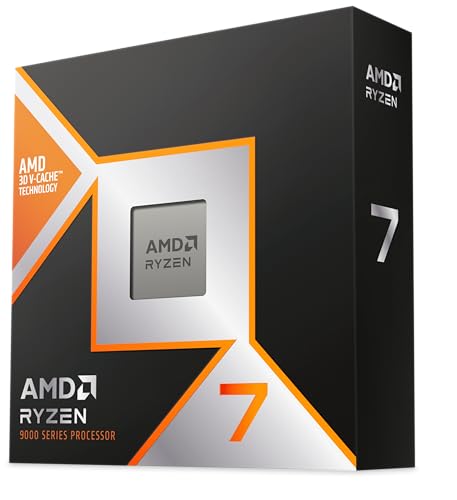
Specs
Cores / threads | 8C / 16T |
Boost | up to 5.2 GHz |
Cache | 96 MB L3 (3D V-Cache) |
TDP | 120 W |
Socket | AM5 |
Best for | sim, strategy, MMO 1% lows; high-refresh esports |
Cores / threads
8C / 16T
Boost
up to 5.2 GHz
Cache
96 MB L3 (3D V-Cache)
TDP
120 W
Socket
AM5
Best for
sim, strategy, MMO 1% lows; high-refresh esports
What it does well
This is the strongest gaming processor you can buy, and the 96 MB of L3 cache is exactly what separates it in the titles that need a processor. Simulation, strategy, and MMO games respond to that cache, and so does chasing clean 1 percent lows on a high-refresh panel. When your diagnosis genuinely came back CPU-bound, this is the chip.
What you give up
It is also overkill for a GPU-bound player at 1440p or 4K. At those resolutions the frame gap over a mid Ryzen shrinks to single digits, and the money would do far more on the graphics card. Buyers reach for the X3D out of habit and then run it where it cannot stretch its legs.
Who it's for
Pick this if you are the simulation, strategy, or MMO player, or the high-refresh esports player, whose read came back CPU-bound. It is not the default upgrade for most people. One more thing: if you are on AM4 today, this is a full platform swap with a new board and DDR5, not a drop-in, so budget for the platform.
The value modern-platform CPU: AMD Ryzen 5 9600X

Specs
Cores / threads | 6C / 12T |
Boost | up to 5.4 GHz |
Cache | 38 MB |
TDP | 65 W |
Socket | AM5 |
Memory | DDR5-5600 (run 6000 CL30) |
Cores / threads
6C / 12T
Boost
up to 5.4 GHz
Cache
38 MB
TDP
65 W
Socket
AM5
Memory
DDR5-5600 (run 6000 CL30)
What it does well
When you are moving off an old platform but your read says you are GPU-bound, you do not need the cache monster. This current-gen six-core will not bottleneck a strong card at 1440p, it sips 65 W, and it lands you on AM5 with PCIe 5.0 runway for the future.
What you give up
There is no 3D V-Cache here, so it trails the 9800X3D in cache-sensitive simulation and strategy titles and in high-refresh 1 percent lows. If that is your library, this is the wrong chip and you should step up. For everyone else, the gap barely registers in real play.
Who it's for
Pick this if you are landing on a modern platform, you are GPU-bound, and you want an efficient chip without paying the cache premium you would never use. On AM5 the asymmetric spend is the memory, not the processor tier, so pair it with DDR5-6000 CL30 and stop there.
Bottom line
Run the five-minute usage check before you spend a cent. If the GPU is pegged and the processor has headroom, you are GPU-bound, like most players, and the graphics card is the upgrade. If a single CPU core is pinned while the GPU coasts, you are in CPU-bound territory and the processor comes first. Still weighing the timing rather than the part? Our guide on whether you should upgrade your GPU lays out the signals that mean it is time and the ones that mean wait.
For the common case at 1440p, the ASUS Prime RX 9070 OC is the value move. Step to the MSI Ventus RTX 5070 for ray tracing or creative work, or the 16 GB RTX 5060 Ti for a mainstream jump. If your read came back CPU-bound, the Ryzen 7 9800X3D is the chip for cache-heavy libraries, with the Ryzen 5 9600X as the sensible value pick for a GPU-bound build on a fresh platform.
FAQ
How do I know if my CPU is bottlenecking my GPU?
Run your game with MSI Afterburner or Task Manager open and watch utilization under load. If the GPU sits near 100 percent and the processor has headroom, the GPU is the limit. If a CPU core is pinned near 100 percent while the GPU coasts at 60 to 80 percent, the processor is bottlenecking the card. Measure uncapped and in real gameplay, since frame caps and menus distort the reading.
Should I upgrade my GPU or CPU first for gaming?
For most players in 2026, the graphics card comes first. It sets your resolution and frame rate, and raising settings or resolution is almost always GPU-bound. The processor comes first only in specific cases: an old platform, high-refresh esports, cache-heavy simulation and strategy titles, or streaming-heavy builds. Run the usage check to see which one you are.
Is it worth upgrading the CPU if I only game at 1440p or 4K?
Usually not, if you are GPU-bound. At 1440p and 4K the gap between a mid Ryzen and the top X3D chip shrinks to single digits in most games, because the graphics card is doing the heavy lifting. The exception is simulation, strategy, and MMO titles, where cache and 1 percent lows still favor the X3D even at higher resolutions. Otherwise the money does more on the GPU.
Will a new GPU work with my old CPU?
In most cases yes, as long as your motherboard has a free PCIe x16 slot and your power supply has the headroom and connectors the new card needs. A modern graphics card will run on an older processor; the only real question is whether that processor becomes the bottleneck. If your CPU is pre-Zen 3 or pre-12th-gen Intel, pairing it with a strong new GPU may leave performance on the table.
Do I need an X3D CPU, or is a regular Ryzen 5 enough?
It depends on your library. The 3D V-Cache on a chip like the Ryzen 7 9800X3D earns its premium in simulation, strategy, and MMO games and when chasing high-refresh 1 percent lows. For a GPU-bound build at 1440p or 4K, a regular Ryzen 5 9600X will not hold back a strong card, and the savings go further on the GPU or on faster DDR5-6000 CL30 memory.
How much of a GPU upgrade do I need to actually feel the difference?
Aim to jump at least one or two performance tiers, not a single small step. Moving from a Pascal or Turing card to a current 16 GB GPU is a difference you feel every session, while a marginal one-tier hop often is not worth the money. Match the card to your monitor: a 1440p panel wants a current 1440p-class card, and the memory floors (12 GB at 1440p, 16 GB at 4K) matter as much as raw speed.
Related Articles

How to Choose a GPU (and a Monitor That Matches)
A buyer's framework for picking a GPU and the monitor that pairs with it. Start with the panel and work the card back.
May 17, 2026

Best GPUs for 1440p Gaming (2026): 5 16GB Picks, 60-240Hz
The best GPUs for 1440p gaming in 2026: five 16GB picks matched to 60, 144, and 240 Hz targets, with real benchmarks, trade-offs, and who each card fits.
Aug 8, 2026

Best GPUs for 1080p Gaming (2026): Picks by Refresh Tier
The best GPU for 1080p gaming in 2026, picked by refresh tier and game genre. From a budget Intel Arc card to a 240Hz esports pick, plus honest 8GB verdicts.
Jun 22, 2026

Best GPUs for Esports at 1440p (2026): Top 5 Picks
The best GPUs for esports at 1440p: five picks for Valorant, CS2, Apex, and Dota 2 tuned to the frame ceiling, not ray tracing, so you stop overspending.
Jun 23, 2026

Should You Wait for Nova Lake or Buy Intel Now? (2026)
Should you wait for Nova Lake or buy an Intel CPU now? LGA 1851 is a dead-end socket, so here is the buy-now pick, the hold case, and the revisit date.
Sep 24, 2026