Affiliate Disclosure: As an Amazon Associate we earn from qualifying purchases. Some links may earn us a commission at no cost to you.

Best 4TB NVMe SSDs for Gaming (2026): 5 Picks, Gen4 First
The best 4TB NVMe SSD for gaming is the WD Black SN850X, and the reason has nothing to do with peak throughput. A modern game library blows past 2TB without trying: Call of Duty alone runs over 300GB, and once you stack a few open-world installs next to it you are back in uninstall-reinstall purgatory. 4TB is the capacity that ends that, and it is finally priced where a second drive makes sense.
The interesting part is the Gen4-versus-Gen5 question, which flips at this capacity. For gaming, the right 4TB drive is a fast Gen4 with strong low-queue-depth reads, not the headline-throughput Gen5 monster. Here is how the five picks shake out, and why our memory and storage guide lands on the same logic.
Our top pick: WD Black SN850X 4TB
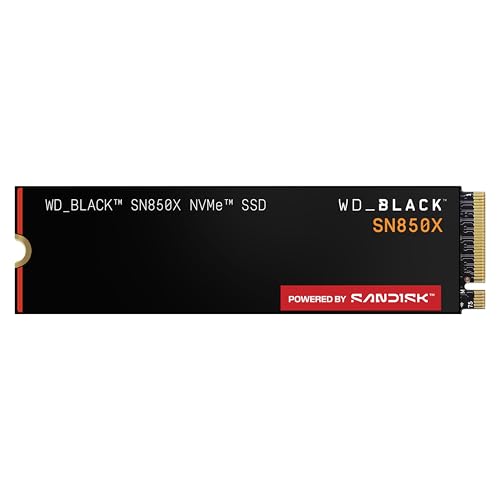
The WD Black SN850X 4TB wins because it loads games faster than anything else at this capacity, and game loading is the one storage job that actually shows up while you play.
Quick picks
Pick | Drive | Best for | Where to buy |
|---|---|---|---|
Best Overall | Fastest game loads at 4TB | ||
Best Value | Flagship feel, smarter price | ||
Best Premium | Top Gen4 peak speed, mixed use | ||
Best Budget | Cheap 4TB bulk library drive | ||
Editor's Pick | Gen5 for creators, not gamers |
Best Overall
- Drive
- Best for
Fastest game loads at 4TB
- Where to buy
Best Value
- Drive
- Best for
Flagship feel, smarter price
- Where to buy
Best Premium
- Drive
- Best for
Top Gen4 peak speed, mixed use
- Where to buy
Best Budget
- Drive
- Best for
Cheap 4TB bulk library drive
- Where to buy
Editor's Pick
- Drive
- Best for
Gen5 for creators, not gamers
- Where to buy
Specs at a glance
Drive | PCIe gen | Seq read | Seq write | NAND |
|---|---|---|---|---|
Gen4 x4 | 7,300 MB/s | 6,600 MB/s | SanDisk TLC | |
Gen4 x4 | 7,000 MB/s | 6,000 MB/s | Micron TLC | |
Gen4 x4 | 7,450 MB/s | 6,900 MB/s | Samsung TLC | |
Gen4 x4 | 5,500 MB/s | 5,000 MB/s | BiCS TLC | |
Gen5 x4 | 14,100 MB/s | 12,600 MB/s | Micron TLC |
- PCIe gen
Gen4 x4
- Seq read
7,300 MB/s
- Seq write
6,600 MB/s
- NAND
SanDisk TLC
- PCIe gen
Gen4 x4
- Seq read
7,000 MB/s
- Seq write
6,000 MB/s
- NAND
Micron TLC
- PCIe gen
Gen4 x4
- Seq read
7,450 MB/s
- Seq write
6,900 MB/s
- NAND
Samsung TLC
- PCIe gen
Gen4 x4
- Seq read
5,500 MB/s
- Seq write
5,000 MB/s
- NAND
BiCS TLC
- PCIe gen
Gen5 x4
- Seq read
14,100 MB/s
- Seq write
12,600 MB/s
- NAND
Micron TLC
How we picked
Game loading is almost entirely low-queue-depth sequential reads. That is the access pattern when a level streams in or a save loads, and it is nothing like the giant queued transfers that produce the big peak numbers on a spec sheet. So the drive that posts the highest 7,000-plus read figure is not automatically the one that loads your game fastest.
At 4TB specifically, that gap matters because Gen5 enters the conversation. Gen5 drives roughly double the peak throughput of any Gen4, which is real time saved on large sequential file moves. In games, that throughput sits unused. Reviewer load-time testing puts a top Gen4 within microseconds of a Gen5 drive at the load screen, while the Gen5 part costs a steep premium and runs hot enough to need a chunky heatsink.
We weighted real game-load behavior first, then sustained write performance for moving big Steam libraries around, then endurance and warranty. We also held the line on capacity-specific NAND quirks. Some budget drives quietly switch to QLC at lower capacities, so we only recommend the 4TB SKU where the flash is the good stuff.
If you are weighing Gen5 anyway, our Gen5 SSD guide and the matching Gen5 heatsink rundown cover the thermal side in full.
Best Overall: WD Black SN850X 4TB
The drive to buy if you want the fastest game loads at 4TB without paying the Gen5 tax.
Specs
Interface | PCIe Gen4 x4 (NVMe 1.4) |
Form factor | M.2 2280, single-sided |
Sequential read | Up to 7,300 MB/s |
Sequential write | Up to 6,600 MB/s |
QD1 random read | Class-leading for Gen4 |
NAND | SanDisk 3D TLC |
Endurance | 2,400 TBW |
Warranty | 5-year limited |
Interface
PCIe Gen4 x4 (NVMe 1.4)
Form factor
M.2 2280, single-sided
Sequential read
Up to 7,300 MB/s
Sequential write
Up to 6,600 MB/s
QD1 random read
Class-leading for Gen4
NAND
SanDisk 3D TLC
Endurance
2,400 TBW
Warranty
5-year limited
What it does well
At the low-queue-depth reads that describe real game loading, the SN850X's 1MB QD1 read rate lands around 5,200 MB/s, ahead of the premium Samsung drive's roughly 4,640. That is the number that moves load screens, and it is where this drive separates itself from parts with bigger headline speeds.
Game Mode 2.0 keeps frequently accessed data primed, and the single-sided 2280 layout drops into any motherboard M.2 slot or most laptops. It runs cool enough to live under a board's M.2 heatsink without throttling, so you do not need to budget for cooling on top.
Endurance is high at 2,400 TBW, and the five-year warranty matches the premium tier. For a drive that will hold your most-played games, that headroom is reassuring.
What you give up
On paper the peak sequential read trails the Samsung flagship by a couple of percent. You will not feel it in any game, but if you stare at synthetic benchmarks it is there.
This SKU ships bare, with no bundled heatsink, so you are relying on your motherboard's M.2 cooler. The RGB and Dashboard software are Windows-only, which is a non-issue for most but worth knowing.
Who it's for
The gamer building or expanding a 2026 rig who wants the drive that loads games fastest at 4TB. It pairs with any AM5 or LGA1851 board's primary or secondary M.2 slot and earns its spot as the everyday boot-and-games drive.
Best Value: Crucial T500 4TB
A true DRAM-equipped Gen4 drive that sits within a hair of the flagships where games care, usually for less.

Specs
Interface | PCIe Gen4 x4 (NVMe 2.0) |
Form factor | M.2 2280, single-sided |
Sequential read | Up to 7,000 MB/s |
Sequential write | Up to 6,000 MB/s |
Controller | Phison E25 (DRAM-equipped) |
NAND | Micron 232-layer 3D TLC |
Endurance | 1,200 TBW |
Warranty | 5-year limited |
Interface
PCIe Gen4 x4 (NVMe 2.0)
Form factor
M.2 2280, single-sided
Sequential read
Up to 7,000 MB/s
Sequential write
Up to 6,000 MB/s
Controller
Phison E25 (DRAM-equipped)
NAND
Micron 232-layer 3D TLC
Endurance
1,200 TBW
Warranty
5-year limited
What it does well
The Phison E25 controller carries onboard DRAM, so sustained performance holds up when you are moving a big Steam library or running back-to-back game installs. That is the everyday work a bulk drive really does, and the T500 does not flinch at it.
Micron 232-layer TLC and a five-year warranty put it on the same reliability footing as drives that cost more. The single-sided 2280 form factor fits laptops and any desktop slot, and it works in a PlayStation 5 without a heatsink in a well-ventilated console.
What you give up
Peak sequential reads top out near 7,000 MB/s against the flagship 7,300 to 7,450. It is a paper gap that does not surface in games, but it is the reason this is the value pick and not the overall winner.
The bundled month of Adobe Creative Cloud is a trial, not real value, so do not let it sway the decision. Sustained write speed past the SLC cache is good rather than class-leading.
Who it's for
The buyer who already understands that the flagship's extra peak throughput is invisible in gaming and would rather route the saved money to a better GPU or monitor. This is the storage spend-up done with discipline.
Best Premium: Samsung 990 Pro 4TB
The fastest Gen4 drive on paper and the most consistent under mixed gaming-plus-creative workloads.

Specs
Interface | PCIe Gen4 x4 (NVMe 2.0) |
Form factor | M.2 2280, single-sided |
Sequential read | Up to 7,450 MB/s |
Sequential write | Up to 6,900 MB/s |
Controller | Samsung Pascal (in-house) |
NAND | Samsung V-NAND TLC |
Endurance | 2,400 TBW |
Warranty | 5-year limited |
Interface
PCIe Gen4 x4 (NVMe 2.0)
Form factor
M.2 2280, single-sided
Sequential read
Up to 7,450 MB/s
Sequential write
Up to 6,900 MB/s
Controller
Samsung Pascal (in-house)
NAND
Samsung V-NAND TLC
Endurance
2,400 TBW
Warranty
5-year limited
What it does well
This is the top of the Gen4 stack for peak numbers, at 7,450 read and 6,900 write. Samsung's in-house Pascal controller is mature and power-efficient, and Magician software makes health monitoring and firmware updates painless.
Where it earns the premium is mixed use. If you game and also touch large sequential transfers, video scratch files, big photo libraries, sustained exports, the higher peak speed is real work saved, not just a bigger benchmark bar.
What you give up
In the low-queue-depth reads that govern game loading, the 990 Pro trails the SN850X. For pure gaming you are paying a premium for peak figures that never show up at the load screen.
Buyers have flagged that the 990 Pro ran warm at launch. Firmware addressed it, but the separate heatsink SKU exists for a reason, and this drive is usually the priciest in the group.
Who it's for
The buyer who wants the best Gen4 drive Samsung makes and does mixed gaming plus light creative work. If your machine is purely a game box, the top pick gets you faster loads for less.
Best Budget: WD Blue SN5000 4TB
The cheapest way to get 4TB of genuinely fast TLC bulk storage for a sprawling game library.
![Western Digital 4TB WD Blue SN5000 NVMe Internal Solid State Drive SSD - PCIe Gen 4.0, M.2 2280, Up to 5,500 MB/s - WDS400T4B0E [New Generation]](https://m.media-amazon.com/images/I/31nPv-dYopL._SL500_.jpg)
Specs
Interface | PCIe Gen4 x4 (NVMe) |
Form factor | M.2 2280, single-sided |
Sequential read | Up to 5,500 MB/s |
Sequential write | Up to 5,000 MB/s |
Cache | nCache 4.0 (DRAM-less, HMB) |
NAND | BiCS 3D TLC (4TB SKU) |
Endurance | 1,200 TBW |
Warranty | 5-year limited |
Interface
PCIe Gen4 x4 (NVMe)
Form factor
M.2 2280, single-sided
Sequential read
Up to 5,500 MB/s
Sequential write
Up to 5,000 MB/s
Cache
nCache 4.0 (DRAM-less, HMB)
NAND
BiCS 3D TLC (4TB SKU)
Endurance
1,200 TBW
Warranty
5-year limited
What it does well
The 4TB SKU uses real TLC NAND, so sustained writes and endurance hold up better than the price suggests. nCache 4.0 with host memory buffer keeps everyday reads quick, and the cost per terabyte is the lowest in this group by a wide margin.
As a second drive for the games you are not actively playing, it is exactly right. Single-sided 2280 means it fits anywhere, and 1,200 TBW of endurance is plenty for a library drive that mostly reads.
What you give up
Peak reads cap at 5,500 MB/s, clearly below the flagships. That is still far past any SATA drive and fine for game loads, but it is not pretending to be a flagship.
The DRAM-less design means sustained random performance under heavy multitasking is weaker. Buyers should also note that WD ships the SN5000 as TLC at 4TB but can use QLC at lower capacities, so the 4TB is the one to buy. This is a bulk-library drive, not a do-everything boot drive.
Who it's for
The buyer adding a big, affordable second drive purely to stop the uninstall-reinstall treadmill. Pair it with one of the flagships as your boot-and-active-games drive and let this one hold the overflow.
Editor's Pick: Crucial T705 4TB
The Gen5 pick for the reader who genuinely needs it, which means large-file creative work, not gaming.

Specs
Interface | PCIe Gen5 x4 (NVMe 2.0) |
Form factor | M.2 2280, integrated heatsink |
Sequential read | Up to 14,100 MB/s |
Sequential write | Up to 12,600 MB/s |
Controller | Phison E26 (DRAM-equipped) |
NAND | Micron 232-layer 3D TLC |
Endurance | 2,400 TBW |
Warranty | 5-year limited |
Interface
PCIe Gen5 x4 (NVMe 2.0)
Form factor
M.2 2280, integrated heatsink
Sequential read
Up to 14,100 MB/s
Sequential write
Up to 12,600 MB/s
Controller
Phison E26 (DRAM-equipped)
NAND
Micron 232-layer 3D TLC
Endurance
2,400 TBW
Warranty
5-year limited
What it does well
Peak sequential throughput roughly doubles any Gen4 drive, at 14,100 read and 12,600 write. For a creator moving 8K footage, video scratch disks, or huge dataset transfers, that is real time back in your day. It ships with a substantial heatsink because at these speeds it needs one, and the DRAM-equipped Phison E26 controller is mature.
If your workload is genuinely sequential-throughput-bound, this is the drive that earns the Gen5 premium. That is the honest case for buying it.
What you give up
For gaming, almost nothing changes. Game-load times sit within microseconds of a good Gen4 because loading is queue-depth-bound, not throughput-bound. You pay a steep premium for speed your games will not touch.
It runs hot enough to require that bundled heatsink, which is tall and can foul tall RAM or a top-slot GPU, so confirm clearance before buying. It also needs a Gen5-capable M.2 slot, which means a recent AM5 or LGA1851 board. For a pure gaming build, the money is better spent on the top pick plus a tier-up elsewhere.
Who it's for
The creator who games on the side and moves large files daily, video editors, 3D artists, anyone whose real bottleneck is sequential throughput. If your use is gaming, buy the SN850X and pocket the difference.
Bottom line
If you want the best 4TB gaming drive, buy the WD Black SN850X 4TB. It loads games faster than anything here and skips the Gen5 tax entirely.
If you want the same flagship feel for less, the Crucial T500 4TB is the smart-money call. If you do mixed gaming and creative work and want the top Gen4 peak speed, the Samsung 990 Pro 4TB is worth the premium. For a cheap bulk library drive, the WD Blue SN5000 4TB is the one to pair with a flagship boot drive. And only buy the Crucial T705 4TB if your real job is moving large files, because in games its Gen5 speed sits idle.
FAQ
Is a Gen5 SSD worth it for gaming at 4TB?
For gaming specifically, no. Game loading is dominated by low-queue-depth reads, and reviewer testing shows a strong Gen4 drive loads games within microseconds of a Gen5 part. Gen5 doubles peak sequential throughput, which helps large file transfers and creative work, but in games that headroom goes unused while you pay a premium and add heat. Buy Gen4 for a gaming-first 4TB drive and spend the savings on your GPU.
Do I need a heatsink on a 4TB NVMe SSD?
For Gen4 drives like the SN850X, T500, 990 Pro, and SN5000, the motherboard's built-in M.2 heatsink is enough for gaming loads. A bare drive in a board with no M.2 cooler can throttle under sustained writes, so check your board. Gen5 drives are different. The T705 ships with its own heatsink because it genuinely needs active cooling to hit rated speeds without throttling.
Is 4TB overkill for a gaming PC in 2026?
Not anymore. A single modern AAA install routinely runs 100 to 300GB, and a handful of them fills a 2TB drive fast. If you keep more than a few large games installed at once, 4TB is the capacity that ends the constant uninstall-and-reinstall cycle. The price gap from 2TB to 4TB has narrowed enough that a 4TB drive, or a 4TB second drive, is an easy call for most builds.
Will a 4TB NVMe SSD work in a PS5?
Yes, as long as it is a PCIe Gen4 M.2 2280 drive that meets Sony's speed floor, which all four Gen4 picks here do. The console also requires a heatsink. Some drives ship with one, or you can add a low-profile M.2 heatsink. The PS5 accepts up to 8TB, so a 4TB drive roughly doubles or triples your usable game storage depending on the model.
Does DirectStorage make a faster SSD matter more for games?
In theory it shifts more of the loading work onto the SSD and GPU, which rewards fast drives. In practice DirectStorage adoption is still thin in 2026, and the titles that use it run fine on any good Gen4 NVMe. Treat it as a reason to own a quality Gen4 drive, not a reason to overspend on Gen5 today. The picks here are all ready for it.
Can I use a 4TB NVMe as my only drive, or do I need a separate boot drive?
A single 4TB NVMe can absolutely be your only drive. Put Windows and your most-played games on it and you are set, which is why a flagship like the SN850X works as a one-drive solution. The two-drive approach, a flagship boot drive plus a budget bulk drive like the SN5000, only makes sense when you want to keep a huge library installed cheaply. For most builds, one good 4TB drive is enough.
Related Articles

Best NVMe SSDs for Gaming 2026: Five Picks by Use Case
Best NVMe SSDs for gaming in 2026 — load times plateau above 5,000 MB/s, so capacity beats Gen5 specs. Five picks: mainstream, value, Gen5, capacity, boot.
May 11, 2026

Best PCIe 5.0 SSDs for Gaming (2026): 5 Gen5 Picks by Tier
Best PCIe 5.0 SSD picks for gaming in 2026: five Gen5 drives that hold speed under sustained load, from the 2TB sweet spot to a 4TB game-library drive.
Aug 18, 2026

Best PCIe 5.0 SSD Heatsinks (2026): Five Picks for Gen5 Thermal Reality
PCIe 5.0 SSDs throttle hard without proper cooling. Five heatsink picks across passive and active tiers, plus the honest answer to whether your motherboard's built-in is enough.
May 14, 2026

RTX 5070 vs 5070 Ti (2026): 12 GB or 16 GB, Which Wins?
RTX 5070 vs RTX 5070 Ti: does 16 GB and 46% more cores reach your screen at 1440p or 4K? The up-tier call, answered row by row instead of by one average.
Sep 25, 2026

Modern Warfare 4 System Requirements: Official 2026 Specs
Modern Warfare 4 system requirements are official: GTX 1060 min, RTX 3060 Ti recommended. Plus the GPU tier for 1440p high refresh and the TPM 2.0 gate.
Sep 25, 2026