Affiliate Disclosure: As an Amazon Associate we earn from qualifying purchases. Some links may earn us a commission at no cost to you.

Best CPUs for the RTX 5070 Ti (2026): 5 Picks by Tier
The RTX 5070 Ti is a 1440p card first and a 4K card second, and that one fact decides which processor belongs underneath it. At 1080p the chip you choose swings frame rates by a wide margin. At 1440p the spread between a six-core Ryzen 5 and the fastest gaming chip AMD sells narrows to something most players never notice. At 4K it nearly disappears.
So the useful question is not which CPU is fastest. It is which CPU stops being the limit at the resolution you actually play at, and what the rest of the platform costs once you get there.
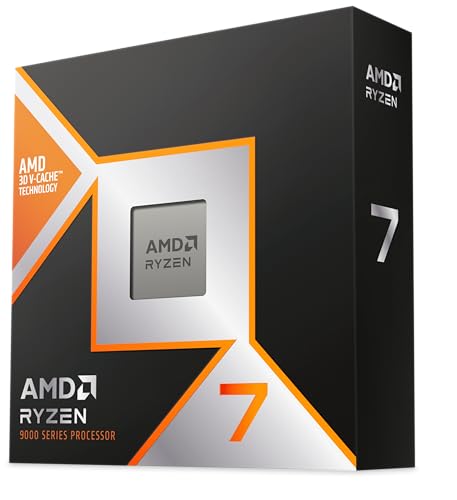
Our top pick: AMD Ryzen 7 9800X3D
The Ryzen 7 9800X3D is the only chip here that never becomes the limit at any resolution this card can drive. If your budget clears it and your library leans on sims, strategy or MMOs, the decision is already made.
Quick picks
Pick | CPU | Best for | Buy |
|---|---|---|---|
Best Overall | Zero bottleneck at any resolution | ||
Best Value | Same cache stack, one tier down | ||
Best Premium | Gaming plus real productivity | ||
Best Budget | 1440p on the tightest budget | ||
Editor's Pick | LGA 1851 and heavy multitasking |
Best Overall
- CPU
- Best for
Zero bottleneck at any resolution
- Buy
Best Value
- CPU
- Best for
Same cache stack, one tier down
- Buy
Best Premium
- CPU
- Best for
Gaming plus real productivity
- Buy
Best Budget
- CPU
- Best for
1440p on the tightest budget
- Buy
Editor's Pick
- CPU
- Best for
LGA 1851 and heavy multitasking
- Buy
Specs at a glance
CPU | Cores / threads | Boost | L3 cache | TDP | Socket |
|---|---|---|---|---|---|
8 / 16 | 5.2 GHz | 96 MB | 120 W | AM5 | |
8 / 16 | 5.0 GHz | 96 MB | 120 W | AM5 | |
16 / 32 | 5.7 GHz | 128 MB | 170 W | AM5 | |
6 / 12 | 5.4 GHz | 32 MB | 65 W | AM5 | |
20 / 20 | 5.5 GHz | 30 MB | 125 W | LGA 1851 |
- Cores / threads
8 / 16
- Boost
5.2 GHz
- L3 cache
96 MB
- TDP
120 W
- Socket
AM5
- Cores / threads
8 / 16
- Boost
5.0 GHz
- L3 cache
96 MB
- TDP
120 W
- Socket
AM5
- Cores / threads
16 / 32
- Boost
5.7 GHz
- L3 cache
128 MB
- TDP
170 W
- Socket
AM5
- Cores / threads
6 / 12
- Boost
5.4 GHz
- L3 cache
32 MB
- TDP
65 W
- Socket
AM5
- Cores / threads
20 / 20
- Boost
5.5 GHz
- L3 cache
30 MB
- TDP
125 W
- Socket
LGA 1851
Benchmarks
A CPU-isolated test on a 4090-class card, so the spread here is wider than an RTX 5070 Ti would show.
- 113 FPS
- 107 FPS
Tested on the same card this article pairs against, so the spread reflects a real build rather than a CPU-isolated rig.
- 130 FPS
- 107 FPS
How we picked
Every pairing recommendation starts with the panel, not the chip. A processor that limits this card at 1080p competitive settings is invisible at 1440p ultra, and the same chip is a non-factor at 4K. That is why a single bottleneck percentage is not an answer: the number moves with resolution, and without a resolution attached it tells you nothing about your build. Our wider guide to CPUs for 1440p gaming works the same way.
So each pick below names the resolution where it stops mattering. The 9600X is GPU-limited at 1440p and CPU-limited at 1080p competitive. The 9800X3D is not the limit anywhere. Between those two sit the choices most buyers are making. A tier up, the same test produces different answers, which is what our CPU guide for the RTX 5080 works through resolution by resolution.
The second filter is what the rest of the platform costs. In 2026 a board and a 32 GB DDR5-6000 CL30 kit can add up to more than the processor itself, which inverts the usual advice about where to spend. DDR5-6000 CL30 is the AM5 floor rather than a luxury, because Infinity Fabric runs one to one at that speed and the uplift beats most CPU tier jumps. Our DDR5 kit picks cover the kits worth buying, and the CPU and motherboard guide covers how far down the chipset ladder you can safely go.
The last filter is power and board quality. The 5070 Ti draws 300 W with transients closer to 350 W, so 750 W is the floor and 850 W is comfortable regardless of which chip you pick. Our RTX 5070 Ti power supply picks size that properly. On the board side, socket compatibility is not the same as build-ready: a 170 W part on a thin VRM heatsink throttles no matter what the compatibility list says.
Best Overall: AMD Ryzen 7 9800X3D
Specs
Cores / threads | 8 / 16 |
Boost clock | 5.2 GHz |
L3 cache | 96 MB (3D V-Cache) |
TDP | 120 W |
Socket | AM5 |
Memory support | DDR5-6000 EXPO |
Integrated graphics | Radeon 2-CU |
Cores / threads
8 / 16
Boost clock
5.2 GHz
L3 cache
96 MB (3D V-Cache)
TDP
120 W
Socket
AM5
Memory support
DDR5-6000 EXPO
Integrated graphics
Radeon 2-CU
What it does well
Ninety-six megabytes of stacked L3 is the whole argument. Engines that walk a big working set every frame, flight sims, 4X strategy, MMO raid instances, live inside that cache instead of going out to memory, and the frame rate moves accordingly.
Tom's Hardware measured this chip 14 percent ahead of the Ryzen 7 7800X3D across a sixteen-game suite at 1080p, and 35 percent ahead of Intel's Core Ultra 9 285K. It also clocks about 10 percent higher than the 7800X3D, so the titles that do not care about cache still gain something.
The practical benefit with a 5070 Ti is headroom. Drop a faster card in two years and this chip will still not be the thing holding it back.
What you give up
At 1440p ultra the picture compresses fast. In Cyberpunk 2077 the measured gap to the 7800X3D is six frames per second on average. At 4K, where this card spends real time, the CPU choice is close to irrelevant and the money would do more sitting in a better panel. We covered whether this card is enough for 4K separately.
Eight cores is also the ceiling. If your machine renders, compiles or transcodes between sessions, this is the wrong chip and the 9950X3D is the right one.
Who it's for
Buy it if you play on a 1440p 165 Hz or 1080p 240 Hz panel and your library leans on sim racing, flight sim, strategy, MMO raids or Escape from Tarkov. Buy it also if you expect to upgrade the GPU before you upgrade the platform. Our 9800X3D motherboard picks cover the boards worth pairing with it.
Best Value: AMD Ryzen 7 7800X3D

Specs
Cores / threads | 8 / 16 |
Boost clock | 5.0 GHz |
L3 cache | 96 MB (3D V-Cache) |
TDP | 120 W |
Socket | AM5 |
Memory support | DDR5-6000 EXPO |
Integrated graphics | Radeon 2-CU |
Cores / threads
8 / 16
Boost clock
5.0 GHz
L3 cache
96 MB (3D V-Cache)
TDP
120 W
Socket
AM5
Memory support
DDR5-6000 EXPO
Integrated graphics
Radeon 2-CU
What it does well
The cache stack is identical. Same 96 MB, same behaviour in the engines that care, at a tier below the current flagship.
Tom's Hardware put it at 107 frames per second average in Cyberpunk 2077 at 1440p ultra against 113 for the 9800X3D. In play that is a rounding error, and 1440p ultra is where a 5070 Ti lives.
It also drops into any AM5 board on a current AGESA, so an older B650 purchase carries forward instead of forcing a board upgrade alongside the chip. Our 7800X3D motherboard picks list the boards worth buying for it.
What you give up
One percent lows are the honest gap. That same Cyberpunk run shows 61 fps lows against the 9800X3D's 82, and lows are what you feel in a busy cockpit or a raid pull, not averages.
You are also buying the older end of the platform. AM5 has runway left, but this chip does not have much of its own.
Who it's for
Buy it if you want V-cache behaviour without the flagship line item, or if you already own an AM5 board and want the largest gaming gain per dollar spent on the chip alone.
Best Premium: AMD Ryzen 9 9950X3D

Specs
Cores / threads | 16 / 32 |
Boost clock | 5.7 GHz |
L3 cache | 128 MB (V-Cache on one CCD) |
TDP | 170 W |
Socket | AM5 |
Memory support | DDR5-6000 EXPO |
Integrated graphics | Radeon 2-CU |
Cores / threads
16 / 32
Boost clock
5.7 GHz
L3 cache
128 MB (V-Cache on one CCD)
TDP
170 W
Socket
AM5
Memory support
DDR5-6000 EXPO
Integrated graphics
Radeon 2-CU
What it does well
Two chiplets, two jobs. One CCD carries the V-cache for games, the other clocks high for everything else, so nothing gets traded away.
GamersNexus measured 155 frames per second average in Baldur's Gate 3 at 1080p medium, functionally tied with the 9800X3D at the top of their chart. The gaming side gives up nothing.
Sixteen cores and thirty-two threads is real capacity for Blender, DaVinci exports, or a compile that would otherwise take the afternoon.
What you give up
For pure gaming with this card it buys nothing over the 9800X3D and costs meaningfully more. If the productivity story is weekend Photoshop, this is the wrong direction.
It pulls 170 W sustained in all-core work, which means a real cooler and a board built to feed it. Socket compatibility is not the same as build-ready, and a thin VRM heatsink will throttle this chip no matter what the box says.
Who it's for
Buy it if the same machine has to game at 1440p and do measurable creative or engineering work. If you do not game at all, the non-cached 9950X does the productivity half for less.
Best Budget: AMD Ryzen 5 9600X

Specs
Cores / threads | 6 / 12 |
Boost clock | 5.4 GHz |
L3 cache | 32 MB |
TDP | 65 W |
Socket | AM5 |
Memory support | DDR5-6000 EXPO |
Integrated graphics | Radeon 2-CU |
Cores / threads
6 / 12
Boost clock
5.4 GHz
L3 cache
32 MB
TDP
65 W
Socket
AM5
Memory support
DDR5-6000 EXPO
Integrated graphics
Radeon 2-CU
What it does well
Zen 5 on six cores is enough to feed a 5070 Ti at 1440p across the overwhelming majority of titles. Published pairing tests put it in the eight to twelve percent GPU-limited range at that resolution, which is the direction you want: the card is the limit, not the chip. The same logic runs one tier down, where our guide to the best CPUs for the RTX 5070 works through how much less chip that card needs at 1440p.
Sixty-five watts means the bundled cooler is genuinely adequate and a mid-tier B650 board is all it asks for.
That matters more in 2026 than it used to, because the money saved here is what buys the memory kit and the power supply the rest of the build needs.
What you give up
CPU-limited settings expose it immediately. Testing on this exact card put it roughly 20 to 25 frames behind the 9800X3D in Stalker 2 at 1440p epic, and around 100 frames behind in Counter-Strike 2 at 1080p medium.
Six cores also leaves less slack when a game, a stream and a browser are all live at once. If your panel is 240 Hz and you play competitive shooters, this is the wrong end of the ladder.
Who it's for
Buy it if you are on a 1440p 144 Hz panel with a mixed AAA library and you would rather put the difference into a 2 TB drive or a better monitor. If you have not settled on the card yet, our 5070 against 5070 Ti comparison is the place to start.
Editor's Pick: Intel Core Ultra 7 265KF

Specs
Cores / threads | 20 (8P + 12E) / 20 |
Boost clock | 5.5 GHz |
L3 cache | 30 MB |
Base power | 125 W |
Socket | LGA 1851 |
Memory support | DDR5-6400 |
Integrated graphics | None (KF) |
Cores / threads
20 (8P + 12E) / 20
Boost clock
5.5 GHz
L3 cache
30 MB
Base power
125 W
Socket
LGA 1851
Memory support
DDR5-6400
Integrated graphics
None (KF)
What it does well
Twenty cores means background load barely registers. The E-core cluster soaks up shader compilation, downloads and encoding without stealing P-core time from the game.
DDR5-6400 is in specification rather than an overclock, so the memory question is simpler than it is on AM5.
Dropping the integrated graphics is the correct trade in a build that already has a 5070 Ti in the slot, and it is why this SKU exists.
What you give up
This is the weakest gaming chip in the lineup and the margin is not small. Tom's Hardware measured the 9800X3D 35 percent ahead of Intel's Core Ultra 9 285K across their 1080p suite, and the 265KF sits below that flagship.
No integrated graphics also means no QuickSync, which removes the main reason to choose Intel for a Premiere or DaVinci workflow, and it means no display output at all if the card fails. LGA 1851 has no announced upgrade path either, so the platform ends here.
Who it's for
Buy it if you are already committed to a Z890 board, or if you want many threads for background work and play at 1440p or above where the gaming gap narrows.
Bottom line
If you play at 1440p on a mixed AAA library, buy the Ryzen 5 9600X and spend the difference on memory and a better panel. If your library is sims, strategy, MMOs or Tarkov, buy the Ryzen 7 9800X3D and stop thinking about it. If you already own an AM5 board, the Ryzen 7 7800X3D gets you most of the way for less. If the machine also has to render or compile, the Ryzen 9 9950X3D is the only pick that does both without a trade. Our broader gaming CPU picks by budget cover builds that are not anchored to this card.
FAQ
Do I need a 9800X3D for an RTX 5070 Ti?
No. At 1440p, which is where most 5070 Ti owners play, a current six-core Ryzen keeps the card GPU-limited in the large majority of titles. The 9800X3D is the right call when your library leans on cache-hungry engines like flight sims, 4X strategy, MMO raids or Tarkov, or when you play at 1080p on a 240 Hz panel and want every frame the card can produce. Outside those cases the difference is small enough that the money does more elsewhere in the build.
Will a Ryzen 5 bottleneck an RTX 5070 Ti?
A current Ryzen 5 like the 9600X sits in the eight to twelve percent GPU-limited range at 1440p with this card, which is normal and healthy. Being GPU-limited is the goal, not a fault. It does become the limit at 1080p competitive settings, where testing on this card showed it roughly 100 frames behind the 9800X3D in Counter-Strike 2. Older six-core parts on DDR4 platforms are a different story and will hold the card back more visibly.
Does the CPU matter at 1440p and 4K with a 5070 Ti?
It matters less as resolution climbs, and that is the single most useful thing to know here. At 1080p the chip choice moves averages a lot. At 1440p ultra the spread between the fastest gaming chip and a solid six-core narrows to something most players will not notice outside a frame counter. At 4K the card is the limit in nearly every title. One percent lows are the exception: cache-heavy chips keep an edge on lows at every resolution.
Is the 7800X3D still worth buying for a 5070 Ti build in 2026?
Yes, particularly if you already own an AM5 board. It carries the same 96 MB cache stack as the 9800X3D and landed within six frames per second of it at 1440p ultra in Cyberpunk 2077. The gap that does show up is one percent lows, where the newer chip holds a real lead. If you are buying the board and the memory at the same time, compare the total platform cost before assuming the older chip is the cheaper route.
Intel or AMD for an RTX 5070 Ti?
AMD is the default. AM5 has socket runway through 2027 and beyond, the X3D parts lead in gaming, and idle power is lower. Intel earns a look in three cases: you already own a Z890 board, you need many threads for background work while gaming, or you lean on QuickSync for hardware video encode. That last case rules out the KF parts, since they have no integrated graphics and therefore no QuickSync.
What PSU do I need for an RTX 5070 Ti build?
The card carries a 300 W board power rating with transient spikes closer to 350 W, so 750 W is the official floor and 850 W is the comfortable number. The CPU tier barely moves that answer: a 65 W Ryzen 5 and a 170 W Ryzen 9 both fit inside an 850 W budget with this card. What matters more is unit quality. Size the supply for the transient behaviour rather than the sum of the TDP numbers, and do not cut the budget here.
Related Articles

Best CPUs for the RTX 5090 (2026): No-Bottleneck Picks
The best CPU for the RTX 5090, graded by resolution. Our no-bottleneck picks from the 9800X3D flagship to an honest budget floor, plus when the 9950X3D wins.
Jul 24, 2026

RTX 5070 vs 5070 Ti (2026): 12 GB or 16 GB, Which Wins?
RTX 5070 vs RTX 5070 Ti: does 16 GB and 46% more cores reach your screen at 1440p or 4K? The up-tier call, answered row by row instead of by one average.
Sep 25, 2026

Is the RTX 5070 Ti Enough for 4K, or Need a 5080? (2026)
Is the RTX 5070 Ti enough for 4K? It clears most games at 60fps with DLSS Quality, but the 5080 buys headroom for ray tracing and 120Hz targets. Verdict inside.
Aug 1, 2026

Best Motherboards for the 9800X3D (2026): 5 Picks by Tier
The best motherboards for the 9800X3D, ranked by build tier: X870E, X870, B850 and B650E picks with the VRM, form-factor and I/O tradeoffs that decide it.
Aug 6, 2026

Best CPUs for 1440p Gaming (2026): Five Top Picks Ranked
Best CPUs for 1440p gaming in 2026, picked by GPU pairing and library. Honest answer on whether the 9800X3D is overkill, and when the 9700X or 265K wins.
May 20, 2026