Affiliate Disclosure: As an Amazon Associate we earn from qualifying purchases. Some links may earn us a commission at no cost to you.

Best CPU Deals for Prime Day 2026: 5 Worth Buying
Prime Day 2026 has ended, and event pricing with it. For today's verified price drops — scored against real 30-day price history and updated daily — see our live CPU deals tracker.
Prime Day 2026 runs June 23 through 26. Five CPUs have real discounts worth acting on this year, from a record-low entry-level Zen 5 chip to a 33% cut on AMD's flagship 16-core processor.
Every deal below comes with a board pairing note and an honest Zen 6 call, because whether to buy now or wait is the question most CPU buyers are asking.
Should you buy a CPU on Prime Day 2026?
Desktop Zen 6 was supposed to land in 2026. It didn't. Based on current roadmap leaks from multiple sources, AMD's Olympic Ridge (Zen 6 desktop, AM5) has slipped to 2027, following EPYC server chips and Medusa Point laptop APUs that come first. AMD hasn't officially confirmed the delay, but the evidence is consistent across several independent analysts.
What that means for Prime Day buyers: you're not leaving Zen 6 on the table by buying now. You're getting Zen 5 or Zen 4 X3D at historically low prices, with roughly 12 to 18 months of relevant platform life before the next meaningful upgrade cycle arrives.
If your current CPU is limiting you today, Prime Day 2026 is a legitimate buying window.
The best CPU Prime Day 2026 deals at a glance
CPU | Socket | Prime Day Price | Discount | Board Needed | Buy |
|---|---|---|---|---|---|
AM5 | Record low | 41% off | B650 / B850 | ||
AM5 | Current low | N/A | B650E / X870 | ||
LGA1851 | Record low | 36% off | Z890 / B860 | ||
AM5 | Lowest to date | 6% off | X870 / B850 | ||
AM5 | Record low | 33% off | X870E |
- Socket
AM5
- Prime Day Price
Record low
- Discount
41% off
- Board Needed
B650 / B850
- Buy
- Socket
AM5
- Prime Day Price
Current low
- Discount
N/A
- Board Needed
B650E / X870
- Buy
- Socket
LGA1851
- Prime Day Price
Record low
- Discount
36% off
- Board Needed
Z890 / B860
- Buy
- Socket
AM5
- Prime Day Price
Lowest to date
- Discount
6% off
- Board Needed
X870 / B850
- Buy
- Socket
AM5
- Prime Day Price
Record low
- Discount
33% off
- Board Needed
X870E
- Buy
Best value CPU deal: AMD Ryzen 5 9600X

Specs
Cores / Threads | 6-core / 12-thread |
Architecture | Zen 5 (AM5) |
Boost clock | 5.4 GHz |
TDP | 65W |
L3 Cache | 32 MB |
Memory support | DDR5 |
Cores / Threads
6-core / 12-thread
Architecture
Zen 5 (AM5)
Boost clock
5.4 GHz
TDP
65W
L3 Cache
32 MB
Memory support
DDR5
What it does well
The 9600X at this price is the easiest AM5 entry point available. Zen 5 brought meaningful IPC gains over the AM4 generation: single-thread performance that beats any Ryzen 5000 chip comfortably, with a 65W thermal budget that runs on a basic 120mm single-tower cooler without drama.
Power draw is one of the 9600X's genuine strengths. It holds to its 65W TDP limit, unlike some Intel counterparts that drift well above their rated numbers under load. The result is a CPU you can pair with a modest B650 board and a budget cooler and forget about thermals entirely.
For most gaming workloads at 1080p and 1440p, six Zen 5 cores are enough. The best CPUs for 1080p gaming guide covers this tier in more depth, but the short version is: you need something that doesn't bottleneck a mid-range GPU, and the 9600X clears that bar with room to spare.
What you give up
No 3D V-Cache. In cache-sensitive games such as Escape from Tarkov, Age of Empires IV, Microsoft Flight Simulator 2024, and Total War: Warhammer III in late-game scenarios. The 9600X trails the 7800X3D and 9800X3D by 10 to 15 percent. For most gaming libraries that gap stays invisible, but if cache-sensitive titles are your primary games, step up to one of the X3D picks below.
Six cores also hit a ceiling when you layer streaming plus gaming plus Discord simultaneously on the same box. Heavy OBS scenes with multiple capture sources, or 64-player server games that pin CPU threads consistently, will stress a 6-core chip. It's manageable but worth knowing going in.
Who it's for
The builder on a tight total budget who wants to enter AM5 without overspending on the CPU at the expense of the GPU. Pairs naturally with a 7700 XT, RX 9060 XT, or RTX 5060 Ti build targeting 1080p or 1440p at mid-tier refresh rates. Also the right call for anyone upgrading from an aging AM4 Ryzen 3000 or 5000 chip who doesn't need the X3D premium.
Best budget X3D deal: AMD Ryzen 5 7600X3D

Specs
Cores / Threads | 6-core / 12-thread |
Architecture | Zen 4 + 3D V-Cache (AM5) |
Boost clock | 5.0 GHz |
TDP | 65W base (120W PPT) |
L3 Cache | 96 MB (3D V-Cache) |
Memory support | DDR5 |
Cores / Threads
6-core / 12-thread
Architecture
Zen 4 + 3D V-Cache (AM5)
Boost clock
5.0 GHz
TDP
65W base (120W PPT)
L3 Cache
96 MB (3D V-Cache)
Memory support
DDR5
What it does well
The 7600X3D carries the same 96 MB of L3 cache as the 7800X3D, which is the number that matters most in cache-sensitive workloads. Benchmarks from Tom's Hardware show it trails the 7800X3D by only about 4 to 5 percent in gaming, which most buyers would never notice in practice.
For Escape from Tarkov, Forza Horizon, sim racing, and other cache-hungry titles, the 7600X3D delivers X3D-tier performance at a price that leaves real money for the GPU. Six cores at 65W base TDP keeps thermal requirements low. A 120mm air cooler handles it fine in a B650E build. The Is the 7800X3D still worth buying? guide has a direct comparison if you're weighing the X3D variants.
What you give up
Reports suggest the Amazon listing for this processor explicitly confirms no heatsink is included in the box. Budget a separate cooler. Six cores means the V-Cache benefit is pure gaming; light encoding workloads, compilation, or anything that scales with core count doesn't benefit from the cache. If your workflow extends beyond gaming, the 9600X at its record low might be a cleaner call at this tier.
Slightly lower boost ceiling than the 7800X3D (5.0 GHz versus 5.0 to 5.1 GHz in practice). The difference is close to a wash, but the 7800X3D's eight cores give it more headroom for non-gaming loads.
Who it's for
Budget-conscious AM5 builders who want V-Cache performance in cache-sensitive titles without paying for the 7800X3D or 9800X3D. Strongest fit for 1080p high-refresh competitive gaming (Forza, Tarkov, iRacing) and anyone coming from AM4 who wants the cache advantage on an existing AM5 board.
Best Intel deal: Intel Core Ultra 7 265K

Specs
Cores / Threads | 20-core (8P+12E) / 20-thread |
Architecture | Arrow Lake (LGA1851) |
Boost clock | 5.5 GHz (P-core) |
TDP | 125W PBP |
L3 Cache | 36 MB |
Memory support | DDR5 |
Cores / Threads
20-core (8P+12E) / 20-thread
Architecture
Arrow Lake (LGA1851)
Boost clock
5.5 GHz (P-core)
TDP
125W PBP
L3 Cache
36 MB
Memory support
DDR5
What it does well
The 265K's 36% Prime Day discount is the biggest percentage cut on this list, and it's the deal that shifts the Intel value proposition from "meh" to genuinely interesting. At this price, the platform breadth argument gets real: native Thunderbolt 4, QuickSync hardware encode, and 20 cores for productivity workloads that scale on P+E topology.
QuickSync's H.264 and H.265 hardware encode remains the strongest option for Adobe Premiere and DaVinci Resolve users doing output-heavy workflows. If you're rendering timelines in hardware, Intel's encoder quality is noticeably better than AMD's equivalent. The 20-core layout handles heavy multitasking: multiple background processes, hot-compile loops, and a game running simultaneously. The throttling you'd see on a 6-core chip at this tier doesn't happen here.
See the best Intel CPUs for gaming guide for more context on where Arrow Lake fits in the Intel lineup.
What you give up
In pure gaming benchmarks against Ryzen X3D chips, the 265K trails by 10 to 25 percent in cache-sensitive titles (Tarkov, Total War, MSFS, Age of Empires). Arrow Lake had a rough launch gaming regression versus Raptor Lake, and while BIOS and driver updates through early 2026 narrowed the gap meaningfully, the X3D lead in cache-sensitive workloads is structural and isn't going away.
LGA1851 socket longevity is a real question. AMD committed AM5 through 2027 and beyond with a clear roadmap. Intel's LGA1851 has no announced follow-up generation confirmed on the same socket. Buyers who care about upgrading their CPU in two years are taking platform risk on Intel that AMD doesn't carry right now.
Buyers should also factor the full platform cost: the 265K needs a Z890 board for overclocking and full feature access (B860 works for no-OC builds), plus DDR5, plus a separate cooler. The chip-only price is attractive but the total platform spend is higher than AM5 at this tier.
Who it's for
Builders who do real video work alongside gaming: Premiere Pro editors, DaVinci Resolve users, streamers running hardware-encode OBS scenes, software developers with heavy compile workloads. Also fits anyone who specifically needs Thunderbolt 4 natively for external storage or audio interfaces. A pure gaming buyer should look at the 9800X3D deal below.
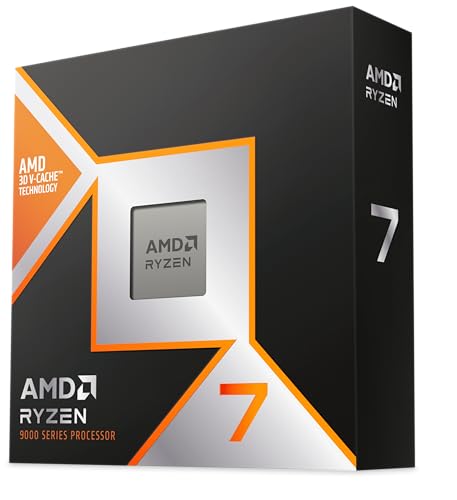
Best overall deal: AMD Ryzen 7 9800X3D
Specs
Cores / Threads | 8-core / 16-thread |
Architecture | Zen 5 + 3D V-Cache (AM5) |
Boost clock | 5.2 GHz |
TDP | 120W (PPT 162W) |
L3 Cache | 96 MB (3D V-Cache) |
Memory support | DDR5 |
Cores / Threads
8-core / 16-thread
Architecture
Zen 5 + 3D V-Cache (AM5)
Boost clock
5.2 GHz
TDP
120W (PPT 162W)
L3 Cache
96 MB (3D V-Cache)
Memory support
DDR5
What it does well
The 9800X3D is the best gaming CPU available right now, and it's been the best gaming CPU available since launch. The Prime Day price is a modest cut from MSRP, not a dramatic percentage like the 9950X deal, but it's the lowest sustained Amazon price the chip has held.
Zen 5 architecture plus 96 MB of 3D V-Cache means the 9800X3D wins in two ways. The cache accelerates the workloads that the 7800X3D already dominated: Total War: Warhammer III late-game turns, MSFS with complex scenery, Tarkov, Forza, AoE IV. The Zen 5 IPC improvement adds meaningful headroom across everything else. Eight cores also cover light-to-medium content creation alongside gaming: you can run OBS, a Discord capture, and a game without hitting the ceiling you'd reach on a 6-core chip.
For board pairing, the best X870 motherboards for Ryzen 9000 guide has specific recommendations. X870 gets PCIe 5.0 NVMe, WiFi 7, and solid VRM headroom for sustained loads.
What you give up
The Prime Day discount is smaller than the other deals on this list: about 6 percent off MSRP. That's a modest cut, and buyers hoping for a dramatic Prime Day price drop on the 9800X3D specifically should know this going in. It's the lowest the chip has held consistently on Amazon, but it's not a 30 or 40 percent slash.
At 4K resolution with an RTX 5080 or faster GPU, the margin between the 9800X3D and a cheaper chip like the 9600X shrinks significantly because the GPU becomes the bottleneck before the CPU matters. If 4K is your primary target and cache-sensitive titles aren't in your library, the 9600X at its record low might be a better spend with the delta going to GPU.
Who it's for
Any builder targeting 1440p or 4K who plays at least some cache-sensitive titles. Specific fits: sim racing (iRacing, ACC, Le Mans Ultimate), flight sim (MSFS 2024, DCS), strategy and 4X (Total War, Stellaris late-game, Cities Skylines 2), competitive FPS at high refresh on a fast GPU, and MMO players in dense server content. Also the right call for anyone pairing with an RTX 5070, RTX 5070 Ti, RTX 5080, or RX 9070 XT who doesn't want the CPU to be the constraint.
Best creator + gamer deal: AMD Ryzen 9 9950X

Specs
Cores / Threads | 16-core / 32-thread |
Architecture | Zen 5 (AM5) |
Boost clock | 5.7 GHz |
TDP | 170W |
L3 Cache | 64 MB |
Memory support | DDR5 |
Cores / Threads
16-core / 32-thread
Architecture
Zen 5 (AM5)
Boost clock
5.7 GHz
TDP
170W
L3 Cache
64 MB
Memory support
DDR5
What it does well
The 9950X Prime Day price is the deal that changes the calculus for dual-purpose machines. The previous low was considerably higher; the Prime Day price is a substantial drop that puts 16 Zen 5 cores within reach for anyone doing real creative work alongside gaming.
Blender, Handbrake, heavy DaVinci Resolve timelines, large compile jobs, and multi-instance development workloads all scale well on 16 cores at Zen 5 IPC. The 5.7 GHz single-core boost is the fastest non-X3D frequency AMD ships, which means gaming performance is competitive in titles where cache doesn't dominate.
For the creator-plus-gamer profile (content producer, 3D artist, developer, heavy streamer) this is the chip that was out of reach for most builders just a few months ago. The Prime Day price changes that significantly.
What you give up
The 9950X has no 3D V-Cache. In cache-sensitive gaming titles (Total War: Warhammer III late-game, Tarkov, MSFS, AoE IV), it trails the 9800X3D by 15 to 25 percent depending on the title. The gap is meaningful and structural. Extra cores don't substitute for the cache advantage in those workloads.
The 9800X3D at its Prime Day price is very close in total spend. If gaming is the primary workload, the 9800X3D wins that tradeoff clearly. The 9950X earns its price only when multi-threaded creative workloads are genuinely part of your daily use. Not "I edit YouTube occasionally," but real production volume.
170W TDP is also a real number. Plan for a 280mm or 360mm AIO, a PSU sized appropriately (750W minimum, 850W recommended for builds with an RTX 5080 or faster), and an X870E board with a proper VRM tier.
Who it's for
Content creators who also game: YouTube producers and podcasters who export regularly, 3D artists running Blender renders overnight, software developers building large codebases, streamers running hardware-encode OBS with a complex scene layout. Anyone who previously needed to choose between a gaming CPU and a workstation CPU now has one answer.
CPUs to skip this Prime Day
Not every "Prime Day deal" is a deal worth taking.
Intel Core Ultra 9 285K: the pricing hasn't moved to a meaningful discount, and Arrow Lake's gaming performance relative to Ryzen X3D doesn't justify the premium. If you're spending at the top of the CPU market for pure gaming, the 9800X3D beats it in the titles that push CPU limits. For workstation workloads where the 285K earns its tile count, wait for a deeper cut.
AMD Ryzen 7 5800X3D: it's still technically fast in cache-sensitive titles on AM4. But AM4 has no upgrade path in 2026. Buying into a platform with no viable CPU upgrade option going forward, even on sale, means this is your last chip on that board. Budget AM5 entry (the 9600X at record low) is a better long-term move.
Intel 13th and 14th gen (13600K, 14700K, and similar): LGA1700 is end-of-life. The micro-op errata history on these chips, combined with a platform with no forward path, makes them a pass even at steep discounts. Buy current-gen.
Ryzen 9 9900X: at the Prime Day prices available, the 9950X costs only marginally more and delivers 16 versus 12 cores. Unless the 9900X lands at a substantially lower price, the 9950X is simply a better spend at the top of the AM5 line.
Bottom line
If gaming is your primary goal, the AMD Ryzen 7 9800X3D at its Prime Day price is the move. The discount is modest but the chip is the right answer regardless. No other CPU delivers the cache-sensitive gaming performance, and the Prime Day window is the lowest sustained price it's held.
For AM5 entry on a budget, the AMD Ryzen 5 9600X at record low is a legitimate call. Zen 5 IPC, real platform longevity, and a price that leaves most of the build budget for the GPU where it belongs.
If you do real creative work alongside gaming, the AMD Ryzen 9 9950X Prime Day price is a step-function change that makes 16 Zen 5 cores accessible at a price that didn't exist before this sale.
Wait for Zen 6 desktop? Based on current roadmap signals, that's a 2027 conversation. Buy the deal that fits your build now.
FAQ
Is the Ryzen 7 9800X3D worth buying on Prime Day 2026, or should I wait for Zen 6?
Based on current roadmap leaks, desktop Zen 6 (AMD's Olympic Ridge platform) has slipped to 2027. Earlier 2026 predictions were for server and laptop chips that come first. That makes Prime Day 2026 a legitimate buying window, not a timing trap. The 9800X3D is the best gaming CPU available right now, and the Prime Day price is the lowest it has held consistently on Amazon. If your current CPU is limiting you today, the wait argument doesn't hold.
Do I need a Z890 board to take full advantage of the Core Ultra 7 265K deal?
Z890 is required if you want full overclocking access. B860 boards work for the 265K if you're running stock settings, and they cost meaningfully less and are worth considering if you have no intention of pushing the chip. For productivity builders doing video work, a mid-range Z890 like the MSI MAG Z890 Tomahawk WiFi is the right pairing to get Thunderbolt 4, WiFi 7, and proper VRM support for sustained multi-core loads.
What's the cheapest AM5 motherboard that works well with the Ryzen 5 9600X at record low?
A B650 board in the budget tier works well. The Gigabyte B650M DS3H and MSI PRO B650-P WiFi are the most commonly recommended at that price point. The 9600X's 65W TDP doesn't stress B-series VRMs, so you don't need a premium board. If you want PCIe 5.0 NVMe and WiFi 7, a B850 board costs a bit more but is worth it for future-proofing the storage lane.
Is the Ryzen 9 9950X a good gaming CPU, or is it overkill unless I do serious content creation?
It's a strong gaming CPU for most titles, but it trails the 9800X3D by 15 to 25 percent in cache-sensitive workloads (Tarkov, Total War, MSFS, AoE IV). For a pure gaming build, the 9800X3D at its Prime Day price is the better call and costs only slightly more. The 9950X earns its value specifically for creators who game: video producers, 3D artists, developers, heavy streamers. If your workflow genuinely uses 16 cores for multi-threaded production work, the Prime Day price makes it compelling. If not, the 9800X3D is the answer.
Which Prime Day CPU deal is best for a 1440p gaming build pairing with an RTX 5070 Ti?
The AMD Ryzen 7 9800X3D. The RTX 5070 Ti is a high-performance GPU that can expose CPU bottlenecks in cache-sensitive titles at 1440p, and the 9800X3D's V-Cache advantage is most visible when paired with a card that can push beyond the CPU ceiling. The 9600X would technically work in most titles at 1440p, but the 9800X3D is the chip that lets the 5070 Ti breathe without holding it back.
Related Articles

Best Intel CPUs for Gaming 2026: 5 Core Ultra Chips Ranked
The best Intel CPUs for gaming in 2026: the Core Ultra 7 270K Plus for most builds, the 250K Plus on a budget, and when a 14th-gen chip or AMD X3D is smarter.
Sep 26, 2026

Best CPUs for 1080p Gaming (2026): 7 Picks, AMD and Intel
The best CPUs for 1080p gaming in 2026. Seven AMD and Intel picks from a budget AM4 chip to the gaming flagship, matched to 60Hz, 144Hz and 240Hz targets.
Aug 21, 2026

Is the Ryzen 7 7800X3D Still Worth It in 2026 vs 9800X3D?
Is the Ryzen 7 7800X3D still worth it in 2026? With the 7700X3D now reviewed and the 9800X3D 7 to 13 percent ahead, here is who should buy and who should wait.
Aug 15, 2026

Best X870 & X870E Motherboards 2026: 5 Picks for Ryzen 9000
Best X870 motherboard for Ryzen 9000: 5 picks by build profile, from a value ATX board to a flagship overclocker, plus when X870E is worth paying for.
Sep 1, 2026

How to Choose an SSD for Gaming in 2026: 4 Picks by Budget
How to choose an SSD for gaming in 2026: why Gen4 loads games as fast as Gen5 for less, when DRAM matters, and 4 drives picked by budget, from 1TB to 2TB.
Oct 23, 2026