Affiliate Disclosure: As an Amazon Associate we earn from qualifying purchases. Some links may earn us a commission at no cost to you.

Best GPUs for Elden Ring: Nightreign (2026): Picks by Tier
Elden Ring: Nightreign runs on the same engine FromSoftware has used since the base game, and that engine has a hard 60 FPS cap baked into its game logic. No graphics card on the market will push it past 60. The card you want is the one that holds a locked, stutter-free 60 at your resolution, then stops costing you money.
Nightreign is also light on memory, barely past 6 GB of VRAM at 1440p native. So the usual flagship arms race does not apply. Below are four cards by tier, and an honest read on where spending more buys you nothing in this game.
Our top pick: Sapphire Pulse RX 9060 XT 16GB
The Sapphire Pulse RX 9060 XT 16GB locks a clean 60 at 1440p max with a 16 GB buffer it never has to think about, at a price that respects the 60-cap reality.

Quick picks
Pick | Card | Best for | Where to buy |
|---|---|---|---|
Best Overall | Locked 60 at 1440p max | ||
Best Value | Clean 60 at 1080p on a budget | ||
Best Premium | Locked 60 at 4K max | ||
Editor's Pick | Nvidia stack for the wider library |
Best Overall
- Card
- Best for
Locked 60 at 1440p max
- Where to buy
Best Value
- Card
- Best for
Clean 60 at 1080p on a budget
- Where to buy
Best Premium
- Card
- Best for
Locked 60 at 4K max
- Where to buy
Editor's Pick
- Card
- Best for
Nvidia stack for the wider library
- Where to buy
Specs at a glance
Card | VRAM | Architecture | Target |
|---|---|---|---|
16 GB GDDR6 | RDNA 4 | 1440p 60 | |
12 GB GDDR6 | Xe2 Battlemage | 1080p 60 | |
16 GB GDDR6 | RDNA 4 | 4K 60 | |
12 GB GDDR7 | Blackwell | 1440p 60 + DLSS |
- VRAM
16 GB GDDR6
- Architecture
RDNA 4
- Target
1440p 60
- VRAM
12 GB GDDR6
- Architecture
Xe2 Battlemage
- Target
1080p 60
- VRAM
16 GB GDDR6
- Architecture
RDNA 4
- Target
4K 60
- VRAM
12 GB GDDR7
- Architecture
Blackwell
- Target
1440p 60 + DLSS
How we picked
Start with the cap. Nightreign tops out at 60 FPS because its engine ties simulation to framerate, the same behavior the base game shipped with. That single fact reframes the whole question. You are not buying frames above 60. You are buying a stable, locked 60 with clean frametimes at the resolution your monitor actually runs.
Next, the memory. Nightreign barely crosses 6 GB of VRAM at 1440p native, so the "16 GB is non-negotiable" rule that drives most modern GPU advice is softer here. Even a 12 GB card has comfortable headroom in this title. We still lean toward 16 GB on two of the picks, but for the wider library, not for Nightreign itself.
Then the part nobody else centers: the stutter in Nightreign is not a GPU problem. It comes from CPU spikes and memory limits, and it shows up most in busy three-player co-op and traversal. A faster graphics card will not smooth a run that is hitching on the processor. Pair any of these cards with a capable CPU and at least 16 GB of system RAM, and the frametimes settle.
Finally, we sized each card to a display tier and a budget, not to a spec sheet. The right pick is the cheapest card that locks 60 at your resolution and covers whatever else you play. Spending past that, in this game, buys headroom the cap will never let you use. If you want the longer version of that framework, our guide on how to choose a GPU walks through it tier by tier.
Best Overall: Sapphire Pulse RX 9060 XT 16GB
Specs
Chip | Radeon RX 9060 XT (RDNA 4) |
VRAM | 16 GB GDDR6 |
Interface | PCIe 5.0 |
Cooling | Dual-X dual fan |
Outputs | Dual HDMI 2.1, DisplayPort 2.1 |
Key features | FSR 4, AV1 encode |
Chip
Radeon RX 9060 XT (RDNA 4)
VRAM
16 GB GDDR6
Interface
PCIe 5.0
Cooling
Dual-X dual fan
Outputs
Dual HDMI 2.1, DisplayPort 2.1
Key features
FSR 4, AV1 encode
What it does well
The Sapphire Pulse RX 9060 XT 16GB holds a locked 60 at 1440p max in Nightreign without working hard for it. The 16 GB buffer means textures are never a question here or in heavier titles you load up later.
It is the value leader of this generation at the mainstream tier. For a game that caps at 60, that matters more than raw horsepower you cannot spend. You get the frames Nightreign allows and pocket the difference. Pair it with a 1440p panel from our best GPUs for 1440p gaming shortlist and you are set.
What you give up
Ray tracing is not this card's strength. Nightreign does not lean on RT, so the gap costs you nothing in this game, but a demanding RT title elsewhere will show it.
It is not a 4K-max card. If your monitor is 4K and the rest of your library is heavy, look at the premium pick instead.
Who it's for
The 1440p player at 60 to 144 Hz who wants a clean, stutter-free Nightreign run and a card that handles everything else without overspending. If that is you, the Sapphire Pulse RX 9060 XT 16GB is the one to get.
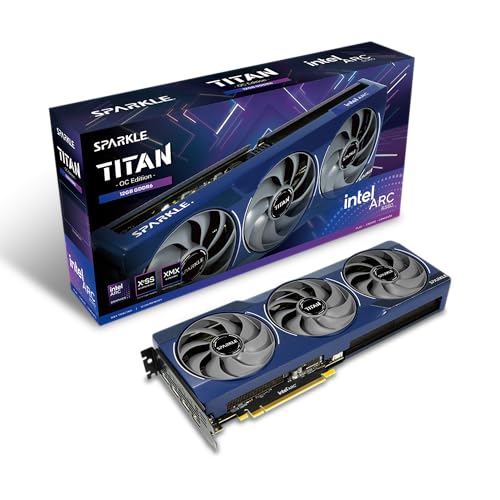
Best Value: Sparkle Arc B580 Titan OC 12GB
Specs
Chip | Intel Arc B580 (Xe2 Battlemage) |
VRAM | 12 GB GDDR6 |
Interface | PCIe 4.0 |
Cooling | Dual-fan |
Outputs | DisplayPort 2.1, HDMI 2.1 |
Key features | XeSS 2, AV1 encode |
Chip
Intel Arc B580 (Xe2 Battlemage)
VRAM
12 GB GDDR6
Interface
PCIe 4.0
Cooling
Dual-fan
Outputs
DisplayPort 2.1, HDMI 2.1
Key features
XeSS 2, AV1 encode
What it does well
The Sparkle Arc B580 Titan OC 12GB is the budget standout when you can find it in stock. Its 12 GB of memory clears Nightreign's modest needs with room to spare and locks a clean 60 at 1080p.
Battlemage drivers have come a long way from the early Arc days, and Nightreign's engine is a straightforward DX12 target, so this is one of the safer places to put a budget Intel card to work. For other options at this price, see our best budget GPUs for 1080p.
What you give up
Street pricing drifts above its list price and stock can be thin, so you may need to wait for a good listing.
It needs Resizable BAR enabled to perform. That is a non-issue on any recent platform, but a real gotcha on older boards, so check your motherboard before you buy.
It caps out around 1080p. It is not the card for a 1440p-max wider library.
Who it's for
The 1080p player on a tight budget who wants a clean 60 in Nightreign and a card that punches above its price elsewhere, provided the motherboard has Resizable BAR.
Best Premium: Sapphire Pulse RX 9070 XT 16GB

Specs
Chip | Radeon RX 9070 XT (RDNA 4) |
VRAM | 16 GB GDDR6 |
Interface | PCIe 5.0 |
Cooling | Triple-fan |
Outputs | Dual HDMI 2.1, Dual DisplayPort 2.1 |
Key features | FSR 4, AV1 encode |
Chip
Radeon RX 9070 XT (RDNA 4)
VRAM
16 GB GDDR6
Interface
PCIe 5.0
Cooling
Triple-fan
Outputs
Dual HDMI 2.1, Dual DisplayPort 2.1
Key features
FSR 4, AV1 encode
What it does well
The Sapphire Pulse RX 9070 XT 16GB delivers a locked 60 at 4K max in Nightreign and is the clearest AMD value win in years for a demanding wider library. With 16 GB and strong raster, it is a one-card answer for a 4K display.
If your library goes well beyond Nightreign and pushes 4K, this is where the extra spend pays off in the games that are not capped. Our best GPUs for 4K gaming guide covers the wider 4K field if you want to compare.
What you give up
Stock has been thin and street pricing sits above its list price, so patience helps.
For Nightreign specifically, you are paying for 4K headroom the 60-cap will not let you exceed. It is only worth it if the rest of what you play genuinely runs at 4K.
Ray tracing trails the Nvidia equivalent, which is irrelevant in this game but worth knowing for a heavy RT library.
Who it's for
The 4K player whose library reaches well past Nightreign and who wants one card that locks 60 here and stays comfortable in heavier 4K titles. For that buyer, the Sapphire Pulse RX 9070 XT 16GB is the pick.
Editor's Pick: ASUS Prime RTX 5070 12GB

Specs
Chip | GeForce RTX 5070 (Blackwell) |
VRAM | 12 GB GDDR7 |
Interface | PCIe 5.0 |
Cooling | Triple-fan (SFF-ready) |
Outputs | HDMI 2.1, DisplayPort 2.1 |
Key features | DLSS 4, Multi-Frame Gen, NVENC AV1 |
Chip
GeForce RTX 5070 (Blackwell)
VRAM
12 GB GDDR7
Interface
PCIe 5.0
Cooling
Triple-fan (SFF-ready)
Outputs
HDMI 2.1, DisplayPort 2.1
Key features
DLSS 4, Multi-Frame Gen, NVENC AV1
What it does well
The ASUS Prime RTX 5070 12GB locks 60 at 1440p in Nightreign comfortably and brings the full Nvidia feature stack for the rest of what you play. DLSS 4 and NVENC AV1 are the reasons to choose it.
This is the pick when you specifically want CUDA for creative work, NVENC AV1 for streaming, or DLSS in a heavily upscaled library. If you are weighing it against the AMD cards, our best 1440p GPUs in this tier lays out the trade.
What you give up
The 12 GB buffer is the common complaint about this card's generation. It is plenty for Nightreign's sub-6 GB needs, but tighter than the 16 GB AMD cards for future heavy titles.
Multi-Frame Gen does nothing in a 60-capped game, so you are buying that feature for other titles, not for Nightreign. It is also a large card that wants a quality power supply, so plan the case and PSU.
Who it's for
The 1440p player committed to the Nvidia stack, whether that is NVENC AV1 streaming, CUDA work, or a DLSS-heavy library, who wants a clean Nightreign 60 alongside it. If that describes your setup, the ASUS Prime RTX 5070 12GB fits.
Bottom line
If you play at 1440p, buy the Sapphire Pulse RX 9060 XT 16GB. It locks 60 in Nightreign and leaves nothing on the table for a 60-capped game.
If you are on a tight budget at 1080p, the Sparkle Arc B580 Titan OC 12GB gets you a clean 60, as long as your board has Resizable BAR.
If your monitor is 4K and your library is heavy, the Sapphire Pulse RX 9070 XT 16GB is the one card that covers it all.
If you live in the Nvidia stack for streaming or creative work, the ASUS Prime RTX 5070 12GB is your 1440p pick. For everyone else, do not chase frames the engine will not give you.
FAQ
What GPU do you really need for Elden Ring: Nightreign?
Less than you might think. Nightreign caps at 60 FPS and barely uses 6 GB of VRAM at 1440p, so a current mainstream card clears it easily. At 1440p the Sapphire Pulse RX 9060 XT 16GB locks a clean 60 with headroom for your other games. At 1080p on a budget, the Sparkle Arc B580 Titan OC does the job.
Why is Nightreign capped at 60 FPS, and does a better GPU help?
The cap is built into FromSoftware's engine, which ties game logic to framerate, the same design the base game used. No graphics card pushes it past 60. A better GPU only helps if your current card cannot hold a steady 60 at your resolution. Once you are locked at 60, more horsepower buys you nothing in this game.
Does Nightreign need a lot of VRAM?
No. It barely crosses 6 GB at 1440p native, so even a 12 GB card has comfortable room. We still lean toward 16 GB on the 1440p and 4K picks, but that is for the heavier titles in your library, not for Nightreign itself. Any of these four cards has more than enough memory for the game.
What causes stuttering in Nightreign, and will a new GPU fix it?
The stutter is usually a CPU or memory issue, not a GPU one. It tends to spike in busy three-player co-op and during traversal, and some Intel hybrid processors have been flagged for it. A faster graphics card will not fix a run that is hitching on the processor. Pair your GPU with a capable CPU and at least 16 GB of system RAM for the smoothest frametimes.
What GPU runs Nightreign at 4K?
The Sapphire Pulse RX 9070 XT 16GB locks a clean 60 at 4K max and is the pick if the rest of your library also pushes 4K. Remember that Nightreign caps at 60 regardless, so a 4K card here is really about your other, uncapped games. If you only play Nightreign at 4K, you are paying for headroom the cap will not let you use.
Do I need DLSS or FSR to play Nightreign?
No. The game is light enough that any of these cards holds 60 at its target resolution natively. Upscaling is a bonus for sharpness or for pushing a higher-resolution display, not a requirement. If you want the Nvidia upscaling stack for your wider library, the ASUS Prime RTX 5070 brings DLSS 4, but Nightreign itself does not demand it.
Related Articles

Best GPUs for 1440p Gaming (2026): 5 16GB Picks, 60-240Hz
The best GPUs for 1440p gaming in 2026: five 16GB picks matched to 60, 144, and 240 Hz targets, with real benchmarks, trade-offs, and who each card fits.
Aug 8, 2026

Best GPUs for 4K Gaming (2026): Picks by Refresh Target
Five GPUs for 4K gaming in 2026, segmented by refresh target and workload: the 5080 buy zone, the AMD-vs-Nvidia call by tier, why the 5090 is usually wrong.
May 21, 2026

How to Choose a GPU (and a Monitor That Matches)
A buyer's framework for picking a GPU and the monitor that pairs with it. Start with the panel and work the card back.
May 17, 2026

Best CPU Coolers for the Ryzen 7 9700X: 5 Picks (2026)
The best CPU cooler for a Ryzen 7 9700X depends on whether you run 65W or 105W mode. Five picks split by mode and case class, with real clearance numbers.
Sep 16, 2026

Best PWM Fan Hubs and Controllers (2026): 5 Top Picks
The best PWM fan hub picks for 2026, plus the header budget math that tells you whether your build needs a powered hub, a passive splitter, or neither.
Sep 17, 2026