Affiliate Disclosure: As an Amazon Associate we earn from qualifying purchases. Some links may earn us a commission at no cost to you.

Should I Wait for Zen 6 or Buy a CPU Now? 2026 Verdict
You have the money set aside and a browser tab open, and every feed you read is telling you to hold. Zen 6 is coming. Nova Lake is coming. Something is always coming.
Here is the part that gets lost in the roadmap noise: whether you should wait is not one question, it is two. It splits by socket. Buy an AM5 chip now and Zen 6 drops into the same board later. Buy into LGA 1851 now and Nova Lake will not fit it. Same question, two different calls, and yours depends on which platform you are standing on.
Quick verdict
On AM5, buy now. AMD has committed to supporting the socket through 2029, and Zen 6 is reported to stay on it, so the chip you buy today sits on a board that will take the next generation. Waiting costs you a year of use in exchange for an upgrade you can still do later.
On Intel's LGA 1851, think harder. Nova Lake is reported to move to a new socket, LGA 1954, which makes anything you buy on 1851 the last chip that board will ever hold. That is not automatically a no, but it changes what you are paying for. If you are weighing the whole build rather than just the chip, whether 2026 is a bad year to build at all covers the rest of the parts list.
At a glance
Platform | Next generation | What happens to your board | Verdict |
|---|---|---|---|
AMD AM5 | Zen 6 "Medusa", reported late 2026 into early 2027 | Same socket. AMD has committed support through 2029 | Buy now |
Intel LGA 1851 | Arrow Lake Refresh, then the platform moves on | Nova Lake is reported to move to LGA 1954, so the board is terminal | Buy only with the socket priced in |
AMD AM5
- Next generation
Zen 6 "Medusa", reported late 2026 into early 2027
- What happens to your board
Same socket. AMD has committed support through 2029
- Verdict
Buy now
Intel LGA 1851
- Next generation
Arrow Lake Refresh, then the platform moves on
- What happens to your board
Nova Lake is reported to move to LGA 1954, so the board is terminal
- Verdict
Buy only with the socket priced in
Those two rows are the whole article. AMD reaffirmed AM5 at Computex 2026 and put a year on it for the first time, extending the old "2027 and beyond" language to continuous support through 2029. Zen 6, codenamed Medusa, is reported to keep AM5 compatibility, with launch tracking late 2026 into early 2027. If both hold, an AM5 board bought this month has at least one more CPU generation ahead of it.
Intel's side is the mirror image. LGA 1851 carries Arrow Lake and its refresh, and reporting on Nova Lake-S points at LGA 1954 with platform availability around the first quarter of 2027. None of this has shipped, so treat every date as reported rather than promised. The socket direction, though, has been consistent across every credible leak so far. For the board side of the decision, our guide to AM5 boards worth pairing with it breaks the range down by chipset.
Quick picks
Your situation | Chip | Why buy it now | Buy |
|---|---|---|---|
Dead or dying CPU, or a GPU being held back | Gaming ceiling today, and the board takes Zen 6 later | ||
First AM5 build on a tight budget | Cheapest way onto a socket with a future | ||
One box that games and earns | Already has the cores you would be waiting for | ||
Locked into Intel this cycle | The sane pick, bought as a terminal socket |
Dead or dying CPU, or a GPU being held back
- Chip
- Why buy it now
Gaming ceiling today, and the board takes Zen 6 later
- Buy
First AM5 build on a tight budget
- Chip
- Why buy it now
Cheapest way onto a socket with a future
- Buy
One box that games and earns
- Chip
- Why buy it now
Already has the cores you would be waiting for
- Buy
Locked into Intel this cycle
- Chip
- Why buy it now
The sane pick, bought as a terminal socket
- Buy
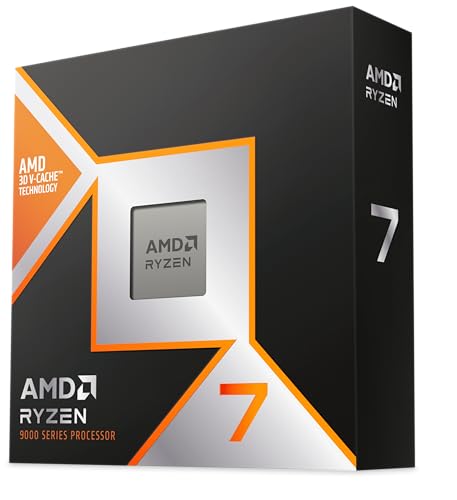
Our top pick: AMD Ryzen 7 9800X3D
If you need a chip now and you are not already on AM5, this is the one that makes the waiting argument collapse. It is the fastest gaming chip you can drop into a socket AMD has committed to through 2029, which means buying it today does not close the door on Zen 6.
How we picked
Socket runway comes first. A CPU purchase is really a platform purchase, and the question that decides whether waiting is rational is not how fast the next chip will be, it is whether you will be able to fit it. On AM5 the answer is yes. On LGA 1851 the answer is no. That single fact reorders everything else, and our guide on how to choose a CPU and motherboard covers the rest of that pairing.
Then comes bottleneck reality. Most people asking this question are not CPU bound. Running a mid-range graphics card at 1440p, the gap between a six-core Ryzen 5 and an eight-core X3D part is close to invisible, because the GPU is the ceiling. Buying more CPU than your graphics card can use is the most common way to waste an upgrade budget, and it is the same error as waiting for a chip you would never feel.
Last is order of operations. Cooling, power delivery and memory decide whether a chip performs the way the review charts say it does. A sixteen-core part on a thin board with a weak VRM will throttle, and socket compatibility is not the same thing as build readiness. Every pick below is named with the board and cooler class it needs, not just the chip that fits the hole.
Dying CPU or a GPU that is being held back: AMD Ryzen 7 9800X3D
Specs
Cores / threads | 8 / 16 |
Boost clock | Up to 5.2 GHz |
L3 cache | 96 MB 3D V-Cache |
TDP | 120 W |
Socket | AM5 |
Platform runway | AM5 confirmed through 2029 |
Cooler included | No |
Cores / threads
8 / 16
Boost clock
Up to 5.2 GHz
L3 cache
96 MB 3D V-Cache
TDP
120 W
Socket
AM5
Platform runway
AM5 confirmed through 2029
Cooler included
No
What it does well
The 96 MB of stacked L3 is the whole pitch, and it lands hardest in engines that thrash cache. Sim racing, flight sim, late-game strategy, dense MMO content, factory builders at scale, Escape from Tarkov. In those titles the 9800X3D is not a few percent ahead, it is a different class of experience, and the gap shows up in 1% lows more than in the average frame counter.
It is also the first fully overclockable X3D part, which matters less for raw speed than for headroom. The chip runs at 120 W, so a decent tower air cooler handles it without drama, and a mid-tier B650 or B850 board with a 14+2 phase VRM is enough. No flagship chipset required.
Then the part that makes it the answer to this article: the board underneath it accepts a Zen 6 chip. Buying now and dropping in the next generation later is a real path rather than a marketing promise. For the deeper case on the chip itself, we covered whether the 9800X3D earns its price separately.
What you give up
Eight cores is eight cores. If your day job is rendering, compiling or long-form encoding, this chip finishes behind a sixteen-core part and no amount of cache closes that gap. It ships without a cooler, so budget for one.
And the honest counterpoint to its own pitch: a Zen 6 X3D part will beat it. If you already own a 9800X3D there is no upgrade case here, and reports suggest even a non-X3D Zen 6 chip would not move you far. This is a pick for people who need a CPU, not for people who already have one that works.
Who it's for
Your CPU died, or the graphics card you just bought is being held back by the one you have, and you play at 1440p or below on a high-refresh panel. Buy it now and stop watching the roadmap.
First AM5 build on a real budget: AMD Ryzen 5 9600X

Specs
Cores / threads | 6 / 12 |
Boost clock | Up to 5.4 GHz |
L3 cache | 32 MB |
TDP | 65 W |
Socket | AM5 |
Platform runway | AM5 confirmed through 2029 |
Cooler included | No |
Cores / threads
6 / 12
Boost clock
Up to 5.4 GHz
L3 cache
32 MB
TDP
65 W
Socket
AM5
Platform runway
AM5 confirmed through 2029
Cooler included
No
What it does well
This is the cheapest honest way onto the socket that still has a future. Six cores at 65 W runs cool on a modest air cooler, idles low, and does not bottleneck a mid-range graphics card at 1440p in the large majority of titles. The money you do not spend here goes to the GPU, which is where it turns into visible frames.
It also buys you the option. A B650 board and a 9600X today means the expensive chip decision moves to 2027, when Zen 6 is on shelves and you already own everything around it. That is the version of waiting that works: build now on the long socket, upgrade the chip later. Our gaming CPU picks by budget cover the rest of the ladder.
What you give up
Six cores shows up when you stream and game on the same machine, or when a compile runs behind a browser with forty tabs open. It is not a production chip and it does not pretend to be.
There is no 3D V-Cache here either, so sim, strategy and MMO titles leave frames on the table against the X3D parts. And like every Ryzen 9000 chip in this article, it arrives in the box without a cooler.
Who it's for
First AM5 build, a real budget, and you would rather put the difference into the graphics card. You get the platform now and the chip choice later.
Gaming plus heavy production in one box: AMD Ryzen 9 9950X3D

Specs
Cores / threads | 16 / 32 |
Boost clock | Up to 5.7 GHz |
L3 cache | 128 MB total, 64 MB on the 3D V-Cache CCD |
TDP | 170 W |
Socket | AM5 |
Platform runway | AM5 confirmed through 2029 |
Cooler included | No |
Cores / threads
16 / 32
Boost clock
Up to 5.7 GHz
L3 cache
128 MB total, 64 MB on the 3D V-Cache CCD
TDP
170 W
Socket
AM5
Platform runway
AM5 confirmed through 2029
Cooler included
No
What it does well
This is the chip that removes the wait-for-more-cores argument, because it already has both halves. Sixteen cores handle renders, compiles and encodes at full throughput, while the cache CCD keeps X3D gaming behaviour intact. Nothing else on either platform does both without a compromise you can feel.
It sits on the same AM5 socket as everything else here, so the 2029 commitment applies. A machine built around it today can take a Zen 6 chip later without a board swap, which is worth real money when your workstation is also your gaming rig.
What you give up
170 W sustained is a genuine thermal and electrical load. This chip wants a 360 mm class AIO or a top-tier dual-tower air cooler, and a board whose VRM was built to feed it. An entry-level B650 is socket compatible and still the wrong board. Price the platform, not the chip.
Scheduling between the cache CCD and the frequency CCD is mostly solved but not invisible. Buyers have flagged the occasional title that lands on the wrong die until a chipset driver or BIOS update sorts it out. Keep both current and it behaves.
Who it's for
Your machine both games and earns, and you were tempted to wait for a higher core count. Zen 6 will deliver that on this same socket, so buy the capability now and keep the upgrade path.
Locked into Intel this cycle: Intel Core Ultra 7 265KF

Specs
Cores / threads | 20 (8 P + 12 E) / 20 |
Boost clock | Up to 5.5 GHz |
L3 cache | 30 MB |
Base power | 125 W |
Socket | LGA 1851 |
Platform runway | Arrow Lake and its refresh only; Nova Lake moves to LGA 1954 |
Integrated graphics | None on the KF |
Cores / threads
20 (8 P + 12 E) / 20
Boost clock
Up to 5.5 GHz
L3 cache
30 MB
Base power
125 W
Socket
LGA 1851
Platform runway
Arrow Lake and its refresh only; Nova Lake moves to LGA 1954
Integrated graphics
None on the KF
What it does well
Twenty cores at this price is a genuine offer in mixed production loads, and Intel's media engine is still the reason a lot of Premiere and Resolve users stay on the platform. Idle power sits well below the Raptor Lake generation it replaced, which shows up on a machine that stays on all day.
If your workflow is already tied to Intel, by an audio interface on Thunderbolt or a board you already own, this is the reasonable chip rather than the halo one. Our Intel gaming lineup guide has the rest of the range.
What you give up
The socket. LGA 1851 carries Arrow Lake and its refresh, and reporting points at Nova Lake moving to LGA 1954, so this board will not take another generation. Buy it knowing the next Intel upgrade is a board, a CPU and possibly a new cooler mount, all at once.
Gaming sits behind the X3D parts in cache-heavy titles, and Arrow Lake's launch regression against 14th-gen Raptor Lake in a chunk of games was real rather than a rounding error. The KF also has no integrated graphics, which makes a discrete card mandatory and removes the display output you would otherwise use to troubleshoot a dead GPU.
Who it's for
You are committed to Intel by workflow or by a board you already own. Treat this as a terminal-socket purchase, price the whole platform accordingly, and it is a fine chip.
Verdict: should you wait for Zen 6?
There is one honest case for waiting, and it is narrower than the roadmap chatter suggests. If you are sitting on a working 7800X3D, a 9800X3D or a Core Ultra 7 265K, nothing in your build is bottlenecked, and no part has failed, then wait. You are not solving a problem. You are shopping.
The strongest Zen 6 upgrade candidates are Zen 4 owners doing a CPU-only swap on a board they already have. That is a cheap upgrade and it is worth timing. If that describes you and your current chip is holding up, sitting out the next few months costs you nothing at all.
Everyone else is waiting for a chip they cannot fit, a launch date nobody has committed to, or an uplift they would never notice. Reported windows slip. Paper launches happen. A part that is available today and works today carries a value that a reported quarter does not.
One more version of waiting is worth taking seriously, and it is component-specific. Memory pricing has its own timing question right now, and we answered the same question for RAM separately. A CPU decision and a RAM decision do not have to move together.
Bottom line
If your CPU died or your graphics card is being held back, buy the 9800X3D now. If this is a first AM5 build on a budget, buy the 9600X and save the chip upgrade for Zen 6. If the machine games and earns, the 9950X3D already has what you would be waiting for. If you are locked into Intel, the 265KF is the sane pick, bought with the socket priced in. And if you are on a working X3D chip with nothing bottlenecked, wait. That is the whole answer.
FAQ
Will Zen 6 work on my AM5 motherboard?
Reported compatibility says yes. Zen 6, codenamed Medusa, is expected to stay on AM5, and AMD has committed to supporting the socket through 2029. Expect to need a BIOS update before the chip will post, which is normal for a new generation on an existing socket, and check that your board vendor is still publishing firmware for your model. Nothing has shipped yet, so treat this as a strong reported direction rather than a guarantee.
When is Zen 6 actually launching?
Late 2026 into early 2027 is the current reporting, and AMD's own public statements have placed Zen 6 in 2026 with the Medusa APUs following in 2027. No street date has been committed. A CES 2027 unveiling with availability shortly after is the shape most credible leaks point at. Plan around a window rather than a date, and assume the first wave will be thin on stock.
Is Arrow Lake a dead-end socket?
For upgrade purposes, effectively yes. LGA 1851 carries Arrow Lake and its refresh, and reporting on Nova Lake-S points at a new socket, LGA 1954, with platform availability around the first quarter of 2027. That does not make an Arrow Lake chip a bad processor. It means the board you buy with it is the last board that chip family will use, so price the whole platform rather than just the CPU.
Should I buy a 9800X3D now or wait for the Zen 6 X3D?
Buy now if you need a CPU. The 9800X3D is the gaming ceiling today and it sits on a socket that will accept the Zen 6 part later, so buying now does not lock you out of the upgrade. Wait only if your current chip works and nothing in your build is bottlenecked. An X3D version of Zen 6 has not been announced with a date, and waiting for an unannounced variant of an unlaunched generation is a long time to run on a dying machine.
Is AM5 still worth buying in 2026?
It is the strongest platform argument on the market. AMD has committed to AM5 through 2029, which means a board bought now has years of CPU releases ahead of it, and the current chips are already the fastest gaming parts you can buy. The old counterarguments were DDR5 pricing and early BIOS trouble, and both have settled. If you are choosing a platform today with any intention of upgrading the chip later, AM5 is the one.
Related Articles

How to Choose a CPU and Motherboard
The buyer's framework for picking a CPU and motherboard pair: use case first, socket second, chip tier third, then the board class that matches.
May 17, 2026

Best CPUs for Gaming in 2026: Top Picks for Every Budget
The best gaming CPUs for 2026 across every budget, from the Ryzen 5 7600X to the Ryzen 9 9950X3D, with full specs and clear buying advice for every tier.
Jul 8, 2026

Is the Ryzen 7 9800X3D Worth It in 2026? Buy or Skip
Buy the Ryzen 7 9800X3D for 360Hz shooters, sim racing and heavy strategy. Skip it at 1440p on a mid-tier GPU. Full 2026 verdict vs the 9600X and 9850X3D.
Aug 26, 2026

Best AM5 Motherboards 2026: 5 Ryzen 9000 Picks by Chipset
The best AM5 motherboards for Ryzen 9000, picked by chipset: B850 is the volume sweet spot, B650 is winding down, and X870 only earns the spend for USB4.
Sep 2, 2026

Should You Buy RAM Now, or Wait Out the 2026 Crisis?
Should you buy RAM now or wait out the 2026 memory crisis? A clear buy-or-wait call by your situation, plus the exact 32GB and 64GB kits worth owning today.
Jul 23, 2026