Affiliate Disclosure: As an Amazon Associate we earn from qualifying purchases. Some links may earn us a commission at no cost to you.

AM5 vs LGA 1851: Which CPU Socket Should You Buy in 2026?
Buy AM5. For nearly every build in 2026 that is the answer, and the reason has nothing to do with which chip wins a benchmark chart this month. AMD has committed to shipping new Ryzen processors on AM5 through 2029, so the board you buy today can still take two more CPUs. LGA 1851 holds exactly one generation. Intel's next desktop parts move to a different socket entirely.
There is a narrow set of cases where LGA 1851 is still the right call, and this guide names them. Everything else comes down to how many upgrades your motherboard is buying you.
At a glance
Platform | Confirmed new-CPU support | Memory | Graphics slot | Best gaming chip today | Buy |
|---|---|---|---|---|---|
AM5 (AMD) | New Ryzen parts through 2029 | DDR5 only | PCIe 5.0 x16 | ||
LGA 1851 (Intel) | Arrow Lake generation only, then LGA 1954 | DDR5 only | PCIe 5.0 x16 |
AM5 (AMD)
- Confirmed new-CPU support
New Ryzen parts through 2029
- Memory
DDR5 only
- Graphics slot
PCIe 5.0 x16
- Best gaming chip today
- Buy
LGA 1851 (Intel)
- Confirmed new-CPU support
Arrow Lake generation only, then LGA 1954
- Memory
DDR5 only
- Graphics slot
PCIe 5.0 x16
- Best gaming chip today
- Buy
Where each socket wins
Your situation | Why | Winner |
|---|---|---|
You want to swap CPUs without swapping boards | The board keeps taking new Ryzen silicon through 2029 | AM5, on the AMD Ryzen 7 9800X3D |
Cache-heavy gaming: sim, strategy, MMO, factory builders | 96 MB of 3D V-Cache is exactly what those engines feed on | AM5, on the AMD Ryzen 7 9800X3D |
Daily Premiere or Resolve work leaning on Quick Sync | Intel's media engine is still the cleaner hardware-encode path | LGA 1851, on the Intel Core Ultra 7 265K |
You replace whole machines instead of upgrading parts | A dead-end socket costs nothing if you were never upgrading | LGA 1851, on the Intel Core Ultra 7 265K |
Single-GPU build on a B-tier board budget | B850 already carries Gen5 graphics, a Gen5 M.2 and Wi-Fi 7 | AM5, on the MSI MAG B850 Tomahawk MAX WiFi |
You want to swap CPUs without swapping boards
- Why
The board keeps taking new Ryzen silicon through 2029
- Winner
AM5, on the AMD Ryzen 7 9800X3D
Cache-heavy gaming: sim, strategy, MMO, factory builders
- Why
96 MB of 3D V-Cache is exactly what those engines feed on
- Winner
AM5, on the AMD Ryzen 7 9800X3D
Daily Premiere or Resolve work leaning on Quick Sync
- Why
Intel's media engine is still the cleaner hardware-encode path
- Winner
LGA 1851, on the Intel Core Ultra 7 265K
You replace whole machines instead of upgrading parts
- Why
A dead-end socket costs nothing if you were never upgrading
- Winner
LGA 1851, on the Intel Core Ultra 7 265K
Single-GPU build on a B-tier board budget
- Why
B850 already carries Gen5 graphics, a Gen5 M.2 and Wi-Fi 7
- Winner
AM5, on the MSI MAG B850 Tomahawk MAX WiFi
Benchmarks
Crowd and traffic simulation keeps this title partly CPU-bound at 1440p.
- 238 FPS
- 194 FPS
The widest spread of the three tested titles; the engine leans hard on cache.
- 217 FPS
- 128 FPS
Effectively GPU-bound at this resolution, which is why the two chips converge.
- 177 FPS
- 175 FPS
How to read your own upgrade path
Start by counting, not comparing. A motherboard is a multi-year commitment and a CPU is not. If AMD keeps releasing AM5 parts through 2029, an AM5 board bought this year has a realistic path to holding three different processors before the socket retires. An LGA 1851 board holds one. That gap is the largest practical difference between these two platforms and it never shows up on a benchmark chart.
Then find your flip condition. The list of workloads that genuinely pull a build toward Intel is short: daily Premiere, Resolve or DaVinci work that leans on Quick Sync for H.264 and H.265 hardware encode, compute bound by memory bandwidth rather than cache, and a need for native Thunderbolt without paying flagship-board money. If none of those describe your week, the flip condition does not apply and the runway argument wins by default.
Last, check the VRM floor for the chip class you intend to run, not the chip you are buying today. Socket compatibility is not build-ready. A board can accept a processor and still throttle it under sustained all-core load, which is exactly what happens when a sixteen-core part lands on a bargain-tier board eighteen months after the build. I size the board for the heaviest chip the socket will plausibly see, because that is the part the board has to survive.
One thing worth saying plainly: B-tier chipsets are fine. A decent B650 or B850 board with proper VRM cooling feeds anything AM5 ships, including the 16-core parts. The X-tier and Z-tier premium earns its keep for a second Gen5 NVMe slot, lane bifurcation, onboard 10GbE, or memory overclocking past the point where it buys anything real. For a single-GPU gaming build that list is usually nobody, which is the same conclusion we reached on where the X-tier premium stops paying.
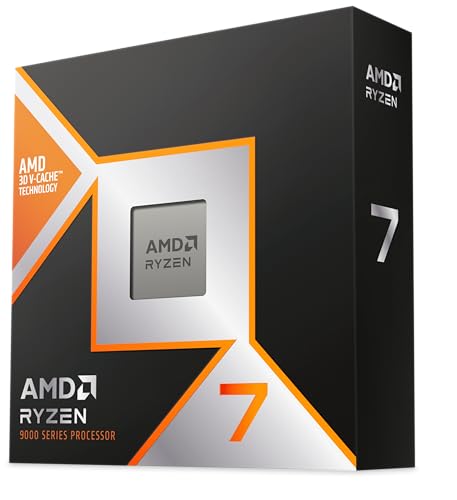
AM5: the CPU to build around, the AMD Ryzen 7 9800X3D
Specs
Cores / threads | 8C / 16T |
Boost clock | 5.2 GHz |
L3 cache | 96 MB (3D V-Cache) |
TDP | 120 W |
Socket | AM5 |
Memory | DDR5-5600 (EXPO 6000 CL30 sweet spot) |
Platform runway | New AM5 chips confirmed through 2029 |
Cores / threads
8C / 16T
Boost clock
5.2 GHz
L3 cache
96 MB (3D V-Cache)
TDP
120 W
Socket
AM5
Memory
DDR5-5600 (EXPO 6000 CL30 sweet spot)
Platform runway
New AM5 chips confirmed through 2029
What it does well
The 96 MB L3 pool is the whole argument. Sim racing, flight sim, 4X strategy, dense MMO content, factory builders at scale: those engines thrash cache, and this chip keeps the working set close to the cores where other parts go out to memory. In Black Myth: Wukong at 1440p it lands near 217 FPS against 128 for the Core Ultra 7 265K. That is not a rounding error.
Power behavior is the quiet win. A 120 W TDP means a decent air tower handles it, and the chip does not force a cooling upgrade or a higher board tier on the way in. It drops onto B650 and B850 without a VRM conversation.
And it sits on a socket that still has silicon coming. Buying this chip today does not close the door on a 2028 upgrade, it moves the door two generations out. If you are weighing timing rather than platform, whether to buy now or wait for Zen 6 covers that side of the decision.
What you give up
Eight cores is eight cores. Sustained multicore work, long renders, heavy compiles, big video exports, wants a 9950X-class part and will notice the difference daily. The cache does nothing for those loads.
There is no Quick Sync equivalent here. If your editing workflow leans on hardware encode, that is a real gap rather than a spec-sheet asterisk.
The cache advantage is also conditional. At 1080p behind a mid-tier GPU you are GPU-bound, both chips produce the same frames, and the X3D premium buys nothing you can see. Reaching for X3D on a build whose bottleneck sits somewhere else is the most common mistake at this price point, and I have talked more buyers out of it than into it.
Who it's for
The builder who wants one motherboard purchase to carry two more CPU generations, and whose library rewards cache. If you play sim, strategy, MMO or factory builders on a 1440p or 4K monitor with a real GPU behind it, this is the chip. For the wider field by budget tier, our gaming CPU picks by budget covers every rung.
AM5: the board that carries the runway, the MSI MAG B850 Tomahawk MAX WiFi

Specs
Chipset | AMD B850 |
Form factor | ATX |
Socket | AM5 |
VRM | AM5-80A SPS |
Memory | 4x DDR5, 8400+ MT/s (OC) |
Graphics | PCIe 5.0 x16 |
Storage | M.2 Gen5 |
Networking | Wi-Fi 7 + 5G LAN |
Chipset
AMD B850
Form factor
ATX
Socket
AM5
VRM
AM5-80A SPS
Memory
4x DDR5, 8400+ MT/s (OC)
Graphics
PCIe 5.0 x16
Storage
M.2 Gen5
Networking
Wi-Fi 7 + 5G LAN
What it does well
The runway only pays if the board survives what lands on it. An 80A SPS VRM on a B-tier board is sized well past what a 120 W X3D chip asks for, which means it still has headroom when a 170 W sixteen-core part shows up in 2028.
The feature set already sits at the ceiling most builds use: PCIe 5.0 for the graphics slot, a Gen5 M.2, Wi-Fi 7 and 5G LAN. A CPU upgrade three years out will not drag a board upgrade behind it because the board came up short on an interface.
This is also the tier where BIOS support shows up in practice. AM5 boards have been accepting newer chips through firmware since the socket launched, and a BIOS update on an existing B650 board is the mechanism that makes the runway real rather than theoretical. If you want the wider B850 board field, we compared the tier separately.
What you give up
One Gen5 M.2 slot, not two. If you run a Gen5 boot drive and a Gen5 scratch drive, this is not your board.
No lane bifurcation for a capture card sharing lanes with the GPU and extra storage. No onboard 10GbE either, which matters if you move raw footage across a wired 10G switch and matters not at all otherwise.
Memory overclocking past roughly 8000 MT/s wants premium trace topology. On AM5 that chase buys close to nothing real, so this reads as a give-up on paper more than in the build.
Who it's for
Anyone building a single-GPU AM5 machine who intends to swap the CPU once or twice and never touch the board again. It is the board I would spec under an X3D chip without thinking twice, and the one I would still trust with a sixteen-core part three years from now. If you want the full chipset ladder before you commit, our guide to the best AM5 motherboards names a pick at every rung from B650 up to X870E and says where the extra spend stops paying.
LGA 1851: the CPU worth buying, the Intel Core Ultra 7 265K

Specs
Cores / threads | 20 cores (8 P-cores + 12 E-cores) |
Boost clock | 5.5 GHz |
L3 cache | 30 MB |
Base power | 125 W |
Socket | LGA 1851 |
Memory | DDR5-6400 |
Media engine | Quick Sync (AV1, H.265) |
Platform runway | Arrow Lake generation only |
Cores / threads
20 cores (8 P-cores + 12 E-cores)
Boost clock
5.5 GHz
L3 cache
30 MB
Base power
125 W
Socket
LGA 1851
Memory
DDR5-6400
Media engine
Quick Sync (AV1, H.265)
Platform runway
Arrow Lake generation only
What it does well
Quick Sync is why this chip is on the list. For daily Premiere or Resolve work that leans on H.264 and H.265 hardware encode, Intel's media engine is still the cleaner path, and no amount of AMD core count substitutes for it.
Twenty cores split eight performance and twelve efficiency handles mixed loads well. A background encode, a compile, a browser stack and a game in the foreground: the scheduler has somewhere to put all of it.
It also holds its own where the engine is not cache-pinned. In Assassin's Creed Mirage at 1440p it sits within about one percent of the 9800X3D. When a title is GPU-bound, the socket choice costs nothing. For a closer chip-level read, we put it chip-for-chip against the 9700X.
What you give up
The upgrade path, entirely. Intel's next desktop generation moves to LGA 1954, so this board and this chip retire together. That is not speculation about a future roadmap, it is the roadmap.
Gaming, in the titles that care. Cyberpunk 2077 at 1440p puts it near 194 FPS against 238 for the 9800X3D, and Black Myth: Wukong widens that into a gap you can feel. Reports at Arrow Lake's launch flagged regressions against the previous Intel generation in a chunk of titles, and pricing has not moved far enough since to make that easy to forgive.
One consolation: reports indicate LGA 1954 reuses the same cooler mounting dimensions, so a cooler bought today should survive the platform jump even though the motherboard does not. The same carry-over logic already applied one socket earlier, which is why an LGA1700 cooler fits an LGA1851 build without a new bracket.
Who it's for
The editor or encoder who leans on Quick Sync daily and would rather have the media engine than the runway. Also the buyer who replaces whole machines every few years instead of upgrading parts, because a dead-end socket costs nothing if you were never going to walk the path.
LGA 1851: the board to pair, the MSI MAG Z890 Tomahawk WiFi II

Specs
Chipset | Intel Z890 |
Form factor | ATX |
Socket | LGA 1851 |
Memory | 4x DDR5, 9200+ MT/s (OC) |
Graphics | PCIe 5.0 x16 |
Storage | M.2 Gen5 |
Networking | Wi-Fi 7 + 5G LAN |
Platform runway | Arrow Lake only |
Chipset
Intel Z890
Form factor
ATX
Socket
LGA 1851
Memory
4x DDR5, 9200+ MT/s (OC)
Graphics
PCIe 5.0 x16
Storage
M.2 Gen5
Networking
Wi-Fi 7 + 5G LAN
Platform runway
Arrow Lake only
What it does well
Arrow Lake's transient power behavior punishes thin VRMs, and this is the tier where that stops being a worry. The Z890 Tomahawk's headroom is sized for the spikes rather than the sustained number printed on the box.
Feature parity with the AM5 pick is close: PCIe 5.0 graphics, a Gen5 M.2, Wi-Fi 7, 5G LAN, and the highest memory ceiling of the four picks here at 9200+ MT/s with overclocking.
What you give up
Every dollar spent here buys exactly one CPU generation. When Nova Lake lands on LGA 1954 this board does not come along, and the next upgrade is a full platform replacement rather than a chip swap.
You are also paying Z-tier prices out of necessity rather than choice. On AM5 the B-tier board is a legitimate option. On Arrow Lake, dropping to a budget B860 board to save money puts a spiky chip on a VRM that was not built to feed it, and I would not do that to a build.
Who it's for
The Intel-committed buyer who needs the platform now and accepts a full board replacement at the next upgrade. If that trade sounds bad, it is the trade, and it is the clearest reason the default answer on this page is AM5.
Bottom line
If you want the motherboard to outlive the CPU, buy AM5 and start with the AMD Ryzen 7 9800X3D on a B850 board. If your week runs on Quick Sync encode, buy the Core Ultra 7 265K with a Z890 board and plan to replace both together. If your library is sim, strategy, MMO or factory builders, the cache is not optional. If you are GPU-bound at 1080p, skip the X3D premium and put it into the graphics card instead. Nobody is wrong for buying Intel in 2026. They are just buying one generation where AM5 sells three.
FAQ
Is AM5 worth it for longevity in 2026?
Yes, and it is the strongest longevity argument on the desktop right now. AMD has extended AM5 support so new Ryzen processors keep arriving through at least 2029, pushed out from an original 2027 commitment. A board bought this year has a realistic path to holding three different processors before the socket retires. That is what longevity actually means in practice: not that the board survives, but that it keeps accepting faster chips without a rebuild around it.
Will LGA 1851 support Intel's next CPU generation?
No. Intel's Nova Lake desktop processors move to a new LGA 1954 socket, so LGA 1851 holds the Arrow Lake generation and nothing after it. An LGA 1851 board bought today has no CPU upgrade ahead of it. Cooler mounting does appear to carry over between the two sockets, so a tower or AIO bought now should still fit the next platform, but the motherboard itself is a one-generation purchase.
Can I upgrade my CPU on AM5 without buying a new motherboard?
Usually yes, with a BIOS update. AM5 boards have been accepting newer Ryzen parts through firmware since the socket launched, and that is the mechanism that turns the 2029 support window into something you can use. Check the board maker's CPU support list for the chip you want, and confirm the board has BIOS Flashback if you plan to install a processor newer than the shipped firmware. Older B650 boards generally handle current chips fine after an update.
Does AM5 or LGA 1851 give better gaming performance?
AM5, in the titles that are CPU-bound. The Ryzen 7 9800X3D leads the Core Ultra 7 265K by roughly 23 percent in Cyberpunk 2077 at 1440p and by a much wider margin in Black Myth: Wukong. In a GPU-bound title like Assassin's Creed Mirage the two land within about one percent of each other. The honest version: if your library is cache-sensitive the gap is large, and if you are GPU-limited the socket choice costs you nothing in frames.
Do I need an X870 board, or is B850 enough for AM5?
B850 is enough for almost every single-GPU gaming build, including one with a sixteen-core chip on top. A decent B850 board ships with a VRM and heatsink arrangement that handles sustained load without throttling, plus PCIe 5.0 graphics, a Gen5 M.2 slot and Wi-Fi 7. X870 and X870E earn their premium for a second Gen5 NVMe slot, lane bifurcation, onboard 10GbE, or heavy memory overclocking. For a gaming build, that list is usually nobody.
Will my CPU cooler carry over if I switch sockets?
Between AM5 and LGA 1851, no, though most cooler makers sell mounting kits that bridge the two. Within Intel's own transition the news is better: LGA 1954 reuses LGA 1851 mounting dimensions, so a cooler bought for Arrow Lake should mount on Nova Lake. AM5 has kept the same mounting since launch, so an AM5 cooler carries across every chip the socket takes. Check the manufacturer's compatibility list before assuming, since bracket availability varies by model.
Related Articles

Should I Wait for Zen 6 or Buy a CPU Now? 2026 Verdict
Should I wait for Zen 6, or buy a CPU now? On AM5 you buy now: Zen 6 keeps the socket. On Intel, Nova Lake resets it. The 2026 answer, split by platform.
Aug 4, 2026

Ryzen 7 9700X vs Core Ultra 7 265K: Which CPU Wins in 2026?
Ryzen 7 9700X vs Core Ultra 7 265K — a scenario-by-scenario breakdown of gaming fps, platform cost, multitasking headroom, power draw, and upgrade path to help mid-high budget builders pick the right chip in 2026.
Jun 1, 2026

Best B850 Motherboards for Ryzen 9000: The Missing Middle Tier
B850 hits the sweet spot between B650 and X870E for Ryzen 9000 builds. These are the picks that actually fit the build, not the chipset upsell.
Jun 1, 2026

Will a 9850X3D Work on a B650 Board? (BIOS Guide 2026)
Will a 9850X3D work on a B650 board? Yes, once the firmware is current. Here is the minimum BIOS by vendor, the Flashback fork, and which board to buy.
Aug 5, 2026

Best CPUs for Gaming in 2026: Top Picks for Every Budget
The best gaming CPUs for 2026 across every budget, from the Ryzen 5 7600X to the Ryzen 9 9950X3D, with full specs and clear buying advice for every tier.
Jul 8, 2026