Affiliate Disclosure: As an Amazon Associate we earn from qualifying purchases. Some links may earn us a commission at no cost to you.

RTX 3080 to RTX 5070 Ti: Is the Upgrade Worth It in 2026?
Upgrade if your 3080 is pinned at 1440p ultra and you have started dropping texture quality to stop the hitching, or if you want ray tracing to be a setting you can use rather than admire. Keep it if your frame rates are fine and the weakest part of your setup is the panel in front of you.
Three things separate an RTX 3080 from an RTX 5070 Ti, and only two of them favour buying: the raster gap, the step from 10 GB of memory to 16 GB, and the power connector. Forum threads argue each one in isolation. Here they get resolved together.
At a glance
Verdict | Product | What it solves | Buy |
|---|---|---|---|
Upgrade (1440p) | Raster plus the 10 GB ceiling | ||
Upgrade (4K) | 4K native headroom | ||
Cross-shop | Raster per dollar, keeps the 8-pin cables | ||
Supporting buy | Native 12V-2x6 and headroom | ||
Do not upgrade | The display, not the GPU |
Upgrade (1440p)
- Product
- What it solves
Raster plus the 10 GB ceiling
- Buy
Upgrade (4K)
- Product
- What it solves
4K native headroom
- Buy
Cross-shop
- Product
- What it solves
Raster per dollar, keeps the 8-pin cables
- Buy
Supporting buy
- Product
- What it solves
Native 12V-2x6 and headroom
- Buy
Do not upgrade
- Product
- What it solves
The display, not the GPU
- Buy
Where each call wins
Your situation | The call | Winner |
|---|---|---|
1440p 144 Hz or better, trimming textures to stop hitching | Upgrade | |
4K or ultrawide, living on DLSS Performance | Step up | |
Raster library, no ray tracing, no creative work | Cross-shop | |
Supply under 750 W or unbranded, going 5080 | Fix the supply first | |
Still on 1080p or a 2020-era 1440p 144 Hz panel | Keep the 3080 |
1440p 144 Hz or better, trimming textures to stop hitching
- The call
Upgrade
- Winner
4K or ultrawide, living on DLSS Performance
- The call
Step up
- Winner
Raster library, no ray tracing, no creative work
- The call
Cross-shop
- Winner
Supply under 750 W or unbranded, going 5080
- The call
Fix the supply first
- Winner
Still on 1080p or a 2020-era 1440p 144 Hz panel
- The call
Keep the 3080
- Winner
Benchmarks
Aggregate relative performance across a 100-plus game set, with the RTX 3080 normalised to 100.
- RTX 3080100 %
- RTX 5070 Ti159 %
- RTX 5080189 %
The 10 GB to 16 GB step is the part of this upgrade that never shows up in an average frame rate.
- RTX 308010 GB
- RTX 5070 Ti16 GB
- RX 9070 XT16 GB
- RTX 508016 GB
The 5070 Ti draws less than the card it replaces, which is why most 3080 owners keep their supply.
- RTX 3080320 W
- RTX 5070 Ti300 W
- RX 9070 XT304 W
- RTX 5080360 W
The three deltas that decide this
Start with raster, because it is the number everyone quotes and the one most likely to mislead. Aggregate testing across a hundred-plus game library puts the 5070 Ti around 59 percent ahead of the 3080. Owner reports at 1440p land closer to 50. Both are honest. The aggregate sweeps in titles where the 3080 falls off a cliff, and the 1440p figure reflects the resolution most 3080 owners are running.
The second delta never shows up in an average frame rate. A 3080 carries 10 GB of GDDR6X. When a game asks for more, the overflow goes to system memory, and the bandwidth gap between the two is roughly eight to one. Assets that miss the frame buffer arrive late. What you feel is a hitch, and buyers have flagged that it gets misread as a CPU problem. Sixteen gigabytes is the fix, and per the Steam hardware survey 16 GB became the most common configuration on the platform this July.
Then power, which is the delta that surprises people. The 3080 is rated at 320 W on a pair of 8-pin connectors. The 5070 Ti is rated at 300 W. The newer card asks for less. What changes is the plug, a 16-pin 12V-2x6 instead of two 8-pins, and reviewers report transient peaks above the rated figure into the mid-350 W range under synthetic load. That is why 750 W is the official floor and 850 W is the number worth targeting if the supply is coming out anyway.
Frame generation sits outside all three. Multi-frame generation on the 50-series is real technology, and reviewers have flagged that it also inflates the apparent generational gap. It turns 60 into 120. It does not turn 30 into 120. Compare native or DLSS Quality figures across the two cards first, then add the smoothness on top.
If you are one rung down the same ladder, the same call one tier down runs the 3070 version of this question. For the general shape of the decision, how to size a GPU to a display is the framework this article sits inside.
Upgrade pick: ASUS TUF RTX 5070 Ti OC

Specs
Chip | NVIDIA GeForce RTX 5070 Ti (Blackwell) |
VRAM | 16 GB GDDR7 |
Memory bus | 256-bit |
Board power | 300 W TGP |
Power connector | 16-pin 12V-2x6 |
Interface | PCIe 5.0 |
Slot width | 3.125 slots |
Display outputs | HDMI 2.1, DisplayPort 2.1 |
Chip
NVIDIA GeForce RTX 5070 Ti (Blackwell)
VRAM
16 GB GDDR7
Memory bus
256-bit
Board power
300 W TGP
Power connector
16-pin 12V-2x6
Interface
PCIe 5.0
Slot width
3.125 slots
Display outputs
HDMI 2.1, DisplayPort 2.1
What it does well
This is the card that stops a 1440p ultra preset being a negotiation. The raster jump is the headline, but the 16 GB frame buffer is what changes day-to-day behaviour: texture quality stops being the first thing you reach for when a new release stutters. DLSS 4 and its transformer model are a real quality lever at this resolution, clean enough in Quality mode that switching it on is not a concession.
The other thing it does is nothing at all to your power supply. At 300 W rated board power it draws less than the card it replaces, so the 750 W unit that has run a 3080 for five years carries on. If you are weighing it against its smaller sibling, the 5070 against the 5070 Ti is where that split lives.
What you give up
It is a 1440p card. Reports suggest it gets sold as 4K-capable, and it reaches 4K the way most cards do under that framing, by leaning on DLSS Performance. If you own a 4K panel, whether the 5070 Ti clears 4K is worth reading first, because the honest answer is conditional.
The TUF shroud runs 3.125 slots. In a case built around a 2020 Ampere card that is usually fine, but check clearance against the bottom PCIe slot and any front-mounted radiator before you order. And the 16-pin plug means the bundled adapter comes into the build whether you wanted it there or not.
Who it's for
The 3080 owner on a 1440p high-refresh panel who has already started trimming texture quality to keep frames stable, and who wants ray tracing to be a setting rather than a screenshot mode.
Step up: MSI RTX 5080 Ventus 3X OC Plus

Specs
Chip | NVIDIA GeForce RTX 5080 (Blackwell) |
VRAM | 16 GB GDDR7 |
Memory bus | 256-bit |
Board power | 360 W TGP |
Power connector | 16-pin 12V-2x6 |
Interface | PCIe 5.0 |
Cooling | Triple TORX 5.0 fan |
Display outputs | HDMI 2.1b, DisplayPort 2.1b |
Chip
NVIDIA GeForce RTX 5080 (Blackwell)
VRAM
16 GB GDDR7
Memory bus
256-bit
Board power
360 W TGP
Power connector
16-pin 12V-2x6
Interface
PCIe 5.0
Cooling
Triple TORX 5.0 fan
Display outputs
HDMI 2.1b, DisplayPort 2.1b
What it does well
If the panel you bought since 2020 is 4K, this is the card that matches it. Aggregate testing puts the 5080 near 89 percent ahead of the 3080 across a large game set, and reviewers measuring 4K specifically land anywhere from 57 percent up past 80 depending on title and settings. That spread is normal at 4K. The shape of it is not in question.
It carries the same 16 GB frame buffer as the 5070 Ti with more bandwidth feeding it, which is what matters when you are pushing four times the pixels of 1080p. AMD has no entry at this tier this generation, so the choice here is between Nvidia parts rather than between vendors.
What you give up
The value gets worse as you climb. The 3080 to 5070 Ti hop buys more frames per unit of spend than the 5070 Ti to 5080 hop does, and that is worth saying plainly before anyone stretches for it. If your monitor is 1440p, this card is headroom you will never see, and the wider 1440p field has better-matched options.
It also reopens the power question the 5070 Ti closes. At 360 W rated it draws more than the 3080 did, and the transient behaviour scales with it. Ventus is MSI's value cooler line rather than its flagship, so expect competent thermals and audible fans under sustained load rather than silence.
Who it's for
The 3080 owner running 4K or an ultrawide who has been living on DLSS Performance and wants native rendering, or DLSS Quality, back on the table.
Cross-shop: Sapphire Pulse RX 9070 XT

Specs
Chip | AMD Radeon RX 9070 XT (RDNA 4) |
VRAM | 16 GB GDDR6 |
Memory bus | 256-bit |
Board power | 304 W TBP |
Power connectors | 2x 8-pin PCIe |
Interface | PCIe 5.0 |
Upscaling | FSR 4 |
Manufacturer SKU | 11348-03-20G |
Chip
AMD Radeon RX 9070 XT (RDNA 4)
VRAM
16 GB GDDR6
Memory bus
256-bit
Board power
304 W TBP
Power connectors
2x 8-pin PCIe
Interface
PCIe 5.0
Upscaling
FSR 4
Manufacturer SKU
11348-03-20G
What it does well
Across large multi-game benchmark sets at 1440p, the 9070 XT trades blows with the 5070 Ti in rasterised titles while sitting a tier lower on the price ladder. It brings the same 16 GB step up from your 3080's 10, which means it fixes the delta that causes the hitching.
It also leaves your cables where they are. Two 8-pin PCIe connectors, no 16-pin, no adapter, nothing to think about on install day. FSR 4 on RDNA 4 closed enough of the upscaling gap that Quality mode at 1440p is a fair lever rather than a compromise.
What you give up
Ray tracing. Reviewers put the Nvidia lead at 25 to 35 percent in RT-heavy titles, and the margin widens further under path tracing. If your library runs on Cyberpunk and Alan Wake 2 with the lights on, that gap is the whole decision.
You also give up CUDA, which stops being abstract the moment you open Blender, DaVinci Resolve, or anything running local image models. Stock on this card has historically been thinner than its Nvidia counterparts, so the tier-below pricing is only real when you can find one at it.
Who it's for
The raster-first 3080 owner with a library that does not lean on ray tracing, no creative workload, and a preference for leaving the power supply untouched.
If the PSU is the weak link: Corsair RM850x ATX 3.1
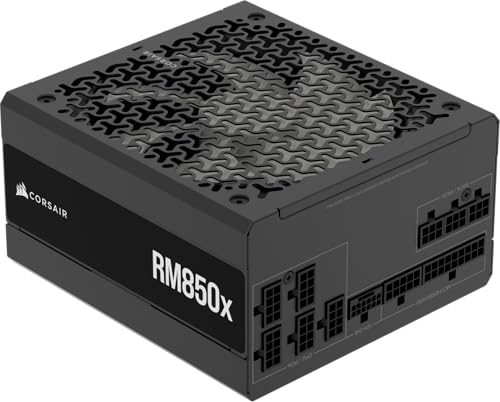
Specs
Capacity | 850 W |
Efficiency | Cybenetics Gold |
Standard | ATX 3.1, PCIe 5.1 ready |
GPU connector | Native 12V-2x6 |
Modularity | Fully modular |
Fan behaviour | Zero RPM at low load |
Capacity
850 W
Efficiency
Cybenetics Gold
Standard
ATX 3.1, PCIe 5.1 ready
GPU connector
Native 12V-2x6
Modularity
Fully modular
Fan behaviour
Zero RPM at low load
What it does well
The reason this section exists is the adapter. A native 12V-2x6 cable takes the bundled Y-adapter out of the build entirely, and the adapter is the part reviewers keep pointing at when 50-series installs go wrong. One cable, one plug, seated once.
850 W is the comfortable figure rather than the minimum one. Nvidia's official floor for the 5070 Ti is 750 W, but the measured peaks sit above rated board power and headroom is cheaper than a diagnostic weekend. Cybenetics Gold on a Tier A platform clears the bar for a build worth putting your name on. For the wider field, supplies sized for a 50-series card covers it.
What you give up
Possibly the whole purchase. Most 3080 owners do not need this. Your current card already pulls 320 W, the 5070 Ti pulls 300, and a quality 750 W unit with the bundled adapter runs one without complaint. Buy this if your supply is under 750 W, carries a brand you cannot identify, or is old enough that the warranty has lapsed.
Fully modular cabling also means the swap is a full re-cable, not a drop-in. Plan an afternoon rather than twenty minutes, and keep the old cables away from the new unit, because pinouts are not interchangeable between supplies.
Who it's for
Anyone on a sub-750 W or unbranded supply, and anyone stepping up to the 5080 rather than the 5070 Ti, where the extra draw is real.
Keep the 3080 and buy this: LG UltraGear 27GS75Q-B

Specs
Panel | 27-inch IPS |
Resolution | 2560 x 1440 |
Refresh rate | 180 Hz (200 Hz overclock) |
Response time | 1 ms |
Adaptive sync | G-SYNC Compatible, FreeSync |
HDR | HDR10 |
Stand | Tilt, height, pivot |
Inputs | HDMI, DisplayPort |
Panel
27-inch IPS
Resolution
2560 x 1440
Refresh rate
180 Hz (200 Hz overclock)
Response time
1 ms
Adaptive sync
G-SYNC Compatible, FreeSync
HDR
HDR10
Stand
Tilt, height, pivot
Inputs
HDMI, DisplayPort
What it does well
1440p at 180 Hz is the target a 3080 was built to hit, and in most 2026 releases it still hits it at high settings. If you are running that card on a 1080p 75 Hz panel, the bottleneck is not the silicon. It is the glass.
The panel is IPS with G-SYNC Compatible certification, and the stand adjusts for height and pivot rather than tilting and calling it done. Of everything on this page, this is the smallest change that alters what the machine feels like every time you sit down at it.
What you give up
IPS contrast, which is fine rather than good, and an HDR10 badge that reads as a specification rather than an experience at this tier. If you sit close, 27 inches at 1440p is a step down in pixel density from a 4K panel.
More to the point, it does nothing for the frame buffer. If you are already watching textures pop in at 1440p ultra, a faster panel makes the stutter easier to see, not easier to live with. That buyer wants the card.
Who it's for
The 3080 owner still on 1080p, or on a 1440p 144 Hz panel bought around the same time as the card, whose frame rates are already fine.
Bottom line
If you play at 1440p ultra and you are trimming textures to hold frames steady, buy the ASUS TUF RTX 5070 Ti OC. If you moved to 4K or an ultrawide since 2020, buy the MSI RTX 5080 Ventus 3X OC Plus. If your library is raster-first and you do no creative work, the Sapphire Pulse RX 9070 XT does the same job a tier down. If your supply is under 750 W or you cannot name its maker, fix that before the GPU. And if your frame rates are already fine and your monitor is five years old, keep the 3080 and buy the panel.
FAQ
How much faster is the RTX 5070 Ti than an RTX 3080?
Aggregate testing across a hundred-plus game library puts the 5070 Ti around 59 percent ahead. Owner reports at 1440p tend to land nearer 50 percent. Both figures are honest. The aggregate includes titles where the 3080's 10 GB frame buffer gives out, which drags its average down further than a typical 1440p session would. Budget for a jump in the 50 to 60 percent band, and expect the low end of it in games that already ran comfortably. The bigger day-to-day change is frame consistency, not the average.
Is 10GB of VRAM still enough for 1440p gaming in 2026?
For most titles at high settings, yes. At 1440p ultra in newer releases it is the part of the 3080 that gives out first. When a game needs more than the frame buffer holds, the overflow moves to system memory, which is roughly eight times slower to read from, and the symptom is hitching rather than a lower average frame rate. Dropping texture quality one notch usually clears it and costs less visual fidelity than people expect. If you are doing that in most new releases, that is your upgrade signal.
Do I need a new PSU or a new cable to go from an RTX 3080 to an RTX 5070 Ti?
Usually neither. The 5070 Ti is rated at 300 W against the 3080's 320 W, so a quality 750 W supply that has been running your current card will run the new one. What changes is the connector: the 5070 Ti takes a 16-pin 12V-2x6 instead of two 8-pins, and an adapter ships in the box. Seat it fully and route it without a tight bend. Replace the supply only if it is under 750 W, carries a brand you cannot identify, or is old enough that the warranty has expired.
Should I wait for the RTX 5070 Ti SUPER?
Reports suggest a 24 GB SUPER refresh was prepared and then put on hold pending memory module pricing, with the window drifting toward late 2026 or CES 2027. That is a long time to sit on a card you have already decided is holding you back. The general rule is to wait when a confirmed launch in the same tier is inside 60 days, and to buy when it is not. Nothing here is confirmed. Whether to wait for the SUPER refresh tracks the timing question on its own.
Is the RX 9070 XT a better buy than the RTX 5070 Ti?
For a raster-first library it is competitive at 1440p while sitting a tier lower on price, and it carries the same 16 GB frame buffer. For ray tracing it is not close: reviewers put the Nvidia lead at 25 to 35 percent in RT-heavy titles, and wider under path tracing. It also has no CUDA, which matters if you render, edit, or run local models. Take the Radeon for raster value and simpler cabling. Take the 5070 Ti if ray tracing or creative work is part of the picture.
Related Articles

RTX 3070 to RTX 5070: Is the Upgrade Worth It in 2026?
Upgrading from an RTX 3070 to an RTX 5070 is worth it if 8GB of VRAM is breaking your 1440p games. When to buy, when to wait, when to fix the monitor.
Aug 5, 2026

RTX 5070 vs 5070 Ti (2026): Is +45% Worth It at 1440p?
RTX 5070 vs RTX 5070 Ti: where the Ti's +45% pays back and where the 5070's 12 GB is the cleaner spend, answered scenario by scenario from 1440p to 4K.
Aug 10, 2026

Is the RTX 5070 Ti Enough for 4K, or Need a 5080? (2026)
Is the RTX 5070 Ti enough for 4K? It clears most games at 60fps with DLSS Quality, but the 5080 buys headroom for ray tracing and 120Hz targets. Verdict inside.
Aug 1, 2026

Best 1000W PSU for RTX 5070 Ti (2026): 750W Is the Floor
The best 1000W PSU for an RTX 5070 Ti absorbs the CPU spikes a 750W unit rides at its limit. Five ATX 3.1 native 12V-2x6 picks, and when 850W is enough.
Aug 25, 2026

Best GPUs for 1440p Gaming (2026): 5 16GB Picks, 60-240Hz
The best GPUs for 1440p gaming in 2026: five 16GB picks matched to 60, 144, and 240 Hz targets, with real benchmarks, trade-offs, and who each card fits.
Aug 8, 2026