Affiliate Disclosure: As an Amazon Associate we earn from qualifying purchases. Some links may earn us a commission at no cost to you.

5800X3D to 9800X3D: Is the Upgrade Worth It in 2026?
Upgrading a Ryzen 7 5800X3D to a 9800X3D is not a chip swap. It is a platform swap. The 5800X3D lives on AM4 and the 9800X3D lives on AM5, so the socket change drags a new motherboard and a new DDR5 kit onto the same order.
That reframes the question. It stops being about how many extra frames the newer chip finds and starts being about whether three parts are worth buying to get them. The answer turns on two things: the resolution you play at, and how hard your library leans on the processor.
At a glance
Path | What you buy | Best for | Buy |
|---|---|---|---|
Upgrade to AM5 | AMD Ryzen 7 9800X3D, an AM5 board and a DDR5 kit | 1080p high-refresh and CPU-pinned engines | |
Keep the 5800X3D | 1440p and 4K on an older card |
Upgrade to AM5
- What you buy
AMD Ryzen 7 9800X3D, an AM5 board and a DDR5 kit
- Best for
1080p high-refresh and CPU-pinned engines
- Buy
Keep the 5800X3D
- What you buy
- Best for
1440p and 4K on an older card
- Buy
Where each path wins
Your setup | What sets the frame time | Winner |
|---|---|---|
1080p at 240Hz or higher, top-tier card | The processor is the ceiling | |
1440p high-refresh, mid-tier card | The graphics card runs out first | |
4K, any card | The graphics card runs out first, by a wide margin | |
Sim racing, flight sim, strategy, MMO | Cache and clocks decide the frame time | |
Escape from Tarkov and similar shooters | The engine never stops asking the processor | |
Streaming and gaming on one machine | The split workload favours the newer cache |
1080p at 240Hz or higher, top-tier card
- What sets the frame time
The processor is the ceiling
- Winner
1440p high-refresh, mid-tier card
- What sets the frame time
The graphics card runs out first
- Winner
4K, any card
- What sets the frame time
The graphics card runs out first, by a wide margin
- Winner
Sim racing, flight sim, strategy, MMO
- What sets the frame time
Cache and clocks decide the frame time
- Winner
Escape from Tarkov and similar shooters
- What sets the frame time
The engine never stops asking the processor
- Winner
Streaming and gaming on one machine
- What sets the frame time
The split workload favours the newer cache
- Winner
The pattern in that table is the whole article. Every row where the processor wins is a row where something other than the graphics card sets the frame time: a low resolution, a simulation tick, a shooter engine that recalculates the world faster than it draws it. Every row where the graphics card wins is a row where it was already the thing holding you back.
Benchmarks
Averages at 1080p behind an RTX 4090, the condition that exposes the processor rather than the graphics card.
- 164 FPS
- 219 FPS
Traversal stutter makes this one of the harder tests on the list for an older processor.
- 110 FPS
- 170 FPS
Creation Engine leans on the processor hard in dense city scenes.
- 93 FPS
- 140 FPS
Large unit counts push the simulation load onto the processor.
- 90 FPS
- 136 FPS
Across the full eight-game set Tech4Gamers measured the newer chip about 42 percent higher on averages and roughly 40 percent higher on 1% lows. The 1% lows are the number worth watching. That is where the 5800X3D's clock ceiling shows up as a hitch rather than as a lower average.
Read them with the resolution caveat attached. TechSpot's scaling work on the 5800X3D shows that lead shrinking as the graphics card takes over as the limiter, dropping into single digits at 1440p once the test rig steps down from an RTX 5090 to an RTX 5080. Unless you run a halo card at a low resolution, the numbers above are a ceiling rather than a forecast.
What the platform swap really costs
Three parts, not one. The chip is the headline, but it cannot socket into the board you already own, and the DDR4 sitting in that board does not move to AM5 either. The bill is a 9800X3D, an AM5 motherboard, and a fresh 32 GB DDR5 kit, bought together.
Memory is the line that has changed since you last bought parts. Tom's Hardware's RAM price index tracked the spot price of a 16Gb DDR5 chip climbing roughly 298 percent in a single quarter through late 2025, and 32 GB kits have sat well above their 2025 level ever since. Analysts quoted in the same coverage point at 2028 before supply normalizes. Whether that means buying memory now or waiting it out is its own decision, but there is no version of this upgrade that skips the kit.
One smaller line gets forgotten. The 5800X3D is a 105 W AM4 part sitting on a cooler you already mounted once. The 9800X3D is a 120 W AM5 part, so that cooler needs an AM5 bracket. Most vendors ship one in the box, and reports suggest others will send one on request, so confirm yours before the board arrives.
Against all of that, the alternative is a single part. A graphics card drops into the machine you already have, with no BIOS work, no new memory, and no operating system reinstall. That asymmetry does most of the work in the verdict below.
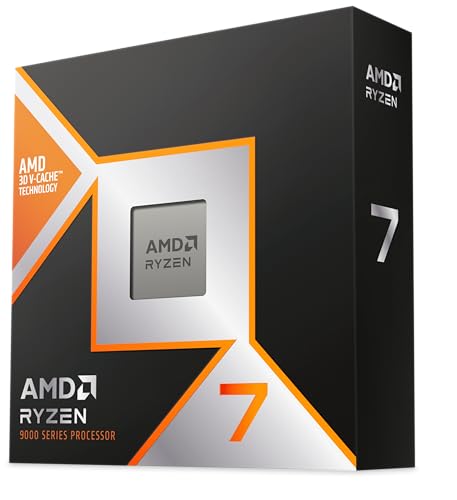
If you upgrade: AMD Ryzen 7 9800X3D
Specs
Cores / threads | 8 / 16 |
Boost clock | Up to 5.2 GHz |
L3 cache | 96 MB (3D V-Cache) |
TDP | 120 W |
Socket | AM5 |
Memory support | DDR5, EXPO to 6000 MT/s |
Cooler included | No |
Cores / threads
8 / 16
Boost clock
Up to 5.2 GHz
L3 cache
96 MB (3D V-Cache)
TDP
120 W
Socket
AM5
Memory support
DDR5, EXPO to 6000 MT/s
Cooler included
No
What it does well
Zen 5 moved the cache stack underneath the cores instead of on top of them. That reads like packaging trivia until you look at the clocks. The 5800X3D topped out at 4.5 GHz because the cache sat between the die and the cooler; the 9800X3D boosts to 5.2 GHz with the same 96 MB pool intact. You get the cache and the clock speed, which earlier X3D parts made you choose between.
In the Tech4Gamers set that shows up as 219 average frames in Cyberpunk 2077: Phantom Liberty against 164, and 170 in Hogwarts Legacy against 110. Starfield went 93 to 140. The heavier the simulation, the wider the gap. If you are cross-shopping the cheaper AM5 X3D part, the 7800X3D and 9800X3D land much closer together than this comparison does.
What you give up
The honest objection is not the chip's price. It is that the chip cannot be bought alone. It is the smallest line on a three-part receipt, and the other two lines are a board and a memory kit you have no say in.
You also give up certainty about what you will actually see. The numbers above were recorded with a halo graphics card at 1080p, which is the condition that exposes the processor most. Move to 1440p on a mid-tier card and TechSpot's scaling testing puts the gap in single digits. Buying this chip for a 4K setup is buying a number you will never observe.
Who it's for
You play at 1080p on a high-refresh monitor with a top-tier card feeding it, or your hours go into sim racing, flight sim, 4X and city builders, dense MMO content, or Escape from Tarkov. Those engines stay pinned to the processor at every resolution, and they are where this chip earns the rest of the receipt.
If you upgrade: MSI MAG B850 Tomahawk MAX WiFi

Specs
Chipset | AMD B850 |
Form factor | ATX |
VRM | AM5-80A SPS |
Memory | 4x DDR5, 8400+ MT/s (OC) |
M.2 slots | 4, one PCIe 5.0 |
Graphics slot | PCIe 5.0 x16 |
Networking | Wi-Fi 7, 5 GbE LAN |
Chipset
AMD B850
Form factor
ATX
VRM
AM5-80A SPS
Memory
4x DDR5, 8400+ MT/s (OC)
M.2 slots
4, one PCIe 5.0
Graphics slot
PCIe 5.0 x16
Networking
Wi-Fi 7, 5 GbE LAN
What it does well
An 80 A SPS VRM against a 120 W chip is not a close call. The heatsinks are real slabs with pad coverage across the MOSFETs rather than a thin decorative strip, which is the thing worth checking on any board that advertises socket compatibility with an X3D part. Socket compatibility and build-ready are two different claims.
Wi-Fi 7 and 5 GbE come standard, the graphics slot is PCIe 5.0 x16, and one of the four M.2 slots runs Gen5. BIOS Flashback sits on the back panel, so a chip newer than the shipped firmware is a five-minute detour rather than a dead board. Our board roundup for the 9800X3D works through the tiers in more detail.
What you give up
One Gen5 M.2 slot rather than two, and no onboard Thunderbolt. Run a capture card alongside the graphics card and need lane bifurcation, and this is not the board for that build.
The Gen5 M.2 slot you do get is closer to a spec-sheet line than a feature in 2026. Gen5 drives still want their own airflow, and the difference over a fast Gen4 drive does not show up on a frame-time graph. Take the slot because it comes with the board, not because you plan to fill it.
Who it's for
Anyone putting a single graphics card in a mid-tower and wanting the board to disappear into the build. If you want the full framework instead of a single pick, how to match a board to a chip covers the tiers from the top.
If you upgrade: G.SKILL Flare X5 32GB DDR5-6000
Specs
Capacity | 32 GB (2x 16 GB) |
Speed | 6000 MT/s |
Timings | CL30-38-38-96 |
Voltage | 1.35 V |
Profile | AMD EXPO |
Form factor | DDR5 U-DIMM |
Heatspreader | Low-profile matte black |
Capacity
32 GB (2x 16 GB)
Speed
6000 MT/s
Timings
CL30-38-38-96
Voltage
1.35 V
Profile
AMD EXPO
Form factor
DDR5 U-DIMM
Heatspreader
Low-profile matte black
What it does well
6000 MT/s at CL30 has been the AM5 sweet spot for three chip generations, and nothing above it buys anything you can measure in a game. Enable EXPO in BIOS, save, done. That matters more than it sounds when you are coming off a DDR4 board you last touched in 2022.
The heatspreader is low profile, so a large air cooler clears the first DIMM slot without the fan-height negotiation taller kits force. 32 GB is the right capacity now rather than 16. Our DDR5 picks for the 9800X3D cover the rest of the field.
What you give up
This is the part of the upgrade that has gone wrong through no fault of the kit. Tom's Hardware's price index tracked 16Gb DDR5 spot prices rising roughly 298 percent in a single quarter through late 2025, and 32 GB kits have sat at multiples of their 2025 level since. The same coverage quotes analysts pointing at 2028 before supply eases.
There is no way to sidestep it. The DDR4 in your current machine does not run on AM5, so the memory is a mandatory purchase rather than a place to economize. If the platform swap dies on a number, this is the number it dies on.
Who it's for
Every reader who commits to AM5. Treat it as part of the board's price rather than as an accessory, because that is how it behaves on the receipt.
If you keep the chip: ASUS TUF RTX 5070 Ti OC

Specs
Chip | GeForce RTX 5070 Ti |
VRAM | 16 GB GDDR7 |
Memory bus | 256-bit |
Interface | PCIe 5.0 |
Slot width | 3.125 slots |
Outputs | HDMI 2.1, DisplayPort 2.1 |
Warranty | 3 years |
Chip
GeForce RTX 5070 Ti
VRAM
16 GB GDDR7
Memory bus
256-bit
Interface
PCIe 5.0
Slot width
3.125 slots
Outputs
HDMI 2.1, DisplayPort 2.1
Warranty
3 years
What it does well
This is the same money pointed at the other socket. At 1440p and above, a graphics card tier moves frames that a processor swap does not, because the graphics card is what was holding you back in the first place. The 16 GB pool is the part that ages well as texture budgets climb.
Installation is the other argument. It drops into the AM4 board you already own in about twenty minutes, with no BIOS flash, no new memory, and no operating system reinstall. Other upgrade paths from an older card follow the same logic from different starting points.
What you give up
It does nothing for engines pinned to the processor. If your hours go into Tarkov, iRacing, Microsoft Flight Simulator, or a late-game Stellaris save, this card will not move the frame times that bother you, and the 5800X3D will still be the thing setting them.
It is also 3.125 slots wide. On a four-year-old mid-tower that is worth measuring before you order, along with whatever headroom is left in a power supply specced for a very different card.
Who it's for
You play at 1440p or 4K on an older or mid-tier card, and your library is mostly AAA releases and console ports. That describes the larger half of the people asking this question.
Bottom line
If you play at 1080p on a high-refresh monitor behind a top-tier card, buy the 9800X3D and accept the board and memory that come with it. If your library is sim, strategy, MMO, or Tarkov, buy it at any resolution. If you play at 1440p or 4K on a mid-tier card, keep the 5800X3D and put the money into the ASUS TUF RTX 5070 Ti OC instead. The processor is not what is holding you back, and the memory market makes that a more expensive mistake this year than it was in 2025. Building from scratch rather than upgrading is a different question, and our gaming CPU picks by budget answer it.
FAQ
Is the Ryzen 7 5800X3D still good in 2026?
Yes, with a caveat about what you pair it with. Four years on it still clears 90 frames per second at 1080p in every game in the Tech4Gamers set, including Starfield and Homeworld 3, two of the harder processor tests on that list. At 1440p and 4K it keeps pace with much newer chips because the graphics card sets the ceiling long before the processor does. Where it shows its age is 1080p at very high refresh rates behind a halo card, and in simulation engines that never stop asking for more.
Does the 5800X3D bottleneck an RTX 5080 at 1440p?
Not meaningfully. TechSpot's scaling testing shows the gap between the 5800X3D and the 9800X3D collapsing into single digits at 1440p once the test rig steps down from an RTX 5090 to an RTX 5080, because the graphics card becomes the limiter. The pairing is balanced in practice. If you are seeing frame-time problems on that combination, look at the specific engine first, since a handful of simulation and shooter titles will pin any four-year-old processor regardless of what sits next to it.
Can I put a 9800X3D in my AM4 motherboard?
No. The 9800X3D is an AM5 part and the 5800X3D is an AM4 part, and the two sockets are not cross-compatible in either direction. No BIOS update changes that. Moving to the 9800X3D means a new motherboard, and because AM5 boards take DDR5 only, it also means a new memory kit. That is why this decision is a platform swap rather than a processor upgrade, and why the total runs a great deal higher than the chip on its own.
Do I need new RAM to upgrade from the 5800X3D to the 9800X3D?
Yes, and it is the line item that hurts most in 2026. AM5 motherboards accept DDR5 only, so the DDR4 in your current build does not transfer. Tom's Hardware's price index tracked 16Gb DDR5 spot prices climbing roughly 298 percent in a single quarter through late 2025, and 32 GB kits have sat well above their 2025 level since, with analysts quoted in that coverage pointing at 2028 before supply eases. Budget a 32 GB DDR5-6000 CL30 kit as part of the upgrade, not as an optional extra.
Will my AM4 CPU cooler fit an AM5 build?
Usually, once you have the right bracket. AM4 and AM5 share the same mounting hole spacing, so most tower coolers and all-in-one units carry over with an AM5 kit fitted. Many vendors ship that kit in the box, and reports suggest others will send one on request. Check your specific model before the board arrives, because a cooler you cannot mount turns a weekend build into a wait. Note too that the 9800X3D is a 120 W part against the 5800X3D's 105 W, so a cooler that was already marginal stays marginal.
Should I wait for the next AMD generation instead of upgrading now?
Waiting has an unusually strong case this year, and memory is the reason. The chip and the board are the stable parts of this bill; the DDR5 kit is the volatile one, and the coverage tracking it does not expect relief soon. If your current setup is playable and your library is not one of the processor-pinned ones, waiting costs you very little and could save a lot on the memory alone. If you are already frame-limited in a simulation engine today, waiting an unknown number of quarters to fix it is the worse trade.
Related Articles

Best Motherboards for the 9800X3D (2026): 5 Picks by Tier
The best motherboards for the 9800X3D, ranked by build tier: X870E, X870, B850 and B650E picks with the VRM, form-factor and I/O tradeoffs that decide it.
Aug 6, 2026

Best DDR5 RAM for the Ryzen 7 9800X3D (2026 Picks)
The best DDR5 RAM for the Ryzen 7 9800X3D: why DDR5-6000 CL30 EXPO is the AM5 sweet spot, the exact 32GB and 64GB kits to buy, and how to dodge the 4-DIMM trap.
Jul 8, 2026

9800X3D vs 7800X3D (2026): 11% Average, 25% Where It Counts
9800X3D vs 7800X3D in 2026: an 11% average uplift, 25% in cache-heavy games, and which of four buyer profiles should actually pay the upgrade premium.
Sep 13, 2026

Should You Buy RAM Now, or Wait Out the 2026 Crisis?
Should you buy RAM now or wait out the 2026 memory crisis? A clear buy-or-wait call by your situation, plus the exact 32GB and 64GB kits worth owning today.
Jul 23, 2026

Best CPUs for Gaming in 2026: Top Picks for Every Budget
The best gaming CPUs for 2026 across every budget, from the Ryzen 5 7600X to the Ryzen 9 9950X3D, with full specs and clear buying advice for every tier.
Jul 8, 2026