Affiliate Disclosure: As an Amazon Associate we earn from qualifying purchases. Some links may earn us a commission at no cost to you.

Best CPU Upgrade From Ryzen 5 5600: AM4 or AM5 (2026)
Your Ryzen 5 5600 still boots fine, but in the games that lean on the processor it is starting to hold your graphics card back. The good news is that this is one of the easiest upgrades in PC building. The harder question is which direction to go.
You have two real paths. Drop a cheaper 3D V-Cache chip straight into the AM4 board you already own, or move to AM5 with a new board and DDR5 for a platform that still has years of upgrades ahead. This guide picks the best chip for each path, then helps you choose between them.
Our top pick: AMD Ryzen 7 5700X3D
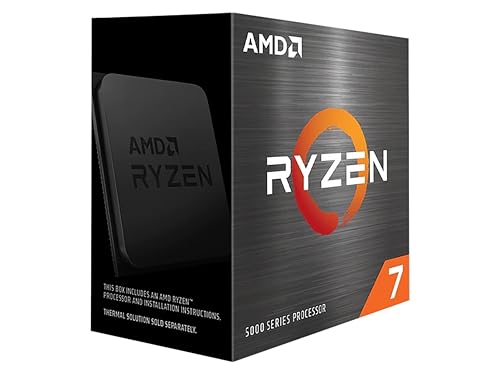
For most people coming from a 5600, the Ryzen 7 5700X3D is the answer. It drops into the same AM4 board and DDR4 memory you already have, so the whole upgrade is a single part, and its 96 MB of 3D V-Cache is exactly what the 5600 was missing in CPU-bound games. Reviewers measured it landing roughly a third ahead of the 5600 in those titles, a bigger jump than most platform swaps deliver.
The real decision: drop-in AM4 or jump to AM5?
Before you buy anything, confirm the CPU is the part holding you back. If your frame rate is already limited by your graphics card at your resolution, a faster processor buys you very little. Our guides on checking a CPU or GPU bottleneck and whether to upgrade the GPU or CPU first walk through how to tell. If the graphics card turns out to be the limit instead, our picks for the best GPUs for the Ryzen 5 5600X cover which cards are worth pairing with the chip you already have.
If the CPU is the limit, the drop-in path is the cheap one. A 5700X3D or 5800X3D reuses your board, your DDR4, and your cooler, so you pay for the chip and nothing else. The trade-off is that AM4 is a dead end. The 5800X3D is the last and fastest chip the socket will ever hold, so there is no upgrade after it. Coming from a Ryzen 5 3600 rather than a 5600? The gap is bigger and the maths lands differently, so we ran whether the 3600 to 5700X3D swap is worth it as its own verdict.
The AM5 path costs more up front because you are buying a new motherboard and a DDR5 kit alongside the processor. What that money buys is runway. AMD supports AM5 into 2027 and beyond, so a 7600 today can become a 9800X3D or something newer later without a full rebuild. If you plan to keep improving this machine for years, the platform cost is really an investment in future upgrades.
Quick picks
Pick | CPU | Upgrade path | Best for | Where to buy |
|---|---|---|---|---|
Best Overall | AM4 drop-in | Cheapest big gaming gain | ||
Best Value | AM4 drop-in | Max AM4 gaming | ||
Best Premium | AM5 rebuild | Fastest, longest runway | ||
Best Budget | AM5 rebuild | Cheapest AM5 onramp | ||
Editor's Pick | AM5 rebuild | AM5 gaming sweet spot |
Best Overall
- CPU
- Upgrade path
AM4 drop-in
- Best for
Cheapest big gaming gain
- Where to buy
Best Value
- CPU
- Upgrade path
AM4 drop-in
- Best for
Max AM4 gaming
- Where to buy
Best Premium
- CPU
- Upgrade path
AM5 rebuild
- Best for
Fastest, longest runway
- Where to buy
Best Budget
- CPU
- Upgrade path
AM5 rebuild
- Best for
Cheapest AM5 onramp
- Where to buy
Editor's Pick
- CPU
- Upgrade path
AM5 rebuild
- Best for
AM5 gaming sweet spot
- Where to buy
Specs at a glance
CPU | Cores / threads | Boost clock | L3 cache | Socket | Memory |
|---|---|---|---|---|---|
8 / 16 | 4.1 GHz | 96 MB | AM4 | DDR4-3200 | |
8 / 16 | 4.5 GHz | 96 MB | AM4 | DDR4-3200 | |
8 / 16 | 5.2 GHz | 96 MB | AM5 | DDR5-5600 | |
6 / 12 | 5.1 GHz | 32 MB | AM5 | DDR5-5200 | |
8 / 16 | 5.0 GHz | 96 MB | AM5 | DDR5-5200 |
- Cores / threads
8 / 16
- Boost clock
4.1 GHz
- L3 cache
96 MB
- Socket
AM4
- Memory
DDR4-3200
- Cores / threads
8 / 16
- Boost clock
4.5 GHz
- L3 cache
96 MB
- Socket
AM4
- Memory
DDR4-3200
- Cores / threads
8 / 16
- Boost clock
5.2 GHz
- L3 cache
96 MB
- Socket
AM5
- Memory
DDR5-5600
- Cores / threads
6 / 12
- Boost clock
5.1 GHz
- L3 cache
32 MB
- Socket
AM5
- Memory
DDR5-5200
- Cores / threads
8 / 16
- Boost clock
5.0 GHz
- L3 cache
96 MB
- Socket
AM5
- Memory
DDR5-5200
Which upgrade path fits you
Your situation | Best pick | Why | Get it |
|---|---|---|---|
Cheapest real gaming gain, keep your board | Drop-in, no platform cost, about a third faster than a 5600 in CPU-bound games | ||
Squeeze every frame out of AM4, then stop | Top of the AM4 ladder, still a drop-in | ||
Onto AM5 for the least money | Cheapest platform onramp, future X3D drop-in later | ||
Rebuilding, want the gaming sweet spot | Near-flagship gaming on a long-lived platform | ||
Rebuilding, want maximum longevity | Fastest gaming chip, longest AM5 runway |
Cheapest real gaming gain, keep your board
- Best pick
- Why
Drop-in, no platform cost, about a third faster than a 5600 in CPU-bound games
- Get it
Squeeze every frame out of AM4, then stop
- Best pick
- Why
Top of the AM4 ladder, still a drop-in
- Get it
Onto AM5 for the least money
- Best pick
- Why
Cheapest platform onramp, future X3D drop-in later
- Get it
Rebuilding, want the gaming sweet spot
- Best pick
- Why
Near-flagship gaming on a long-lived platform
- Get it
Rebuilding, want maximum longevity
- Best pick
- Why
Fastest gaming chip, longest AM5 runway
- Get it
How we picked
We start from the same principle we use for any build: size the CPU to the job, and for gaming that means cache over raw core count. Every top pick here except the budget 7600 carries AMD's 3D V-Cache, because that stacked L3 is what lifts frame rates in the simulation, strategy, and open-world games where a 5600 struggles most. Our CPU and motherboard buyer's framework covers the wider logic.
We only counted chips that are a genuine step up from a 5600 in gaming, and we weighed the full cost of each path, not just the sticker on the CPU. A cheap AM5 chip is not actually cheap once you add the board and memory, and we say so in each pick.
We also kept the honest counterpoint front and center: for pure gaming value, a drop-in 5700X3D often beats building a fresh AM5 platform around a non-cache 7600 at the same total spend. See our full CPU rankings if you want the wider field.
Best Overall: AMD Ryzen 7 5700X3D
Specs
Cores / threads | 8 / 16 |
Base / boost | 3.0 / 4.1 GHz |
L3 cache | 96 MB (3D V-Cache) |
TDP | 105 W |
Socket | AM4 |
Memory | DDR4-3200 |
Upgrade type | Drop-in (keep board + RAM) |
Cores / threads
8 / 16
Base / boost
3.0 / 4.1 GHz
L3 cache
96 MB (3D V-Cache)
TDP
105 W
Socket
AM4
Memory
DDR4-3200
Upgrade type
Drop-in (keep board + RAM)
What it does well
The 5700X3D's whole appeal is that it fixes the 5600's biggest weakness without asking you to rebuild. Its 96 MB of 3D V-Cache feeds the processor the game data it needs without waiting on system memory, and in the titles that punished the 5600 most, sim racing, flight sims, strategy games, and extraction shooters like Escape from Tarkov, the jump is large. Across broad game testing reviewers put it around a third faster than the 5600.
Just as important is what you do not have to do. It uses the AM4 socket, so it drops into the B550 or X570 board you already own. It runs on your existing DDR4 and, in most cases, your current cooler. There is no new operating system install and no rewiring. For a lot of builders this is a fifteen minute job that makes the machine feel new.
What you give up
It is still an eight core chip with a low 3.0 GHz base clock, so if your real bottleneck is heavy multitasking or content work rather than gaming, the gain over a 5600 is modest. This is a gaming upgrade first.
The bigger caveat is the platform. AM4 ends here. The 5800X3D sits one small step above it and nothing comes after, so you are buying into a socket with no future. And on many boards made before 2024 you will need a BIOS update before the chip will POST, which means keeping an older CPU handy or using your board's BIOS flashback button.
Who it's for
The 5700X3D is for the 5600 owner on a 1080p or 1440p rig who wants the biggest gaming gain per dollar and does not want to touch the rest of the build. If that is you, stop here.
Best Value: AMD Ryzen 7 5800X3D
Specs
Cores / threads | 8 / 16 |
Base / boost | 3.4 / 4.5 GHz |
L3 cache | 96 MB (3D V-Cache) |
TDP | 105 W |
Socket | AM4 |
Memory | DDR4-3200 |
Upgrade type | Drop-in (keep board + RAM) |
Cores / threads
8 / 16
Base / boost
3.4 / 4.5 GHz
L3 cache
96 MB (3D V-Cache)
TDP
105 W
Socket
AM4
Memory
DDR4-3200
Upgrade type
Drop-in (keep board + RAM)
What it does well
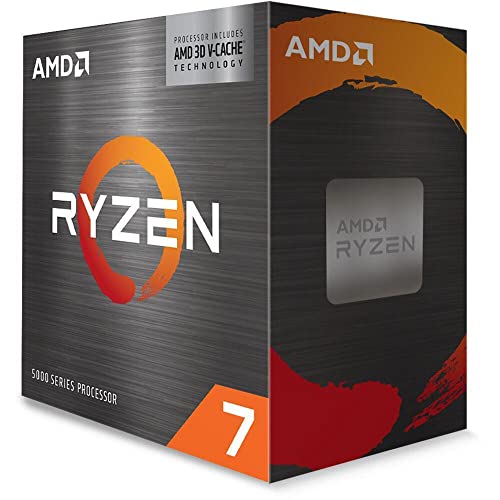
The 5800X3D is the fastest processor the AM4 socket will ever run, and it is still a simple drop-in. It shares the 5700X3D's 96 MB of 3D V-Cache but clocks higher, 3.4 GHz base and 4.5 GHz boost, which puts it roughly 8% ahead in games. If you are keeping your board and want the absolute ceiling of AM4 gaming performance, this is the chip that delivers it. That ceiling is also the answer to the question AM4 owners ask next, because a 9800X3D will not work on a B550 motherboard and the 5800X3D is where the socket actually tops out.
Like the 5700X3D it reuses your board, memory, and cooler, so the only thing you are buying is the processor. It was the halo AM4 gaming chip for years and it still holds up against far newer parts in cache-heavy titles.
What you give up
The problem is value. The 5800X3D costs meaningfully more than the 5700X3D for that 6 to 10% gap, so the price per frame usually favors the cheaper chip. It only makes sense when the gap between the two has narrowed.
It is also the same dead-end platform and the same possible BIOS-update step. You are paying a premium for the last chip on a socket that has nowhere left to go. Intel owners face a near-identical decision, which we work through in the i5-12400F upgrade question.
Who it's for
Buy the 5800X3D if you are committed to AM4, want the most gaming performance the socket can hold, and treat this as the final CPU the machine will ever run. Otherwise the 5700X3D gets you almost all the way for less.
Best Premium: AMD Ryzen 7 9800X3D
Specs
Cores / threads | 8 / 16 |
Base / boost | 4.7 / 5.2 GHz |
L3 cache | 96 MB (2nd-gen 3D V-Cache) |
TDP | 120 W |
Socket | AM5 |
Memory | DDR5-5600 |
Upgrade type | New platform (board + DDR5) |
Cores / threads
8 / 16
Base / boost
4.7 / 5.2 GHz
L3 cache
96 MB (2nd-gen 3D V-Cache)
TDP
120 W
Socket
AM5
Memory
DDR5-5600
Upgrade type
New platform (board + DDR5)
What it does well
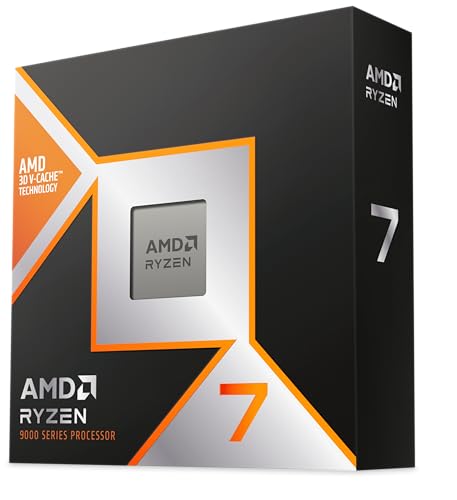
The 9800X3D is the fastest gaming CPU you can buy, full stop. Its second-generation 3D V-Cache sits under the compute cores rather than on top, so it clocks much higher than earlier X3D chips while keeping the cache advantage, 4.7 GHz base and 5.2 GHz boost. Against the 7800X3D it is about 14% faster on average, and more in the most CPU-bound games. It is also a capable all-rounder, so it handles content work better than the older cache chips.
Because it is an AM5 part, it comes with the newest platform: DDR5, PCIe 5.0, and an upgrade path that runs for years. If you want to build once and not think about the CPU again for a long time, this is the pick with the most runway. Our look at how the 7800X3D compares to the 9800X3D covers the generational gap in detail.
What you give up
The chip is the smallest part of this decision. Choosing the 9800X3D means buying an AM5 motherboard, a DDR5 memory kit, and likely a new cooler bracket, so the real cost of this path is well above any drop-in option. Budget for the platform, not the sticker.
And the performance you are paying for is easiest to see at lower resolutions. At 1440p and especially 4K, where the graphics card does more of the work, the gap over a 7800X3D shrinks, sometimes to nothing. The same logic runs the other way on an older card: the best CPU for an RTX 3060 stops well short of X3D money, because the card runs out of headroom before the chip does.
Who it's for
The 9800X3D is for the 5600 owner who is ready to rebuild and wants maximum longevity and the best 1% lows under load, especially for cache-hungry games or a high-refresh 1080p or 1440p setup where the extra frames land. If the newer refresh is tempting you instead, whether the 9850X3D is worth it over the 9800X3D comes down to about 3 percent and a warmer package.
Best Budget: AMD Ryzen 5 7600
Specs
Cores / threads | 6 / 12 |
Base / boost | 3.8 / 5.1 GHz |
L3 cache | 32 MB |
TDP | 65 W |
Socket | AM5 |
Memory | DDR5-5200 |
Upgrade type | New platform (board + DDR5) |
Cores / threads
6 / 12
Base / boost
3.8 / 5.1 GHz
L3 cache
32 MB
TDP
65 W
Socket
AM5
Memory
DDR5-5200
Upgrade type
New platform (board + DDR5)
What it does well
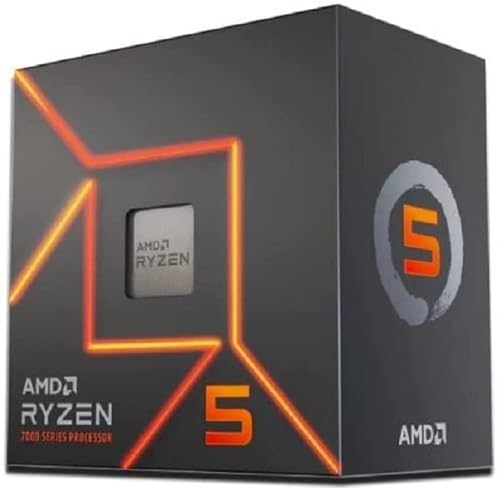
The 7600 is the cheapest way onto AM5, and that is its real value. It is a modern six-core Zen 4 chip that boosts to 5.1 GHz, sips power at 65 W, and even ships with a cooler in the box. Coming from a 5600 it is a clear step up in both games and everyday responsiveness, and because it sits on AM5 you can later drop in a 7800X3D or something newer on the same board.
For a builder who wants the platform runway but does not want to spend flagship money today, the 7600 is the sensible on-ramp. Pair it with an affordable B650 motherboard and a DDR5 kit and you have a machine you can keep upgrading.
What you give up
The 7600 has no 3D V-Cache, and that matters. In the cache-bound games where your 5600 struggled the most, a same-price drop-in 5700X3D can match or beat it, so as a pure gaming upgrade it is not always the strongest use of the money.
You are also still buying a board and DDR5 on top of the chip, so even though the processor is inexpensive, the total spend lands well above a drop-in. This pick is about where the platform can go, not about raw value today.
Who it's for
The 7600 is for the 5600 owner who has decided to move to AM5 but wants to spend the least now and add a faster CPU later. If you are not planning that future upgrade, look hard at the drop-in chips first.
Editor's Pick: AMD Ryzen 7 7800X3D

Specs
Cores / threads | 8 / 16 |
Base / boost | 4.2 / 5.0 GHz |
L3 cache | 96 MB (3D V-Cache) |
TDP | 120 W |
Socket | AM5 |
Memory | DDR5-5200 |
Upgrade type | New platform (board + DDR5) |
Cores / threads
8 / 16
Base / boost
4.2 / 5.0 GHz
L3 cache
96 MB (3D V-Cache)
TDP
120 W
Socket
AM5
Memory
DDR5-5200
Upgrade type
New platform (board + DDR5)
What it does well
If you have decided to jump to AM5, the 7800X3D is the chip most people should buy. It has the same 96 MB of first-generation 3D V-Cache that made it a gaming favorite, and it delivers the large majority of the 9800X3D's frame rate for less money on the same long-lived platform. Years after launch it is still one of the best gaming CPUs you can buy.
It gives you the full AM5 package, DDR5 and a multi-year upgrade path, without paying the flagship premium. For a rebuild centered on gaming, it hits the sweet spot between cost and performance more cleanly than anything else here.
What you give up
Its clocks are lower than the 9800X3D's, so it trails in non-gaming multithreaded work and leaves a little future headroom on the table. In games the gap is around 14% at the resolutions where it shows up at all, and it narrows as you climb to 1440p and 4K.
And like every AM5 pick, the chip is only part of the bill. You are still buying a board and a DDR5 kit, so weigh the total against a drop-in before you commit.
Who it's for
The 7800X3D is for the 5600 owner rebuilding on AM5 who wants near-flagship gaming without paying flagship prices, and who values the platform runway over squeezing out the final few percent.
Bottom line
If you want the most gaming performance per dollar and you are happy to keep your current board, buy the Ryzen 7 5700X3D. It is the cleanest upgrade a 5600 owner can make. If you want to max out AM4 and never rebuild, step up to the 5800X3D when its price is close.
If you are ready to move platforms, the Ryzen 7 7800X3D is the gaming sweet spot, the 9800X3D is the longest-runway flagship, and the 7600 gets you onto AM5 for the least money with room to upgrade later. Pick the path first, then the chip.
FAQ
Is the Ryzen 7 5700X3D a worthwhile upgrade from a Ryzen 5 5600?
Yes. For gaming it is one of the best-value upgrades available. In CPU-bound games reviewers measured the 5700X3D landing roughly a third ahead of the 5600, thanks to its 96 MB of 3D V-Cache. Because it uses the same AM4 socket and DDR4 memory, you keep your board, RAM, and usually your cooler, so the whole upgrade is a single part. If your games lean on the processor and you do not want to rebuild, it is the obvious choice.
Do I need a new motherboard to upgrade from a Ryzen 5 5600?
Not if you stay on AM4. The 5700X3D and 5800X3D drop straight into the B450, B550, or X570 board your 5600 already lives in, so no new motherboard is required. You only need a new board if you move to AM5 for a chip like the 7600, 7800X3D, or 9800X3D, and in that case you also need DDR5 memory. That platform cost is the main thing separating the two upgrade paths.
Will I need a BIOS update to install a 5700X3D or 5800X3D on my current board?
Often, yes. Many AM4 boards made before 2024 need a BIOS update to recognize the X3D chips. If your board shipped before those CPUs existed, update to the latest BIOS before swapping. Boards with a BIOS flashback feature can update without any CPU installed. Otherwise, keep your 5600 handy to boot, flash the BIOS, then install the new chip. Check your motherboard maker's support page for the exact version that adds support.
Is it worth jumping to AM5 with a 7800X3D instead of staying on AM4?
It depends on your horizon. Staying on AM4 with a 5700X3D or 5800X3D is cheaper because you only buy the chip. Jumping to AM5 with a 7800X3D costs more up front since you add a motherboard and DDR5, but it puts you on a platform AMD supports into 2027 and beyond, so you can upgrade the CPU again later. If you plan to keep this machine for years and keep improving it, the AM5 path is worth it. If you just want more frames now, the drop-in is smarter.
Does the Ryzen 5 5600 bottleneck modern GPUs?
It can, especially in CPU-heavy games and at lower resolutions where the graphics card is waiting on the processor. With a strong modern GPU at 1080p or high-refresh 1440p, a 5600 will often limit your frame rate in simulation, strategy, and open-world titles. At 4K the graphics card does more of the work, so the 5600 holds up better. Before upgrading, confirm the CPU is the limit rather than the GPU, since that tells you whether a CPU swap will help.
How much more does a full AM5 upgrade cost than a drop-in AM4 chip?
A drop-in AM4 chip is just the processor, since you reuse your board, memory, and cooler. A full AM5 upgrade adds two more parts: a new motherboard and a DDR5 memory kit, and sometimes a new cooler mount. That makes the AM5 path noticeably more expensive overall even when the CPU itself is cheap, which is exactly why a budget AM5 chip like the 7600 is not really a budget upgrade. What the extra spend buys is a platform with years of future upgrades, not just today's performance.
Related Articles

Best CPUs for Gaming in 2026: Top Picks for Every Budget
The best gaming CPUs for 2026 across every budget, from the Ryzen 5 7600X to the Ryzen 9 9950X3D, with full specs and clear buying advice for every tier.
Jul 8, 2026

Should You Upgrade Your GPU or CPU First for Gaming?
Should you upgrade your GPU or CPU first for gaming? Read your own usage data, then match your current GPU tier to the right upgrade. Clear 2026 picks for both.
Jun 26, 2026

Is the Ryzen 7 7800X3D Still Worth It in 2026 vs 9800X3D?
Is the Ryzen 7 7800X3D still worth it in 2026? With the 7700X3D now reviewed and the 9800X3D 7 to 13 percent ahead, here is who should buy and who should wait.
Aug 15, 2026

9800X3D vs 7800X3D (2026): 11% Average, 25% Where It Counts
9800X3D vs 7800X3D in 2026: an 11% average uplift, 25% in cache-heavy games, and which of four buyer profiles should actually pay the upgrade premium.
Sep 13, 2026

How to Choose a CPU and Motherboard
The buyer's framework for picking a CPU and motherboard pair: use case first, socket second, chip tier third, then the board class that matches.
May 17, 2026