Affiliate Disclosure: As an Amazon Associate we earn from qualifying purchases. Some links may earn us a commission at no cost to you.

Best CPU for Video Editing and Gaming: 5 Picks for 2026
The best CPU for video editing and gaming is the one that matches how your day actually splits between the timeline and the game. A 4K DaVinci Resolve project wants rendering cores, a 200-FPS CS2 session wants L3 cache, and the two pull in opposite directions. These five picks are ranked by that split. Each one carries a concrete hybrid profile, real rendering numbers alongside real gaming FPS, and an honest account of what you give up at that price.
The Ryzen 9 9950X3D is the first chip that doesn't force the tradeoff, but it costs more than most people's total CPU budget. The picks below run from that flagship down to a budget Zen 5 chip for casual creators.
Our top pick: AMD Ryzen 9 9950X3D
The 9950X3D is the only CPU on AM5 that gives you 16 Zen 5 cores, 3D V-Cache on the gaming CCD, and full productivity throughput without a bottleneck on either side. It matches the 9800X3D in gaming and beats the 9950X in rendering. The two-workload tradeoff, resolved.

Quick picks
Pick | CPU | Best for | Buy |
|---|---|---|---|
Best Overall | Balanced 50/50 creator-gamer | ||
Best Gaming-First | Gaming 70%, editing 30% | ||
Best Creator-First | Editing 70%, gaming 30% | ||
Best Pro Creator | Pro production + casual gaming | ||
Best Budget Hybrid | Budget entry creator-gamer |
Best Overall
- CPU
- Best for
Balanced 50/50 creator-gamer
- Buy
Best Gaming-First
- CPU
- Best for
Gaming 70%, editing 30%
- Buy
Best Creator-First
- CPU
- Best for
Editing 70%, gaming 30%
- Buy
Best Pro Creator
- CPU
- Best for
Pro production + casual gaming
- Buy
Best Budget Hybrid
- CPU
- Best for
Budget entry creator-gamer
- Buy
Specs at a glance
CPU | Cores | Boost | TDP | Socket | Price |
|---|---|---|---|---|---|
16C / 32T | 5.7 GHz | 170W | AM5 | ||
8C / 16T | 5.2 GHz | 120W | AM5 | ||
24C / 24T | 5.7 GHz | 250W MTP | LGA1851 | ||
16C / 32T | 5.7 GHz | 170W | AM5 | ||
8C / 16T | 5.5 GHz | 65W | AM5 |
- Cores
16C / 32T
- Boost
5.7 GHz
- TDP
170W
- Socket
AM5
- Price
- Cores
8C / 16T
- Boost
5.2 GHz
- TDP
120W
- Socket
AM5
- Price
- Cores
24C / 24T
- Boost
5.7 GHz
- TDP
250W MTP
- Socket
LGA1851
- Price
- Cores
16C / 32T
- Boost
5.7 GHz
- TDP
170W
- Socket
AM5
- Price
- Cores
8C / 16T
- Boost
5.5 GHz
- TDP
65W
- Socket
AM5
- Price
Benchmarks
- Ryzen 9 9950X3D145 FPS
- Ryzen 7 9800X3D145 FPS
- Core Ultra 9 285K130 FPS
- Ryzen 9 9950X128 FPS
- Ryzen 7 9700X126 FPS
- Ryzen 9 9950X3D680 FPS
- Ryzen 7 9800X3D680 FPS
- Ryzen 9 9950X520 FPS
- Core Ultra 9 285K498 FPS
- Ryzen 7 9700X312 FPS
- Ryzen 7 9800X3D70 FPS
- Ryzen 9 9950X3D68 FPS
- Ryzen 9 9950X55 FPS
- Core Ultra 9 285K52 FPS
- Ryzen 7 9700X48 FPS
- Ryzen 9 9950X3D135 FPS
- Ryzen 7 9800X3D134 FPS
- Ryzen 7 9700X133 FPS
- Ryzen 9 9950X125 FPS
- Core Ultra 9 285K120 FPS
- Ryzen 9 9950X3D195 FPS
- Ryzen 7 9800X3D194 FPS
- Ryzen 9 9950X150 FPS
- Core Ultra 9 285K145 FPS
- Ryzen 7 9700X140 FPS
- Core Ultra 9 285K18753 score
- Ryzen 9 9950X16960 score
- Ryzen 9 9950X3D11800 score
- Ryzen 7 9800X3D10200 score
- Ryzen 7 9700X8800 score
- Ryzen 9 9950X3D26220 points
- Ryzen 9 9950X26093 points
- Ryzen 7 9700X25587 points
- Core Ultra 9 285K24000 points
- Ryzen 7 9800X3D22260 points
How we picked
The core question for a creator-gamer build is whether your bottleneck is rendering cores or cache. Video editing and rendering workloads scale with core count and sustained boost frequency. Cache-hungry gaming workloads (flight sims, strategy late-game, competitive shooters at 1080p) scale with L3 cache. The two ask for opposite things.
For a long time, getting both in one chip meant buying a 16-core workstation CPU and accepting worse gaming, or buying an X3D gaming chip and accepting slower exports. The 9950X3D changes that calculus at the top end by stacking 3D V-Cache on one CCD of a 16-core Zen 5 chip. Whether that premium is worth it depends on your split. We used five ratio profiles to define each slot: balanced 50/50, gaming-first (70/30), creator-first (30/70), serious production with casual gaming, and budget hybrid.
Rendering data comes from Puget Systems (Premiere Pro), GamersNexus, and OSHKO (Blender/Cinebench). Gaming data comes from GamersNexus and Tom's Hardware. We used a basket of six titles weighted toward cache-sensitive scenarios (MSFS 2024, CS2, Total War: Warhammer 3) alongside mainstream AAA (Cyberpunk 2077, Black Myth: Wukong) to give X3D chips their best test surface. A chip that wins in AAA but loses in sims and competitive titles doesn't earn the creator-gamer premium. The 9950X3D earns it. The 285K earns it specifically for Premiere Pro users. The others each represent a real trade.
Platform pairing matters here more than it does in a pure gaming article. The 9950X3D and 9950X both pull 170W sustained under Premiere Pro workloads. Both need a B850-class board with quality VRM (MSI B850 Tomahawk MAX, Asus TUF B850-Plus, Gigabyte B850 Aorus Elite) to avoid clock throttling on long renders. The 285K needs a Z890 board at minimum, which adds to the platform cost. The 9800X3D and 9700X work fine on a B650 board without drama.
How many cores you actually need
Core count is the first thing creator-gaming buyers over-buy. For 1080p and 1440p timelines in Premiere Pro or DaVinci Resolve with light grading, eight Zen 5 cores clear a 20-minute export without drama. 4K multicam, AI noise reduction, Fusion compositing and Blender scenes are where 12 and 16 cores stop being vanity and start cutting real minutes off a render.
Hardware encoding changes the math on delivery. If your output is H.264 or H.265, QuickSync on the 285K and NVENC on your GPU take the encode pass off the CPU, which flattens the gap between an 8-core and a 16-core chip at export. If your output is ProRes, DNxHR, or a CPU-bound Blender render, no encoder rescues you and the core count carries the whole load. The GPU side of that split deserves the same scrutiny: our best GPUs for content creation guide maps cards by workload, so you can size VRAM to your heaviest render instead of your frame rate.
The gaming half rarely wants more cores at all. Past eight cores, frame rates track L3 cache and boost clock rather than core count. That is why the 9800X3D and the 9950X3D post the same 1440p numbers, and why buying 16 cores for gaming alone spends money on the wrong axis.
Best Overall: AMD Ryzen 9 9950X3D
Specs
Cores / Threads | 16C / 32T |
Boost Clock | 5.7 GHz |
TDP | 170W |
L3 Cache | 128 MB (64 MB 3D V-Cache) |
Socket | AM5 |
Memory Support | DDR5-6000 (EXPO) |
Architecture | Zen 5 / Zen 5X3D |
Cores / Threads
16C / 32T
Boost Clock
5.7 GHz
TDP
170W
L3 Cache
128 MB (64 MB 3D V-Cache)
Socket
AM5
Memory Support
DDR5-6000 (EXPO)
Architecture
Zen 5 / Zen 5X3D
What it does well
The second-generation 3D V-Cache implementation on the 9950X3D ended the scheduling problem that plagued the 7950X3D. The older chip required the OS to park workloads on the correct CCD, and getting that wrong in gaming was a significant FPS penalty. The 9950X3D handles it automatically. You configure the BIOS once and forget it.
In gaming, the 9950X3D matches the 9800X3D in virtually every title at 1440p. The two V-Cache chips are within margin across AAA gaming; the 9800X3D sometimes edges ahead in pure single-CCD cache density for flight sims like MSFS 2024, but the 9950X3D stays close enough that the gaming performance is not a meaningful concession. It leads the 285K by 37% in CS2 at 1080p competitive and outpaces it significantly in cache-sensitive simulation titles.
On the production side, Puget Systems measured the 9950X3D at roughly 5.8% faster than the 9950X in Premiere Pro and essentially tied in Blender CPU rendering. That's a modest gap over the 9950X in raw throughput terms, but the 9950X costs less. You're paying for the V-Cache gaming uplift, not a huge rendering speed jump. If you need the gaming performance AND the 16-core production throughput in one chip, there is no other option on AM5. See our Ryzen 9 9950X vs Ryzen 7 9800X3D comparison if you are deciding between the cores-first and cache-first approach.
What you give up
The price is real. The 9950X3D sits at the top of the consumer AM5 stack. Compared to the 9950X, you are paying a meaningful premium for a 4-5% rendering improvement and a large gaming improvement. If you game casually at 1440p with a mainstream GPU, that gaming improvement won't be visible in most titles where the GPU is the bottleneck.
The chip also needs proper board support. Under 170W sustained loads during Premiere Pro renders, cheaper B650 boards have shown clock-speed drops in user testing. The MSI B850 Tomahawk MAX or an equivalent board at the B850/X870 tier is the correct pairing. That adds to the total platform cost. Budget the board separately from the CPU.
Who it's for
The 9950X3D is for the person who edits 4K or 6K footage for hours daily in DaVinci Resolve or Premiere Pro and games seriously the rest of the time, particularly in cache-hungry titles: flight sims, strategy games, competitive shooters at 1080p high-refresh. If either of those halves is casual, one of the cheaper picks covers you at lower total cost.
Best Gaming-First Creator: AMD Ryzen 7 9800X3D
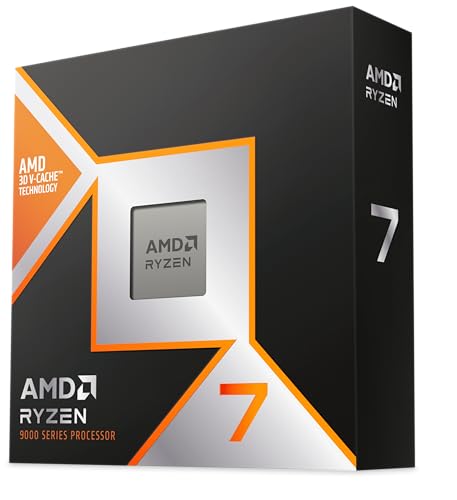
Specs
Cores / Threads | 8C / 16T |
Boost Clock | 5.2 GHz |
TDP | 120W |
L3 Cache | 96 MB (64 MB 3D V-Cache) |
Socket | AM5 |
Memory Support | DDR5-6000 (EXPO) |
Architecture | Zen 5X3D |
Cores / Threads
8C / 16T
Boost Clock
5.2 GHz
TDP
120W
L3 Cache
96 MB (64 MB 3D V-Cache)
Socket
AM5
Memory Support
DDR5-6000 (EXPO)
Architecture
Zen 5X3D
What it does well
At 1440p, the 9800X3D and 9950X3D are functionally identical. Both chips run the same V-Cache CCD and post the same gaming numbers in the vast majority of titles. In MSFS 2024 and other cache-dense simulations, the 9800X3D's single-CCD architecture occasionally pulls a few FPS ahead of the 9950X3D because every byte of cache is in one place with no second CCD to route around. For a gaming-first buyer, the 9800X3D delivers the 9950X3D's gaming performance at a lower price point.
The 120W TDP is also a genuine advantage in compact builds. Where the 9950X3D and 9950X both pull 170W under sustained render loads, the 9800X3D runs comfortably on any modern B650 or B850 board without needing premium VRM configurations. A Thermalright Peerless Assassin or similar air cooler handles it without strain. That matters in mATX and mini-ITX builds.
For the casual editing side of a gaming-first hybrid, the 9800X3D is fine. YouTube content, short-form cuts, 1080p or light 1440p export in Premiere Pro or DaVinci Resolve on shorter timelines runs without noticeable slowdown. The 8-core ceiling is real on long 4K export jobs, but if those jobs are not part of your daily workflow, the 9800X3D gets the task done and sends you back to the game.
What you give up
The 8-core count is the wall. A 20-minute 4K timeline in DaVinci Resolve on a project with AI noise reduction, Fusion VFX, or multiple correction nodes on every clip will show genuine time-delta versus the 16-core picks. The 9800X3D posts roughly 30-50% lower scores in sustained all-core rendering compared to the 9950X3D or 9950X. For a producer or video editor who delivers multiple 4K projects per week, this concession adds up fast. Dense multi-track Premiere Pro sessions with heavy correction stacks show latency that the 16-core chips handle smoothly.
There is also no path to more cores on the same chip. The 9800X3D is the gaming pick. If your editing ambitions grow, you are looking at a platform upgrade, not a CPU swap.
Who it's for
The 9800X3D is the right pick when gaming is 70% of your time and editing is 30%. The editing half is YouTube uploads, short-form content, or casual cuts under 30 minutes at 1080p or 1440p. The gaming half is serious, including cache-hungry titles like flight sims or competitive 1080p. For a 1440p or 4K gaming rig paired with a mid-to-high-end GPU, this chip is the standard recommendation. Check the Ryzen 7 9700X vs Ryzen 7 9800X3D comparison if you are deciding whether the X3D premium is worth it at your budget.
Best Creator-First: Intel Core Ultra 9 285K

Specs
Cores / Threads | 24C (8P+16E) / 24T |
P-Core Boost | 5.7 GHz |
TDP | 125W PBP / 250W MTP |
L3 Cache | 36 MB |
Socket | LGA1851 |
Memory Support | DDR5-6400 |
Architecture | Arrow Lake (Lion Cove + Skymont) |
Cores / Threads
24C (8P+16E) / 24T
P-Core Boost
5.7 GHz
TDP
125W PBP / 250W MTP
L3 Cache
36 MB
Socket
LGA1851
Memory Support
DDR5-6400
Architecture
Arrow Lake (Lion Cove + Skymont)
What it does well
In Adobe Premiere Pro, the 285K scored 18,753 on the Puget Systems benchmark compared to roughly 16,960 for the 9950X. That is an 11% lead in the industry's most-watched production benchmark, and the gap is largest in export-heavy workflows where QuickSync hardware encoding applies. Intel's QuickSync H.264 and H.265 encode is still faster than AMD's encoder when Adobe can use it. For a creator who lives inside Premiere Pro and exports multiple H.264 or H.265 deliverables per day, the time savings compound over a month of work.
The 24-core P+E hybrid architecture also handles parallel desktop loads well. Background tasks running alongside a Premiere Pro export (browser, Slack, audio monitoring) do not create the CPU contention that an 8-core chip can surface under heavy sustained load. Arrow Lake's E-cores were specifically tuned for this kind of background-task offloading, and the in-practice result for a working creator is a smoother studio experience during export.
For gaming at 1440p and 4K in mainstream AAA titles, the 285K performs well. Cyberpunk 2077, Black Myth: Wukong, and similarly GPU-bound titles show modest deltas between the 285K and the AMD chips. At these resolutions with a high-end GPU, you are GPU-limited most of the time and the CPU choice matters less. See our Core Ultra 9 285K vs Ryzen 9 9950X3D head-to-head for the full comparison.
What you give up
Cache-sensitive gaming is where the 285K concedes. CS2 at 1080p competitive shows the 285K posting around 498 FPS compared to 680 FPS for the V-Cache chips, a gap of roughly 37%. Total War: Warhammer 3 late-game battle benchmarks show a similar magnitude. Flight sims like MSFS 2024 are highly cache-sensitive and the 285K trails meaningfully in those scenarios. If any significant portion of your gaming time is in sims, strategy late-game, or high-FPS competitive play at 1080p, this chip will frustrate you in those specific titles.
Arrow Lake also dropped Intel's Hyper-Threading. Each core runs one thread, not two. Some older rendering pipelines and legacy workloads that scaled well with SMT show regression compared to 13th or 14th-gen Intel. Adobe has mitigated this substantially, but if your workflow includes tools outside the major NLEs, test before committing to the platform.
The platform cost is higher. LGA1851 requires a Z890 board for full performance. A quality Z890 option (MSI Z890 Tomahawk WiFi, Asus ROG Strix Z890-A) runs higher than an equivalent AM5 B850 board. LGA1851 also has no confirmed successor socket, which reduces upgrade runway compared to AM5's stated roadmap through 2027.
Who it's for
The 285K is the right pick when your daily workflow is 4K editing in Premiere Pro or After Effects with regular H.264 or H.265 deliverables, and your gaming is mainstream AAA at 1440p or 4K rather than competitive 1080p or simulation titles. If you rely on QuickSync to hit delivery timelines, the 285K earns its platform premium through faster exports.
Best Premium Pro Creator: AMD Ryzen 9 9950X

Specs
Cores / Threads | 16C / 32T |
Boost Clock | 5.7 GHz |
TDP | 170W |
L3 Cache | 64 MB |
Socket | AM5 |
Memory Support | DDR5-6000 (EXPO) |
Architecture | Zen 5 |
Cores / Threads
16C / 32T
Boost Clock
5.7 GHz
TDP
170W
L3 Cache
64 MB
Socket
AM5
Memory Support
DDR5-6000 (EXPO)
Architecture
Zen 5
What it does well
In sustained all-core rendering, the 9950X and the 9950X3D are within 3-4% of each other. Blender CPU rendering scores them essentially tied: 26,093 points for the 9950X versus 26,220 for the 9950X3D in the BMW benchmark. DaVinci Resolve color grading and Premiere Pro timelines show a similar pattern, with the 9950X3D ahead by a small margin that most editors would not feel on a per-project basis. If you are billing by the hour on production work, that difference is not where your time goes.
The 9950X is on AM5, which means the same socket commitment as every other AMD pick on this list, the same DDR5-6000 EXPO memory tuning, and the same upgrade path through AMD's platform roadmap. If your budget doesn't stretch to the 9950X3D premium and your workflow is production-first, the 9950X is where the spending stops making sense to increase.
What you give up
Gaming is the concession. Without 3D V-Cache, the 9950X is a solid mainstream gaming CPU but not a competitive one in cache-hungry titles. CS2 at 1080p competitive posts around 520 FPS, a 25% gap versus the V-Cache chips. Total War: Warhammer 3 and MSFS 2024 show similar magnitude gaps. If your gaming sessions skew toward simulation, strategy, or high-refresh competitive play, the 9950X will underperform your GPU's capability in those specific titles.
Like the 9950X3D, this chip needs a B850 or X870 board with proper VRM heatsink coverage for sustained 170W loads. The board requirement is identical to the 9950X3D tier, so you are not saving on the platform side.
Who it's for
The 9950X is the right pick for the semi-professional creator who delivers multiple 4K projects per week, renders Blender scenes regularly for motion graphics or archvis, and games casually in the evenings on story games or strategy at 1440p. The buyer who comes to this article from the production side and plays games for unwinding rather than competing. For the streaming-focused creator-gamer, also check Best CPUs for Streaming and Gaming for a streaming-anchored pick set.
Best Budget Hybrid: AMD Ryzen 7 9700X

Specs
Cores / Threads | 8C / 16T |
Boost Clock | 5.5 GHz |
TDP | 65W (88W PPT) |
L3 Cache | 32 MB |
Socket | AM5 |
Memory Support | DDR5-6000 (EXPO) |
Architecture | Zen 5 |
Cores / Threads
8C / 16T
Boost Clock
5.5 GHz
TDP
65W (88W PPT)
L3 Cache
32 MB
Socket
AM5
Memory Support
DDR5-6000 (EXPO)
Architecture
Zen 5
What it does well
The 9700X runs at 65W TDP by default, which is unusually efficient for a Zen 5 chip. On a B650 or B850 board with a mid-range air cooler, it runs cool and quiet under the kind of mixed workloads (rendering, browsing, gaming) that define a creator-gamer's daily use. No premium thermal solution required.
At 1440p with a discrete GPU, the gap between the 9700X and the 9800X3D in gaming shrinks to 2-5% in most titles. GPU-bound scenes equalize the chips, and at resolutions above 1080p the majority of AAA titles are GPU-bound. The 9700X at 1440p paired with a 4070 Super or 4080 delivers a gaming experience that is not meaningfully different from what the X3D chip provides in those titles.
One important caveat: the 9700X's default 65W TDP is conservative. Enabling PBO (Precision Boost Overdrive) in the BIOS unlocks 30-40% more multi-core performance in rendering workloads at the cost of higher power and temperature. Out of the box, the chip leaves performance on the table in editing tasks. For a creator-focused buyer, enabling PBO is the first BIOS change to make.
What you give up
The 9700X has no 3D V-Cache, so cache-sensitive titles show the gap: 312 FPS in CS2 at 1080p competitive versus 680 for the V-Cache chips, a difference of roughly 15-25% depending on the title and resolution. MSFS 2024 and Total War: Warhammer 3 will run, but both titles show meaningful frame-rate and frame-time gaps versus the X3D chips at CPU-bound settings.
Eight cores without 3D V-Cache is also the ceiling on ambitious editing workflows. A 30-minute 4K timeline with AI noise reduction or heavy Fusion compositing will be noticeably slower than the 16-core picks on export. The 9700X is for the person whose editing workload is manageable inside those 8 cores, not for the person who is processing long-form 4K on a daily production schedule. If your ambitions grow, the upgrade path is a new CPU on the same AM5 board.
Who it's for
The 9700X is for the person building their first serious creator-gaming hybrid at a budget that still needs room for a good GPU. Edits YouTube content or short-form video a few times a week. Games the rest of the time at 1440p 144Hz with a 4070 or equivalent. The AM5 platform means the socket is reusable when upgrading to a better chip later. For a full comparison of the CPU tier decision, see Best CPUs for Gaming: Every Budget.
Bottom line
If you split time equally between the timeline and the game, the AMD Ryzen 9 9950X3D is the chip that stops forcing the choice. If gaming is most of your time and editing is occasional, the AMD Ryzen 7 9800X3D delivers identical gaming performance at a lower price point. If your workflow is Premiere Pro with regular H.264 or H.265 deliverables and gaming is secondary, the Intel Core Ultra 9 285K leads in Adobe's benchmark and earns its platform premium through QuickSync export speed. If you do serious production work but game casually, the AMD Ryzen 9 9950X matches the 9950X3D in rendering within a few percent and costs less. If you are building your first creator-gaming hybrid at a mainstream budget, the AMD Ryzen 7 9700X is the AM5 entry point that handles both without bottlenecking either half at 1440p.
FAQ
Is the Ryzen 9 9950X3D worth it for video editing if I mostly game?
If gaming is 70% or more of your time, the 9800X3D matches the 9950X3D in gaming at 1440p while costing significantly less. The 9950X3D's premium is justified when you genuinely split time between heavy 4K production work and serious gaming, particularly in cache-sensitive titles like flight sims or competitive shooters at 1080p. For a gaming-first buyer who edits occasionally, the 9800X3D is the more efficient choice and leaves budget for a better GPU.
Does the Core Ultra 9 285K beat AMD for Premiere Pro?
In Puget Systems benchmarking, the 285K scored approximately 18,753 versus roughly 16,960 for the Ryzen 9 9950X, a lead of about 11%. The advantage is largest in export workflows where Adobe can leverage Intel's QuickSync hardware encode for H.264 and H.265. If your production pipeline relies on fast H.264 or H.265 deliverables, the 285K is the Premiere Pro leader in this group. In Blender CPU rendering and DaVinci Resolve color work, the gap narrows and the AMD 16-core chips close the distance.
Can the Ryzen 7 9800X3D handle 4K video editing?
Yes, for moderate workloads. Shorter 4K timelines, YouTube uploads, short-form social content, and projects without heavy AI noise reduction or complex Fusion compositing run without obvious bottlenecks. Where the 8-core count shows its ceiling is on long-form 4K projects with dense correction stacks. A 20-minute 4K timeline with AI-heavy tools will export noticeably slower than a 16-core chip. If 4K export speed matters daily, the 9950X or 9950X3D is the right tier. If editing is occasional and gaming is primary, the 9800X3D handles it.
What CPU should I pair with an RTX 4080 or 4090 for a creator build?
At 4K with a 4090, the GPU bottleneck equalizes most gaming scenarios and CPU choice matters less for pure AAA frame rates. In that case, lean toward the CPU that wins your production workload: the 285K for Premiere Pro export, the 9950X3D for the combination, the 9950X for rendering-heavy work without gaming emphasis. At 1440p or in cache-sensitive gaming, the X3D chips show their advantage even with a top-tier GPU. For creator builds, prioritize which workload you care about more and match the pick to that.
Is AM5 or Intel's LGA1851 platform better for future-proofing a video editing rig?
AM5 has AMD's public commitment through 2027 with new CPU generations expected on the same socket. LGA1851 currently has no confirmed successor socket announced. That makes AM5 the stronger platform bet for a buyer who wants to upgrade the CPU in three years without changing the motherboard. The 285K earns its LGA1851 platform cost in production performance today, but the upgrade runway is shorter. For a build you plan to iterate on, AM5 is the more defensible choice.
How many cores do I need for 4K editing in DaVinci Resolve?
For casual to moderate 4K work (short-form content, YouTube at 30 or 60fps, projects under 30 minutes without heavy effects), 8 cores handles the job. The 9700X and 9800X3D both edit 4K without complaint on those terms. For professional production workflows with long timelines, AI noise reduction, heavy color grading, or simultaneous audio and video correction on complex projects, 16 cores makes a measurable difference in render and export times. The 9950X and 9950X3D are the tier where production work at scale runs without hitting the core-count ceiling.
Related Articles

Core Ultra 9 285K vs Ryzen 9 9950X3D: Which Flagship Wins?
Intel's 24-core Arrow Lake flagship versus AMD's 16-core X3D flagship, by workload. Pick by gaming, productivity, platform longevity, or QuickSync need.
May 17, 2026

Ryzen 9 9950X vs 9800X3D (2026): 16 Cores or 3D V-Cache?
Ryzen 9 9950X vs 9800X3D: the 9800X3D wins cache-heavy games by 15 to 25%, the 9950X wins renders and streaming. Find your build in one scenario table.
Oct 6, 2026

Best CPU for 1440p Gaming (2026): 5 Picks by GPU Tier
The best CPU for 1440p gaming in 2026 depends on your GPU. Match a chip to a 5070, 9070 XT or 5080, and see when the 9800X3D is overkill and the 9700X wins.
Oct 2, 2026

Best CPUs for Streaming and Gaming (2026): 5 NVENC Picks
Best CPUs for streaming and gaming in 2026: 5 picks from 6 to 16 cores. Your GPU handles NVENC encoding, so eight good cores beat a 16-core flagship CPU.
Aug 24, 2026

Ryzen 7 9700X vs 9800X3D (2026): A 2% to 18% Gaming Gap
Ryzen 7 9700X vs 9800X3D: the X3D leads by 2% to 18% across 8 games. See which libraries earn the cache premium and when the 9700X plus a better GPU wins.
Oct 14, 2026