Affiliate Disclosure: As an Amazon Associate we earn from qualifying purchases. Some links may earn us a commission at no cost to you.

Best Monitor for RTX 4060 (2026): 1080p and 1440p Picks
The RTX 4060 is a 1080p card with an 8GB frame buffer, and the right monitor follows from that. In Counter-Strike and Diablo IV it runs well past 200 fps. In heavy AAA games it lands between roughly 55 and 90 fps at 1080p. A 1080p panel at 180Hz covers both ends of that range without wasting money on refresh the card never fills.
Four of the five picks below are 1080p panels, sorted by what the card can saturate. Two are 1440p, and both only make sense if you run DLSS by default in anything modern.
Our top pick: MSI MAG 256F
The MSI MAG 256F is a 24.5 inch Rapid IPS panel running 1080p at 180Hz, which is the refresh tier the RTX 4060 fills across a mixed library, and it is one of the few panels at this tier with a height-adjustable stand.

Quick picks
Pick | Monitor | Panel and refresh | Best for | Buy |
|---|---|---|---|---|
Best Overall | 24.5" 1080p 180Hz Rapid IPS | Mixed shooters and AAA at full refresh | ||
Best Value | 27" 1440p 180Hz curved VA | The cheapest way into 1440p with DLSS | ||
Best Premium | 27" 1440p 180Hz IPS | DLSS-first players planning a GPU upgrade | ||
Best Budget | 24" 1080p 200Hz IPS | Tight display budgets that refuse to drop refresh | ||
Editor's Pick | 24" 1080p 240Hz Fast IPS | Esports-dominant playtime |
Best Overall
- Monitor
- Panel and refresh
24.5" 1080p 180Hz Rapid IPS
- Best for
Mixed shooters and AAA at full refresh
- Buy
Best Value
- Monitor
- Panel and refresh
27" 1440p 180Hz curved VA
- Best for
The cheapest way into 1440p with DLSS
- Buy
Best Premium
- Monitor
- Panel and refresh
27" 1440p 180Hz IPS
- Best for
DLSS-first players planning a GPU upgrade
- Buy
Best Budget
- Monitor
- Panel and refresh
24" 1080p 200Hz IPS
- Best for
Tight display budgets that refuse to drop refresh
- Buy
Editor's Pick
- Monitor
- Panel and refresh
24" 1080p 240Hz Fast IPS
- Best for
Esports-dominant playtime
- Buy
Specs at a glance
Monitor | Size | Resolution | Refresh rate | Panel | Response | Adaptive sync |
|---|---|---|---|---|---|---|
24.5 inch | 1920 x 1080 | 180Hz (48 to 180Hz VRR range) | Rapid IPS | 1ms GtG | Adaptive-Sync | |
27 inch, 1000R curve | 2560 x 1440 | 180Hz | VA | 1ms MBR | AMD FreeSync | |
27 inch | 2560 x 1440 | 180Hz (200Hz overclock) | IPS | 1ms GtG | NVIDIA G-SYNC Compatible, AMD FreeSync | |
23.8 inch | 1920 x 1080 | 200Hz | IPS | 0.3ms MPRT | NVIDIA G-SYNC Compatible | |
24 inch | 1920 x 1080 | 240Hz | Fast IPS | 0.3ms | G-SYNC Compatible, FreeSync Premium |
- Size
24.5 inch
- Resolution
1920 x 1080
- Refresh rate
180Hz (48 to 180Hz VRR range)
- Panel
Rapid IPS
- Response
1ms GtG
- Adaptive sync
Adaptive-Sync
- Size
27 inch, 1000R curve
- Resolution
2560 x 1440
- Refresh rate
180Hz
- Panel
VA
- Response
1ms MBR
- Adaptive sync
AMD FreeSync
- Size
27 inch
- Resolution
2560 x 1440
- Refresh rate
180Hz (200Hz overclock)
- Panel
IPS
- Response
1ms GtG
- Adaptive sync
NVIDIA G-SYNC Compatible, AMD FreeSync
- Size
23.8 inch
- Resolution
1920 x 1080
- Refresh rate
200Hz
- Panel
IPS
- Response
0.3ms MPRT
- Adaptive sync
NVIDIA G-SYNC Compatible
- Size
24 inch
- Resolution
1920 x 1080
- Refresh rate
240Hz
- Panel
Fast IPS
- Response
0.3ms
- Adaptive sync
G-SYNC Compatible, FreeSync Premium
Benchmarks
Average frame rates the RTX 4060 holds at 1080p in titles where a high-refresh panel earns its keep.
- 439 FPS
- 206 FPS
- 146 FPS
Average frame rates at 1080p in heavier games, where the card sits between 55 and 90 fps.
- 88 FPS
- 75 FPS
- 72 FPS
- 62 FPS
- 57 FPS
How we picked
Start from the card, not the panel. The benchmark tables above are the whole framework. In competitive titles the 4060 runs past 200 fps at 1080p, and in demanding single-player games it sits between 55 and 90. Every pick here is chosen to make one of those two ranges look good.
That makes 180Hz the default. It sits above the old 144Hz tier, costs almost nothing extra, and the variable refresh window on every pick covers the 60 to 90 fps band where the card spends its AAA time. If your hours live in Counter-Strike 2 and Valorant, 200 to 240Hz is the one place extra refresh pays off, and our 240Hz 1080p panels roundup goes deeper on that tier.
Resolution is the harder call. The 4060 carries 8GB of VRAM, and reports suggest the frame buffer, not raw shader throughput, is what caps it at 1440p in recent releases. Native 1440p in new games means trimming textures. With DLSS Quality on, the card renders internally near 1080p and outputs a sharper image, which is why the two 1440p picks are framed as DLSS panels. Our breakdown of whether 8GB of VRAM is enough covers where that ceiling bites.
Two things we skipped on purpose: 4K and 360Hz panels. The 4060 cannot feed either outside a handful of esports titles, and pairing it with a 1440p 240Hz panel wastes most of the panel. If you expect to upgrade soon, the RTX 5060 vs RTX 4060 comparison shows how much headroom the next tier adds, and the cluster guide on choosing a GPU and display together frames the pairing as one decision.
Best Overall: MSI MAG 256F
Specs
Size | 24.5 inch |
Resolution | 1920 x 1080 |
Refresh rate | 180Hz (48 to 180Hz VRR range) |
Panel | Rapid IPS |
Response | 1ms GtG |
Adaptive sync | Adaptive-Sync |
Inputs | DisplayPort 1.2a, 2x HDMI 2.0 |
Stand | Tilt, height adjustable |
Size
24.5 inch
Resolution
1920 x 1080
Refresh rate
180Hz (48 to 180Hz VRR range)
Panel
Rapid IPS
Response
1ms GtG
Adaptive sync
Adaptive-Sync
Inputs
DisplayPort 1.2a, 2x HDMI 2.0
Stand
Tilt, height adjustable
What it does well
This panel wins the slot by matching the card's output. 1080p at 180Hz is the ceiling the 4060 reaches in lighter games and approaches in titles like Warzone, and the 48 to 180Hz adaptive sync window keeps frame pacing smooth when heavy games drop into the 60s. Rapid IPS with a 1ms GtG rating holds motion clean at that refresh without the dark smear that VA panels show at this tier.
The stand is the other reason. Height adjustment is rare on 1080p 180Hz panels, and it matters more than any spec line once the monitor is on your desk every day. Rapid IPS also keeps colors consistent at an angle, which the budget VA panels this size do not.
What you give up
DisplayPort is listed as 1.2a on the US and UK datasheets, while the China datasheet lists 1.4. At 1080p 180Hz either version carries the full refresh, but it limits the panel's usefulness as a second screen behind a future GPU at higher refresh.
At 24.5 inches this is a smaller screen than the 27 inch picks, and color stops at a standard sRGB-class gamut. It is a gaming panel first, not a photo-editing one.
Who it's for
The 4060 owner who plays a mix of competitive shooters and single-player AAA at 1080p, wants one panel that is never the bottleneck, and values a stand that adjusts for height.
Best Value: LG UltraGear 27GS60QC-B

Specs
Size | 27 inch, 1000R curve |
Resolution | 2560 x 1440 |
Refresh rate | 180Hz |
Panel | VA |
Response | 1ms MBR |
Adaptive sync | AMD FreeSync |
HDR | HDR10 |
Inputs | DisplayPort, 2x HDMI |
Size
27 inch, 1000R curve
Resolution
2560 x 1440
Refresh rate
180Hz
Panel
VA
Response
1ms MBR
Adaptive sync
AMD FreeSync
HDR
HDR10
Inputs
DisplayPort, 2x HDMI
What it does well
This is the cheapest real route to 1440p in the roundup. QHD across 27 inches lands near 109 PPI, so desktop text, game UI and distant detail all sharpen visibly over any 1080p panel. VA contrast gives deeper blacks than the IPS picks, which shows in dark scenes in games like Cyberpunk 2077.
180Hz keeps the esports headroom intact. In Valorant and Counter-Strike the 4060 still runs well above 144 fps at native 1440p, so the refresh is used where it matters, and DLSS Quality covers the heavy games. If you want more 1440p options at this tier, our 1440p monitors on a budget list goes wider.
What you give up
VA is the trade. Dark transitions smear more than on the IPS picks, and the 1ms figure on the listing is a motion-blur-reduction number. Buyers have flagged that 1ms MBR, 0.3ms MPRT and 1ms GtG print identically on listings while measuring different things.
The 1000R curve is aggressive for a 27 inch screen. And the 8GB buffer makes native 1440p in new releases a settings negotiation, so plan on DLSS Quality as the default rather than the exception.
Who it's for
The reader who wants 1440p sharpness on a tight budget, plays a lot of esports or older titles that run native at 1440p, and is happy to turn on DLSS everywhere else.
Best Premium: LG UltraGear 27GS75Q-B

Specs
Size | 27 inch |
Resolution | 2560 x 1440 |
Refresh rate | 180Hz (200Hz overclock) |
Panel | IPS |
Response | 1ms GtG |
Adaptive sync | NVIDIA G-SYNC Compatible, AMD FreeSync |
HDR | HDR10 |
Stand | Tilt, height, pivot |
Size
27 inch
Resolution
2560 x 1440
Refresh rate
180Hz (200Hz overclock)
Panel
IPS
Response
1ms GtG
Adaptive sync
NVIDIA G-SYNC Compatible, AMD FreeSync
HDR
HDR10
Stand
Tilt, height, pivot
What it does well
This is the flat IPS 1440p pick, and it earns the slot on panel quality. No VA smear, no curve, and 1ms GtG at 180Hz with a 200Hz overclock. G-SYNC Compatible certification carries more weight here than on the 1080p picks because the 4060 will spend real time under 60 fps at this resolution in heavy titles, and certified VRR keeps those dips smooth.
The stand tilts, adjusts for height and pivots, which makes this the one panel in the list you will not want to replace when the GPU changes. It is the monitor to buy once if the 4060 is a stop on the way to something faster, like the cards in our RTX 5060 Ti monitor pairings.
What you give up
The 4060 does not drive 1440p natively in demanding games. Expect DLSS Quality in everything modern and trimmed texture settings in the newest releases, since the frame buffer is the constraint. Part of what you pay for here is headroom for the next card.
HDR10 support is a spec-sheet entry rather than a real HDR experience. LG also sells the 27GS75QX-B alongside it with the same headline spec, so confirm the exact suffix before checkout.
Who it's for
The reader who plans a GPU upgrade inside two years, runs DLSS Quality by default today, and wants the monitor decision made once.
Best Budget: AOC 24G42HE
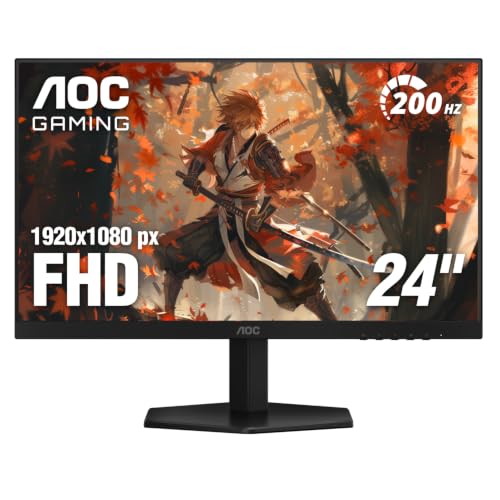
Specs
Size | 23.8 inch |
Resolution | 1920 x 1080 |
Refresh rate | 200Hz |
Panel | IPS |
Response | 0.3ms MPRT |
Adaptive sync | NVIDIA G-SYNC Compatible |
Inputs | HDMI 2.0, DisplayPort |
Size
23.8 inch
Resolution
1920 x 1080
Refresh rate
200Hz
Panel
IPS
Response
0.3ms MPRT
Adaptive sync
NVIDIA G-SYNC Compatible
Inputs
HDMI 2.0, DisplayPort
What it does well
The cheapest panel here still runs a higher refresh ceiling than the top pick. 200Hz on IPS with G-SYNC Compatible branding used to cost considerably more, and in esports titles where the 4060 clears 200 fps the extra headroom over 180Hz gets used.
IPS color is the other win. This tier used to belong to TN and VA panels with washed-out color or dark smear, and that matters when the whole build is priced around an entry-level card. For more panels in this class, see our 1080p gaming monitors roundup.
What you give up
Build quality is where the savings land: a tilt-only stand, light plastics and no speakers. The 0.3ms figure is MPRT, not GtG, so it says more about strobing than about pixel transitions.
AOC's naming at this tier is dense. The 24G42E, 24G42HE and C24G42E sit next to each other on Amazon, refresh ceilings differ between them, and the C-prefixed model is curved VA. The model suffix is the only reliable tell.
Who it's for
The prebuilt or first-build buyer who spent the budget on the tower and needs a high-refresh panel that is not the weak link.
Editor's Pick: ASUS TUF Gaming VG249QML5A

Specs
Size | 24 inch |
Resolution | 1920 x 1080 |
Refresh rate | 240Hz |
Panel | Fast IPS |
Response | 0.3ms |
Adaptive sync | G-SYNC Compatible, FreeSync Premium |
Motion blur reduction | ELMB Sync |
Color | 99% sRGB |
Size
24 inch
Resolution
1920 x 1080
Refresh rate
240Hz
Panel
Fast IPS
Response
0.3ms
Adaptive sync
G-SYNC Compatible, FreeSync Premium
Motion blur reduction
ELMB Sync
Color
99% sRGB
What it does well
This pick exists for one kind of player. In Counter-Strike and Valorant the 4060 runs well past 200 fps at 1080p, and that is the only situation where a 240Hz panel is properly fed. Fast IPS at 240Hz turns those frames into tracking clarity you can feel in a flick.
ELMB Sync is the feature that separates it from cheaper 240Hz panels. It runs backlight strobing and variable refresh at the same time, which most panels make you choose between. Add an ergonomic stand and 99% sRGB coverage and it is a complete monitor, not a stripped esports tool.
What you give up
Outside esports the extra refresh sits idle. In any modern single-player game the 4060 lands nowhere near 240 fps, and you pay more than the 180Hz picks for a benefit only competitive players notice.
ASUS runs the VG249Q, VG249QM1A, VG249QE5A and VG249QML5A in parallel with different refresh ceilings. The suffix decides whether you get 144Hz or 240Hz, so check it twice.
Who it's for
The reader whose weekly hours are mostly Counter-Strike 2, Valorant or competitive Fortnite, with single-player games as a side dish.
Bottom line
If you play a mix of everything at 1080p, buy the MSI MAG 256F. If you want the cheapest step into 1440p and accept DLSS, buy the LG UltraGear 27GS60QC-B. If you plan to upgrade the GPU soon, buy the LG UltraGear 27GS75Q-B once and keep it. If the budget is tight, the AOC 24G42HE gives up build quality, not refresh. If you mostly play esports, the ASUS TUF Gaming VG249QML5A is the one panel the 4060 can fill at 240Hz. Moving up to a 5060 instead? Our monitor picks for the RTX 5060 cover the next tier.
FAQ
Is the RTX 4060 good for a 1440p monitor?
Yes, with DLSS. At native 1440p the 4060 handles esports and older titles comfortably, but recent AAA releases push past its 8GB frame buffer and need lower textures. With DLSS Quality on, the card renders internally near 1080p and outputs a sharper 1440p image at playable frame rates. If you want native 1440p in new games without compromise, that is a job for a faster card.
Is 144Hz or 180Hz the better refresh rate for an RTX 4060?
180Hz is the better pick today. Panels at 180Hz cost about the same as 144Hz models, and the 4060 exceeds 144 fps in many esports and lighter titles at 1080p. In heavy games the difference does not matter because the card runs below both ceilings, and variable refresh keeps those frame rates smooth either way.
Can an RTX 4060 run a 240Hz monitor?
Yes, but only esports titles fill it. Counter-Strike and Valorant run well past 200 fps on a 4060 at 1080p, so a 240Hz panel like the Editor's Pick is properly used there. In single-player AAA games the card sits between roughly 55 and 90 fps, so the extra refresh goes unused. Buy 240Hz for competitive play, not for everything.
Does the RTX 4060 work with FreeSync monitors?
Yes. NVIDIA cards support variable refresh on FreeSync and Adaptive-Sync monitors over DisplayPort, and G-SYNC Compatible certification means NVIDIA has validated a specific panel for flicker-free VRR. Every pick in this roundup supports adaptive sync, and the two certified panels are the safer choice if you expect frame rates to dip often.
Will 8GB of VRAM hold the RTX 4060 back at 1440p?
At 1440p, yes, in the newest and most demanding releases. Reports suggest the frame buffer, not the GPU core, is what forces lower texture settings at that resolution. At 1080p, 8GB is still workable in nearly everything with sensible settings, which is the main reason this roundup leans toward 1080p panels.
Should I use DisplayPort or HDMI to connect an RTX 4060 to a monitor?
Use DisplayPort for most setups. Most RTX 4060 cards carry three DisplayPort 1.4a outputs and one HDMI 2.1a output, and DisplayPort is the most dependable path for high refresh and variable refresh on the panels here. HDMI works too on panels whose HDMI port supports the refresh you want, but check the listed refresh per input before relying on it.
Related Articles

Best Monitors for the RTX 5060 (2026): 5 Picks by Tier
The best monitor for the RTX 5060 is a 1080p high-refresh panel, not a 1440p one. Five picks by tier, plus why the card's 8GB frame buffer sets the ceiling.
Aug 20, 2026

RTX 5060 vs RTX 4060 (2026): 25% Faster, Worth the Upgrade?
RTX 5060 vs RTX 4060: the 5060 runs about 25% faster at 1080p and adds DLSS 4 MFG. See when a 4060 owner should upgrade, keep the card, or go 16GB instead.
Sep 26, 2026

Best 1080p Gaming Monitors 2026: 5 Picks, 144Hz to 540Hz
The best 1080p gaming monitors for 2026, from a 144Hz 27-inch AAA panel to a 540Hz esports flagship. Five picks, real tradeoffs, and which refresh tier to buy.
Sep 2, 2026

Is 8GB VRAM Enough for Gaming in 2026, or Do You Need 16GB?
Is 8GB VRAM enough for gaming in 2026? It holds at 1080p, cracks at 1440p, and fails at 4K. Here is when 8GB works, when you need 16GB, and what to buy.
Jul 23, 2026

Best Gaming Monitors for the RTX 5060 Ti (2026)
Five monitors paired to the RTX 5060 Ti by resolution tier, from 1080p 180Hz to 1440p QD-OLED. Honest answer on whether the 16GB card earns a 1440p panel.
Jun 21, 2026