Affiliate Disclosure: As an Amazon Associate we earn from qualifying purchases. Some links may earn us a commission at no cost to you.

Best PSU for RX 7700 XT (2026): 650W vs 750W, 5 Picks
The best PSU for an RX 7700 XT is a quality 750W ATX 3.1 unit. AMD rates the card at 245W of board power and asks for a 700W supply, but that figure assumes a 16-core Ryzen 9 7950X sitting next to it. Pair the card with a 65W Ryzen 5 and a good 650W unit handles the load with room to spare.
Below are five units that clear our bar, from a right-sized 650W to an SFX option for mini-ITX, plus the wattage math so you can check any deal you find. One rule matters more than the label: run two separate 8-pin cables to the card.
Our top pick: Corsair RM750x (2024)
The Corsair RM750x sits right on AMD's guidance with margin to spare, runs its fan at zero RPM through most of a 7700 XT gaming load, and carries a 10-year warranty.

Quick picks
Pick | PSU | Best for | Buy |
|---|---|---|---|
Best Overall | Most RX 7700 XT builds, Ryzen 5 to Ryzen 7 | ||
Best Value | 750W for less, with a 10-year warranty | ||
Best Premium | 16-core CPUs or a planned GPU upgrade | ||
Best Budget | 65W-CPU builds with no upgrade plans | ||
Editor's Pick | Mini-ITX and small-form-factor cases |
Best Overall
- PSU
- Best for
Most RX 7700 XT builds, Ryzen 5 to Ryzen 7
- Buy
Best Value
- PSU
- Best for
750W for less, with a 10-year warranty
- Buy
Best Premium
- PSU
- Best for
16-core CPUs or a planned GPU upgrade
- Buy
Best Budget
- PSU
- Best for
65W-CPU builds with no upgrade plans
- Buy
Editor's Pick
- PSU
- Best for
Mini-ITX and small-form-factor cases
- Buy
Specs at a glance
PSU | Wattage | Efficiency | Form factor | Modularity | Warranty |
|---|---|---|---|---|---|
750W | Cybenetics Gold | ATX | Fully modular | 10 years | |
750W | 80 Plus Gold, Cybenetics Platinum | ATX | Fully modular | 10 years | |
850W | 80 Plus Gold, Cybenetics Platinum | ATX | Fully modular | 10 years | |
650W | 80 Plus Gold | ATX | Fully modular | 7 years | |
850W | 80 Plus Platinum | SFX | Fully modular | 7 years |
- Wattage
750W
- Efficiency
Cybenetics Gold
- Form factor
ATX
- Modularity
Fully modular
- Warranty
10 years
- Wattage
750W
- Efficiency
80 Plus Gold, Cybenetics Platinum
- Form factor
ATX
- Modularity
Fully modular
- Warranty
10 years
- Wattage
850W
- Efficiency
80 Plus Gold, Cybenetics Platinum
- Form factor
ATX
- Modularity
Fully modular
- Warranty
10 years
- Wattage
650W
- Efficiency
80 Plus Gold
- Form factor
ATX
- Modularity
Fully modular
- Warranty
7 years
- Wattage
850W
- Efficiency
80 Plus Platinum
- Form factor
SFX
- Modularity
Fully modular
- Warranty
7 years
How we sized the PSU for an RX 7700 XT
Wattage tier | Verdict for an RX 7700 XT build |
|---|---|
550W | Below AMD's guidance and thin on spike headroom. Skip it, even with a quality unit. |
650W | Works with a 65W-class CPU and a quality ATX 3.1 unit. No headroom for a hungrier CPU later. |
750W | The sweet spot. Clears AMD's 700W guidance with margin for any gaming CPU, and the fan stays slow. |
850W and up | Only for a 16-core CPU or a bigger GPU already on your shopping list. |
550W
- Verdict for an RX 7700 XT build
Below AMD's guidance and thin on spike headroom. Skip it, even with a quality unit.
650W
- Verdict for an RX 7700 XT build
Works with a 65W-class CPU and a quality ATX 3.1 unit. No headroom for a hungrier CPU later.
750W
- Verdict for an RX 7700 XT build
The sweet spot. Clears AMD's 700W guidance with margin for any gaming CPU, and the fan stays slow.
850W and up
- Verdict for an RX 7700 XT build
Only for a 16-core CPU or a bigger GPU already on your shopping list.
Start with what the card pulls. AMD lists 245W of typical board power. Tom's Hardware measured 218W at 1080p medium and 239W at 4K ultra, and LanOC caught a Sapphire Pulse averaging 248W with a 290W peak in 3DMark Time Spy Extreme. Factory-overclocked partner cards run hotter, which is why PowerColor's Hellhound listing asks for 750W instead of 700W.
Add the CPU and the rest of the system. With a 65W-class Ryzen 5 7600 or 9600X, drives, fans and USB devices, a full gaming load lands somewhere around 400W to 450W by our math, even with the card at its peak. A 650W unit carries that at roughly two-thirds load. Swap in a Ryzen 7 9800X3D and 750W keeps the same comfortable margin. AMD's own 700W number assumes a Ryzen 9 7950X, a much hungrier chip than most people pair with this card. Our guide to gaming PC wattage walks the same math for any build.
Connectors are the easy part. The RX 7700 XT uses two standard PCIe 8-pin plugs, so you do not need a 12V-2x6 cable, and ATX 3.1 is a nice-to-have rather than a requirement. Run two separate 8-pin cables from the PSU to the card. A single daisy-chained pigtail cable puts the card's full draw through one set of wires, which is the most common avoidable mistake in builds like this.
How we picked
The OEM behind the badge comes first. A brand's lineup can span very different factories, so every unit here is built by a Tier A manufacturer: Seasonic in-house, CWT for the 2024 RMx, and be quiet!'s own platform. Corsair's CX line and the bargain-bin brands are out, even though they would technically run this card.
Second, efficiency and protection. Everything here is 80 Plus Gold or better, fully modular, and specified for ATX 3.x transient behavior, so short GPU spikes land on a unit built to absorb them. Third, warranty length as a tell for how long the maker expects the capacitors to last: seven years is the floor here, and three of the five carry ten.
Wattage came last, on purpose. Once a unit clears the ledger above, extra watts buy upgrade headroom, not frame rate. If you are still choosing the processor, our best CPUs for the RX 7700 XT breaks down which chips the card pairs with, and that choice decides between 650W and 750W.
Best Overall: Corsair RM750x (2024)
The default answer for a standard ATX build around this card.
Specs
Wattage | 750W |
Efficiency | Cybenetics Gold |
Form factor | ATX |
Modularity | Fully modular |
Standard | ATX 3.1, native 12V-2x6 |
Fan | 140mm, zero RPM mode |
Warranty | 10 years |
Wattage
750W
Efficiency
Cybenetics Gold
Form factor
ATX
Modularity
Fully modular
Standard
ATX 3.1, native 12V-2x6
Fan
140mm, zero RPM mode
Warranty
10 years
What it does well
A 7700 XT build with a Ryzen 5 or Ryzen 7 parks the RM750x somewhere between half and two-thirds load, right where it is most efficient. The 140mm fan stays off at light loads and spins slowly in games, so the PSU is rarely the loudest thing in the case.
The 2024 revision is the one that matters. It is built by CWT, one of the Tier A OEMs, and adds ATX 3.1 compliance with a native 12V-2x6 cable. You will not use that cable on this card, but it means the PSU will not be the part holding back a future GPU. Fully modular cabling makes running two separate 8-pin leads in a mid-tower painless.
What you give up
It is not the cheapest 750W unit here; the Pure Power 13 M undercuts it most weeks. Watch the naming too. Corsair's RMe line shares the look and costs less, but it is a different, lower-tier platform. Buyers have flagged older RMx revisions still sitting in retail listings, so check that the listing says ATX 3.1.
Who it's for
Anyone building a standard ATX system around an RX 7700 XT with a Ryzen 5, Ryzen 7 or Core i5-class CPU who wants one PSU recommendation and no second-guessing.
Best Value: be quiet! Pure Power 13 M 750W
The same 750W tier as our top pick for less money, with a longer warranty than its price suggests.

Specs
Wattage | 750W |
Efficiency | 80 Plus Gold, Cybenetics Platinum |
Form factor | ATX |
Modularity | Fully modular |
Standard | ATX 3.1, PCIe 5.1 |
Fan | Semi-passive |
Warranty | 10 years |
Wattage
750W
Efficiency
80 Plus Gold, Cybenetics Platinum
Form factor
ATX
Modularity
Fully modular
Standard
ATX 3.1, PCIe 5.1
Fan
Semi-passive
Warranty
10 years
What it does well
Ten years of warranty on a unit at this price is the headline, and the platform backs it up: LLC topology, a single 12V rail, and a Cybenetics Platinum efficiency rating that beats the RM750x on paper. The semi-passive fan keeps it silent at idle and quiet under a 7700 XT load.
It also lands on exactly the wattage this card wants. You get AMD's 700W guidance plus margin for a Ryzen 7 X3D chip, with nothing wasted on capacity you will never use.
What you give up
The trade-offs are cosmetic and practical rather than electrical. Plain flat black cables, no RGB, no display, and be quiet!'s warranty service runs through fewer US channels than Corsair's or Seasonic's. The bigger trap is the model name: the older Pure Power 12 still sells beside the 13 M and looks similar in a search result, so check the model name at checkout.
Who it's for
The buyer who sorts by price per watt and warranty length, and anyone whose first-choice 750W unit is out of stock the week they build.
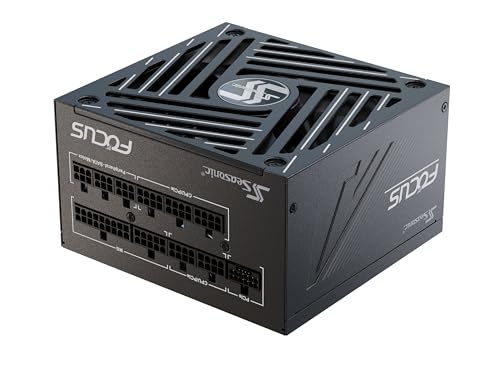
Best Premium: Seasonic Focus GX-850 (ATX 3.1)
For the build that pairs the card with a hungry CPU or plans a bigger GPU later.
Specs
Wattage | 850W |
Efficiency | 80 Plus Gold, Cybenetics Platinum |
Form factor | ATX |
Modularity | Fully modular |
Standard | ATX 3.1, native 12V-2x6 |
Capacitors | Japanese |
Warranty | 10 years |
Wattage
850W
Efficiency
80 Plus Gold, Cybenetics Platinum
Form factor
ATX
Modularity
Fully modular
Standard
ATX 3.1, native 12V-2x6
Capacitors
Japanese
Warranty
10 years
What it does well
Seasonic builds its own units, with no third-party OEM and no rebadged platform, and the Focus GX has been a safe recommendation for years. The ATX 3.1 refresh brings a native 12V-2x6 cable, Japanese capacitors and a 10-year warranty.
The extra 100W is the point. A Ryzen 9 or Core i7 next to a factory-overclocked 7700 XT pushes past what a 650W unit should carry, and 850W covers a later jump to a 300W-class card without touching the PSU again. Our RX 7800 XT PSU picks cover that next step up.
What you give up
Money, mostly. For a typical Ryzen 5 build this is more PSU than the card needs, and at low loads it sits a little further down its efficiency curve than a 750W unit would. You will never see that on a power bill, but you will see the price difference at checkout.
Who it's for
Builders pairing the RX 7700 XT with a Ryzen 9, a Core i7 or i9, or anyone who already knows the next GPU will be a bigger one.
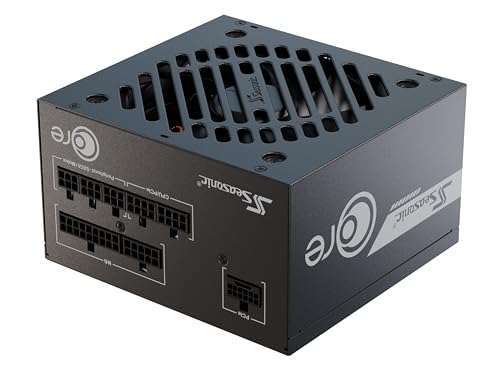
Best Budget: Seasonic CORE GX-650 (ATX 3.1)
The honest 650W option, for builds where the CPU stays modest.
Specs
Wattage | 650W |
Efficiency | 80 Plus Gold |
Form factor | ATX |
Modularity | Fully modular |
Standard | ATX 3.1, PCIe 5.1 |
Fan | 120mm fluid dynamic bearing |
Warranty | 7 years |
Wattage
650W
Efficiency
80 Plus Gold
Form factor
ATX
Modularity
Fully modular
Standard
ATX 3.1, PCIe 5.1
Fan
120mm fluid dynamic bearing
Warranty
7 years
What it does well
This is the cheapest way into a Seasonic-built unit, and it covers an RX 7700 XT with a Ryzen 5 7600 or 9600X at roughly two-thirds load. It is fully modular, ATX 3.1 compliant, and backed by a seven-year warranty, which is unusual at this tier.
The CORE GX is a short 140mm unit, so it fits compact mid-towers where longer PSUs fight the drive cage. That makes it a good match for the tighter budget builds this card often lands in.
What you give up
Headroom. At 650W there is no room for a Ryzen 9 or a factory-overclocked card pushing past 300W, and it sits below AMD's 700W guidance on paper. Build with a 65W CPU and that guidance does not apply, but buy this knowing the next GPU upgrade likely means a new PSU too. It also carries a plain 80 Plus Gold rating rather than the Cybenetics Platinum of the 750W picks.
Who it's for
Budget 1440p builds with a 65W-class CPU and no plans to change the GPU tier. Spend the savings on one of our monitor picks for the RX 7700 XT.
Editor's Pick: Corsair SF850 (2024)
The SFX answer for mini-ITX builds around this card.

Specs
Wattage | 850W |
Efficiency | 80 Plus Platinum |
Form factor | SFX (ATX bracket included) |
Modularity | Fully modular |
Fan | 92mm, zero RPM mode |
Warranty | 7 years |
Wattage
850W
Efficiency
80 Plus Platinum
Form factor
SFX (ATX bracket included)
Modularity
Fully modular
Fan
92mm, zero RPM mode
Warranty
7 years
What it does well
Platinum efficiency means less waste heat inside a cramped case, where it matters most. The 92mm fan stops entirely at light loads, and the short cable kit is sized for mini-ITX routing instead of leaving a bundle of slack to hide. It is fully modular, so you only run the two 8-pin leads the card needs.
The 850W ceiling also means a small build is not stuck with this GPU. A bigger card that fits your case will not need a new PSU.
What you give up
The SFX premium is real, and 850W is more than an RX 7700 XT needs. You are paying for the form factor and the future, not for this card. The SF850 also needs an SFX-compatible case; the included bracket only adapts it to standard ATX mounts, so it makes no sense in a normal mid-tower. Our SFX PSU guide covers smaller options if your case is tight.
Who it's for
Mini-ITX and console-sized builds where SFX is a requirement of the case. Everyone else should buy an ATX unit from this list and keep the difference.
Bottom line
If you are building a standard ATX system around an RX 7700 XT, buy the Corsair RM750x (2024). If price per watt and warranty decide it, buy the be quiet! Pure Power 13 M 750W. If a Ryzen 9 or a bigger future GPU is in the plan, buy the Seasonic Focus GX-850. If the CPU is a 65W Ryzen 5 and the budget is tight, the Seasonic CORE GX-650 is enough. If the case is mini-ITX, buy the Corsair SF850, and whichever you choose, run two separate 8-pin cables to the card.
FAQ
What wattage PSU do I need for an RX 7700 XT?
750W is the sweet spot for most builds. AMD recommends 700W, but that figure assumes a 16-core Ryzen 9 7950X. With a Ryzen 5 or Ryzen 7, a quality 750W unit covers the card's 290W peaks with plenty of margin and stays quiet. A good 650W unit also works if your CPU is a 65W-class chip and you have no upgrade plans.
Is 650W enough for an RX 7700 XT?
Yes, with a 65W-class CPU and a quality unit. A Ryzen 5 7600 or 9600X build peaks around 400W to 450W, which a 650W unit carries at roughly two-thirds load. Skip 650W if you run a Ryzen 9 or Core i7, a factory-overclocked card, or plan a bigger GPU. The Seasonic CORE GX-650 is our pick at this wattage.
Is 750W enough for an RX 7700 XT?
Yes, comfortably. 750W clears AMD's 700W guidance with margin for any gaming CPU, including a Ryzen 7 9800X3D, and leaves room for a modest GPU upgrade later. It is the wattage we recommend for most builds, and both the Corsair RM750x (2024) and the be quiet! Pure Power 13 M 750W sit in that tier.
How many power connectors does the RX 7700 XT need?
Two standard PCIe 8-pin connectors on AMD's reference design, and most partner cards follow the same layout. You do not need a 12V-2x6 cable. Run two separate 8-pin cables from the PSU instead of one daisy-chained cable with two plugs, so the card's draw is split across two sets of wires.
Do I need an ATX 3.1 PSU for the RX 7700 XT?
No. The card uses 8-pin connectors, so ATX 3.1's native 12V-2x6 cable goes unused. ATX 3.x units are still worth buying, because they are specified to handle short GPU power spikes and they keep you ready for a future card. Every pick in this guide is ATX 3.1 except the SFX Corsair SF850, which covers spikes with its large 850W ceiling.
Should I buy an 850W PSU for an RX 7700 XT?
Only if you pair the card with a Ryzen 9 or Core i7 or i9, or you already plan to move to a bigger GPU. For a Ryzen 5 or Ryzen 7 build, 850W buys headroom you will not use, and 750W does the job for less. If you do want the headroom, the Seasonic Focus GX-850 is our pick.
Related Articles

Best PSU for RX 7800 XT (2026): 750W Sweet Spot, 5 Picks
The best PSU for an RX 7800 XT is a quality 750W unit with two 8-pin leads. Five vetted picks for budget, quiet, premium and SFF builds, plus the wattage math.
Oct 25, 2026

Best CPUs for the RX 7700 XT (2026): 5 Picks by Tier
The best CPU for the RX 7700 XT keeps 1440p at 144Hz fed without overspending. Five picks by tier, plus the AM4 drop-in versus AM5 rebuild math for 2026.
Oct 18, 2026

How Much PSU Wattage for a Gaming PC? 9 GPU Tiers (2026)
How much PSU wattage do you need? Sized floors for 9 GeForce and Radeon tiers, why 850W is usually overkill for gaming, and an ATX 3.1 pick at each tier.
Sep 22, 2026

Docking Station vs USB Hub vs Thunderbolt (2026): Worth It?
Docking station vs USB hub vs Thunderbolt hub: which is worth the money for a gaming laptop. Bandwidth, charging and monitor limits for each tier, compared.
Oct 27, 2026

Best Budget Gaming Headsets Under $60, Ranked by Mic (2026)
Best budget gaming headset picks under $60, ranked by mic quality: 3 wired and 1 wireless that keep your voice clean on Discord, plus what each gives up.
Oct 27, 2026