Affiliate Disclosure: As an Amazon Associate we earn from qualifying purchases. Some links may earn us a commission at no cost to you.

Best CPUs for Escape from Tarkov (2026): Streets-Proof Picks
Your frame counter looks fine in Woods. It looks fine in Customs, mostly. Then you load into Streets of Tarkov, walk two blocks toward the cinema, and the whole thing falls apart in a way no graphics setting fixes.
That is a processor problem, and it is a specific kind of processor problem. Tarkov leans on L3 cache far harder than it leans on clock speed, which is why chips carrying AMD's stacked 3D V-Cache hold their floor on the map that matters and chips without it do not. These five picks are ranked by Streets headroom rather than by an average across maps that never behave the same way.
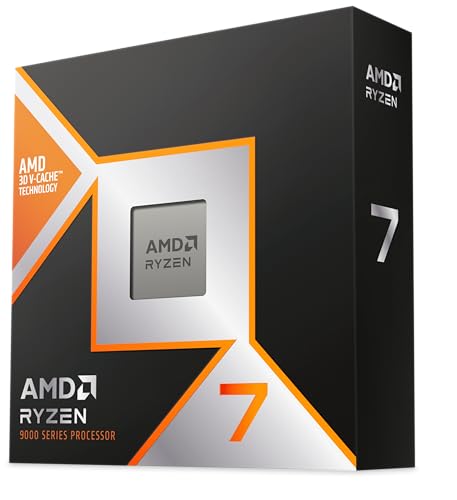
Our top pick: AMD Ryzen 7 9800X3D
It carries 96 MB of L3 on Zen 5 cores, and Tarkov spends its worst moments waiting on memory. That is the entire argument.
Quick picks
Pick | CPU | Best for | Buy |
|---|---|---|---|
Best Overall | The highest floor on Streets | ||
Best Value | The same cache for less | ||
Best Premium | Raiding and streaming on one box | ||
Best Budget | Every map but Streets, on AM5 | ||
Editor's Pick | An AM4 drop-in, no rebuild |
Best Overall
- CPU
- Best for
The highest floor on Streets
- Buy
Best Value
- CPU
- Best for
The same cache for less
- Buy
Best Premium
- CPU
- Best for
Raiding and streaming on one box
- Buy
Best Budget
- CPU
- Best for
Every map but Streets, on AM5
- Buy
Editor's Pick
- CPU
- Best for
An AM4 drop-in, no rebuild
- Buy
Specs at a glance
CPU | Cores / threads | Boost clock | L3 cache | TDP | Socket |
|---|---|---|---|---|---|
8 / 16 | 5.2 GHz | 96 MB | 120 W | AM5 | |
8 / 16 | 5.0 GHz | 96 MB | 120 W | AM5 | |
16 / 32 | 5.7 GHz | 128 MB | 170 W | AM5 | |
6 / 12 | 5.3 GHz | 32 MB | 105 W | AM5 | |
8 / 16 | 4.5 GHz | 96 MB | 105 W | AM4 |
- Cores / threads
8 / 16
- Boost clock
5.2 GHz
- L3 cache
96 MB
- TDP
120 W
- Socket
AM5
- Cores / threads
8 / 16
- Boost clock
5.0 GHz
- L3 cache
96 MB
- TDP
120 W
- Socket
AM5
- Cores / threads
16 / 32
- Boost clock
5.7 GHz
- L3 cache
128 MB
- TDP
170 W
- Socket
AM5
- Cores / threads
6 / 12
- Boost clock
5.3 GHz
- L3 cache
32 MB
- TDP
105 W
- Socket
AM5
- Cores / threads
8 / 16
- Boost clock
4.5 GHz
- L3 cache
96 MB
- TDP
105 W
- Socket
AM4
What the official spec sheet actually asks for
Component | Official minimum | Official recommended | What Streets asks for |
|---|---|---|---|
Processor | Ryzen 5 3600 class | Core i7-14700F class | A large L3 pool ahead of raw core count |
Memory | 16 GB | 64 GB | 32 GB is the realistic floor, 64 GB removes the ceiling |
Graphics | GTX 1660 class | RTX 4070 class | Less than the processor on this map |
Storage | 80 GB | 80 GB | An NVMe drive, for load times rather than frames |
Processor
- Official minimum
Ryzen 5 3600 class
- Official recommended
Core i7-14700F class
- What Streets asks for
A large L3 pool ahead of raw core count
Memory
- Official minimum
16 GB
- Official recommended
64 GB
- What Streets asks for
32 GB is the realistic floor, 64 GB removes the ceiling
Graphics
- Official minimum
GTX 1660 class
- Official recommended
RTX 4070 class
- What Streets asks for
Less than the processor on this map
Storage
- Official minimum
80 GB
- Official recommended
80 GB
- What Streets asks for
An NVMe drive, for load times rather than frames
Read the memory row twice. Battlestate lists 64 GB as its recommended figure for the 1.0 build, which is four times what most 2026 gaming builds treat as generous. That number is not a typo. Streets holds an enormous amount of geometry and loot state in memory at once, and the game has a long history of leaking some of it across a long session.
The processor row is the tell for everything else here. The chip Battlestate names at the recommended tier is a 2023 Intel part with twenty cores, not a current flagship. What the engine wants is not the newest silicon. It wants a big pool of fast memory sitting close to the cores, and in 2026 the cheapest way to buy that is AMD's stacked cache.
Why cache beats clocks in Tarkov
Tarkov runs on Unity, and it asks that engine to do something Unity was never built for: stream a dense, fully modeled city with hundreds of interactive containers, dozens of AI, and a networked loot state, all at the same time. The set of data the processor has to keep touching is enormous.
When that working set fits inside the processor's L3 cache, a core reads it in a few nanoseconds. When it does not, the core waits on system memory instead, and that wait is an order of magnitude longer. A 32 MB pool spills constantly on Streets. A 96 MB pool spills far less often. The difference shows up less as a higher average frame rate and more as a higher floor, which is the number a Tarkov player feels the moment a fight starts.
That is why this ladder is mostly cache chips, and why the high-clock six-core lands where it lands. Clock speed still counts, and it counts for more here than on a well-threaded modern engine, but it only helps once the data is already sitting there. Cache decides whether it is.
For the general version of this argument across a whole library rather than one title, whether X3D is worth it in general covers it. Tarkov sits at the far end of that spectrum, next to the other game where the processor is the purchase.
How we picked
We rank by headroom on Streets of Tarkov, then by L3 cache size, then by how much runway the socket has left. An average frame rate across maps is close to useless in this game, because the maps do not share a performance profile and nobody quits over their Factory numbers.
The usual order of operations in a build is graphics card first, with the processor sized so it does not hold the card back. Tarkov is one of the few games where that order flips. At 1440p on a mid-range card, the processor is still what decides whether Streets holds together. If you are buying both halves at once, the graphics card side of the same question handles the other one, and choosing a processor and motherboard together covers how the board fits around it.
We also want to be straight about the counterweight. Spending up on a cache chip is, for most buyers, an overspend. At 1440p and above, across most libraries, a mid-range Ryzen sits within single digits of an X3D part and the money should have gone to the graphics card instead. Tarkov is the exception that earns the tax. That is a narrow claim and we mean it narrowly.
None of these picks needs an expensive motherboard either. A B650 or B850 board with a fourteen-phase VRM and real heatsinks feeds every chip in this article without throttling, including the 170 W one.
Best Overall: AMD Ryzen 7 9800X3D
Specs
Cores / threads | 8 / 16 |
Boost clock | 5.2 GHz |
L3 cache | 96 MB (second-gen 3D V-Cache) |
TDP | 120 W |
Socket | AM5 |
Memory | DDR5, EXPO to 6000 CL30 |
Cooler | Not included |
Cores / threads
8 / 16
Boost clock
5.2 GHz
L3 cache
96 MB (second-gen 3D V-Cache)
TDP
120 W
Socket
AM5
Memory
DDR5, EXPO to 6000 CL30
Cooler
Not included
What it does well
The 9800X3D is the only eight-core on AM5 that pairs 96 MB of L3 with Zen 5 cores, and AMD moved the stacked cache die underneath the compute die on this generation. That sounds like packaging trivia. It is not. Heat now leaves the cores through the top of the package the way it does on an ordinary chip, so the part boosts to 5.2 GHz instead of being held back the way the first cache chips were.
On Streets the practical result is a higher floor. Cache keeps the geometry and loot state resident, and the extra clock covers the parts of a frame that cache does nothing for. Where a 32 MB chip stumbles walking into a busy block, this one keeps pacing.
It is also fully unlocked, which the earlier cache parts were not. Precision Boost Overdrive and Curve Optimizer both work, so there is real tuning headroom for anyone who wants it. At 120 W it does not demand an exotic board or an oversized cooler either. A good tower air cooler is enough, and cooling an X3D part goes through the specifics.
What you give up
This is the most expensive eight-core AMD sells, and eight cores is what you get. If you also render, compile, or run virtual machines, the core count is a real ceiling and the cache does nothing for you there.
Outside cache-hungry titles the gap to a cheaper Ryzen 7 shrinks to almost nothing. A player whose library is mostly well-optimized console ports at 4K will never see this chip earn its price. Tarkov is the justification. If Tarkov is a small slice of what you play, buy differently.
There is no cooler in the box, so budget for one.
Who it's for
The player who lives in Tarkov, wants the highest floor available on Streets today, and expects to keep the platform through at least one more chip generation.
Best Value: AMD Ryzen 7 7800X3D

Specs
Cores / threads | 8 / 16 |
Boost clock | 5.0 GHz |
L3 cache | 96 MB (first-gen 3D V-Cache) |
TDP | 120 W |
Socket | AM5 |
Memory | DDR5, EXPO to 6000 CL30 |
Cooler | Not included |
Cores / threads
8 / 16
Boost clock
5.0 GHz
L3 cache
96 MB (first-gen 3D V-Cache)
TDP
120 W
Socket
AM5
Memory
DDR5, EXPO to 6000 CL30
Cooler
Not included
What it does well
The 7800X3D carries exactly the same 96 MB L3 pool as the 9800X3D. Same capacity, same behavior on the half of the workload that cache decides. For a game whose problem is memory residency rather than instructions per clock, that is most of the story.
It drops into the same AM5 boards, wants the same DDR5-6000 CL30 kit, and pulls the same modest sustained power. A mid-range B650 board and a tower cooler cover it completely, which leaves the saving where a Tarkov player also needs it: memory capacity and the graphics card.
The broader case for and against cache chips across a mixed library sits in the X3D and non-X3D split across a whole library.
What you give up
The cache die on this generation sits on top of the compute die rather than underneath it, which traps heat and caps the boost clock at 5.0 GHz. The multiplier is locked, so tuning stops at whatever Curve Optimizer will give you.
That clock gap is small on paper and it lands in the worst possible place: the busiest Streets scenes, where the processor is already the constraint and cache alone has stopped being enough. This is a lower ceiling than the 9800X3D, not a different chip.
It is also an AM5 part. If you are on AM4 today, this means a new board, new memory, and usually a new cooler bracket, not a swap.
Who it's for
The builder moving to AM5 now who wants the cache without paying current-generation prices, and who accepts a slightly lower worst case.
Best Premium: AMD Ryzen 9 9950X3D

Specs
Cores / threads | 16 / 32 |
Boost clock | 5.7 GHz |
L3 cache | 128 MB total (96 MB on the V-Cache CCD) |
TDP | 170 W |
Socket | AM5 |
Memory | DDR5, EXPO to 6000 CL30 |
Cooler | Not included |
Cores / threads
16 / 32
Boost clock
5.7 GHz
L3 cache
128 MB total (96 MB on the V-Cache CCD)
TDP
170 W
Socket
AM5
Memory
DDR5, EXPO to 6000 CL30
Cooler
Not included
What it does well
This is the one chip that refuses to make you choose. It carries a full 96 MB cache die on one compute complex, which is what Tarkov runs on, and a second eight-core complex that boosts to 5.7 GHz for everything else.
In practice the raid gets the same cache the 9800X3D has while OBS, a browser stack, Discord, and a capture pipeline all sit on cores the game is not using. Anyone who has watched frame pacing collapse the moment a stream starts on an eight-core will recognize what that is worth. Sixteen cores also cuts real time off editing raid footage afterward.
The second complex clocks higher than the cache complex, so ordinary desktop work feels quicker here than it does on the 9800X3D.
What you give up
A large premium over the 9800X3D that buys nothing inside the game itself. In Tarkov alone these two chips land in the same place, because Tarkov only ever uses the cache complex.
The frames also depend on scheduling. Windows and the AMD chipset driver have to park the game on the cache complex, and when that goes wrong the chip behaves like a slower non-cache part. Buyers have flagged this as the failure mode they hit in practice, which makes keeping the chipset driver and Game Bar current a maintenance job rather than an option.
At 170 W sustained it needs real cooling, not a budget tower. And if Tarkov is the whole reason for the build, this is the wrong direction and the 9800X3D is the right one.
Who it's for
The Tarkov player who also streams, records, or works on the same machine and will not run two boxes to do it.
Best Budget: AMD Ryzen 5 7600X

Specs
Cores / threads | 6 / 12 |
Boost clock | 5.3 GHz |
L3 cache | 32 MB |
TDP | 105 W |
Socket | AM5 |
Memory | DDR5, EXPO to 6000 CL30 |
Cooler | Not included |
Cores / threads
6 / 12
Boost clock
5.3 GHz
L3 cache
32 MB
TDP
105 W
Socket
AM5
Memory
DDR5, EXPO to 6000 CL30
Cooler
Not included
What it does well
The 7600X is the honest floor. It clears the minimum Battlestate publishes by a wide margin, and it boosts to 5.3 GHz, higher than any cache chip in this article. On Woods, Factory, Shoreline, and Customs it holds up fine.
The reason it beats a closeout AM4 six-core is the socket. Buying this puts you on AM5, so the upgrade to a cache chip later is one part and a BIOS update rather than a rebuild. Same board, same memory, same cooler. Boards that feed an X3D chip properly are the same boards this chip runs on, so buy the board once and buy it right.
It is also cheap enough that the saving can go somewhere this game rewards: a 32 GB memory kit.
What you give up
32 MB of L3, a third of what the cache chips carry. On Streets, in a busy block, that is exactly the shortfall, and no amount of clock speed covers it. This pick is a compromise and the compromise deserves naming plainly.
Six cores also leaves less room for anything running alongside the game. Streaming on this chip means giving up frames to do it.
The 7600X ships without a cooler, unlike the non-X 7600 sitting beside it on the shelf. Budget a tower cooler into the plan.
Who it's for
The player building now on a real budget, who runs every map except Streets regularly, and who intends to drop a cache chip into the same board when the money is there.
Editor's Pick: AMD Ryzen 7 5800X3D

Specs
Cores / threads | 8 / 16 |
Boost clock | 4.5 GHz |
L3 cache | 96 MB (first-gen 3D V-Cache) |
TDP | 105 W |
Socket | AM4 |
Memory | DDR4 |
Multiplier | Locked, PBO and Curve Optimizer only |
Cores / threads
8 / 16
Boost clock
4.5 GHz
L3 cache
96 MB (first-gen 3D V-Cache)
TDP
105 W
Socket
AM4
Memory
DDR4
Multiplier
Locked, PBO and Curve Optimizer only
What it does well
The reason this pick exists is that it is not a rebuild. If you are sitting on a B450 or B550 board with the Ryzen 5 3600 that Battlestate itself lists as the minimum, this is a BIOS flash and one part. Same board, same DDR4 kit, same cooler bracket, and you land on the same 96 MB cache pool the AM5 chips use.
For a five-year-old machine that has started falling apart on Streets, that is a good outcome at a fraction of a platform migration. Cache is the thing Tarkov responds to, and this is the cheapest socket to get it on when you already own the socket.
If you are undecided about staying put or moving across, the AM4 or AM5 decision in full lays out where the line sits.
What you give up
Zen 3 cores and a 4.5 GHz ceiling. The multiplier is locked, so Precision Boost Overdrive and Curve Optimizer are the only levers you get. Against a 9800X3D this is not close, and this article is not pretending otherwise.
It is also the last chip that board will ever take. AM4 ends here. And AM4 cache chips have drifted upward in price as supply dried out, which means the math only works when you genuinely keep the board and the memory. If you were replacing those anyway, buy AM5 and skip this rung.
Buyers have flagged that it runs a warm hotspot despite the modest rating, so plan on an undervolt through Curve Optimizer rather than treating it as something to get around to.
Who it's for
The AM4 owner who wants one more good year out of the machine without spending a weekend rebuilding it.
Bottom line
If Tarkov is your main game and you are building on AM5, buy the 9800X3D. If you want the same cache for less and can live with a slightly lower ceiling, the 7800X3D is the value call. If you stream or edit on the same box, the 9950X3D is the only chip here that does both without a trade. If the budget is tight, the 7600X gets you onto the socket and leaves the cache upgrade open. And if you are on AM4 with a healthy board, the 5800X3D is one part instead of five.
FAQ
Does Escape from Tarkov actually need an X3D CPU?
Need is a strong word, but Tarkov is one of the few games where the cache chips earn their price rather than just winning benchmark charts. The engine's working set on dense maps overruns a normal 32 MB L3 pool constantly, and the stall lands in your frame floor during fights. A high-clock six-core plays the game fine. A 96 MB cache chip is what keeps Streets steady. If Streets is a map you run regularly, the answer is yes. If you stay on Woods and Customs, a 7600X is enough.
How much RAM does Escape from Tarkov need in 2026?
Battlestate's own recommended figure for the 1.0 build is 64 GB, which is unusual enough to take seriously. The published minimum is 16 GB, and 16 GB is genuinely painful on Streets. Treat 32 GB as the real floor for a machine you want to enjoy, and 64 GB as the point where the map stops being a memory problem at all. On AM5, buy a DDR5-6000 CL30 kit and turn EXPO on. Capacity matters more here than the last few hundred megatransfers of speed.
Is a Ryzen 5 3600 still enough for Tarkov after the 1.0 release?
It is the chip Battlestate lists as the minimum, and minimum means the game launches and runs, not that it runs well. On Woods and Factory a 3600 is playable. On Streets it is the bottleneck, and no settings change fixes that. The useful part is that if you own one, you almost certainly own a board that takes a 5800X3D. That single swap is the cheapest meaningful upgrade available to you, and it leaves your memory and cooler alone.
Why does Streets of Tarkov run so much worse than the other maps?
Streets is a dense urban map with far more geometry, far more interactive containers, and far more simultaneous AI than Woods or Factory. All of it lives in memory and the processor has to keep touching it, which makes the map processor-limited and memory-limited rather than graphics-limited. Dropping the resolution barely helps. What helps is a larger L3 cache, more system memory, and closing whatever else is running. That is the whole reason this article ranks by Streets instead of by an average.
Is the 9800X3D worth it over the 7800X3D for Tarkov?
They carry the same 96 MB of L3, so the cache half of the equation is identical. The 9800X3D adds Zen 5 cores and, more usefully, a repackaged cache die that lets it boost to 5.2 GHz instead of 5.0 GHz with the multiplier unlocked. That gap is small in most games, and it lands hardest exactly where Tarkov hurts, in the busiest scenes where cache alone has run out. If the price difference is meaningful to you, the 7800X3D is not a mistake. If it is not, take the newer chip.
Should I upgrade my AM4 build or move to AM5 for Tarkov?
It depends on what you would be throwing away. If your board and DDR4 kit are healthy, a 5800X3D is one part and a BIOS flash, and it gets you the cache that matters. If the board is a low-end A320 or B350, or the memory is a slow 16 GB kit you were replacing anyway, the drop-in stops making sense and you should move to AM5 with a 7800X3D. The deciding question is not which chip is faster. It is how many parts the upgrade touches.
Related Articles

Best GPUs for Escape from Tarkov (2026): Picks for High-FPS Raids
The best GPUs for Escape from Tarkov in 2026, ranked by resolution tier. Covers GPU selection, VRAM requirements, and the CPU bottleneck threshold that drives EFT FPS.
Jun 3, 2026

Do You Need an X3D CPU for Gaming? 2026 Buyer's Verdict
Do you need an X3D CPU for gaming? For most builds at 1440p and 4K, no. Here is the resolution, GPU, and library test that decides, plus three AM5 picks.
Aug 13, 2026

Best CPUs for Star Citizen (2026): Cache, Cores & 32GB RAM
Star Citizen is CPU-bound, not GPU-bound. The best CPU for Star Citizen leans on 3D V-Cache and fast single-thread clocks, plus 32GB of dual-channel DDR5.
Aug 19, 2026

AM4 vs AM5 for Gaming in 2026: 5 Picks, One Cutoff
AM4 vs AM5 in 2026: the DDR5 spike narrowed the gap without closing it. Here is the budget where AM5 wins anyway, plus five buyable CPU picks by bucket.
Aug 23, 2026

Best Motherboards for the 9800X3D (2026): 5 Picks by Tier
The best motherboards for the 9800X3D, ranked by build tier: X870E, X870, B850 and B650E picks with the VRM, form-factor and I/O tradeoffs that decide it.
Aug 6, 2026