Affiliate Disclosure: As an Amazon Associate we earn from qualifying purchases. Some links may earn us a commission at no cost to you.

Best CPUs for Star Citizen (2026): Cache, Cores & 32GB RAM
Star Citizen does not care much about your graphics card. Load into a busy landing zone and watch the numbers: CPU pinned near 100 percent, GPU coasting at a third of that. The frame rate you get is decided by one heavy simulation thread and how much of its working set fits in cache.
So the buying rule is short. Take the largest 3D V-Cache pool the budget allows, feed it 32 GB of dual-channel DDR5, and worry about core count last. Here are five chips that follow that rule, and one honest warning about what none of them fix.
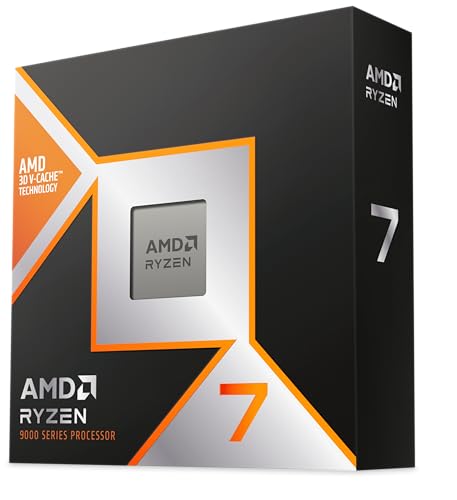
Our top pick: AMD Ryzen 7 9800X3D
The 9800X3D pairs a 96 MB V-Cache pool with the fastest sustained clocks AMD ships on eight cores, and it posted the highest verified average in the largest public Star Citizen processor test.
Quick picks
Pick | CPU | Best for | Buy |
|---|---|---|---|
Best Overall | Highest verified average in the game | ||
Best Value | Same 96 MB cache, lower entry | ||
Best Premium | Game plus stream plus tooling | ||
Best Budget | Cheapest full V-Cache pool | ||
Editor's Pick | Platform first, cache later |
Best Overall
- CPU
- Best for
Highest verified average in the game
- Buy
Best Value
- CPU
- Best for
Same 96 MB cache, lower entry
- Buy
Best Premium
- CPU
- Best for
Game plus stream plus tooling
- Buy
Best Budget
- CPU
- Best for
Cheapest full V-Cache pool
- Buy
Editor's Pick
- CPU
- Best for
Platform first, cache later
- Buy
Specs at a glance
CPU | Cores / threads | L3 cache | Boost clock | TDP | Socket |
|---|---|---|---|---|---|
8 / 16 | 96 MB | 5.2 GHz | 120 W | AM5 | |
8 / 16 | 96 MB | 5.0 GHz | 120 W | AM5 | |
16 / 32 | 128 MB | 5.7 GHz | 170 W | AM5 | |
6 / 12 | 96 MB | 4.1 GHz base | 65 W | AM5 | |
8 / 16 | 32 MB | 5.5 GHz | 65 W | AM5 |
- Cores / threads
8 / 16
- L3 cache
96 MB
- Boost clock
5.2 GHz
- TDP
120 W
- Socket
AM5
- Cores / threads
8 / 16
- L3 cache
96 MB
- Boost clock
5.0 GHz
- TDP
120 W
- Socket
AM5
- Cores / threads
16 / 32
- L3 cache
128 MB
- Boost clock
5.7 GHz
- TDP
170 W
- Socket
AM5
- Cores / threads
6 / 12
- L3 cache
96 MB
- Boost clock
4.1 GHz base
- TDP
65 W
- Socket
AM5
- Cores / threads
8 / 16
- L3 cache
32 MB
- Boost clock
5.5 GHz
- TDP
65 W
- Socket
AM5
Benchmarks
Populated CPU-bound scene run at low resolution with maximum detail to strip GPU limits.
- 72 FPS
- 67 FPS
Two caveats sit on top of that chart. Only two of the five picks have a published average from this scene, so the rest are placed by qualitative reporting rather than a number worth standing behind.
The second caveat is bigger. Star Citizen benchmarks move. The same chip has been measured 25 percent faster on one pass and 15 percent slower on the next, depending on server state and where in the zone the run happens. One documented run swung from triple digits inside a hangar to the mid forties a few steps later, still CPU limited the whole time. Treat these figures as direction, not as a promise.
How we picked
Cache first. Star Citizen streams a large entity set through one dominant thread, and the difference between a chip that holds that working set in L3 and one that spills it to memory shows up as stutter in exactly the places you notice. Every X3D part here carries 96 MB or more. The one non-cache pick carries 32 MB and earns its place on platform grounds, not performance ones. For the general case, we covered when V-Cache earns its price.
Single-thread clock second. Cache decides whether the data is there. Clock decides how fast it gets chewed. That is the entire gap between the 9800X3D and the 7800X3D, which carry identical cache pools and finish about five frames apart.
Core count third, but not zero. This is one of the few games that genuinely scales past eight cores. Sixteen-core cache parts finished ahead in five of six test cases in the largest public sweep. That does not make eight cores wrong. It makes sixteen the ceiling rather than the target. Most CPU-bound sims sit on the other side of that line, which is worth knowing before you pay for cores: our guide to the best CPU for iRacing covers a title where the physics thread never spreads past eight, so the cache pick beats the core-count pick outright.
Then memory, and this one is not negotiable. Populated zones sit in the 18 to 24 GB range, so 32 GB is the floor and 16 GB will crash you out. Run two 16 GB sticks rather than one 32 GB module. On the board underneath, the honest answer is that a mid-tier chipset with a VRM sized to the chip is enough, which is the same conclusion we reach in picking the board underneath it.
Last, the thing no chip fixes. Server meshing is projected to raise CPU demand meaningfully, which is the argument for buying cache now rather than trimming to a part you replace in a year. But even the fastest desktop processor tested still logged P0.2 lows near single digits during loading transitions. That is the server, not your socket. Anyone selling a chip as the cure for Star Citizen stutter is overselling it.
Best Overall: AMD Ryzen 7 9800X3D
Specs
Cores / threads | 8 cores, 16 threads |
L3 cache | 96 MB 3D V-Cache |
Boost clock | Up to 5.2 GHz |
Socket | AM5 |
TDP | 120 W |
Memory | DDR5, dual-channel |
Cooler | Not included |
Cores / threads
8 cores, 16 threads
L3 cache
96 MB 3D V-Cache
Boost clock
Up to 5.2 GHz
Socket
AM5
TDP
120 W
Memory
DDR5, dual-channel
Cooler
Not included
What it does well
In the largest public Star Citizen processor test, run at the Grand Barter Market on Levski with the resolution dropped to strip out the graphics card, this chip averaged 72 frames per second. That was the top result. The scene is deliberately unpleasant: a populated trading hub where simulation load peaks and the CPU has nowhere to hide.
The reason is architectural. AMD moved the V-Cache stack underneath the compute die on this generation instead of over it, so the silicon that gets hot has a direct path to the cooler. The chip holds higher sustained clocks than the 7800X3D while carrying the same 96 MB pool. In a game bottlenecked by one thread grinding entity updates, that combination is the whole ballgame.
What you give up
It is the priciest eight-core on the AM5 shelf, and the honest measurement against the 7800X3D is about five frames in this game. Both carry 96 MB. You are paying for clock, and clock is the smaller half of the equation here.
Eight cores is also the point where Star Citizen starts asking for more, since sixteen-core cache parts finished ahead in five of six cases in the same sweep. No cooler ships in the box, and 120 W under a sustained CPU-bound load is not a chip you put a stock-height tower on. Reports also suggest the X3D Gaming Mode toggle costs frames rather than gaining them in this title, so leave it alone unless something else needs it.
Who it's for
The 1440p Star Citizen player who wants one purchase to settle the CPU question without stepping into sixteen-core money, and who intends to keep the same board through another upgrade. For the case outside this game, we made it in the 9800X3D's wider gaming case.
Best Value: AMD Ryzen 7 7800X3D

Specs
Cores / threads | 8 cores, 16 threads |
L3 cache | 96 MB 3D V-Cache |
Boost clock | Up to 5.0 GHz |
Socket | AM5 |
TDP | 120 W |
Memory | DDR5, dual-channel |
Cooler | Not included |
Cores / threads
8 cores, 16 threads
L3 cache
96 MB 3D V-Cache
Boost clock
Up to 5.0 GHz
Socket
AM5
TDP
120 W
Memory
DDR5, dual-channel
Cooler
Not included
What it does well
Same 96 MB of V-Cache, same socket, and 67 frames per second in the same Levski run. That is inside five frames of the top result and ahead of a Core i9-14900K measured alongside it. For a game that mostly wants to know whether its working set fits in L3, the answer here is identical to the answer above.
Everything downstream is identical too. Same AM5 boards, same DDR5-6000 sweet spot, same cooler bracket. The platform has shipped long enough that the early BIOS drama is a memory and board support is universal.
What you give up
Zen 4 clocks. The gap shows up most on loading transitions, where raw single-thread speed is doing the work and cache has already done its part. The first-generation V-Cache stack sits over the compute die rather than under it, which caps overclock headroom and makes the chip run warmer per watt than its successor.
There is a subtler cost. This is the older occupant of a socket that keeps getting new chips, so the upgrade-later argument that makes AM5 attractive is weaker when you start a generation back. Buyers have flagged that some listings for this SKU ship as tray or open-box units without retail packaging, so read the condition line before ordering.
Who it's for
The player building a Star Citizen machine right now who would rather put the difference into a second memory stick or a faster NVMe drive than into five frames. In this game that is a defensible trade.
Best Premium: AMD Ryzen 9 9950X3D

Specs
Cores / threads | 16 cores, 32 threads |
L3 cache | 128 MB total, 96 MB V-Cache die |
Boost clock | Up to 5.7 GHz |
Socket | AM5 |
TDP | 170 W |
Memory | DDR5, dual-channel |
Cooler | Not included |
Cores / threads
16 cores, 32 threads
L3 cache
128 MB total, 96 MB V-Cache die
Boost clock
Up to 5.7 GHz
Socket
AM5
TDP
170 W
Memory
DDR5, dual-channel
Cooler
Not included
What it does well
Star Citizen is one of a small number of games that genuinely uses more than eight cores. Sixteen-core cache parts finished fastest in five of six test cases across a thirty-processor sweep, which is the strongest evidence available that the second compute die is doing work rather than idling. Cities: Skylines II is another of the few, and our Cities: Skylines II CPU picks map where the core-count ceiling starts deciding how large a city stays playable.
The shape is what makes it. One die carries the 96 MB V-Cache stack and feeds the simulation thread. The other absorbs everything else you have running: stream encode, voice, a browser full of trade tools, shader compilation in the background. On an eight-core chip all of that competes with the game for the same cores.
What you give up
170 W of sustained draw, a cooling solution that can remove it, and a board with the VRM to feed it. That is real money stacked on top of the chip.
The dual-die arrangement also adds a variable the single-die cache parts do not have. When the scheduler puts game threads on the compute die without the cache, frame pacing can wobble in ways you will not see on a 9800X3D. And the gain over the top pick is real but not proportional to what it costs. Buy this because you need the second die.
Who it's for
The org-fleet player who runs Star Citizen with a stream, a capture, and a second monitor of tooling, and who does real work on the same machine. If the box only games, the 9800X3D is the better spend.
Best Budget: AMD Ryzen 5 7600X3D

Specs
Cores / threads | 6 cores, 12 threads |
L3 cache | 96 MB 3D V-Cache |
Base clock | 4.1 GHz |
Socket | AM5 |
TDP | 65 W |
Memory | DDR5, dual-channel |
Cooler | Not included |
Cores / threads
6 cores, 12 threads
L3 cache
96 MB 3D V-Cache
Base clock
4.1 GHz
Socket
AM5
TDP
65 W
Memory
DDR5, dual-channel
Cooler
Not included
What it does well
This is the cheapest route onto AM5 with the full 96 MB V-Cache pool intact, and that pool is the one specification the game rewards. Six cores, 65 W, and the same cache stack the 7800X3D carries.
That leaves budget where it does more good. The order that works here is GPU, then memory, then CPU, and this chip clears the cache threshold while leaving room for a 32 GB dual-channel DDR5 kit and a better graphics card. It is a normal AM5 drop-in, so the path to an eight-core cache chip later stays open on the same board.
What you give up
Six cores is genuinely tight in this title. Reviewer testing shows real core scaling, and this chip stacks noticeably behind the 7800X3D in populated zones, which is precisely where Star Citizen hurts. Expect the widest gap between an empty system and a crowded landing zone to land here.
It is also the pick most exposed to what comes next. If server meshing raises thread demand the way projections suggest, six cores ages out first. The listing spells out that no heatsink is included, so a tower cooler goes in the same cart.
Who it's for
The player putting together a first Star Citizen rig on a real budget who understands the purchase is the cache, not the core count, and who wants the board to outlive the chip in it.
Editor's Pick: AMD Ryzen 7 9700X

Specs
Cores / threads | 8 cores, 16 threads |
L3 cache | 32 MB |
Boost clock | Up to 5.5 GHz |
Socket | AM5 |
TDP | 65 W |
Memory | DDR5, dual-channel |
Cooler | Not included |
Cores / threads
8 cores, 16 threads
L3 cache
32 MB
Boost clock
Up to 5.5 GHz
Socket
AM5
TDP
65 W
Memory
DDR5, dual-channel
Cooler
Not included
What it does well
Eight Zen 5 cores at 65 W with the highest clocks in the non-cache line, sitting on the same AM5 board every other pick here uses. That last part is the entire argument. Buy this now, drop a V-Cache chip in later, and the board, the memory, and the cooler all carry across.
For someone who also encodes video or compiles code on the same machine, eight full-clock cores do work that six cores cannot, cache or no cache.
What you give up
32 MB of L3 against 96 MB on every other pick on this page, and in this specific game that is the gap that decides the outcome. It trails the cache parts in exactly the populated-zone scenarios players complain about, and the deficit widens rather than narrows as entity counts grow.
Pricing often moves against it. This chip frequently sits close enough to the 7800X3D that the cache upgrade costs less than a single memory stick, which makes the platform-first argument harder to defend. Check both before committing.
Who it's for
The buyer replacing an entire platform at once who has to split the budget across CPU, board, and memory, with a V-Cache drop-in planned for the next upgrade window. Everyone else should buy cache.
Bottom line
If you play Star Citizen and want the question settled, buy the AMD Ryzen 7 9800X3D. If the budget bends, the AMD Ryzen 7 7800X3D gets you the same cache and gives up about five frames. If you stream or work on the same box, the AMD Ryzen 9 9950X3D is the one chip whose second die earns its keep here. Building from scratch on a tight number, the AMD Ryzen 5 7600X3D buys the cache and leaves room for memory and a graphics card. Whatever you pick, put 32 GB of dual-channel DDR5 next to it, and do not expect any of them to fix the server-side stutter. The GPU side of the same build is a separate conversation.
FAQ
Is Star Citizen CPU bound or GPU bound?
CPU bound, and not subtly. In populated areas players routinely report the processor pinned near 100 percent while the graphics card sits at 30 to 40 percent utilization. The game runs a large entity simulation through one dominant thread, and that thread decides your frame rate long before the GPU does. Test methodology reflects it: reviewers benchmark this game at low resolution with maximum detail specifically to remove the graphics card from the equation. Buy the CPU first for this title.
Do you need an X3D CPU for Star Citizen?
You do not need one, but it is the single most effective thing you can buy for this game. The X3D parts carry 96 MB of L3 against roughly 32 MB on their non-cache siblings, and testing has put V-Cache chips 25 to 35 percent ahead on 1% lows. Star Citizen's problem is stutter in busy zones, and 1% lows are what stutter looks like on a chart. If the budget stretches to one upgrade, make it cache.
Is 32 GB of RAM enough for Star Citizen in 2026?
32 GB is the floor, not the comfortable answer. Populated zones consume roughly 18 to 24 GB on their own, which is why 16 GB systems stutter and crash there. Run it as two 16 GB sticks rather than a single 32 GB module, because dual-channel operation is worth real frames on every chip on this page. If you are already at 32 GB and still stuttering, the bottleneck is the server or the cache pool, not the capacity.
How many CPU cores does Star Citizen actually use?
More than most games, which is unusual. Sixteen-core parts finished ahead of eight-core parts in five of six test cases in the largest public sweep, so the scaling is real. The ordering still favors cache though. A six-core X3D chip beats an eight-core non-cache chip here, and an eight-core X3D chip lands close enough to a sixteen-core one that most players should not stretch for the extra die. Cache first, clock second, cores third.
Will server meshing need a faster CPU?
Projections put the increase in CPU demand from server meshing in the 30 to 40 percent range, which is the strongest argument for buying cache now rather than the cheapest chip that runs the game today. The practical read: an eight-core V-Cache part has headroom, a six-core one sits closer to the edge, and a non-cache chip is the first thing you will want to replace. None of that is measured yet, so treat it as a planning assumption.
Is the Ryzen 7 9800X3D worth it over the 7800X3D for Star Citizen?
In this game the measured gap is about five frames, 72 against 67 in the same populated test scene. Both carry the same 96 MB cache pool, so you are paying for clock speed and thermal headroom rather than for the specification that moves this title most. If the difference in cost buys a second memory stick or a GPU tier, take the 7800X3D. If the budget is already settled and you want the ceiling among eight-core chips, the 9800X3D is it.
Related Articles

Is the Ryzen 7 9800X3D Worth It in 2026? Buy or Skip
Buy the Ryzen 7 9800X3D for 360Hz shooters, sim racing and heavy strategy. Skip it at 1440p on a mid-tier GPU. Full 2026 verdict vs the 9600X and 9850X3D.
Aug 26, 2026

Do You Need an X3D CPU for Gaming? 2026 Buyer's Verdict
Do you need an X3D CPU for gaming? For most builds at 1440p and 4K, no. Here is the resolution, GPU, and library test that decides, plus three AM5 picks.
Aug 13, 2026

Best DDR5 RAM for Gaming 2026: 5 CL30 Kits for AM5 + Intel
The best DDR5 RAM for gaming in 2026: five DDR5-6000 CL30 kits ranked for AM5 and Intel, plus EXPO vs XMP setup and whether 32GB or 64GB fits your build.
Aug 17, 2026

How to Choose a CPU and Motherboard
The buyer's framework for picking a CPU and motherboard pair: use case first, socket second, chip tier third, then the board class that matches.
May 17, 2026

Are Expensive Motherboards Worth It? Only in 5 Cases (2026)
Are expensive motherboards worth it? Rarely. A good B650 or B850 board runs a 9800X3D or 9950X3D at full speed. Here are the 5 cases where X870E pays off.
Oct 3, 2026