Affiliate Disclosure: As an Amazon Associate we earn from qualifying purchases. Some links may earn us a commission at no cost to you.

Best CPU for Fortnite (2026): 5 Picks for 240Hz and Lumen
The best CPU for Fortnite depends on which Fortnite you play. Performance mode at 1080p, the setting most competitive players run, hands the frame rate to the processor, and a 240Hz panel asks it for a lot. DX12 with Lumen and Nanite at 1440p moves the limit back to the graphics card.
These five picks are sorted by that split: an X3D chip for the 240Hz build-fight crowd, a cheaper X3D for most of the same result, a 16-core for streamers, a budget AM5 six-core, and a drop-in for AM4 owners.
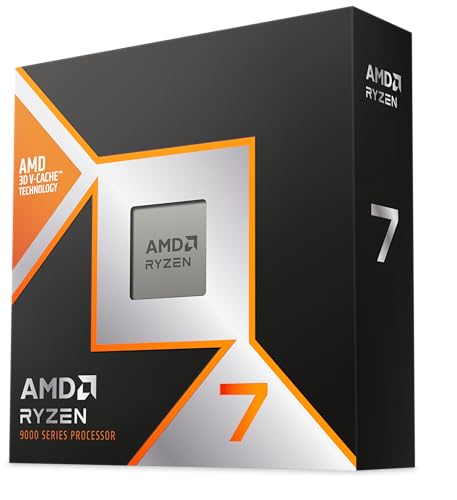
Our top pick: AMD Ryzen 7 9800X3D
The AMD Ryzen 7 9800X3D is the chip to buy for Performance mode at 240Hz and up: its 96 MB of L3 cache keeps late-game build fights from dragging the frame rate down.
Quick picks
Pick | CPU | Best for | Buy |
|---|---|---|---|
Best Overall | 240Hz and up in Performance mode | ||
Best Value | 165Hz to 240Hz, most of the X3D gain | ||
Best Premium | Play and stream from one PC | ||
Best Budget | 144Hz to 165Hz, AM5 on a budget | ||
Editor's Pick | AM4 drop-in upgrade |
Best Overall
- CPU
- Best for
240Hz and up in Performance mode
- Buy
Best Value
- CPU
- Best for
165Hz to 240Hz, most of the X3D gain
- Buy
Best Premium
- CPU
- Best for
Play and stream from one PC
- Buy
Best Budget
- CPU
- Best for
144Hz to 165Hz, AM5 on a budget
- Buy
Editor's Pick
- CPU
- Best for
AM4 drop-in upgrade
- Buy
Specs at a glance
CPU | Cores / threads | Max boost | L3 cache | Socket |
|---|---|---|---|---|
8 / 16 | 5.2 GHz | 96 MB (3D V-Cache) | AM5 | |
8 / 16 | 5.0 GHz | 96 MB (3D V-Cache) | AM5 | |
16 / 32 | 5.7 GHz | 128 MB (3D V-Cache on one CCD) | AM5 | |
6 / 12 | 5.3 GHz | 32 MB | AM5 | |
8 / 16 | 4.5 GHz | 96 MB (3D V-Cache) | AM4 |
- Cores / threads
8 / 16
- Max boost
5.2 GHz
- L3 cache
96 MB (3D V-Cache)
- Socket
AM5
- Cores / threads
8 / 16
- Max boost
5.0 GHz
- L3 cache
96 MB (3D V-Cache)
- Socket
AM5
- Cores / threads
16 / 32
- Max boost
5.7 GHz
- L3 cache
128 MB (3D V-Cache on one CCD)
- Socket
AM5
- Cores / threads
6 / 12
- Max boost
5.3 GHz
- L3 cache
32 MB
- Socket
AM5
- Cores / threads
8 / 16
- Max boost
4.5 GHz
- L3 cache
96 MB (3D V-Cache)
- Socket
AM4
Where Fortnite hits the CPU
Fortnite has two render paths, and they put the load in different places. Performance mode strips the image back so a mid-range graphics card can push frames in the hundreds at 1080p. Once the GPU stops being the limit, the CPU decides how many of those frames arrive, and how evenly. DX12 with Lumen lighting and Nanite geometry is the opposite case. At 1440p and up the graphics card is busy enough that a cheaper processor lands close to the same frame rate.
The hard moments are late in a match. The storm circle closes, every surviving player is building and editing on one screen, and the processor has to track all of it. That is where average frame rate holds up and the drops show, and where a big L3 cache helps most. Cache is the reason an eight-core X3D chip is the default here rather than a chip with more cores; our X3D vs non-X3D breakdown covers where that cache pays off and where it does not.
Core count still sets a floor. An older CapFrameX test of a Fortnite endgame replay in DX12 found six-core processors dipped noticeably where eight-cores held, and it did not recommend six-cores for DX12 play. That test ran on a 2021 build of the game with older chips, so treat it as a direction rather than a number, but it is why our six-core pick sits at the 144Hz tier.
If you are not sure which part limits your current rig, run it through our bottleneck calculator before you buy. A 240Hz monitor paired with an RTX 4060 or Arc B580 class card is limited by the graphics card first, and the right upgrade is the GPU, covered in our best GPU for Fortnite guide.
How we picked
We started from the refresh rate. A 144Hz panel needs 144 frames that arrive evenly, which a modern six-core handles in Performance mode. A 240Hz or faster panel needs a chip that keeps its minimums in the endgame, and that is where X3D cache earns its place. Those are different purchases, so they get different picks.
Then we sized the CPU to the graphics card and the render mode, not the other way round. An X3D chip on a mid-range card at 1440p Lumen buys almost nothing you can see, so the budget belongs in the GPU. For the full framework behind that call, see how to choose a CPU and motherboard.
Platform path decided the last two slots. Four picks sit on AM5, which has an upgrade runway, so a budget build today can take an X3D chip later on the same board. The fifth is for the large group of players on an AM4 board who want better frame pacing without a rebuild. Streamers get their own pick because a CPU-encoded stream needs cores that pure play does not.
No pick here ships with a cooler in the box, so every build needs one. A good dual-tower air cooler covers the 120W X3D chips; the 170W Ryzen 9 9950X3D wants a 240mm AIO or a strong dual-tower.
Best Overall: AMD Ryzen 7 9800X3D
Specs
Cores / threads | 8 / 16 |
Max boost | 5.2 GHz |
L3 cache | 96 MB (3D V-Cache) |
TDP | 120W |
Socket | AM5 |
Architecture | Zen 5 |
Memory | DDR5 |
Cooler | Not included |
Cores / threads
8 / 16
Max boost
5.2 GHz
L3 cache
96 MB (3D V-Cache)
TDP
120W
Socket
AM5
Architecture
Zen 5
Memory
DDR5
Cooler
Not included
What it does well
The AMD Ryzen 7 9800X3D pairs eight Zen 5 cores with 96 MB of L3 cache, and that cache is what Fortnite's CPU-bound moments lean on. In Performance mode at 1080p, the frame-rate floor during an endgame build fight is set by how fast the processor can work through every player and structure on screen, and the 3D V-Cache keeps more of that work close to the cores.
Across a broad game set it runs about 11% ahead of the 7800X3D on average in our 9800X3D vs 7800X3D comparison, and further ahead in cache-heavy titles. TechSpot's 45-game test, which includes Fortnite, put it 24% ahead of Intel's Core Ultra 9 285K on average, with 29% better 1% lows.
AM5 is still a live socket, so the board you buy now carries forward. Our motherboards for the 9800X3D guide covers the B850 boards that feed it without overspending.
What you give up
It is wasted on the wrong rig. On a 1440p Lumen setup with a mid-range graphics card, the GPU sets the frame rate and a much cheaper chip lands within a few frames. The 9800X3D only pays for itself when the GPU is fast enough to stop being the limit.
There is no cooler in the box, and eight cores is the right count for Fortnite plus Discord and a browser, not for a CPU-encoded stream on the same PC.
Who it's for
Competitive players on a 1080p panel at 240Hz or faster, running Performance mode with an RTX 5070 Ti or RX 9070 XT class card or better. It is the same class of chip you find in what PC Fortnite pros use, and if you chase every frame in ranked, this is the one.
Best Value: AMD Ryzen 7 7800X3D

Specs
Cores / threads | 8 / 16 |
Max boost | 5.0 GHz |
L3 cache | 96 MB (3D V-Cache) |
TDP | 120W |
Socket | AM5 |
Architecture | Zen 4 |
Memory | DDR5 |
Cooler | Not included |
Cores / threads
8 / 16
Max boost
5.0 GHz
L3 cache
96 MB (3D V-Cache)
TDP
120W
Socket
AM5
Architecture
Zen 4
Memory
DDR5
Cooler
Not included
What it does well
The AMD Ryzen 7 7800X3D carries the same 96 MB of L3 cache as the 9800X3D, and the cache is most of what matters in Fortnite's endgame. It delivers most of the 9800X3D's Performance-mode result on the same AM5 board and the same DDR5 kit.
At 120W it runs cool and draws little power for an eight-core gaming chip, so a mid-range air cooler keeps it in check. Because it shares a socket with the 9800X3D, swapping up later is a drop-in.
What you give up
It trails the 9800X3D by roughly a tenth on average across games, and its Zen 4 cores clock lower. Overclocking headroom is limited compared with the newer X3D chip.
The value case depends on the gap. When the 9800X3D sits only a little above it, buy the newer chip; the 7800X3D wins when the difference is big enough to move you up a GPU tier.
Who it's for
144Hz to 240Hz players who want X3D frame pacing in build fights and would rather put the savings into the graphics card.
Best Premium: AMD Ryzen 9 9950X3D

Specs
Cores / threads | 16 / 32 |
Max boost | 5.7 GHz |
L3 cache | 128 MB (3D V-Cache on one CCD) |
TDP | 170W |
Socket | AM5 |
Architecture | Zen 5 |
Cooler | Not included |
Cores / threads
16 / 32
Max boost
5.7 GHz
L3 cache
128 MB (3D V-Cache on one CCD)
TDP
170W
Socket
AM5
Architecture
Zen 5
Cooler
Not included
What it does well
The AMD Ryzen 9 9950X3D is the pick for the Fortnite streamer who plays, encodes and records on one machine. It has 16 cores across two chiplets, with the extra cache on one of them. The game runs on the cache chiplet while the other eight cores take a CPU x264 encode, OBS scenes and a replay buffer.
It sits on the same AM5 platform as the other X3D picks, so the board and memory choices carry over. For other ways to split streaming and play, see our best CPUs for streaming and gaming.
What you give up
For pure gaming it does not beat the 9800X3D. Only one chiplet carries the extra cache, and reports suggest the AMD chipset driver and Xbox Game Bar need to be current so Fortnite lands on the right one.
At 170W it needs a 240mm AIO or a strong dual-tower, and a board with a VRM that can feed a 16-core chip under sustained load. If you stream with your graphics card's hardware encoder, the 9800X3D does the same job for less.
Who it's for
Streamers and creators who play Fortnite seriously and use CPU encoding, editing or rendering for the other half of the day.
Best Budget: AMD Ryzen 5 7600X

Specs
Cores / threads | 6 / 12 |
Max boost | 5.3 GHz |
L3 cache | 32 MB |
TDP | 105W |
Socket | AM5 |
Architecture | Zen 4 |
Cooler | Not included |
Cores / threads
6 / 12
Max boost
5.3 GHz
L3 cache
32 MB
TDP
105W
Socket
AM5
Architecture
Zen 4
Cooler
Not included
What it does well
The AMD Ryzen 5 7600X is the cheapest sensible way onto AM5. Six Zen 4 cores at up to 5.3 GHz carry Performance mode at 144Hz to 165Hz without fuss, and the savings go where a budget Fortnite build needs them: the graphics card.
The platform is the bigger win. When the 9800X3D or 7800X3D drops in price, it slots into the same board and memory, so today's budget build becomes tomorrow's 240Hz build with one part swap.
What you give up
Six cores sit at the line for DX12. The older CapFrameX endgame test found six-core chips dipped where eight-cores held, so expect more variance in the busiest late-game fights than with an X3D chip.
It is not a 240Hz processor in big build fights, and there is no cooler in the box, which a budget plan has to account for.
Who it's for
1080p 144Hz builders spending the budget on the GPU, with an X3D upgrade planned for later on the same board.
Editor's Pick: AMD Ryzen 7 5800X3D

Specs
Cores / threads | 8 / 16 |
Max boost | 4.5 GHz |
L3 cache | 96 MB (3D V-Cache) |
TDP | 105W |
Socket | AM4 |
Architecture | Zen 3 |
Memory | DDR4 |
Cooler | Not included |
Cores / threads
8 / 16
Max boost
4.5 GHz
L3 cache
96 MB (3D V-Cache)
TDP
105W
Socket
AM4
Architecture
Zen 3
Memory
DDR4
Cooler
Not included
What it does well
The AMD Ryzen 7 5800X3D is the upgrade-in-place answer for anyone on an AM4 board with a Ryzen 5 3600 or 5600. It keeps the board and the DDR4 kit and moves a six-core system to an eight-core chip with 96 MB of 3D V-Cache, which is what late-game frame pacing needs.
For a player who plays Fortnite and little else on an older rig, it is the cheapest route to X3D behaviour without buying a new board and memory. Our AM4 vs AM5 in 2026 breakdown covers when that trade still makes sense.
What you give up
AM4 is end of line, so this is the last CPU that board will take. Older 300 and 400 series boards need a BIOS update before the chip will post, and buyers have flagged that some boards need the update installed with the old CPU still in place.
The listing price has crept close to the 7800X3D. If you are replacing the board and memory anyway, the AM5 picks are the better spend.
Who it's for
AM4 owners on a Ryzen 5 3600 or 5600 class chip who want Fortnite frame pacing fixed without a platform rebuild.
Bottom line
If you play Performance mode on a 240Hz or faster monitor with a fast graphics card, buy the AMD Ryzen 7 9800X3D. If you want most of that result and a better GPU, buy the AMD Ryzen 7 7800X3D. If you stream with CPU encoding from the same PC, buy the AMD Ryzen 9 9950X3D. If you are building on a budget for 144Hz, buy the AMD Ryzen 5 7600X and plan an X3D upgrade. If you are on AM4 today, buy the AMD Ryzen 7 5800X3D and keep your board.
FAQ
Is Fortnite CPU or GPU bound?
Both, depending on the mode. In Performance mode at 1080p, which most competitive players run, a mid-range graphics card produces frames in the hundreds and the processor becomes the limit, especially in late-game build fights. In DX12 with Lumen and Nanite at 1440p or 4K, the graphics card is the limit and a cheaper CPU lands close to the same frame rate. Check your settings first: if you play Lumen at 1440p, upgrade the GPU before the CPU.
What CPU do I need for 240 fps in Fortnite?
For 240 fps in Performance mode, an eight-core X3D chip is the safest choice. The Ryzen 7 9800X3D is our top pick, and the Ryzen 7 7800X3D gets most of the way for less. You also need a graphics card fast enough to stop being the limit, roughly an RTX 5070 Ti or RX 9070 XT class card, plus a 240Hz monitor. A six-core chip can reach 240 fps in quiet moments but tends to drop in busy endgame fights.
Is the Ryzen 5 7600X good for Fortnite?
Yes, for 144Hz to 165Hz play. The Ryzen 5 7600X handles Performance mode at 1080p comfortably and leaves budget for a better graphics card. Its limit is the busiest endgame fights at 240Hz, where six cores and 32 MB of cache fall behind the X3D chips. The bigger reason to buy it is AM5: a 7800X3D or 9800X3D drops into the same board later.
Does X3D cache help in Fortnite?
Yes, when the processor is the limit. In Performance mode at high refresh rates, the extra L3 cache on chips like the Ryzen 7 9800X3D helps keep the frame-rate floor up in late-game build fights, which is what you feel as smoothness. It helps very little when the graphics card is the limit, such as 1440p Lumen on a mid-range card. Pair X3D with a fast GPU and a high refresh monitor, or spend the money elsewhere.
How many CPU cores does Fortnite use?
Fortnite runs well on six cores, but eight is the comfortable count for DX12 and busy endgame scenes. An older CapFrameX test found six-core processors dipped in a DX12 endgame replay where eight-cores held steady. Past eight cores, cache and per-core speed matter more than more cores, so a 16-core chip only makes sense when you also stream with CPU encoding or do creative work on the same PC.
Is Intel or AMD better for Fortnite?
AMD leads for Fortnite right now because of the X3D chips. The Ryzen 7 9800X3D and 7800X3D combine eight fast cores with 96 MB of L3 cache, and the AM5 socket gives budget builds an upgrade path. Intel chips run Fortnite well, but none offers an equivalent cache advantage, and current Intel boards have no announced upgrade runway, so every pick here is AMD.
Related Articles

Best GPU for Fortnite 2026: 5 Picks From 240Hz to 4K Lumen
The best GPU for Fortnite depends on your render mode. Five tested picks for Performance Mode at 240Hz, 1440p Lumen and 4K, from the Arc B580 to the RTX 5080.
Sep 10, 2026

What PC Do Fortnite Pros Use in 2026? Full Specs Breakdown
The exact PC specs Fortnite pros use in 2026 — CPU, GPU, RAM, monitor, and storage across four competitive tiers. From entry competitive to the 540Hz Performance Mode ceiling, with named pro anchors and Buy links.
May 25, 2026

Best Prebuilt PC for Fortnite (2026): 5 Picks by FPS Target
The best prebuilt PC for Fortnite, split by mode: X3D systems for 240Hz and 360Hz Performance Mode, 16 GB GPUs for 1440p DX12 with Lumen. 5 spec-checked picks.
Oct 12, 2026

Best CPUs for Counter-Strike 2 (2026): Five Picks by Tier
Best CPUs for Counter-Strike 2 in 2026: five picks across competitive tiers from 144 Hz to 480 Hz OLED, with X3D cache analysis and 1% lows benchmarks.
May 12, 2026

How to Choose a CPU and Motherboard
The buyer's framework for picking a CPU and motherboard pair: use case first, socket second, chip tier third, then the board class that matches.
May 17, 2026