Affiliate Disclosure: As an Amazon Associate we earn from qualifying purchases. Some links may earn us a commission at no cost to you.

Best CPUs for Gears of War: E-Day (2026): 5 Tiered Picks
Gears of War: E-Day asks for a Ryzen 5 2600X at minimum and a Ryzen 5 5600 for its recommended 1440p target. That is one step of six-core between the floor and the tier most people will play at, which tells you most of what you need to know about how much processor this game wants.
The Ultra row is where it gets interesting, because that one jumps straight to a Ryzen 7 7800X3D. So the honest buying question is not which CPU runs E-Day. It is which tier you stop at, and where on that ladder your money stops buying frames.
Our top pick: AMD Ryzen 5 9600X
For the tier most readers are building for, the AMD Ryzen 5 9600X clears E-Day's recommended CPU by two generations and leaves the rest of the budget where it belongs, in the graphics card.

Quick picks
Pick | CPU | Tier it targets | Buy |
|---|---|---|---|
Best Overall | 1440p High, 60 to 120 FPS | ||
Best Value | 1440p High, 60+ FPS | ||
Best Premium | 4K Ultra and high-refresh 1440p | ||
Best Budget | The recommended tier itself, on AM4 | ||
Editor's Pick | 4K Ultra, exactly as listed |
Best Overall
- CPU
- Tier it targets
1440p High, 60 to 120 FPS
- Buy
Best Value
- CPU
- Tier it targets
1440p High, 60+ FPS
- Buy
Best Premium
- CPU
- Tier it targets
4K Ultra and high-refresh 1440p
- Buy
Best Budget
- CPU
- Tier it targets
The recommended tier itself, on AM4
- Buy
Editor's Pick
- CPU
- Tier it targets
4K Ultra, exactly as listed
- Buy
Specs at a glance
CPU | Cores / threads | Max boost | L3 cache | TDP | Socket |
|---|---|---|---|---|---|
6 / 12 | 5.4 GHz | 32 MB | 65 W | AM5 | |
6 / 12 | 5.3 GHz | 32 MB | 105 W | AM5 | |
8 / 16 | 5.2 GHz | 96 MB | 120 W | AM5 | |
6 / 12 | 4.4 GHz | 32 MB | 65 W | AM4 | |
8 / 16 | 5.0 GHz | 96 MB | 120 W | AM5 |
- Cores / threads
6 / 12
- Max boost
5.4 GHz
- L3 cache
32 MB
- TDP
65 W
- Socket
AM5
- Cores / threads
6 / 12
- Max boost
5.3 GHz
- L3 cache
32 MB
- TDP
105 W
- Socket
AM5
- Cores / threads
8 / 16
- Max boost
5.2 GHz
- L3 cache
96 MB
- TDP
120 W
- Socket
AM5
- Cores / threads
6 / 12
- Max boost
4.4 GHz
- L3 cache
32 MB
- TDP
65 W
- Socket
AM4
- Cores / threads
8 / 16
- Max boost
5.0 GHz
- L3 cache
96 MB
- TDP
120 W
- Socket
AM5
How we picked
Start with what the requirements actually say. The minimum row wants a Ryzen 5 2600X or a Core i5-10400 for 1080p at 60 frames on medium. The recommended row wants a Ryzen 5 5600 or a Core i5-11600K for 1440p at 60 or better on high. Both are six-core parts, and the newer one shipped in 2022. The step between them is small enough that any six-core built in the last three years clears the whole table without trying.
Then read the fine print, because it changes the picture. All three targets assume an upscaler is running, so none of those frame rates are native-resolution numbers. Every tier also requires a graphics card with hardware ray tracing, because E-Day uses ray-traced reflections, shadows and global illumination with no fallback path. An older GeForce GTX card blocks the game outright no matter what sits in the CPU socket.
That is why the picks below are sized to the graphics card rather than to a leaderboard. Ray-traced global illumination is the heaviest thing E-Day does, and it lands on the GPU. If you are choosing between a faster processor and a faster card at the same total spend, the card wins this game every time. If you are not sure which part is holding your frame rate back today, that is worth checking before you buy anything.
The one place the CPU genuinely matters is the Ultra row, and it matters for a specific reason. E-Day runs on Unreal Engine 5, and UE5 worlds stream assets in as you move through them. That traversal work is bound by the processor and memory rather than the card, and it shows up in 1% lows instead of in average frame rate. A large L3 cache is the most direct answer to it, which is why the requirement jumps from a six-core to a 3D V-Cache part instead of stepping through the middle of the stack.
Shader compilation, the other classic UE5 complaint, is partly handled. E-Day supports Advanced Shader Delivery, which ships precompiled shaders alongside the game on compatible hardware and storefronts, removing first-run shader stutter where it is supported. Support is not universal yet, so treat it as a reason to worry less rather than a reason to stop thinking about it.
Best Overall: AMD Ryzen 5 9600X
Specs
Cores / threads | 6 / 12 |
Max boost clock | 5.4 GHz |
TDP | 65 W |
L3 cache | 32 MB |
Socket | AM5 |
Architecture | Zen 5 |
Bundled cooler | None |
Cores / threads
6 / 12
Max boost clock
5.4 GHz
TDP
65 W
L3 cache
32 MB
Socket
AM5
Architecture
Zen 5
Bundled cooler
None
What it does well
E-Day's recommended tier asks for a Zen 3 six-core. The 9600X is a Zen 5 six-core, two architectures newer, with higher clocks and the same core count. There is no scenario in this game where it runs short of threads at 1440p on high.
It also stays cheap to run. At 65 watts it holds boost under a mid-range air tower without much fan noise, which matters more across a long campaign than a benchmark number does. The AM5 socket underneath it still has road left, so a later 3D V-Cache swap is a chip change rather than a rebuild. That platform runway is the main reason to pick a board and a processor together rather than in sequence.
The reason it is the overall pick rather than the fastest pick is arithmetic. Every dollar that does not go into the processor here can go into the graphics card, and in a game whose heaviest load is ray-traced lighting, that is the trade that shows up on screen.
What you give up
Six cores is enough for the game and thin for everything you might run beside it. If you record or stream from the same machine, the eight-core picks further down have headroom this does not.
No cooler comes in the box. Add an air tower to the parts list before you compare it against a chip that bundles one, because the gap narrows once you do.
Who it's for
A fresh AM5 build pointed at 1440p high with an RTX 5060 or RX 9060 XT class card. That is the exact machine E-Day's recommended row describes, and this chip clears it with room left over.
Best Value: AMD Ryzen 5 7600X

Specs
Cores / threads | 6 / 12 |
Max boost clock | 5.3 GHz |
TDP | 105 W |
L3 cache | 32 MB |
Socket | AM5 |
Architecture | Zen 4 |
Bundled cooler | None |
Cores / threads
6 / 12
Max boost clock
5.3 GHz
TDP
105 W
L3 cache
32 MB
Socket
AM5
Architecture
Zen 4
Bundled cooler
None
What it does well
Six Zen 4 cores at 5.3 GHz sit comfortably above what the recommended requirement asks for. The 7600X takes the same AM5 boards, the same DDR5 kits and the same future 3D V-Cache upgrade as the top pick, so nothing else in the build has to get worse to accommodate it.
It is the cheapest honest way onto a socket that still has a future. That matters more than the single-digit frame difference against the 9600X, because E-Day is not going to be processor-bound on a 1440p high preset with an upscaler running. The same logic applies to most mid-tier gaming chips right now.
What you give up
105 watts against the 9600X's 65 is the real cost. Same frames, more heat, more fan noise, and a cooler that has to be chosen rather than grabbed. In a small case that difference is not academic.
Zen 4 also trails Zen 5 on instructions per clock. In a GPU-bound shooter you will not see it, but if your library leans on simulation or strategy titles that hammer the processor, the newer core earns a little of that back.
Who it's for
A cost-first AM5 build where every dollar saved on the processor moves into the graphics card. If that describes your parts list, this is the chip.
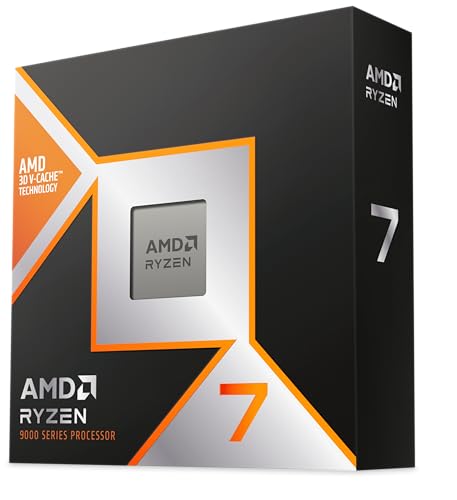
Best Premium: AMD Ryzen 7 9800X3D
Specs
Cores / threads | 8 / 16 |
Max boost clock | 5.2 GHz |
TDP | 120 W |
L3 cache | 96 MB |
Socket | AM5 |
Architecture | Zen 5 with second-generation 3D V-Cache |
Multiplier | Unlocked |
Cores / threads
8 / 16
Max boost clock
5.2 GHz
TDP
120 W
L3 cache
96 MB
Socket
AM5
Architecture
Zen 5 with second-generation 3D V-Cache
Multiplier
Unlocked
What it does well
96 MB of L3 cache is the point. Unreal Engine 5 streams the world in as you move through it, and that traversal work lands on the processor and the memory subsystem rather than the graphics card. It surfaces as frame-time spikes, not as a lower average, which is exactly the kind of problem a large cache absorbs well.
E-Day's Ultra row asks for a 7800X3D. The 9800X3D is the generation after it, with higher clocks and a fully unlocked multiplier, so it clears that bar rather than meeting it. Running a 4K ultra preset on an RTX 5070 Ti or RX 7900 XT and want the processor to be the last thing you think about? This is the one, and the gap to its predecessor is wider than the model numbers suggest.
What you give up
It costs more than double the top pick to buy frames most readers will never see. Ray-traced global illumination pushes E-Day onto the graphics card long before the processor runs short, and at 4K that gap only widens. If your card is not already at the Ultra tier, this chip is solving a problem you do not have.
120 watts and a hot cache die mean a real cooler, and nothing ships in the box. Buyers have flagged thermal throttling on stock-class towers, so budget cooling that matches the chip rather than the socket.
Who it's for
A 4K ultra or 1440p 144 Hz buyer already running an RTX 5070 Ti or RX 7900 XT class card. At that point the graphics card is strong enough that the processor is the next thing in the way, and this takes it out of the conversation.
Best Budget: AMD Ryzen 5 5600

Specs
Cores / threads | 6 / 12 |
Max boost clock | 4.4 GHz |
TDP | 65 W |
L3 cache | 32 MB |
Socket | AM4 |
Architecture | Zen 3 |
Bundled cooler | Wraith Stealth |
Cores / threads
6 / 12
Max boost clock
4.4 GHz
TDP
65 W
L3 cache
32 MB
Socket
AM4
Architecture
Zen 3
Bundled cooler
Wraith Stealth
What it does well
This is the chip in the recommended row. Not an equivalent, not a close relative, the actual part the developers named for 1440p at 60 on high. There is no interpretation involved in deciding whether it clears the bar.
On an existing AM4 board it is a drop-in. Current BIOS, 65 watts, a Wraith Stealth cooler in the box, and nothing else in an older machine has to change. Sitting on a Ryzen 5 1600, 2600 or 3600 with E-Day as the reason you are shopping? This ends the question, and it is the step most AM4 owners should be looking at.
What you give up
AM4 is finished. This is the last processor that board will ever take that is worth buying, and there is nothing above it on the socket that does not cost 3D V-Cache money.
It also sits close enough to current AM5 six-core pricing that putting it in a new build means paying nearly the same for a platform with no road ahead. As a drop-in it is the right call. As the foundation of a fresh machine it is not.
Zen 3 clocks and a 32 MB cache leave nothing in reserve above the recommended tier. It meets that row and stops there. Push toward 4K ultra and this is the part holding you back.
Who it's for
An existing AM4 owner running an older six-core who wants the cheapest honest path to E-Day's recommended tier without touching the motherboard or the memory.
Editor's Pick: AMD Ryzen 7 7800X3D

Specs
Cores / threads | 8 / 16 |
Max boost clock | 5.0 GHz |
TDP | 120 W |
L3 cache | 96 MB |
Socket | AM5 |
Architecture | Zen 4 with 3D V-Cache |
Bundled cooler | None |
Cores / threads
8 / 16
Max boost clock
5.0 GHz
TDP
120 W
L3 cache
96 MB
Socket
AM5
Architecture
Zen 4 with 3D V-Cache
Bundled cooler
None
What it does well
The Ultra row lists this chip by name, which makes it the one purchase in this article that carries no interpretation risk. Same 96 MB cache profile as the premium pick, same AM5 socket, same DDR5, for less money.
It is also the cleanest upgrade for somebody already on an AM5 six-core. No board swap, no memory swap, just a chip and a BIOS update, and you land on the exact part the requirements name for 4K ultra.
What you give up
It is slower than the 9800X3D and it is not fully unlocked, so there is no tuning headroom to close that gap. What you buy is what you get.
Supply thins as the part ages, and pricing moves with it. The value argument against the newer chip holds only while the gap is wide, so check both on the day.
And it is still a 3D V-Cache tax on a game that spends most of its frame budget on ray-traced lighting. Matching the spec box exactly is a reasonable thing to want. It is not the same thing as getting the most frames per dollar, which is a distinction that matters far more in something like a 128-player shooter.
Who it's for
The 4K ultra buyer who wants exactly what the requirements list, or an AM5 owner stepping up from a six-core who would rather not pay current-generation 3D V-Cache pricing.
Bottom line
If you are building fresh for 1440p high, buy the AMD Ryzen 5 9600X and put the savings into the graphics card. If the budget is tight and the socket still matters to you, the AMD Ryzen 5 7600X does the same job. If you already own an AM4 board, the AMD Ryzen 5 5600 is a drop-in that meets the recommended row without touching the rest of the machine. If you are running a 4K ultra preset on a card that can hold it, the AMD Ryzen 7 9800X3D is the one that stops the processor mattering. And if you would rather match the requirements exactly than argue with them, the AMD Ryzen 7 7800X3D is the part they name.
FAQ
Is a Ryzen 5 5600 enough for Gears of War: E-Day?
Yes, for the tier it was named against. The Ryzen 5 5600 is the processor in E-Day's recommended row, which targets 1440p at 60 frames or better on high settings with an upscaler running. It is not a stretch goal for that preset, it is the reference point. Where it runs out is above that row. Push toward 4K ultra and the requirements jump to a 3D V-Cache part, and a Zen 3 six-core has nothing left in reserve to get you there.
What CPU do I need for Gears of War: E-Day at 1440p?
Anything at or above a Ryzen 5 5600 or a Core i5-11600K, which is what the recommended row lists for 1440p at 60 and up on high. In practice any six-core from the last three years clears it. For a fresh build the Ryzen 5 9600X is the pick, because it puts real distance between you and that floor while leaving the rest of the budget for the graphics card, which is where E-Day's ray-traced lighting load lands.
Do you need an X3D CPU for Gears of War: E-Day?
Only at the top. The Ultra row asks for a Ryzen 7 7800X3D or a Core i7-14700K for 4K at 60 and up, so a 3D V-Cache chip is the AMD answer there. Below that row it is money spent on frames you will not see. Playing at 1440p on a mid-tier card, a six-core clears the requirement and the graphics card is what limits you. Buy the 3D V-Cache part when the card is already strong enough to expose the processor.
Will Gears of War: E-Day run on an Intel Core i5?
Yes. The minimum row lists a Core i5-10400 for 1080p at 60 on medium, and the recommended row lists a Core i5-11600K for 1440p at 60 and up on high. Any modern Core i5 clears both comfortably. The picks in this article lean AMD because AM5 still has upgrade road ahead of it and the current Intel desktop platform does not, but an existing LGA1700 machine has no reason to change sockets for this game.
How much RAM does Gears of War: E-Day need?
12 GB at minimum and 16 GB at both the recommended and Ultra tiers. Sixteen is the practical floor for a 2026 gaming build regardless of this game, and on AM5 a DDR5-6000 CL30 kit is the one to reach for because Ryzen's fabric runs one to one at that speed. Storage is the requirement people miss: E-Day wants 115 GB of SSD space at every tier, which is a real planning number if you run a single small drive.
Does Gears of War: E-Day have Unreal Engine 5 shader stutter?
Less than most UE5 titles, at least on paper. E-Day supports Advanced Shader Delivery, which ships precompiled shaders alongside the game on compatible hardware and storefronts and removes first-run shader compilation stutter where it is supported. That support is not universal yet. Traversal stutter, the other UE5 pattern, is a separate problem: it comes from streaming world assets in as you move, and a large L3 cache is the most direct hardware answer to it.
Related Articles

Best CPUs for Battlefield 6 (2026): 128-Player Multiplayer Picks
The best CPUs for Battlefield 6 ranked by 128-player Conquest performance. Five picks from budget to premium, with real benchmark data and 32GB RAM pairing advice.
May 25, 2026

Best CPUs for Star Citizen (2026): Cache, Cores & 32GB RAM
Star Citizen is CPU-bound, not GPU-bound. The best CPU for Star Citizen leans on 3D V-Cache and fast single-thread clocks, plus 32GB of dual-channel DDR5.
Aug 19, 2026

Best CPU Upgrade From Ryzen 5 5600: AM4 or AM5 (2026)
The best CPU upgrade from a Ryzen 5 5600 comes down to one call: a cheap AM4 drop-in or a jump to AM5. We break down both paths with honest cost math.
Jul 8, 2026

9800X3D vs 7800X3D (2026): 11% Average, 25% Where It Counts
9800X3D vs 7800X3D in 2026: an 11% average uplift, 25% in cache-heavy games, and which of four buyer profiles should actually pay the upgrade premium.
Sep 13, 2026

How to Choose a CPU and Motherboard
The buyer's framework for picking a CPU and motherboard pair: use case first, socket second, chip tier third, then the board class that matches.
May 17, 2026