Affiliate Disclosure: As an Amazon Associate we earn from qualifying purchases. Some links may earn us a commission at no cost to you.

Best CPUs for the RX 9070 XT (2026): 5 Picks by Tier
The RX 9070 XT is a 1440p card that stretches to 4K, and that single fact decides your CPU. At 1080p with the settings turned down, a faster processor still adds frames. Move up to 1440p ultra and the card becomes the limiter, at which point the expensive chip and the cheap one return the same number.
So the right answer depends on the panel in front of you. Below are five AM5 picks by tier, each with the resolution where it stops holding the card back, plus what the board and the memory add to the bill.
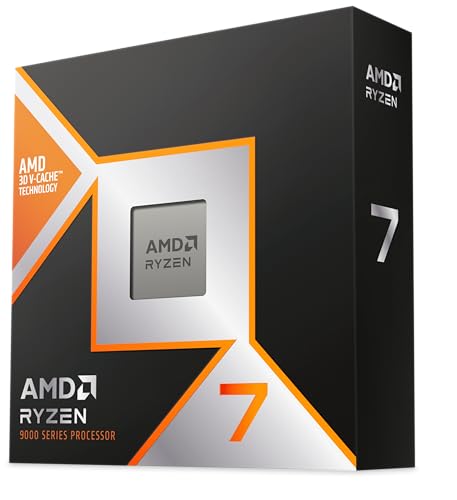
Our top pick: AMD Ryzen 7 9800X3D
The Ryzen 7 9800X3D is the call if your panel is 1080p high refresh or your library leans on sims, strategy and MMOs. Those are the only places an RX 9070 XT will let a processor stretch its legs.
Quick picks
Pick | CPU | Best for | Buy |
|---|---|---|---|
Best Overall | 1080p high refresh and cache-heavy libraries | ||
Best Value | Most of the cache benefit, one tier down | ||
Best Premium | Gaming plus genuine productivity work | ||
Best Budget | 1440p and 4K, budget back into the GPU | ||
Editor's Pick | Mixed use at 1440p, streaming and light creative |
Best Overall
- CPU
- Best for
1080p high refresh and cache-heavy libraries
- Buy
Best Value
- CPU
- Best for
Most of the cache benefit, one tier down
- Buy
Best Premium
- CPU
- Best for
Gaming plus genuine productivity work
- Buy
Best Budget
- CPU
- Best for
1440p and 4K, budget back into the GPU
- Buy
Editor's Pick
- CPU
- Best for
Mixed use at 1440p, streaming and light creative
- Buy
Specs at a glance
CPU | Cores / threads | Boost clock | L3 cache | TDP |
|---|---|---|---|---|
8C / 16T | 5.2 GHz | 96 MB, second-gen 3D V-Cache | 120 W | |
8C / 16T | 5.0 GHz | 96 MB, first-gen 3D V-Cache | 120 W | |
16C / 32T | 5.7 GHz | 128 MB total, 64 MB V-Cache CCD | 170 W | |
6C / 12T | 5.3 GHz | 32 MB | 105 W | |
8C / 16T | 5.5 GHz | 32 MB | 65 W default, 105 W configurable |
- Cores / threads
8C / 16T
- Boost clock
5.2 GHz
- L3 cache
96 MB, second-gen 3D V-Cache
- TDP
120 W
- Cores / threads
8C / 16T
- Boost clock
5.0 GHz
- L3 cache
96 MB, first-gen 3D V-Cache
- TDP
120 W
- Cores / threads
16C / 32T
- Boost clock
5.7 GHz
- L3 cache
128 MB total, 64 MB V-Cache CCD
- TDP
170 W
- Cores / threads
6C / 12T
- Boost clock
5.3 GHz
- L3 cache
32 MB
- TDP
105 W
- Cores / threads
8C / 16T
- Boost clock
5.5 GHz
- L3 cache
32 MB
- TDP
65 W default, 105 W configurable
Benchmarks
Two numbers frame the whole decision. The first shows how large the CPU gap gets when the graphics card is removed as the limiter. The second shows how little the top of the stack buys once you are already on an X3D part.
Suite average with the GPU removed as the limiter. This is the largest CPU gap that exists, and an RX 9070 XT never reaches it.
- 130 FPS
- 90 FPS
Top of the stack compared. The sixteen-core part does not buy frames over the eight-core X3D.
- 195.5 FPS
- 194.8 FPS
How we picked
Resolution comes first. The job of the processor in this build is to keep the graphics card fed at your target resolution, and nothing beyond that. Published scaling testing makes the shape of it clear: with a 5090 clearing the way at 1080p medium, a 9800X3D ran about 41 percent ahead of a Ryzen 5 7600X. Swap in an RX 9070 class card at 1080p ultra and the two chips return the same result. At 1440p and 4K they are the same again. Every pick below is placed against that curve.
Second, the library. Cache-sensitive engines break the resolution rule. Sim racing, flight sims, late-game 4X, factory builders and dense MMO content stay CPU-bound at 1440p and beyond, and that is where the 96 MB V-Cache pool earns its price. If none of that is on your drive, the cache is money you are not spending.
Third, the platform. These are all AM5 parts, which means a board and a DDR5 kit alongside the chip. That used to be a footnote. In 2026 it is not: memory pricing has moved enough that a 32 GB kit can cost more than the step between two CPU tiers, so the board and RAM decisions belong in the same conversation as the processor. Our picks for budget AM5 boards and for DDR5-6000 CL30 kits cover the sensible floors.
Finally, every pick had to be a current Amazon listing with a real SKU behind it, and each one is placed by tier rather than by a single ranking, because the correct chip for a 4K buyer and the correct chip for a 1080p competitive player are not the same chip. If you are looking one tier down, our CPU guide for the RX 9060 XT runs the same framework against AMD's mainstream card.
Best Overall: AMD Ryzen 7 9800X3D
Specs
Cores / threads | 8C / 16T |
Boost clock | 5.2 GHz |
L3 cache | 96 MB, second-gen 3D V-Cache |
TDP | 120 W |
Socket | AM5 |
Memory | DDR5, 6000 CL30 sweet spot |
Cooler | Not included |
Cores / threads
8C / 16T
Boost clock
5.2 GHz
L3 cache
96 MB, second-gen 3D V-Cache
TDP
120 W
Socket
AM5
Memory
DDR5, 6000 CL30 sweet spot
Cooler
Not included
What it does well
This is the chip that raises the ceiling. Second-generation 3D V-Cache sits underneath the compute die rather than on top of it, so the 9800X3D clocks to 5.2 GHz and sheds heat through the IHS the way a normal Ryzen part does. The 96 MB L3 pool is what feeds sim, strategy and MMO engines that thrash cache.
Reviewer scaling testing puts a number on the headroom. With an RTX 5090 doing the rendering at 1080p medium, the 9800X3D turned in 130 fps against roughly 90 for a Ryzen 5 7600X, a gap of about 41 percent. That is the size of the CPU advantage when nothing else is in the way.
It also stays sane thermally. A 120 W part on a decent dual-tower air cooler runs quiet, which matters more than it sounds when the rest of the build already has a 300 W class graphics card in it.
What you give up
The catch is the card you are pairing it with. Once an RX 9070 XT is rendering at 1080p ultra, and certainly at 1440p, published scaling runs show the expensive chip and a six-core Zen 4 part returning the same frame rate. At 4K they are identical. You are buying headroom the GPU will not let you spend.
Eight cores is also the ceiling for anything genuinely threaded. Long renders, big compiles and multi-hour encodes all favour a sixteen-core part, and no amount of cache changes that.
Who it's for
Buy this if your monitor is a 1080p high-refresh panel and you play competitive shooters at the frame ceiling, or if your library is sims, 4X strategy, factory builders or dense MMO content at any resolution. Those engines are cache-bound rather than GPU-bound, so the cache pays for itself. If you are still choosing the display, our guide to the panels that suit this card covers the refresh targets worth aiming at.
Best Value: AMD Ryzen 7 7800X3D

Specs
Cores / threads | 8C / 16T |
Boost clock | 5.0 GHz |
L3 cache | 96 MB, first-gen 3D V-Cache |
TDP | 120 W |
Socket | AM5 |
Memory | DDR5, 6000 CL30 target |
Cooler | Not included |
Cores / threads
8C / 16T
Boost clock
5.0 GHz
L3 cache
96 MB, first-gen 3D V-Cache
TDP
120 W
Socket
AM5
Memory
DDR5, 6000 CL30 target
Cooler
Not included
What it does well
The 7800X3D carries the same 96 MB cache profile as the Best Overall pick, and in the titles where cache is the bottleneck it lands within a few percent. Total War: Warhammer 3 shows the two chips inside run-to-run error, because the test is already GPU bound before either processor runs out of road.
It drops into the same AM5 socket, wants the same DDR5-6000 CL30 kit, and pulls the same 120 W. Anything you were going to buy for the newer chip works here without a second thought.
What you give up
The gap opens up exactly where you would expect. Counter-Strike 2 puts the 7800X3D roughly 13 percent behind, and CPU-bound Flight Simulator 2024 scenes stretch that to somewhere between 17 and 21 percent. If your library is the reason you are buying an X3D chip at all, those are the titles you care about.
First-generation V-Cache also sits on top of the compute die, so it runs warmer under the same cooler and gives up clock headroom. Reports from buyers suggest the live price gap against the newer part has narrowed enough that the value case is worth re-checking before you commit.
Who it's for
This is the pick if you want the cache and not the premium, or if you already own an AM5 board and want a drop-in that clears an RX 9070 XT in everything except the most CPU-pinned corner cases. If you are still weighing the card itself, our RTX 5080 comparison covers what the step up buys.
Best Premium: AMD Ryzen 9 9950X3D

Specs
Cores / threads | 16C / 32T |
Boost clock | 5.7 GHz |
L3 cache | 128 MB total, 64 MB V-Cache CCD |
TDP | 170 W |
Socket | AM5 |
Memory | DDR5, 6000 CL30 target |
Cooler | Not included |
Cores / threads
16C / 32T
Boost clock
5.7 GHz
L3 cache
128 MB total, 64 MB V-Cache CCD
TDP
170 W
Socket
AM5
Memory
DDR5, 6000 CL30 target
Cooler
Not included
What it does well
Sixteen Zen 5 cores with a V-Cache CCD is a genuinely useful combination. Renders, compiles and long encodes finish meaningfully faster than they do on any eight-core part here, and because one chiplet carries the 64 MB cache stack, gaming does not regress the way it would on a plain 9950X.
It boosts to 5.7 GHz, which is the highest clock in this list, and the 128 MB total L3 pool means cache-sensitive titles still land near the top of the chart.
What you give up
In games it buys you nothing. Across a sixteen-game geometric mean at 1080p high and ultra, the 9950X3D returned 194.8 fps against 195.5 for the 9800X3D. That is a rounding error, and behind an RX 9070 XT it is invisible.
The 170 W sustained draw is a real constraint. It wants a serious cooler and a board with the VRM to feed it, which pushes you past the entry AM5 tier and into the mid-range chipsets covered in our B850 board guide. Buyers have also flagged that Windows scheduling decides which chiplet a game lands on, so stale chipset drivers can quietly park a title on the non-cache CCD.
Who it's for
Take this one only if the machine has a second job. If the productivity workload is real, the cores are worth the outlay. If it is a video every few weeks, the money belongs somewhere else in the build.
Best Budget: AMD Ryzen 5 7600X

Specs
Cores / threads | 6C / 12T |
Boost clock | 5.3 GHz |
L3 cache | 32 MB |
TDP | 105 W |
Socket | AM5 |
Memory | DDR5, 6000 CL30 target |
Cooler | Not included |
Cores / threads
6C / 12T
Boost clock
5.3 GHz
L3 cache
32 MB
TDP
105 W
Socket
AM5
Memory
DDR5, 6000 CL30 target
Cooler
Not included
What it does well
The 7600X is the chip the scaling study was run against, which makes it the honest floor for this card. Six Zen 4 cores at 5.3 GHz clear an RX 9070 XT at 1440p and 4K in the overwhelming majority of titles, because at those resolutions the card is the limiter and the processor is just feeding it.
What that buys you is room elsewhere. The difference between this and the top pick covers a better board, a proper DDR5-6000 CL30 kit, or a step up in storage. It also leaves headroom in the power budget, which our 650W sufficiency piece for this card walks through.
What you give up
The 32 MB cache pool is the trade. Late-game Stellaris, a full Factorio base, Flight Simulator over a dense city, a raid night in a packed instance: those are the places six cores and a small cache pool show their limits, and no GPU pairing hides it.
1080p competitive players will feel it too. If you are chasing a 240 Hz or 360 Hz ceiling, this is the wrong end of the list.
Who it's for
This is the pick for 1440p and 4K buyers whose library is AAA and console ports, and for anyone whose budget is already stretched by the card itself. It is also a live socket, so a later X3D chip is a drop-in upgrade rather than a platform rebuild. If you are weighing the cheaper sibling card instead, the best CPUs for the RX 9070 GRE runs this same ladder against a 12 GB buffer.
Editor's Pick: AMD Ryzen 7 9700X

Specs
Cores / threads | 8C / 16T |
Boost clock | 5.5 GHz |
L3 cache | 32 MB |
TDP | 65 W default, 105 W configurable |
Socket | AM5 |
Memory | DDR5, 6000 CL30 target |
Cooler | Not included |
Cores / threads
8C / 16T
Boost clock
5.5 GHz
L3 cache
32 MB
TDP
65 W default, 105 W configurable
Socket
AM5
Memory
DDR5, 6000 CL30 target
Cooler
Not included
What it does well
The 9700X is the eight-core Zen 5 middle ground. It gives you two more cores than the Best Budget pick for streaming, encoding and the kind of light creative work that a six-core part starts to feel tight in, and it does it at a 65 W default TDP that a mid-tier air cooler handles without noise.
Zen 5 IPC also means the per-core performance is closer to the top of the stack than the older Zen 4 parts here, so nothing in the mainstream library feels slow.
What you give up
There is no V-Cache, so the sim and strategy ceiling is the same 32 MB ceiling the Best Budget pick has, just with more cores behind it. In pure gaming terms the Best Value pick is the better buy at a similar outlay, and you should be honest with yourself about which of those two things you actually do.
The 65 W default is also conservative. The advertised clocks show up on the 105 W profile, which means enabling it in BIOS and giving the chip a cooler that can take the extra heat.
Who it's for
This is the mixed-use pick. You game at 1440p, you stream some of it, you cut video occasionally, and you would rather have core headroom than a cache pool the card will not let you exploit. The same logic drives our pairing guide for the RTX 5070 Ti on the Nvidia side.
Bottom line
If you play at 1440p or 4K on mostly AAA titles, buy the Ryzen 5 7600X and put the difference into the board, the memory or the storage. If your library is sims, strategy or MMOs at any resolution, buy the Ryzen 7 9800X3D. If you want the cache without the premium, the Ryzen 7 7800X3D gets you most of the way. If the machine also renders or compiles for a living, the Ryzen 9 9950X3D is the only pick that adds anything. And if you stream at 1440p and want cores rather than cache, take the Ryzen 7 9700X. Still weighing the card itself, our RTX 5070 Ti comparison covers the other side of that decision.
FAQ
Does the RX 9070 XT need an X3D CPU?
Only if your resolution or your library makes the CPU the limiter. At 1440p and 4K the card runs out of road before any of these chips do, and published scaling testing shows an X3D part and a six-core Zen 4 part returning the same frame rate. The exception is cache-heavy content: sims, 4X strategy, factory builders and dense MMO instances lean on the L3 pool regardless of resolution, and so do 1080p competitive players chasing a high refresh ceiling.
Will a Ryzen 5 bottleneck the RX 9070 XT?
Not in a way you will see at 1440p or 4K. A Ryzen 5 7600X clears the card in the overwhelming majority of titles at those resolutions because the GPU is doing the limiting. Drop to 1080p with settings turned down, or load a cache-bound engine, and the six-core part becomes the constraint. Match the chip to the panel you actually own rather than to the one you might buy later.
What CPU should you pair with an RX 9070 XT at 1440p?
For most 1440p libraries, anything from a Ryzen 5 7600X upward is enough, and the money saved is better spent on a DDR5-6000 CL30 kit or a board with a VRM that will not throttle. If your 1440p library is sim, strategy or MMO heavy, step up to a Ryzen 7 7800X3D or 9800X3D, since those engines stay CPU-bound even when the rest of the frame is not.
Is the 9800X3D overkill for an RX 9070 XT at 4K?
In pure frame-rate terms, yes. Scaling runs show identical results at 4K between the 9800X3D and a Ryzen 5 7600X once an RX 9070 class card is rendering. The argument for buying it anyway is upgrade horizon: if you plan to move to a faster card on the same AM5 board in two or three years, the CPU will still be current. If the card is the last GPU this machine gets, spend the difference elsewhere.
Do you need a new motherboard and DDR5 kit for these CPUs?
Every pick here is AM5, so if you are coming from AM4 or from Intel you need a new board and DDR5 memory. Budget for both up front. DDR5 pricing moved sharply through 2026, and a 32 GB kit is now a serious line item rather than an afterthought, in several cases larger than the step between two CPU tiers. A B-series board is enough for any single-GPU gaming build here; only the sixteen-core pick argues for a stronger VRM.
Related Articles

Best Gaming Monitors for the RX 9070 XT (2026): 5 Picks
The best monitor for an RX 9070 XT, matched to what the card genuinely feeds: 1440p high refresh, QD-OLED, an ultrawide, plus when a 4K panel makes sense.
Aug 11, 2026

Is 650W Enough for an RX 9070 XT? Yes on ATX 3.1 (2026)
Is 650W enough for an RX 9070 XT? Yes on ATX 3.1 with a Ryzen 5 or 7, no on a factory OC card. Here is the headroom math per CPU pairing and the picks.
Sep 26, 2026

Best CPUs for the RTX 5070 Ti (2026): 5 Picks by Tier
The best CPU for an RTX 5070 Ti depends on your resolution. Five picks from budget AM5 to 16-core flagship, plus the bottleneck math for 1080p, 1440p and 4K.
Aug 11, 2026

RTX 5070 Ti vs RX 9070 XT (2026): 5% Raster, 15% RT Gap
RTX 5070 Ti vs RX 9070 XT: the 9070 XT is 5% behind at 1440p raster for far less money, the 5070 Ti wins ray tracing by 15%. Which one you should buy.
Sep 3, 2026

How to Choose a CPU and Motherboard
The buyer's framework for picking a CPU and motherboard pair: use case first, socket second, chip tier third, then the board class that matches.
May 17, 2026