Affiliate Disclosure: As an Amazon Associate we earn from qualifying purchases. Some links may earn us a commission at no cost to you.

Best CPUs for the RX 9070 GRE (2026): 5 No-Bottleneck Picks
The RX 9070 GRE is a 1440p raster card with 48 compute units and a 12 GB frame buffer. That combination picks your processor for you, and it picks one further down the stack than most buyers expect.
Short version: the Ryzen 7 9700X is the pairing you never have to revisit, and the Ryzen 5 9600X returns the same frames in a pure gaming build for a lot less money. The cache flagship everyone reaches for first is the one chip on this list the GRE cannot stretch.
Our top pick: AMD Ryzen 7 9700X
Eight Zen 5 cores inside a 65 W envelope is the last rung on this ladder a GRE can still register, and it is the only pick that also covers recording or streaming off the same machine. Buy it once and stop thinking about the CPU.

Quick picks
Pick | CPU | Best for | Buy |
|---|---|---|---|
Best Overall | One decision, gaming plus everything else | ||
Best Value | Pure 1440p gaming on a GRE | ||
Best Premium | Cache-shaped libraries and a future GPU | ||
Best Budget | The cheapest credible AM5 GRE build | ||
Editor's Pick | Cache without the flagship premium |
Best Overall
- CPU
- Best for
One decision, gaming plus everything else
- Buy
Best Value
- CPU
- Best for
Pure 1440p gaming on a GRE
- Buy
Best Premium
- CPU
- Best for
Cache-shaped libraries and a future GPU
- Buy
Best Budget
- CPU
- Best for
The cheapest credible AM5 GRE build
- Buy
Editor's Pick
- CPU
- Best for
Cache without the flagship premium
- Buy
Specs at a glance
CPU | Cores / threads | Boost clock | L3 cache | TDP | Socket |
|---|---|---|---|---|---|
8C / 16T | 5.5 GHz | 32 MB | 65 W | AM5 | |
6C / 12T | 5.4 GHz | 32 MB | 65 W | AM5 | |
8C / 16T | 5.2 GHz | 96 MB with 3D V-Cache | 120 W | AM5 | |
6C / 12T | 5.3 GHz | 32 MB | 105 W | AM5 | |
8C / 16T | 5.0 GHz | 96 MB with 3D V-Cache | 120 W | AM5 |
- Cores / threads
8C / 16T
- Boost clock
5.5 GHz
- L3 cache
32 MB
- TDP
65 W
- Socket
AM5
- Cores / threads
6C / 12T
- Boost clock
5.4 GHz
- L3 cache
32 MB
- TDP
65 W
- Socket
AM5
- Cores / threads
8C / 16T
- Boost clock
5.2 GHz
- L3 cache
96 MB with 3D V-Cache
- TDP
120 W
- Socket
AM5
- Cores / threads
6C / 12T
- Boost clock
5.3 GHz
- L3 cache
32 MB
- TDP
105 W
- Socket
AM5
- Cores / threads
8C / 16T
- Boost clock
5.0 GHz
- L3 cache
96 MB with 3D V-Cache
- TDP
120 W
- Socket
AM5
Verdict: where the RX 9070 GRE CPU bottleneck sits
Start with what the card is. The GRE runs 48 of Navi 48's compute units and 3,072 stream processors, with 12 GB of GDDR6 on a 192-bit bus feeding it 432 GB/s of bandwidth, boosting up to 2.79 GHz inside a 220 W board power budget. In 1440p raster that puts it roughly a fifth ahead of an RTX 5060 Ti 16 GB and a little ahead of an RTX 4070. It is a 1440p card, and the 12 GB buffer is the first thing to bind once ray tracing goes on.
At that resolution a card in this class is the limiter in nearly everything. TechSpot scaled a Ryzen 7 9800X3D against a Ryzen 5 7600X across four different graphics cards to measure exactly this. With an RTX 5090 attached, the cache flagship led by about 5% on averages at 1440p and about 9% on 1% lows. Drop to an RTX 5080, an RX 9070, or an RX 9060 XT and the gap closes to zero, because the test goes fully GPU limited and both chips return the same numbers.
The GRE sits below the RX 9070 in that lineup, so the convergence is stronger here, not weaker. Whatever separates a cache flagship from a good six-core at 1080p on a 5090 does not reach a 1440p monitor behind this card. If the mechanics are new to you, how bottlenecks shift with resolution walks through why the limiter moves, and our wider 1440p CPU roundup arrives at the same arithmetic from the other direction.
So the useful question stops being which processor is fastest and becomes which processor stops being the problem, then where the rest of the budget goes. On a GRE build that is DDR5-6000 CL30 instead of a slower kit, 2 TB of Gen4 storage instead of 1 TB, and a 1440p panel worth looking at. You notice all three every time you sit down. The gap between a six-core and a cache flagship, at this resolution, behind this card, you do not.
How we picked
We size the processor to the graphics card at the resolution the buyer plays at, not the other way round. The GPU sets the experience for the next three or four years; the CPU's job is to stay out of its way. That ordering is why this list opens with a six-core and treats the cache parts as a conditional rather than a default, and the long version lives in our CPU and motherboard framework.
Every pick here is AM5 on purpose. The socket still has runway, idle power is lower, and the gaming stack is stronger top to bottom. The conditions that would flip a GRE build to Intel are narrow: heavy Premiere or Resolve work that leans on QuickSync for hardware encode, or a need for native Thunderbolt on the board without paying for a halo chipset. Neither one describes the person shopping a 1440p raster card.
Board choice follows the chip rather than the badge. A GRE build has no use for a top-tier X870E. A B650 or B850 with real VRM heatsinks and thermal pad coverage across the MOSFETs runs anything on this list without throttling. What we would avoid is the bottom rung of B650, especially under one of the 120 W cache parts, where the heatsink is a thin slab and the sustained duty cycle is real. Board options that clear the VRM bar covers the shortlist.
Two line items get forgotten at this budget. Four of the five picks ship without a cooler, so a tower cooler is a budget line rather than an afterthought. And DDR5-6000 CL30 is the floor on AM5, not the ceiling: Ryzen's Infinity Fabric wants 6000 MT/s running 1:1, and a slower kit gives up real frames in CPU-bound titles to save a rounding error.
Best Overall: AMD Ryzen 7 9700X
Specs
Cores / threads | 8C / 16T |
Base clock | 3.8 GHz |
Boost clock | 5.5 GHz |
L3 cache | 32 MB |
TDP | 65 W |
Socket | AM5 |
Memory | DDR5 with EXPO |
Cooler | Not included |
Cores / threads
8C / 16T
Base clock
3.8 GHz
Boost clock
5.5 GHz
L3 cache
32 MB
TDP
65 W
Socket
AM5
Memory
DDR5 with EXPO
Cooler
Not included
What it does well
This is the chip that never becomes the story. At 1440p behind a GRE it is not the limiter in anything the card can render, and the 65 W envelope means it runs cool and quiet on an inexpensive tower cooler rather than demanding a liquid loop.
Eight cores matter in exactly one place a six-core starts to wobble: running a game and a capture or encode pipeline off the same machine. If Discord streaming, OBS, or a second monitor full of background work is part of the plan, the headroom is real rather than theoretical.
It also has the longest tail of anything on this list. AM5 has years left, so the 9700X can sit in the socket through a GPU upgrade or two before it becomes the thing holding the build back.
What you give up
In a pure gaming library at 1440p, it is close to indistinguishable from the Ryzen 5 below it. The two extra cores are insurance against a workload you might add later, not frames you get today.
It also lands in the same money as the 7800X3D, and in sim, strategy, and MMO titles the cache chip beats it outright. If your library leans that way, the 9700X is the wrong eight-core.
Who it's for
The buyer who wants one processor decision and no second thoughts, who does something besides game on the machine, and who is pairing the GRE with a 1440p high-refresh panel.
Best Value: AMD Ryzen 5 9600X

Specs
Cores / threads | 6C / 12T |
Base clock | 3.9 GHz |
Boost clock | 5.4 GHz |
L3 cache | 32 MB |
TDP | 65 W |
Socket | AM5 |
Memory | DDR5 with EXPO |
Cooler | Not included |
Cores / threads
6C / 12T
Base clock
3.9 GHz
Boost clock
5.4 GHz
L3 cache
32 MB
TDP
65 W
Socket
AM5
Memory
DDR5 with EXPO
Cooler
Not included
What it does well
This is the pick most GRE buyers should actually make. Six Zen 5 cores keep a 48-compute-unit card fed at 1440p with room to spare, and the scaling data says the frames land in the same place as the eight-core above it.
Everything else about the build stays identical: same AM5 socket, same DDR5, same board shortlist, same 65 W thermal behaviour, same upgrade path. Nothing is compromised except the core count you were not using.
What it buys you is the rest of the build. The difference between this and the flagship is roughly a memory tier, a storage tier, and a real step up in monitor, and the panel you pair with it is the single part you look at every session.
What you give up
Six cores gets thin if you plan to game and stream simultaneously off one box. That is the one workload where the eight-core above it earns its money.
There is no 3D cache here either, so a library built on sim racing, late-game strategy, or dense MMO content will feel the 1% lows more than a cache part would. For shooters, AAA single-player, and console ports at 1440p, you will not.
Who it's for
The single-purpose 1440p gamer pairing the GRE with a 144 Hz to 180 Hz panel, who would rather put the difference into memory, a 2 TB drive, or the display.
Best Premium: AMD Ryzen 7 9800X3D
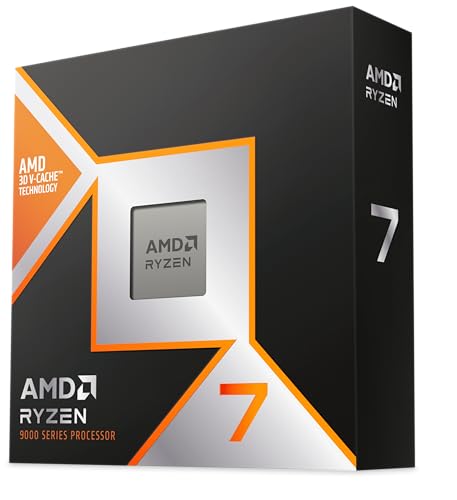
Specs
Cores / threads | 8C / 16T |
Base clock | 4.7 GHz |
Boost clock | 5.2 GHz |
L3 cache | 96 MB with 3D V-Cache |
TDP | 120 W |
Socket | AM5 |
Memory | DDR5 with EXPO |
Multiplier | Unlocked |
Cores / threads
8C / 16T
Base clock
4.7 GHz
Boost clock
5.2 GHz
L3 cache
96 MB with 3D V-Cache
TDP
120 W
Socket
AM5
Memory
DDR5 with EXPO
Multiplier
Unlocked
What it does well
The 96 MB cache pool is not marketing. In sim racing, flight sim, late-game 4X and city builders, dense MMO raid content, and Escape from Tarkov, 3D V-Cache turns into 1% lows you can feel, and 1% lows are what those genres are made of.
It is also the only pick here with obvious headroom. If the GRE is a stopgap and a card two tiers up is coming in eighteen months, this chip will still be ahead of that GPU when it arrives.
Zen 5 clocks and an unlocked multiplier mean it is no slouch outside cache-heavy titles either. Nothing about it is a compromise except the price relative to what this particular GPU can use.
What you give up
Behind a 1440p card with a 12 GB buffer, most of what you are paying for never reaches the screen. That is the whole argument, and it does not go away because the chip is good.
It is the largest single line item on this list by a wide margin, it pulls 120 W rather than 65 W, and it wants a cooler and a board built for that. Whether 3D V-Cache earns its price is worth reading before you commit.
Who it's for
The buyer whose library is genuinely cache-shaped, or who is buying the processor first and treating the GRE as a placeholder until a bigger card arrives.
Best Budget: AMD Ryzen 5 7600X

Specs
Cores / threads | 6C / 12T |
Base clock | 4.7 GHz |
Boost clock | 5.3 GHz |
L3 cache | 32 MB |
TDP | 105 W |
Socket | AM5 |
Memory | DDR5 with EXPO |
Cooler | Not included |
Cores / threads
6C / 12T
Base clock
4.7 GHz
Boost clock
5.3 GHz
L3 cache
32 MB
TDP
105 W
Socket
AM5
Memory
DDR5 with EXPO
Cooler
Not included
What it does well
Zen 4 six-core performance is still comfortably more than a 1440p GRE workload asks for. This is the cheapest chip on the list that does not hold the card back, and that is the entire job.
It lands on the same AM5 socket as everything else here, so the board, the memory, and the cooler all carry forward. When the time comes to step up, the upgrade is one part rather than a platform.
Clocks are high enough that it does not feel like a budget part in day-to-day use. In GPU-bound titles at 1440p it returns the same numbers as chips costing several times more.
What you give up
You give up a generation of IPC and a much higher power budget. At 105 W it runs hotter and louder than the 65 W Zen 5 six-core for performance the GRE will not show you, which is a strange trade to make for a small saving.
It is also the pick most likely to feel dated first. Buyers have flagged that the non-X Ryzen 5 7600 has been listing above both this chip and the Zen 5 9600X, so the usual budget ordering does not hold right now. Check all three before defaulting to the non-X out of habit.
Who it's for
The buyer assembling the cheapest credible GRE build who still wants a socket with a future rather than a dead platform.
Editor's Pick: AMD Ryzen 7 7800X3D

Specs
Cores / threads | 8C / 16T |
Base clock | 4.2 GHz |
Boost clock | 5.0 GHz |
L3 cache | 96 MB with 3D V-Cache |
TDP | 120 W |
Socket | AM5 |
Memory | DDR5 with EXPO |
Multiplier | Locked |
Cores / threads
8C / 16T
Base clock
4.2 GHz
Boost clock
5.0 GHz
L3 cache
96 MB with 3D V-Cache
TDP
120 W
Socket
AM5
Memory
DDR5 with EXPO
Multiplier
Locked
What it does well
This is the cache chip without the flagship premium. It carries the same 96 MB pool that makes the 9800X3D good at simulation, strategy, and MMO content, one rung down the ladder.
In GPU-bound 1440p titles it is level with everything else on this list, which is the point: you are not paying for cache you cannot use, you are paying for cache in the specific titles that use it.
Reports from buyers comparing the two suggest the gap to the 9800X3D is currently wider than the threshold where swapping up makes sense, which is what puts this chip in the Editor's Pick slot rather than the compromise slot.
What you give up
Locked multiplier, lower clocks, and Zen 4 rather than Zen 5 IPC in everything that is not cache-bound. If your library has no simulation or strategy in it, you are paying for a feature you will not touch.
It is an older part, so the platform tail is shorter than the Zen 5 picks. That matters less than it sounds on AM5, but it is the honest counterweight to the price.
Who it's for
The sim racer, flight simmer, or raid-logger on a GRE budget who wants 3D V-Cache and does not want to pay flagship money to get it.
Bottom line
If you want one processor decision and no second thoughts, buy the Ryzen 7 9700X. If the machine is purely a 1440p gaming build, the Ryzen 5 9600X gets you the same frames and the difference belongs in the memory and the monitor. If your library is sim racing, flight sim, or late-game strategy, buy the Ryzen 7 7800X3D and skip the flagship premium. If you are building as cheaply as AM5 allows, the Ryzen 5 7600X still will not hold the card back.
If the card itself is still an open question, how the GRE compares with the RTX 5070 is the decision upstream of this one. And once the processor is settled, PSU sizing for a GRE build is the next thing to get right.
FAQ
Will the RX 9070 GRE bottleneck with a Ryzen 5 CPU?
Not at 1440p. A Ryzen 5 9600X or 7600X has more than enough throughput to keep a 48-compute-unit card fed at that resolution, and scaling tests on graphics cards in the GRE's class show a six-core and a cache flagship returning the same frame rates once the GPU becomes the limiter. Where a six-core can show its limits is a game-plus-capture workload on one machine, or a library built on simulation and strategy titles that lean on cache. For a single-purpose 1440p gaming build, a Ryzen 5 is the right amount of processor.
Is the Ryzen 7 9800X3D overkill for the RX 9070 GRE?
For most GRE buyers, yes. The 9800X3D is the fastest gaming processor you can drop into an AM5 socket, but its advantage comes from a 96 MB cache pool that only separates itself when the CPU is the limiter. Behind a 1440p card with a 12 GB buffer, it rarely is. Two cases make it worth the money anyway: a library built on sim racing, flight sim, late-game strategy, or dense MMO content where 1% lows are the experience, or a firm plan to replace the GRE with a card two tiers up.
Do you need an X3D CPU for the RX 9070 GRE?
You do not, and buying one by reflex is the most common overspend in this pairing. 3D V-Cache pays off in a specific shape of game: heavy simulation, late-game 4X and city builders, MMO raid content, and Escape from Tarkov. If that describes your library, the Ryzen 7 7800X3D is the sensible cache buy on a GRE budget. If your library is shooters, AAA single-player, and console ports at 1440p, a non-cache six or eight-core returns the same frames and leaves money for the rest of the build.
What motherboard and RAM should I pair with these CPUs?
A B650 or B850 board with real VRM heatsinks, and a 32 GB DDR5-6000 CL30 kit. None of these chips needs an X870E, and money saved on the board is better spent on the graphics tier or the display. What matters on the board is that the VRM was built to feed the chip, so skip the bottom rung of B650 under a 120 W cache part. On memory, 6000 MT/s at CL30 is the AM5 sweet spot because Infinity Fabric runs 1:1 there, and faster kits buy almost nothing on a gaming build.
Should I pair the RX 9070 GRE with an Intel CPU instead?
Only under narrow conditions. Arrow Lake parts such as the Core Ultra 5 245K sit on a platform with no announced upgrade runway, and their gaming position against Ryzen has not moved enough to change the default. The cases where Intel still makes sense are workflow cases rather than gaming ones: heavy Premiere or Resolve editing that leans on QuickSync hardware encode, or a build that needs native Thunderbolt on the board. For a 1440p gaming build around a GRE, AM5 is the stronger platform.
Does the GRE's 12 GB of VRAM change which CPU I should buy?
It reinforces the case for buying less processor. The 12 GB buffer is the first thing to bind on this card once ray tracing is switched on, and no CPU fixes that. The levers that do are settings, upscaling, and texture quality. If the buffer is what caps your frame rate in a given title, spending the difference on a cache flagship changes nothing on screen. Put that money into memory, storage, and the display instead, all of which you notice in every session.
Related Articles

RX 9070 GRE vs RTX 5070: Which 1440p GPU to Buy in 2026
RX 9070 GRE vs RTX 5070: same 12GB, same nominal price, different street reality. Our 1440p verdict by buyer profile, with ray tracing and FSR 4 weighed in.
Aug 9, 2026

RX 9070 GRE vs RTX 5060 Ti 16GB: 1440p Verdict (2026)
RX 9070 GRE vs RTX 5060 Ti 16GB at 1440p: the GRE takes raster by a clear margin, the 5060 Ti takes over the moment ray tracing goes on. Here is the buy call.
Aug 17, 2026

Best Gaming Monitors for the RX 9070 GRE (2026): 5 Picks
The best monitor for an RX 9070 GRE, matched to what 12GB on a 192-bit bus actually feeds: 1440p high refresh, QD-OLED, an ultrawide, and the 4K truth.
Aug 26, 2026

Is 550W Enough for an RX 9070 GRE? 650W Math (2026)
Is 550W enough for an RX 9070 GRE? The card pulls 220W measured, so the answer turns on your CPU. Here is the full wattage math and which PSU to buy instead.
Sep 18, 2026

Best CPUs for 1440p Gaming (2026): Five Top Picks Ranked
Best CPUs for 1440p gaming in 2026, picked by GPU pairing and library. Honest answer on whether the 9800X3D is overkill, and when the 9700X or 265K wins.
May 20, 2026