Affiliate Disclosure: As an Amazon Associate we earn from qualifying purchases. Some links may earn us a commission at no cost to you.

How Many CPU Cores Do You Need for Gaming in 2026?
How many CPU cores do you need for gaming? Six still clears nearly every game at the frame rates a normal monitor can show. Eight is the safe buy, because the extra pair absorbs everything running behind the game without costing you clocks. Twelve or sixteen only pays for itself when a second workload runs at the same time.
That is the whole answer. The rest of this page turns it into a part number: one chip per workload lane, what each one gives up, and the point where spending on cores stops buying frames and starts buying render time. If you are still choosing a platform, start with how to choose a CPU and motherboard.
Our top pick: AMD Ryzen 7 9800X3D
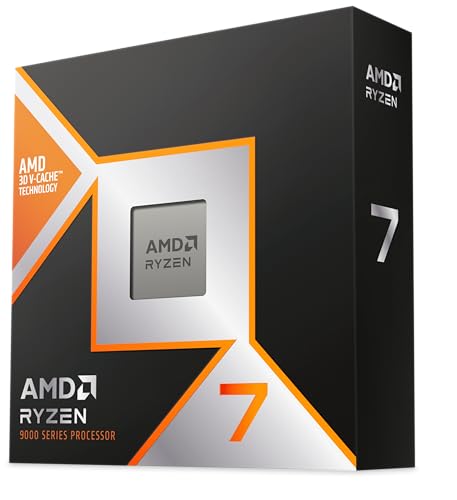
For most builders the honest answer is eight cores with a large cache, and the AMD Ryzen 7 9800X3D is the chip that combination points at. Its 96 MB of L3 lifts the 1% lows in the engines that stutter, which is the part of gaming you feel.
Quick picks
What you do with the PC | Cores you need | The chip | Buy |
|---|---|---|---|
Esports and competitive play | 6 cores / 12 threads | ||
Single-player and AAA gaming | 8 cores / 16 threads | ||
Gaming plus light creative work | 8 cores / 16 threads | ||
Stream and game on one PC | 12 cores / 24 threads | ||
Rendering, compiling, batch export | 16 cores / 32 threads |
Esports and competitive play
- Cores you need
6 cores / 12 threads
- The chip
- Buy
Single-player and AAA gaming
- Cores you need
8 cores / 16 threads
- The chip
- Buy
Gaming plus light creative work
- Cores you need
8 cores / 16 threads
- The chip
- Buy
Stream and game on one PC
- Cores you need
12 cores / 24 threads
- The chip
- Buy
Rendering, compiling, batch export
- Cores you need
16 cores / 32 threads
- The chip
- Buy
Specs at a glance
CPU | Cores / threads | Boost clock | L3 cache | TDP |
|---|---|---|---|---|
6 / 12 | 5.4 GHz | 32 MB | 65 W | |
8 / 16 | 5.2 GHz | 96 MB (3D V-Cache) | 120 W | |
8 / 16 | 5.5 GHz | 32 MB | 65 W | |
12 / 24 | 5.5 GHz | 128 MB (3D V-Cache) | 120 W | |
16 / 32 | 5.7 GHz | 64 MB | 170 W |
- Cores / threads
6 / 12
- Boost clock
5.4 GHz
- L3 cache
32 MB
- TDP
65 W
- Cores / threads
8 / 16
- Boost clock
5.2 GHz
- L3 cache
96 MB (3D V-Cache)
- TDP
120 W
- Cores / threads
8 / 16
- Boost clock
5.5 GHz
- L3 cache
32 MB
- TDP
65 W
- Cores / threads
12 / 24
- Boost clock
5.5 GHz
- L3 cache
128 MB (3D V-Cache)
- TDP
120 W
- Cores / threads
16 / 32
- Boost clock
5.7 GHz
- L3 cache
64 MB
- TDP
170 W
How we decide how many cores you need
Start from the workload, not the core count. A game engine runs one heavy render thread, a handful of medium worker threads, and a long tail of small jobs. That shape has not changed much in a decade. It means the first six cores do most of the work, cores seven and eight mop up background load, and everything past that sits idle unless something else is running.
Cache and clocks decide the frame rate long before core count does. A fast six-core routinely beats a slower eight-core of the same generation, and a cache-heavy eight-core beats both. Core count is the last variable to check, not the first. If frames are the goal, the GPU and the monitor set the budget and the CPU is sized to keep up with them. Working out where the bottleneck sits is the check to run before you spend anything.
So the ladder is short. Six cores for one thing at a time. Eight cores when a game shares the machine with a browser, a chat client, and a capture overlay. Twelve when a software encode runs alongside the game. Sixteen when the deadline is a render bar rather than a match.
Why more cores stop helping in games
Reviewer testing keeps landing in the same place. A 24-game sweep comparing same-generation six-core and eight-core parts found the two separated by very little in most titles, with only a handful of engines showing a margin wider than the clock difference between them. Adding cores to a workload that cannot use them changes nothing.
Where the extra cores do show up is frame pacing. Two spare cores give the scheduler somewhere to put shader compilation, asset streaming, and every background service Windows starts without asking. Average FPS barely moves. The 1% lows get smoother, and smoother lows are what reads as a better experience. That is the real argument for eight over six, and it is a modest one. Our best CPUs for gaming picks lean on the same reasoning.
Streaming shifts the math
Encoding is the one gaming-adjacent job that genuinely eats threads. A software x264 encode at a quality preset worth using will take four to six cores on its own while the game is still asking for six. That is the case for twelve cores, and it is a real one.
It is also the case most single-PC streamers do not need. NVENC on a GeForce card and AMF on a Radeon run the encode on dedicated silicon, which drops the CPU cost of a broadcast close to nothing. Check which encoder your setup uses before buying threads for it. The cohort-by-cohort breakdown lives in our CPUs for streaming and gaming guide.
Where sixteen cores finally earn it
Rendering, video export, compilation, and simulation scale close to linearly with cores. Double the cores, roughly halve the wall time. There is no ambiguity in this lane and no clever trade-off to reason about. If a progress bar sets your day, buy cores.
The catch is that this rarely helps the same person twice. A sixteen-core chip usually sits behind a cache-heavy eight-core in games while costing more, so buying it for gaming headroom is buying the wrong thing. We ran that comparison directly in cores against cache.
Six cores: AMD Ryzen 5 9600X

Specs
Cores / threads | 6 / 12 |
Base clock | 3.9 GHz |
Boost clock | 5.4 GHz |
L3 cache | 32 MB |
TDP | 65 W |
Socket | AM5 |
Architecture | Zen 5 |
Cores / threads
6 / 12
Base clock
3.9 GHz
Boost clock
5.4 GHz
L3 cache
32 MB
TDP
65 W
Socket
AM5
Architecture
Zen 5
What it does well
Six Zen 5 cores at 5.4 GHz is enough to feed any graphics card you would reasonably pair with them at 1440p. In competitive titles the AMD Ryzen 5 9600X holds frame rates that outrun most monitors, and it does it on a 65 W budget, which means a tower cooler and a mid-range board rather than a cooling project.
The platform matters as much as the chip here. AM5 leaves the door open, so a builder can start on six cores now and drop in a cache-heavy part later without touching the board or the memory. That upgrade path is the strongest argument for starting at this tier instead of a dead-end socket.
What you give up
Headroom is what you trade away. Run the game, a browser with a video in it, a chat client, and a capture overlay at once and six cores show it in the 1% lows before the average frame rate moves at all.
The 32 MB L3 pool is the other gap. Simulation-heavy games and large open worlds lean on cache, and this chip has the smallest one in the group. Reports from buyers also point at six cores being the tier that ages fastest, which is worth weighing if you keep a build for five years.
Who it's for
Buy it if you play one thing at a time at 1080p or 1440p, care most about frames per dollar, and would rather put the savings into the graphics card. It is the sensible floor, not a compromise.
Eight cores for AAA gaming: AMD Ryzen 7 9800X3D
Specs
Cores / threads | 8 / 16 |
Base clock | 4.7 GHz |
Boost clock | 5.2 GHz |
L3 cache | 96 MB (3D V-Cache) |
TDP | 120 W |
Socket | AM5 |
Architecture | Zen 5 |
Cores / threads
8 / 16
Base clock
4.7 GHz
Boost clock
5.2 GHz
L3 cache
96 MB (3D V-Cache)
TDP
120 W
Socket
AM5
Architecture
Zen 5
What it does well
The 96 MB L3 pool is the whole story. Engines that miss cache stall the render thread, and stalls are what a player feels as a hitch rather than as a lower number. The AMD Ryzen 7 9800X3D turns a chunk of those misses into hits, and the gain lands hardest in traversal-heavy open worlds and big simulation ticks.
It is also an eight-core, so background load has somewhere to go. A capture overlay, a voice client, and a browser can all run without the game noticing. That combination of a wide cache and two spare cores is why this chip is the default recommendation for a machine that mostly plays games.
What you give up
You pay a clear premium over a plain eight-core for a benefit that only shows up in the games that respond to cache. In clock-bound work the 9800X3D gives ground to its cheaper sibling, because the cache die costs it top boost frequency.
It also runs hot for a 120 W part. The stacked cache sits between the cores and the heat spreader, so a cheap cooler will throttle it. Budget for real air cooling or an AIO and treat that as part of the price rather than as an optional extra.
Who it's for
Buy it if the PC is mostly a gaming machine and you want the CPU question closed for the life of the platform. It is the pick for the reader who plays big single-player games and wants smooth lows more than a higher headline number.
Eight cores for mixed use: AMD Ryzen 7 9700X

Specs
Cores / threads | 8 / 16 |
Base clock | 3.8 GHz |
Boost clock | 5.5 GHz |
L3 cache | 32 MB |
TDP | 65 W |
Socket | AM5 |
Architecture | Zen 5 |
Cores / threads
8 / 16
Base clock
3.8 GHz
Boost clock
5.5 GHz
L3 cache
32 MB
TDP
65 W
Socket
AM5
Architecture
Zen 5
What it does well
Eight cores at 5.5 GHz on a 65 W package is the most balanced part in this list. The AMD Ryzen 7 9700X has the highest boost clock of the group, which makes it the quickest here in the clock-bound work that fills a normal day: spreadsheet models, single-threaded exports, code that will not parallelise.
It stays cool enough for a compact case and a modest cooler, and it handles a game plus a light encode without dropping frames. For a machine that games most nights and works some days, that balance is worth more than a cache win in six specific titles.
What you give up
Against the 9800X3D it loses the games that live on cache, and it loses them by more than the clock advantage wins back. If your library is open-world and simulation-heavy, this is the wrong eight-core.
The 65 W package also caps sustained all-core throughput. Under a long render it settles below what the 9900X3D and 9950X hold, so this is not the chip to buy if the machine spends hours at full load.
Who it's for
Buy it if you game and work on the same box, want an eight-core, and do not want to pay the cache premium for either job. It is the practical middle of the ladder.
Twelve cores for streaming: AMD Ryzen 9 9900X3D

Specs
Cores / threads | 12 / 24 |
Base clock | 4.4 GHz |
Boost clock | 5.5 GHz |
L3 cache | 128 MB (3D V-Cache) |
TDP | 120 W |
Socket | AM5 |
Architecture | Zen 5 |
Cores / threads
12 / 24
Base clock
4.4 GHz
Boost clock
5.5 GHz
L3 cache
128 MB (3D V-Cache)
TDP
120 W
Socket
AM5
Architecture
Zen 5
What it does well
Twelve cores split across two dies, one of them carrying 3D V-Cache, is the shape a single-PC streamer wants. The AMD Ryzen 9 9900X3D games close to the 9800X3D because the cache die does the same job, and the second die is free to take the encode.
Twenty-four threads leave room for the rest of a modern broadcast: browser sources, alert overlays, a chat bot, and a capture pipeline all running behind the game. This is the tier where extra cores stop being a spec and start doing visible work.
What you give up
Dual-die scheduling is the tax. Windows and the chipset driver decide which cores get the game threads, and when they get it wrong the frame rate gives back part of the cache advantage. Buyers have flagged inconsistent results when chipset drivers are left stale, so keep them current.
It also costs more than the 9800X3D for gaming performance that is roughly a tie. If you broadcast with GPU encoding, which most single-PC streamers do, the second die sits idle and you have bought threads you will not use.
Who it's for
Buy it if you run a software encode on the same machine you play on, or if your scene stack is heavy enough to keep a dozen cores busy. Otherwise the eight-core cache chip is the better spend.
Sixteen cores for rendering: AMD Ryzen 9 9950X

Specs
Cores / threads | 16 / 32 |
Base clock | 4.3 GHz |
Boost clock | 5.7 GHz |
L3 cache | 64 MB |
TDP | 170 W |
Socket | AM5 |
Architecture | Zen 5 |
Cores / threads
16 / 32
Base clock
4.3 GHz
Boost clock
5.7 GHz
L3 cache
64 MB
TDP
170 W
Socket
AM5
Architecture
Zen 5
What it does well
Sixteen cores and 32 threads at 5.7 GHz is where AM5 tops out on throughput. Blender, Handbrake, and a large compile all scale close to linearly with cores, so the AMD Ryzen 9 9950X cuts those jobs to roughly half the wall time an eight-core needs.
The high boost clock keeps it quick in the single-threaded parts of the same workflows, which matters more than throughput charts suggest. Timeline scrubbing, project loads, and the serial stages of a build all run on one core, and this chip is fast at those too.
What you give up
170 W is a real cooling and power requirement. It wants a strong board with proper VRM cooling and a cooler sized for sustained all-core load, and neither of those shows up in the CPU price.
In games it usually sits behind the 9800X3D while costing more. Sixteen cores buy nothing at all for a reader who only plays. The cores idle and the cache deficit shows up in exactly the titles that are hardest on a CPU.
Who it's for
Buy it if a render bar or a build pipeline sets the length of your day and gaming is the second job. Anyone whose priority runs the other way should read the AMD gaming CPUs ranked by price to performance list instead.
Bottom line
If you play one game at a time and want the most frames per dollar, buy the AMD Ryzen 5 9600X. If the PC is mostly for gaming and you want it settled, buy the AMD Ryzen 7 9800X3D. If you game and work on the same box without a cache-hungry library, the AMD Ryzen 7 9700X is the balanced pick.
If you run a software encode while you play, the AMD Ryzen 9 9900X3D earns its second die. If a render bar sets your day, buy the AMD Ryzen 9 9950X and treat gaming as the bonus. For everyone else, eight cores is the answer, and it has been for a while.
FAQ
Is 6 cores enough for gaming in 2026?
Yes, for most people. A current six-core like the Ryzen 5 9600X clears the frame rates that mainstream monitors can display in nearly every game, and in competitive titles it runs well ahead of the panel. The limit is not the game, it is everything else. Once a capture overlay, a browser, and a chat client run behind it, six cores start showing strain in the 1% lows. If you play one thing at a time, six is enough.
Do more CPU cores mean higher FPS?
Not on their own. Games use a small number of heavy threads, so once a chip has enough cores to cover them, adding more does nothing for the average frame rate. Clock speed, instructions per clock, and cache size are what move the number. Extra cores help in a narrower way: they give background tasks somewhere to run, which smooths frame times rather than raising the headline figure.
How many cores do you need to stream and game on one PC?
It depends on the encoder. If you broadcast with NVENC or AMF, the graphics card does the encoding and eight cores is plenty. If you run a software x264 encode at a preset worth using, the encode alone wants four to six cores while the game still wants six, and that is where twelve cores like the Ryzen 9 9900X3D start to make sense. Check your encoder setting before buying threads for it.
How many CPU cores do you need for video editing?
Eight is the working minimum and sixteen is where the time saving becomes obvious. Export, transcode, and effects rendering scale close to linearly with cores, so a 9950X finishes a long export in roughly half the time an eight-core takes. Timeline scrubbing and project loading lean on single-thread speed instead, which is why a fast sixteen-core beats a slow one rather than core count deciding it alone.
Is 8 cores enough for gaming and productivity?
For most mixed workloads, yes. Eight cores handle a game plus the background stack without stutter, and they cover light editing, photo work, and everyday compiling comfortably. The line is sustained all-core load. If you spend hours a week waiting on renders, compiles, or batch exports, twelve or sixteen cores pay for themselves. If those jobs are occasional, eight cores is the right stopping point.
Cores or threads: which matters more for gaming?
Cores. Threads stacked on a core share its resources, so simultaneous multithreading adds throughput rather than a second full core. A game that saturates six cores gains little from the extra threads attached to them. The practical reading: compare physical core counts first, then clocks and cache, and treat the thread number as a secondary signal about multitasking headroom rather than about gaming performance.
Related Articles

Best CPUs for Gaming in 2026: Top Picks for Every Budget
The best gaming CPUs for 2026 across every budget, from the Ryzen 5 7600X to the Ryzen 9 9950X3D, with full specs and clear buying advice for every tier.
Jul 8, 2026

Best AMD CPU for Gaming 2026: 8 Ryzen Picks Ranked
The best AMD CPU for gaming in 2026, ranked by price to performance: 8 Ryzen picks from the 9600X to the 9950X3D, plus the 9850X3D buy-or-skip verdict.
Aug 26, 2026

Best CPUs for Streaming and Gaming (2026): 5 NVENC Picks
Best CPUs for streaming and gaming in 2026: 5 picks from 6 to 16 cores. Your GPU handles NVENC encoding, so eight good cores beat a 16-core flagship CPU.
Aug 24, 2026

Ryzen 9 9950X vs Ryzen 7 9800X3D: Cores or Cache for Your Build?
Picking between the 16-core 9950X and the V-cache 9800X3D? Use-case matrix across gaming, streaming, and productivity to settle the choice.
May 19, 2026

How to Choose a CPU and Motherboard
The buyer's framework for picking a CPU and motherboard pair: use case first, socket second, chip tier third, then the board class that matches.
May 17, 2026