Affiliate Disclosure: As an Amazon Associate we earn from qualifying purchases. Some links may earn us a commission at no cost to you.

Should You Buy an SSD Now, or Wait Out the 2026 Crunch?
If your drive just died or your new build is sitting in a box waiting on parts, buy the SSD now and stop refreshing price charts. Storage is a small slice of the bill, and the relief everyone is waiting for keeps sliding further out.
There is one situation where holding is the right call, and it is coming up. NAND prices climbed hard through the first half of 2026 and are still climbing, just at a slower rate. Real relief now looks like a 2027 story. So the question is not when prices fall. It is which situation you are in, and what capacity floor that situation needs.
Which situation are you in?
Find your row. The verdict comes from the situation you are in, not from a forecast.
Your situation | Verdict | What to do |
|---|---|---|
Boot drive is dead, dying, or throwing SMART warnings | Buy now | Replace it with the 2TB gaming floor. A failed drive is not a timing decision. |
Speccing a new build this quarter | Buy now | Buy the 2TB floor alongside the rest of the parts. Waiting leaves you holding a box of components. |
Drive still works, you just want more room | Wait, or go external | Skip the internal upgrade for now. Add overflow capacity and revisit when the market eases. |
Thinking about stockpiling before prices climb again | Do not | You would pay today's inflated prices to hedge against slightly higher ones, on drives burning their warranty clock in a drawer. |
Boot drive is dead, dying, or throwing SMART warnings
- Verdict
Buy now
- What to do
Replace it with the 2TB gaming floor. A failed drive is not a timing decision.
Speccing a new build this quarter
- Verdict
Buy now
- What to do
Buy the 2TB floor alongside the rest of the parts. Waiting leaves you holding a box of components.
Drive still works, you just want more room
- Verdict
Wait, or go external
- What to do
Skip the internal upgrade for now. Add overflow capacity and revisit when the market eases.
Thinking about stockpiling before prices climb again
- Verdict
Do not
- What to do
You would pay today's inflated prices to hedge against slightly higher ones, on drives burning their warranty clock in a drawer.
How to read the 2026 NAND market
The run-up has a cause, and it is not a repeat of the crypto story. Memory makers redirected wafer capacity toward high-bandwidth memory and enterprise storage to feed AI datacenter demand, which pulled supply out of the consumer NAND pool while consumer demand stayed where it was. Client SSD contract prices rose roughly 40 percent quarter over quarter in the first quarter of 2026, the sharpest move of any NAND product category.
The back half of the year brought a change in slope rather than a change in direction. Analyst projections still point to further increases, in the 40 to 50 percent range in the third quarter and 30 to 40 percent in the fourth, before the curve starts to flatten. That deceleration is the only good news on offer, and it feeds into a bigger question about whether 2026 is a rough year to build at all.
What would have to happen for prices to fall
Two things could bring prices down in a way you would feel at checkout. Either manufacturers add real capacity back to the consumer NAND pool, or AI demand cools enough to free that capacity on its own. Neither is close. New fab capacity is not scheduled to come online until late 2027, and fabs do not get built on a quarterly cadence. The same squeeze reaches removable media, where capacity per dollar has moved in the same direction. If the machine you are feeding is a Switch 2, our guide to the best microSD Express cards for Switch 2 covers which capacity is still worth buying while pricing sits where it is.
Which is why stockpiling is a bet, not a plan. You would be paying inflated prices today to hedge against prices going somewhat higher, on drives that sit in a drawer burning down their warranty while your money is tied up. Buy what the machine needs now. Do not buy what you are guessing it might need in two years. We landed in the same place making the same call on memory earlier this year.
The capacity floors, and the drives worth owning
Once you have decided to buy, the only question left is how much. Capacity is where buyers get it wrong in both directions, and the crunch has made the wrong answer more expensive than usual. Below are the floors that hold up for gaming, for a capped budget, and for real creative work, each with a specific drive that clears it. For the reasoning underneath these picks, our deeper storage framework and our take on whether 1TB is still enough go further than this article has room for.
The gaming floor: 2TB Gen4 NVMe

Specs
Capacity | 2TB |
Interface | PCIe 4.0 x4 NVMe, M.2 2280 |
Sequential read | Up to 7,400 MB/s |
Sequential write | Up to 7,000 MB/s |
NAND | 232-layer Micron TLC |
DRAM cache | Yes |
Endurance | 1,200 TBW |
Warranty | 5 years |
Capacity
2TB
Interface
PCIe 4.0 x4 NVMe, M.2 2280
Sequential read
Up to 7,400 MB/s
Sequential write
Up to 7,000 MB/s
NAND
232-layer Micron TLC
DRAM cache
Yes
Endurance
1,200 TBW
Warranty
5 years
Two terabytes is the floor for a gaming machine in 2026, and the crunch does not change that. It changes what the rule costs. Call of Duty runs past 200GB on its own. Baldur's Gate 3 sits around 150GB, Microsoft Flight Simulator lands in the same neighborhood, and a single 1TB drive holds four or five of those before you start uninstalling to make room. Every build I have helped spec around one 1TB drive came back inside eight months asking how to add storage.
The Crucial T500 2TB clears that floor without paying for speed you will never feel. It carries a real DRAM cache and 232-layer TLC NAND, which is the combination that keeps sustained writes from collapsing once the SLC cache fills. Plenty of drives post a big sequential number and then fall apart on a large file copy. This one holds. It is single-sided M.2 2280, so it drops into laptops and small-form-factor boards without a clearance argument.
What you give up is bragging rights. The T500 loses a sequential-read bar chart to any Gen5 drive, and that gap does not show up in a game. You are also paying the 2TB premium at the worst moment in years to be paying it, which is worth naming rather than glossing over. If you want more 2TB options at this floor, we have a shortlist. One thing to check before you order: M.2 slots tucked under a GPU backplate run hot, and a throttling drive is slower than the cheaper one you did not buy.
The tight-budget floor: 1TB Gen4 NVMe

Specs
Capacity | 1TB |
Interface | PCIe 4.0 x4 NVMe, M.2 2280 |
Sequential read | Up to 7,100 MB/s |
Sequential write | Up to 6,000 MB/s |
NAND | Micron QLC |
DRAM cache | No (host memory buffer) |
Endurance | 220 TBW |
Warranty | 5 years |
Capacity
1TB
Interface
PCIe 4.0 x4 NVMe, M.2 2280
Sequential read
Up to 7,100 MB/s
Sequential write
Up to 6,000 MB/s
NAND
Micron QLC
DRAM cache
No (host memory buffer)
Endurance
220 TBW
Warranty
5 years
Sometimes the 2TB premium is not in the budget this quarter. A machine you cannot afford to finish is worse than a machine with a smaller drive, so this is the compromise pick, named as one rather than dressed up.
The Crucial P310 1TB is a current-generation Gen4 drive that uses a host memory buffer instead of onboard DRAM. In daily use it boots and loads games in a way you cannot tell apart from drives costing far more, because game loading leans on small random reads and every modern NVMe drive is quick at those. Single-sided 2280 and low idle draw make it a sensible handheld or laptop upgrade too.
The catch is QLC NAND with no DRAM cache. Copy a large folder and write speed drops sharply once the SLC cache runs out, and rated endurance is a fraction of what the T500 carries. The bigger catch is the capacity itself. Buying 1TB in 2026 means planning to buy storage again, in a market unlikely to be kinder when you do. Treat it as a bridge rather than a destination. Our budget NVMe shortlist covers the rest of this tier.
The heavy-workload step-up: premium 2TB Gen4

Specs
Capacity | 2TB |
Interface | PCIe 4.0 x4 NVMe, M.2 2280 |
Sequential read | Up to 7,450 MB/s |
Sequential write | Up to 6,900 MB/s |
NAND | Samsung V-NAND TLC |
DRAM cache | Yes |
Endurance | 1,200 TBW |
Warranty | 5 years |
Capacity
2TB
Interface
PCIe 4.0 x4 NVMe, M.2 2280
Sequential read
Up to 7,450 MB/s
Sequential write
Up to 6,900 MB/s
NAND
Samsung V-NAND TLC
DRAM cache
Yes
Endurance
1,200 TBW
Warranty
5 years
There is a tier above the gaming floor, and it is not the one the marketing points at. If your drive is a working tool rather than a game library, the money goes into sustained write consistency, not into a bigger number on the box.
The Samsung 990 Pro 2TB pairs Samsung's own controller with V-NAND and a full DRAM cache, and it holds write speed under long transfers better than most of the Gen4 field. It also runs cooler than the Gen5 drives, which matters when the M.2 slot lives directly under a GPU.
You pay a brand premium over the T500 for a difference most gaming workloads never surface, so this is not the default recommendation. It is also a Gen4 drive. If the PCIe 5.0 number on the box is what started your search, read our take on whether Gen5 earns its price first. Gen5 costs more per gigabyte, runs hot enough to need a heatsink, and buys load times games do not surface. Reaching for one during a NAND crunch because it sounds like the safe upgrade is the most expensive mistake available on this page.
Already full? Add capacity without replacing anything
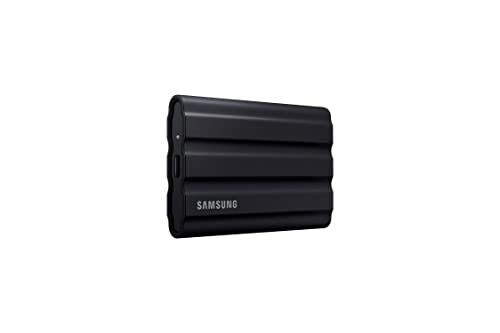
Specs
Capacity | 2TB |
Interface | USB 3.2 Gen 2 (10 Gbps), USB-C |
Sequential read | Up to 1,050 MB/s |
Sequential write | Up to 1,000 MB/s |
Form factor | External portable, pocket size |
Durability | IP65 dust and water resistance |
Warranty | 3 years |
Capacity
2TB
Interface
USB 3.2 Gen 2 (10 Gbps), USB-C
Sequential read
Up to 1,050 MB/s
Sequential write
Up to 1,000 MB/s
Form factor
External portable, pocket size
Durability
IP65 dust and water resistance
Warranty
3 years
Here is the branch where waiting wins. If your boot drive is healthy and you are simply out of room, replacing it right now means paying crunch prices to solve a problem with a cheaper answer. Most of a Steam library is installed and not being played.
A Samsung T7 Shield 2TB plugs into any USB-C port and takes the backlog off your boot drive in an afternoon. No case to open, no cloning, no Windows reinstall. The IP65 rating and rubberized shell mean it survives living in a bag, which is more than most external drives manage.
It is slower, and that is the whole trade. USB 3.2 Gen 2 tops out around a tenth of what the internal Gen4 drives do, so this is a shelf for games you are not currently playing, not a home for the one you are. It is also one more cable on the desk. Our external shortlist has alternatives if this one is out of stock. When the market eases the way forecasts eventually expect, you replace the internal drive then, having spent far less in the meantime.
Specs at a glance
Drive | Capacity | Interface | Best for |
|---|---|---|---|
2TB | PCIe 4.0 NVMe | New builds and dead-drive replacements | |
1TB | PCIe 4.0 NVMe | Capped budget, handhelds and laptops | |
2TB | PCIe 4.0 NVMe | Sustained-write and creative workloads | |
2TB | USB 3.2 Gen 2 | Overflow storage on a drive that still works |
- Capacity
2TB
- Interface
PCIe 4.0 NVMe
- Best for
New builds and dead-drive replacements
- Capacity
1TB
- Interface
PCIe 4.0 NVMe
- Best for
Capped budget, handhelds and laptops
- Capacity
2TB
- Interface
PCIe 4.0 NVMe
- Best for
Sustained-write and creative workloads
- Capacity
2TB
- Interface
USB 3.2 Gen 2
- Best for
Overflow storage on a drive that still works
Bottom line
If your drive is dead or your build is waiting on parts, buy the 2TB Gen4 floor and move on. If the budget will not stretch this quarter, take the 1TB drive and accept that you are buying storage again later. If your work leans on sustained writes, step up to the premium 2TB. If your drive still works and you are only out of room, add an external and leave the internal upgrade for a better market.
The one move to avoid is waiting for a drop the supply picture does not support. If you want the full framework before you commit, our guide to how to choose a drive goes deeper on controllers, endurance, and capacity.
FAQ
Will SSD prices drop in 2026?
Not in a way you will feel this year. Contract prices are still rising through the back half of 2026, just more slowly than they did in the first quarter. A real drop needs either new manufacturing capacity or a cooling of AI-driven demand, and neither is a short-horizon event. Most forecasts have pushed meaningful relief out to 2027 or later, and that date has already slipped more than once. Plan around what drives cost today rather than a rebound that keeps moving further out.
Why are SSD prices going up?
Memory manufacturers shifted wafer capacity toward high-bandwidth memory and enterprise storage to serve AI datacenter demand, which pulled supply out of the consumer NAND pool. Consumer demand did not fall to match, so the shortage landed straight on retail pricing. Client SSD contract prices rose roughly 40 percent quarter over quarter in the first quarter of 2026, the largest jump of any NAND product category. This is a supply reallocation rather than a demand spike, which is why it has outlasted previous cycles.
Is a PCIe 5.0 SSD worth buying right now?
For gaming, no. Gen5 drives post much higher sequential numbers, but game loading is dominated by small random reads where a good Gen4 drive already sits at the point of diminishing returns. You pay more per gigabyte, you need a heatsink to keep the drive from throttling, and the frame-rate difference is nothing. During a NAND crunch that premium is even harder to justify. If your workload genuinely moves huge sequential files every day, Gen5 has a case. Otherwise put the money into capacity.
How much SSD storage do I actually need in 2026?
Two terabytes is the working floor for a gaming machine. Modern AAA installs run 150GB to 200GB and up, so a 1TB drive holds four or five of them before you start uninstalling to make room. If your budget is genuinely capped this quarter, 1TB will get the machine running, but plan on buying storage again. For creative work with large project files, 2TB is the starting point rather than the target.
Should I stockpile SSDs before prices rise further?
No. Stockpiling means paying inflated prices today to hedge against somewhat higher prices later, on drives that sit unused while their warranty clock runs down and newer controllers ship. Flash memory also has a shelf life, and an unpowered drive in a drawer is not archival storage. If you have a build coming in the next month or two, buy for that build. Buying for a machine you might assemble in 2028 is speculation, and it ties up money you could put into a part you will use now.
Related Articles

Should You Buy RAM Now, or Wait Out the 2026 Crisis?
Should you buy RAM now or wait out the 2026 memory crisis? A clear buy-or-wait call by your situation, plus the exact 32GB and 64GB kits worth owning today.
Jul 23, 2026

How to Choose an SSD for Gaming: Gen4 vs Gen5 (2026)
How to choose an SSD for gaming without overpaying: why Gen4 is the 2026 sweet spot, when Gen5 is actually worth it, DRAM vs DRAM-less, and capacity by tier.
Jul 24, 2026

Is 1TB Enough for Gaming, or Do You Need 2TB? (2026)
Modern AAA installs run 100 to 150+ GB each. Here's when 1TB is enough, when 2TB is the safe default, and which NVMe drive to buy for each tier.
Jul 25, 2026

Is 2026 a Bad Year to Build a PC? An Honest Answer
Is 2026 a bad year to build a PC? DRAM is up double digits and GPUs cost more too. The honest, segmented verdict on whether to build, upgrade, or wait it out.
Jul 26, 2026

Best 2TB NVMe SSDs Under $150 (2026): DRAM vs HMB Picks by Use Case
The best 2TB NVMe SSD under $150 isn't one drive. It's five, keyed to use case. DRAM-versus-HMB tradeoffs, PS5 fitment, and an honest answer for each.
May 19, 2026