Affiliate Disclosure: As an Amazon Associate we earn from qualifying purchases. Some links may earn us a commission at no cost to you.

Best CPU for RTX 5090 (2026): 5 Picks Graded at 1440p and 4K
The best CPU for an RTX 5090 is the Ryzen 7 9800X3D: it posts the smoothest 1% lows at 1440p and never becomes the thing holding the card back. At 4K the field compresses, so a 7800X3D or even a 7700X feeds the 5090 in most AAA games, but CPU-heavy titles still lean on the chip even there.
So the right pairing depends on the resolution you play at, and on whether your library is full of shooters and open-world AAA or the sim, strategy, and MMO titles that live on cache. Here are five picks, graded by that lens.
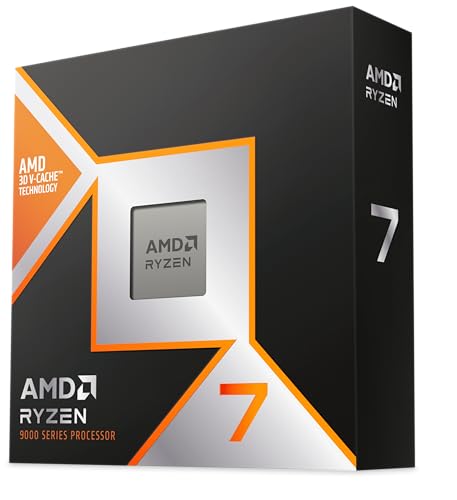
Our top pick: AMD Ryzen 7 9800X3D
The 9800X3D is the cleanest match for a 5090, and it trades blows with the newer 9850X3D in games while drawing less power. Its 96 MB of L3 cache holds the frame data the card churns through, so it posts top-tier 1% lows at 1440p and never becomes the thing holding the GPU back.
Quick picks
CPU | Best for | Cores | Where to buy |
|---|---|---|---|
Max frames at 1440p and 4K | 8C / 16T | ||
Near-flagship gaming for less | 8C / 16T | ||
Gaming plus 16-core work | 16C / 32T | ||
4K-first builds on a budget | 8C / 16T | ||
Team-Blue creators | 24C (8P+16E) |
- Best for
Max frames at 1440p and 4K
- Cores
8C / 16T
- Where to buy
- Best for
Near-flagship gaming for less
- Cores
8C / 16T
- Where to buy
- Best for
Gaming plus 16-core work
- Cores
16C / 32T
- Where to buy
- Best for
4K-first builds on a budget
- Cores
8C / 16T
- Where to buy
- Best for
Team-Blue creators
- Cores
24C (8P+16E)
- Where to buy
Specs at a glance
CPU | Cores / threads | Max boost | L3 cache | TDP | Socket |
|---|---|---|---|---|---|
8 cores / 16 threads | 5.2 GHz | 96 MB | 120 W | AM5 | |
8 cores / 16 threads | 5.0 GHz | 96 MB | 120 W | AM5 | |
16 cores / 32 threads | 5.7 GHz | 128 MB total | 170 W | AM5 | |
8 cores / 16 threads | 5.4 GHz | 32 MB | 105 W | AM5 | |
24 cores (8P + 16E) / 24 threads | 5.7 GHz | 36 MB | 125 W / 250 W | LGA 1851 |
- Cores / threads
8 cores / 16 threads
- Max boost
5.2 GHz
- L3 cache
96 MB
- TDP
120 W
- Socket
AM5
- Cores / threads
8 cores / 16 threads
- Max boost
5.0 GHz
- L3 cache
96 MB
- TDP
120 W
- Socket
AM5
- Cores / threads
16 cores / 32 threads
- Max boost
5.7 GHz
- L3 cache
128 MB total
- TDP
170 W
- Socket
AM5
- Cores / threads
8 cores / 16 threads
- Max boost
5.4 GHz
- L3 cache
32 MB
- TDP
105 W
- Socket
AM5
- Cores / threads
24 cores (8P + 16E) / 24 threads
- Max boost
5.7 GHz
- L3 cache
36 MB
- TDP
125 W / 250 W
- Socket
LGA 1851
The RTX 5090 bottleneck ledger, by resolution
At 1080p, the CPU is fully exposed. Across a broad gaming suite the 9800X3D runs about 15 percent ahead of the 7800X3D, and the 9950X3D opens roughly a 22 percent gap over the Core Ultra 9 285K. With a 5090 you would only chase these frames on a 360 Hz or faster panel, but the ranking is real.
At 1440p, the gap narrows but still decides the outcome. This is where most 5090 owners actually play, and where the cache chips protect the smooth 1% lows that a 7700X or a 285K give up in busy scenes. The same pattern holds one tier down, and our CPU picks for the RTX 5080 work through where that crossover lands on the cheaper card.
At 4K, the 5090 becomes the limiter in most AAA games and the field compresses to a few percent. In Cyberpunk 2077 at 4K Ultra the 9800X3D and 7800X3D post the same 106 fps average. But 4K does not erase every bottleneck. Hogwarts Legacy stays CPU-bound in Hogsmeade even at 4K, where the 9800X3D holds 83 fps to the 7800X3D's 68. Sim, strategy, and MMO titles behave the same way, which is the whole reason a 5090 owner still thinks about cache. It is the CPU side of the same pairing we answer from the GPU direction.
Benchmarks
Two 4K results tell the story: one where the GPU takes over, and one where the CPU refuses to let go.
At 4K the RTX-class GPU is the limiter, so the two cache chips post the same average.
- 106 FPS
- 106 FPS
Hogsmeade stays CPU-bound even at 4K, so the cache still separates the two chips.
- 83 FPS
- 68 FPS
How we picked
We size the CPU to the GPU, not the other way around, the same way we approach how to choose a CPU and motherboard. A 5090 is the one card fast enough to justify the best gaming cache on the market, so the AMD X3D line leads. We lock a resolution and a library first: shooters and console-port AAA lean on the GPU, while sim, strategy, and MMO games lean on the chip. Every pick resolves to a real Amazon listing, and we grade on where each one loses, not just where it wins. Prices move, so the buy buttons carry live pricing rather than a number that goes stale. Whichever chip you land on, pair it with a 1000W-class power supply sized for the 5090's transient spikes.
Best Overall: AMD Ryzen 7 9800X3D
Specs
Cores / threads | 8 cores / 16 threads |
Max boost clock | Up to 5.2 GHz |
L3 cache | 96 MB (2nd-gen 3D V-Cache) |
TDP | 120 W |
Socket | AM5 |
Memory | DDR5, EXPO |
Cores / threads
8 cores / 16 threads
Max boost clock
Up to 5.2 GHz
L3 cache
96 MB (2nd-gen 3D V-Cache)
TDP
120 W
Socket
AM5
Memory
DDR5, EXPO
What it does well
The 9800X3D pairs eight Zen 5 cores with 96 MB of L3 cache, and the second generation of AMD's 3D V-Cache sits under the cores instead of on top of them. That change lets the chip clock to 5.2 GHz and shed heat better than the 7800X3D it replaces, so it holds its boost longer under a heavy GPU load. Feeding a 5090, that shows up as the best 1% lows in the group. The frames stay even when a scene fills with NPCs, particles, or ray-traced light. It drops into any AM5 board, runs cool enough for a strong air cooler, and sits on a socket AMD has committed to past 2027.
What you give up
Eight cores is plenty for games and light multitasking, but this is not a production chip. If you render, compile, or run heavy batch exports, the 16-core parts pull well ahead. You also pay the X3D premium, and part of what you buy fades at 4K in GPU-bound titles where a cheaper chip ties it. The cache is the reason to own it, so if your library never touches sim, strategy, or MMO games, some of that headroom goes unused.
Who it's for
The default answer for a 1440p high-refresh build, and still the right call at 4K if you play anything CPU-heavy. Buy it when you want the highest frames and the smoothest lows with a 5090 and your workload is gaming first.
Best Value: AMD Ryzen 7 7800X3D

Specs
Cores / threads | 8 cores / 16 threads |
Max boost clock | Up to 5.0 GHz |
L3 cache | 96 MB (1st-gen 3D V-Cache) |
TDP | 120 W |
Socket | AM5 |
Memory | DDR5, EXPO |
Cores / threads
8 cores / 16 threads
Max boost clock
Up to 5.0 GHz
L3 cache
96 MB (1st-gen 3D V-Cache)
TDP
120 W
Socket
AM5
Memory
DDR5, EXPO
What it does well
The 7800X3D carries the same 96 MB cache class as the flagship, and in most games it lands within a few percent of the 9800X3D. Across a full suite it trails the flagship by around 15 percent at 1080p, but that is a 1080p number. At the 1440p and 4K a 5090 owner plays at, the two sit much closer, and in GPU-bound 4K scenes they are identical. It uses the same AM5 boards and the same coolers, so nothing about the platform costs more.
What you give up
This is first-generation 3D V-Cache, stacked on top of the cores, so it clocks a little lower and runs a touch warmer than the 9800X3D. It has almost no overclocking headroom, and in the most CPU-bound moments it hands back a few frames. Stock has also grown less predictable as the chip ages, so the listing can swing. None of that changes the core value: you get the cache that matters for a 5090 at a real discount.
Who it's for
The pick for a 5090 build that mostly plays at 1440p or 4K and does not need the last few percent. When the flagship delta feels steep, this is where that money is better spent elsewhere in the build. Building around a cheaper card instead? The best CPUs for the RTX 5070 Ti apply the same bottleneck-by-resolution test one tier down.
Best Premium: AMD Ryzen 9 9950X3D

Specs
Cores / threads | 16 cores / 32 threads |
Max boost clock | Up to 5.7 GHz |
L3 cache | 128 MB total |
TDP | 170 W |
Socket | AM5 |
Memory | DDR5, EXPO |
Cores / threads
16 cores / 32 threads
Max boost clock
Up to 5.7 GHz
L3 cache
128 MB total
TDP
170 W
Socket
AM5
Memory
DDR5, EXPO
What it does well
The 9950X3D is the one chip that refuses to compromise. One of its two core complexes carries the 3D V-Cache for gaming that lands right alongside the 9800X3D, while the other is a high-clock 16-core block that chews through video exports, Blender scenes, and long compiles. For someone who games on a 5090 and then sits down to real production work, it does both jobs on one machine, with 128 MB of L3 total and boost up to 5.7 GHz on the fast cores.
What you give up
You pay the most, and for pure gaming that money buys nothing you can see over a 9800X3D. It also leans on the scheduler: Windows and AMD's driver have to park the non-cache cores so games land on the right die, and getting that right took driver updates. The 170 W chip wants a stouter board and better cooling than an eight-core part, which adds to the bill. Buy it for the second core complex, not for frames.
Who it's for
Creators, streamers, and professionals who feed a 5090 and lean on 16 cores for work that actually uses them. If your productivity is Photoshop on weekends, the 9800X3D is the smarter buy.
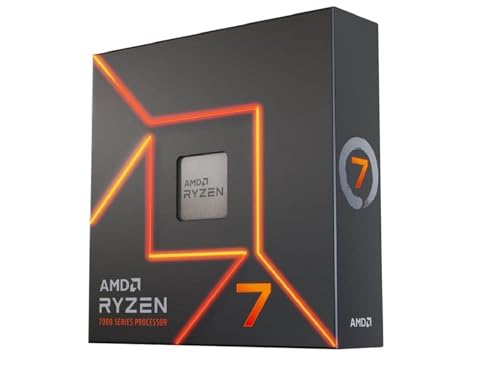
Best Budget: AMD Ryzen 7 7700X
Specs
Cores / threads | 8 cores / 16 threads |
Max boost clock | Up to 5.4 GHz |
L3 cache | 32 MB |
TDP | 105 W |
Socket | AM5 |
Memory | DDR5, EXPO |
Cores / threads
8 cores / 16 threads
Max boost clock
Up to 5.4 GHz
L3 cache
32 MB
TDP
105 W
Socket
AM5
Memory
DDR5, EXPO
What it does well
The 7700X is the honest floor for a 5090, and it does the job better than its price suggests. Eight strong Zen 4 cores clock to 5.4 GHz, and at 4K, where the 5090 is doing most of the work, it lands within striking distance of the X3D chips in well-optimized console ports and open-world AAA. It drops into the cheapest AM5 boards, leaves real budget for a 2TB drive and a better monitor, and keeps a live upgrade path. You can slot an X3D chip onto the same board in two years.
What you give up
There is no 3D V-Cache here, and it shows. In sim, strategy, MMO, and traversal-heavy games the 1% lows fall behind the cache chips, and at 1440p the average gap widens as the 5090 starts asking more of the processor. It runs warm at stock and wants a competent cooler. This is a floor, chosen so the money goes to parts you feel more often, not a chip you buy to brag about.
Who it's for
The 4K-first 5090 buyer on a console-port and AAA library who would rather put the cache premium into storage, memory, or the screen, with a clear path to upgrade later. If you are still deciding between the 5090 and the 4090 already in the case, our RTX 5090 vs RTX 4090 upgrade breakdown covers the power and workload math before you spec a CPU around either one.
Editor's Pick: Intel Core Ultra 9 285K

Specs
Cores / threads | 24 cores (8P + 16E) / 24 threads |
Max boost clock | Up to 5.7 GHz |
L3 cache | 36 MB |
Base / turbo power | 125 W / 250 W |
Socket | LGA 1851 |
Memory | DDR5 |
Cores / threads
24 cores (8P + 16E) / 24 threads
Max boost clock
Up to 5.7 GHz
L3 cache
36 MB
Base / turbo power
125 W / 250 W
Socket
LGA 1851
Memory
DDR5
What it does well
The Core Ultra 9 285K is the crossover pick for someone who needs Intel. Its 24 cores split eight performance cores and sixteen efficiency cores, which makes short work of Premiere and DaVinci timelines and heavy compiles. Its QuickSync block still handles H.264 and H.265 hardware encode better than AMD for that specific workflow, and many Z890 boards ship native Thunderbolt for fast external storage. Memory bandwidth is strong, and for mixed create-and-game use it is a capable all-rounder.
What you give up
For gaming with a 5090 it trails. Arrow Lake landed behind the X3D chips at launch and behind the prior Raptor Lake generation in some titles, and later patches narrowed but did not close that gap. At 1080p it sits roughly 22 percent behind the 9950X3D. It also wants the right setup to behave, including current firmware and, oddly, the Balanced Windows power plan. The LGA 1851 socket has no announced upgrade path, and its transient power draw punishes a weak board VRM. For frames alone, an X3D chip wins clearly.
Who it's for
Creators and professionals feeding a 5090 who live in QuickSync-accelerated editing or bandwidth-heavy work and specifically want Intel. Gaming is a strong secondary here, not the reason to buy.
What about the Ryzen 7 9850X3D?
AMD's 9850X3D is a higher-clocked 9800X3D: the same eight Zen 5 cores and 96 MB of L3 cache, with the boost raised to 5.6 GHz from 5.2 GHz. In reviews it lands anywhere from level with the 9800X3D to about 4 percent ahead in games, and it draws noticeably more power to get there. Behind a 5090 that edge shows up at 1080p and in CPU-heavy titles, and it shrinks to almost nothing at 4K. Buy it if it costs about the same on the day, but it does not change the pick: the 9800X3D delivers nearly all of the frames with less heat to manage.
Bottom line
If you want the best frames and lows with a 5090 and you game first, buy the 9800X3D. If you play mostly at 4K and want to save without losing what matters, the 7800X3D gets you there. If you game and do real production work, the 9950X3D does both without compromise. If the 5090 lives at 4K and budget is tight, the 7700X is an honest floor with an upgrade path. And if you need Intel for QuickSync or bandwidth, the 285K crosses over, with gaming as the trade.
FAQ
Do you need a Ryzen 7 9800X3D for an RTX 5090?
No, but it is the best match. The 9800X3D posts frames and 1% lows within a few percent of the newer 9850X3D, the top of the gaming charts, and a 5090 is fast enough to show that lead at 1440p and in CPU-heavy games at 4K. If you play mostly at 4K in well-optimized titles, a 7800X3D or even a 7700X will feed the card without holding it back. The flagship is the ceiling, not the entry fee.
Does the RTX 5090 get bottlenecked at 4K?
Sometimes, which is the surprise. In most AAA games at 4K the 5090 is the limiter and the CPU choice barely moves the average. But in CPU-heavy titles, including sim, strategy, MMO, and traversal-heavy games like Hogwarts Legacy, the processor still caps the frame rate even at 4K. That is why a 5090 owner thinks about cache when a mid-range card owner would not.
Is the 9950X3D better than the 9800X3D for gaming with a 5090?
For gaming alone, no. The two are effectively tied in games, so the extra money buys nothing you can see on screen. The 9950X3D earns its price only if you also run real multi-threaded work: video exports, 3D rendering, or long compiles that use all 16 cores. Game and create on one machine and it is worth it. Game only, and the 9800X3D is the smarter buy.
Is the 7800X3D still good enough for an RTX 5090?
Yes. It shares the same 96 MB cache class as the 9800X3D and matches it in GPU-bound 4K scenes. Across a full suite it trails at 1080p, but that is a resolution most 5090 owners never play. At 1440p and 4K the two are close, so the 7800X3D stays a strong value pairing. The main catch is stock, which has grown less predictable as the chip ages.
Should you pair an Intel CPU with an RTX 5090, or go AMD?
For gaming, AMD's X3D chips win clearly, so a 9800X3D is the default. Intel's Core Ultra 9 285K makes sense mainly when you need it for work: QuickSync hardware encode, memory-bandwidth-heavy tasks, or native Thunderbolt. It is a productivity crossover, not the frames pick. If your 5090 is mostly for games, stay on AM5.
What RAM speed should you run with an RTX 5090 and an X3D CPU?
On AM5, DDR5-6000 at CL30 is the sweet spot. Ryzen's Infinity Fabric runs 1:1 at that speed, and a good 32 GB kit costs only a little more than a slower one while adding real frames in CPU-bound games. Faster kits chasing higher numbers buy almost nothing on AM5 and can hurt stability. For a 5090 build, 32 GB is the floor, and 64 GB is worth it if you do heavy production work.
Related Articles

Best GPUs for the Ryzen 7 9800X3D (2026): by Monitor Tier
Best GPUs to pair with the Ryzen 7 9800X3D — picks by monitor tier and use case, from 1080p competitive to 4K without bottlenecking the V-cache.
May 9, 2026

Best 1000W PSUs for RTX 5090 Builds (2026)
The RTX 5090 pulls 575W TDP with transient spikes past 650W. Here are five 1000W ATX 3.1 PSUs that handle it without throttling or burning cables.
Jun 6, 2026

How to Choose a CPU and Motherboard
The buyer's framework for picking a CPU and motherboard pair: use case first, socket second, chip tier third, then the board class that matches.
May 17, 2026

Best Motherboards for Ryzen 9 9950X3D (2026): B850 or X870E
Best motherboard for the 9950X3D in 2026: five AM5 picks ranked by VRM headroom for a 170W 16-core X3D, not by chipset tier. Where to spend and where to stop.
Jul 21, 2026

Best CPUs for Gaming in 2026: Top Picks for Every Budget
The best gaming CPUs for 2026 across every budget, from the Ryzen 5 7600X to the Ryzen 9 9950X3D, with full specs and clear buying advice for every tier.
Jul 8, 2026