Affiliate Disclosure: As an Amazon Associate we earn from qualifying purchases. Some links may earn us a commission at no cost to you.

Best CPU for Satisfactory (2026): 5 Picks for Big Factories
Satisfactory starts as a graphics card game. The 1.0 release runs on Unreal Engine 5 with Lumen lighting, so a fresh save leans on the GPU and almost any modern processor keeps up. Then the factory grows. Hundreds of machines, kilometers of belts, trains and drones all simulate every frame, and somewhere in Phase 4 the processor becomes the limit.
So the best CPU for Satisfactory is the one that still holds a high frame rate in that late-game factory. That comes down to cache first and clock speed second, which is why AMD's X3D chips fill most of this list.
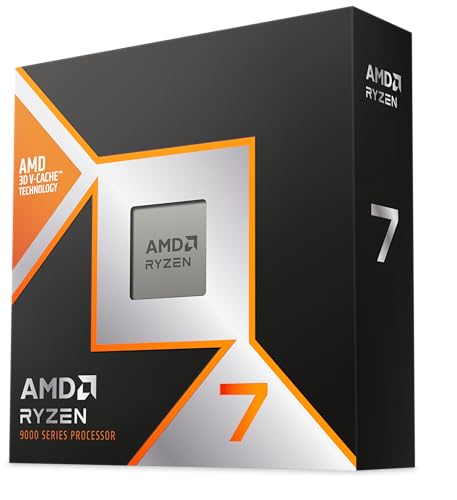
Our top pick: AMD Ryzen 7 9800X3D
The Ryzen 7 9800X3D pairs 96 MB of L3 cache with a full 5.2 GHz boost, the combination a sprawling late-game factory rewards, and it is the fastest gaming CPU you can buy without paying for cores the game leaves idle.
Quick picks
Pick | CPU | Cores / threads | Best for | Buy |
|---|---|---|---|---|
Best Overall | 8 / 16 | Late-game factories at high refresh | ||
Best Value | 8 / 16 | Big factories on a mid budget | ||
Best Premium | 16 / 32 | Satisfactory plus streaming or hosting | ||
Best Budget | 6 / 12 | Early and mid-game at 60 fps | ||
Editor's Pick | 8 / 16 | Fastest eight-core option on AM5 |
Best Overall
- CPU
- Cores / threads
8 / 16
- Best for
Late-game factories at high refresh
Best Value
- CPU
- Cores / threads
8 / 16
- Best for
Big factories on a mid budget
Best Premium
- CPU
- Cores / threads
16 / 32
- Best for
Satisfactory plus streaming or hosting
Best Budget
- CPU
- Cores / threads
6 / 12
- Best for
Early and mid-game at 60 fps
Editor's Pick
- CPU
- Cores / threads
8 / 16
- Best for
Fastest eight-core option on AM5
Specs at a glance
CPU | Cores / threads | Boost clock | L3 cache | TDP | Socket |
|---|---|---|---|---|---|
8 / 16 | 5.2 GHz | 96 MB (3D V-Cache) | 120 W | AM5 | |
8 / 16 | 5.0 GHz | 96 MB (3D V-Cache) | 120 W | AM5 | |
16 / 32 | 5.7 GHz | 128 MB (V-Cache on one CCD) | 170 W | AM5 | |
6 / 12 | 5.3 GHz | 32 MB | 105 W | AM5 | |
8 / 16 | 5.6 GHz | 96 MB (3D V-Cache) | 120 W | AM5 |
- Cores / threads
8 / 16
- Boost clock
5.2 GHz
- L3 cache
96 MB (3D V-Cache)
- TDP
120 W
- Socket
AM5
- Cores / threads
8 / 16
- Boost clock
5.0 GHz
- L3 cache
96 MB (3D V-Cache)
- TDP
120 W
- Socket
AM5
- Cores / threads
16 / 32
- Boost clock
5.7 GHz
- L3 cache
128 MB (V-Cache on one CCD)
- TDP
170 W
- Socket
AM5
- Cores / threads
6 / 12
- Boost clock
5.3 GHz
- L3 cache
32 MB
- TDP
105 W
- Socket
AM5
- Cores / threads
8 / 16
- Boost clock
5.6 GHz
- L3 cache
96 MB (3D V-Cache)
- TDP
120 W
- Socket
AM5
When Satisfactory hits the CPU limit
No reviewer has published a per-CPU frame rate chart for Satisfactory 1.0 yet, so this section works from the closest thing available: ComputerBase's launch testing of the 1.0 release on a Ryzen 9 7950X3D test system.
Their finding matches what players report. Even huge maps hit the graphics card limit quickly, so a faster CPU alone often changes nothing at 4K. Below 4K, in a large factory, the limit can flip to the processor. In that case the 7950X3D ran at close to 50 percent load, ComputerBase judged that a Ryzen 7 7800X3D would be running at its limit, and other AMD chips, the non-X3D Ryzen 9000 parts included, would be too slow to hold about 70 fps.
Read that as a ranking rather than a benchmark score. The cache-equipped chips are the ones with headroom once the simulation grows, and the X3D question has a clearer answer here than in most shooters.
How we picked the best CPU for Satisfactory
Three things decide this game, in this order.
Cache comes first. Every machine, belt segment, pipe and train in the factory adds work to each simulation step. A larger L3 pool keeps more of that state next to the cores, so each step waits on main memory less often. That is the job X3D chips do better than anything else on the market.
Clock speed comes second. Once the working set fits in cache, a faster core finishes the frame sooner. This is where the 9800X3D and 9850X3D pull ahead of the 7800X3D.
Core count comes third, and only up to a point. Satisfactory spreads rendering and world streaming across several threads, so six fast cores are the floor and eight is the comfortable target. Past that, extra cores help streaming or a hosted server, not the game itself. Our guide to CPU core counts covers the general case, the CPU and motherboard guide covers the platform, and the bottleneck calculator shows how any of these chips pairs with your GPU.
Best Overall: AMD Ryzen 7 9800X3D
Specs
Cores / threads | 8 / 16 |
Boost clock | 5.2 GHz |
L3 cache | 96 MB (3D V-Cache) |
TDP | 120 W |
Socket | AM5 |
Memory | DDR5 |
Best fit | Late-game factories at high refresh |
Cores / threads
8 / 16
Boost clock
5.2 GHz
L3 cache
96 MB (3D V-Cache)
TDP
120 W
Socket
AM5
Memory
DDR5
Best fit
Late-game factories at high refresh
What it does well
The 96 MB L3 pool is the whole argument. A late-game factory spreads its machine and belt state across far more memory than a normal 32 MB cache can hold, so a standard chip spends part of every frame waiting on RAM. The 9800X3D keeps much more of that working set on die, and the simulation step finishes sooner because of it.
It also fixed the older X3D compromise. The cache die now sits under the cores instead of on top of them, which lets the chip run its full 5.2 GHz boost. You get the cache and the clocks in one part, which is exactly the mix a CPU-bound factory asks for.
What you give up
Eight cores, and Satisfactory does not need more, but you will feel the ceiling if the same machine streams, encodes video or hosts a dedicated server for your friends. A 16-core chip handles those jobs much better.
The other cost is that the advantage only shows once the factory is big. A new save is GPU-bound on almost any modern processor, and so is 4K play. A buyer who never builds past the space elevator's early phases is paying for headroom they will not use.
Who it's for
Players heading into Phase 4 and 5 megafactories who play at 1080p or 1440p on a high-refresh monitor. Pair it with a strong GPU; Lumen still wants one.
Best Value: AMD Ryzen 7 7800X3D

Specs
Cores / threads | 8 / 16 |
Boost clock | 5.0 GHz |
L3 cache | 96 MB (3D V-Cache) |
TDP | 120 W |
Socket | AM5 |
Memory | DDR5 |
Best fit | Big factories on a mid budget |
Cores / threads
8 / 16
Boost clock
5.0 GHz
L3 cache
96 MB (3D V-Cache)
TDP
120 W
Socket
AM5
Memory
DDR5
Best fit
Big factories on a mid budget
What it does well
It carries the same 96 MB of L3 as the 9800X3D, and cache is the spec a big factory rewards most. In ComputerBase's CPU-bound test case it was the chip they picked as the one that could still keep up, right at its limit, while non-X3D Ryzen 9000 parts fell short.
It runs cool and draws modest power, so a mid-range air cooler and a B650 board are enough. That leaves budget for the graphics card, which still decides frame rate for most of a playthrough.
What you give up
Clock speed and headroom. The stacked cache die sits on top of the cores and holds the boost to 5.0 GHz, and "at its limit" is a thin margin. As the factory keeps growing, this chip runs out of room before the 9800X3D does. Our 7800X3D versus 9800X3D breakdown covers the gap across other games.
It is also the previous generation. The 7800X3D makes sense only while it sells clearly below the 9800X3D; when the two land close together, the newer chip is the better buy for the same board.
Who it's for
A buyer building a fresh AM5 machine who wants the cache advantage for less, or a Ryzen 7000 owner who wants a drop-in X3D upgrade.
Best Premium: AMD Ryzen 9 9950X3D

Specs
Cores / threads | 16 / 32 |
Boost clock | 5.7 GHz |
L3 cache | 128 MB (V-Cache on one CCD) |
TDP | 170 W |
Socket | AM5 |
Memory | DDR5 |
Best fit | Satisfactory plus streaming or creative work |
Cores / threads
16 / 32
Boost clock
5.7 GHz
L3 cache
128 MB (V-Cache on one CCD)
TDP
170 W
Socket
AM5
Memory
DDR5
Best fit
Satisfactory plus streaming or creative work
What it does well
The 9950X3D pairs a 3D V-Cache die with the highest boost clock in the lineup, 5.7 GHz. It is the successor to the 7950X3D that ComputerBase tested on, which still had about half its capacity spare in the CPU-bound case.
The other eight cores are what you are really paying for. Satisfactory leaves most of them idle, but a player who streams, edits video or runs a dedicated server for a co-op group on the same PC gets room for all of it without touching the game's frame rate.
What you give up
Cost, heat and a scheduling dependency. Only one of its two core dies carries the extra cache, so the game has to land on that die to benefit. AMD's chipset driver and Windows Game Mode handle this, but buyers have flagged that a stale driver can schedule the game on the wrong die and lose the advantage.
For Satisfactory alone it is not the best buy. The 9800X3D gets you nearly all of the gaming result for much less money.
Who it's for
Players who stream, edit or host a server on the same machine, and want one chip that leads at both.
Best Budget: AMD Ryzen 5 7600X

Specs
Cores / threads | 6 / 12 |
Boost clock | 5.3 GHz |
L3 cache | 32 MB |
TDP | 105 W |
Socket | AM5 |
Memory | DDR5 |
Best fit | Early and mid-game factories at 60 fps |
Cores / threads
6 / 12
Boost clock
5.3 GHz
L3 cache
32 MB
TDP
105 W
Socket
AM5
Memory
DDR5
Best fit
Early and mid-game factories at 60 fps
What it does well
It clears the game's recommended spec, a Ryzen 5 5600X, with room to spare. Six Zen 4 cores boosting to 5.3 GHz keep an early and mid-game factory smooth, and in that stage the graphics card sets the frame rate anyway.
It also puts you on AM5. When the factory outgrows the chip, a 9800X3D drops into the same board, so the budget build is an on-ramp rather than a dead end.
What you give up
Cache, which is the spec this game eventually asks for. Thirty-two megabytes of L3 is a third of what the X3D chips carry, and a sprawling late-game factory will drag this chip below high frame rates well before it troubles an X3D part. Six cores also leave little spare for Discord, a browser and a hosted session at once.
Who it's for
First playthroughs, buyers on a tight full-build budget, and anyone who wants to start on AM5 now and add the cache later.
Editor's Pick: AMD Ryzen 7 9850X3D
Specs
Cores / threads | 8 / 16 |
Boost clock | 5.6 GHz |
L3 cache | 96 MB (3D V-Cache) |
TDP | 120 W |
Socket | AM5 |
Memory | DDR5 |
Best fit | The fastest eight-core option on AM5 |
Cores / threads
8 / 16
Boost clock
5.6 GHz
L3 cache
96 MB (3D V-Cache)
TDP
120 W
Socket
AM5
Memory
DDR5
Best fit
The fastest eight-core option on AM5
What it does well
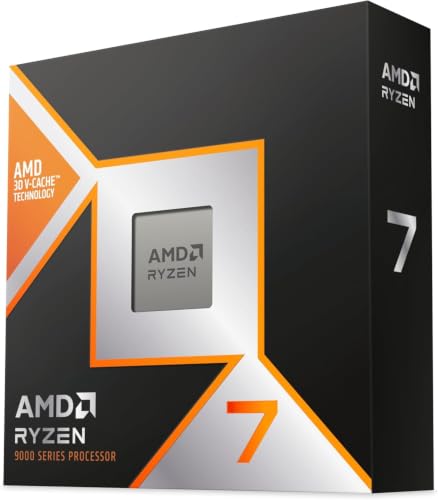
The 9850X3D is a 9800X3D with a 400 MHz higher boost clock, 5.6 GHz, and the same 96 MB L3 pool. In a CPU-bound factory that extra frequency turns into extra frames, so this is the fastest eight-core chip you can put in an AM5 board for this game.
Everything else matches the 9800X3D, so board support, coolers and memory advice carry over unchanged. Our 9850X3D versus 9800X3D comparison covers the clock gap across general games.
What you give up
A small gain for a real premium. Reviewers measured only a few percent over the 9800X3D in games, and it draws more power to get there. No one has published a controlled Satisfactory test for it yet, so the gain here is an expectation from its clocks, not a measured number.
Who it's for
The player who wants the last few frames in a huge factory and does not mind paying for them, or anyone buying new who would rather not leave clock speed on the table.
Bottom line
If you are building toward a megafactory, buy the Ryzen 7 9800X3D.
If you want the same cache for less and can live with thinner headroom, buy the Ryzen 7 7800X3D.
If the same PC streams, edits or hosts your co-op server, step up to the Ryzen 9 9950X3D.
If this is your first playthrough and the budget is tight, start on the Ryzen 5 7600X and drop an X3D chip in later.
If you want every last frame from a huge save, the Ryzen 7 9850X3D is the fastest eight-core option. Factory players who also run other builders can compare our Factorio CPU picks and Cities: Skylines II CPU picks, which follow the same cache-first logic.
FAQ
Is Satisfactory CPU or GPU heavy?
Both, at different stages. A new save and anything at 4K lean on the GPU, because Unreal Engine 5's Lumen lighting is expensive. In a large late-game factory at 1080p or 1440p, the simulation takes over and the CPU sets the frame rate. Buy a strong GPU first, then a CPU with enough cache that the late game does not undo it.
Does X3D cache help in Satisfactory?
Yes, once the factory is big. Every machine, belt and train adds simulation work each frame, and a bigger L3 cache keeps more of that state close to the cores. In ComputerBase's CPU-bound test case the X3D chips were the only AMD parts with enough headroom for about 70 fps. Early in a save, before the CPU becomes the limit, the difference is small.
Why does my fps drop in a big Satisfactory factory?
Because the simulation grows with the factory. More machines, belt segments, pipes and vehicles mean more work per frame, and the GPU often sits partly idle while the CPU struggles. Players report that lowering view distance and the conveyor belt render settings recovers frames in that state. A faster CPU with more cache raises the ceiling, and tidier factory design lowers the load.
How many CPU cores does Satisfactory use?
It uses several threads for rendering and world streaming, but the factory simulation leans on a few fast ones. Six fast cores are a sensible floor and eight is the comfortable target. More than eight helps only if you stream, record or host a dedicated server on the same machine, which is the case for the 16-core Ryzen 9 9950X3D.
Is the 9800X3D worth it over the 7800X3D for Satisfactory?
For a late-game megafactory, yes. Both carry 96 MB of L3, but the 9800X3D boosts about 200 MHz higher and is not boxed in by a stacked cache die, so it keeps more headroom as the factory grows. If you play mid-sized factories or at 4K, the 7800X3D does the same job for less money, so buy the cheaper chip.
How much RAM do you need for Satisfactory?
The official recommended spec lists 16 GB, and that is enough for a normal playthrough. Large late-game saves with many mods or a hosted session are more comfortable on 32 GB, which also leaves room for a browser and voice chat. On AM5, a DDR5-6000 kit is the dependable choice for every chip on this list.
Related Articles

Best CPU for Factorio (2026): 5 Picks Ranked by UPS
The best CPU for Factorio is the one that holds 60 UPS as your megabase grows. Five picks ranked by cache, clock speed and the base size each one sustains.
Nov 17, 2026

Best CPU for Cities: Skylines II (2026): 5 Picks by Tier
The best CPU for Cities: Skylines II is the one that holds full simulation speed as your city grows. Five picks ranked by the city size each sustains.
Sep 18, 2026

Do You Need an X3D CPU for Gaming? 2026 Buyer's Verdict
Do you need an X3D CPU for gaming? For most builds at 1440p and 4K, no. Here is the resolution, GPU, and library test that decides, plus three AM5 picks.
Aug 13, 2026

9800X3D vs 7800X3D (2026): 11% Average, 25% Where It Counts
9800X3D vs 7800X3D in 2026: an 11% average uplift, 25% in cache-heavy games, and which of four buyer profiles should actually pay the upgrade premium.
Sep 13, 2026

Is the 9850X3D Worth It Over the 9800X3D? 2026 Verdict
Is the 9850X3D worth it over the 9800X3D? The 2026 refresh buys about 3 percent more frames for more heat and power. When to upgrade, when to keep yours.
Sep 23, 2026