Affiliate Disclosure: As an Amazon Associate we earn from qualifying purchases. Some links may earn us a commission at no cost to you.

Best CPU for Cities: Skylines II (2026): 5 Picks by Tier
Cities: Skylines II does not ask your PC the question most games ask. Frame rate is a renderer problem, and it is the easy half. The hard half is simulation tick rate: every citizen, vehicle and cargo shipment is an agent the CPU has to move each step, and once that work stops fitting in cache the clock in the corner slows down no matter how many frames the GPU pushes.
So the useful ranking is not frames per second. It is how large a city each chip holds at full speed before the tick stalls. Five picks, ordered by that.
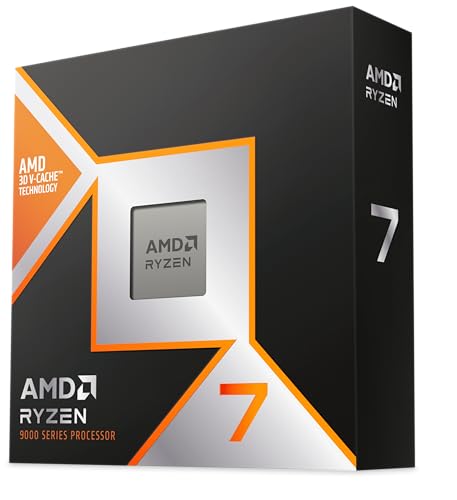
Our top pick: AMD Ryzen 7 9800X3D
The Ryzen 7 9800X3D carries 96 MB of L3 cache and still clocks to 5.2 GHz, which is the exact pairing a city builder rewards: a wide pool to keep agent data out of main memory, and enough frequency to chew through the main simulation thread.
Quick picks
Pick | CPU | Cores / threads | Sustains | Buy |
|---|---|---|---|---|
Best Overall | 8 / 16 | Large metros past 300,000 at full speed | ||
Best Value | 8 / 16 | Cities to roughly 250,000 without tick stall | ||
Best Premium | 16 / 32 | Million-plus saves, and it keeps scaling | ||
Best Budget | 6 / 12 | Comfortable to about 100,000 citizens | ||
Editor's Pick | 20 (8P + 12E) / 20 | Large cities, with a thinner cushion at speed 3 |
Best Overall
- CPU
- Cores / threads
8 / 16
- Sustains
Large metros past 300,000 at full speed
- Buy
Best Value
- CPU
- Cores / threads
8 / 16
- Sustains
Cities to roughly 250,000 without tick stall
- Buy
Best Premium
- CPU
- Cores / threads
16 / 32
- Sustains
Million-plus saves, and it keeps scaling
- Buy
Best Budget
- CPU
- Cores / threads
6 / 12
- Sustains
Comfortable to about 100,000 citizens
- Buy
Editor's Pick
- CPU
- Cores / threads
20 (8P + 12E) / 20
- Sustains
Large cities, with a thinner cushion at speed 3
- Buy
Specs at a glance
CPU | Cores / threads | Boost clock | Total L3 cache | Power | Socket |
|---|---|---|---|---|---|
8 / 16 | 5.2 GHz | 96 MB (64 MB 3D V-Cache) | 120 W | AM5 | |
8 / 16 | 5.0 GHz | 96 MB (64 MB 3D V-Cache) | 120 W | AM5 | |
16 / 32 | 5.7 GHz | 128 MB (64 MB 3D V-Cache) | 170 W | AM5 | |
6 / 12 | 5.4 GHz | 32 MB | 65 W | AM5 | |
20 (8P + 12E) / 20 | 5.5 GHz | 30 MB | 125 W / 250 W | LGA 1851 |
- Cores / threads
8 / 16
- Boost clock
5.2 GHz
- Total L3 cache
96 MB (64 MB 3D V-Cache)
- Power
120 W
- Socket
AM5
- Cores / threads
8 / 16
- Boost clock
5.0 GHz
- Total L3 cache
96 MB (64 MB 3D V-Cache)
- Power
120 W
- Socket
AM5
- Cores / threads
16 / 32
- Boost clock
5.7 GHz
- Total L3 cache
128 MB (64 MB 3D V-Cache)
- Power
170 W
- Socket
AM5
- Cores / threads
6 / 12
- Boost clock
5.4 GHz
- Total L3 cache
32 MB
- Power
65 W
- Socket
AM5
- Cores / threads
20 (8P + 12E) / 20
- Boost clock
5.5 GHz
- Total L3 cache
30 MB
- Power
125 W / 250 W
- Socket
LGA 1851
How big a city each pick holds
CPU | Holds full simulation speed | Where it earns the money |
|---|---|---|
Holds speed 3 well past 300,000 citizens | Very large metros with heavy transit networks | |
Comfortable to roughly 250,000 citizens | Dense late-game saves at speed 3 | |
Million-plus saves, and it keeps scaling | Mod stacks that add their own simulation layers | |
Comfortable to roughly 100,000 citizens | Mid-game sprawl and busy cargo networks | |
Large cities, with a thinner cushion at speed 3 | Cache-heavy late game without memory tuning |
- Holds full simulation speed
Holds speed 3 well past 300,000 citizens
- Where it earns the money
Very large metros with heavy transit networks
- Holds full simulation speed
Comfortable to roughly 250,000 citizens
- Where it earns the money
Dense late-game saves at speed 3
- Holds full simulation speed
Million-plus saves, and it keeps scaling
- Where it earns the money
Mod stacks that add their own simulation layers
- Holds full simulation speed
Comfortable to roughly 100,000 citizens
- Where it earns the money
Mid-game sprawl and busy cargo networks
- Holds full simulation speed
Large cities, with a thinner cushion at speed 3
- Where it earns the money
Cache-heavy late game without memory tuning
How we picked
Three specs decide this game, and they are not the three a general gaming ladder leans on.
Cache comes first. Agent pathfinding walks a large, scattered working set, and every miss on the main simulation thread stalls out to DRAM at a cost measured in hundreds of cycles. That is why X3D against the non-X3D ladder reads so differently here than it does in a console-port shooter. In a well-optimized AAA engine the cache advantage often disappears into a GPU bottleneck. In a city builder it compounds with every citizen you add.
Clock speed comes second, because one thread still drives the simulation and hands work out to the rest. A chip with enormous cache and mediocre frequency wins less than the spec sheet suggests.
Core count comes third, and it sets a ceiling rather than a slope. Agent work spreads across threads well once the main thread distributes it, so more cores let a save grow further before the tick rate sags. Community measurement puts that ceiling somewhere near 150,000 citizens per eight cores, which is a rough figure from player testing rather than a lab number, but it matches what people report when their cities stop holding speed 3. Our broader take on how many cores a gaming build actually needs still applies; this game just moves the line up.
What did not make the cut: GPU tier, above the minimum the game asks for, and raw memory frequency. Both matter, and neither is what stalls a large save.
Best Overall: AMD Ryzen 7 9800X3D
Specs
Cores / threads | 8 / 16 |
Max boost clock | 5.2 GHz |
Total L3 cache | 96 MB (64 MB 3D V-Cache) |
TDP | 120 W |
Socket | AM5 |
Memory support | DDR5-5600 (EXPO to 6000 CL30) |
Cooler included | No |
Cores / threads
8 / 16
Max boost clock
5.2 GHz
Total L3 cache
96 MB (64 MB 3D V-Cache)
TDP
120 W
Socket
AM5
Memory support
DDR5-5600 (EXPO to 6000 CL30)
Cooler included
No
What it does well
The 96 MB L3 pool is the single spec that matters here. Agent pathfinding data for a big city is a large, scattered working set, and a cache miss on the main simulation thread costs hundreds of cycles against DRAM. The second-generation 3D V-Cache sits under the compute die on this chip rather than on top, which is why it clocks to 5.2 GHz instead of throttling the way the 7000-series X3D parts do. That combination, wide cache plus real clocks, is exactly the shape a city builder rewards.
City builders sit on the short list of workloads where I recommend an X3D chip without hedging, and this game is the clearest case on it. The general version of that argument lives in whether an X3D chip earns its premium; the difference here is that you do not need a high-refresh monitor or a flagship GPU for the cache to pay. A 60 Hz panel and a mid-range card still leave the simulation thread as the limit.
What you give up
Eight cores is the ceiling. Once a city sprawls far enough that the agent workload genuinely saturates all eight, the 16-core parts pull ahead on raw throughput even with less cache in play. It also ships without a cooler and runs hot enough under sustained simulation that a budget tower is a false economy.
Who it's for
The buyer who wants one CPU decision to hold for the life of the save. Pair it with any modern GPU and a 1440p monitor and the simulation, not the renderer, sets the pace.
Best Value: AMD Ryzen 7 7800X3D

Specs
Cores / threads | 8 / 16 |
Max boost clock | 5.0 GHz |
Total L3 cache | 96 MB (64 MB 3D V-Cache) |
TDP | 120 W |
Socket | AM5 |
Memory support | DDR5-5200 (EXPO to 6000 CL30) |
Cooler included | No |
Cores / threads
8 / 16
Max boost clock
5.0 GHz
Total L3 cache
96 MB (64 MB 3D V-Cache)
TDP
120 W
Socket
AM5
Memory support
DDR5-5200 (EXPO to 6000 CL30)
Cooler included
No
What it does well
The cache is the argument, and this chip has all of it. Community measurement is consistent on the point: builders who moved from a Ryzen 7 7700X to this chip at matching clocks report roughly 15 more frames in late-game saves, which is a clean isolation of cache from frequency because nothing else changed. It also drops onto any AM5 board that a 7700X was already running, so an in-place upgrade needs a BIOS update and nothing else. Worth knowing before you commit: this chip is the reason the cache argument is easy to test at home. Load a large save, watch the in-game clock against a real one at speed 3, and the gap between a cache-light chip and this one shows up in seconds rather than in a frame counter.
What you give up
Clocks. Running 200 MHz behind the 9800X3D costs a few percent on the simulation thread, and that gap widens as the city grows because the main thread is the thing you are starving. First-generation 3D V-Cache also sits above the compute die, so the thermal headroom is thinner and overclocking is off the table.
Who it's for
Anyone building AM5 fresh on a mid-range budget, or a 7000-series owner who wants the cache without a platform change.
Best Premium: AMD Ryzen 9 9950X3D

Specs
Cores / threads | 16 / 32 |
Max boost clock | 5.7 GHz |
Total L3 cache | 128 MB (64 MB 3D V-Cache) |
TDP | 170 W |
Socket | AM5 |
Memory support | DDR5-5600 (EXPO to 6000 CL30) |
Cooler included | No |
Cores / threads
16 / 32
Max boost clock
5.7 GHz
Total L3 cache
128 MB (64 MB 3D V-Cache)
TDP
170 W
Socket
AM5
Memory support
DDR5-5600 (EXPO to 6000 CL30)
Cooler included
No
What it does well
Cities: Skylines II spreads agent work across every thread it can find, and the core count sets a soft ceiling on how far a save grows before the tick rate sags. Sixteen cores raise that ceiling, and the cache die on the first CCD keeps the main simulation thread fast while the rest handle the agent load. It is also the pick that survives a heavy mod stack, where custom assets and extra simulation layers add work that is neither cached nor cheap.
What you give up
Cost, heat, and a scheduling dependency. Half the cores carry the extra cache and half do not, so the chip leans on the Windows scheduler and AMD's chipset driver to park work on the right die. When that goes wrong the chip behaves like a slower 9800X3D. At 170 W under sustained simulation it also needs real cooling, which is another line on the build sheet.
Who it's for
Players whose saves regularly pass half a million citizens, and anyone who renders, compiles, or streams on the same machine between city sessions. It is also the pick for players who bounce between simulation-heavy titles. The same cache and core mix that holds a megacity together is what carries Star Citizen's server-tick problem on the client side.
Best Budget: AMD Ryzen 5 9600X

Specs
Cores / threads | 6 / 12 |
Max boost clock | 5.4 GHz |
Total L3 cache | 32 MB |
TDP | 65 W |
Socket | AM5 |
Memory support | DDR5-5600 (EXPO to 6000 CL30) |
Cooler included | Yes, Wraith Stealth |
Cores / threads
6 / 12
Max boost clock
5.4 GHz
Total L3 cache
32 MB
TDP
65 W
Socket
AM5
Memory support
DDR5-5600 (EXPO to 6000 CL30)
Cooler included
Yes, Wraith Stealth
What it does well
High clocks carry a small city a long way. Early and mid game, before agent counts climb, the simulation thread is latency-bound rather than cache-bound, and 5.4 GHz handles that well. It runs at 65 W, includes a cooler, and drops onto inexpensive B650 boards, so the whole platform lands cheaply. The upgrade story is the real value: when the save outgrows it, a 9800X3D goes into the same socket.
What you give up
Cache and cores, which are the two things this game eventually asks for. Thirty-two megabytes of L3 is a third of what the X3D parts carry, and six cores hit their ceiling sooner. Expect the tick rate to start slipping at speed 3 well before the city looks big. Treat it as a starting point rather than a destination. If the same machine is doing double duty for shooters and open-world games, our general 1440p CPU picks make the case for the same chip on different grounds, which is a reasonable way to justify the spend before the city outgrows it.
Who it's for
First-time city builders, buyers assembling a full machine on a tight budget, and anyone who would rather spend the difference on the GPU now and upgrade the CPU later.
Editor's Pick: Intel Core Ultra 7 265K

Specs
Cores / threads | 20 (8P + 12E) / 20 |
Max turbo clock | 5.5 GHz |
Total L3 cache | 30 MB |
Base / turbo power | 125 W / 250 W |
Socket | LGA 1851 |
Memory support | DDR5-6400 |
Cooler included | No |
Cores / threads
20 (8P + 12E) / 20
Max turbo clock
5.5 GHz
Total L3 cache
30 MB
Base / turbo power
125 W / 250 W
Socket
LGA 1851
Memory support
DDR5-6400
Cooler included
No
What it does well
Agent simulation is embarrassingly parallel once the main thread hands work out, and twenty cores absorb a lot of it. The memory controller also runs DDR5-6400 natively, which matters more here than in most games because a cache miss on this chip goes straight to RAM. If a reader already owns an LGA 1851 board, or needs QuickSync for video work on the same machine, this is the chip that fits the build rather than forcing a platform change.
What you give up
The cache argument, entirely. Thirty megabytes of L3 against 96 MB is not a close comparison, and the simulation thread is where that shows up first. Buyers have flagged that late-game saves on Arrow Lake lean harder on memory tuning to stay smooth, which is effort the X3D parts do not ask for. Reports of gaming regressions against the previous Intel generation have not fully settled either.
Who it's for
Existing LGA 1851 owners, and buyers who need hardware video encode alongside the city builder and will not move to AM5 for it. Sim-adjacent buyers on Intel are in similar shape elsewhere: our picks for Flight Simulator 2024 land on the same trade, strong cores and memory against a cache deficit that shows up in the heaviest scenes.
Bottom line
If you want one decision that holds for the life of a save, buy the Ryzen 7 9800X3D.
If the budget is tighter and the platform is new, the Ryzen 7 7800X3D carries the same cache pool for less.
If your cities routinely pass half a million citizens, or you render and compile on the same machine, step up to the Ryzen 9 9950X3D.
If you are building a first PC and the GPU needs the money more, start on the Ryzen 5 9600X and upgrade into the same socket later.
If you are staying on Intel, the Core Ultra 7 265K is the honest answer, with the cache gap understood going in. Either way, size the board to the chip before you order: how to choose a CPU and motherboard covers the VRM floor these parts want.
FAQ
Does the X3D cache actually help in Cities: Skylines II?
Yes, and more than it helps in most games. The simulation walks a large agent dataset every tick, so the extra L3 pool on an X3D chip keeps that data off the slow path to main memory. Players who moved from a Ryzen 7 7700X to a 7800X3D at matching clocks report gaining roughly 15 frames in late-game saves, which isolates cache from frequency because nothing else changed. Treat that as community measurement rather than a lab result, because no reviewer outlet benchmarks this game.
How many CPU cores do you need for Cities: Skylines II?
Six cores run the game. Eight is the sensible floor if you intend to grow a city past a few hundred thousand citizens, and sixteen raises the ceiling again for megacity saves. Cores do not make a small city faster. They decide how large the city gets before the simulation tick starts falling behind real time at speed 3.
Is Cities: Skylines II CPU bound or GPU bound?
Both, at different moments. The renderer is genuinely demanding, so a weak GPU caps your frame rate at any city size. But frame rate is not the thing that ruins a long save. Once the population climbs, the simulation thread becomes the limit and the in-game clock slows down even when frames look fine. Budget the GPU for the resolution you play at, then spend the rest of the CPU budget on cache.
What causes late-game lag in Cities: Skylines II, and will a new CPU fix it?
Late-game slowdown is agent count outrunning the CPU. Every citizen, vehicle and delivery is simulated, so the per-tick cost grows with the city while your hardware stays the same. A cache-heavy CPU pushes that wall further out and it is the single most effective upgrade for the problem. It does not remove the wall. Trimming redundant transit lines and keeping traffic flowing buys you room on any chip.
Should you buy Intel or AMD for Cities: Skylines II?
AMD, if the platform is open. The X3D cache advantage is large in simulation workloads and there is no Intel equivalent at the moment. Intel remains the right call in two cases: you already own an LGA 1851 board, or you need QuickSync for video work on the same machine. In those builds the Core Ultra 7 265K is a capable city-builder chip that simply gives up the cache argument.
How much RAM do you need alongside the CPU for a large city?
Sixteen gigabytes is the working minimum and 32 GB is what a large save wants, especially with custom assets loaded. Speed matters less than capacity here, though a DDR5-6000 CL30 kit is the sensible default on AM5 because it is where the memory controller is happiest. Running short on RAM shows up as stutter and long load times rather than a slow simulation clock, so diagnose the two separately.
Related Articles

Best CPUs for Star Citizen (2026): Cache, Cores & 32GB RAM
Star Citizen is CPU-bound, not GPU-bound. The best CPU for Star Citizen leans on 3D V-Cache and fast single-thread clocks, plus 32GB of dual-channel DDR5.
Aug 19, 2026

Best CPU for MSFS 2024 in 2026: 5 X3D and Intel Picks
Best CPU for MSFS 2024: the Ryzen 7 9800X3D holds 1% lows at photogrammetry hubs where non-X3D chips stutter. Five picks by tier, plus the Intel path.
Aug 29, 2026

Do You Need an X3D CPU for Gaming? 2026 Buyer's Verdict
Do you need an X3D CPU for gaming? For most builds at 1440p and 4K, no. Here is the resolution, GPU, and library test that decides, plus three AM5 picks.
Aug 13, 2026

How Many CPU Cores Do You Need for Gaming in 2026?
How many CPU cores do you need for gaming? Six cores clear most games, eight is the safe buy, and twelve or more only pays off for streaming or rendering.
Aug 4, 2026

Best CPUs for 1440p Gaming (2026): Five Top Picks Ranked
Best CPUs for 1440p gaming in 2026, picked by GPU pairing and library. Honest answer on whether the 9800X3D is overkill, and when the 9700X or 265K wins.
May 20, 2026