Affiliate Disclosure: As an Amazon Associate we earn from qualifying purchases. Some links may earn us a commission at no cost to you.

Intel vs AMD for Streaming (2026): 4 CPU Picks by Setup
Streaming CPU choice comes down to one question: how many PCs are doing the work. On a single PC, Intel's Quick Sync Video earns its keep by encoding on the chip's media engine instead of stealing cycles from the game. Once a dedicated GPU is carrying NVENC, or a second PC is handling the whole encode, AMD's Ryzen X3D chips win the part viewers actually watch: the gameplay itself.
The honest verdict: AMD wins raw gaming performance in every setup here. Intel earns its spot only in one specific case, a single PC without a discrete GPU doing the encoding, where Quick Sync is the difference between a clean stream and a chugging one.
At a glance
Two representative chips, one from each side of the QuickSync-versus-NVENC divide.
Chip | Best for | Encode path | Buy |
|---|---|---|---|
Single PC, no discrete GPU doing the encode | Intel Quick Sync Video (CPU media engine) | ||
Single PC with a modern GPU, best gameplay | NVENC (on the paired GPU) |
- Best for
Single PC, no discrete GPU doing the encode
- Encode path
Intel Quick Sync Video (CPU media engine)
- Buy
- Best for
Single PC with a modern GPU, best gameplay
- Encode path
NVENC (on the paired GPU)
- Buy
Where each one wins
Four streamer setups, four different winners. The matrix below is the fast path; the picks below it walk through why.
Streamer setup | Winner | Why | Buy |
|---|---|---|---|
Single PC, casual streaming | Quick Sync frees the CPU cores and the GPU for the game itself | ||
Single PC, serious streaming | Best gaming performance available; NVENC on the GPU handles the encode | ||
Dual-PC streaming | The gaming rig needs no iGPU or encoder at all; a second PC handles output | ||
Stream plus edit | 16 cores clear live encode, capture, and video exports without trading off |
Single PC, casual streaming
- Winner
- Why
Quick Sync frees the CPU cores and the GPU for the game itself
- Buy
Single PC, serious streaming
- Winner
- Why
Best gaming performance available; NVENC on the GPU handles the encode
- Buy
Dual-PC streaming
- Winner
- Why
The gaming rig needs no iGPU or encoder at all; a second PC handles output
- Buy
Stream plus edit
- Winner
- Why
16 cores clear live encode, capture, and video exports without trading off
- Buy
Benchmarks
All four chips tested with a matched high-end GPU so the numbers isolate CPU headroom, the kind of margin that matters once OBS, chat, and Discord are all running alongside the game.
CPU-bound esports title; cache and per-core clocks dominate the result.
- Core i7-14700K560 FPS
- Ryzen 7 9800X3D720 FPS
- Ryzen 5 9600X490 FPS
- Ryzen 9 9950X3D705 FPS
Late-game battle simulation; heavily cache sensitive.
- Core i7-14700K132 FPS
- Ryzen 7 9800X3D168 FPS
- Ryzen 5 9600X118 FPS
- Ryzen 9 9950X3D165 FPS
GPU-bound modern AAA; the CPU gap narrows here.
- Core i7-14700K131 FPS
- Ryzen 7 9800X3D142 FPS
- Ryzen 5 9600X121 FPS
- Ryzen 9 9950X3D140 FPS
Unreal Engine 5 title with meaningful traversal and shader load.
- Core i7-14700K84 FPS
- Ryzen 7 9800X3D89 FPS
- Ryzen 5 9600X78 FPS
- Ryzen 9 9950X3D88 FPS
Live-service hero shooter; esports-adjacent frame targets.
- Core i7-14700K186 FPS
- Ryzen 7 9800X3D224 FPS
- Ryzen 5 9600X167 FPS
- Ryzen 9 9950X3D219 FPS
The canonical CPU stress test for this game; NPC density is the bottleneck.
- Core i7-14700K92 FPS
- Ryzen 7 9800X3D118 FPS
- Ryzen 5 9600X84 FPS
- Ryzen 9 9950X3D116 FPS
Best for casual single-PC streaming: Intel Core i7-14700K
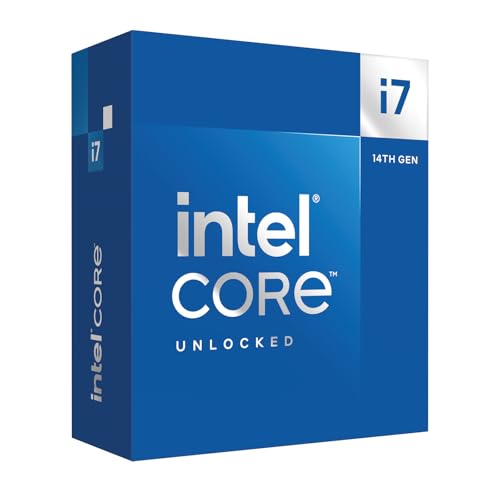
Specs
Cores / threads | 20 cores (8 P-cores + 12 E-cores), 28 threads |
Boost clock | Up to 5.6 GHz (P-core) |
Cache | 33 MB Smart Cache |
Integrated graphics | Intel UHD Graphics 770 with Quick Sync Video |
TDP | 125 W base, 253 W max turbo |
Socket | LGA1700 |
Memory support | DDR5-5600 or DDR4-3200 |
Cores / threads
20 cores (8 P-cores + 12 E-cores), 28 threads
Boost clock
Up to 5.6 GHz (P-core)
Cache
33 MB Smart Cache
Integrated graphics
Intel UHD Graphics 770 with Quick Sync Video
TDP
125 W base, 253 W max turbo
Socket
LGA1700
Memory support
DDR5-5600 or DDR4-3200
What it does well
Quick Sync runs on the chip's dedicated media engine, separate silicon from the cores doing the actual gaming. That split is the entire reason this pick exists: OBS can lean on hardware encode without touching the frame rate the game is putting up.
The 8 P-cores handle the game while the 12 E-cores soak up OBS, Discord, chat overlays, and the browser tab with the stream dashboard open. On a single PC juggling that much background load, having threads to spare matters more than peak clock speed.
What you give up
Against a Ryzen X3D chip, gameplay frame rate trails, especially in the cache-sensitive titles in the benchmark tables above. Competitive shooters where every frame counts for aim consistency will show the gap most clearly.
Quick Sync's AV1 hardware encode isn't universally accepted yet; most Twitch viewers still land on H.264 streams, though YouTube handles AV1 fine. There's no 3D V-Cache here, so if gameplay smoothness in cache-heavy games matters more than encode efficiency, this isn't the pick.
Who it's for
The streamer running one PC with a mid-range GPU that isn't itself an encoding powerhouse, who doesn't want to buy a capture card or a second machine, and mainly needs a stream that doesn't drop frames while the game runs. Pair it with a board picked for the rest of the platform; our how to choose CPU and motherboard guide covers the tradeoffs.
Best for serious single-PC streaming: AMD Ryzen 7 9800X3D
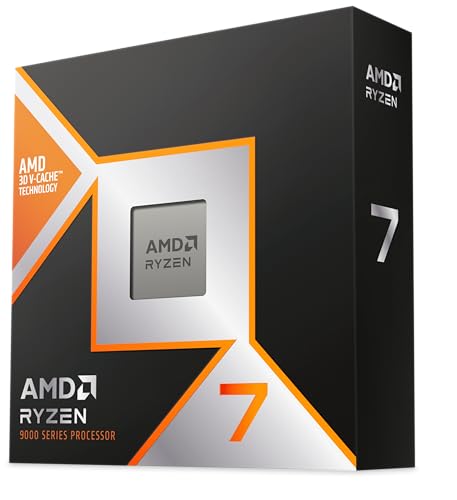
Specs
Cores / threads | 8 cores, 16 threads |
Boost clock | Up to 5.2 GHz |
Cache | 96 MB 3D V-Cache L3 plus 8 MB L2 (104 MB total) |
Integrated graphics | None; requires a discrete GPU |
TDP | 120 W |
Socket | AM5 |
Memory support | DDR5-5600, higher with EXPO profiles |
Cores / threads
8 cores, 16 threads
Boost clock
Up to 5.2 GHz
Cache
96 MB 3D V-Cache L3 plus 8 MB L2 (104 MB total)
Integrated graphics
None; requires a discrete GPU
TDP
120 W
Socket
AM5
Memory support
DDR5-5600, higher with EXPO profiles
What it does well
96 MB of 3D V-Cache wins nearly every cache-sensitive esports title outright, the kind of margin that shows up directly in the benchmark tables above. Paired with NVENC on any modern GeForce card, encode is fully offloaded to the GPU, so all 8 cores stay free for the game and the streaming software running alongside it. If you would rather buy that pairing ready-built, our roundup of the best prebuilt gaming PC for streaming ranks five systems by NVENC encoder count.
This is the same chip that wins outright gaming benchmarks against nearly everything on the market right now. For a streamer whose viewers are watching the gameplay more than anything else, that's the number that matters most.
What you give up
There's no integrated graphics at all, so this chip needs a discrete GPU that supports NVENC, which in practice means any RTX 20-series card or newer. Eight cores is plenty for gaming plus streaming, but a heavier simultaneous workload, exporting video while live, will bottleneck sooner than a higher core count chip would.
Who it's for
The streamer building a single PC around a dedicated NVIDIA GPU who wants the best gameplay experience and the smoothest possible frame rate for viewers, with NVENC quietly carrying the encode in the background. For a fuller spread of gaming CPU options at other budgets, see our CPU buying guide for every budget.
Best budget pick for dual-PC streaming: AMD Ryzen 5 9600X

Specs
Cores / threads | 6 cores, 12 threads |
Boost clock | Up to 5.4 GHz |
Cache | 32 MB L3 plus 6 MB L2 (38 MB total) |
Integrated graphics | AMD Radeon Graphics, display output only |
TDP | 65 W (105 W package power tracking) |
Socket | AM5 |
Memory support | DDR5-5600 |
Cores / threads
6 cores, 12 threads
Boost clock
Up to 5.4 GHz
Cache
32 MB L3 plus 6 MB L2 (38 MB total)
Integrated graphics
AMD Radeon Graphics, display output only
TDP
65 W (105 W package power tracking)
Socket
AM5
Memory support
DDR5-5600
What it does well
In a dual-PC setup, the gaming rig only has to render the game and push a clean feed to a second machine over a capture card or a network link. That means the gaming CPU doesn't need an integrated GPU, a hardware encoder, or a huge core count of its own; the second PC carries that load entirely.
Six cores and twelve threads at modern IPC hold up fine at the frame rates most viewers actually watch, and the money saved over a flagship gaming chip can go straight into the GPU, where it does more for the stream's picture quality.
What you give up
Cache is smaller than the X3D chips, so this isn't the pick if streaming happens on the same machine. Without a second PC or a dedicated capture path carrying the encode, this chip's frame rate will visibly dip once OBS starts working.
Who it's for
Streamers who already own, or are planning, a second PC purely for encode and overlay duty, and want the gaming rig's budget to go toward frame rate rather than encode headroom. Our streaming and creator PC build guide walks through pairing a setup like this end to end.
Best for stream plus edit: AMD Ryzen 9 9950X3D

Specs
Cores / threads | 16 cores, 32 threads |
Boost clock | Up to 5.7 GHz |
Cache | 128 MB 3D V-Cache L3 plus 16 MB L2 (144 MB total) |
Integrated graphics | AMD Radeon Graphics, display output only |
TDP | 170 W |
Socket | AM5 |
Memory support | DDR5-5600, higher with EXPO profiles |
Cores / threads
16 cores, 32 threads
Boost clock
Up to 5.7 GHz
Cache
128 MB 3D V-Cache L3 plus 16 MB L2 (144 MB total)
Integrated graphics
AMD Radeon Graphics, display output only
TDP
170 W
Socket
AM5
Memory support
DDR5-5600, higher with EXPO profiles
What it does well
16 cores with 3D V-Cache stacked on one chiplet gives this chip a combination almost nothing else on the market has: top-tier gaming frame rates alongside real multithreaded throughput. It can carry live encode, chat capture, and a background export queue in an editor like Premiere Pro or DaVinci Resolve without those tasks fighting the game for cycles.
What you give up
It costs more than the other three picks here combined in some build budgets, and the second chiplet doesn't carry the extra cache, so workloads that don't split cleanly across cores can occasionally schedule onto the slower half of the chip. Most streamers who edit occasionally, rather than constantly, don't need this much chip.
Who it's for
Full-time streamers and content creators who go live, then immediately cut VODs and highlight reels on the same machine, and need one CPU that doesn't compromise on either job. If editing is the bigger half of the workload, our CPUs for video editing and gaming picks digs deeper into that side specifically.
Bottom line
If you're running one PC with a modest GPU and just want a stream that doesn't stutter, buy the Intel Core i7-14700K and lean on Quick Sync.
If you're building a single gaming PC around a modern NVIDIA card and want the best frame rate on stream, buy the AMD Ryzen 7 9800X3D and let NVENC carry the encode.
If a second PC is already doing your encoding, buy the AMD Ryzen 5 9600X and put the difference into your GPU instead.
If you stream live and edit the VOD on the same rig, buy the AMD Ryzen 9 9950X3D.
AMD wins the actual gameplay in every scenario here. Intel earns its spot only when Quick Sync is doing real work on a single PC without a GPU carrying the encode. See how our full streaming CPU picks by streamer cohort line up if your setup doesn't match one of the four above.
FAQ
Is QuickSync better than NVENC for streaming?
Not in raw quality. NVENC on a modern GeForce card produces cleaner video at the same bitrate than Intel's Quick Sync, and most reviewers still give NVENC the edge. Quick Sync's advantage is architectural: it runs on the CPU's own media engine, so a single PC without an encode-capable discrete GPU can still stream cleanly without dropping frames in the game itself.
Do you need a good CPU for streaming?
You need enough CPU to run the game, OBS, chat overlays, and Discord at once without pushing your frame times up. On a single PC that also handles live encode through Quick Sync or software x264, cores matter. On a dual-PC setup or a GPU-offloaded NVENC setup, the CPU mostly just needs to run the game well, so a mainstream 6 to 8 core chip is plenty.
Is Intel or AMD better for streaming?
AMD wins the gameplay side in every setup covered here, mostly on the strength of 3D V-Cache in the Ryzen X3D lineup. Intel's advantage is narrower and specific: a chip like the Core i7-14700K carries a Quick Sync media engine that AMD's desktop chips still lack, which only matters on a single PC without a discrete GPU handling NVENC.
Can you stream on an AMD CPU without a capture card?
Yes, as long as the PC has a discrete GPU. AMD's desktop Ryzen chips ship with either no integrated graphics at all, on the X3D gaming chips, or a basic display-only iGPU, so NVENC on the GPU, or software x264 on the CPU, carries the encode instead of a capture card. A capture card only becomes necessary in a dual-PC setup where a second machine ingests the video feed.
What's the difference between dual-PC and single-PC streaming setups?
A single-PC setup runs the game and the encoder on the same machine, using Quick Sync, NVENC, or software x264 to compress the stream. A dual-PC setup splits the job: one PC renders the game and outputs a clean video feed, and a second PC handles OBS, overlays, and the upload, which frees the gaming PC's CPU and GPU completely for frame rate. Once the CPU question is settled, a solid streaming microphone is usually the next spending priority, not another core.
Related Articles

Best CPUs for Streaming and Gaming (2026): 5 NVENC Picks
Best CPUs for streaming and gaming in 2026: 5 picks from 6 to 16 cores. Your GPU handles NVENC encoding, so eight good cores beat a 16-core flagship CPU.
Aug 24, 2026

Best CPU for Video Editing and Gaming: 5 Picks for 2026
The best CPU for video editing and gaming in 2026: five picks that cut 4K render times in DaVinci Resolve and Premiere Pro without giving up gaming frames.
Aug 12, 2026

Best PC Builds for Streaming, Gaming & Creators (2026)
The best custom PC builds for streaming, gaming, and content creation in 2026 — upgradeable setups across every budget, with live US pricing.
Aug 3, 2025

Best 1440p Prebuilt Gaming PCs (2026): 5 PSU-Checked Picks
Best 1440p prebuilt gaming PC picks for 2026, screened by GPU tier, VRAM and published PSU specs, so you know which box actually holds high-refresh 1440p.
Sep 15, 2026

RTX 5070 vs RX 9070 XT (2026): 12GB DLSS 4 vs 16GB Raster
RTX 5070 vs RX 9070 XT at 1440p in 2026: the 9070 XT leads raster with 16GB, the 5070 wins ray tracing with DLSS 4 on 12GB. Pick by the games you actually play.
Sep 15, 2026