Affiliate Disclosure: As an Amazon Associate we earn from qualifying purchases. Some links may earn us a commission at no cost to you.

Steam Machine vs Building Your Own PC: 2026 Verdict
Valve's Steam Machine put a real question back on the table. If a sealed SteamOS box plays your library from the sofa, why build anything at all? For most of this year the answer was easy: price the parts, pocket the difference, keep the upgrade path.
Price those same parts today and the difference has mostly evaporated. Memory is the reason. So steam machine vs building your own pc now turns on what you need rather than what you save, and the split is narrower than it was in June.
At a glance
Two columns, one decision. Most of these rows are close. The ones that decide it are VRAM, anti-cheat, and what you are allowed to replace later. If you want the longer version of this argument without the console in it, we cover build versus buy separately.
Spec | Same-class AM5 build | |
|---|---|---|
CPU | Semi-custom Zen 4, 6 cores and 12 threads, up to 4.8 GHz | Ryzen 5 7600X, 6 cores and 12 threads, up to 5.3 GHz |
GPU | Semi-custom RDNA 3, 28 compute units at 2.45 GHz sustained | Radeon RX 9060 XT, RDNA 4, desktop power budget |
VRAM | 8 GB GDDR6, fixed for life | 16 GB GDDR6 |
Memory | 16 GB DDR5 SO-DIMM, replaceable | 32 GB DDR5-6000, two slots still free |
Storage | 512 GB or 2 TB NVMe, one slot | 2 TB NVMe Gen4, a second M.2 slot free |
Operating system | SteamOS 3 with Proton | SteamOS or Windows, your call |
Kernel anti-cheat titles | Blocked | Supported on Windows |
Upgrade path | Memory and the drive | Every part, including the socket |
Footprint | A 156 mm cube, 2.6 kg | A mid-tower that owns a corner of the desk |
How you buy it | Steam Store reservation queue | Eight listings, ordered part by part |
CPU
- Valve Steam Machine
Semi-custom Zen 4, 6 cores and 12 threads, up to 4.8 GHz
- Same-class AM5 build
Ryzen 5 7600X, 6 cores and 12 threads, up to 5.3 GHz
GPU
- Valve Steam Machine
Semi-custom RDNA 3, 28 compute units at 2.45 GHz sustained
- Same-class AM5 build
Radeon RX 9060 XT, RDNA 4, desktop power budget
VRAM
- Valve Steam Machine
8 GB GDDR6, fixed for life
- Same-class AM5 build
16 GB GDDR6
Memory
- Valve Steam Machine
16 GB DDR5 SO-DIMM, replaceable
- Same-class AM5 build
32 GB DDR5-6000, two slots still free
Storage
- Valve Steam Machine
512 GB or 2 TB NVMe, one slot
- Same-class AM5 build
2 TB NVMe Gen4, a second M.2 slot free
Operating system
- Valve Steam Machine
SteamOS 3 with Proton
- Same-class AM5 build
SteamOS or Windows, your call
Kernel anti-cheat titles
- Valve Steam Machine
Blocked
- Same-class AM5 build
Supported on Windows
Upgrade path
- Valve Steam Machine
Memory and the drive
- Same-class AM5 build
Every part, including the socket
Footprint
- Valve Steam Machine
A 156 mm cube, 2.6 kg
- Same-class AM5 build
A mid-tower that owns a corner of the desk
How you buy it
- Valve Steam Machine
Steam Store reservation queue
- Same-class AM5 build
Eight listings, ordered part by part
Verdict: Steam Machine or your own build?
Pick the row that sounds like you. The honest answer changes more by scenario than by spec sheet, and in two of these six the console wins outright. If neither column fits, a prebuilt in the same bracket is the third option people forget.
Scenario | Better choice | Why |
|---|---|---|
You play on a TV from the sofa | Steam Machine | Nothing you assemble gets that small, that quiet, and that ready for this money. |
You play shooters with kernel-level anti-cheat | Build it | SteamOS cannot load those drivers, so the box will not launch the games at all. |
You target 1440p with textures turned up | Build it | The 16 GB card keeps textures resident that an 8 GB pool has to evict. |
You want to buy once and stop thinking | Steam Machine | Fixed spec, fixed price, no parts list to get wrong and no compatibility homework. |
You already own a monitor, keyboard and mouse | Build it | A tower reuses all of it. The console assumes a TV and a controller you may still need to buy. |
You want the cheapest route to playing this month | Steam Machine | Current memory pricing is doing the arguing, and it is not close right now. |
You play on a TV from the sofa
- Better choice
Steam Machine
- Why
Nothing you assemble gets that small, that quiet, and that ready for this money.
You play shooters with kernel-level anti-cheat
- Better choice
Build it
- Why
SteamOS cannot load those drivers, so the box will not launch the games at all.
You target 1440p with textures turned up
- Better choice
Build it
- Why
The 16 GB card keeps textures resident that an 8 GB pool has to evict.
You want to buy once and stop thinking
- Better choice
Steam Machine
- Why
Fixed spec, fixed price, no parts list to get wrong and no compatibility homework.
You already own a monitor, keyboard and mouse
- Better choice
Build it
- Why
A tower reuses all of it. The console assumes a TV and a controller you may still need to buy.
You want the cheapest route to playing this month
- Better choice
Steam Machine
- Why
Current memory pricing is doing the arguing, and it is not close right now.
The living-room player should buy the Steam Machine and stop reading. You are not short of compute for 1080p on a TV, you do not want a tower in the lounge, and the money you would spend closing a gap you cannot see on a couch-distance screen is better spent on games.
The desk player at 1440p should build. This is where the 8 GB frame buffer starts dictating your settings menu rather than your GPU doing it, and where the fixed spec becomes a ceiling you hit in two years instead of five. You pay a premium for that headroom right now. It is still the right call if 1440p is where you live.
The competitive multiplayer player does not have a choice to make. If your rotation includes the big kernel anti-cheat titles, SteamOS will not run them, and no amount of hardware fixes a driver that refuses to load. Build, and run Windows on it.
Valve Steam Machine: what is in the box
The Steam Machine is a 156 mm cube with semi-custom AMD silicon inside and SteamOS on top. Six Zen 4 cores, twelve threads, and an RDNA 3 graphics block with 28 compute units holding 8 GB of GDDR6. Sixteen gigabytes of DDR5 sits on replaceable SO-DIMMs, which is more generous than the console framing suggests.
Valve sells it through a reservation draw on the Steam Store rather than through retail, so it is not something you add to a cart on a whim. That matters to the comparison: the build is available tonight, and the console is available when your name comes up.
Specs and ports
CPU | Semi-custom AMD Zen 4, 6 cores and 12 threads, up to 4.8 GHz |
GPU | Semi-custom AMD RDNA 3, 28 compute units at 2.45 GHz sustained |
VRAM | 8 GB GDDR6, soldered |
Memory | 16 GB DDR5 SO-DIMM, user replaceable |
Storage | 512 GB or 2 TB NVMe |
Operating system | SteamOS 3, Arch Linux base with Proton |
Dimensions | 156 x 152 x 162 mm, 2.6 kg |
Availability | Steam Store reservation queue |
CPU
Semi-custom AMD Zen 4, 6 cores and 12 threads, up to 4.8 GHz
GPU
Semi-custom AMD RDNA 3, 28 compute units at 2.45 GHz sustained
VRAM
8 GB GDDR6, soldered
Memory
16 GB DDR5 SO-DIMM, user replaceable
Storage
512 GB or 2 TB NVMe
Operating system
SteamOS 3, Arch Linux base with Proton
Dimensions
156 x 152 x 162 mm, 2.6 kg
Availability
Steam Store reservation queue
What it does well
It is genuinely competent at 1080p. Older and mid-weight titles run comfortably above 60 frames per second, and the Proton compatibility layer has quietly stopped being the story it was three years ago. Most of a normal Steam library simply launches.
The engineering win is the power envelope. Valve is getting that performance out of a box drawing a small fraction of what the desktop parts it competes with pull from the wall, in a volume you can hide behind a soundbar. Nothing you assemble from desktop components lands in the same place.
The 16 GB of system memory on replaceable SO-DIMMs is the detail reviewers undersold. In a market where memory is the most volatile line in any parts list, a machine that ships with a sane amount already installed is carrying real value that a spec-for-spec table does not show.
What you give up
The 8 GB frame buffer is the hard ceiling. At 1080p it is mostly fine. Push to 1440p with texture quality raised, or into a recent title with heavy streaming assets, and you are managing a budget rather than picking settings. That number never changes, because the GPU is soldered to the board.
Then there is the software wall. Kernel-level anti-cheat does not run on Linux, and SteamOS is Linux. Reports from across 2026 are consistent on which titles that removes:
- Valorant, League of Legends and Teamfight Tactics, via Riot Vanguard
- Recent Call of Duty releases, including Black Ops 7
- Fortnite, under Easy Anti-Cheat's current configuration
- Battlefield and EA Sports titles, under EA's Javelin anti-cheat
EA job listings have hinted at a future path for Javelin on Linux and Proton, and Valve has said openly that Steam Machine sales are part of how it intends to pressure that forward. Buyers have flagged the obvious risk: none of that has shipped, and buying hardware against a roadmap is how people end up disappointed.
Who it's for
The Steam Machine is for the person who wants a console that happens to run their Steam library. Living room, controller, TV, no parts list. If that is the setup, pair it with a decent panel and you are done; our monitor picks for the Steam Machine cover the sensible options, and the storage question gets its own answer in whether 512 GB is enough. It is not for anyone whose weekly rotation includes a kernel anti-cheat shooter, and it is not for anyone who expects to raise the graphics ceiling later.
How we'd build it for the same money
Here is the part where the usual answer has aged badly. The standard reply all year was to match the console's spec with desktop parts and keep the change. You still can. Match it exactly, with an 8 GB card and 16 GB of memory, and a build lands modestly under the console.
That is not the build we would make. Matching an 8 GB card in 2026 means buying the same ceiling you were trying to escape, so our list doubles both the VRAM and the system memory. Doing that is what moves the total, and memory is where almost all of the movement happens. If you have not assembled one before, our guide to building a gaming PC walks the order of operations.
Click through on any row and the live price tells you the rest of the story faster than we can. The memory line is the one to look at first.
Part | Pick | Why this one | Buy |
|---|---|---|---|
Graphics card | Doubles the Steam Machine's VRAM pool, which is the single biggest reason to build. | ||
Processor | Same six-core, twelve-thread Zen 4 layout Valve used, with higher clocks and no power cap. | ||
CPU cooler | The 7600X ships without a cooler, so this line is mandatory, not optional. | ||
Motherboard | AM5 socket with four DIMM slots and two Gen4 M.2 ports, so the upgrade path is real. | ||
Memory | Double the Steam Machine's memory, and the line item that decides the whole comparison. | ||
Storage | Matches the large Steam Machine's capacity without paying Valve's storage step-up. | ||
Power supply | ATX 3.1 headroom so a bigger card later does not mean a second power supply. | ||
Case | Mesh front and room for the cooler, at the cost of a footprint no shelf will hide. |
Graphics card
- Pick
- Why this one
Doubles the Steam Machine's VRAM pool, which is the single biggest reason to build.
- Buy
Processor
- Pick
- Why this one
Same six-core, twelve-thread Zen 4 layout Valve used, with higher clocks and no power cap.
- Buy
CPU cooler
- Pick
- Why this one
The 7600X ships without a cooler, so this line is mandatory, not optional.
- Buy
Motherboard
- Pick
- Why this one
AM5 socket with four DIMM slots and two Gen4 M.2 ports, so the upgrade path is real.
- Buy
Memory
- Pick
- Why this one
Double the Steam Machine's memory, and the line item that decides the whole comparison.
- Buy
Storage
- Pick
- Why this one
Matches the large Steam Machine's capacity without paying Valve's storage step-up.
- Buy
Power supply
- Pick
- Why this one
ATX 3.1 headroom so a bigger card later does not mean a second power supply.
- Buy
Case
- Pick
- Why this one
Mesh front and room for the cooler, at the cost of a footprint no shelf will hide.
- Buy
ASUS Dual RX 9060 XT 16GB: where building pulls ahead
If you only read one reason to build instead of buy, read this one. The card is the entire argument, and the number that matters is sixteen.
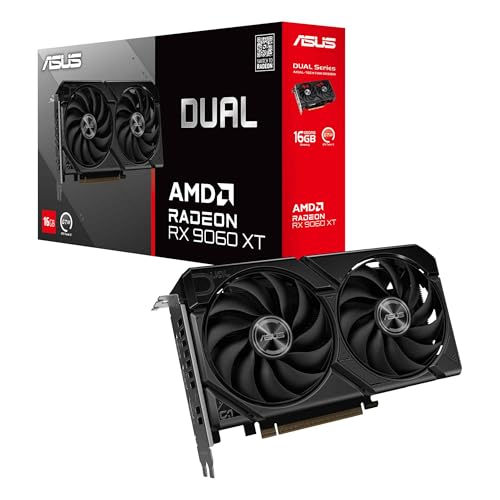
Specs
Chip | Radeon RX 9060 XT, RDNA 4 |
VRAM | 16 GB GDDR6 |
Memory bus | 128-bit |
Interface | PCIe 5.0 x8 |
Display outputs | DisplayPort 2.1a and HDMI 2.1b |
Cooling | Dual axial fans |
Board partner | ASUS Dual, non-OC |
Chip
Radeon RX 9060 XT, RDNA 4
VRAM
16 GB GDDR6
Memory bus
128-bit
Interface
PCIe 5.0 x8
Display outputs
DisplayPort 2.1a and HDMI 2.1b
Cooling
Dual axial fans
Board partner
ASUS Dual, non-OC
What it does well
Sixteen gigabytes of GDDR6 at this tier buys you the thing a console cannot offer: the ability to stop thinking about texture settings. The Steam Machine's 8 GB pool is adequate at 1080p and becomes a planning exercise above it. The 9060 XT's pool stays out of your way at 1440p.
RDNA 4 also fixed the thing RDNA 3 was weakest at. Ray tracing on this generation is no longer the feature you switch off before reading the benchmark, and the upscaling story has caught up enough that it is a normal part of the settings menu rather than a compromise.
Practically, it is a two-fan card on PCIe 5.0 that fits a normal mid-tower without planning. Nothing exotic, nothing that needs a bigger power supply than the one on this list.
What you give up
The 128-bit memory bus is the honest caveat. Sixteen gigabytes on a narrow bus is capacity without matching bandwidth, so this is a card that holds big textures well and pushes very high frame rates less well. It is the right shape for 1440p quality settings and the wrong shape for chasing 4K.
The other caveat is the shopping trip. Search for this card and the 8 GB version is routinely the first result, and the two share almost every word in the product name. Buyers get caught by this constantly. Check that the listing says 16 GB before you order.
Who it's for
This is the card for the 1440p desk player who intends to keep it for several years and does not want the frame buffer to be the thing that retires it. If you are playing at 1080p on a TV, you are buying headroom you will not use.
Corsair Vengeance RS DDR5 32GB: the part that breaks the math
And here is the reason the easy answer stopped being easy. One line item in an eight-part list is doing almost all of the damage.
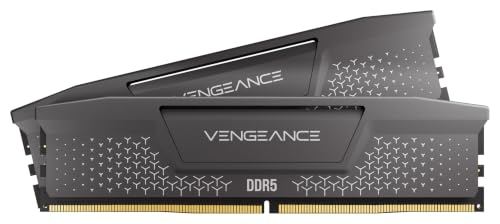
Specs
Capacity | 32 GB as two 16 GB modules |
Type | DDR5 UDIMM, 288-pin |
Rated speed | Up to 6000 MT/s |
Profile support | AMD EXPO and Intel XMP |
Voltage | 1.35 V |
Platforms | AM5, plus Intel LGA1700 and LGA1851 |
Finish | Matte black, no RGB |
Capacity
32 GB as two 16 GB modules
Type
DDR5 UDIMM, 288-pin
Rated speed
Up to 6000 MT/s
Profile support
AMD EXPO and Intel XMP
Voltage
1.35 V
Platforms
AM5, plus Intel LGA1700 and LGA1851
Finish
Matte black, no RGB
What it does well
On the merits this is the right kit. Thirty-two gigabytes is the 2026 standard rather than the luxury it was two years ago, DDR5-6000 is the sweet spot the AM5 memory controller is tuned for, and EXPO means one toggle in BIOS rather than an evening of manual timings.
Two sticks in a four-slot board is also the correct configuration. You keep two slots free, the controller stays happy, and a later capacity bump does not mean throwing away what you bought.
What you give up
What you give up is the entire price argument. DRAM makers have committed most of this year's output to AI and enterprise customers, and consumer DDR5 has absorbed the shortfall. Reports through 2026 describe kits like this one multiplying several times over from where they sat in early 2025, and forecasters do not expect relief soon.
That is why the comparison flipped. The console ships with memory already installed at a price Valve locked in; your parts list buys memory at today's. Open the listing and the live figure will make the point better than a paragraph can.
Who it's for
Buy this kit if you have decided to build. Do not let it talk you out of building if you need anti-cheat support or VRAM headroom, because neither of those is purchasable on the other side of the comparison at any price.
Bottom line
If you game on a TV with a controller, buy the Steam Machine. If your rotation includes kernel anti-cheat shooters, build, and put Windows on it. If you play at 1440p with textures up and plan to keep the machine for years, build.
Everyone else should notice what changed. The parts-cost argument that made this an easy call in June has been eaten by memory pricing, and the remaining reasons to build are capability reasons rather than money reasons. They are good reasons. They are just no longer free ones. If a tower is the answer but assembling it is not, a prebuilt or even a handheld covers the same ground from a different angle.
FAQ
Is the Steam Machine worth it compared to building a PC?
For a living-room setup, yes. The Steam Machine delivers competent 1080p gaming in a 156 mm cube with SteamOS already configured, and current memory pricing means a same-class build no longer undercuts it the way it did earlier in 2026.
Building wins when you need something the box cannot give you at any price: more than 8 GB of VRAM, support for kernel-level anti-cheat games, or the ability to replace the graphics card in three years. Decide on capability, not on cost.
Can you upgrade the Steam Machine?
Partly. The 16 GB of DDR5 sits on standard SO-DIMMs and the NVMe drive is accessible, so memory and storage are both serviceable.
The parts that decide how long it stays useful are not. The Zen 4 CPU and the RDNA 3 graphics block are semi-custom silicon soldered to the board, which means the 8 GB frame buffer is fixed for the life of the machine. When it stops keeping up, the whole unit is the upgrade. An AM5 build swaps either part on its own.
Will the Steam Machine run Fortnite, Call of Duty and Valorant?
No, not as of 2026. All three rely on kernel-level anti-cheat built for Windows, and SteamOS runs on the Linux kernel, so the anti-cheat driver cannot load. Recent Call of Duty releases, Valorant through Riot Vanguard, and Battlefield and EA Sports titles through EA's Javelin are all affected.
EA has publicly explored Linux and Proton support for Javelin, and Valve has said Steam Machine adoption is part of its argument to publishers. Nothing has shipped. If those games are your weekly rotation, build a Windows machine.
How much PC can you build for Steam Machine money in 2026?
Spec for spec, slightly more than the console. A six-core Zen 4 chip, an 8 GB card and 16 GB of memory assembles for modestly less than Valve charges, which is where the popular answer came from.
Raise either number and the saving disappears. Doubling VRAM to 16 GB and memory to 32 GB, which is the build most people have in mind, pushes the total meaningfully above the console because DDR5 pricing has climbed hard this year. Check the live prices on the parts list above before committing either way.
Is 8GB of VRAM enough for 1440p gaming in 2026?
It is workable, not comfortable. Plenty of titles run fine at 1440p on 8 GB if you keep texture quality at medium or high and accept upscaling, and esports titles are not close to the limit.
Recent releases with large streaming texture pools are where it bites, and the symptom is stutter and pop-in rather than a lower average frame rate, which makes it feel worse than a benchmark chart suggests. At 1080p, 8 GB is still fine. If 1440p with textures raised is the target, 16 GB is the number to buy.
Related Articles

Build vs. Buy a Gaming PC in 2026: Which Wins?
Building a gaming PC vs buying a prebuilt in 2026: honest cost math by budget tier, where DIY still wins, and where prebuilts are the smarter buy now.
Jun 27, 2026

Is 512GB Enough for the Steam Machine? 2TB Verdict (2026)
Is 512GB enough for the Steam Machine, or is the 2TB worth it? We do the capacity math against real drive prices, then name the SSD and card to upgrade with.
Sep 4, 2026

Best Monitors for the Steam Machine (2026): 5 Picks
The best monitor for the Steam Machine is 1440p, not 4K. Five picks by resolution and refresh tier, sized to what a 28 CU RDNA 3 box renders in real games.
Sep 19, 2026

How to Build a Gaming PC: A Buyer's Decision Framework
Build a gaming PC the right way: GPU-first ordering, CPU sized to match, motherboard overspend avoided, and the PSU/case rules that protect the build.
May 17, 2026

Best Prebuilt Gaming PCs Under $1,200 (2026): 5 Picks
The best prebuilt gaming PC under $1,200 in 2026: five picks judged on the 8GB VRAM ceiling, PSU headroom, and whether the socket survives an upgrade.
Jul 20, 2026