Affiliate Disclosure: As an Amazon Associate we earn from qualifying purchases. Some links may earn us a commission at no cost to you.

Best CPUs for the RX 7900 XTX (2026): 5 Picks by Tier
The RX 7900 XTX is a 4K card with 24 GB of VRAM and a 355 W board power budget, and most people who own one are not building a new PC. They are deciding what to put next to a graphics card they already paid for, and the honest answer depends on two things: the panel on your desk and the socket under your current CPU.
At 4K the card sets the frame rate and the processor barely matters. At high-refresh 1440p it starts to. Below are five picks by tier, from a drop-in AM4 upgrade that keeps your board and RAM to a full AM5 move.
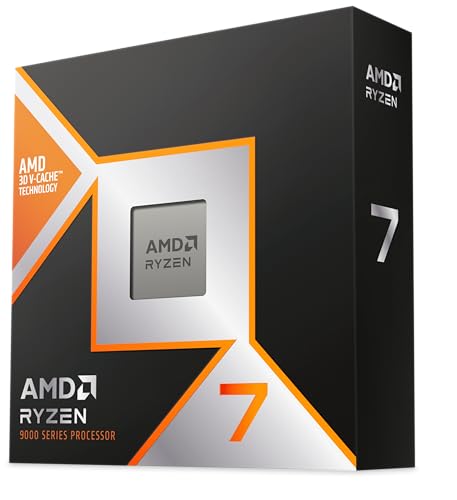
Our top pick: AMD Ryzen 7 9800X3D
The Ryzen 7 9800X3D is the chip that keeps an RX 7900 XTX fed at high-refresh 1440p and in cache-heavy games, and it sits on the platform with an upgrade path still ahead of it.
Quick picks
Pick | CPU | Best for | Buy |
|---|---|---|---|
Best Overall | 1440p high refresh, any library | ||
Best Value | Nearly the same result, one tier down | ||
Best Premium | The last few percent at 1080p and 1440p | ||
Best Budget | AM4 owners: keep the board and DDR4 | ||
Editor's Pick | 4K gaming plus real productivity work |
Best Overall
- CPU
- Best for
1440p high refresh, any library
- Buy
Best Value
- CPU
- Best for
Nearly the same result, one tier down
- Buy
Best Premium
- CPU
- Best for
The last few percent at 1080p and 1440p
- Buy
Best Budget
- CPU
- Best for
AM4 owners: keep the board and DDR4
- Buy
Editor's Pick
- CPU
- Best for
4K gaming plus real productivity work
- Buy
Specs at a glance
CPU | Socket | Cores / threads | Boost clock | L3 cache | TDP |
|---|---|---|---|---|---|
AM5 | 8C / 16T | 5.2 GHz | 96 MB, second-gen 3D V-Cache | 120 W | |
AM5 | 8C / 16T | 5.0 GHz | 96 MB, first-gen 3D V-Cache | 120 W | |
AM5 | 8C / 16T | 5.6 GHz | 96 MB, second-gen 3D V-Cache | 120 W | |
AM4 | 8C / 16T | 4.5 GHz | 96 MB, first-gen 3D V-Cache | 105 W | |
AM5 | 8C / 16T | 5.5 GHz | 32 MB | 65 W default, 105 W configurable |
- Socket
AM5
- Cores / threads
8C / 16T
- Boost clock
5.2 GHz
- L3 cache
96 MB, second-gen 3D V-Cache
- TDP
120 W
- Socket
AM5
- Cores / threads
8C / 16T
- Boost clock
5.0 GHz
- L3 cache
96 MB, first-gen 3D V-Cache
- TDP
120 W
- Socket
AM5
- Cores / threads
8C / 16T
- Boost clock
5.6 GHz
- L3 cache
96 MB, second-gen 3D V-Cache
- TDP
120 W
- Socket
AM4
- Cores / threads
8C / 16T
- Boost clock
4.5 GHz
- L3 cache
96 MB, first-gen 3D V-Cache
- TDP
105 W
- Socket
AM5
- Cores / threads
8C / 16T
- Boost clock
5.5 GHz
- L3 cache
32 MB
- TDP
65 W default, 105 W configurable
Benchmarks
Nobody has published a multi-CPU run on an RX 7900 XTX at the resolutions its owners use, so the two tables below come from reviewer testing with an RTX 5090. That is the worst case for CPU differences: the fastest card on the market strips the GPU out as a limit. Every gap you see here gets smaller on a 7900 XTX, which renders roughly a tier below it. If the mechanics of that are fuzzy, our explainer on how CPU and GPU bottlenecks work walks through it.
MMO content is cache-bound, which is where the clock bump on the 9850X3D shows up at all.
- 323 FPS
- 313 FPS
Relative frame rate, 9800X3D = 100. Even with the fastest card available, the AM4 drop-in sits within a few percent at 1440p Ultra.
- 100 %
- 97 %
How we picked a CPU for the RX 7900 XTX
Resolution decides the processor. The job of the CPU in this build is to keep the graphics card fed at your target resolution, and no more. At native 4K the 7900 XTX runs out of headroom long before any chip on this list does, and reviewer testing with a much faster RTX 5090 still showed the 5800X3D and the 9800X3D level at 4K Ultra. At 1440p with a high-refresh panel the picture shifts, and in CPU-bound titles the newer X3D parts pull clear.
Second, the library. Sim racing, flight sims, late-game 4X, factory builders and dense MMO content stay CPU-bound well past 1080p, and that is where 96 MB of L3 earns its place. If your drive is mostly single-player AAA at 4K, the case for skipping X3D at 1440p and 4K is strong, and our Editor's Pick follows it.
Third, the socket you already own. A lot of 7900 XTX systems still run on AM4. A drop-in chip keeps the board, the DDR4 kit and the Windows install, while every AM5 pick adds a board and a DDR5 kit to the bill. We place both routes side by side because the platform total, not the CPU sticker, is the real comparison.
Finally, every pick is a current Amazon listing for a new retail SKU, and each one is placed by tier rather than in a single ranking. The right chip for a 4K OLED owner and the right chip for a 240 Hz 1440p player are not the same chip. If you are still choosing that panel, our list of monitors for the RX 7900 XTX is the other half of this decision.
Best Overall: AMD Ryzen 7 9800X3D
Specs
Cores / threads | 8C / 16T |
Boost clock | 5.2 GHz |
L3 cache | 96 MB, second-gen 3D V-Cache |
TDP | 120 W |
Socket | AM5 |
Memory | DDR5, 6000 CL30 sweet spot |
Cooler | Not included |
Cores / threads
8C / 16T
Boost clock
5.2 GHz
L3 cache
96 MB, second-gen 3D V-Cache
TDP
120 W
Socket
AM5
Memory
DDR5, 6000 CL30 sweet spot
Cooler
Not included
What it does well
This is the chip that raises the ceiling without asking anything odd of the rest of the build. Second-generation 3D V-Cache sits under the compute die instead of on top of it, so the 9800X3D boosts to 5.2 GHz and moves heat through the IHS like a normal Ryzen part. The 96 MB L3 pool is what feeds sim, strategy and MMO engines that thrash cache.
The scaling data shows how much headroom that buys. In TechSpot's CPU-bound testing with an RTX 5090, the 5800X3D landed roughly a third behind it. That gap is the reason to buy this chip for a high-refresh 1440p panel, where the 7900 XTX can push frame rates that older CPUs start to cap.
It also stays easy to cool. A 120 W part on a decent dual-tower air cooler runs quiet, which matters in a case that already has a 355 W graphics card dumping heat into it.
What you give up
At 4K you are buying headroom the card will not let you spend. Reviewer testing shows the 9800X3D and the 5800X3D level at native 4K Ultra even on an RTX 5090, and the 7900 XTX is a slower card than that.
The platform cost is real for AM4 owners. You need an AM5 board and a DDR5 kit on top of the chip, so price it against our picks for budget AM5 boards and DDR5-6000 CL30 kits rather than against the CPU alone. Skip the cheapest B650 boards with thin VRM heatsinks; a B-tier board with proper cooling is all an X3D chip needs.
Who it's for
Players on a 1440p 165 Hz to 240 Hz panel, anyone whose library leans on sims, strategy or MMOs, and anyone moving to AM5 who wants the platform to outlast the card.
Best Value: AMD Ryzen 7 7800X3D

Specs
Cores / threads | 8C / 16T |
Boost clock | 5.0 GHz |
L3 cache | 96 MB, first-gen 3D V-Cache |
TDP | 120 W |
Socket | AM5 |
Memory | DDR5, 6000 CL30 sweet spot |
Cooler | Not included |
Cores / threads
8C / 16T
Boost clock
5.0 GHz
L3 cache
96 MB, first-gen 3D V-Cache
TDP
120 W
Socket
AM5
Memory
DDR5, 6000 CL30 sweet spot
Cooler
Not included
What it does well
The 7800X3D carries the same 96 MB L3 pool as the 9800X3D, and on a 7900 XTX that is most of what matters for gaming. At 1440p and 4K the card is doing the limiting in most titles, so the gap between these two X3D parts shrinks to a few frames.
It runs at 120 W and pairs with the same AM5 boards and DDR5-6000 kits as the newer chip, so the platform you buy around it is identical. If the price gap between the two is meaningful, this is where the saving goes furthest.
What you give up
First-generation V-Cache sits on top of the compute die, which caps clocks at 5.0 GHz and makes it run warmer under the same cooler. It is also the weaker of the two in threaded work, because Zen 4 cores give up some IPC to Zen 5.
Inside a small price gap, the newer chip wins on thermals and has a longer platform tail ahead of it. Check the two listings side by side before you settle. Owners of an RDNA 4 card face the same trade, covered in the same question for the RX 9070 XT.
Who it's for
1440p high-refresh players moving to AM5 who want the X3D benefit without paying for the newest silicon.
Best Premium: AMD Ryzen 7 9850X3D

Specs
Cores / threads | 8C / 16T |
Boost clock | 5.6 GHz |
Base clock | 4.7 GHz |
L3 cache | 96 MB, second-gen 3D V-Cache |
TDP | 120 W |
Socket | AM5 |
Cooler | Not included |
Cores / threads
8C / 16T
Boost clock
5.6 GHz
Base clock
4.7 GHz
L3 cache
96 MB, second-gen 3D V-Cache
TDP
120 W
Socket
AM5
Cooler
Not included
What it does well
The 9850X3D is a higher-binned 9800X3D with 400 MHz more boost, topping out at 5.6 GHz with the same 96 MB L3 and 120 W rating. Reviewers put it at the top of their gaming charts: Hardware Unboxed and GamersNexus measured it up to about 4 percent ahead of the 9800X3D at 1080p.
In cache-bound MMO content the clock bump shows most clearly. Club386 recorded 323 FPS against 313 in Final Fantasy XIV: Dawntrail with an RTX 5090. If you want the fastest gaming chip on the platform and nothing less, this is it.
What you give up
Reports suggest the gain costs heat. Tom's Hardware measured about 30 percent more power for about 3 percent more performance, and GamersNexus measured it 7 to 9 degrees C hotter under the same load. Budget for a stronger cooler than the 9800X3D needs.
On a 7900 XTX that 3 to 4 percent shrinks further, and at 4K it is gone. Most owners of this card get a better return from the 9800X3D, a view our 9850X3D vs 9800X3D verdict shares.
Who it's for
1080p and 1440p competitive players on 240 Hz or faster panels who want every frame, and builders who would otherwise wait for the next X3D release.
Best Budget: AMD Ryzen 7 5800X3D

Specs
Cores / threads | 8C / 16T |
Boost clock | 4.5 GHz |
L3 cache | 96 MB, first-gen 3D V-Cache |
TDP | 105 W |
Socket | AM4 |
Memory | DDR4, 3600 CL16 sweet spot |
Cooler | Not included |
Cores / threads
8C / 16T
Boost clock
4.5 GHz
L3 cache
96 MB, first-gen 3D V-Cache
TDP
105 W
Socket
AM4
Memory
DDR4, 3600 CL16 sweet spot
Cooler
Not included
What it does well
This is the cheapest real upgrade for a 7900 XTX owner still on AM4. It drops into the B450, B550 or X570 board you already have, keeps the DDR4 kit, and needs no Windows reinstall. The 96 MB of L3 is the same amount the AM5 X3D chips carry.
At the resolutions this card runs, it gives up very little. TechSpot measured it about 3 percent behind the 9800X3D in Kingdom Come: Deliverance II at 1440p Ultra with an RTX 5090, and level with it at native 4K Ultra. For a 4K panel, that is the AM5 upgrade's frame gain at a fraction of the platform cost.
What you give up
AM4 is a dead end. There is no faster chip coming for the socket, and when you do move, the board and the DDR4 kit move with you to the recycling pile. In CPU-bound titles and at 1080p it trails the 9800X3D by roughly a third, and the multiplier is locked.
Older B450 and X470 boards need a BIOS update before the chip will post, so flash it with the old CPU still installed. Stock is also thinning: the cheaper 5700X3D now surfaces only as a renewed listing. Our AM4 vs AM5 breakdown and the 5800X3D to 9800X3D upgrade cover when the full move is worth it.
Who it's for
Owners of a Ryzen 5 3600, 5600 or 5600X class chip on an AM4 board who game at 1440p or 4K and want the frame-time gain without rebuilding the platform.
Editor's Pick: AMD Ryzen 7 9700X

Specs
Cores / threads | 8C / 16T |
Boost clock | 5.5 GHz |
L3 cache | 32 MB |
TDP | 65 W default, 105 W configurable |
Socket | AM5 |
Memory | DDR5, 6000 CL30 sweet spot |
Cooler | Not included |
Cores / threads
8C / 16T
Boost clock
5.5 GHz
L3 cache
32 MB
TDP
65 W default, 105 W configurable
Socket
AM5
Memory
DDR5, 6000 CL30 sweet spot
Cooler
Not included
What it does well
At 4K the 7900 XTX sets the frame rate, so the X3D cache premium buys nothing you will see in most single-player AAA games. The 9700X puts that money into eight Zen 5 cores instead, boosting to 5.5 GHz on a 65 W default that runs cool and quiet on modest air.
It is also the better all-rounder. Without the stacked cache it holds higher clocks under load, and it outpaces the X3D parts in renders, compiles and encodes at the same core count. If this machine also streams, edits or builds code, that matters more than a few frames at 1080p.
What you give up
Without V-Cache it falls well behind in cache-bound games: sims, 4X strategy, factory builders and MMO raids. If those are on your drive, the X3D tax is worth paying and this is the wrong chip.
It also has less in reserve for a future GPU. A faster card at 1440p will expose the smaller 32 MB L3 sooner than it would on an X3D part.
Who it's for
4K single-player gamers, and anyone who streams, edits or compiles on the same box and wants AM5 without the cache premium.
Bottom line
If you game at high-refresh 1440p or play sims, strategy or MMOs, buy the Ryzen 7 9800X3D. If you want nearly the same result for less, buy the Ryzen 7 7800X3D. If you want every last frame and accept the heat, buy the Ryzen 7 9850X3D. If you are on AM4 and game at 1440p or 4K, drop in the Ryzen 7 5800X3D and keep your board. If you play at 4K and also do real work on the machine, buy the Ryzen 7 9700X.
FAQ
Does the RX 7900 XTX need an X3D CPU?
Only if your resolution or your library makes the CPU the limiter. At native 4K the card runs out of headroom first, and reviewer testing shows the 5800X3D and 9800X3D level there even on a faster RTX 5090. At high-refresh 1440p, or in cache-heavy sims, strategy games and MMOs, the extra L3 does lift frame rates and 1% lows. For a 4K single-player library, a Ryzen 7 9700X is the better use of the money.
Will a Ryzen 7 5800X3D bottleneck the RX 7900 XTX?
Not at 4K, and only slightly at 1440p Ultra, where TechSpot measured it about 3 percent behind the 9800X3D with an RTX 5090. It does fall behind in CPU-bound titles and at 1080p, where the newer chip leads by roughly a third. For an AM4 owner gaming at 1440p or 4K, it is the cheapest upgrade that keeps the card fed.
Should RX 7900 XTX owners on AM4 move to AM5?
Move if you play at high-refresh 1440p, lean on cache-bound games, or plan to keep the platform through another GPU upgrade. Stay on AM4 with a 5800X3D if you play at 4K, because the card sets the frame rate there and a new board plus a DDR5 kit buys little. Flash the BIOS first if your board is a B450 or X470.
What CPU should you pair with an RX 7900 XTX at 4K?
Any eight-core chip on this list will keep up at 4K, because the graphics card is the limit. On AM5, the Ryzen 7 9700X is the sensible pick and leaves budget for the board and memory. On AM4, the Ryzen 7 5800X3D matches the newer X3D parts at native 4K Ultra in reviewer testing. Save the 9800X3D for a high-refresh panel or a sim-heavy library.
Is the Ryzen 7 9850X3D worth it over the 9800X3D for an RX 7900 XTX?
For most owners, no. Reviewers measured the 9850X3D about 3 to 4 percent ahead at 1080p with an RTX 5090, and that lead shrinks on a 7900 XTX and disappears at 4K. It also draws more power and runs hotter. Buy it only if you play competitive titles on a 240 Hz panel and want the absolute top chip; otherwise the 9800X3D is the better buy.
Related Articles

Best Gaming Monitors for the RX 7900 XTX (2026): 5 Picks
The best monitor for RX 7900 XTX owners, matched to its native raster: a 4K QD-OLED, a budget 4K IPS, a 240Hz ultrawide and 1440p high-refresh picks for it.
Oct 16, 2026

5800X3D to 9800X3D: Is the Upgrade Worth It in 2026?
Is the 5800X3D to 9800X3D upgrade worth it in 2026? It is a full AM4 to AM5 platform swap, and your resolution decides whether to buy or keep the chip.
Aug 9, 2026

AM4 vs AM5 in 2026: Is AM4 Still Worth It? (5 CPU Picks)
AM4 vs AM5 in 2026: AM5 still wins most new gaming builds despite DDR5 prices, but AM4 is the smarter buy below one budget line. See where it flips + 5 picks.
Oct 15, 2026

Best CPUs for the RX 9070 XT (2026): 5 Picks by Tier
The best CPU for an RX 9070 XT depends on your resolution. Five AM5 picks by tier, plus the point where the CPU gap disappears and the real platform cost.
Sep 4, 2026

How to Choose a CPU and Motherboard
The buyer's framework for picking a CPU and motherboard pair: use case first, socket second, chip tier third, then the board class that matches.
May 17, 2026