Affiliate Disclosure: As an Amazon Associate we earn from qualifying purchases. Some links may earn us a commission at no cost to you.

Best PSU for RX 7900 XTX: 850W Sweet Spot, 5 Picks (2026)
An 850W power supply is the right match for an RX 7900 XTX in almost every build. AMD rates the card at 355W of board power and recommends an 800W unit, and its short power spikes are the reason a cheap 650W unit that looks fine on paper can trip into a shutdown mid-game. Below are the five units worth buying, keyed to the kind of build you are running, plus the wattage math so you can check any deal you find.
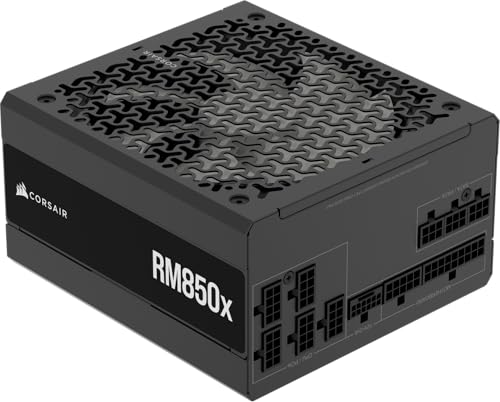
Our top pick: Corsair RM850x (ATX 3.1)
The Corsair RM850x lands on the wattage this card wants, carries a ten-year warranty and handles transient spikes by specification, which makes it the safest single answer for a 7900 XTX build.
How much wattage does an RX 7900 XTX actually need?
AMD lists the reference RX 7900 XTX at 355W typical board power, with two PCIe 8-pin connectors, and recommends an 800W power supply for a system built around a Ryzen 9 5900X. That recommendation is deliberately conservative, but it is pointing at something real: like most high-end GPUs, the card produces brief power excursions well above its rated figure, too short for a wall meter or monitoring software to show.
A typical gaming system with this card peaks somewhere between 500W and 600W once you add a 65W to 120W CPU, the motherboard, drives and fans. Factory-overclocked partner cards with three 8-pin connectors push that higher, and a 170W-plus CPU under a combined load can approach 700W. That math gives a simple ledger:
Wattage tier | Verdict for a 7900 XTX build |
|---|---|
650W | Too tight. Clears the average draw but leaves no margin for transient spikes. The most common cause of unexplained shutdowns on this card. |
750W | The floor, with a quality ATX 3.1 unit, a reference card and a 65W to 120W CPU. No room for an overclocked partner model. |
850W | The sweet spot. Comfortable spike headroom for reference and most partner cards, and the PSU runs in its quiet, efficient middle. |
1000W | For three-connector overclocked cards, high-draw CPUs, or a planned jump to a hungrier GPU. |
650W
- Verdict for a 7900 XTX build
Too tight. Clears the average draw but leaves no margin for transient spikes. The most common cause of unexplained shutdowns on this card.
750W
- Verdict for a 7900 XTX build
The floor, with a quality ATX 3.1 unit, a reference card and a 65W to 120W CPU. No room for an overclocked partner model.
850W
- Verdict for a 7900 XTX build
The sweet spot. Comfortable spike headroom for reference and most partner cards, and the PSU runs in its quiet, efficient middle.
1000W
- Verdict for a 7900 XTX build
For three-connector overclocked cards, high-draw CPUs, or a planned jump to a hungrier GPU.
Connectors matter as much as wattage. The 7900 XTX uses classic PCIe 8-pin plugs, two on the reference design and three on many partner cards, so you do not need a 12V-2x6 cable at all. What you do need is a separate PCIe cable for each socket on the card, rather than one cable with a daisy-chained second plug, which concentrates the spike current on a single run. Our guide to PSU wattage by GPU tier walks through the system math in more depth, and the ATX 3.1 explainer covers what the newer standard changes for transient handling.
Quick picks
Pick | Product | Best for | Buy |
|---|---|---|---|
Best Overall | Standard ATX builds with a 65W to 170W CPU | ||
Best Value | 850W of headroom at a value-tier price | ||
Best Premium | Overclocked three-connector cards and high-draw CPUs | ||
Best 750W Floor | Reference cards with a 65W CPU, no upgrade plans | ||
Best SFF | Small form factor cases that still fit a 7900 XTX |
Best Overall
- Product
- Best for
Standard ATX builds with a 65W to 170W CPU
- Buy
Best Value
- Product
- Best for
850W of headroom at a value-tier price
- Buy
Best Premium
- Product
- Best for
Overclocked three-connector cards and high-draw CPUs
- Buy
Best 750W Floor
- Product
- Best for
Reference cards with a 65W CPU, no upgrade plans
- Buy
Best SFF
- Product
- Best for
Small form factor cases that still fit a 7900 XTX
- Buy
Specs at a glance
Product | Wattage | Efficiency | Modularity | Form factor | Standard and GPU cable | Warranty |
|---|---|---|---|---|---|---|
850W | Cybenetics Gold | Fully modular | ATX | ATX 3.1, native 12V-2x6 | 10 years | |
850W | Cybenetics Platinum | Fully modular | ATX | ATX 3.1, native 12V-2x6 | 10 years | |
1000W | Cybenetics Gold | Fully modular | ATX | ATX 3.1, native 12V-2x6 | 10 years | |
750W | Cybenetics Platinum | Fully modular | ATX | ATX 3.1, native 12V-2x6 | 7 years | |
850W | 80 Plus Platinum | Fully modular | SFX | Native 12V-2x6 | 7 years |
- Wattage
850W
- Efficiency
Cybenetics Gold
- Modularity
Fully modular
- Form factor
ATX
- Standard and GPU cable
ATX 3.1, native 12V-2x6
- Warranty
10 years
- Wattage
850W
- Efficiency
Cybenetics Platinum
- Modularity
Fully modular
- Form factor
ATX
- Standard and GPU cable
ATX 3.1, native 12V-2x6
- Warranty
10 years
- Wattage
1000W
- Efficiency
Cybenetics Gold
- Modularity
Fully modular
- Form factor
ATX
- Standard and GPU cable
ATX 3.1, native 12V-2x6
- Warranty
10 years
- Wattage
750W
- Efficiency
Cybenetics Platinum
- Modularity
Fully modular
- Form factor
ATX
- Standard and GPU cable
ATX 3.1, native 12V-2x6
- Warranty
7 years
- Wattage
850W
- Efficiency
80 Plus Platinum
- Modularity
Fully modular
- Form factor
SFX
- Standard and GPU cable
Native 12V-2x6
- Warranty
7 years
How we picked
Three filters did most of the work. First, the manufacturer behind the badge: a single PSU brand can sell units from very different OEMs, so we shortlisted platforms from Seasonic, CWT, FSP and their peers and skipped the budget lines that are fine for office machines but have no business behind a 355W GPU. Second, ATX 3.1 compliance or an equivalent modern design, because the 7900 XTX's spikes are a specification problem and the right fix is a unit built to absorb them. Third, enough separate PCIe 8-pin cables to feed a three-connector partner card without daisy-chaining.
Wattage came last, on purpose. Once a unit clears the ledger above, extra watts buy upgrade headroom and a quieter fan, not frames. If you are still choosing the processor for this build, our CPU picks for the RX 7900 XTX list each chip's power draw, which is the other half of the wattage math.
Best Overall: Corsair RM850x (ATX 3.1)
The default answer for a mid-tower build around this card.
Specs
Wattage | 850W |
Efficiency | Cybenetics Gold |
Standard | ATX 3.1, PCIe 5.1 |
Form factor | ATX |
Modularity | Fully modular |
GPU cables | PCIe 8-pin plus native 12V-2x6 |
Warranty | 10 years |
Wattage
850W
Efficiency
Cybenetics Gold
Standard
ATX 3.1, PCIe 5.1
Form factor
ATX
Modularity
Fully modular
GPU cables
PCIe 8-pin plus native 12V-2x6
Warranty
10 years
What it does well
At the 60 to 65 percent load a 7900 XTX gaming session parks it at, the RM850x sits in the flat middle of its efficiency curve and its fan stays slow. That matters more than the label: the 7900 XTX dumps a lot of heat into the case already, and a PSU fan that ramps every time the GPU boosts is the noise you notice first.
The 2024 RMx revision is the one on our signed-build list. ATX 3.1 compliance means the unit is specified to ride out the millisecond power excursions this card produces, which is the actual job you are hiring a power supply for here. Fully modular cabling keeps the two or three PCIe 8-pin runs a 7900 XTX needs tidy in a mid-tower, and the ten-year warranty says the manufacturer expects its capacitors to outlast the GPU.
What you give up
It is not the cheapest 850W unit with good internals. The be quiet! Pure Power 13 M below matches it on paper and on warranty for less, and you would struggle to hear the difference in a closed case.
The native 12V-2x6 cable is wasted on a 7900 XTX, which uses classic PCIe 8-pin connectors. It only earns its place if you later move to a card that uses the newer plug.
Who it's for
Anyone pairing a reference or two-connector 7900 XTX with a Ryzen 7, Ryzen 9 or Core Ultra 7 class CPU in a standard ATX case. If you want one unit you never have to think about again, this is it.
Best Value: be quiet! Pure Power 13 M 850W
The same 850W answer as the top pick, usually for noticeably less.

Specs
Wattage | 850W |
Efficiency | 80 Plus Gold, Cybenetics Platinum |
Standard | ATX 3.1, PCIe 5.1 |
Form factor | ATX |
Modularity | Fully modular |
Topology | LLC, single 12V rail |
Warranty | 10 years |
Wattage
850W
Efficiency
80 Plus Gold, Cybenetics Platinum
Standard
ATX 3.1, PCIe 5.1
Form factor
ATX
Modularity
Fully modular
Topology
LLC, single 12V rail
Warranty
10 years
What it does well
The Pure Power 13 M is the unit that makes premium 850W pricing hard to justify. It carries a Cybenetics Platinum rating, a single 12V rail that hands the full output to whichever connector needs it, and a semi-passive fan that stays off at idle and on the desktop.
For a 7900 XTX, the single-rail design is the quiet advantage. When the card spikes, it pulls from one large pool rather than tripping a per-rail limit, and owners report per-rail trips as a common cause of the black-screen shutdowns that get blamed on drivers. A ten-year warranty at this price is the strongest value tell in the category.
What you give up
The cable set is plainer than the Corsair's, and the fan, while quiet at gaming loads, becomes audible sooner if you push a heavily overclocked partner card for hours in a warm room.
be quiet! lists the GPU cable count per model on its product page, so check that the 850W version gives you a separate cable for every 8-pin socket on your card before assuming it covers a three-connector model.
Who it's for
Value-first builders who want real 850W headroom for a 7900 XTX without paying for a premium badge. It is the pick we would steer most buyers toward if the price gap to the RM850x is meaningful on the day you shop.
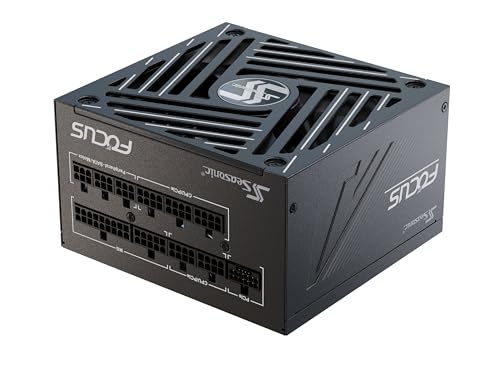
Best Premium: Seasonic FOCUS GX-1000 (ATX 3.1)
The unit for the factory-overclocked cards that blow past the reference power budget.
Specs
Wattage | 1000W |
Efficiency | 80 Plus Gold, Cybenetics Gold |
Standard | ATX 3.1, PCIe 5.1 |
Form factor | ATX |
Modularity | Fully modular |
Capacitors | Japanese |
Warranty | 10 years |
Wattage
1000W
Efficiency
80 Plus Gold, Cybenetics Gold
Standard
ATX 3.1, PCIe 5.1
Form factor
ATX
Modularity
Fully modular
Capacitors
Japanese
Warranty
10 years
What it does well
Partner models like the Sapphire Nitro+ and ASUS TUF run a higher board power than AMD's 355W reference card and move to three PCIe 8-pin connectors. Pair one with a Ryzen 9 or a Core i9 and full-system draw under a stress load climbs fast. At 1000W, the FOCUS GX keeps that build in the middle of its load range instead of near the top of it.
Seasonic builds its own units, so there is no question about which OEM sits behind the badge. That in-house design, Japanese capacitors and a ten-year warranty are why the FOCUS GX line has been a default in high-end builds for years.
What you give up
For a reference 7900 XTX with a 65W or 120W CPU, 1000W is over-buying. The extra capacity buys headroom you will not use, and the money is better spent on the GPU, the cooler or more storage.
It is also a physically longer unit than the 850W picks. Check your case's PSU shroud clearance, especially in compact mid-towers where the bottom chamber doubles as a drive cage.
Who it's for
Owners of a factory-overclocked, three-connector 7900 XTX, anyone running a 170W-plus CPU, and builders who want the PSU to carry the next flagship card without a swap.
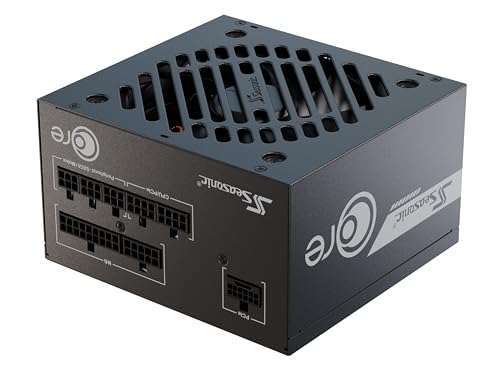
Best 750W Floor: Seasonic CORE GX-750 (ATX 3.1)
The lowest wattage we would put behind this card, and only in the right build.
Specs
Wattage | 750W |
Efficiency | 80 Plus Gold, Cybenetics Platinum |
Standard | ATX 3.1, PCIe 5.1 |
Form factor | ATX |
Modularity | Fully modular |
Cooling | OptiSink heatsink design |
Warranty | 7 years |
Wattage
750W
Efficiency
80 Plus Gold, Cybenetics Platinum
Standard
ATX 3.1, PCIe 5.1
Form factor
ATX
Modularity
Fully modular
Cooling
OptiSink heatsink design
Warranty
7 years
What it does well
A quality 750W unit clears the real numbers for a reference 7900 XTX paired with a 65W-class CPU like a Ryzen 7 7800X3D or 9800X3D in gaming. The CORE GX-750 gets you there with Seasonic's own platform, ATX 3.1 transient handling and a Cybenetics Platinum rating, which is a far safer 750W than the generic units that ship in bundle deals.
It is the right answer for the owner reusing a tight budget around a used or discounted 7900 XTX, where every part of the build is already sized and nothing is getting swapped later.
What you give up
You are below AMD's 800W recommendation, and that has a cost. Transient headroom is thinner, the fan works harder in long sessions, and there is no room for an overclocked partner card or a hotter CPU later.
The warranty is seven years rather than the ten the 850W picks carry, and the gap in price to a good 850W unit is often small. If it is small on the day you shop, take the 850W.
Who it's for
Builders with a reference or two-connector 7900 XTX, an efficient 65W to 120W CPU, a mid-tower with good airflow, and no plans to change the GPU.
Best SFF: Corsair SF850 (2024)
850W in an SFX shell, for the small builds that fit this card at all.

Specs
Wattage | 850W |
Efficiency | 80 Plus Platinum |
Form factor | SFX, ATX bracket included |
Modularity | Fully modular |
Fan | Zero RPM mode at low load |
Warranty | 7 years |
Wattage
850W
Efficiency
80 Plus Platinum
Form factor
SFX, ATX bracket included
Modularity
Fully modular
Fan
Zero RPM mode at low load
Warranty
7 years
What it does well
A few small form factor cases do take a full-length 7900 XTX, and those builds need full-size wattage in a fraction of the space. The SF850 puts 850W and Platinum efficiency into an SFX unit, and the higher efficiency matters here: less waste heat in a cramped case means the PSU fan and the GPU fans are not fighting over the same hot air.
The included SFX-to-ATX bracket means the unit can follow you into a bigger case later, so the premium is not locked to one chassis.
What you give up
SFX units cost more per watt than ATX equivalents, and the small fan becomes audible sooner under a long, heavy load than a 135mm ATX fan would.
Cable length is the real gotcha. Stock SFX cables are short on purpose, which is great in a small case and a problem in a mid-tower, and dense small cases make three-connector cards awkward to cable. Measure before you buy.
Who it's for
Small form factor builders with a case that fits a 7900 XTX and its power cables. If your case takes an ATX unit, buy one of the ATX picks above instead.
Bottom line
If you are running a reference 7900 XTX in a standard ATX case, buy the Corsair RM850x.
If you want the same 850W headroom for less, buy the be quiet! Pure Power 13 M 850W.
If your card is a three-connector overclocked model or your CPU pulls 170W or more, buy the Seasonic FOCUS GX-1000.
If your build is a reference card with a 65W CPU and nothing will change, the Seasonic CORE GX-750 is the floor. If you are building small, the Corsair SF850 is the one SFX unit we would trust with this card. Pairing the card with a new display too? Our monitor picks for the RX 7900 XTX match panels to what it can actually drive.
FAQ
What size PSU do I need for an RX 7900 XTX?
An 850W unit is the right size for most builds. AMD recommends at least 800W for a system with a Ryzen 9 class CPU, and a quality 850W ATX 3.1 unit gives the card's short power spikes enough margin while running quietly in the middle of its efficiency curve. Go to 1000W for a factory-overclocked three-connector card or a CPU that pulls 170W or more.
Is 750W enough for an RX 7900 XTX?
A quality 750W unit works with a reference card and an efficient 65W to 120W CPU, but it sits below AMD's 800W recommendation and leaves thin margin for transient spikes. It is a floor, not a target. If the price gap to a good 850W unit is small, take the 850W, especially if you might add an overclocked card later.
Is 650W enough for an RX 7900 XTX?
No. A 650W unit can cover the card's average gaming draw, but the brief power spikes a 7900 XTX produces can trip its protection and shut the system down mid-game. Owners chasing random black-screen shutdowns on this card report that a PSU upgrade often fixes them when driver changes did not. Budget for at least 750W, and 850W for a comfortable margin.
Does the RX 7900 XTX need an ATX 3.1 power supply?
No. The card uses standard PCIe 8-pin connectors, not the 12V-2x6 plug, so any quality power supply with enough separate 8-pin cables will run it. ATX 3.1 is still worth having because the standard specifies how a unit must handle transient spikes, which is exactly the stress this card puts on a PSU.
How many power connectors does the RX 7900 XTX use?
The AMD reference card uses two PCIe 8-pin connectors. Many factory-overclocked partner models, such as the Sapphire Nitro+, use three. Feed each socket with its own cable from the power supply rather than a single cable with a daisy-chained second plug, and check that your unit ships with enough separate PCIe cables before you buy.
Related Articles

Best PSU for RX 9070 (2026): 750W or 850W? 5 Top Picks
The best PSU for an RX 9070 is 750W with ATX 3.1, or 850W with a high-end CPU. Its 220W TDP spikes to 830W, so transient response decides it, not wattage.
Aug 21, 2026

Best 850W PSUs for the RTX 5080 (2026): 5 ATX 3.1 Picks
The best 850W PSU for an RTX 5080 needs ATX 3.1 and a native 12V-2x6 cable. Five picks that clear that bar, across quiet, value, budget and Titanium tiers.
Aug 11, 2026

How Much PSU Wattage for a Gaming PC? 9 GPU Tiers (2026)
How much PSU wattage do you need? Sized floors for 9 GeForce and Radeon tiers, why 850W is usually overkill for gaming, and an ATX 3.1 pick at each tier.
Sep 22, 2026

Best CPUs for the RX 7900 XTX (2026): 5 Picks by Tier
The best CPU for an RX 7900 XTX depends on your panel and your socket. Five picks by tier, from a drop-in AM4 X3D upgrade to a full AM5 platform move.
Oct 17, 2026

RX 5700 XT to RX 9070 XT: Is the Upgrade Worth It? (2026)
Is the RX 5700 XT to RX 9070 XT upgrade worth it? Yes: close to triple the 1440p frame rate, ray tracing and FSR 4, plus the power supply check to run first.
Oct 27, 2026