Affiliate Disclosure: As an Amazon Associate we earn from qualifying purchases. Some links may earn us a commission at no cost to you.

i5-12400F Upgrade in 2026: 3 Paths, One Honest Verdict
If you own an i5-12400F and a graphics card in the RTX 4060 or 5060 class, the honest answer is that your CPU is not what is holding your frame rate down. Buy a faster GPU instead. The 12400F is six cores at 65 watts, and at 1080p or 1440p behind a mid-tier card it spends most of its time waiting.
Two things flip that verdict. You already run an RTX 5070-class card or better, or you live in sims, strategy games, Tarkov and dense MMO content, where six cores and a small cache cap the experience no matter what GPU you feed them. If either applies, there are two real paths and they cost very different amounts of money.
At a glance
Path | What you buy | What it costs you | Buy |
|---|---|---|---|
Stay on LGA1700 | A drop-in Intel Core i5-14600KF or Intel Core i7-14700K | A real cooler, a BIOS update, and a board that can feed it | |
Switch to AM5 | AMD Ryzen 7 9800X3D plus a board plus a DDR5 kit | Three purchases, a full teardown, and 2026 memory pricing | |
Keep the chip, buy the GPU | A faster graphics card and nothing else | Nothing, if the CPU was never the limit | No CPU purchase |
Stay on LGA1700
- What you buy
A drop-in Intel Core i5-14600KF or Intel Core i7-14700K
- What it costs you
A real cooler, a BIOS update, and a board that can feed it
- Buy
Switch to AM5
- What you buy
AMD Ryzen 7 9800X3D plus a board plus a DDR5 kit
- What it costs you
Three purchases, a full teardown, and 2026 memory pricing
- Buy
Keep the chip, buy the GPU
- What you buy
A faster graphics card and nothing else
- What it costs you
Nothing, if the CPU was never the limit
- Buy
No CPU purchase
Where each i5-12400F upgrade path wins
Your situation | What wins | Get it |
|---|---|---|
RTX 4060 or 5060-class card at 1080p | No CPU purchase | |
RTX 5070-class card at 1440p, mixed AAA library | ||
Sims, strategy, Tarkov, MMOs in dense content | ||
Streaming, compiling, or heavy multicore work | ||
Cheapest real fix on the board you already own |
RTX 4060 or 5060-class card at 1080p
- What wins
- Get it
No CPU purchase
RTX 5070-class card at 1440p, mixed AAA library
- What wins
- Get it
Sims, strategy, Tarkov, MMOs in dense content
- What wins
- Get it
Streaming, compiling, or heavy multicore work
- What wins
- Get it
Cheapest real fix on the board you already own
- What wins
- Get it
Benchmarks
A cache-bound title, which is where the gap between the two upgrade branches is widest.
- 169 FPS
- 106 FPS
In a cache-bound game the AM5 chip is not a few percent ahead of the best drop-in Intel offers. It is a tier ahead. In everything else the gap narrows sharply, which is why the right path depends on your library rather than on which chip benchmarks highest.
For a baseline on the chip you own, TechSpot's budget CPU testing put the 12400F at 131 fps average in Cyberpunk 2077 at 1080p medium. That came off a different bench than the chart above, so read it as a sense of where the chip sits, not a like-for-like comparison.
How we decided
We lock the GPU first and size the CPU so it does not hold that GPU back. That order matters more here than in a fresh build, because a 12400F owner already has a graphics card and already knows what it can do. If the card is the weaker half, no CPU purchase fixes anything. Our guide to how to choose a CPU and motherboard walks through the same sequencing from the other direction.
We also price the whole platform, not the chip. A drop-in is one purchase and keeps your DDR4, your board, and your Windows install. An AM5 switch is three purchases and a full teardown, because DDR4 does not carry over. Comparing chip price against chip price hides most of the decision, which is the same trap we walked through in the same question on AMD's side.
Two things specific to 2026 push in opposite directions. LGA1700 is not the terminated socket its reputation suggests: Intel has kept Raptor Lake in production, and reporting points to further LGA1700 parts entering production in early 2027 to keep a DDR4 entry point alive. Treat that as reporting rather than a shipped roadmap, but the drop-in branch has more runway than it appeared to a year ago.
The other cuts the opposite way. DDR5 pricing has multiplied from where it sat in late 2025, because DRAM capacity went to AI parts, with supply reported constrained into 2027. Memory is mandatory on the AM5 branch, so the switch costs meaningfully more than the same decision would have last year. We covered the timing in 2026 memory pricing, and the platform question on its own terms in AM5 against Intel's current socket.
Before you buy any CPU: the GPU-first case
The 12400F's weakness is specific. It is six cores with a modest cache, and it shows up in 1% lows and in CPU-pinned engines, not in average frame rates in well-optimised AAA games. If you are playing Cyberpunk or Hogwarts Legacy at 1440p on a mid-tier card, the chip is fine and the card is the ceiling.
Watch utilisation rather than guess. Run the game you play, at the settings you use, and look at GPU load. Pinned near 100% means the card is the limit and a CPU swap buys frames nothing can render. Sitting well below it while your frame rate is low means the chip is the limit and the rest of this article applies. Which part to upgrade first walks through the check in detail.
This is the branch most readers land on, and the one with nothing to sell. A card two tiers up changes how the machine feels every time you sit down at it. A CPU that was never the bottleneck will not.
Best drop-in upgrade: Intel Core i7-14700K
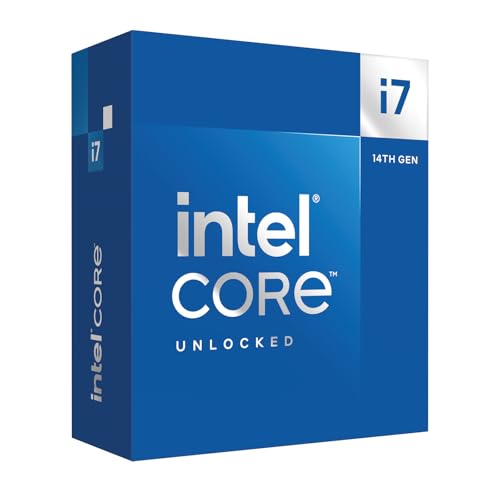
Specs
Cores / threads | 20 (8 P + 12 E) / 28 |
P-core boost | 5.6 GHz |
L3 cache | 33 MB |
Base power | 125 W |
Socket | LGA1700 |
Memory | DDR4 or DDR5, board-dependent |
Graphics | Intel UHD 770 |
Cores / threads
20 (8 P + 12 E) / 28
P-core boost
5.6 GHz
L3 cache
33 MB
Base power
125 W
Socket
LGA1700
Memory
DDR4 or DDR5, board-dependent
Graphics
Intel UHD 770
What it does well
Twenty cores against six is not an incremental step. For streaming while you play, for compiling, for heavy sim workloads with a lot running in the background, this is a different class of processor from the one in your machine now, and it goes in the board you already own using the DDR4 you already bought.
Reviewer testing puts its gaming performance within a few percent of the 14900K, so you are buying the practical ceiling of the socket rather than a middle rung.
What you give up
Power and heat, and they are not a footnote. This is a 125 watt base part that pulls far more under turbo. Whoever bought a 12400F almost certainly paired it with the stock cooler and an inexpensive B660 or H610 board, and neither will carry this chip.
Socket compatibility is not build readiness. Check your board's VRM and budget a real tower cooler before you call this a drop-in. Reports have also flagged Vmin degradation on Raptor Lake parts, worth weighing if you shop the used market.
Who it's for
A 12400F owner on a decent B660 or B760 board, running an RTX 5070-class card or better, with a workload that uses cores rather than one that just wants higher clocks.
Best value drop-in: Intel Core i5-14600KF

Specs
Cores / threads | 14 (6 P + 8 E) / 20 |
P-core boost | 5.3 GHz |
L3 cache | 24 MB |
Base power | 125 W |
Socket | LGA1700 |
Memory | DDR4 or DDR5, board-dependent |
Graphics | None (F-series) |
Cores / threads
14 (6 P + 8 E) / 20
P-core boost
5.3 GHz
L3 cache
24 MB
Base power
125 W
Socket
LGA1700
Memory
DDR4 or DDR5, board-dependent
Graphics
None (F-series)
What it does well
This is the sane version of the drop-in. Most of the gaming uplift the 14700K offers, for less money and with far less thermal demand, in a tier where a 12400F owner's existing cooling has a fighting chance.
The thread count more than doubles and the clocks jump hard. Board stays, memory stays, Windows install stays. For most people genuinely CPU-limited on this platform it is the right answer. Our budget CPU tier roundup covers the neighbours if you want to shop wider.
What you give up
No integrated graphics. That is continuity coming from a 12400F rather than a loss, but it still means no display output if your GPU dies.
It is also an unlocked 125 watt-class part with an appetite the 12400F never had, and you are buying a platform whose remaining ceiling sits one tier above this chip.
Who it's for
The 12400F owner who has confirmed the CPU is the limit, wants the cheapest honest fix, and has no interest in rebuilding the machine.
Best platform switch: AMD Ryzen 7 9800X3D
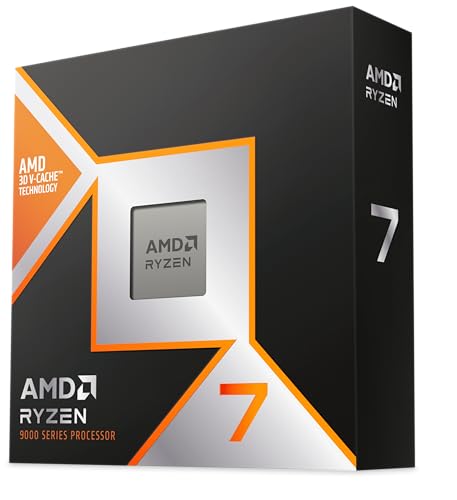
Specs
Cores / threads | 8 / 16 |
Boost clock | 5.2 GHz |
L3 cache | 96 MB (3D V-Cache) |
TDP | 120 W |
Socket | AM5 |
Memory | DDR5 only |
Cores / threads
8 / 16
Boost clock
5.2 GHz
L3 cache
96 MB (3D V-Cache)
TDP
120 W
Socket
AM5
Memory
DDR5 only
What it does well
The 96 MB of stacked cache is the whole argument, and the Baldur's Gate 3 chart above shows what it looks like in practice. If you leave LGA1700, this is the only reason worth leaving for. Anything less is a lateral move that also costs you a board and a memory kit.
AM5 still has socket runway, which matters if you expect to swap the chip before you swap the machine. We covered whether the 9800X3D earns its price and what an AM5 platform actually costs separately.
What you give up
Eight cores. For sustained multithreaded work the 14700K takes this comfortably, and the cache does nothing for a render queue.
It is also one line of a three-line purchase. Your DDR4 does not follow you, so the real cost is chip plus board plus memory at 2026 prices. And it is a full teardown with a fresh Windows activation. Budget the afternoon, not just the money.
Who it's for
Sim racers, flight sim players, Tarkov regulars, strategy and 4X players, and anyone pairing a fast GPU who wants to stop thinking about the CPU for several years.
The board the switch needs: MSI MAG B850 Tomahawk MAX WiFi

Specs
Chipset | AMD B850 |
Form factor | ATX |
VRM | AM5-80A SPS |
Memory | 4x DDR5, EXPO |
Storage | PCIe 5.0 M.2 plus additional M.2 slots |
Networking | Wi-Fi 7, 5 GbE |
PCIe | 5.0 x16 |
Chipset
AMD B850
Form factor
ATX
VRM
AM5-80A SPS
Memory
4x DDR5, EXPO
Storage
PCIe 5.0 M.2 plus additional M.2 slots
Networking
Wi-Fi 7, 5 GbE
PCIe
5.0 x16
What it does well
B-tier is the right call for a single-GPU gaming build, even with an X3D chip on top. An 80 amp SPS stage with proper heatsink coverage is well past what a 120 watt part asks for, and it will not throttle under anything a gaming load throws at it. Wi-Fi 7 and 5 gigabit ethernet come along rather than being charged for.
What you give up
A second Gen5 NVMe slot and the larger heatsinks X-tier boards put on the box. Neither does anything measurable for a machine with one graphics card in it.
MSI also ships a V1 revision of this board under its own listing, and a renewed listing sits alongside the new one. Check which you are adding to the cart.
Who it's for
Anyone taking the AM5 branch who wants to buy a board once and never think about it again.
The memory the switch needs: G.Skill Flare X5 32GB DDR5-6000 CL30
Specs
Capacity | 32 GB (2x16 GB) |
Speed | 6000 MT/s |
Timings | CL30-38-38-96 |
Voltage | 1.35 V |
Profile | AMD EXPO |
Form factor | U-DIMM |
Capacity
32 GB (2x16 GB)
Speed
6000 MT/s
Timings
CL30-38-38-96
Voltage
1.35 V
Profile
AMD EXPO
Form factor
U-DIMM
What it does well
DDR5-6000 CL30 is the speed AM5 wants, because it lands the Infinity Fabric on a 1:1 ratio, and EXPO means one toggle in BIOS rather than an evening of manual timings. Thirty-two gigabytes is the floor for a machine you expect to keep; buying sixteen now and adding sixteen later rarely survives contact with mismatched kits.
What you give up
The price, and there is no way around it. This is the same class of kit that sold for a fraction of current pricing in 2025, and on the AM5 branch it is mandatory, because your DDR4 stays in the old board.
If that is what stops you, it is a real signal rather than a failure of nerve. We wrote up DDR4 to DDR5 separately, and the short version is that memory pricing alone justifies taking the drop-in branch this year.
Who it's for
Every reader taking the AM5 branch. There is no cheaper option that still lets the platform perform the way the chip is priced to.
Bottom line
If you run an RTX 4060 or 5060-class card, keep the 12400F and buy a GPU. If you run an RTX 5070-class card at 1440p with a mixed library, drop in the Intel Core i5-14600KF and keep your board. If you stream or compile as much as you game, take the Intel Core i7-14700K and budget a real cooler for it. If you live in sims, strategy or Tarkov and want the question closed, switch to the AMD Ryzen 7 9800X3D and accept that it is three purchases. Memory pricing is the reason that last option is harder to justify this year than last.
FAQ
Is the i5-12400F still good enough for gaming in 2026?
For most people, yes. Six cores at 65 watts still delivers playable frame rates in almost every current game at 1080p and 1440p, and behind a mid-tier card it is rarely the limiting part. Where it struggles is CPU-pinned engines and 1% lows: flight and racing sims, late-game strategy, Escape from Tarkov, dense MMO content. If your library lives there, you will feel the chip. If it does not, you will feel your GPU first.
What is the best drop-in CPU upgrade from an i5-12400F?
The Core i5-14600KF for most people, and the Core i7-14700K if you do serious multithreaded work. Both keep your LGA1700 board and your DDR4 memory, so the upgrade is one purchase rather than three. The 14600KF more than doubles your thread count and raises clocks hard for the least money of any real upgrade path. The 14700K goes further but asks more of your cooling and your board's power delivery.
Will an i7-14700K work in my current 12400F motherboard?
It depends on the board, and socket compatibility alone is not the answer. Most 600-series boards need a BIOS update before a 14th-gen chip will POST, so update first. Many H610 boards cannot feed a 14700K at all, and cheap B660 boards throttle it under sustained load. Check your board's VRM specification and supported CPU list, and plan on a tower cooler either way. The stock 12400F cooler is nowhere near enough.
Is switching from LGA1700 to AM5 worth it in 2026?
Only if you want the 3D V-Cache tier specifically. The switch is a CPU, a motherboard and a DDR5 kit, because DDR4 does not carry over, and DDR5 pricing rose sharply through 2026. That makes it harder to justify than a year ago. If you play cache-bound games and want the CPU question closed for years, it is still right. If you just want more frames in a mixed AAA library, the drop-in gets most of the way for a fraction of the spend.
Should I upgrade my CPU or my GPU first?
Check GPU utilisation before deciding. Run the game you play at your normal settings and watch GPU load. Near 100% while your frame rate disappoints means the card is the limit and a CPU will not help. Well below it with uneven frame times means the processor is the limit. For a 12400F owner on a mid-tier card, the answer is the GPU far more often than not.
Related Articles

Best CPU Upgrade From Ryzen 5 5600: AM4 or AM5 (2026)
The best CPU upgrade from a Ryzen 5 5600 comes down to one call: a cheap AM4 drop-in or a jump to AM5. We break down both paths with honest cost math.
Jul 8, 2026

AM5 vs LGA 1851: Which CPU Socket Should You Buy in 2026?
AM5 vs LGA 1851: AMD ships new AM5 chips through 2029 while LGA 1851 stops at one generation. Here is which socket to buy and the CPU and board to pair.
Aug 6, 2026

Should You Upgrade Your GPU or CPU First for Gaming?
Should you upgrade your GPU or CPU first for gaming? Read your own usage data, then match your current GPU tier to the right upgrade. Clear 2026 picks for both.
Jun 26, 2026

AM4 vs AM5 in 2026: Is AM4 Still Worth It? (5 CPU Picks)
AM4 vs AM5 in 2026: AM5 still wins most new gaming builds despite DDR5 prices, but AM4 is the smarter buy below one budget line. See where it flips + 5 picks.
Oct 15, 2026

Should You Buy RAM Now, or Wait Out the 2026 Crisis?
Should you buy RAM now or wait out the 2026 memory crisis? A clear buy-or-wait call by your situation, plus the exact 32GB and 64GB kits worth owning today.
Jul 23, 2026