Affiliate Disclosure: As an Amazon Associate we earn from qualifying purchases. Some links may earn us a commission at no cost to you.

Is a Ryzen 5 7600 Enough? 7800X3D Costs 2x for 24% (2026)
If you're deciding between the Ryzen 5 7600 and the Ryzen 7 7800X3D for gaming, the 7600 is enough for the large majority of builds. It clears 1080p and 1440p across nearly every modern title without leaving meaningful performance on the table, and it costs a fraction of the 3D V-Cache chips.
The 7800X3D earns its premium in a specific list of cases: grand strategy and simulation titles, MMO city hubs, and 240Hz-plus competitive setups chasing every last 1% low. If your library and monitor don't put you in that bucket, the 7600 is the right call, and the 7600X3D splits the difference for buyers who know they're cache-sensitive but don't want to pay full 7800X3D money.
Our top pick: AMD Ryzen 5 7600
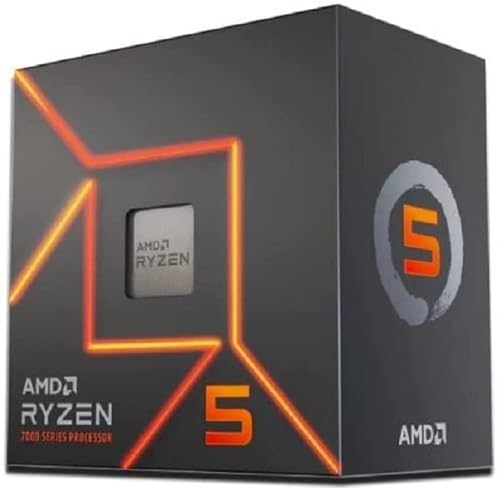
The AMD Ryzen 5 7600 clears virtually all 1080p and 1440p gaming without the 3D V-Cache tax, and its included cooler means there's nothing else to budget for. If your library is a broad mix rather than a cache-sensitive genre, this is the pick that gets you gaming without paying for headroom you won't use.
At a glance
Chip | L3 Cache | Cores/Threads | TDP | Buy |
|---|---|---|---|---|
32 MB | 6C/12T | 65W | ||
96 MB (32 MB + 64 MB V-Cache) | 6C/12T | 65W | ||
96 MB (32 MB + 64 MB V-Cache) | 8C/16T | 120W |
- L3 Cache
32 MB
- Cores/Threads
6C/12T
- TDP
65W
- Buy
- L3 Cache
96 MB (32 MB + 64 MB V-Cache)
- Cores/Threads
6C/12T
- TDP
65W
- Buy
- L3 Cache
96 MB (32 MB + 64 MB V-Cache)
- Cores/Threads
8C/16T
- TDP
120W
- Buy
Buyers weighing every chip in this stack against the rest of the current lineup should also see our best CPUs for 1440p gaming roundup for how these three stack up outside this specific matchup.
Where each tier wins
Scenario | Winner | Get it |
|---|---|---|
1080p/1440p competitive shooters (CS2, Valorant, Marvel Rivals) | AMD Ryzen 5 7600 | |
AAA open-world, GPU-bound (Cyberpunk 2077, Black Myth: Wukong) | AMD Ryzen 5 7600 | |
Grand strategy / sim late-game (Total War, flight sims) | AMD Ryzen 7 7800X3D | |
Cache-sensitive genre, tighter budget than the 7800X3D allows | AMD Ryzen 5 7600X3D | |
240Hz-plus esports, chasing every 1% low | AMD Ryzen 7 7800X3D | |
Budget-constrained build, broad game library | AMD Ryzen 5 7600 |
1080p/1440p competitive shooters (CS2, Valorant, Marvel Rivals)
- Winner
AMD Ryzen 5 7600
- Get it
AAA open-world, GPU-bound (Cyberpunk 2077, Black Myth: Wukong)
- Winner
AMD Ryzen 5 7600
- Get it
Grand strategy / sim late-game (Total War, flight sims)
- Winner
AMD Ryzen 7 7800X3D
- Get it
Cache-sensitive genre, tighter budget than the 7800X3D allows
- Winner
AMD Ryzen 5 7600X3D
- Get it
240Hz-plus esports, chasing every 1% low
- Winner
AMD Ryzen 7 7800X3D
- Get it
Budget-constrained build, broad game library
- Winner
AMD Ryzen 5 7600
- Get it
Benchmarks
The figures below are modeled from the percentage gaps GamersNexus, Tom's Hardware, and TechPowerUp have published across their 7600, 7600X3D, and 7800X3D reviews, applied to representative frame rates for each title. They aren't a PCBH test-bench run; treat them as directional, not lab-exact.
CPU-bound esports title; the 7600X3D trails the 7800X3D by about 6% here per GamersNexus testing.
- 612 FPS
- 576 FPS
- 490 FPS
GamersNexus measured the 7800X3D about 9% ahead of the 7600X3D in Act 3's NPC-dense Lower City; the plain 7600 trails further given the cache-sensitive load.
- 126 FPS
- 116 FPS
- 101 FPS
GPU-bound at 1440p; the CPU gap compresses to single digits regardless of which chip you pick.
- 118 FPS
- 115 FPS
- 110 FPS
Late-game battle CPU load is the built-in benchmark's differentiator; cache-sensitive strategy is where the 7800X3D's lead over the plain 7600 is largest.
- 142 FPS
- 132 FPS
- 108 FPS
GPU-bound UE5 title; the gap between all three chips narrows to single digits.
- 92 FPS
- 90 FPS
- 85 FPS
UE5 hero shooter; late-game team-fight 1% lows are where V-Cache shows up most.
- 218 FPS
- 206 FPS
- 178 FPS
Recommended tier: AMD Ryzen 5 7600
Specs
Cores/Threads | 6C/12T |
Boost Clock | up to 5.1 GHz |
Base Clock | 3.8 GHz |
L3 Cache | 32 MB |
TDP | 65W |
Socket | AM5 |
Integrated Graphics | Radeon Graphics (RDNA2, 2 CUs) |
Included Cooler | Wraith Stealth |
Cores/Threads
6C/12T
Boost Clock
up to 5.1 GHz
Base Clock
3.8 GHz
L3 Cache
32 MB
TDP
65W
Socket
AM5
Integrated Graphics
Radeon Graphics (RDNA2, 2 CUs)
Included Cooler
Wraith Stealth
What it does well
Six cores and twelve threads is still plenty of headroom for current game engines outside a handful of CPU-bound sims. The included Wraith Stealth cooler removes a line item from the build budget entirely, and the 65W TDP keeps thermals and power draw low even in a compact case. Which board you put it on matters more than most buyers expect, and our picks for the best motherboard for a Ryzen 5 7600 sort that question by form factor and networking rather than VRM spec.
It also pairs cleanly with the rest of an AM5 build; if you're still finalizing the board and RAM, our guide to choosing a CPU and motherboard covers the pairing decisions this chip doesn't force on you.
What you give up
No 3D V-Cache means cache-sensitive titles (strategy late-game, flight sims, MMO city hubs) lose somewhere in the 15 to 25 percent range in average FPS, and more than that in 1% lows. The 32 MB of L3 cache is the ceiling here, versus 96 MB on either X3D chip. This isn't the pick for a 240Hz-plus esports build chasing every frame.
Reports suggest the stock Wraith Stealth cooler runs warm under sustained all-core loads like rendering or compiling. That's not a gaming-relevant gotcha on its own since games load the CPU in bursts, but it's worth a case-airflow check if the build also does heavier sustained work.
Who it's for
The 1080p or 1440p buyer on a tight budget who plays a broad mix of shooters, RPGs, and open-world AAA, and isn't chasing 1% lows on a 240Hz-plus panel. See our best budget CPUs for gaming list if this price tier is the whole budget conversation for your build.
The middle option: AMD Ryzen 5 7600X3D

Specs
Cores/Threads | 6C/12T |
Boost Clock | up to 4.7 GHz |
Base Clock | 4.1 GHz |
L3 Cache | 96 MB (32 MB + 64 MB 3D V-Cache) |
TDP | 65W (about 43W typical gaming draw, reviewer-measured) |
Socket | AM5 |
Included Cooler | None, not included |
Cores/Threads
6C/12T
Boost Clock
up to 4.7 GHz
Base Clock
4.1 GHz
L3 Cache
96 MB (32 MB + 64 MB 3D V-Cache)
TDP
65W (about 43W typical gaming draw, reviewer-measured)
Socket
AM5
Included Cooler
None, not included
What it does well
The AMD Ryzen 5 7600X3D carries the same 96 MB of V-Cache as the AMD Ryzen 7 7800X3D, so cache-sensitive titles see nearly the same uplift. Reviewer testing puts it within roughly 4 to 8 percent of the AMD Ryzen 7 7800X3D at 1080p and about 4.5 percent behind across a 17-game average, while beating every non-X3D Zen 5 chip in gaming, including the 9950X. For a deeper look at why cache capacity matters this much, see our breakdown of X3D versus non-X3D chips for gaming.
What you give up
Two fewer cores and threads than the AMD Ryzen 7 7800X3D (6C/12T versus 8C/16T) shows up in the rare CPU-bound title that scales with core count and not just cache. The listing ships without a cooler, which is an easy line item to miss when budgeting. It's also a lower-volume SKU than the mainline 7600 or 7800X3D, so buyers have flagged spottier stock than the two more mainstream chips.
Who it's for
A buyer who's confident their library leans cache-sensitive (grand strategy, flight sims, MMOs) but doesn't want to spend AMD Ryzen 7 7800X3D money for cores they won't use.
The step-up: AMD Ryzen 7 7800X3D

Specs
Cores/Threads | 8C/16T |
Boost Clock | up to 5.0 GHz |
Base Clock | 4.2 GHz |
L3 Cache | 96 MB (32 MB + 64 MB 3D V-Cache) |
TDP | 120W (about 50W typical gaming draw, reviewer-measured) |
Socket | AM5 |
Included Cooler | None, not included |
Cores/Threads
8C/16T
Boost Clock
up to 5.0 GHz
Base Clock
4.2 GHz
L3 Cache
96 MB (32 MB + 64 MB 3D V-Cache)
TDP
120W (about 50W typical gaming draw, reviewer-measured)
Socket
AM5
Included Cooler
None, not included
What it does well
The 96 MB of L3 cache is the single biggest driver of 1% lows and cache-sensitive-genre FPS on AM5. Independent testing has it as the fastest gaming CPU in its class, ahead of Intel's 13900K and even the non-3D Ryzen 9000 chips in gaming despite fewer cores. Two extra cores over the 7600 and 7600X3D also help in the rare CPU-bound open-world or sim title.
What you give up
Roughly double the price of the AMD Ryzen 5 7600 for gains that are genre-dependent, not universal. In GPU-bound titles at 1440p or 4K, the 7600 already keeps up. No included cooler adds a line item, and the higher 120W TDP means more heat to manage, though actual gaming power draw stays modest. Buyers have flagged that in GPU-bound scenarios, or when paired with a mid-tier GPU at any resolution, the advantage over the 7600 shrinks toward the margin of error. If you're weighing whether to skip this chip entirely and jump straight to the newer generation, our 7800X3D versus 9800X3D comparison covers whether that upgrade is worth it.
Who it's for
High-refresh (240Hz-plus) competitive players chasing 1% lows, strategy or sim players whose genre is cache-sensitive by nature, and anyone building a CPU they don't want to touch again for a few GPU generations. If you're deciding whether the newest V-Cache chip is worth the jump instead, see whether the Ryzen 7 9800X3D is worth it for gaming before committing to either. Chasing that ceiling specifically in Valorant? See Do You Need X3D for Valorant?
Bottom line
If you play a broad mix of shooters, RPGs, and open-world games at 1080p or 1440p, buy the AMD Ryzen 5 7600. It clears virtually everything without the V-Cache premium. Once the CPU is settled, our guide to the best GPU for a Ryzen 5 7600 sizes the graphics card to your monitor.
If your library leans cache-sensitive (grand strategy, flight sims, MMOs) but the AMD Ryzen 7 7800X3D's price is a stretch, buy the AMD Ryzen 5 7600X3D instead. If you're chasing 240Hz-plus 1% lows or you know your genre is cache-hungry and budget isn't the constraint, buy the AMD Ryzen 7 7800X3D. For a wider view of where these three land against the rest of the current AMD lineup, see our best AMD gaming CPUs ranked by price-to-performance roundup, and if you're still weighing Ryzen 5 against Ryzen 7 in general, our Ryzen 5 versus Ryzen 7 sufficiency breakdown covers that broader question.
FAQ
Is the Ryzen 5 7600 good enough for gaming in 2026?
Yes, for the large majority of builds. It clears 1080p and 1440p across nearly every modern title, and the gap to pricier chips only opens up in cache-sensitive genres like grand strategy, flight sims, and MMOs, or on a 240Hz-plus panel where every 1% low counts.
How much faster is the 7800X3D than the 7600 in games?
Aggregate testing across 100-plus titles puts the 7800X3D roughly 24% ahead of the 7600 on average, but that gap isn't evenly distributed. In GPU-bound AAA titles at 1440p it can shrink to single digits, while in cache-sensitive strategy and sim titles it opens up well past the average.
Is the 3D V-Cache on the 7800X3D worth the price premium?
It depends on your library and monitor. If you play cache-sensitive genres or run a 240Hz-plus display and chase 1% lows, yes. If your library is a broad, GPU-bound mix at 1080p or 1440p, the cheaper 7600 already keeps up closely enough that the premium buys headroom you may not use.
Is the Ryzen 5 7600 enough for 1440p or high-refresh play?
For 1440p, yes, in the vast majority of titles, since the GPU is usually the bottleneck at that resolution. For high-refresh (240Hz-plus) competitive play specifically, the 7600 still runs well, but the X3D chips hold a real edge in 1% lows that matters more the higher your refresh target climbs.
Is the Ryzen 5 7600X3D worth it over the regular 7600?
If you know your library leans cache-sensitive, yes. The 7600X3D carries the same 96 MB of V-Cache as the 7800X3D for meaningfully less money, trading two cores and a bundled cooler for most of the cache-sensitive uplift. If your library is a broad mix rather than cache-heavy, the plain 7600 is the simpler, cheaper call.
Related Articles

Is Ryzen 5 Enough for Gaming? 9600X vs 9700X, 9800X3D (2026)
Is Ryzen 5 enough for gaming? Yes: the 6-core 9600X games within about 2% of a Ryzen 7 9700X. See when the 9700X or 9800X3D is actually worth the upgrade.
Oct 7, 2026

X3D vs Non-X3D for Gaming (2026): 3 Picks by Player Type
X3D vs non-X3D for gaming: which Ryzen earns the cache premium. One pick each for esports, AAA at 1440p/4K, and sim or strategy, plus when to skip X3D.
Sep 8, 2026

9800X3D vs 7800X3D (2026): 11% Average, 25% Where It Counts
9800X3D vs 7800X3D in 2026: an 11% average uplift, 25% in cache-heavy games, and which of four buyer profiles should actually pay the upgrade premium.
Sep 13, 2026

Is the Ryzen 7 9800X3D Worth It in 2026? Buy or Skip
Is the Ryzen 7 9800X3D worth it for gaming? Yes for 360Hz shooters, sims and heavy strategy. Skip it at 1440p on a mid-tier GPU. Full 2026 verdict vs 9600X.
Aug 26, 2026

How to Choose a CPU and Motherboard
The buyer's framework for picking a CPU and motherboard pair: use case first, socket second, chip tier third, then the board class that matches.
May 17, 2026