Affiliate Disclosure: As an Amazon Associate we earn from qualifying purchases. Some links may earn us a commission at no cost to you.

Will a 9800X3D Work on B550? No (2026): Do This Instead
No. A Ryzen 7 9800X3D will not work on a B550 motherboard, and no BIOS update changes that. B550 is Socket AM4. The 9800X3D is Socket AM5. Different contact counts, opposite package designs, so the chip physically cannot seat in the board. Firmware cannot move pins.
That leaves two real purchases. Stay on B550 and fit the fastest AM4 gaming chip the board will take, a drop-in with no other spending. Or replace board, memory, and CPU together and land on AM5. Which one is right depends on your GPU, your library, and how soon you were going to rebuild anyway.
At a glance
Path | Top CPU | Socket and memory | What you replace | Buy |
|---|---|---|---|---|
Stay on B550 | AM4, keeps your DDR4 | CPU only | ||
Move to AM5 | AM5, DDR5 only | CPU, board, and memory |
Stay on B550
- Top CPU
- Socket and memory
AM4, keeps your DDR4
- What you replace
CPU only
- Buy
Move to AM5
- Top CPU
- Socket and memory
AM5, DDR5 only
- What you replace
CPU, board, and memory
- Buy
Why no BIOS update can fix it
The confusion comes from how AMD handled AM4. A B550 board shipped supporting Ryzen 3000, then an AGESA update taught it Ryzen 5000, and the same socket carried both. Buyers learned that firmware unlocks CPUs. It does, right up to the socket boundary.
AM5 is a different socket, not a different generation. AM4 puts the pins on the CPU and the holes in the board. AM5 inverts that, with the pads on the chip and the pins in the socket, and the contact counts differ as well. A 9800X3D laid over an AM4 socket lines up with nothing, and BIOS code has no say in it. That is also why an A620 board, which is AM5 and does take it is a yes while B550 is a no. A620 is a budget chipset, but it is a budget AM5 chipset.
Socket AM4 (B550) | Socket AM5 (9800X3D) | |
|---|---|---|
Socket name | AM4 | AM5 |
Package style | PGA, pins on the CPU | LGA, pads on the CPU |
Contacts | 1331 | 1718 |
Memory | DDR4 only | DDR5 only |
CPU families | Ryzen 3000 to 5000, plus 4000G and 5000G APUs | Ryzen 7000, 8000, 9000 |
Top gaming chip | Ryzen 7 5800X3D | Ryzen 7 9800X3D |
Socket name
- Socket AM4 (B550)
AM4
- Socket AM5 (9800X3D)
AM5
Package style
- Socket AM4 (B550)
PGA, pins on the CPU
- Socket AM5 (9800X3D)
LGA, pads on the CPU
Contacts
- Socket AM4 (B550)
1331
- Socket AM5 (9800X3D)
1718
Memory
- Socket AM4 (B550)
DDR4 only
- Socket AM5 (9800X3D)
DDR5 only
CPU families
- Socket AM4 (B550)
Ryzen 3000 to 5000, plus 4000G and 5000G APUs
- Socket AM5 (9800X3D)
Ryzen 7000, 8000, 9000
Top gaming chip
- Socket AM4 (B550)
Ryzen 7 5800X3D
- Socket AM5 (9800X3D)
Ryzen 7 9800X3D
Where each path wins
Find your situation, and the winner column is the part to buy.
Your situation | Path | Winner | Why |
|---|---|---|---|
1440p or 4K on a mid-tier GPU | Stay on B550 | AMD Ryzen 7 5800X3D | GPU-bound, so the platform jump buys almost nothing visible |
Sim racing, flight sim, strategy, 4X, MMO raids | Stay on B550 | AMD Ryzen 7 5800X3D | Cache is the win, and the 5800X3D already carries 96 MB of it |
Coming off a Ryzen 5 2600 or 3600, console-port library | Stay on B550 | AMD Ryzen 7 5700X | Eight cores for much less, and cache is not what your library wants |
1080p high-refresh on a top-tier GPU, chasing the ceiling | Move to AM5 | AMD Ryzen 7 9800X3D | The only path to the frame ceiling, and B550 cannot get there |
Gaming plus heavy productivity or streaming on one box | Move to AM5 | AMD Ryzen 7 9800X3D | Zen 5 IPC now, with an upgrade path to a 16-core part later |
You want a platform that takes another CPU after 2027 | Move to AM5 | MSI MAG B650 Tomahawk WiFi | AM4 is terminal; AM5 is committed through 2027 and beyond |
1440p or 4K on a mid-tier GPU
- Path
Stay on B550
- Winner
AMD Ryzen 7 5800X3D
- Why
GPU-bound, so the platform jump buys almost nothing visible
Sim racing, flight sim, strategy, 4X, MMO raids
- Path
Stay on B550
- Winner
AMD Ryzen 7 5800X3D
- Why
Cache is the win, and the 5800X3D already carries 96 MB of it
Coming off a Ryzen 5 2600 or 3600, console-port library
- Path
Stay on B550
- Winner
AMD Ryzen 7 5700X
- Why
Eight cores for much less, and cache is not what your library wants
1080p high-refresh on a top-tier GPU, chasing the ceiling
- Path
Move to AM5
- Winner
AMD Ryzen 7 9800X3D
- Why
The only path to the frame ceiling, and B550 cannot get there
Gaming plus heavy productivity or streaming on one box
- Path
Move to AM5
- Winner
AMD Ryzen 7 9800X3D
- Why
Zen 5 IPC now, with an upgrade path to a 16-core part later
You want a platform that takes another CPU after 2027
- Path
Move to AM5
- Winner
MSI MAG B650 Tomahawk WiFi
- Why
AM4 is terminal; AM5 is committed through 2027 and beyond
Benchmarks
All four charts come from one reviewer rig, an RTX 4090 at 1080p, which is where a CPU comparison shows its hand. At 4K the two chips converge because the graphics card becomes the limit. The 5700X is absent because no reviewer tested it in this suite.
Phantom Liberty's crowd simulation is CPU-bound at 1080p with a 4090; the gap collapses at 4K.
- 219 FPS
- 164 FPS
Traversal stutter is where the 1% low gap between these two chips is widest.
- 170 FPS
- 110 FPS
Creation Engine 2 is heavily CPU-pinned, and this is one of the largest deltas in the suite.
- 140 FPS
- 93 FPS
RTS unit simulation is the cache-sensitive case, and the relative gap here is the biggest of the four.
- 136 FPS
- 90 FPS
How to decide
Answer three questions in order and the fork resolves itself.
What GPU, at what resolution? Size the CPU to the GPU, never the reverse. A 4070-class card at 1440p or 4K is GPU-limited, and a 9800X3D produces frames you will not see. A 240 Hz 1080p panel in front of a 4060-class card is the same story in reverse. Spend on graphics first, and if you want a CPU step anyway, take the drop-in that costs you nothing else.
What is in your library? Cache is a genre-specific upgrade, not a general-purpose one. Sim racing, flight sim, strategy and city builders, dense MMO content, and Tarkov reward it heavily. Console ports and well-optimized AAA at 1440p barely notice. A cache-sensitive library says take the 5800X3D now; a console-port library says the 5700X is enough.
When were you going to rebuild? This is the only question that makes the AM5 path right on its own. If a full rebuild was already on the calendar inside the next year, buying board and memory now rather than twice is sound. If it was not, you are pulling a platform purchase forward into the worst DDR5 market in years. The AM4 versus AM5 decision goes through the longer version, and how CPU and motherboard choice fit together covers the pairing rules underneath it.
Stay on B550: AMD Ryzen 7 5800X3D

Specs
Socket | AM4 |
Cores / threads | 8 / 16 |
Base / boost clock | 3.4 / 4.5 GHz |
L3 cache | 96 MB (3D V-Cache) |
TDP | 105 W |
Memory | DDR4-3200 |
Overclocking | Multiplier locked (PBO and Curve Optimizer only) |
B550 requirement | AGESA 1.2.0.6B BIOS or newer |
Socket
AM4
Cores / threads
8 / 16
Base / boost clock
3.4 / 4.5 GHz
L3 cache
96 MB (3D V-Cache)
TDP
105 W
Memory
DDR4-3200
Overclocking
Multiplier locked (PBO and Curve Optimizer only)
B550 requirement
AGESA 1.2.0.6B BIOS or newer
What it does well
The cache is the part you were chasing. A 9800X3D is fast because it carries 96 MB of L3 where a normal eight-core Ryzen gets 32 MB, and the 5800X3D carries the same 96 MB. It is the older implementation, stacked above the cores rather than below them, which is why it clocks lower.
That pays most in the genres where frame rate is decided by how often the CPU goes out to memory: sim racing, flight sim, 4X and city builders, dense MMO content, large factory sims, and Escape from Tarkov. The other half of the argument is what you do not buy. Same socket, so the board stays. Same memory, so the DDR4 already in your B550 build stays. Same cooler mount, no reinstall, no afternoon lost.
What you give up
Frames, at the top end. Against a 9800X3D on the same RTX 4090 test rig, reviewer numbers put the 5800X3D roughly 40 percent behind on average frame rate at CPU-bound 1080p settings, and further behind on 1% lows. With a top-tier GPU and a high-refresh panel you will feel that gap.
You also give up tuning and a future. The multiplier is locked, so PBO and Curve Optimizer are the only levers, and DDR4-3200 is the memory ceiling. AM4 ends here: this is the last CPU that board will ever accept. One more wrinkle: buyers have flagged boards still sitting on 2020 launch firmware, which need BIOS Flashback or a borrowed older chip to flash before this one will POST.
Who it's for
A B550 owner running 1440p or 4K on a mid-tier card, or anyone whose library is cache-sensitive at any resolution. If the GPU is what holds your frame rate back, this is still the right CPU purchase, because it costs nothing beyond the chip.
Stay on B550 on a budget: AMD Ryzen 7 5700X

Specs
Socket | AM4 |
Cores / threads | 8 / 16 |
Base / boost clock | 3.4 / 4.6 GHz |
L3 cache | 32 MB |
TDP | 65 W |
Memory | DDR4-3200 |
Overclocking | Fully unlocked |
Socket
AM4
Cores / threads
8 / 16
Base / boost clock
3.4 / 4.6 GHz
L3 cache
32 MB
TDP
65 W
Memory
DDR4-3200
Overclocking
Fully unlocked
What it does well
Eight cores and sixteen threads at 65 W. Coming from a Ryzen 5 2600 or 3600 that is double the cores and a full architecture step, inside the same socket, on the same cooler.
It is fully unlocked, unlike the 5800X3D, so anyone who enjoys tuning keeps doing that. And at 1440p on a mid-tier GPU the measured gap to the 5800X3D narrows to very little, because the card runs out of headroom before the CPU does. The rest of the AM4 upgrade ladder covers the cheaper steps below this one.
What you give up
The cache. 32 MB of L3 against 96 MB is the entire difference between this chip and the X3D part, and in the genres where cache decides frame rate the gap is large and obvious. Sim, strategy, MMO, and Tarkov buyers should not take this pick.
Same terminal-platform caveat, too. And the retail box ships without a cooler, so check what is sitting on your chip today before assuming one carries over.
Who it's for
A B550 owner on a 2600, 3600, or 3700X, running 1440p on a mid-tier card, with a library that leans on console ports and well-optimized AAA. You get the core count without paying a cache tax you would not use.
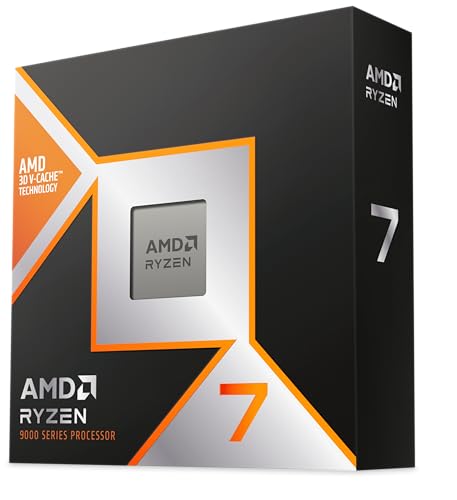
Move to AM5: AMD Ryzen 7 9800X3D
Specs
Socket | AM5 (LGA 1718) |
Cores / threads | 8 / 16 |
Boost clock | 5.2 GHz |
L3 cache | 96 MB (second-generation 3D V-Cache) |
TDP | 120 W |
Memory | DDR5 only |
Overclocking | Fully unlocked |
Chipsets | A620, B650, B840, B850, X670, X870 |
Socket
AM5 (LGA 1718)
Cores / threads
8 / 16
Boost clock
5.2 GHz
L3 cache
96 MB (second-generation 3D V-Cache)
TDP
120 W
Memory
DDR5 only
Overclocking
Fully unlocked
Chipsets
A620, B650, B840, B850, X670, X870
What it does well
It is the fastest gaming CPU you can buy short of a 16-core part, and the margin is not subtle. Tom's Hardware measured a 195 FPS average across a 16-game suite at 1080p on an RTX 4090, with 1% lows at 148. Against the 5800X3D on a comparable rig that works out to roughly 40 percent more average frames in CPU-bound titles.
The structural change is where the cache sits. On the 5800X3D the stacked die sat above the cores, which trapped heat and forced AMD to lock the multiplier. On the 9800X3D it sits underneath, so the cores have a clear thermal path, the chip boosts to 5.2 GHz, and it is fully unlocked for the first time in the X3D line. The socket also has somewhere to go: AM5 is committed through 2027 and beyond, so the board takes at least one more CPU generation. Whether the 9800X3D is worth chasing at all is a separate question.
What you give up
Your B550 build, essentially. The chip needs an AM5 board and DDR5 memory, and neither is optional or partial. Your DDR4 has no role in the new system and the spend is three parts rather than one. In late 2026 the memory half of that bill is the part that stings, because DDR5 pricing has moved hard against buyers during the DRAM shortage.
The 120 W TDP also asks more of a cooler than a 105 W AM4 chip did, and AM4 mounting hardware does not universally carry to AM5. Most recent towers and AIOs include an AM5 bracket.
Who it's for
Someone with a high-end GPU and a high-refresh panel who is genuinely CPU-limited today, or someone who was rebuilding inside the year anyway and would rather spend once on a socket with a runway. If neither describes you, the drop-in is the better purchase.
The board for it: MSI MAG B650 Tomahawk WiFi

Specs
Chipset | AMD B650 |
Socket | AM5 |
Form factor | ATX |
VRM | 14+2+1, 80 A SPS stages |
Memory | 4x DDR5 DIMM |
M.2 slots | 3 (one PCIe 5.0) |
Networking | 2.5 GbE, Wi-Fi 6E, Bluetooth 5.3 |
BIOS Flashback | Yes |
Chipset
AMD B650
Socket
AM5
Form factor
ATX
VRM
14+2+1, 80 A SPS stages
Memory
4x DDR5 DIMM
M.2 slots
3 (one PCIe 5.0)
Networking
2.5 GbE, Wi-Fi 6E, Bluetooth 5.3
BIOS Flashback
Yes
What it does well
The VRM is why this board is here. 14+2+1 phases with 80 A stages, and heatsinks that contact the MOSFETs properly, means a 120 W X3D chip never runs into a duty-cycle problem, and a 16-core part later would not either. Socket compatibility and build-readiness are different things; this board clears both.
The rest is the boring kind of complete. Three M.2 slots, one PCIe 5.0. Wi-Fi 6E, 2.5 GbE, Bluetooth 5.3. BIOS Flashback, so firmware updates work with no CPU seated. Full ATX, so a long GPU and a tall tower cooler both fit without a clearance argument. Other B650 boards worth considering covers the tier, and cheaper AM5 boards covers the floor.
What you give up
PCIe 4.0 on the graphics slot instead of 5.0, Wi-Fi 6E instead of Wi-Fi 7, one Gen5 M.2 instead of two. On a spec sheet next to a B850 board those read as concessions. In practice none changes a frame at 1440p, and wired beats wireless either way.
The real trade is that a B-tier board buys nothing to show off. If you need native USB4, 10 GbE, or lane bifurcation for a capture card plus extra storage, move up a tier on purpose. One listing caution: Amazon carries a renewed version of this board next to the new one, so check the condition before you add it to a cart.
Who it's for
Anyone taking the AM5 path who wants the board to stop being a decision. Pair it with the 9800X3D and a DDR5-6000 CL30 kit and the platform is finished.
The RAM for it: G.Skill Flare X5 DDR5-6000 CL30
Specs
Capacity | 32 GB (2x16 GB) |
Speed | DDR5-6000 |
Timings | CL30-38-38-96 |
Voltage | 1.35 V |
Profile | AMD EXPO |
Form factor | U-DIMM |
Heatspreader | Low-profile matte black |
Part number | F5-6000J3038F16GX2-FX5 |
Capacity
32 GB (2x16 GB)
Speed
DDR5-6000
Timings
CL30-38-38-96
Voltage
1.35 V
Profile
AMD EXPO
Form factor
U-DIMM
Heatspreader
Low-profile matte black
Part number
F5-6000J3038F16GX2-FX5
What it does well
DDR5-6000 at CL30 is the setting Ryzen 9000 wants, and this kit is the straightforward way to get it. One EXPO toggle in BIOS and the timings land where they should, with no memory-training fight and no manual subtimings. 6000 MT/s keeps the Infinity Fabric in its 1:1 sweet spot, and pushing past it on AM5 buys numbers rather than frames.
The heatspreader is low-profile, so a 140 mm tower clears the first DIMM without the usual shuffling. Two sticks also leaves both remaining slots free, which is right on AM5 where four populated DIMMs make higher speeds harder. DDR5 kits matched to the 9800X3D has the wider set.
What you give up
Everything you already paid for on the DDR4 side. Your B550 build's memory does not come with you, cannot be adapted, and has no role in an AM5 system. This is a clean replacement, and it is the line item that makes the platform jump feel expensive right now.
Capacity is the other trade. 32 GB is correct for gaming and normal multitasking in 2026. Video editing or large local models want 64 GB and a different kit.
Who it's for
Anyone buying the 9800X3D and an AM5 board. It is not an optional accessory in that purchase, it is a third of it.
Bottom line
If you own a working B550 board and a mid-tier GPU, buy the AMD Ryzen 7 5800X3D and stop there. If your library is sim, strategy, or MMO, that is more true rather than less. If you came off a 2600 or 3600 and play console ports at 1440p, the AMD Ryzen 7 5700X is enough. If you have a top-tier GPU, a high-refresh panel, and a rebuild already planned, move to AM5 with the 9800X3D, the B650 Tomahawk, and a DDR5-6000 CL30 kit. What you cannot do is put the 9800X3D in the board you have.
FAQ
Is the Ryzen 7 9800X3D AM4 or AM5?
AM5. The 9800X3D uses Socket AM5, an LGA design with 1718 contacts, and it runs DDR5 only. AM4, the socket B550 uses, is a PGA design with 1331 pins and runs DDR4. Any board you fit a 9800X3D to has to be an AM5 board: A620, B650, B840, B850, X670, or X870.
Can a BIOS update make an AM5 CPU work on an AM4 board?
No. A BIOS update teaches a board to recognize a CPU it already fits, which is what happened when AGESA updates brought Ryzen 5000 support to B550 boards built for Ryzen 3000. Firmware cannot change the socket. AM4 and AM5 have different contact counts and opposite package designs. The 9800X3D will not seat in an AM4 socket, so there is nothing for a BIOS to negotiate.
What is the best CPU I can put in a B550 board in 2026?
The AMD Ryzen 7 5800X3D. B550 officially supports Ryzen 3000 through Ryzen 5000 plus the 4000G and 5000G APUs, and the 5800X3D sits at the top of that list for gaming thanks to its 96 MB of 3D V-Cache. You need a BIOS on AGESA 1.2.0.6B or newer before it will POST, which every major vendor shipped in 2022. If your library does not reward cache, the Ryzen 7 5700X gives you the same eight cores for less.
Do I need new RAM to go from B550 to AM5?
Yes, and there is no way around it. AM4 boards run DDR4, AM5 boards run DDR5, and the two are physically and electrically incompatible. No adapter exists. Moving from B550 to AM5 is a three-part purchase: CPU, board, and memory. A 32 GB DDR5-6000 CL30 kit is the right target for Ryzen 9000, and the memory is usually the line item that decides whether the jump is worth making this year.
Is the Ryzen 7 5800X3D still worth buying in 2026?
For a B550 or X570 owner, yes. It is the fastest gaming chip AM4 will ever run, it drops into a board you already own, and it keeps your DDR4 and your cooler. It gives up roughly 40 percent of average frame rate against a 9800X3D in CPU-bound tests, but most buyers at this tier are GPU-limited anyway. What it is not is a reason to buy an AM4 board today. For a new build, AM5 is the platform.
Related Articles

Will a 9800X3D Work on an A620 Motherboard? (2026)
A 9800X3D pulls 162W peak; A620 is rated for 88W. Here is which A620 motherboards actually clear it, the BIOS version you need, and when a B650 board wins.
Aug 8, 2026

AM4 vs AM5 in 2026: Is AM4 Still Worth It? (5 CPU Picks)
AM4 vs AM5 in 2026: AM5 still wins most new gaming builds despite DDR5 prices, but AM4 is the smarter buy below one budget line. See where it flips + 5 picks.
Oct 15, 2026

Best CPU Upgrade From Ryzen 5 5600: AM4 or AM5 (2026)
The best CPU upgrade from a Ryzen 5 5600 comes down to one call: a cheap AM4 drop-in or a jump to AM5. We break down both paths with honest cost math.
Jul 8, 2026

Best B650 Motherboards for Ryzen 9000 (2026): Mid-Tier AM5 Picks
B650 is the AM5 value lane for Ryzen 9000. We pick 5 boards by build profile, with a BIOS-update buying framework built in.
May 18, 2026

Is the Ryzen 7 9800X3D Worth It in 2026? Buy or Skip
Is the Ryzen 7 9800X3D worth it for gaming? Yes for 360Hz shooters, sims and heavy strategy. Skip it at 1440p on a mid-tier GPU. Full 2026 verdict vs 9600X.
Aug 26, 2026